
No, you should not use a patio heater in a garage. Propane and outdoor gas patio heaters are designed and approved for outdoor use only, and every major manufacturer explicitly prohibits using them inside a building, garage, or any enclosed space. The CPSC advises never to use portable fuel-burning camping equipment inside a home, garage, vehicle, or tent unless it is specifically designed for enclosed use and provides instructions for safe use in an enclosed area. This is not a gray area. The carbon monoxide risk alone makes it genuinely dangerous, and no amount of 'cracking the door open' changes that enough to make it safe.
Can You Use a Patio Heater in a Garage Safely?

Grant Mercer
29 Apr 2026
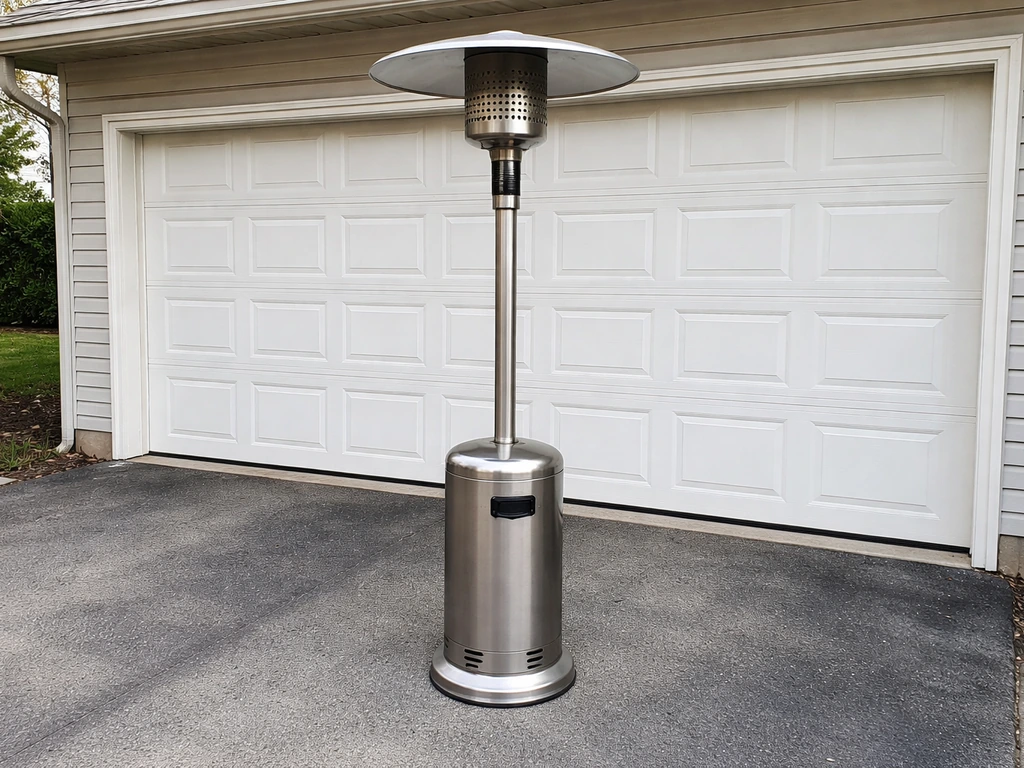
Why using a patio heater in a garage is actually dangerous
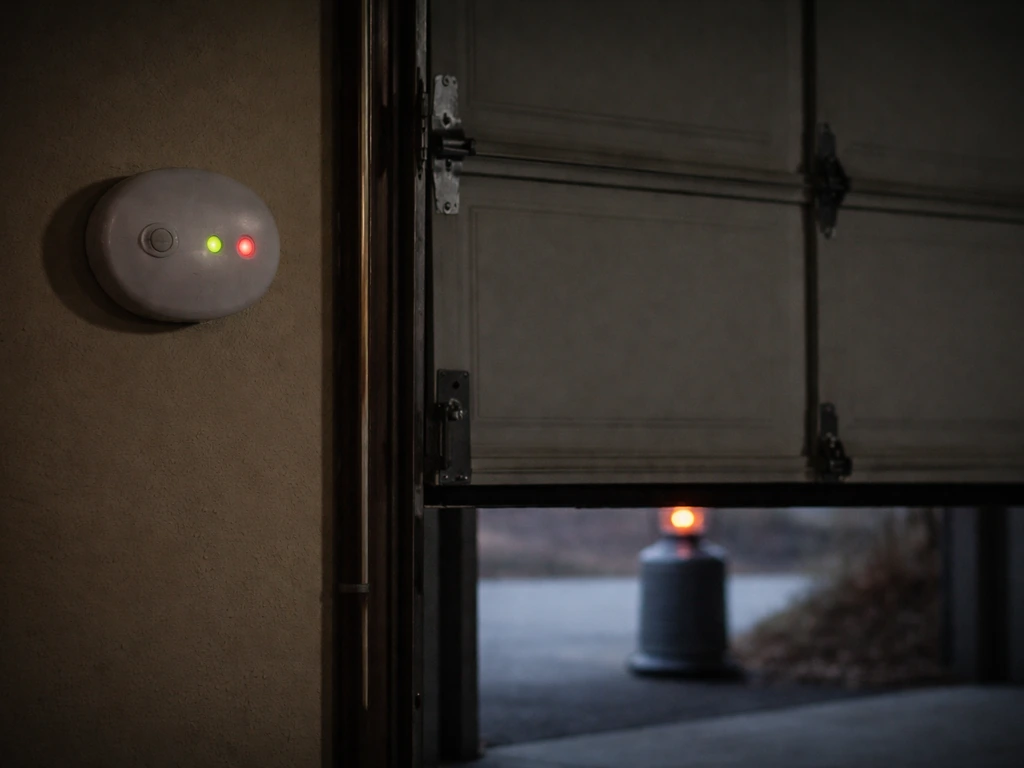
The core problem is carbon monoxide. When a propane patio heater burns fuel, it produces CO as a byproduct. Outdoors, that gas disperses harmlessly into the open air. In a garage, even a large one, CO accumulates fast. You cannot smell it, you cannot see it, and by the time you feel symptoms (headache, dizziness, nausea), you may already be in trouble. OSHA specifically calls out fuel-burning equipment used 'indoors or in semi-enclosed spaces with inadequate ventilation' as a major CO poisoning risk, and notes that risk goes up in winter when people seal spaces tightly to keep the cold out. That describes a garage almost exactly.
Oxygen depletion is the second issue. A running patio heater consumes oxygen from the surrounding air. In an enclosed space, oxygen levels can drop to the point where the heater begins producing even more CO (incomplete combustion) and where the air itself becomes dangerous to breathe. This is why the HLDS01-WPGT owner's manual lists asphyxiation alongside fire, explosion, burn, and CO poisoning as explicit hazards, not just fine-print warnings.
Then there's the fire and burn risk. A standard mushroom-style propane patio heater runs at 40,000 to 46,000 BTU and produces an open radiant flame under a metal reflector that gets extremely hot. Garages are full of combustible materials: wood shelving, cardboard boxes, gasoline containers, paint cans, rags, and rubber. The clearance requirements printed on the heater's nameplate assume outdoor placement with nothing nearby. You cannot replicate that in a typical garage.
Propane-specific concerns when you're thinking about the garage
Propane carries a specific additional hazard that electric heaters do not: the tank itself. Propane tanks should never be stored or used indoors. If a connection leaks, propane gas sinks to the floor (it's heavier than air), pools in low spots, and can ignite from a spark as small as a light switch being flipped. In a garage with a water heater, furnace ignitor, or car engine nearby, that's a real explosion risk, not a theoretical one.
PERC's propane safety guidance is blunt: never use portable heaters indoors unless they are specifically designed and approved for indoor use. The NC Department of Agriculture has documented deaths from CO poisoning linked directly to propane space heater use in poorly ventilated spaces. These aren't edge cases. The risk is well established and consistent across every regulatory and manufacturer source.
If you're thinking 'but I'll just open the garage door,' that argument doesn't hold up. The CPSC uses the same 'even with the door(s) open' language explicitly when warning against running combustion devices in garages, and manufacturers like AmazonBasics list garages as prohibited spaces without any door-open exception. A related article on using a patio heater in a garage with the door open covers this specific scenario in more depth, but the short answer is: it's still not safe enough.
If you're seriously considering it anyway: what to check first
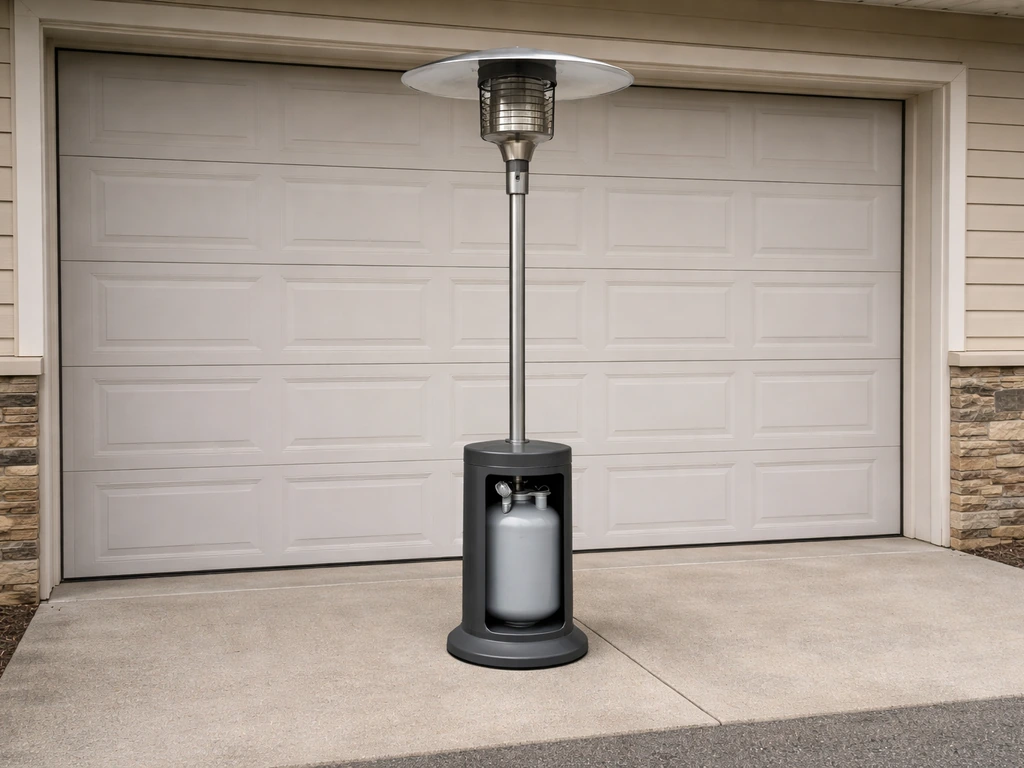
If you're in a situation where you feel you have no other option and plan to use a propane patio heater at the threshold of a garage or just outside it, at least treat the placement and inspection seriously. Here's what to verify before you ever light the thing:
- Keep the heater fully outside, with the tank on a stable, level, non-combustible surface. The heater should not be inside the garage footprint at all, not even partially.
- Check the nameplate for minimum clearances to combustibles. Most outdoor patio heaters require at least 24 to 36 inches of clearance on all sides and significantly more overhead clearance from the reflector. A garage ceiling, door frame, or overhead door track will likely violate these.
- Inspect the regulator hose before use. Look for cracks, kinks, or brittleness. A degraded hose is a gas leak waiting to happen.
- Check that the tilt switch is working. This is the safety shutoff that cuts gas flow if the heater tips over. A stuck or faulty tilt switch means the heater won't light or won't stay lit, but it also means the safety system isn't working. Don't bypass it.
- Confirm the thermocouple is functional. If the heater lights but won't stay lit when you release the ignition button, the thermocouple is likely weak or dirty. This 'won't stay lit' symptom means the heater is not holding flame safely, and you need to fix that before operating it anywhere.
- If CO is a concern (and it is), run a CO detector in any adjacent space before and during use, and never use the heater unattended.
Even with all of these steps, using the heater inside or directly at the garage entrance is not a manufacturer-sanctioned use. These are damage-reduction steps, not a green light.
Better options for heating a garage
The good news is that there are heaters actually designed for garage use. They're not more expensive than a quality patio heater, and they won't put you in a CO-poisoning situation.
| Heater Type | Safe for Garages? | Notes |
|---|---|---|
| Outdoor propane patio heater | No | Outdoor use only; CO hazard in any enclosed space |
| Electric infrared garage heater (hardwired) | Yes | No combustion, no CO risk; requires proper electrical circuit |
| Vented propane/natural gas unit heater | Yes | Must be properly vented to exterior; not portable |
| Indoor-rated propane heater (e.g., Mr. Heater Buddy series) | Yes (with ventilation) | Labeled for indoor/enclosed use; still requires some airflow |
| Electric forced-air shop heater (portable) | Yes | Easy to set up; works well for temporary heating needs |
For most homeowners, an electric infrared heater mounted to the garage wall or ceiling is the cleanest solution. No fuel, no CO, no tank to manage. If you want something portable and quick, an indoor-rated propane heater like the Mr. Heater Buddy (MH9BX or similar) is designed specifically for enclosed spaces and includes an oxygen depletion sensor that shuts the unit off automatically if O2 levels drop. That's a fundamentally different and much safer product than a mushroom-style patio heater.
If your goal is to use the patio heater you already own, the honest answer is: use it outside. If your goal is to use the patio heater you already own, the honest answer is: use it outside, and not in the garage even with the door open can you use patio heater in garage with door open. Set it up on the driveway, on a patio, or under a covered outdoor structure with adequate clearance.
If you are trying to use a patio heater under a tent or covered structure, make sure you follow the heater’s clearance and ventilation guidance for that specific setup. It also helps to check whether the gazebo is truly open and has enough clearance so you are not running the heater in a semi-enclosed space a gazebo.
If you are wondering can a patio heater be used under a roof, the key is keeping safe clearances and making sure the area is ventilated. There are real guidelines around using a patio heater under a roof or in a covered outdoor space, but any of those configurations is safer than a garage.
Before you fire up the heater anywhere: basic safety checks
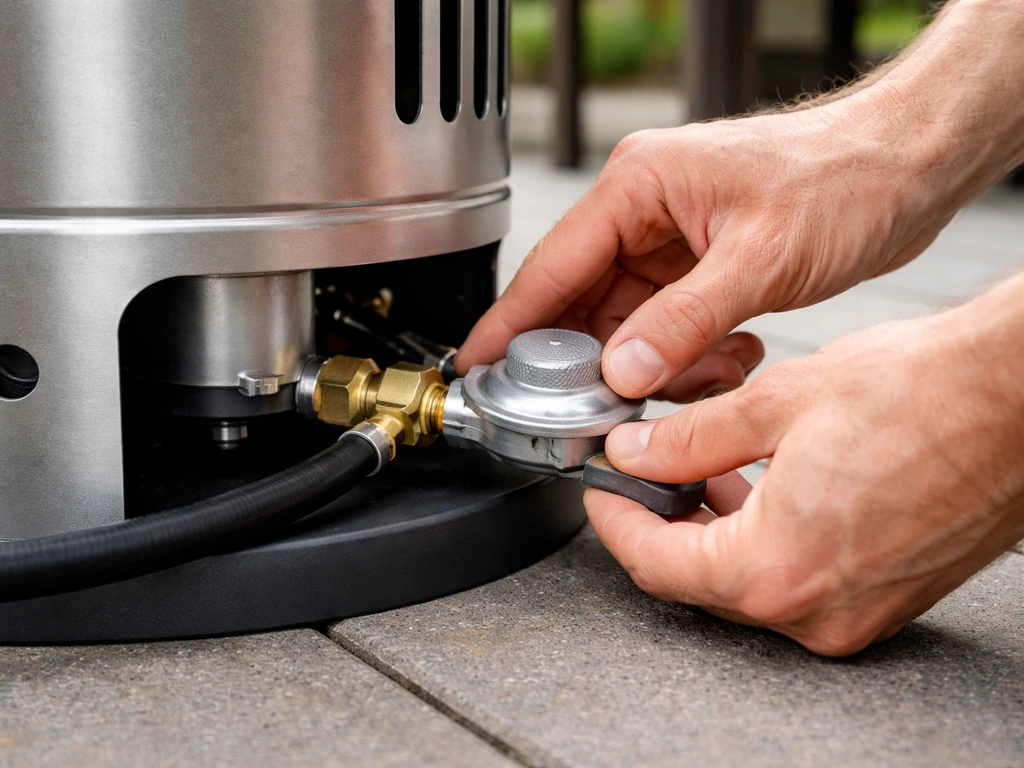
Whether you're moving your patio heater back outside or you've been storing it through winter, run through these checks before the first use. A lot of 'won't light' and 'won't stay lit' calls happen right at this point, and operating a partially functioning heater is more dangerous than not operating one at all.
Won't ignite at all
Start with the obvious: is there gas? Check the tank valve is fully open and the tank isn't empty. Then check whether the igniter is clicking. If you hear a click but no flame, the spark gap may be dirty or misaligned, or the igniter electrode is corroded. Clean it gently with a dry cloth or fine wire brush. If there's no click, the piezo igniter module may have failed, and you can light it manually with a long lighter while holding the gas knob in.
Lights but won't stay lit
This almost always comes down to the thermocouple. The thermocouple is a small probe that sits in the flame and generates a small voltage that tells the gas valve 'yes, there's a flame, stay open.' If the thermocouple is dirty, corroded, or positioned away from the flame, it won't generate enough signal and the valve will snap shut as soon as you release the ignition button. Hold the button in for a full 30 to 45 seconds after lighting to give the thermocouple time to heat up fully. If it still cuts out, clean the thermocouple tip or replace it. They're inexpensive and usually a straightforward swap on most heater models.
Tilt switch issues
If the heater won't light at all and the gas and igniter both seem fine, check the tilt switch. On most mushroom-style patio heaters, the tilt switch is a small mercury or ball-bearing switch mounted at the base. If it's stuck in the 'tilted' position (often from being stored on its side or after a tip-over), it will block the gas valve regardless of what you do.
With the heater upright on a level surface, the switch should reset on its own. If it doesn't, that's a repair to make before using the heater. A tilt switch that won't reset means your safety shutoff is compromised, and that matters a lot more when you're operating the heater anywhere near a structure. Some users on Reddit report Mr.
Heater Buddy units shutting off and discuss troubleshooting themes such as cleaning components and the oxygen-depletion sensor triggering Heater buddy shutting off.
Running through these checks takes maybe ten minutes and tells you whether your heater is in safe operating condition before you ever open the gas valve. It also saves you the frustration of dragging the heater outside, setting it up, and then finding out it won't hold a flame. Fix the underlying issue first, then use it where it belongs: outdoors.
FAQ
Can I use a patio heater in my garage if I have the door cracked open the whole time?
No. A small opening does not provide the level of air exchange needed to prevent carbon monoxide buildup. Also, wind gusts and changes in airflow can reduce ventilation suddenly, which is why manufacturers and safety guidance treat garages as prohibited spaces even with doors open.
Is it safer to run a patio heater right at the garage threshold instead of fully inside?
Still not recommended. The exhaust products can linger and drift into the garage, especially near vehicles, walls, or stored items that limit airflow. If you plan to use any fuel-burning heater near a building, position it fully outdoors with clear distance from doors, walls, and windows, and follow the heater’s stated clearance.
What if my patio heater is electric instead of propane, can I use it in a garage?
Electric heaters do not produce carbon monoxide, but you still need to consider fire risk and safe clearance. Ensure the unit is specifically rated for indoor/garage use, use a proper outlet, and keep combustibles away from the heater according to the nameplate. Never use an outdoor-rated heater indoors just because it is electric.
How do I know if the garage already has carbon monoxide buildup from a heater that was running earlier?
Use a certified carbon monoxide detector, and place it in the garage area following the detector instructions (do not rely on smell or visual cues). If anyone feels headache, dizziness, or nausea, get everyone outside immediately and seek medical help. Do not continue running the heater to “air it out.”
Can I use a patio heater in a garage if it’s winter and the door is mostly closed for heat?
That is one of the highest-risk scenarios. When spaces are sealed to keep cold out, ventilation is reduced, oxygen depletion and incomplete combustion become more likely, and carbon monoxide can accumulate faster.
What should I do if my propane patio heater will light but keeps shutting off after I release the knob?
Most commonly, the thermocouple is not heating correctly or is mispositioned. Hold the ignition knob for a full 30 to 45 seconds after lighting, then clean the thermocouple tip and confirm it sits in the flame. If it still cuts out, replace the thermocouple before further use.
If the heater won’t light, is it always safe to try lighting it manually with a long lighter?
Only after confirming there is gas and the igniter is functioning properly. If you smell strong gas or suspect a leak, stop and address the leak first. Manual lighting should be done carefully, with stable placement and no attempt while the heater is still warm from a recent failed ignition.
How do I check whether the tilt safety switch is the issue?
Set the heater on a level, stable surface and see if it resets. If it does not reset, do not bypass it. A stuck tilt switch can mean the safety shutoff is not reliable, which matters whether you use the heater outdoors or near structures.
Does using a patio heater under a tent or covered area make it okay to use in a garage-like setup?
Covered areas can be safe only if they are open enough to prevent semi-enclosed conditions and if you maintain the specific clearance and ventilation requirements for that exact heater. A tent or gazebo can become effectively “semi-enclosed” depending on how it is set up and the direction of wind.
What is the safest alternative if I just need temporary heat for work in the garage?
Use a heater designed and labeled for indoor or garage use. For fuel options, choose an indoor-rated unit that includes an oxygen depletion sensor and automatic shutoff. For non-fuel options, choose an electric infrared or properly rated garage heater and follow clearance rules to keep combustibles away.
Can I store a propane patio heater tank in the garage to use it later?
Do not store propane tanks indoors or in garages. Store the tank outdoors in a safe, upright position away from ignition sources and follow the tank and heater manufacturer instructions for storage and transport.