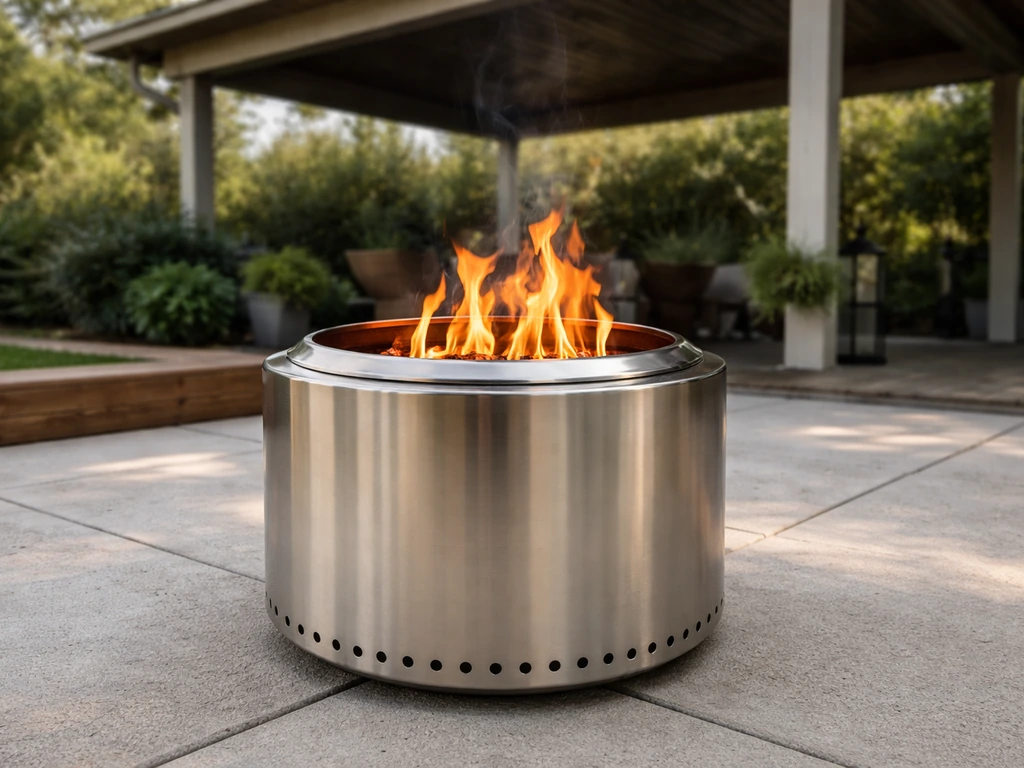
Technically you can use a Solo Stove under a covered patio, but Solo Stove's own manuals say not to use their fire pits 'under any overhead or near any unprotected combustible constructions.' That's a hard no for most standard covered patios with a wood or composite ceiling. If your covered patio is more of an open pergola with wide gaps and a ceiling height above 15 to 20 feet, you're in a grayer zone, but you still need to work through clearance, ventilation, and surface rules before you light anything.
Can You Use a Solo Stove Under a Covered Patio?
Grant Mercer
4 May 2026
What 'covered patio' actually means here (and why it changes the answer)
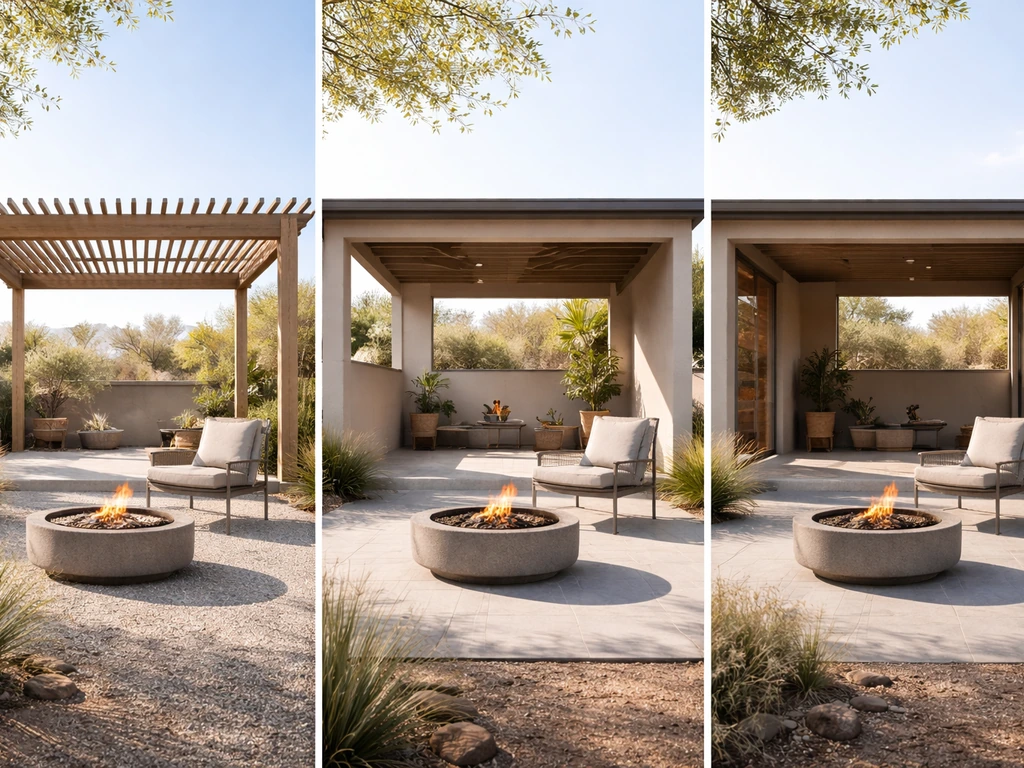
The phrase 'covered patio' covers a huge range of structures, and the distinction matters a lot when you're dealing with a wood-burning fire pit. There are three common setups people mean when they ask this question.
- Fully enclosed or solid-roof patio cover: a solid wood, composite, or metal roof with walls or screens on the sides. This is the most restrictive scenario. Heat and smoke have nowhere to go, combustible materials are directly overhead, and using a Solo Stove here is not safe.
- Open pergola or lattice cover: a slatted or open overhead structure with significant gaps. Some ventilation exists, but you still have combustible wood directly above and spark exposure risk. Clearance to the underside of the structure is the key measurement.
- Partial overhang or single-side cover: a roof overhang that extends a few feet out from the house, with the rest of the patio open to the sky. If your Solo Stove placement is well clear of the overhang, this can work with proper setback distances.
The simple rule: if there is solid material above the fire pit within 15 to 20 feet, the manufacturer says don't do it. If your structure is open enough that the fire pit effectively sits under open sky, you're working with the same rules as any outdoor placement, just with nearby overhead elements to account for.
Fire safety basics you need to understand first
Solo Stove's warning language is consistent across their product line. The Bonfire manual and the 2.0 instruction sheet hosted by Home Depot both state: 'Do not use Solo Stove fire pits under any overhead or near any unprotected combustible constructions.' That language isn't suggesting caution, it's a prohibition. The reason is straightforward: a wood-burning fire pit produces real flames, hot embers, radiant heat, and smoke. Under a cover, all three of those become serious hazards.
- Embers and sparks: Solo Stoves are designed to reduce sparks through their double-wall airflow system, but they don't eliminate them. Any ember that reaches a wood pergola beam or composite ceiling panel can start a fire.
- Radiant heat: the burn chamber on a Bonfire or Ranger gets extremely hot. Heat rises and collects under a low ceiling, which can warp, scorch, or ignite overhead materials over time even without direct flame contact.
- Smoke and carbon monoxide: wood combustion produces CO. In an enclosed or low-ventilation space, CO can build to dangerous concentrations faster than most people expect. CO has no smell and no color.
- Soot deposition: even low-smoke burns leave soot on ceilings, beams, and roof panels over time. Beyond cosmetic damage, soot buildup on porous materials can eventually become a fire risk.
This is different from the propane patio heater question. Propane heaters are engineered specifically for covered-patio use with defined clearance specs and no open flame or ember issue. If you want a similar heat experience on a covered patio, propane patio heaters are typically the safer route because they are built for that covered, specified-clearance use.
If you want the same kind of covered-patio reassurance but with a patio heater, look for propane or electric models that list clearance specs for covered areas covered-patio clearance specs. A Solo Stove is a wood-burning fire pit, and the risks are categorically different. If you're comparing options, propane patio heaters or even propane fire pits have manufacturer-defined clearances for covered use that a wood-burning Solo Stove simply doesn't.
Clearance, placement, and ventilation checklist
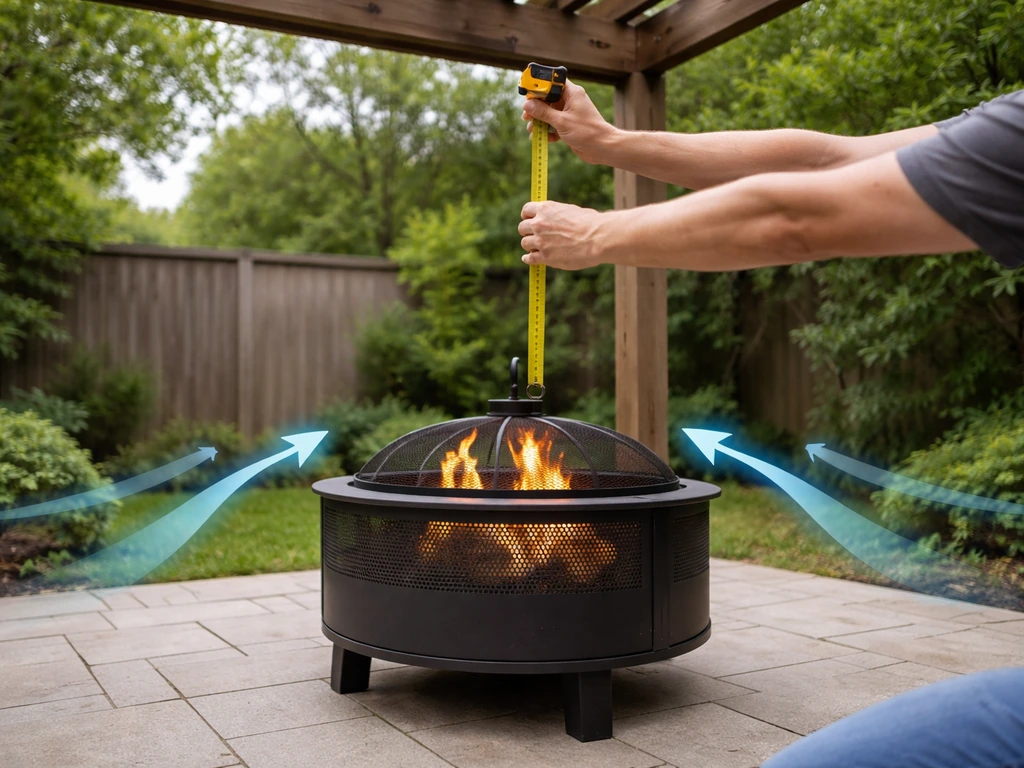
If you've evaluated your structure and believe your setup might be within the bounds of safe use (open pergola, very high clearance, or placement near the edge of a partial overhang), work through every item on this checklist before you light the fire.
- Overhead clearance: Bob Vila's review of the Bonfire 2.0 cites a requirement of at least 15 feet of overhead clearance, while a separate Solo Stove general review on the same site references 20 feet. Use 20 feet as your minimum. Measure from the top of the Solo Stove to the underside of any overhead structure.
- Horizontal distance from walls and vertical surfaces: Solo Stove recommends at least 6 feet of distance from walls, fences, and other vertical surfaces. This applies to house walls, pergola posts, privacy screens, and outdoor furniture.
- Surface: the Solo Stove must sit on a non-combustible, level surface. Concrete, pavers, or natural stone are acceptable. Wood decking, composite decking, and artificial turf are not safe surfaces without a proper heat-resistant pad and stand.
- Ventilation: there must be open air movement around and above the fire pit. A pergola with less than 50% open area overhead is not providing meaningful ventilation. Open-sided patios fare better than those with screens or curtains blocking airflow.
- No combustibles within the horizontal clearance zone: check for hanging string lights, fabric curtain panels, potted plants, wooden furniture, or overhead decorations within 6 feet horizontally.
- Wind direction: check prevailing wind before lighting. Wind that pushes smoke toward the house or under a low ceiling dramatically increases soot buildup and CO accumulation risk.
- Exit path: make sure you and anyone nearby can move quickly away from the fire pit if something goes wrong. Don't place it in a tight corner.
What smoke and heat actually do under a cover
Here's what happens physically when you run a wood fire under a roof. Hot gases and smoke rise. Under open sky, they disperse immediately. Under a ceiling, they collect, cool slightly, and then spread horizontally across the ceiling surface. This is called the ceiling jet effect. What that means practically is that your ceiling gets hotter than you expect, and smoke concentrations directly above and around the fire pit build up faster than they would outside.
Solo Stoves are specifically designed to burn with less smoke than a traditional fire pit by using a secondary combustion system that re-burns smoke gases. This helps, but it doesn't make them smoke-free, especially during startup, when adding wood, or when burning wet or resinous wood. EPA notes that when wood is not burned completely, [wood smoke contains carbon monoxide and toxic air pollutants](https://www. epa.
gov/burnwise/frequent-questions-about-wood-burning-appliances), along with fine particles (PM2. 5). During OutdoorGearLab testing of the Solo Stove Bonfire 2. 0, they observed that wood choice can still affect how much smoke you see, especially during startup or when burning wet or resinous wood [wood choice affects smoke](https://www.
outdoorgearlab. com/reviews/camping-and-hiking/fire-pit/solo-stove-bonfire-2-0). That startup smoke is often the worst of it, and it's exactly when you're closest to the fire.
Signs that your setup has a ventilation problem include: smoke hanging at eye level rather than rising and dissipating, eyes watering after a few minutes even when not directly downwind, a haze accumulating near the ceiling, or the fire burning sluggishly and requiring constant attention. Any of these is a signal to move the fire pit to a more open location immediately. Don't wait it out.
Model-specific considerations: Ranger, Bonfire, Yukon, and the stand question
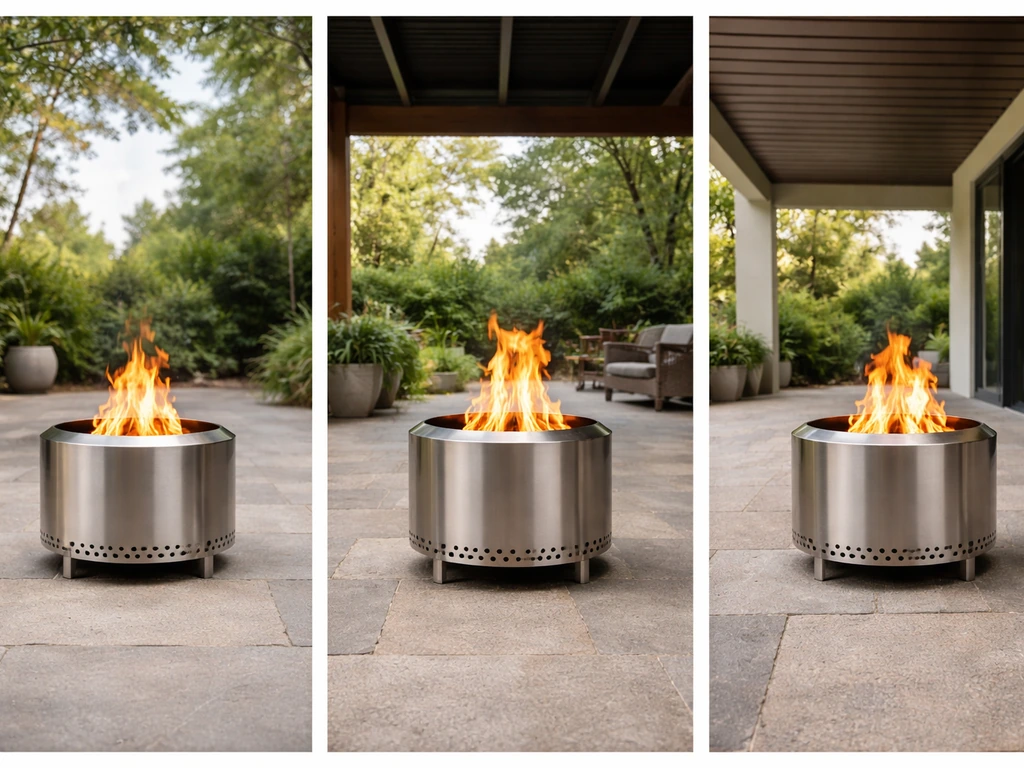
Solo Stove makes several fire pit sizes, and they behave differently under a cover. The Ranger is the smallest, the Bonfire is the mid-size most popular model, and the Yukon is the largest. Bigger fire produces more heat, more smoke volume, and more ember output. If you're going to use any Solo Stove near (not under) a covered structure, smaller is safer.
| Model | Diameter | Burn Chamber Heat Output | Covered Patio Risk Level |
|---|---|---|---|
| Ranger | 15 inches | Lower output, smaller flame | Lower risk than larger models, still requires full clearance |
| Bonfire / Bonfire 2.0 | 19.5 inches | Moderate-high output, taller flame | Higher risk; this is the model most referenced in clearance warnings |
| Yukon | 27 inches | High output, large flame column | Highest risk; should never be used near any overhead structure |
The stand and base accessories matter for a different reason: surface protection. Solo Stove sells a stand that raises the fire pit off the ground, which is useful for protecting decking surfaces from radiant heat, but it also raises the top of the flame column higher, reducing your effective overhead clearance. If you're using a stand, add the stand height to the fire pit height when calculating your clearance to the ceiling. A Bonfire on a stand sits roughly 7 to 8 inches taller than it would flat on the ground.
For deck surfaces specifically: the bottom of a Solo Stove gets extremely hot during a burn. On wood or composite decking, this is a real fire risk even without a stand. Solo Stove makes a heat-resistant base pad for exactly this reason. If you're on any combustible surface, the base pad is not optional. On concrete or stone, it's less critical but still good practice.
How to operate it safely and when to walk away
Safe operating habits
- Start small: use less wood than you think you need for the first 10 minutes. A smaller initial fire lets you assess smoke behavior and heat buildup under your specific structure before you commit to a full burn.
- Stay present: never leave a Solo Stove unattended under or near any overhead structure. The only scenario where unattended fires are acceptable is in a fully open outdoor space with nothing overhead. Under a cover, someone needs to be watching.
- Have water or a fire extinguisher within reach: a garden hose or a bucket of water works for smothering the fire pit quickly. A dry chemical extinguisher is better for anything that lands on a combustible surface.
- Monitor the ceiling: every 10 to 15 minutes, look up at the ceiling directly above and to the sides of the fire pit. Any discoloration, darkening, or visible heat shimmer near ceiling materials is a sign to extinguish the fire immediately.
- Let the fire burn down before covering or moving: the Solo Stove lid accessory can be used to snuff the fire. Let it cool completely before moving it, especially if you're on a combustible surface.
- Burn only dry hardwood: wet or green wood produces significantly more smoke. Resinous softwoods like pine produce more sparks. Stick to dry seasoned hardwood (oak, hickory, maple) to minimize smoke and ember output.
When you should not use it under a cover, full stop
- Solid roof directly overhead at any height below 20 feet: this is the manufacturer's own line in the sand.
- Any enclosed or semi-enclosed space: if three or four sides have walls, screens, or curtains, ventilation is insufficient for safe wood combustion.
- High wind conditions blowing toward the house or overhead structure: wind can redirect embers and smoke into exactly the places you're trying to protect.
- Wet weather where the wood is damp: you'll get heavy smoke immediately on startup, which is the worst possible scenario under a cover.
- Pergolas with dry or weathered wood beams: older, dried-out wood ignites more easily. A pergola that needs a fresh coat of stain or sealant is not a safe overhead structure near an open fire.
- Any space where children or pets can't be easily moved away quickly: the unpredictability of a wood fire under a confined space means you need a clear and fast exit for everyone.
If your covered patio doesn't meet the clearance and ventilation standards here, the honest answer is that a Solo Stove isn't the right heater for that space. A propane patio heater with a defined covered-patio clearance rating, or an electric infrared heater, will give you warmth without the open-flame and smoke risks. If you mainly want warmth under a covered patio, a propane patio heater with a defined clearance rating is a safer related option than using a Solo Stove. The Solo Stove is an excellent product in the right setting. A low-ceiling covered patio just isn't that setting.
FAQ
If my patio has a partial overhang (like a small awning), does that count as a “covered patio” for a Solo Stove? (What if the overhang is only on one side)?
Usually, yes, but it depends on the material and how “sealed” the roofline is. If the overhang has solid soffits or a close fascia that can trap smoke or direct hot exhaust upward, the situation is closer to a true covered patio and the manufacturer prohibition still applies.
Does the Solo Stove’s secondary burn system make it safe under a covered patio?
Don’t assume the Solo Stove’s “less smoke” claim makes it acceptable under a roof. The highest-risk moment is startup and reload, when smoke is most visible and users tend to stand close to observe it, so you should treat those minutes as the critical test period.
What are quick, practical signs that ventilation is failing under my patio cover?
If you can see smoke or haze collecting near the ceiling, treat it as a fail condition. A safe decision rule is simple: if smoke does not rapidly clear upward like it would in open air, shut it down and move it outdoors rather than “waiting it out.”
How much does wood quality (wet, resinous, pressure-treated) change the risk under a cover?
Wet wood increases both smoke and flame behavior. If you are already borderline on clearance or ventilation, using kiln-dried or properly seasoned wood matters more because wet or resinous wood tends to create heavier startup smoke that is harder to manage under overhead structures.
If the Solo Stove is not directly under the ceiling beam, but close to it, is it still a problem?
It can still be risky, because “near” overhead combustibles includes things like a nearby ceiling, beams, or decorative trim even if the fire pit is not directly centered under the structure. Your clearance math should include the widest points of overhead elements, not just what is directly above the stove.
What clearance height should I use as my cutoff if my patio is not exactly “low” or “high”?
If your patio cover is under 15 to 20 feet clearance, plan as if you have insufficient overhead space. If the cover is higher, you may still have a ceiling-jet effect depending on the roof shape, and you must still ensure the surrounding surfaces are noncombustible and spaced to allow smoke to dissipate.
If I use the Solo Stove stand, do I need to recalculate clearance under the patio cover, and how?
The stand changes the geometry. Add the stand height to the fire pit height for overhead clearance, and remember the stand also shifts the hottest point of the flame column upward, which can bring you closer to soffits or ceiling beams.
Is it safe to use a Solo Stove under a covered patio on a wood or composite deck if I use the base pad?
Yes, especially on decks. The base and outer surfaces get extremely hot during operation, radiant heat can build up under close furniture or railings, and the heat-resistant base pad is still important if you are anywhere near wood, composite, or other combustible decking.
If I leave doors open or run a fan under the cover, can I use the Solo Stove as long as smoke clears?
Most of the time, yes, but you should not rely on the “door open” or “fan on” approach. Fans can improve comfort without eliminating the key hazards, heat transfer, and smoke accumulation on overhead surfaces, so clearance to combustibles still has to be met.
If I cannot use a Solo Stove under my patio cover, what’s the closest safer substitute for heat and ambiance?
If you are trying to keep a similar outdoor ambiance under a covered patio, consider alternatives designed for covered use, like propane or electric patio heaters that publish clearance specs for overhead areas. They avoid the open-flame and ember risks that make wood-burning units categorically different in this setting.