A standard 20 lb propane tank gives you roughly 9 to 14 hours of burn time on a typical patio heater, depending on the BTU setting you use. At a common output of 40,000 BTU/hr, you're looking at about 10 to 11 hours from a full tank. Dial it down to 30,000 BTU/hr and you can stretch that same tank to around 14 hours. Push it to 45,000 BTU/hr and you'll burn through it in under 10 hours. Those are the numbers to keep in your head as a starting point.
How Long Does a Patio Heater Propane Tank Last? Runtime Guide

Grant Mercer
1 May 2026
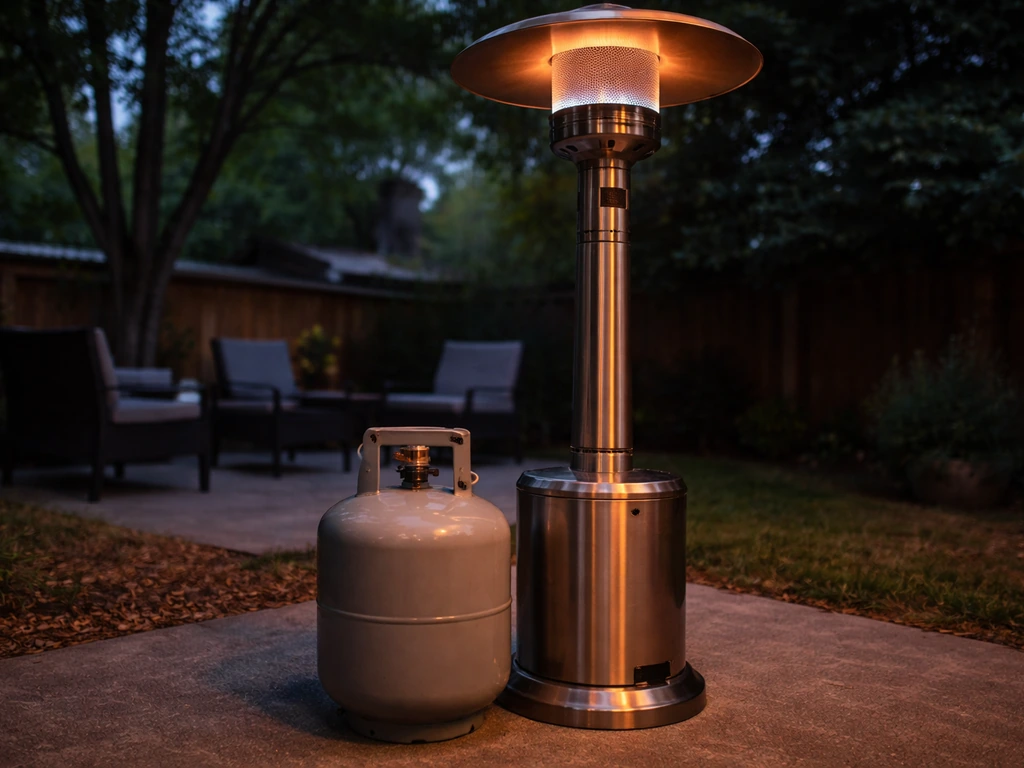
Typical runtime ranges for common propane tank sizes
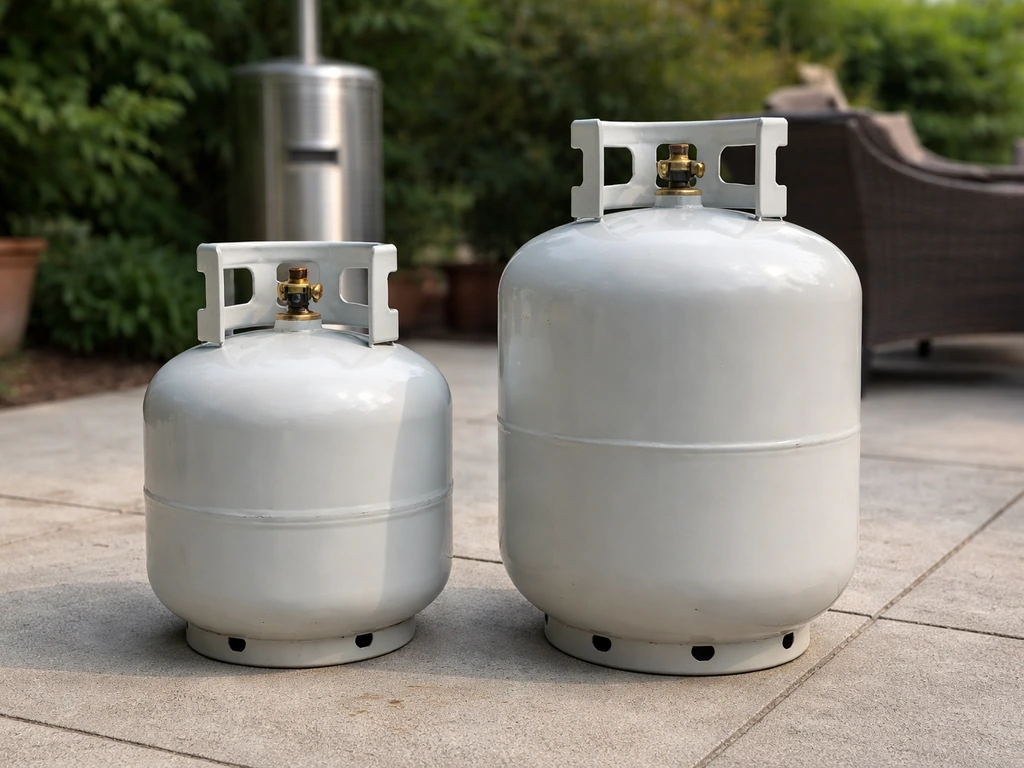
Most freestanding patio heaters sold in North America run on a standard 20 lb propane cylinder, which holds about 4.7 gallons of usable propane. Propane contains roughly 91,500 BTU per gallon, so a full 20 lb tank gives you approximately 430,000 BTU total. Divide that by your heater's output and you get your hours. Here's how that plays out across the most common heater sizes:
| Heater Output (BTU/hr) | 20 lb Tank Runtime | Notes |
|---|---|---|
| 30,000 | ~14 hours | Low setting on most adjustable heaters |
| 36,000 | ~12 hours | Medium setting, very common real-world use |
| 40,000 | ~10.75 hours | Most common rated output for mushroom-style heaters |
| 45,000 | ~9.5 hours | High setting on larger models |
| 48,000 | ~9 hours | High-output commercial-style units |
These figures assume a full tank and continuous operation at a steady output. Real-world use rarely looks exactly like this, because most people adjust the flame or run the heater in cycles rather than flat-out from start to finish. But these numbers give you a solid baseline to plan around.
What actually changes how long your tank lasts
The math above assumes ideal conditions, but several real-world variables can push your runtime shorter (or occasionally longer) than the calculation suggests. If you're wondering how long does a patio gas bottle last, the biggest thing to check is your heater's BTU output and how you run the flame day to day.
BTU output and heat setting
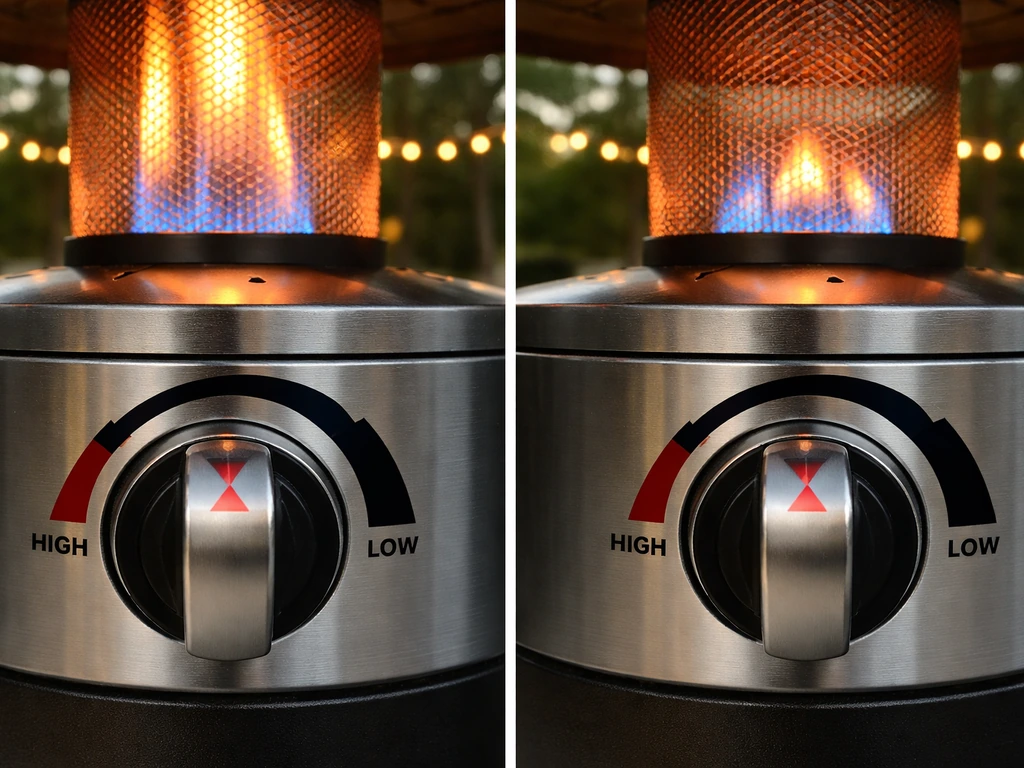
This is the biggest variable by far. A heater running at 45,000 BTU/hr consumes about 50 percent more propane per hour than the same heater dialed back to 30,000 BTU/hr. If your heater has a variable control, running it on medium instead of high can add 4 or more hours to a tank. That's worth knowing when you're trying to stretch a tank across a longer event.
Cold weather
Cold temperatures hit propane performance in two ways. First, you're using the heater harder because it's colder outside. Second, and less obvious: propane is stored as a liquid and needs to vaporize before it can fuel the burner. When temperatures drop below about 20°F (-6.
7°C), the tank struggles to vaporize fuel fast enough to maintain rated pressure. This can cause the flame to weaken, the heater to cycle off more often, and your actual runtime to drop noticeably even if the tank is still full. Some manuals explicitly flag this 20°F threshold as the lower operating limit for a reason.
Refer to the model’s operator manual for the specific operating temperature range, including sub-freezing operation (for example, it may list a range such as “-20° F to 85° F”).
Wind
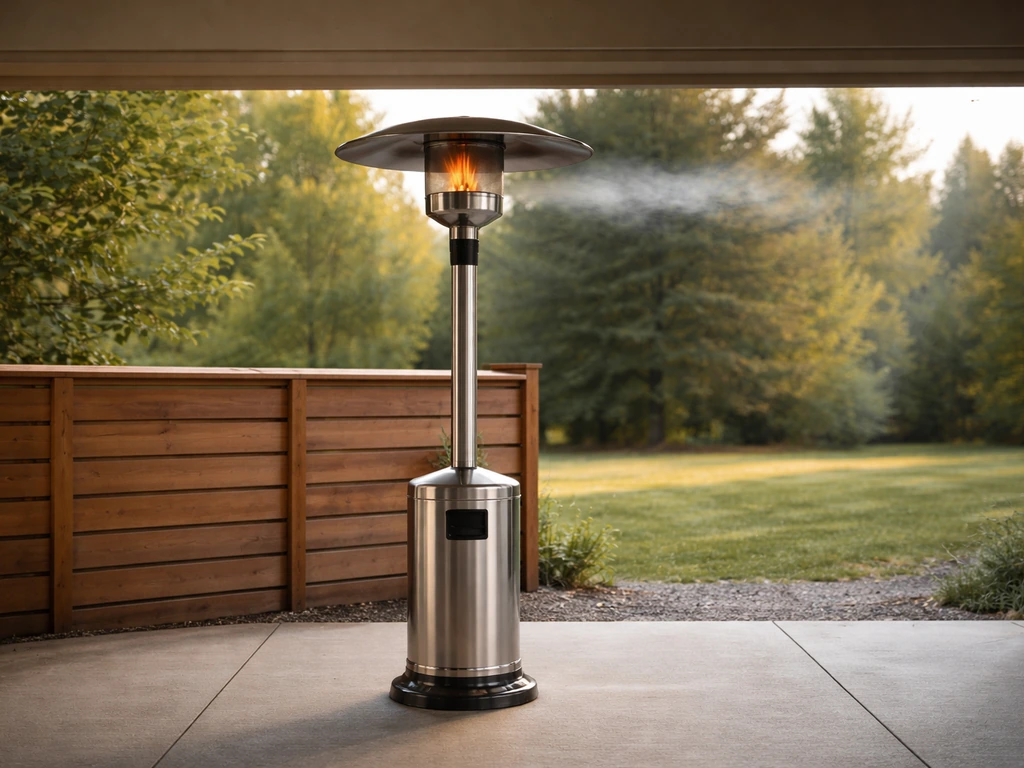
Wind is a silent tank-killer. A steady breeze strips heat away from the area you're trying to warm, which pushes you to run the heater at a higher setting than you otherwise would. It can also affect burner efficiency if the flame is disturbed. Positioning your heater out of direct wind, or using a windscreen, can make a meaningful difference in how long a tank lasts across an evening.
Tank size
If you're using a smaller 1 lb camping-style canister or a larger 33 lb or 100 lb tank, your runtime will scale proportionally with the fuel volume. A 13 kg gas bottle has a smaller fuel capacity than a typical 20 lb propane cylinder, so you should expect proportionally shorter runtime and double-check the BTU rating of your heater. A 1 lb canister holds about 0.
236 gallons of propane, which means you'd get roughly 30 minutes of runtime at 40,000 BTU/hr. A 100 lb tank holds around 23. 6 gallons and would theoretically run that same heater for over 53 hours. For more detail on matching tank sizes to specific heater setups, the guide on what size gas bottle to use for a patio heater covers this well.
How to estimate your own runtime in under a minute
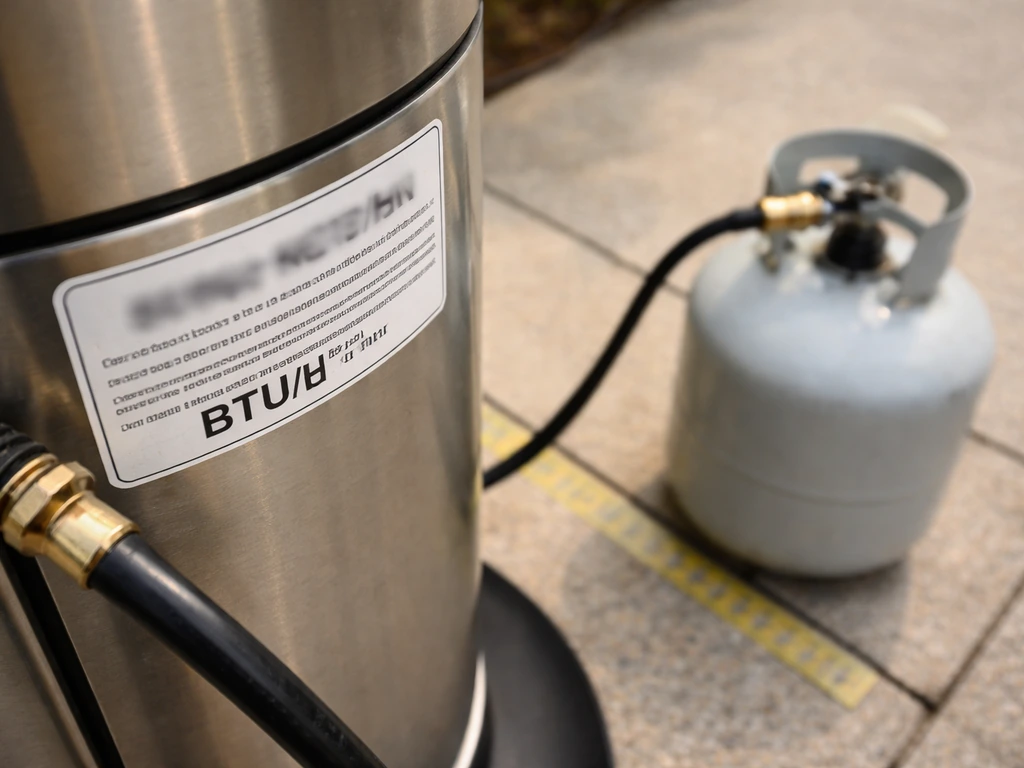
You don't need a calculator for this. Here's the simple formula:
- Find your heater's BTU/hr rating (it's on the label on the heater body or in the manual).
- Find your tank's weight in pounds. A standard 20 lb tank holds about 4.7 gallons of propane.
- Multiply the gallons by 91,500 to get total BTU in the tank. For 4.7 gallons: 4.7 × 91,500 = 430,050 BTU.
- Divide total BTU by your heater's BTU/hr rating. At 40,000 BTU/hr: 430,050 ÷ 40,000 = 10.75 hours.
- That's your estimated runtime at that setting on a full tank.
If you want to figure out how much propane is left in a partially used tank, weigh it on a bathroom scale. The tare weight (empty weight) of a standard 20 lb cylinder is stamped on the collar, and it's typically around 17 lb. Subtract the tare weight from the current weight to get the pounds of propane remaining. Divide that by 4.24 (pounds per gallon of propane) to convert to gallons, then run the formula above. It takes about 90 seconds and gives you a reliable estimate of how many hours you have left.
Is your heater consuming propane normally? Quick checks
Before you assume something is wrong, it helps to know what normal actually looks like. Here are the signs that your heater is running the way it should:
- Flame color is predominantly blue with minimal yellow at the tips. A small amount of yellow is acceptable on most burners, but heavy yellow or orange flame is a warning sign.
- The flame is steady and holds its height consistently at your chosen setting.
- The heater stays lit without repeated cycling off and relighting.
- The tank exterior feels cool but doesn't have visible frost forming on it under normal temperatures.
- Runtime roughly matches the estimates from the formula above (within 1 to 2 hours).
If your tank seems to run out significantly faster than the math suggests, or if the heater is behaving erratically, something is off. The most common culprits are a regulator issue, a burner restriction, a leak, or a failing valve.
Troubleshooting common causes of rapid propane drain
Regulator problems
The regulator controls gas flow between the tank and the burner, and a faulty one can cause real problems on both ends of the spectrum. A regulator stuck in a high-flow state can let more gas through than intended, burning propane faster than the BTU rating suggests. A regulator that's partially locked (regulators have a safety mode that restricts flow if they detect a rapid pressure drop) can cause weak flame and frequent cycling, which wastes propane inefficiently.
Frost forming on the regulator or the tank body, especially on a mild day, is a strong indicator the regulator is working harder than it should be, usually because it's drawing fuel faster than the cold tank can vaporize it. Try disconnecting the hose, waiting 30 seconds, and reconnecting slowly with the burner valve turned off before reopening the tank valve.
If you need to know how to connect a gas bottle to a patio heater, confirm you have the correct hose and fittings for your model before you reconnect anything how to connect gas bottle to patio heater. This resets most common flow-restrictor lockouts.
Clogged burner or blocked orifice
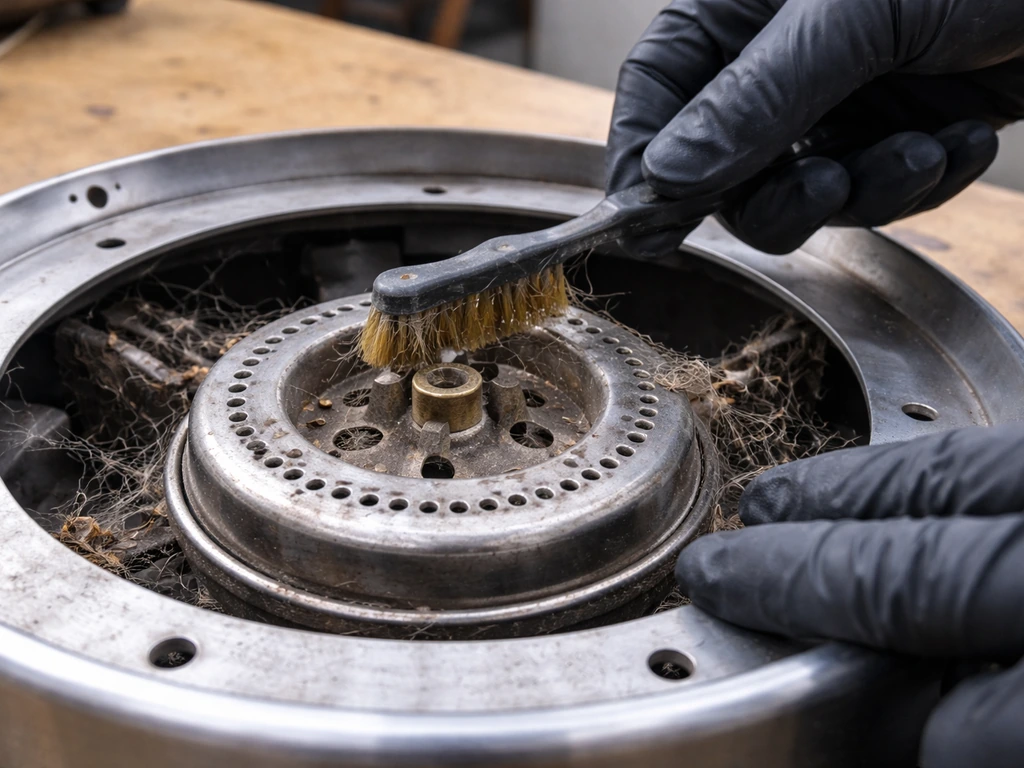
Spider webs, insect nests, and debris are the most common burner blockages on patio heaters that have been stored for a season. A partial blockage changes the air-to-fuel mixture at the burner, producing incomplete combustion. You'll typically see a heavy yellow or orange flame and possibly black smoke. The heater may also cycle off repeatedly via the thermocouple safety shutoff, which means the igniter keeps firing and consuming gas in repeated startup attempts. Inspect the burner and pilot tube visually and use a thin pipe cleaner or compressed air to clear any debris. Don't use anything that could enlarge the orifice.
Gas leaks
A leak anywhere in the system means propane is escaping without producing any heat. Even a small leak at a connection point or along the hose can drain a tank faster than you'd expect. The way to check is with a soapy water solution: mix one part liquid dish soap with one part water, apply it to every connection point (tank valve, regulator connection, hose-to-heater fitting), and watch for bubbles while the gas is on. Any bubbling means you have a leak at that point. If you find one, turn off the tank valve immediately and do not attempt to relight the heater. Tighten or replace the affected connection before testing again.
Valve or thermocouple issues causing excessive cycling
The thermocouple is a flame-sensing rod that keeps the gas valve open only when it detects a live flame. If the thermocouple is weak, dirty, or positioned incorrectly, it signals the valve to shut off even when the flame is present. This causes the heater to click off, requiring a manual relight. Every failed startup attempt releases some unburned gas, and repeated cycling burns propane without delivering meaningful heat. If your heater keeps shutting off and relighting, check that the thermocouple tip is sitting directly in the pilot flame path and that the tip isn't coated in oxidation or residue. Gently cleaning the tip with fine steel wool can restore proper function.
Safe DIY checks for your propane system
You can handle a lot of propane system diagnostics safely at home, but there's a right way to do it. Follow these steps in order, and don't skip the safety steps to save time.
- Always do any inspection outdoors, away from open flames, sparks, and enclosed spaces. Never check for leaks indoors or near a grill or fire pit.
- Before disconnecting anything, close the tank valve completely and let the system depressurize for a moment.
- Mix your soapy leak-test solution (one part dish soap, one part water) before you open any gas valve. Never smoke or use an open flame near this test.
- Apply the solution to connections with the gas flowing slowly: the tank valve-to-regulator connection, the regulator body, and the hose-to-heater fitting.
- Watch for 30 to 60 seconds. Tiny, slow-forming bubbles are enough to flag a leak.
- If you find a leak, close the tank valve immediately. Do not light the heater.
- Check the flame color at startup. Blue with small yellow tips is normal. Heavy yellow, orange, or black smoke means a combustion or gas-mixture issue.
- Weigh the tank if you suspect faster-than-expected consumption. Compare to the formula earlier to see if actual consumption matches the expected rate.
One thing worth emphasizing: never use an open flame to check for gas leaks. The soapy water method is the only safe DIY approach. Gas-detection spray products sold at hardware stores are also a good option and work the same way chemically.
When to stop DIY and call for service
There's a real difference between diagnosing a clogged burner and dealing with a compromised gas valve or cracked hose. Here are the situations where you should stop, set the tank aside with the valve fully closed, and contact a qualified technician or the heater manufacturer:
- You smell gas strongly even after closing the tank valve and disconnecting the regulator. This suggests residual gas in a damaged hose or internal valve component.
- You find bubbles at the soapy water test but tightening the connection doesn't stop them. A leaking fitting that won't seal needs replacement, not more torque.
- The hose has visible cracking, discoloration, or physical damage. Propane hoses are wear items and should be replaced, not repaired.
- The regulator housing is physically damaged, corroded through, or has been dropped hard. Internal damage isn't visible and isn't DIY-repairable.
- The gas control valve on the heater body itself is stiff, leaking from its stem, or won't close fully. This is an internal valve failure and requires a part replacement or professional assessment.
- The heater has been involved in a tip-over incident and the tilt switch has already cut gas flow. Before relighting, the entire gas path should be inspected to confirm nothing is damaged from the fall.
- You're unsure about anything in the system. Propane doesn't give second chances with serious failures. If something doesn't feel right, trust that instinct.
For many heater brands, replacement regulators, hoses, and thermocouples are available as standalone parts and are straightforward to swap once you've identified the correct component. But gas valve internals and structural hose damage are where reasonable DIY scope ends. The cost of a service call is worth it when the alternative is a compromised propane system.
Getting more hours out of every tank
A few practical habits will help you get closer to the maximum runtime your tank is capable of delivering. This is why many people wonder how long patio heaters burn on a single propane tank and what factors can change that runtime maximum runtime. If you're wondering how long a patio heater lasts overall, these habits can help you maximize each tank between refills how long does a patio heater last.
Run the heater at medium rather than high whenever the ambient temperature allows. Position it where wind won't fight it. Store propane tanks at room temperature before use when possible, because a warmer tank vaporizes fuel more efficiently than a cold one. Keep the burner and pilot assembly clean between seasons to prevent blockages that reduce combustion efficiency.
And if you're regularly running through propane faster than the estimates suggest and can't identify a mechanical cause, a quick inspection of the regulator is worth doing. Regulators have a lifespan and can develop internal wear that affects flow accuracy without producing obvious external symptoms. Most manufacturers recommend replacing them every five to ten years as a precaution.
FAQ
How can I estimate how much propane is left without a scale?
If you do not have a scale, look for the tank gauge (some setups include one) and pay attention to how the flame strength changes when you throttle down. For a more reliable check, do a one-time calibration with a scale (weigh full, then weigh again after a known burn period) and use that pattern for future refills, because heater cycling and wind can make “guessing by flame” misleading.
Is it normal for a propane tank to feel cold or frost up during use?
Some cooling is normal, but heavy or persistent frost on the regulator or tank body, especially when conditions are not very cold, is a warning sign that vaporization is struggling or flow is restricted. If you see frost, try lowering the BTU setting and reduce wind exposure, and inspect the regulator and fittings if it continues.
Does using the heater on “medium” actually save propane, or does it just look like it?
It saves propane because consumption is tied to burner output, not just how warm it feels. In practice, medium typically reduces flow enough to extend runtime significantly, but if the heater is frequently cycling off and back on, you may waste propane through repeated ignition attempts, so stable operation matters.
Why does the flame look yellow or the heater smell like gas sometimes?
A yellow, sooty flame usually points to incomplete combustion, often from burner blockage or incorrect air mix. If you also smell gas, treat it as a potential leak first by checking all connections with soapy water and only then troubleshoot the burner, because incomplete combustion can be confused with leaking gas.
My heater runs for a while, then shuts off repeatedly, what should I check first?
Start with the easiest high-probability causes: a partially blocked burner or pilot tube, and thermocouple placement or residue. Repeated shutoffs can also happen from regulator issues or low vapor pressure in cold weather, so if cycling is worse at night or in windy areas, cold and airflow are likely contributing.
Can I safely refill a small camping propane canister and reuse it?
Most disposable 1 lb camping canisters are not meant to be refilled, and refilling can be unsafe or unreliable due to valve design and pressure regulation. If you need longer runtime, use an appropriate larger cylinder or a refillable, compatible tank and ensure the hose and regulator match the heater’s requirements.
How do I know whether my heater is drawing more propane than it should?
Compare runtime across the same burner setting and similar weather. If you consistently get much less time at a fixed BTU level, run a leak check at all connections and verify the regulator is functioning normally. If leaks are ruled out and flame behavior is unstable, the regulator or burner/pilot components are the next most likely culprits.
Is it safe to run a patio heater indoors or under a covered patio?
It is not safe to use propane heaters in enclosed spaces without proper ventilation, even if the heater is under a roof. Enclosed or poorly ventilated areas increase carbon monoxide risk, so only operate outdoors or in a well-ventilated area following your heater’s manual and local safety guidance.
What is the best way to plan how many tanks I need for an event?
Use your target runtime estimate for the BTU setting, then add a buffer for wind and cycling. A practical approach is to plan on the lower end of the hours range for your chosen setting, and if it will be windy or cold, assume you will be closer to the shorter estimate and bring one extra tank for contingencies.
How often should I clean the burner and pilot to maximize tank life?
Clean at least at the start of the season and whenever you notice weak flame or soot. Even if you do not change tanks often, debris from storage can cause incomplete combustion, which increases gas usage and can lead to more frequent shutoffs, reducing effective runtime.