Most standard propane and gas patio heaters light the same way: turn the control knob to the pilot position, push it in to open the gas valve, press the igniter button repeatedly until you see a small pilot flame, then hold the knob in for 30 to 45 seconds before releasing and turning up to your desired heat setting. If your heater skips the pilot and goes straight to a main burner (common on some tabletop models), the process is even simpler. Pellet heaters are a different animal entirely and use an electric igniter with an auger feed system. Whatever type you have, the steps below will walk you through it.
How to Light a Patio Heater: Gas, Propane, Tabletop More

Grant Mercer
2 May 2026
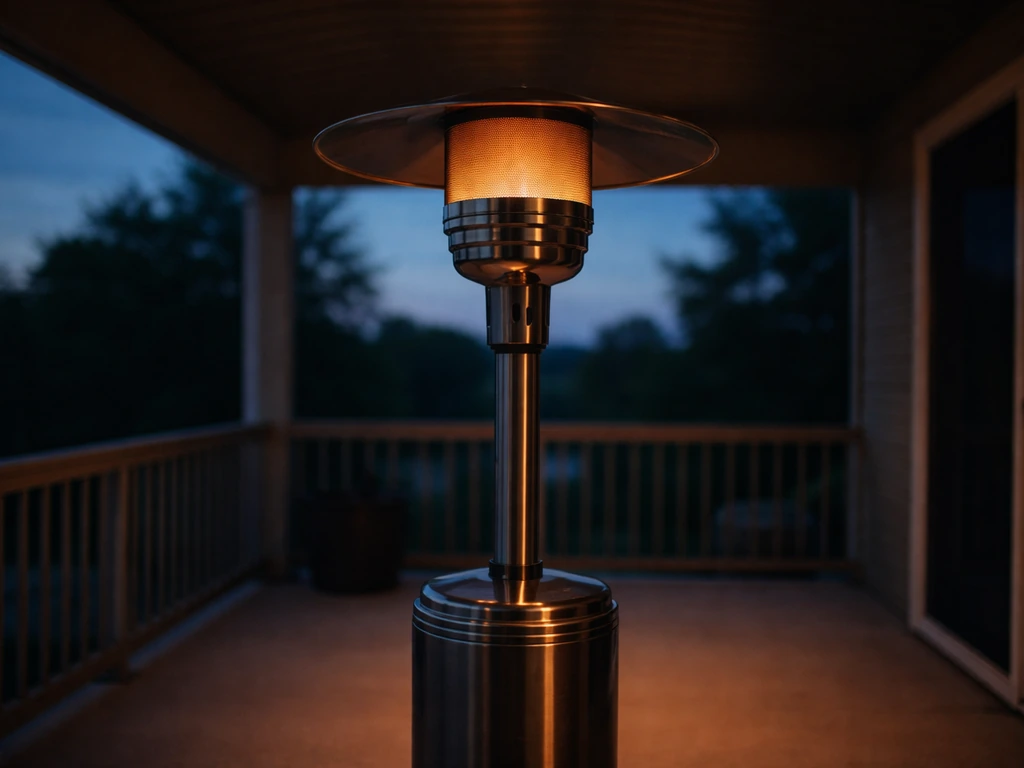
First: Know What You're Working With
Before you touch a knob, make sure you know your heater type. The lighting procedure is genuinely different depending on the fuel and format, and using the wrong method can cause a failed ignition or, worse, a gas buildup.
| Heater Type | Fuel | Ignition Method | Notes |
|---|---|---|---|
| Freestanding mushroom/column | Propane (LP) or natural gas | Push-and-hold knob + igniter button | Most common type; pilot flame required |
| Pyramid/tower heater | Propane or natural gas | Push-and-hold knob + igniter button | Has glass tube; must be positioned correctly over center hole |
| Tabletop heater | Propane (small 1 lb cylinder) | Push-and-hold knob + igniter button or lighter | Compact; same pilot-hold logic applies |
| Pellet patio heater | Wood pellets | Electric igniter; no open flame needed | Requires auger priming if pellets run out |
| Electric infrared heater | Electricity | On/off switch or remote | No gas, no open flame; not covered in this guide |
If you have a propane mushroom-style heater from brands like Hiland, Fire Sense, Mosaic, or Vulcan, you're in the largest category and the main step-by-step section below covers you directly. Pyramid heaters share the same basic process with one important physical check (covered below). Tabletop heaters are essentially miniaturized versions of the same propane system. Pellet heaters get their own section.
Safety Checks Before You Try to Light Anything
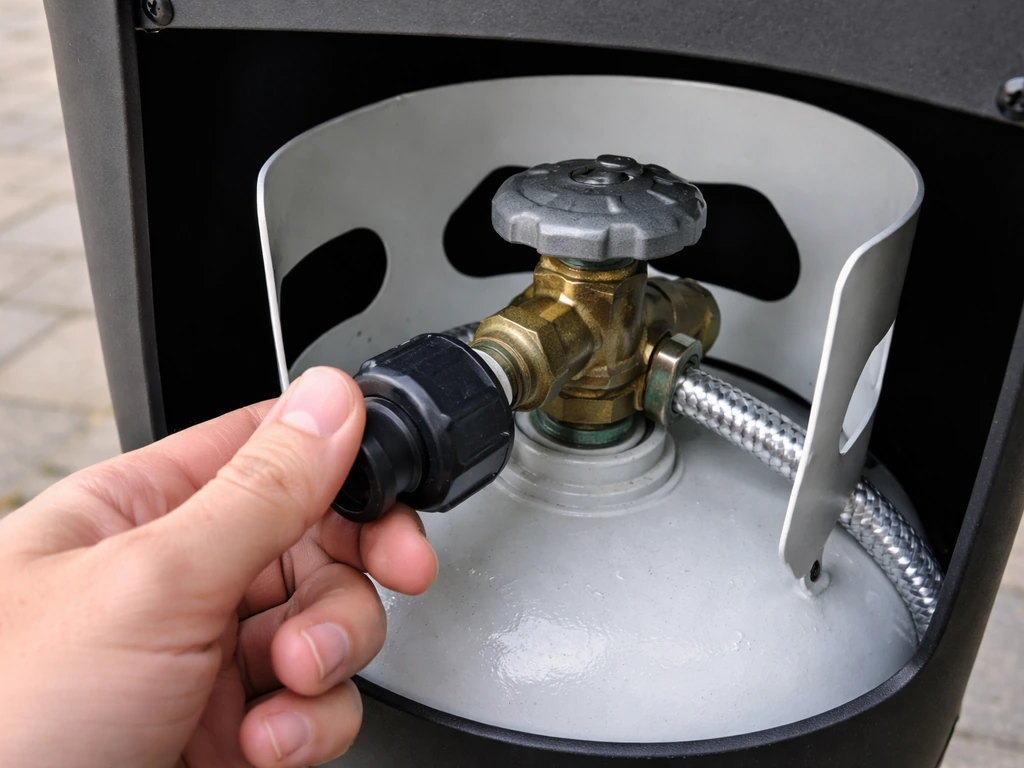
This part is worth doing every single time, not just the first time. It takes two minutes and can prevent a genuinely dangerous situation.
- Check the gas connection: Make sure your propane tank is securely connected at the regulator. Hand-tighten the fitting; most standard propane regulators are reverse-threaded (lefty-tighty). If you just attached a new tank, do a quick leak test by applying soapy water to the connection point. No bubbles means no leak. Do not light the heater if you see bubbles anywhere.
- Inspect the hose and regulator: Look for cracks, kinks, or burn marks on the gas hose. A damaged hose is a replacement job, not an ignore-it-and-light job.
- Make sure the area is ventilated: Patio heaters are outdoor appliances. Never operate one in an enclosed space, garage, or tent.
- Check the anti-tilt switch: Many freestanding heaters have a tip-over safety switch at the base. If the heater has been bumped or stored on its side, the switch may be tripped. Stand the heater fully upright on a level surface before lighting.
- Look inside the burner head: Check for spider webs, debris, or insect nests inside the emitter screen or burner tube. These are surprisingly common and can block gas flow or cause a flashback.
- If you're relighting a heater that just went out: Wait at least 5 minutes before trying again. This is not a suggestion. It lets any accumulated gas dissipate completely before you introduce a spark. Multiple manuals from Fire Sense, Pyramid, and EventWorks all specify this same waiting period.
How to Light a Gas or Propane Patio Heater
Using the Built-In Igniter (Standard Method)
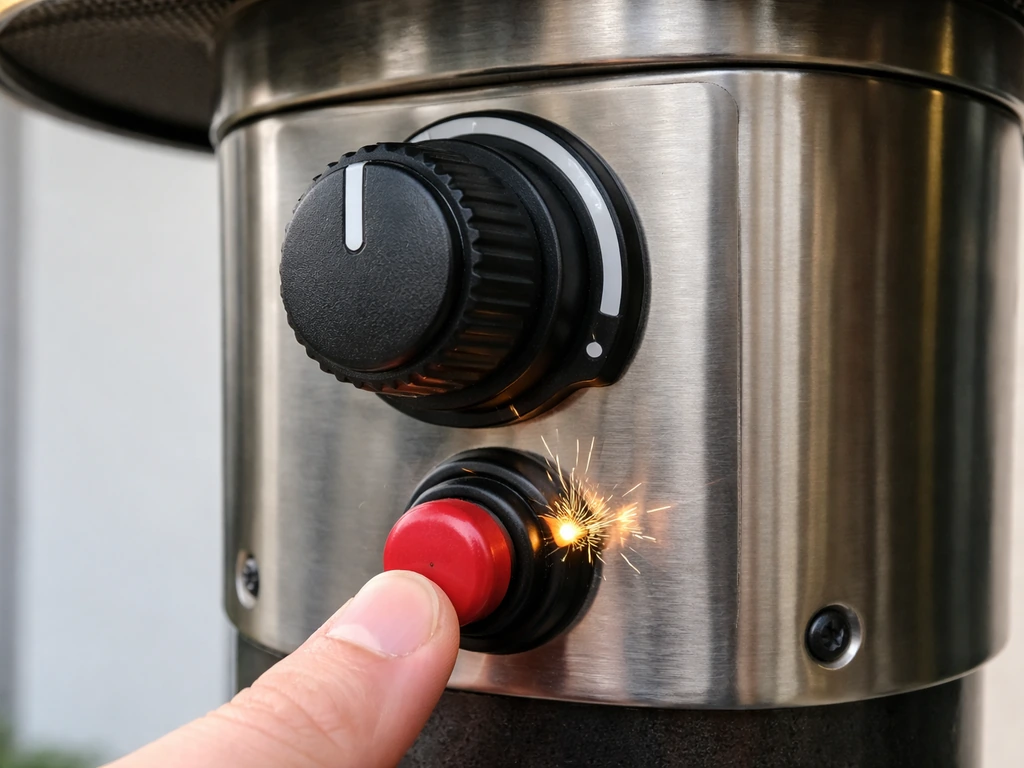
This covers the vast majority of freestanding propane heaters. For mosaic patio heaters, follow the same gas or propane lighting method used by your specific heater type, and take extra care around any gaps or shielding in the pattern. The igniter is usually a piezo button on the control panel near the knob, or sometimes integrated into the knob itself.
- Open your propane tank valve: Turn the valve counterclockwise (lefty-loosey) one full turn. You should hear or feel a slight pressure change at the regulator.
- Turn the control knob to the Pilot position: This is usually marked on the knob. Push the knob in firmly to bypass the safety valve and allow gas to flow to the pilot.
- While holding the knob in, press the igniter button: Press it repeatedly, once per second, until you see the pilot flame ignite. On many heaters you can see it through a small viewing window or by looking up toward the burner. The Pyramid manual specifically instructs you to watch for flame visible through the glass tube.
- Keep holding the knob in for 30 to 45 seconds after ignition: This is the critical step most people skip. The thermocouple (a small heat-sensing safety device) needs time to heat up and signal the gas valve to stay open. If you let go too soon, the flame goes out immediately.
- Slowly release the knob: If the pilot stays lit, you're through the hard part. If it goes out, wait 5 minutes and start over from step 1.
- Turn the knob from Pilot to your desired heat setting (Low, Medium, or High): The main burner should ignite from the pilot flame within a few seconds.
- Confirm the main burner is running: You'll hear it and feel heat radiating from the emitter screen within about 30 to 60 seconds.
Using a Handheld Lighter (When the Igniter Fails or Is Missing)
If your built-in igniter is dead or your model doesn't have one, a long-reach barbecue lighter works perfectly. The gas valve behavior is identical; you're just supplying the spark yourself.
- Use a long-reach fireplace or barbecue lighter, not a standard pocket lighter. You need your hand well clear of the burner area.
- Follow steps 1 and 2 from above (open the tank, turn knob to Pilot and push in).
- Insert the lit lighter near the pilot orifice (the small tube the pilot flame comes from) before or at the same moment you push the knob in.
- Once the pilot lights, remove the lighter and hold the knob in for the full 30 to 45 seconds as described above.
- Proceed exactly as normal from there.
Pyramid Heater: One Extra Check
If you have a pyramid-style tower heater, the lighting procedure is the same as above but there's one physical check you must do first: make sure the glass tube is seated completely over the center hole of the middle plate. If the glass is shifted even slightly, the blank" rel="noopener noreferrer">pilot won't be visible and the thermocouple won't heat properly. Seat it, then light.
Tabletop Propane Heaters
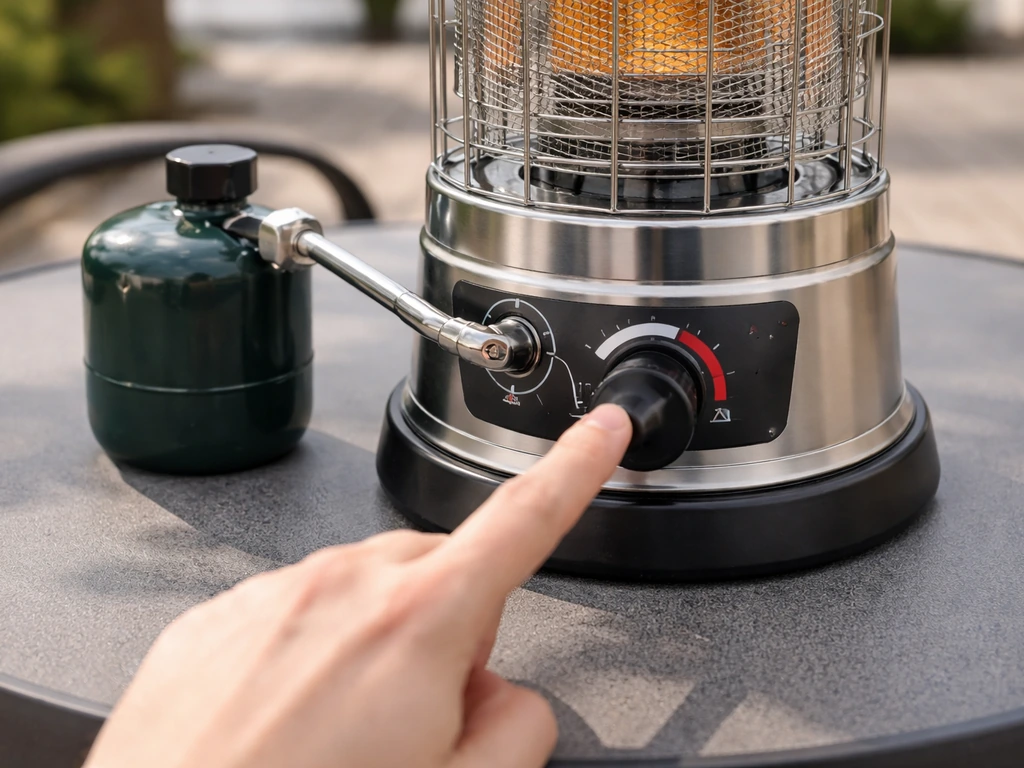
Tabletop heaters running on a 1 lb propane cylinder follow the same push-hold-ignite-hold sequence. The pilot orifice is smaller, so give the igniter a few extra clicks if it doesn't catch immediately. Because the tank is smaller, also make sure the cylinder isn't nearly empty before assuming you have an ignition problem.
How to Light a Pellet Patio Heater
Pellet heaters don't use a gas valve or a piezo igniter. They use an electric heating element (the igniter rod) and a motorized auger that feeds pellets into the burn pot. The startup process is more automated, but there are a few things that will trip you up if you don't know what to expect.
- Fill the hopper with dry, quality wood pellets. Damp pellets are the number one cause of failed ignition and poor combustion in pellet heaters.
- If the pellet feed tube (auger) is empty (common when the unit ran out of pellets last time), you need to prime it. This means running the auger manually or running a startup cycle that feeds pellets into the tube before the igniter fires. Check your specific manual for the priming procedure; some brands do this automatically on startup, others have a dedicated prime setting.
- Set the heat output to your desired level (Low, Medium, or High) and power on the unit.
- The electric igniter rod will activate and begin heating the burn pot. After roughly one minute, the auger motor will start feeding pellets.
- Do not interrupt the startup sequence once it begins. Turning the unit off during priming or early startup can jam the auger or leave pellets partially fed and unlit.
- Once pellets ignite, you'll see smoke reduce and a steady flame establish in the burn pot. The blower fan will then ramp up to distribute heat.
- If ignition fails after a full startup cycle, wait for the unit to cool, check that the burn pot isn't clogged with ash, and try again.
When It Won't Light or Won't Stay Lit
This is where most people get stuck. Here's how to work through the most common failure points without calling a repair tech.
Pilot Lights But Goes Out When You Release the Knob
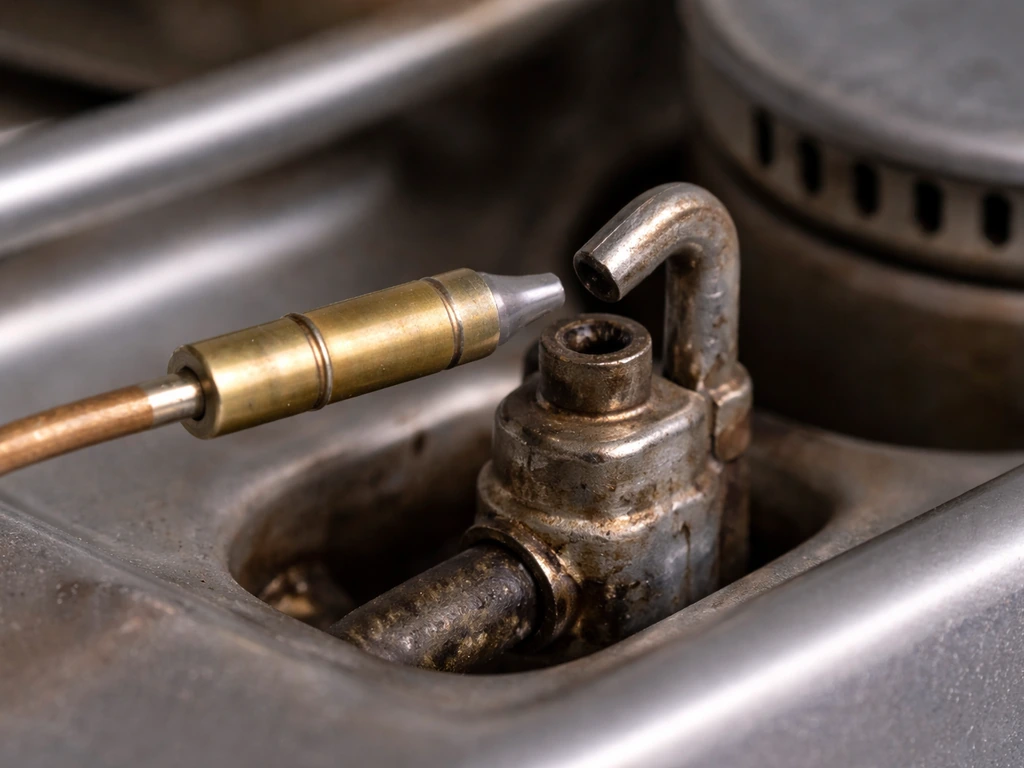
This is almost always a thermocouple problem. The thermocouple is a thin metal probe that sits in the pilot flame. When it heats up, it sends a small electrical signal to the gas valve telling it to stay open. If it's dirty, bent out of position, or failed, the valve closes the moment you let go of the knob.
- Hold longer: First try holding the knob in for a full 45 seconds (not 30). Some thermocouples take longer to heat up, especially in cool weather.
- Clean the thermocouple tip: Use fine steel wool or emery cloth to lightly sand any soot or oxidation off the tip of the probe. This is a surprisingly effective fix.
- Check the thermocouple position: The tip should be sitting directly in the pilot flame, not beside it. Gently bend the probe so it's centered in the flame path.
- Replace the thermocouple: If none of the above works, the thermocouple has likely failed. It's a cheap part (usually under $15) and a straightforward DIY replacement on most heaters. Per the Fire Sense troubleshooting guide, a heater that won't stay lit often means the thermocouple has failed outright.
Igniter Clicks But No Spark (or No Flame)
- Replace the igniter battery: Many heaters use a single AA battery in the igniter module. If the click sounds weak or the spark is barely visible, a fresh battery is almost always the fix. This is the most common igniter repair on battery-powered modules.
- Check the igniter electrode gap: The ceramic igniter tip (the white or tan nub near the pilot) should be about 3 to 4 mm from the metal it's sparking against. If it's cracked or the gap is too wide, the spark won't jump.
- Check for moisture: A damp igniter electrode won't spark reliably. Let the heater dry in the sun for 30 minutes and try again.
- Use a lighter as backup: If the igniter module is faulty, you can always use a long-reach lighter while you source a replacement part.
No Gas Flow at All (Regulator Lock-Out)
If you turn the knob and push it in but smell no gas and get no flame whatsoever, the regulator may have locked out. This happens when you open the tank valve too fast, creating a pressure spike that triggers the regulator's built-in safety shutoff.
- Turn off the control knob completely.
- Close the propane tank valve.
- Disconnect the regulator from the tank.
- Wait 30 seconds. This lets the regulator fully reset.
- Reconnect the regulator, then open the tank valve very slowly (a quarter turn, pause, then slowly all the way).
- Try lighting again from the beginning.
Tilt Switch or Overheat Safety Switch Is Triggered
Most freestanding patio heaters have an anti-tilt switch, usually a small ball-bearing or mercury switch in the base. If the heater has been tipped, moved roughly, or stored on its side, this switch may have tripped and will prevent the gas valve from opening. Stand the heater fully upright on a completely level surface, give it a moment to settle, and try again.
Some models also have a thermal overheat cutoff that needs the heater to cool down completely before it will reset. If the heater was running hot and suddenly shut off, give it 20 to 30 minutes to cool before relighting. EventWorks Rentals instructs that if the burner goes out, you should turn the heater off and wait at least 5 minutes before relighting to let the gas dissipate [give it 20 to 30 minutes to cool before relighting](https://www. eventworksrentals.
com/pages/patio-heater-instructions).
Lighting in Windy Conditions
Wind is the most common reason a properly functioning patio heater won't stay lit outdoors. Here's how to manage it.
- Shield the pilot during lighting: Cup your hand or use a piece of cardboard to block wind at the base of the heater while you're pressing the igniter. You only need to protect the pilot for the first 30 to 45 seconds while the thermocouple heats up.
- Position the heater strategically: Put the heater with its back to the wind, or tuck it near a wall or fence. Even a small windbreak makes a big difference.
- Don't try to light in gusting conditions above about 15 mph: If it's genuinely windy, the main burner will struggle to stay lit even if you successfully light it. The heater needs a relatively calm environment to operate safely and efficiently.
- Check the emitter screen: A clogged or damaged emitter screen disrupts the flame pattern and makes the burner much more susceptible to wind-induced outages. Inspect it and clean or replace it if it looks corroded or blocked.
If You Smell Gas or Something Looks Wrong
Stop what you're doing immediately. A gas smell during or after a lighting attempt is not something to push through.
- Do not press the igniter or create any spark. Even a light switch can ignite accumulated propane.
- Turn the control knob to the Off position if it isn't already.
- Close the propane tank valve completely.
- Move away from the heater and the area around it.
- If the smell is strong or inside an enclosed space, leave the area and call your gas supplier or emergency services.
- If the smell is mild and outdoors, wait at least 10 to 15 minutes for the gas to fully dissipate, then do a thorough leak test with soapy water on all connections before attempting to relight.
- If you see an orange or yellow burner flame instead of blue, or if the flame is irregular or producing heavy soot, turn the heater off. This indicates incomplete combustion, which can signal a blocked burner orifice or incorrect gas pressure. Clean the orifice or have the regulator checked before using the heater again.
Keeping Your Ignition System in Good Shape
A heater that lights reliably at the start of every season is one that got a little attention at the end of the last one. None of this is complicated.
Before the Season Starts
- Replace the igniter battery even if it seems fine. Batteries degrade over winter storage and a fresh AA costs almost nothing compared to a frustrating troubleshooting session.
- Inspect and clean the thermocouple tip with fine steel wool. A little soot buildup over a season is normal and easy to fix.
- Check the pilot orifice for clogs: a thin wire or can of compressed air clears most blockages.
- Inspect the gas hose and regulator for cracks or brittleness, especially if the heater stored outdoors through a cold winter.
- Look inside the emitter screen and burner head for spiderwebs and debris. This is a must-do every spring.
During the Season
- Cover the heater when not in use. Moisture is the enemy of igniters and regulators.
- Store propane tanks upright and in a ventilated area, never indoors.
- If the heater goes through periods of non-use, close the tank valve between uses to prevent slow regulator leakage.
- Do a quick visual check of the burner and emitter screen every few weeks during heavy use periods.
If you have a specific brand that's giving you trouble, the lighting procedure and known quirks can vary enough that a brand-specific guide is worth checking. For a vulcan patio heater manual that matches your exact model, check the brand-specific instructions before you troubleshoot further. Hiland, pyramid-style heaters, and Mosaic models each have their own manual quirks around knob positions, glass tube placement, and igniter module locations that aren't always obvious from the hardware alone.
FAQ
How long should I hold the knob in during lighting, and what if the pilot goes out right after I release it?
Hold the knob in for the full 30 to 45 seconds. If it extinguishes immediately after you release, the thermocouple likely is not heating long enough or is not positioned correctly, try again after confirming the pilot flame is steady and aligned with the probe.
What should I do if I smell gas but see no flame or pilot?
Stop right away, shut the gas supply at the tank, and do not keep pressing the igniter. Let the area clear for at least several minutes before attempting again, and if the smell returns, have the heater inspected rather than repeated relighting.
My heater clicks from the igniter but the pilot never lights. How can I tell whether it is the igniter, fuel, or something else?
First confirm gas is actually flowing at the tank, then try a few more ignition attempts while holding the knob in the pilot position. If there is no pilot after several tries and there is no consistent flame, suspect a gas delivery issue, a clogged pilot orifice, or a mispositioned thermocouple rather than only the igniter.
Can I light the patio heater with the control knob already turned away from pilot?
No. Move the knob to the pilot position before pressing it in. If you try to ignite in another position, you can get poor pilot ignition and incorrect gas flow, which increases the chance of delayed ignition.
Should I relight immediately if it shuts off during wind or cold weather?
Wait until you stop smelling or hearing abnormal gas release, then relight using short ignition attempts. In strong wind or after a cutoff, giving it a minute and ensuring the heater is upright and not obstructed helps, but if it repeatedly shuts off, check the thermocouple and airflow path.
Do I need to keep the patio heater on low first before turning up?
For many gas and propane models, turning up after the pilot is established and the knob has been held long enough is best. Going to high immediately can increase heat demand and make marginal thermocouple engagement more noticeable, especially outdoors.
How can I tell if the pilot flame is the right size and placement?
The pilot should appear as a small stable flame near the pilot assembly and, for models with a thermocouple, it should consistently heat the thermocouple tip. If the pilot is weak, flickering excessively, or not contacting the probe area, fix the alignment or cleaning before more ignition attempts.
Why does a tabletop heater sometimes light differently than the larger propane heaters?
Tabletop models often have a smaller pilot orifice and can require extra igniter clicks before the pilot ignites. Also confirm the unit is on stable footing, because some units include an anti-tilt safety that can prevent ignition if the base is slightly off level.
What if my pyramid tower heater lights but the pilot is hard to see, or it never heats the thermocouple properly?
Check that the glass tube is fully seated over the center hole of the middle plate. If it is even slightly shifted, the pilot flame may not be visible where expected and the thermocouple may not heat correctly, leading to shutdown when you release the knob.
My regulator might have locked out after opening the tank valve quickly, how long should I wait before trying again?
After a pressure spike lockout, give it time for the system to stabilize before relighting. In practice, waiting several minutes and then trying again more slowly is safer than immediately repeating ignition attempts.
How do I check whether the propane cylinder is too empty to light reliably?
If you are using a 1 lb cylinder, low fuel can cause weak ignition and delayed pilot lighting. Confirm the cylinder is not nearly empty before troubleshooting igniter issues, and keep the cylinder upright during operation to maintain proper flow.
What is the fastest way to reduce wind-related relighting problems?
Position the heater so the pilot and burner are not directly battered by gusts, and avoid lighting when gusts are peaking. Wind can push the pilot flame away from the thermocouple, so wind protection that does not block safe clearance is often the real fix.
Can I use a barbecue lighter if my igniter is dead, and do I still need to hold the knob the same way?
Yes, a long-reach barbecue lighter can provide the spark. You still must push the knob in to open the gas valve and hold it in for the normal pilot heating window, since the thermocouple timing does not change.
For pellet patio heaters, what should I check first if it won’t ignite or starts but shuts down?
If the auger is not feeding pellets consistently, ignition can fail even if the igniter rod works. Start by confirming pellets are present, the feed path is not jammed, and the burn pot is seated properly, then follow the heater’s startup steps exactly.
Is it safe to keep pressing the igniter repeatedly if the heater fails to stay lit?
Avoid repeated rapid attempts after multiple failures, especially if you ever detect gas odor. Repeated tries can create a buildup risk, so follow a pause-and-reset approach, then troubleshoot the most likely cause such as thermocouple position or pilot ignition.
What routine maintenance helps prevent ignition issues at the start of the season?
At the end of the season, wipe dust off control areas, check burner and pilot openings for debris, and store the heater upright when possible. Before relighting after storage, inspect thermocouple alignment and the pilot area for soot or obstructions.