To turn on a gas patio heater, open the propane tank valve, press and turn the control knob to the pilot or ignite position, hold it in while pressing the igniter button, and keep holding the knob for about 30 seconds after the flame catches before releasing. If it lights and holds, turn the knob to your desired heat setting and you're done. If it doesn't light or goes out when you release the knob, something upstream needs checking before you retry. That's what this guide walks through, start to finish.
How to Turn On Patio Heater: Step-by-Step Gas Guide

Grant Mercer
29 Apr 2026
Safety checks before you do anything else
Propane and open flames outdoors deserve real respect, not a quick skim. Run through these before you touch the knob. It takes two minutes and can prevent a genuinely bad outcome.
- Check the propane tank: pick it up and shake it gently. If it's bone light, it's empty. A 20 lb tank should have obvious weight when it has fuel. Refill or swap it before proceeding.
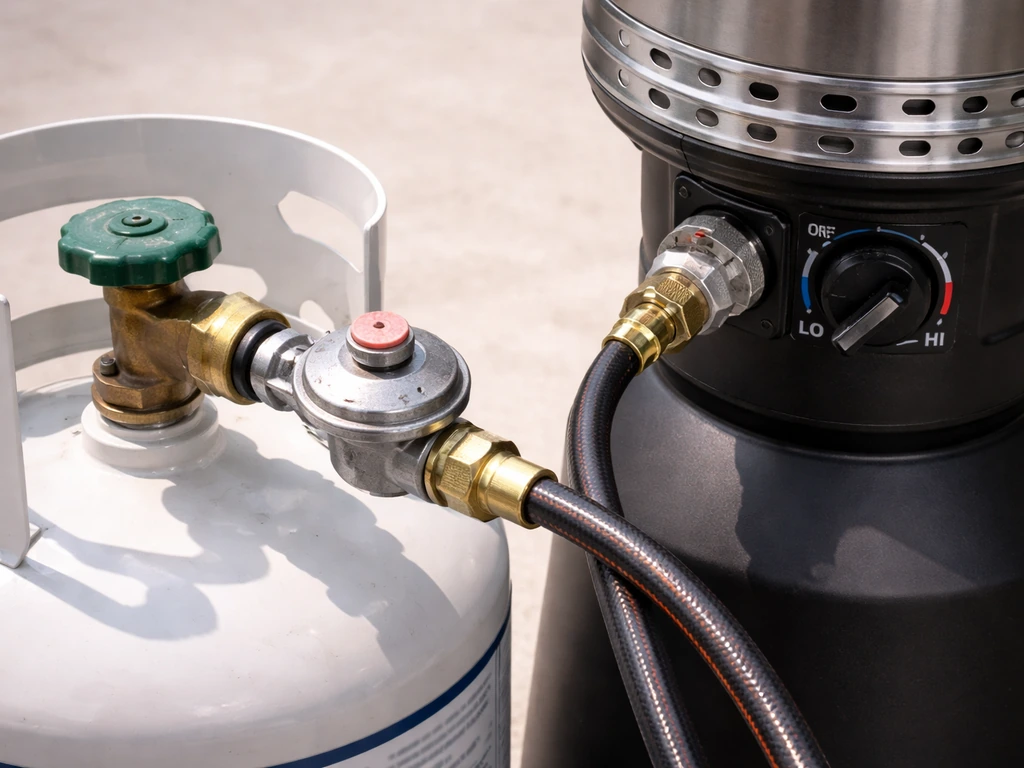
- Inspect the hose and regulator: look along the entire length of the LP hose for cracks, kinks, or scorch marks. A cracked hose is a fire hazard. Replace it before lighting.
- Do a quick leak test if the setup is new or the tank was recently changed: brush soapy water over the regulator connection and the hose fittings, then open the tank valve slowly. Bubbles mean a leak. Tighten the connection or replace the part before lighting anything.
- Check your clearances: manufacturer manuals consistently call clearance to combustibles a critical safety factor. Keep the heater at least 24 to 36 inches from anything that can burn — patio umbrellas, wood fences, awnings, hanging plants, outdoor curtains. Some models list specific clearance tables in their manuals, so check yours if you have it.
- Make sure the heater is on a level, stable surface. Most patio heaters have a built-in tilt switch that will cut the gas if the unit tips. If the heater isn't level before you start, the tilt switch may prevent it from staying lit even after a successful ignition.
- Light the heater outdoors only, in an open or semi-open area with adequate ventilation. Never operate a gas patio heater indoors or in an enclosed space — carbon monoxide buildup is a real and serious risk.
Figure out what type of heater you have and where the controls are
Before you start pressing buttons, know what you're working with. The ignition process is similar across most gas patio heaters, but the control layout and ignition method can vary enough to trip you up if you're not expecting it. If you want a simple walkthrough, learn how to start patio heater models by ignition type before you troubleshoot anything.
Freestanding propane mushroom-top heaters
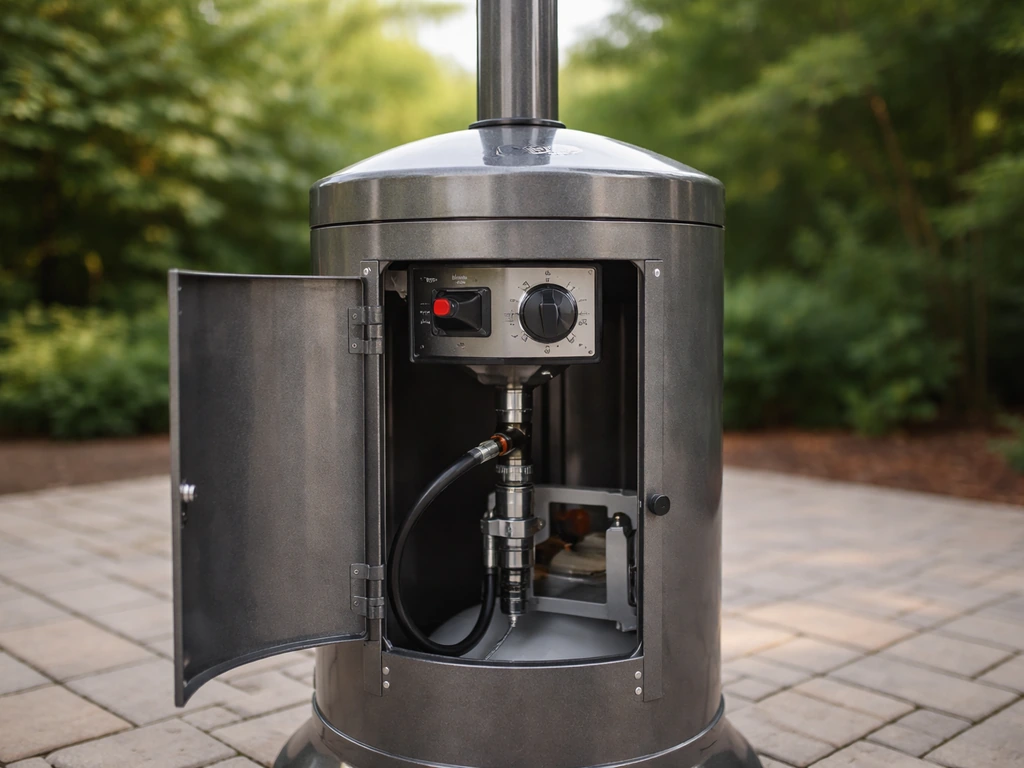
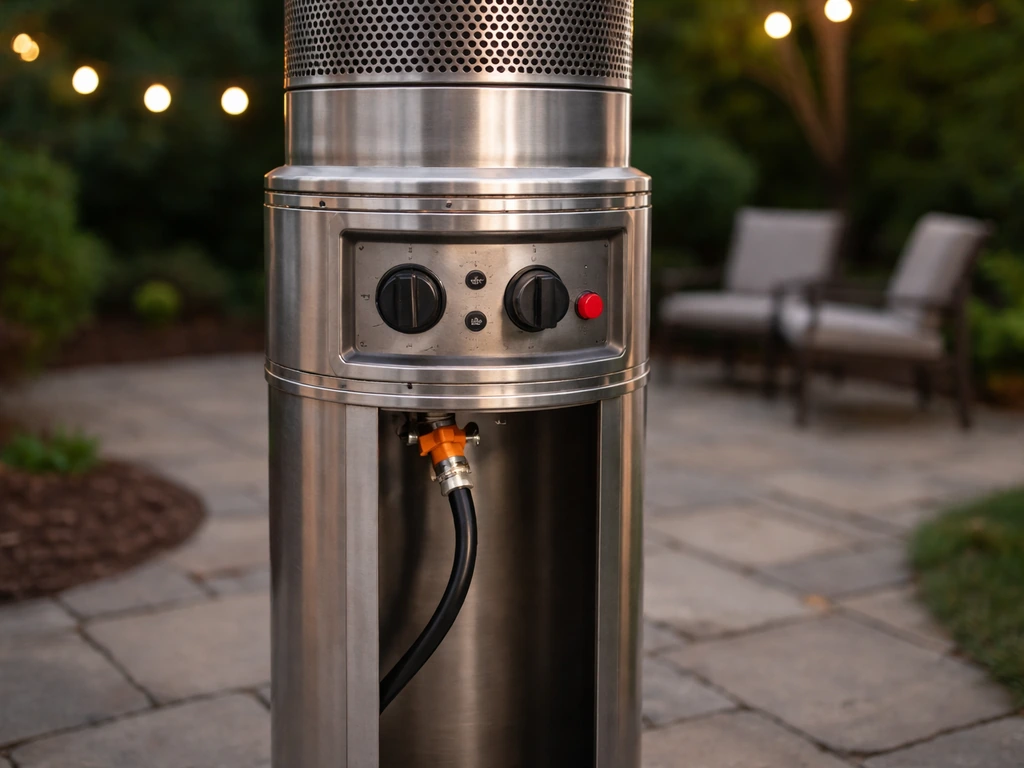
These are the most common type, the tall, pole-style heaters with a round reflector hood on top. The control knob and igniter are almost always at the base, inside a small access panel. Open the panel door, and you'll find a multi-position knob (usually labeled Off, Pilot, and one or more heat settings) plus either a piezo igniter button or a push-to-ignite knob. The propane tank sits inside the base column.
Tabletop propane heaters
Tabletop heaters are smaller and connect directly to a 1 lb propane cylinder or a bulk tank via an adapter hose. The control knob is usually on the side of the unit near the burner. The same knob-and-igniter process applies, though some tabletop models use a simple on/off valve and a separate igniter wand rather than a built-in piezo button.
Natural gas patio heaters
Natural gas heaters are typically wall-mounted or fixed to a post and plumbed directly into your home's gas line. The controls are similar, a knob or valve near the burner, but there's no tank to check. Instead, confirm the gas supply valve on the wall or at the pipe is open before trying to light it.
Electric patio heaters
If your heater has no propane tank and plugs into an outlet, it's electric. Electric patio heaters don't use a gas valve or igniter, they use a simple power switch or remote control. The U.S. CPSC warns that outdoor heaters should never be used indoors or in enclosed spaces because they can cause deadly carbon monoxide buildup in minutes. Make sure it's plugged into a GFCI-protected outdoor outlet and flip the switch. If it doesn't come on, check the outlet, the circuit breaker, and the power cord. The rest of this guide focuses on gas heaters, but the troubleshooting logic (check power source, check switches, check safety cutoffs) translates.
How to turn on a gas patio heater, step by step
These steps apply to most freestanding and tabletop propane patio heaters. If you have a specific brand like Fire Sense, Hampton Bay, or Hi-Land, the sequence is the same but the knob layout may look slightly different. Follow along and cross-reference your model's label if needed. Once you confirm your controls match this process, you can follow the exact steps to start a patio heater safely.
- Open the access panel at the base of the heater to expose the control knob and igniter. On tabletop models, the knob is usually already visible on the side.
- Turn the propane tank valve counterclockwise (lefty-loosey) until it's fully open. Don't force it — a quarter to half turn is enough on most regulators.
- Press the control knob in and turn it counterclockwise to the Pilot position. You need to press down on the knob as you turn it — this bypasses the safety valve and lets gas flow to the pilot.
- While still holding the knob pressed in, press the igniter button repeatedly (usually 1 to 3 clicks) until you see a pilot flame appear. On models with a push-to-ignite knob, press that instead.
- Keep the knob held in for about 30 seconds after the pilot flame appears. This is important — you're heating the thermocouple, which is the safety sensor that tells the valve the pilot is genuinely lit. Release too soon and the gas valve closes and the flame dies.
- After 30 seconds, slowly release the knob. The pilot flame should stay on. If it goes out, wait at least 5 minutes (to let any accumulated gas clear), then start over from step 3.
- Once the pilot holds, turn the knob from Pilot to your desired heat setting — Low, Medium, or High. The main burner should ignite with an audible whomp or soft roar.
- Close the access panel and enjoy the heat. Check around the base and hood for any unusual smell. A faint initial smell is normal as dust burns off; a persistent gas odor is not.
If it won't ignite or won't stay lit
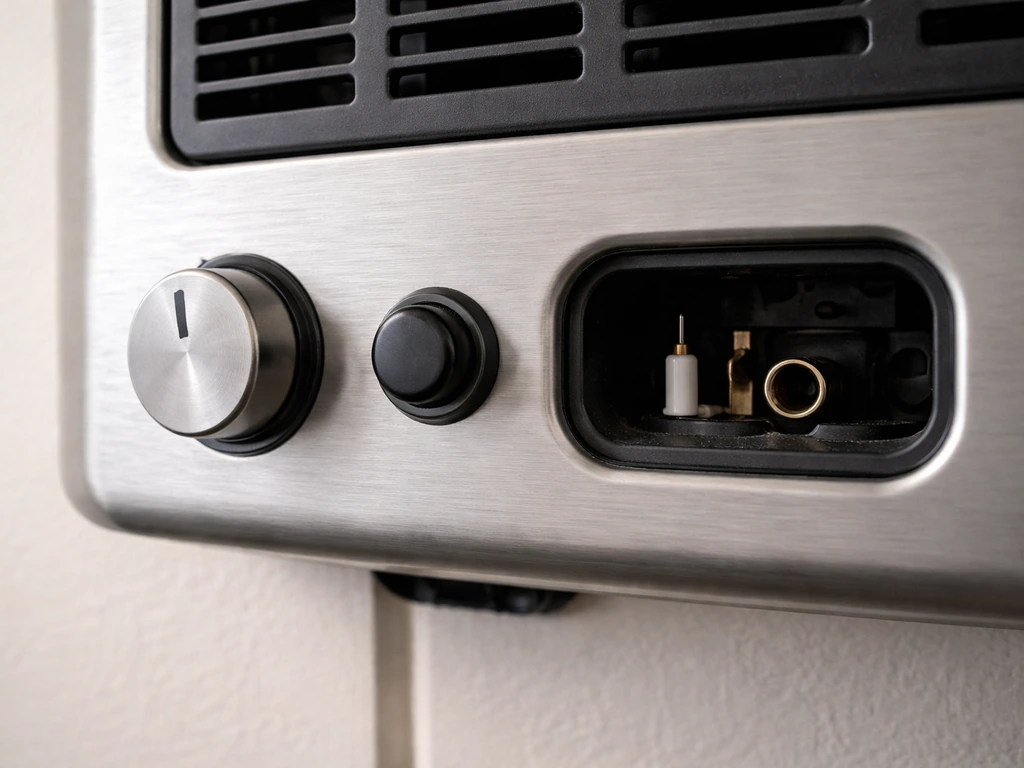
This is where most people get stuck. The heater clicks, nothing catches, or it lights for a second and then dies when you release the knob. Here's how to work through it quickly without guessing.
Nothing happens when you press the igniter
- Tank is empty or valve is closed: confirm the valve is fully open and the tank has fuel.
- Regulator is in an over-pressure lockout: this happens if you opened the tank valve too fast. Close the tank valve, disconnect the regulator, wait 30 seconds, reconnect, and open the tank valve slowly this time.
- Igniter electrode is dirty or misaligned: open the top of the heater and look at the small metal tip near the burner. It should be positioned about 3 to 5 mm from the burner surface with no carbon buildup. Clean it with fine sandpaper or a dry cloth and recheck the gap.
- Piezo igniter is dead: click the button while looking at the electrode in low light. You should see a small spark. No spark means the igniter needs replacement — they're inexpensive and simple to swap on most models.
It lights but goes out when you release the knob
This almost always points to the thermocouple. The thermocouple is a small sensor positioned in the pilot flame. When the flame heats it up, it generates a tiny electrical signal that keeps the gas valve open. If the thermocouple is worn out, dirty, or positioned incorrectly (not sitting directly in the flame), it won't generate enough signal and the valve closes the moment you let go of the knob.
- First, try holding the knob in for a full 30 to 45 seconds — longer than you think you need. A slow-to-respond thermocouple sometimes just needs more time to heat up.
- Check that the pilot flame is actually touching the thermocouple tip. If the flame is small or blowing sideways, reposition the thermocouple slightly or clean the pilot orifice with compressed air.
- If the heater still won't stay lit after multiple attempts, the thermocouple likely needs replacement. This is a common, fixable repair on most patio heater models and doesn't require a service call.
It lights but shuts off after a few minutes
- Tilt switch: the most overlooked culprit. If the heater is on an uneven surface, the tilt switch (a safety device that cuts gas when the unit tips) can trip even when the heater looks upright. Use a small level to confirm the base is truly flat.
- Low gas pressure: if the tank is close to empty, pressure can drop enough to starve the burner. Try a fresh or fuller tank.
- Blocked burner ports: spider webs and debris can partially clog the burner, causing inconsistent combustion and shutdowns. Remove the emitter screen at the top, brush out debris with a soft brush, and blow out with compressed air.
Wind keeps blowing out the flame
Most mushroom-top heaters have a reflector hood that provides some wind protection, but a strong gust from the right angle can still kill the pilot. If the manufacturer's manual says to 'turn off the heater and wait' before retrying after a wind-related blowout, take that seriously, wait at least 5 minutes before reattempting so any unburned gas has time to dissipate. For persistently windy locations, look for a windscreen accessory or reposition the heater so it's sheltered on the windward side.
How to turn off a patio heater safely
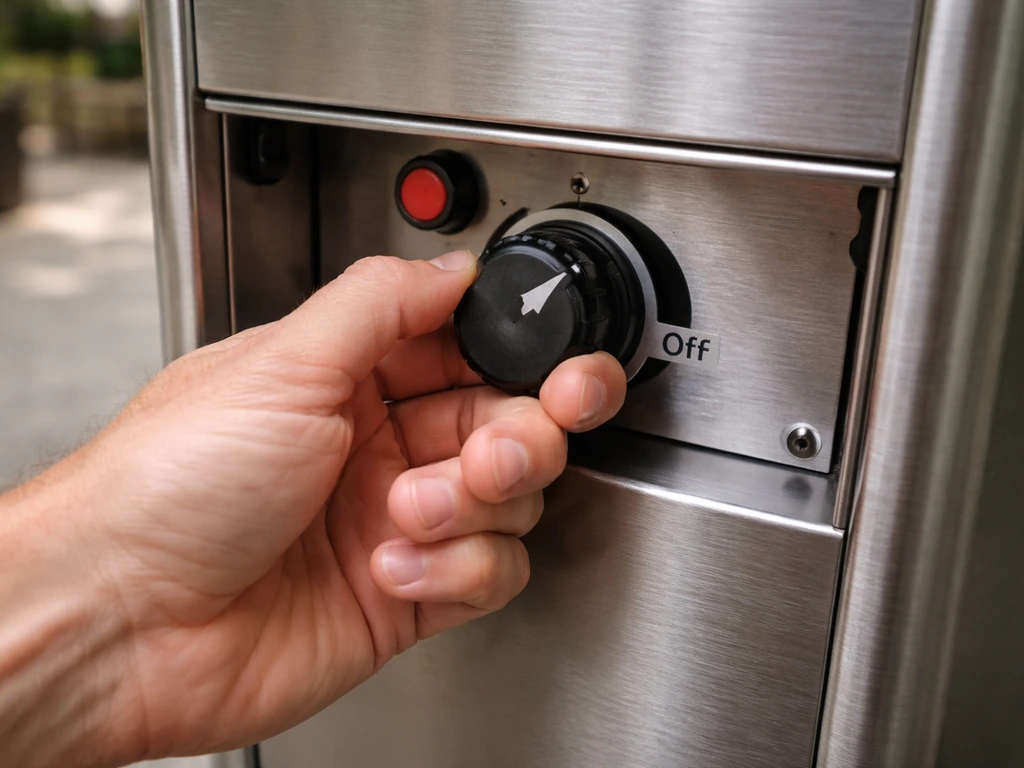
Turning off a patio heater correctly matters as much as starting it. Propane outdoor heaters and portable patio heaters should never be used indoors or in enclosed spaces, according to propane safety guidance propane outdoor heaters should never be used indoors or in enclosed spaces. Skipping steps here can leave gas in the line or create a fire hazard the next time you open the tank.
- Turn the control knob to the Off position. Don't just close the tank valve and walk away — turn the knob to Off first.
- Close the propane tank valve by turning it clockwise (righty-tighty) until it stops. This cuts the gas supply at the source.
- Leave the control knob in the Off position. This allows any residual gas in the hose to bleed out safely through the regulator over the next few minutes.
- Let the heater cool completely before covering it or moving it. The reflector hood and emitter screen stay hot for 10 to 15 minutes after shutdown.
- Once cool, replace the cover if you use one. Keeping the heater covered when not in use is the single biggest thing you can do to prevent debris and insect clogging in the burner and pilot orifice.
Maintenance habits that prevent ignition headaches
Most patio heater ignition problems aren't random failures, they're the result of deferred maintenance. If you deal with these things at the start and end of each season, the heater will light reliably and you'll rarely need to troubleshoot.
- Clean the burner and emitter screen at least once per season. Remove the top assembly, use a soft brush and compressed air to clear debris, and inspect the burner ports for blockage.
- Inspect the thermocouple tip for carbon buildup every season. A light scrub with fine steel wool keeps the tip conductive and responsive.
- Check the pilot orifice with a can of compressed air. Spider webs are the number-one cause of weak pilot flames in heaters that sat unused over winter.
- Test the igniter electrode gap at the start of each season and look for cracks in the ceramic insulator. A cracked insulator causes the spark to ground out against the housing instead of jumping to the burner.
- Examine the LP hose and regulator for age-related cracking, especially if the hose is more than 5 years old. Hoses are cheap insurance against a serious hazard.
- Store the heater covered and upright during the off-season to prevent moisture from settling in the burner and valve assembly.
- Keep the propane tank topped up rather than running it to empty. Low-pressure delivery from a near-empty tank stresses the regulator and can cause erratic flame behavior.
If you're working with a specific brand, the process above is universal but the knob layout and pilot location can vary. Fire Sense, Hampton Bay, and Hi-Land all follow the same basic ignition sequence with slightly different control panel designs. Brand-specific guides for those models cover the exact knob positions and known quirks for each. And if your problem is specifically that the heater won't stay lit even after all of the steps above, the thermocouple is almost always the place to dig deeper, it's the most failure-prone component on any gas patio heater and almost always repairable without a service call.
FAQ
What should I check if the propane tank valve is open but the heater still will not ignite?
Confirm the cylinder actually has liquid propane (many tanks have a float gauge), then check the regulator hose for kinks and secure connections at the tank. If you recently swapped tanks, bleed air by trying the ignition once, then wait 2 to 3 minutes before another attempt to let gas reach the burner and pilot.
Do I need to smell for gas before trying again if the heater clicks but won’t catch?
Yes. If you smell strong gas, stop and do not keep pressing the igniter. Close the tank valve, move away, and wait before attempting again. If the smell persists when the valve is closed, you should not relight and should have the connection inspected for a leak.
How long should I hold the control knob on Pilot before letting go?
Most units require holding the knob in for about 30 seconds after the pilot flame is stable. If the pilot looks weak, flickers, or keeps going out, hold the knob slightly longer (another 10 to 15 seconds) the next try, then reassess for draft or thermocouple issues rather than repeatedly cycling.
What if the pilot lights, but it immediately turns off as soon as I release the knob?
That pattern usually means the thermocouple is not being heated enough. Check that the pilot flame is actually reaching the thermocouple tip, then inspect for soot buildup or corrosion. If the thermocouple connection is loose or the tip is misaligned, the heater will not stay on.
How do I know whether I’m turning the knob to the correct position (Off, Pilot, or heat)?
Look for distinct detents or labeled stops on the knob, Off should be fully to the off position, Pilot should be the setting that corresponds to the small pilot flame, and heat settings will typically be clockwise to higher numbers. If your knob markings are worn, use the access panel photo in the manual to confirm orientation before igniting.
Can wind prevent my patio heater from staying lit, and what should I do?
Yes, crosswinds can blow out the pilot even on wind-resistant designs. If wind blows the flame out, close the tank valve, wait at least 5 minutes before trying again, and use a windscreen accessory or reposition the heater so the wind hits the sheltered side first.
What’s the safest way to retry if ignition fails repeatedly?
After a failed attempt, close the tank valve and wait 2 to 5 minutes before relighting to allow unburned gas to dissipate. Then retry only once or twice, if it still fails switch to troubleshooting (pilot position, thermocouple, hose connections) instead of continuing to press the igniter.
If the heater ignites but the flame seems too low or uneven, is it a normal behavior?
Usually no. A low or uneven flame can indicate partial gas flow, a dirty burner/pilot area, or a mispositioned pilot. Let it cool, inspect for blockage around the burner, and verify the regulator hose is connected correctly and not restricted.
How can I tell whether the problem is with the thermocouple versus ignition button or gas supply?
If the pilot will not stay on after holding the knob, that points to thermocouple heating or pilot flame contact. If the igniter produces sparks but no pilot flame appears at all, check gas availability first (tank contents, valve open, regulator connection) and then recheck pilot alignment and obstructions.
Should I clean or service anything before the first ignition of the season?
Yes. Before lighting, remove dust, spider webs, and debris from the burner and pilot area, and check the base panel access for loose connections. A quick end-of-season clean reduces most “lights then dies” problems because airflow around the pilot and thermocouple stays correct.
What should I do if my patio heater has an access panel but the controls feel stuck?
Do not force the knob. A stuck valve can prevent the Pilot or heat detent from engaging correctly. Turn the tank valve off, let it cool, and check for obstructions inside the panel. If it still won’t move freely, have it inspected rather than continuing to attempt ignition.
Is the ignition process the same for tabletop propane heaters as for tall freestanding ones?
The sequence is similar, but placement differs. Tabletop units often have the control knob on the side near the burner and may use an igniter wand or a different switch style. Verify the correct “Pilot” position on the specific control layout so you hold the correct valve setting long enough.
How do I safely shut down a propane patio heater before going inside?
Turn the control knob back to Off first, then close the propane tank valve. This ensures gas flow stops before you leave the area and helps prevent gas lingering in the line for the next ignition attempt.
What should I do if my patio heater is electric instead of gas but I assumed it was propane?
Stop attempting to use tank or pilot steps. Electric heaters usually only require powering the unit and confirming the outdoor outlet is GFCI-protected, then checking the cord and any remote/battery controls. If it powers on but won’t heat, check for a safety cutoff and the heater’s temperature setting rather than touching any gas components.