Patio gas and propane are, in almost every practical sense, the same fuel. In the UK, 'patio gas' is a marketing and naming convention used by suppliers like Calor and Flogas to label propane cylinders sold for outdoor and leisure use. The gas inside a green patio gas cylinder is propane, the same propane you'd find in a red Calor cylinder. The difference is the cylinder color, valve style, and the target market, not the chemistry. That said, you should always confirm by checking your cylinder label and your heater's data plate, because assuming the wrong thing here can cause real problems. Whether gas patio heaters are banned depends on your local rules and the type of installation, so check your council or venue guidance before using one.
What Is the Difference Between Propane and Patio Gas?

What 'patio gas' actually means (and where the confusion comes from)
The term 'patio gas' isn't a chemical specification. It's a retail category. Suppliers use it to describe propane cylinders packaged and marketed for garden, patio, and leisure appliances like outdoor heaters, gas BBQs, and fire pits. Calor, for example, sells a green cylinder specifically branded as 'Patio Gas' and their own documentation confirms it contains propane. Their colour-coding is straightforward: red cylinder = propane, blue cylinder = butane, green cylinder = patio gas (which is propane).
The confusion usually comes from people assuming that because the product has a different name and a different-coloured cylinder, it must be a different gas. It isn't. Where it does differ is in the valve and fitting style. Patio gas cylinders typically use a 27mm clip-on valve, while standard propane cylinders often use a screw-on fitting. That physical difference matters a lot when you're choosing a regulator, but it has nothing to do with the fuel itself.
It's also worth knowing that this naming convention is mainly a UK thing. If you're reading advice from North American sources, 'propane' is just propane, no separate 'patio gas' branding exists there. So if your heater manual was written for a North American market and refers only to 'propane,' that's the same fuel you'd buy as patio gas in the UK.
How to confirm which fuel your patio heater actually needs
Don't guess. It takes about two minutes to check, and it saves you from buying the wrong cylinder or the wrong regulator. Here's where to look.
Check the data plate on the heater
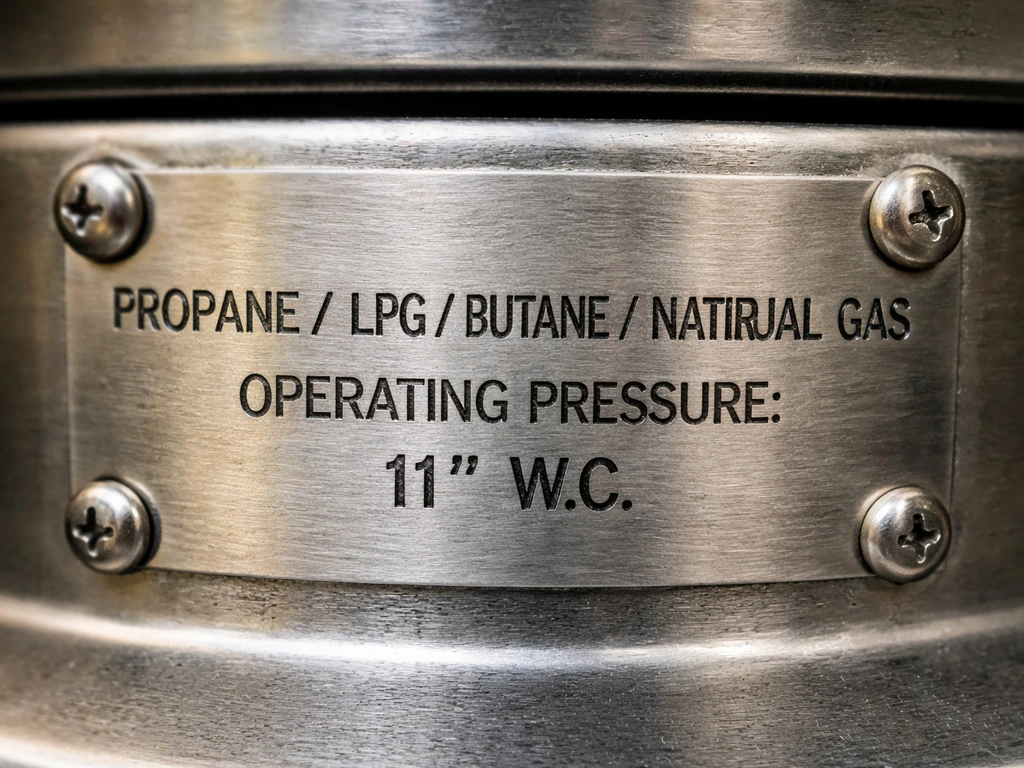
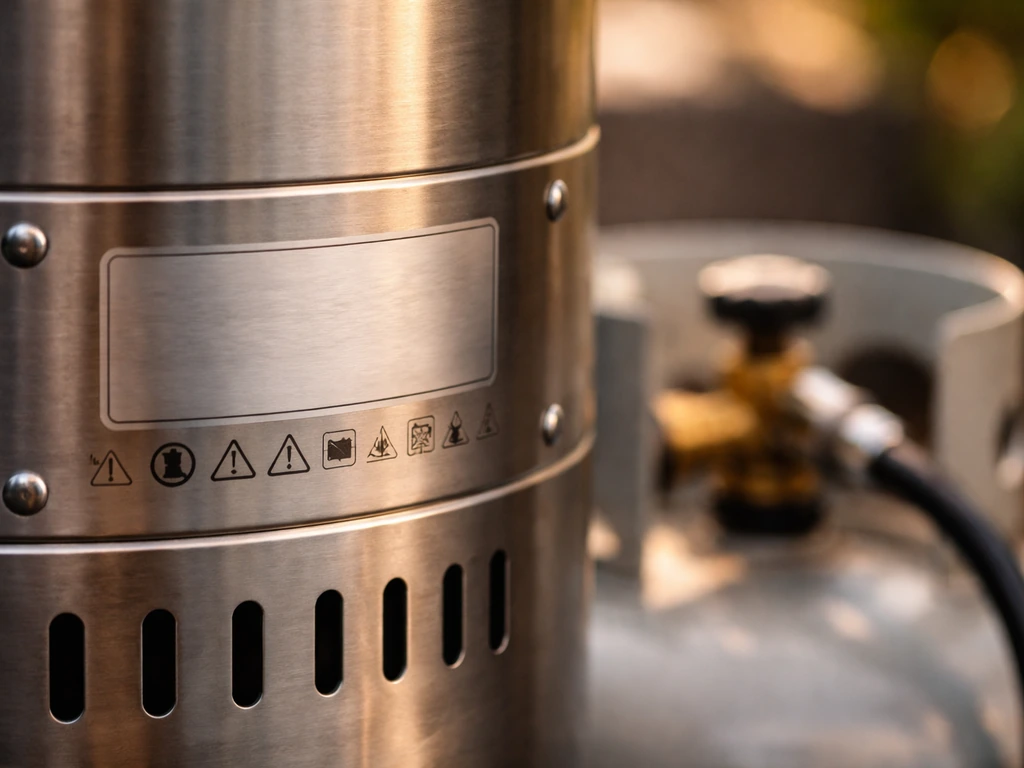
Every patio heater has a data plate, usually fixed to the base or the burner housing. It will list the approved gas type (propane, butane, LPG, or natural gas) and the operating pressure in millibars (mbar). For propane and patio gas, the standard UK operating pressure is 37 mbar. If your plate says 37 mbar and propane or LPG, you need a propane regulator, which in practice means either a 27mm clip-on patio gas regulator or a screw-on propane regulator depending on your cylinder valve type.
Read the cylinder label
Don't rely on colour alone, even though the UK colour coding is fairly consistent. Actually read the label. It will state the gas type clearly. If it says propane, it's propane, whether it's red, green, or any other colour from a different supplier. Flogas, for example, also sells green propane cylinders for patio use. The label is the definitive source.
Look at the regulator and connection type
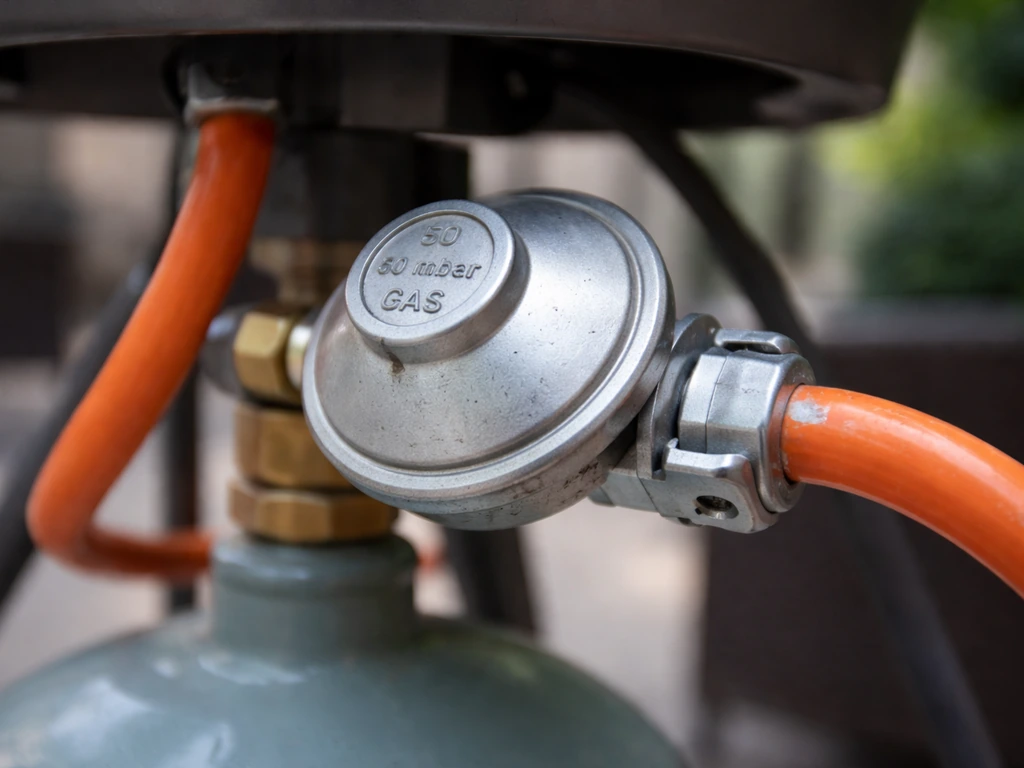
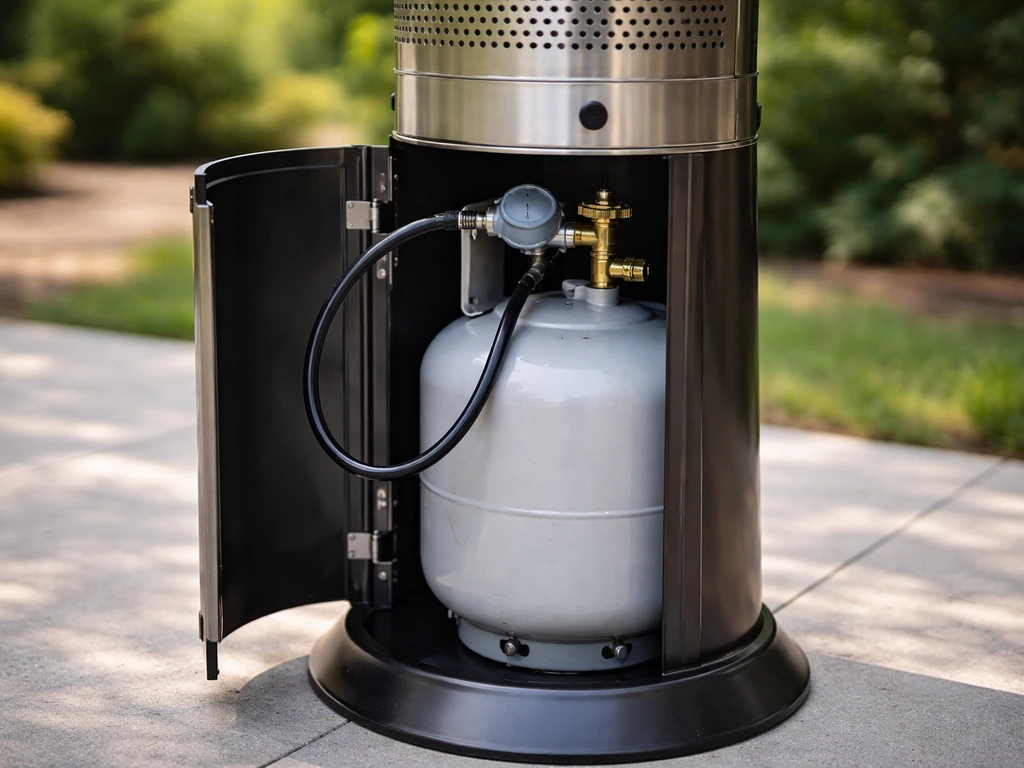
The regulator attached to your heater (or supplied with it) will usually be marked with the gas type and pressure it's rated for. A 27mm clip-on regulator rated at 37 mbar is a propane patio gas regulator. If your regulator is marked for butane (typically 28 mbar), it is not compatible with propane or patio gas cylinders. Using a butane regulator on a propane cylinder is both dangerous and likely physically impossible with UK fittings, since the valve styles are different, but it's worth knowing why they're different rather than just relying on the fittings to save you.
Check the owner's manual
If you have the manual, it will blank" rel="noopener noreferrer">specify the exact gas type, the required regulator pressure, and sometimes the regulator connection standard. If you've lost the manual, search for your heater's model number online. The model number is usually on the same data plate as the gas type. Knowing the exact model also helps when you're diagnosing ignition or thermocouple faults later.
Propane vs butane: why the distinction matters for outdoor heaters
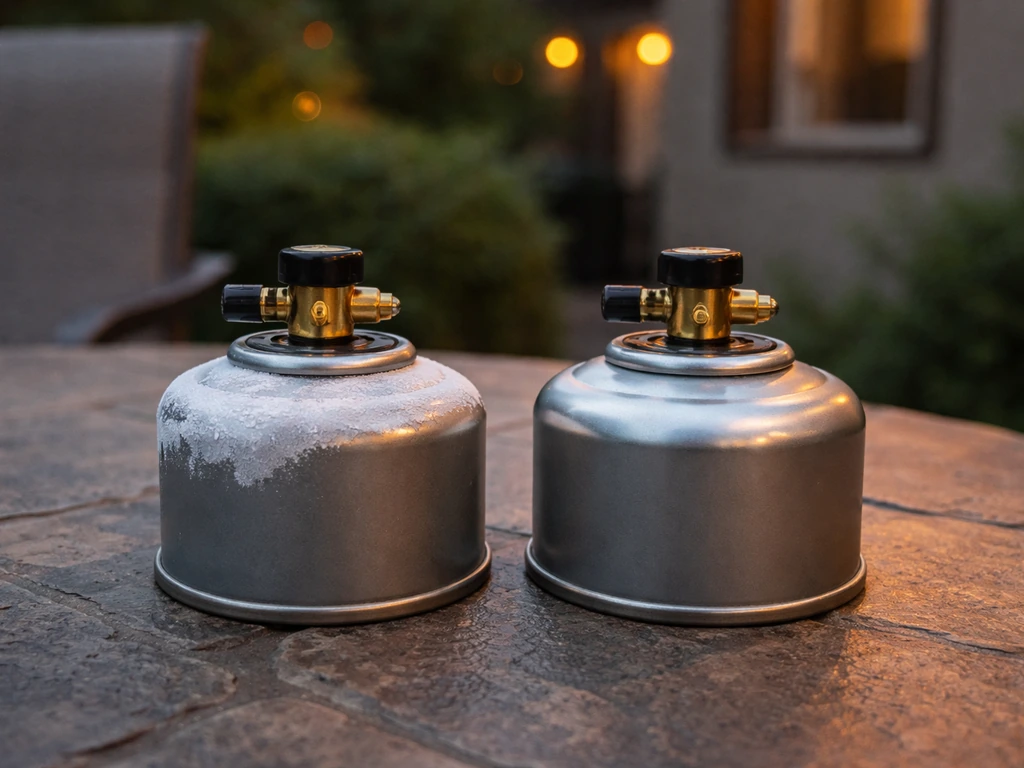
Since patio gas is propane, understanding why propane is the right choice for outdoor heaters (versus butane) is worth a moment of your time. The key difference is cold-weather performance.
| Property | Propane (Patio Gas) | Butane |
|---|---|---|
| Boiling point | -42°C | Approximately -2°C |
| Cold performance | Vaporises effectively in all UK weather | Stops vaporising effectively below about 5°C |
| Typical UK cylinder colour | Red or green (patio gas) | Blue |
| Standard regulator pressure (UK) | 37 mbar | 28 mbar |
| Typical connection (patio use) | 27mm clip-on or screw-on | 21mm clip-on |
| Best for outdoor heaters? | Yes | Not recommended in cold weather |
Propane's boiling point of -42°C means it turns from liquid to vapour reliably even on a cold winter evening, which is exactly when you want your patio heater to work. Butane struggles below about 5°C. If someone connects a butane cylinder to a propane-rated patio heater, the heater may light initially when the cylinder is warm, then fade or cut out as temperatures drop. That's a fuel performance issue, not a heater fault.
Regulators and connections: the practical compatibility checklist
The fuel type and the physical connection are two separate things, and you need to match both. This same patio gas and regulator compatibility approach also applies when you’re setting up a gas BBQ. Most UK patio heaters and gas BBQs are set up for one of two propane connection standards.
- 27mm clip-on regulator at 37 mbar: the standard for patio gas (propane) cylinders with the clip-on valve. This is what Calor patio gas cylinders and many Flogas cylinders use. The regulator simply clips onto the top of the valve, no threading required.
- Screw-on propane regulator at 37 mbar: used with traditional red propane cylinders that have a threaded valve outlet. These are common for larger cylinders used with commercial or high-output heaters.
- Never mix a propane regulator with a butane cylinder, or vice versa. Beyond the pressure mismatch, the physical fittings are designed differently to prevent accidental cross-connection.
If you're replacing a regulator or buying a new cylinder and something doesn't fit, stop. Don't force it and don't use adapters sourced from non-gas-specialist retailers unless they are explicitly rated for LPG use. An ill-fitting connection is a gas leak waiting to happen.
When the wrong fuel looks like a heater fault
This is the section that matters most for DIY troubleshooting. A lot of the ignition and burner problems that look like thermocouple failures or ignition electrode faults are actually caused by using the wrong gas, the wrong regulator pressure, or a near-empty cylinder on a cold night. If you are asking, what happened to patio TV dinners, it is usually just a name confusion rather than a problem with the heater fuel itself. Before you start replacing parts, rule out the fuel side of the equation.
Symptoms that suggest a fuel or pressure issue (not a heater fault)
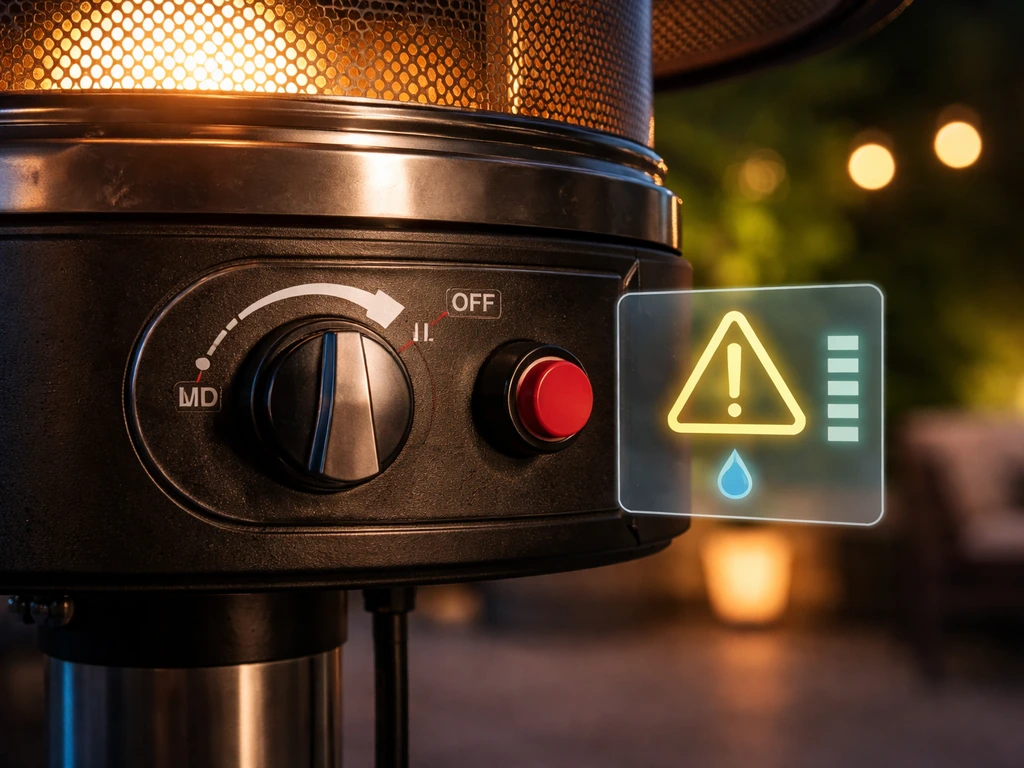
- Heater lights but goes out after a few seconds or minutes, especially on cold evenings: classic sign of butane in a propane-rated heater, or a near-empty cylinder with poor vaporisation.
- Weak, yellow, or lazy flame that doesn't respond well to the control knob: often a pressure issue, either the wrong regulator pressure or a failing regulator.
- Heater won't ignite at all when the cylinder is cold to the touch: the cylinder may have some residual fuel but it's not vaporising. Try warming the cylinder slightly (bring it indoors for 30 minutes, never use direct heat) before assuming the igniter is faulty.
- Clicking igniter produces a spark but no flame: this can be an igniter issue, but also check that gas is actually reaching the burner by listening for the faint hiss when you open the valve before pressing ignite.
- Heater cuts out and the thermocouple reset doesn't hold the flame: if the thermocouple is genuinely getting heat from the pilot but still dropping out, check gas pressure first. Low pressure means a weak pilot flame that doesn't generate enough heat to keep the thermocouple satisfied.
The thermocouple is a common scapegoat because it's a known wear item on patio heaters. But a thermocouple fault and a gas supply fault produce nearly identical symptoms: the heater won't stay lit. If you replace the thermocouple and the problem persists, go back and look hard at the fuel and regulator. Check that you're using propane (patio gas) and not butane, confirm the regulator is rated at 37 mbar, and weigh the cylinder if you can to confirm it still has fuel in it.
Safety first: what to do if you suspect a gas leak
If you smell gas while troubleshooting, stop immediately. Do not use any ignition source, including the heater's piezo igniter. Do not use a naked flame to look for a leak. Turn off the cylinder valve if it is safe to reach, move away from the area, and ventilate the space. To check for a leak once the smell has cleared, use a gas leak detection spray or a soapy water solution applied to all connection points. Bubbles indicate a leak. If you suspect a significant leak or cannot identify the source, blank" rel="noopener noreferrer">call the Calor Emergency Service or your gas supplier's emergency line. If there is any fire, call 999. If anyone shows symptoms of carbon monoxide exposure (headache, dizziness, nausea), get them into fresh air and seek medical attention immediately. Carbon monoxide from a faulty or badly-supplied patio heater is a genuine risk, and it's covered in more detail in another guide on this site.
What to do today: your step-by-step checklist
If you've arrived here because your patio heater isn't working and you're not sure whether fuel type is the issue, work through this checklist before touching any internal components. Pellet patio heaters can also produce smoke if the fuel feed or burner setup is off, so check the manufacturer guidance for correct operation and airflow.
- Find the data plate on your heater. It's usually on the base or the burner housing. Write down the gas type and the operating pressure (in mbar).
- Read the label on your current cylinder. Confirm it says propane (or LPG propane). If it says butane, that's your problem. You need a propane or patio gas cylinder instead.
- Check your regulator. It should be marked with the gas type and pressure it delivers. For most UK patio heaters, you need a propane regulator at 37 mbar. If it's a 28 mbar butane regulator, replace it.
- Confirm the physical connection matches your cylinder's valve. Patio gas cylinders (Calor green, Flogas green) typically use a 27mm clip-on connection. Standard propane cylinders use a screw-on fitting. Do not force a mismatched connection.
- Weigh or shake your cylinder to estimate remaining fuel. A near-empty cylinder on a cold day may vaporise poorly enough to mimic a fault. If in doubt, swap to a known full cylinder before diagnosing further.
- Check all connection points for leaks using leak detection spray or soapy water before relighting. Look for bubbles at the regulator-to-cylinder connection and at the hose-to-heater connection.
- Attempt to light the heater. If it lights and holds flame, you've confirmed the fuel supply is fine and any remaining fault is in the heater itself (igniter, thermocouple, ODS pilot, or burner).
- If the heater still won't light or stay lit after confirming correct fuel, correct regulator, and no leaks, move on to diagnosing the ignition system or thermocouple. Those are separate repair guides on this site.
Storing your cylinder safely
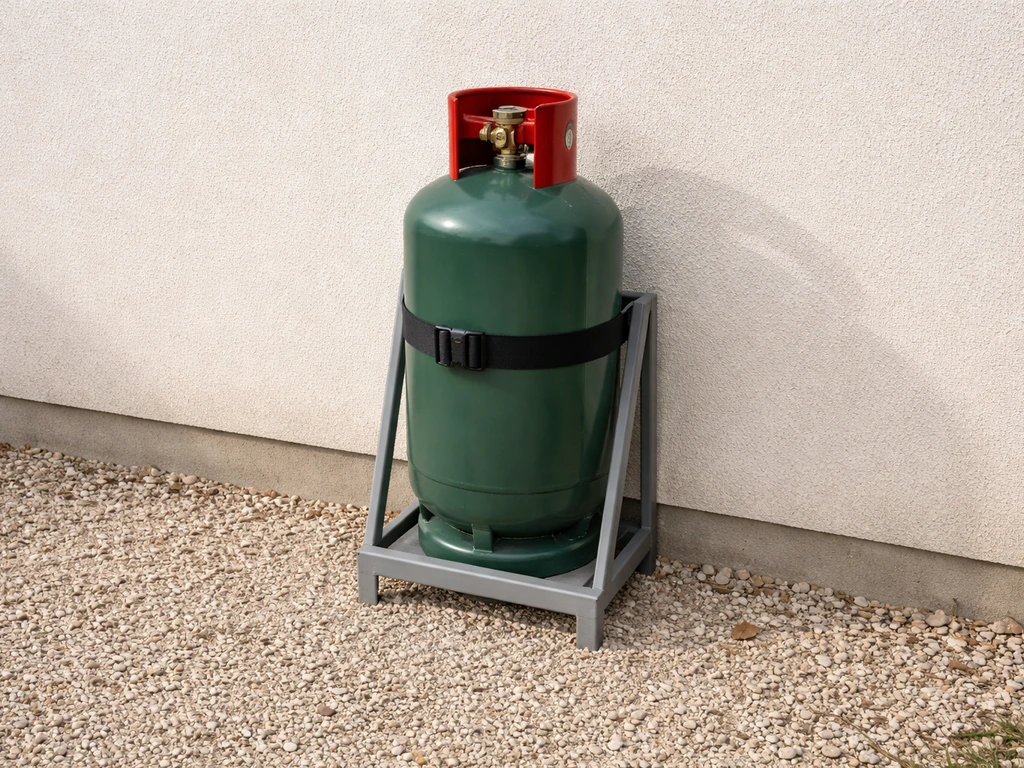
Propane and patio gas cylinders should be stored outdoors in a well-ventilated area, upright, away from any ignition sources and away from drains or low-lying areas where leaked gas could accumulate. Don't store them in a shed or garage if it's an enclosed space with poor ventilation. When the heater isn't in use, close the cylinder valve first, then let the heater burn off the remaining gas in the hose before switching the heater off. This keeps residual pressure out of the hose during storage. UK cylinders like Calor patio gas are on an exchange system, so when your cylinder is empty, exchange it at a stockist rather than attempting to refill it yourself. Pricing can also be affected by how patio gas cylinders are supplied through exchange schemes compared with propane alternatives exchange it at a stockist.
Getting the fuel right is genuinely the foundation of everything else on a gas patio heater. If you're about to replace a thermocouple or strip down a burner assembly, take five minutes to run through the fuel checklist above first. It's a lot easier to swap a cylinder than to replace a thermocouple, and a surprising number of 'broken' patio heaters turn out to have nothing wrong with them at all. If you're also wondering can you cook with patio gas, the same cylinder and pressure guidance applies to keep your appliances working safely gas patio heater.
FAQ
If patio gas is propane, do I still need a patio gas regulator?
In the UK, patio gas cylinders are propane, typically supplied at about 37 mbar. The practical difference is that patio gas uses a 27 mm clip-on valve/regulator arrangement, so you need a regulator that matches that fitting and is rated for the correct pressure.
What if the regulator fits but the pressure rating is different?
No. You can confirm compatibility by matching both items: the cylinder’s labelled gas type (propane vs butane) and the heater/regulator pressure rating (for most patio heaters, 37 mbar). If the fitting or regulator type does not match, do not use adapters unless the adapter is explicitly rated for LPG/propane and made for your connection standard.
How can I tell if I accidentally connected butane instead of patio gas?
If the heater only lights when the cylinder is warm, then fades, goes out in cold weather, or won’t relight properly, that often points to using butane or an incorrect pressure regulator on a unit designed for propane (37 mbar). A quick confirmation is to check the cylinder label for “propane” and visually compare the regulator’s rating to the heater data plate.
Is UK cylinder color ever misleading when setting up a patio heater?
Color coding can mislead, especially if you have cylinders from different suppliers or older exchanges. Treat the cylinder label and the heater’s data plate as the “source of truth,” because different products can share similar green branding while still requiring strict regulator and pressure matching.
Can I convert a patio heater from natural gas to patio gas (propane) or vice versa?
On many UK patio heaters, the data plate lists the approved gas and operating pressure, but some models also allow specific conversions. If the manual or data plate does not explicitly allow conversion to another gas type, do not attempt it, instead use the correct cylinder and regulator for the approved specification.
Why does my heater act differently after exchanging to a “new” patio gas cylinder?
If you swap a cylinder and the heater behaves differently, verify three things before replacing parts: cylinder gas type from the label, regulator pressure marking, and whether the cylinder is sufficiently full, since very low fuel on a cold night can mimic ignition and flame-sensing faults.
What should I check after changing the cylinder or regulator to prevent leaks?
Even if the cylinder and regulator are correct, if the connection is slightly off or damaged (for example, a worn seal or cross-threaded connection), it can leak or reduce flow. Use leak detection spray or soapy water on every connection point after any change, and stop using the appliance if bubbles appear.
How can I confirm the cylinder isn’t just too empty when the heater won’t stay lit?
Weighing helps because cylinder gauges can be unreliable. If you cannot weigh it, look for signs like repeated cut-outs on cold nights. If the heater repeatedly fails to stay lit and the regulator pressure is correct, an almost-empty cylinder becomes a prime suspect.
What is the safest way to troubleshoot if I smell gas around the patio heater?
If you smell gas while troubleshooting, do not try to “test quickly” with the igniter or any flame. Ventilate, turn off the cylinder valve if safe, then use a gas leak detection spray or soapy water only after the area is clear. If the leak is significant or you cannot find it, call your gas supplier’s emergency number.
Does the propane vs patio gas guidance apply the same way to gas BBQs?
Yes, the same cylinder and pressure principles apply when using patio gas with other LPG appliances. However, some BBQs may require a different connection/regulator style even if they are still for propane at 37 mbar, so you must match both the heater appliance data plate requirements and the regulator’s rating.