Most patio heaters cannot be used indoors safely. Propane and natural gas patio heaters produce carbon monoxide and need substantial ventilation that enclosed rooms simply cannot provide. Electric and infrared patio heaters are a different story: if the unit is rated and labeled for indoor use, it can be appropriate inside. The fuel type and the specific label on your unit are the two things that determine whether indoor use is acceptable or genuinely dangerous.
Can a Patio Heater Be Used Indoors? Safety Guide by Type

Grant Mercer
1 May 2026
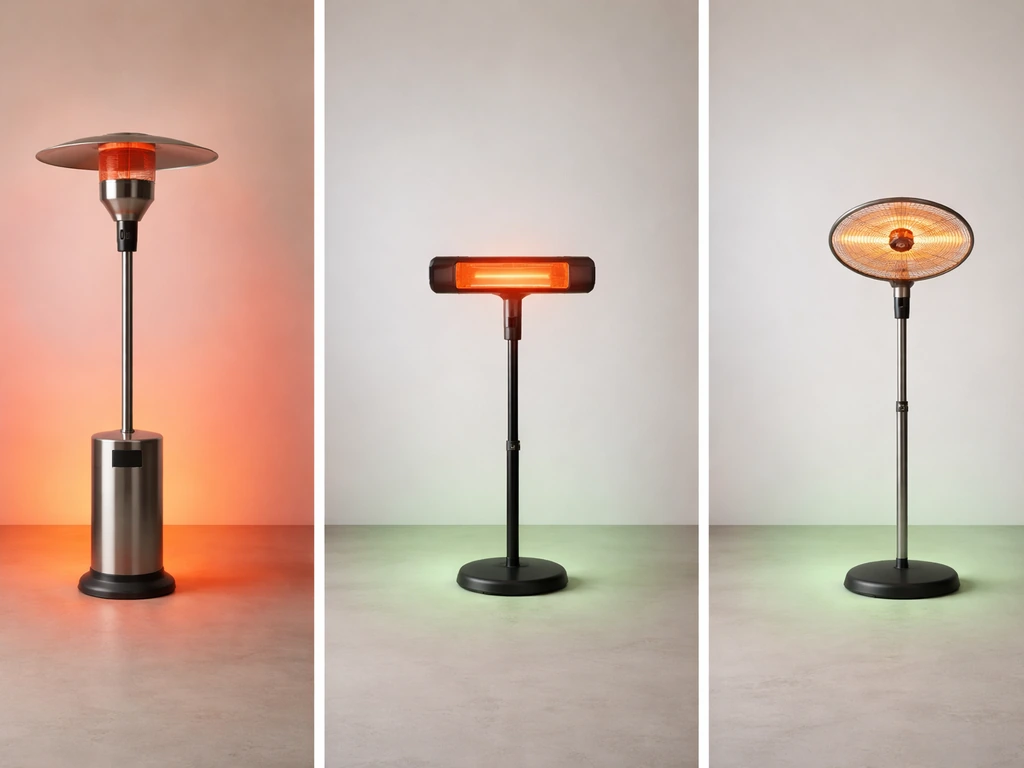
The quick answer by heater type
| Heater Type | Indoor Use? | Key Condition |
|---|---|---|
| Propane / Gas patio heater | No (with rare exceptions) | Only if explicitly labeled for indoor use with ODS and CSA 4.98 certification; standard tall patio heaters are never rated for indoors |
| Electric patio heater | Yes, if rated for it | Must carry an indoor-use rating; check the label and manual before assuming |
| Infrared electric heater | Yes, if rated for it | Electric infrared units without combustion are generally safer indoors, but still need the indoor rating on the unit itself |
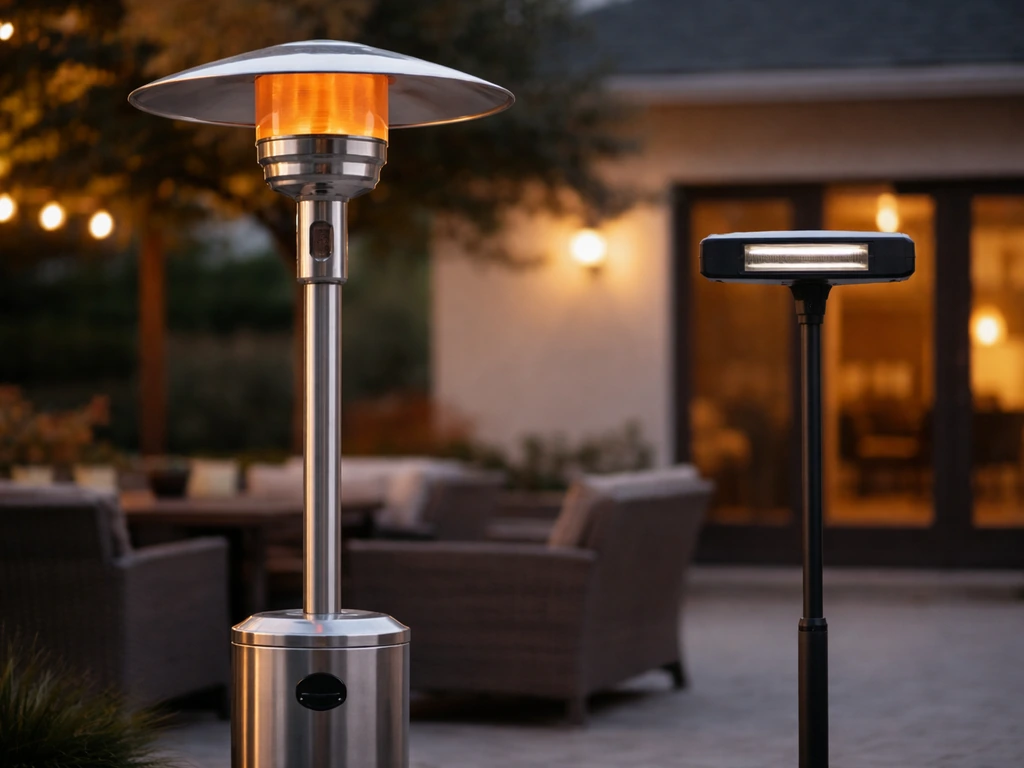
The mushroom-style propane tower heaters you see on restaurant patios are designed exclusively for outdoor use. They are not exceptions to the rule. If you own one of those, stop reading and skip straight to the alternatives section below.
Why propane and gas patio heaters are a serious hazard indoors
Any heater that burns fuel, whether propane or natural gas, produces carbon monoxide (CO) as a byproduct of combustion. CO is colorless, odorless, and can reach lethal concentrations faster than most people expect. Outdoor patio heaters are designed with the assumption that open air will continuously dilute and carry away combustion gases. Move that same heater into a living room, sunroom, or garage, and you remove that assumption entirely.
The CPSC draws a clear line between two categories of portable propane radiant heaters. Units designed for indoor use carry specific labels: 'Designed for Indoor Use,' 'Low Oxygen Automatic Shut-Off System,' 'Oxygen Depletion Sensor,' or a CSA 4.98 star marking. Heaters without those labels fall under outdoor-only standards and are not designed for indoor use, full stop. A standard patio tower heater will have none of those markings.
Even heaters that do include an Oxygen Depletion Sensor (ODS) carry strict ventilation requirements. The Mr. Heater MH12HB manual is explicit: if the space does not have a window or roof vent, do not use the heater inside. That same manual specifies a minimum vent area of 12 square inches. If those conditions are not met, the ODS alone is not enough protection. The ODS shuts the heater off when oxygen drops too low, but by that point CO may already be at dangerous levels.
Safety checks to run before any indoor use
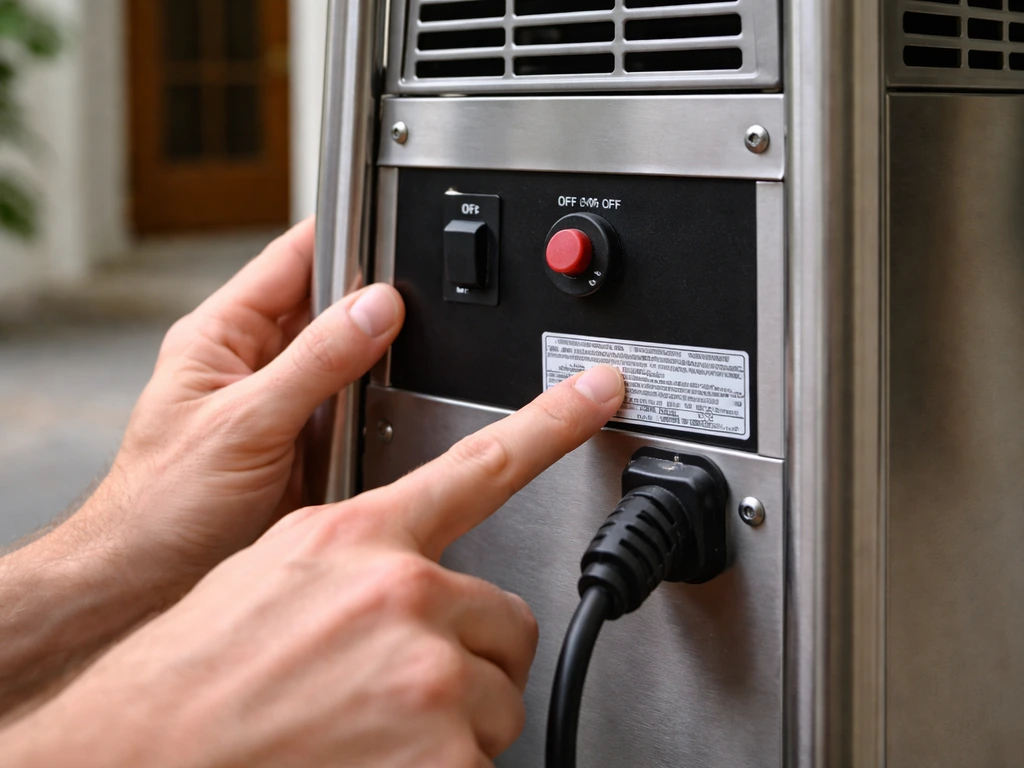
If you are seriously considering using any heater in an enclosed or semi-enclosed space, work through this checklist before you turn anything on. Skipping steps here is how people end up in trouble.
- Check the physical label on the heater itself, not just the product page or box. Look for 'Designed for Indoor Use,' an ODS label, and a CSA 4.98 certification mark. If those are absent on a propane or gas unit, stop here.
- Pull the actual owner's manual for your model number, not a generic version. Manufacturers like Mr. Heater publish model-specific manuals with exact ventilation requirements. The MH9BX allows limited indoor emergency use; the MH12HB requires a window or roof vent. These are different units with different rules.
- Measure your ventilation. If your manual specifies a minimum vent area (12 square inches is a common figure for smaller indoor-rated propane heaters), measure the actual opening you have. A cracked window is not a ventilation plan.
- Install a CO detector in the same room before operating any fuel-burning heater. Place it at breathing height, not near the ceiling. Test it before you start the heater.
- Install a smoke detector if one is not already present. Check the battery.
- Confirm the heater's tilt-over safety switch is functional. This is a basic but critical check covered below.
Indoor risk scenarios you need to avoid
Opening a door or cracking a window does not make indoor propane heater use safe. The CPSC and EPA both state clearly that CO can build up to deadly levels even when a garage door is open, and the same principle applies to any partially ventilated space. Even with a garage door open, propane and gas patio heaters can still produce dangerous carbon monoxide levels indoors. A slightly open window gives you a false sense of security while CO accumulates in the rest of the room.
- Closed or nearly-closed rooms: bedrooms, living rooms, sunrooms, and finished basements have no adequate air exchange for combustion heaters.
- Garages with the door open: the EPA explicitly states this is not safe for CO-producing equipment. A related topic covers garage use in more detail, but the short version is: the door being open is not enough.
- Tents and enclosed canopies: fabric enclosures trap CO faster than any other scenario. This is a leading cause of camping-related CO deaths.
- Using a propane heater as backup power during an outage indoors: running a combustion heater inside a home during a power outage is one of the most common and preventable CO poisoning scenarios every winter.
- Partially covered outdoor spaces like gazebos or pergolas: these occupy a gray area that requires separate consideration depending on how enclosed the structure is.
When electric and infrared patio heaters are fine indoors
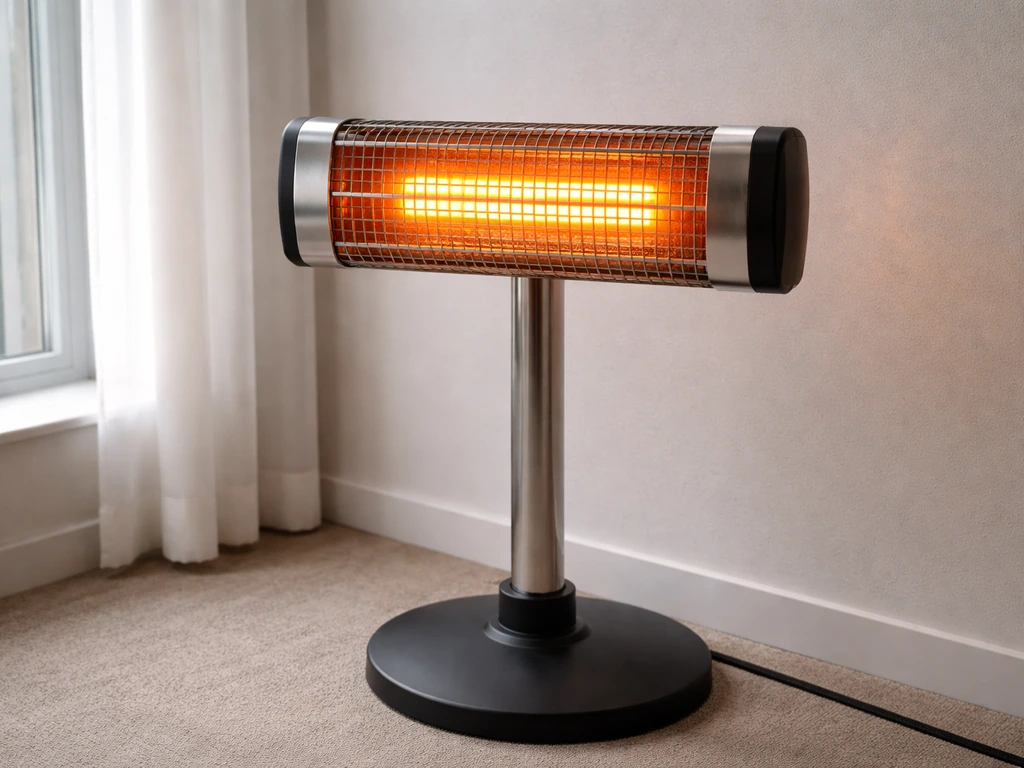
Electric patio heaters, including electric infrared models, do not burn fuel and produce no combustion gases. That removes the CO risk entirely. If your electric patio heater carries an indoor-use rating from the manufacturer and is sized appropriately for the space, using it inside is a reasonable choice. Wall-mounted or ceiling-mounted electric infrared heaters are common in garages, workshops, and sunrooms for exactly this reason.
That said, 'electric' and 'safe for indoors' are not the same thing automatically. A 240V outdoor-rated electric patio heater mounted on a deck post is weatherproofed for outdoor use and may not be safe near curtains, upholstery, or in a space with limited clearance. Check the manual for minimum clearance distances and confirm whether the unit carries an indoor safety rating (typically UL or ETL listed for indoor use). If it only carries an outdoor rating, treat it like an outdoor appliance.
Freestanding electric infrared heaters designed for patios are often dual-rated. The product label or spec sheet will list the IP (ingress protection) rating for outdoor use and, separately, any indoor-use certifications. A heater rated IP44 or higher is weatherproof, but that tells you nothing about indoor safety ratings. Look for both.
Heater faults that make indoor use more dangerous
A heater that is malfunctioning is significantly more dangerous indoors than outdoors, because the enclosed space removes the margin for error. Three failure points are especially important to check if you are considering any indoor or semi-indoor use.
Tilt switch (tip-over switch)
Most propane patio heaters include a tilt switch that shuts off gas flow if the unit tips over. Indoors, with furniture, pets, and kids around, tip-over risk is higher than on a flat patio. Test the tilt switch by gently tilting the heater more than 45 degrees with the pilot lit. The flame should extinguish within a few seconds. If it does not, the switch is faulty and the heater should not be used anywhere until it is repaired. On many models the tilt switch is a small magnetic or ball-bearing sensor near the base, accessible after removing the base panel.
Thermocouple
A weak or failing thermocouple causes the pilot to go out repeatedly. Indoors, a pilot outage means unburned propane can accumulate before you notice. If your heater keeps going out after lighting, or if you have to hold the ignition button for an unusually long time, test the thermocouple output with a multimeter. A working thermocouple should read between 25 and 35 millivolts. Below that range, replace it before using the heater anywhere, but especially before using it in any enclosed space.
ODS (Oxygen Depletion Sensor)
On heaters like the Mr. Heater MH9BX that are designed for limited indoor use, the ODS is a critical safety component, not just a feature. If the ODS is dirty, damaged, or defective, it may fail to shut the heater off when oxygen levels drop. Mr. Heater's own manual specifies that a defective ODS should be replaced before continued use. Do not assume the ODS is working just because the heater lights. If the unit has not been serviced in several seasons, have the ODS inspected or replace it proactively.
Ignition system
A faulty igniter that requires multiple attempts before lighting is a problem outdoors but a larger one indoors. Each failed ignition attempt allows propane to flow and accumulate slightly. If your igniter is clicking without lighting, or if you smell gas before ignition catches, fix the igniter before any use. A worn electrode, cracked ceramic, or corroded wire are the usual culprits and are straightforward DIY repairs on most models.
Better options if you need to heat an indoor space
If your goal is heating a garage, workshop, covered porch, or indoor room, the smartest move is to match the equipment to the actual use case rather than adapting outdoor equipment. If you are thinking about a patio heater under a tent, treat it like an enclosed or semi-enclosed space and confirm the unit is specifically rated for that use before turning it on. Here is how to approach that decision.
- For a living room or bedroom: a standard indoor electric space heater (oil-filled radiator, ceramic, or infrared panel) is safer, cheaper to run, and purpose-built for the job. These are UL-listed for indoor use and sized correctly for residential spaces.
- For a garage or workshop with ventilation: a propane heater that is explicitly rated and labeled for indoor use, such as the Mr. Heater MH9BX on a 1 lb. cylinder in emergency situations, can work if you follow the ventilation rules exactly. A permanently installed vented gas heater is a better long-term solution.
- For a covered patio, pergola, or gazebo: this is where your outdoor patio heater actually belongs. The question of how enclosed the space is matters a great deal here, and different structures have different safety thresholds worth understanding before you add heat.
- For a screened porch or sunroom: an electric infrared heater rated for indoor use is the right tool. Wall-mounted electric infrared panels are efficient, safe, and do not require fuel storage.
- To verify your specific model: search your model number on the manufacturer's website or ManualsLib and read the 'Indoor Use' or 'Ventilation' section directly. Do not rely on product descriptions or retailer listings. The manual is the authority.
The bottom line is straightforward. Propane and gas patio heaters are outdoor appliances, and treating them otherwise puts people at real risk. In particular, you generally should not use propane or natural gas patio heaters in a garage unless the unit is specifically rated and labeled for indoor use. Electric and infrared units can cross over indoors when they carry the right rating.
Even if the patio is covered by a roof, you still need an indoor-use rating and proper ventilation, otherwise the risk does not go away can a patio heater be used under a roof. Before you use any heater in an enclosed or semi-enclosed space today, check the label, check the manual, verify the safety switches are working, and have a CO detector running in the room.
Even though a gazebo is outdoors, treat it like a semi-enclosed space if you are using a propane or natural gas patio heater, and only use units that are explicitly rated for that setting can a patio heater go under a gazebo. If any of those boxes cannot be checked, use a different heater.
FAQ
Can I use a propane patio heater in a covered porch or under a roof?
Yes, but only if the heater is explicitly labeled for that environment. “Covered” or “open to the outside” is not the same as an indoor rating. For propane or natural gas units, you need indoor-safe labeling plus ventilation requirements from the manual, not just a roof overhead. If the label only says outdoor, treat it as outdoor-only.
Is it safe to run a gas or propane patio heater in a garage with the door cracked open?
A garage door being open does not reliably prevent CO buildup. CO can spread into the occupied space through cracks and airflow patterns, and concentration can rise faster than you would notice. If you do not have an indoor-rated, properly vented fuel heater and a CO monitor operating, the safer choice is to use an electric indoor-rated heater instead.
I have an electric infrared patio heater, can I use it indoors without changing anything?
If the unit is dual-rated, you can use it indoors, but you still must respect indoor clearance and positioning. Patio infrared heaters that are outdoors only may still be weatherproofed and wired differently, and they can be unsafe near fabrics or low-clearance walls even if they do not produce combustion gases. Check the label for an indoor safety rating and verify minimum clearance distances from the manual.
What does the IP rating on a patio heater mean for indoor safety?
Not automatically. IP ratings (like IP44) describe water and dust resistance for outdoor exposure, not whether a heater is certified for indoor installation or safe placement around combustibles. Look for a specific “indoor use” certification or listing on the label or in the documentation, and confirm the required mounting type and clearance.
Can I test a propane patio heater indoors to see if it works before using it for heating?
You should only test a fuel heater outside, with the heater functioning correctly before any indoor or semi-indoor consideration. If you ever smell gas, don’t attempt to “test” inside. Use a leak-check method recommended by the manufacturer (or a professional if you are unsure), and verify the thermocouple and tilt shutoff are working before continuing.
What should I do if my propane indoor-rated heater keeps shutting off?
If it shuts off immediately, shuts off and relights repeatedly, or you see error behavior, do not keep using it indoors. Those symptoms can indicate a failing ODS, oxygen sensor wiring issue, or incomplete combustion. For fuel heaters, the correct next step is to follow the manual troubleshooting and replace any failed safety component before any further use.
Can I leave a patio heater running while I sleep or leave the room?
If the thermostat or timer is on a fuel heater, it can create additional risk indoors because the heater may cycle without you being able to visually confirm stable operation. For any fuel heater considered indoors, avoid leaving it unattended, avoid sleeping with it running, and always keep the CO detector active. If the manual restricts operation in semi-enclosed spaces, follow those limits.
What kind of CO detector should I use if I’m heating a semi-enclosed space?
Buy a dedicated CO detector that is audible and designed for residential use, and place it at breathing height in the room where the heater is operating. Make sure it is within its replacement schedule for the batteries or sensor lifespan. Also, treat the detector as backup, not as permission to use an outdoor-rated fuel heater indoors.
What’s the safer alternative if I only have an outdoor patio heater but need to heat a garage or workshop?
If your goal is heating a garage, workshop, or enclosed room, the better option is an electric heater that is rated for indoor use or a furnace designed for that space. Converting an outdoor appliance is often what leads to clearance and ventilation mistakes. Matching the heater to the room type reduces reliance on uncertain “temporary ventilation” assumptions.
Can I use a patio heater inside a tent or canopy area?
Yes, but the decision should be label-first. If it is a fuel patio heater without indoor designations, it should not be used there. If it is an electric unit, confirm indoor listing and safe clearance, especially near curtains, shelving, or garage chemicals. If the space is semi-enclosed, keep in mind that even electric heaters can pose burn or fire risks due to proximity, not CO.