
Yes, you can use a patio heater on a screened porch, but the type of heater you're running and how enclosed that space actually is will determine whether it's safe or genuinely dangerous. Electric patio heaters are the straightforward choice for screened porches and carry far fewer risks. Propane and natural gas heaters are much trickier: most manufacturer manuals explicitly prohibit use in enclosed or semi-enclosed spaces, and a screened porch can easily qualify as one depending on its construction. Getting this wrong isn't a matter of damaging your screen. It's a carbon monoxide risk.
Can You Use a Patio Heater on a Screened Porch?

Grant Mercer
4 Jul 2026
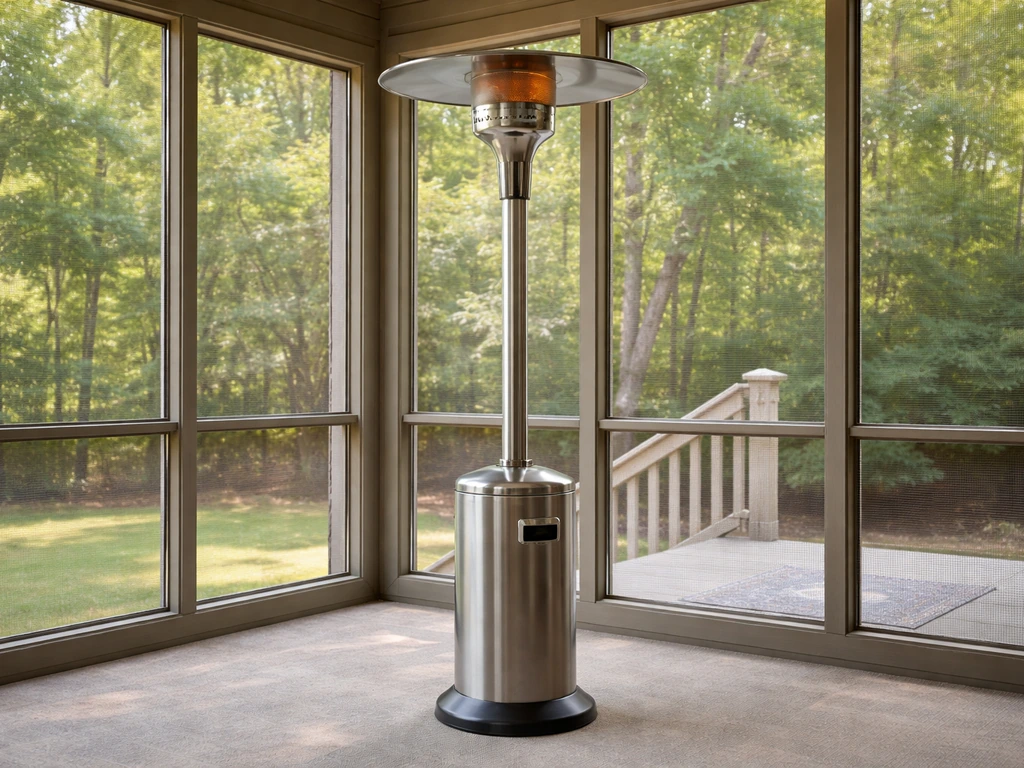
Start here: gas or electric makes all the difference
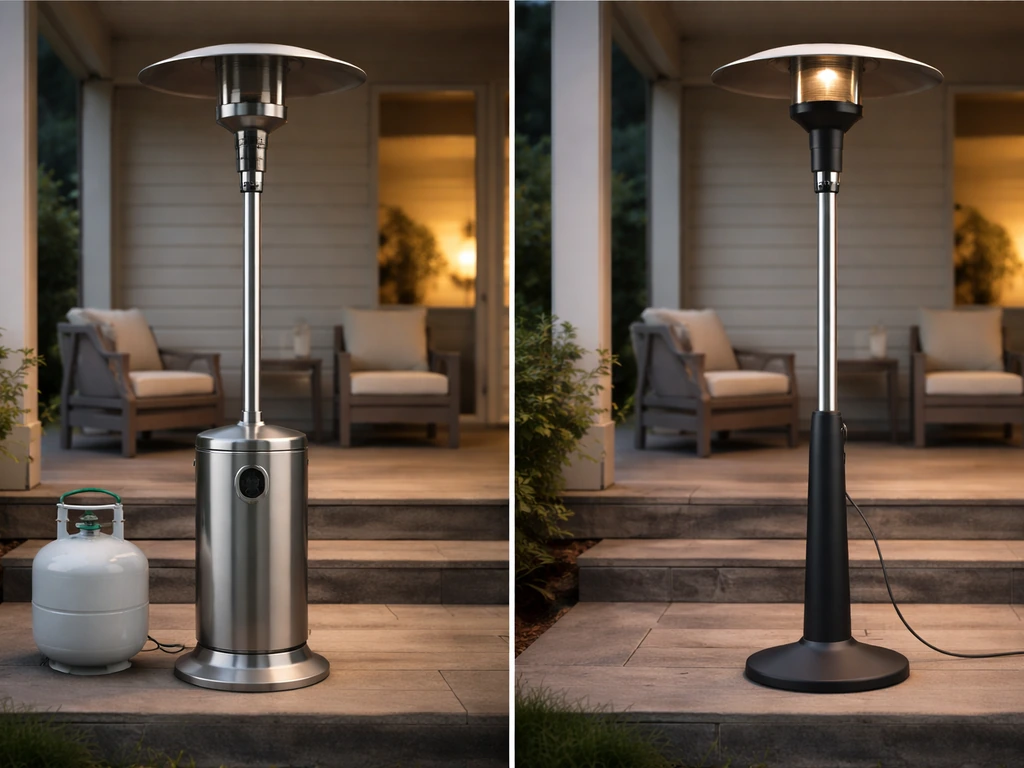
Before you move anything onto your porch, you need to know exactly what kind of heater you have. This single decision point changes every recommendation that follows.
Gas heaters, whether propane (LP) or natural gas, produce combustion byproducts including carbon monoxide. CO is colorless and odorless, and it can accumulate in partially enclosed spaces faster than you'd expect. The AZ Patio Heaters manual puts it plainly: 'This appliance shall be used only in a well-ventilated space and shall not be used in a building, garage or any other enclosed area.' The Bond, HEATMAXX, and Napoleon manuals all say essentially the same thing. That language isn't boilerplate padding. It reflects a real CO accumulation risk in spaces where airflow is reduced.
Electric patio heaters don't burn fuel. There's no combustion, no CO, and no ventilation requirement tied to the heating process itself. The main concerns shift to moisture exposure, proper electrical connections, and standard clearance from combustibles. For screened porches, electric is almost always the easier and safer path.
| Heater Type | CO Risk | Ventilation Required | Screened Porch Suitability |
|---|---|---|---|
| Propane (LP) gas | Yes, significant | Yes, strict outdoor-level airflow required | Conditional, depends heavily on enclosure level and airflow |
| Natural gas | Yes, significant | Yes, strict outdoor-level airflow required | Conditional, same concerns as propane |
| Electric infrared/radiant | None | No combustion ventilation needed | Generally suitable with proper clearances and weather rating |
The real safety factors on a screened porch
Ventilation: screens help, but they're not a guarantee
A screened porch feels open, but it can behave more like an enclosure than you'd think, especially on calm, windless nights when you actually want the heater most. OSHA's guidance on CO risk specifically calls out semi-enclosed spaces without adequate ventilation as dangerous. The CPSC has issued warnings against blank" rel="noopener noreferrer">running combustion equipment in locations like outside porches and carports for exactly this reason. If your screened porch has a solid roof, three screened walls, and minimal cross-breeze, a propane heater running for an hour can push CO to concerning levels. The more enclosed your porch feels, the more that 'outdoor only' instruction in your heater's manual applies to you directly.
Clearance from combustibles
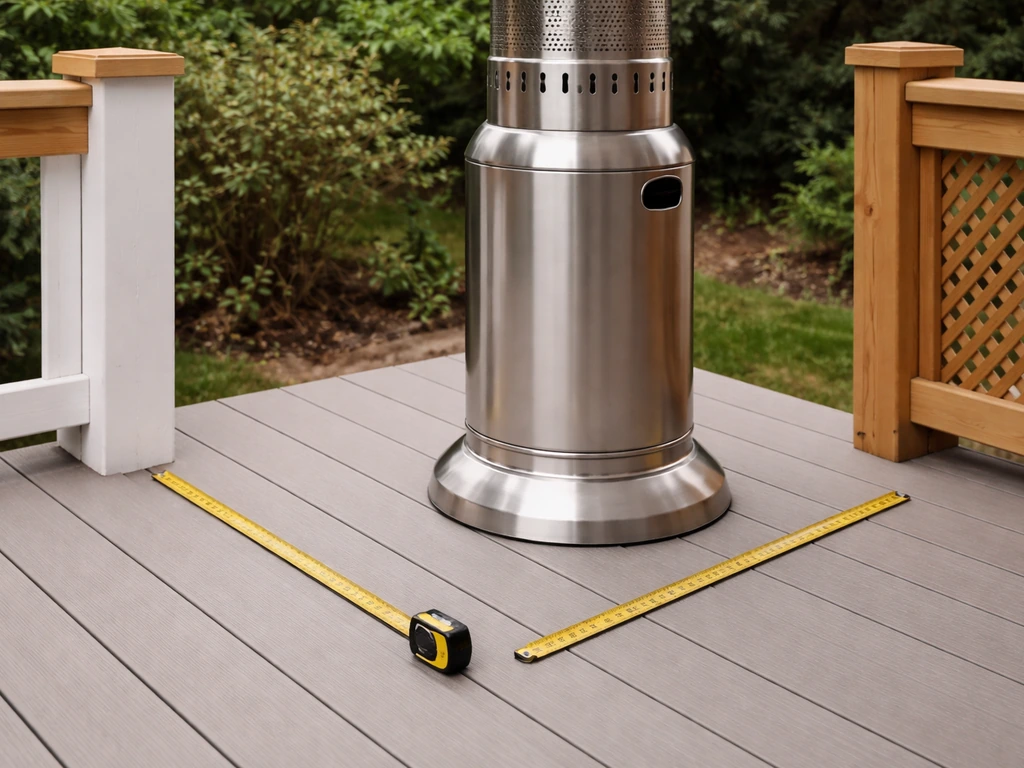
Every gas patio heater manual includes a minimum clearance to combustibles diagram, and you need to look yours up before placement. Napoleon's manuals specify a minimum of 6 inches to combustible materials on the sides, with additional clearance required above the heater head. Detroit Radiant products require at least 8 inches of clearance when mounted beneath a surface, even a non-combustible one. Because mounting a patio heater under a canopy can restrict airflow, it matters whether the heater is electric or uses propane or natural gas. Delaware's administrative code references a 36-inch clearance concept from hot surfaces to materials. These numbers vary by model, so pull up your specific manual and treat those dimensions as non-negotiable minimums, not general guidelines.
Screen material and fire risk
Standard fiberglass or aluminum window screening won't ignite easily, but that doesn't mean your heater can sit two feet away from it without consequence. The heat radiating from a mushroom-style propane heater is intense at close range. That same close-range heat is why you should not rely on simply putting a patio heater under an awning without verifying clearances and safe placement mushroom-style propane heater. More importantly, the fabric furniture, curtains, rugs, wood trim, and ceiling material inside your porch absolutely can ignite or scorch. Treat every surface around your heater as a potential combustible until you've confirmed clearances from your manual.
Placement checklist before you fire it up
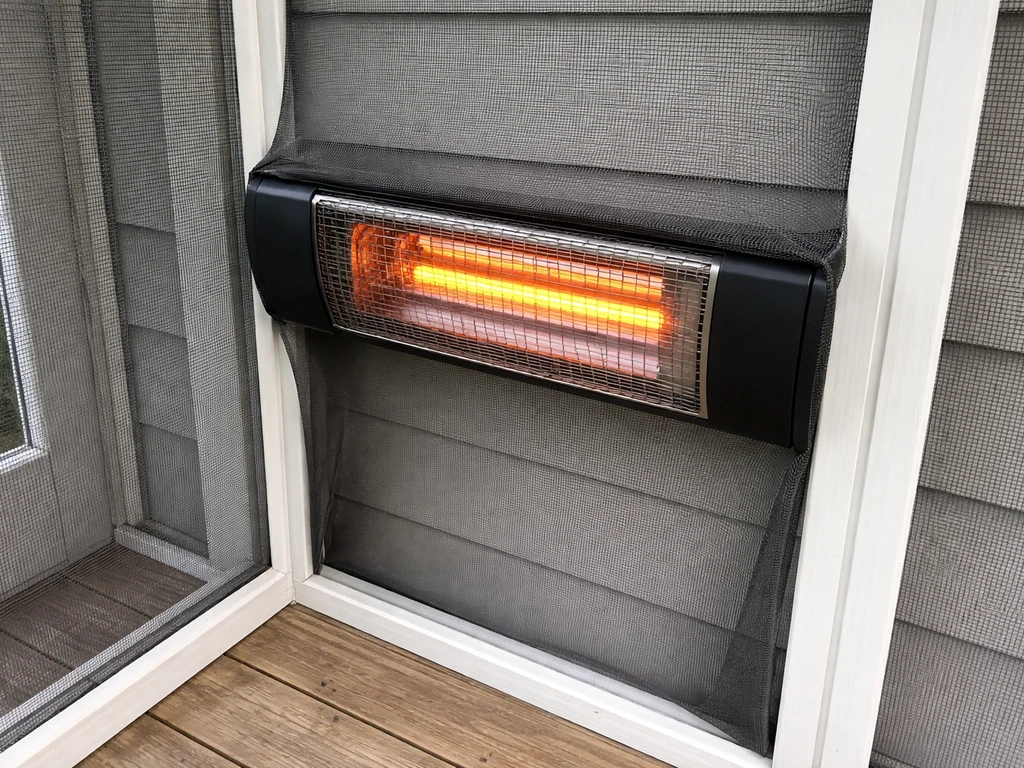
Work through this list in order. Don't skip items because the porch 'looks fine.'
- Pull up your heater's manual and find the minimum clearance-to-combustibles diagram. Note the side clearance, top clearance, and any specific restrictions on overhead placement.
- Measure your porch ceiling height and confirm the heater head will have at least the manual-required clearance above it. Mushroom-style heaters typically need 24 to 36 inches of clearance from the top of the heater to anything overhead.
- Check all four sides: distance to screen walls, railings, wood posts, fabric furniture, and any hanging lights or decorations.
- Place the heater on a stable, non-combustible base. Concrete, pavers, or stone tile are good options. Wooden decking is not ideal directly under a gas heater. Use a heater mat rated for the BTU output if you have one.
- Confirm the porch has genuine cross-airflow, not just mesh walls with no wind passing through. If you close three sides with curtains or covers when the heater is running, you've effectively enclosed the space.
- For propane heaters: position the tank upright, check that the regulator hose is undamaged, and keep the tank in a ventilated location. Never store or run a propane tank in a fully enclosed space.
- For electric heaters: verify the heater carries a damp or wet location rating if the porch is open to humidity and weather, and confirm you're using a properly rated outdoor outlet and GFCI protection.
- Keep a clear 3-foot zone around the heater free of furniture, cushions, throw blankets, and anything that could shift into the heat zone.
What not to do on a screened porch
These are the mistakes that turn a manageable setup into a dangerous one. Some of them are surprisingly common.
- Running a propane or gas heater with the screened walls covered, blocked, or zipped shut with weather panels. This converts a ventilated space into an enclosed one. CO can build to dangerous levels within 30 to 60 minutes.
- Assuming that 'outdoor rated' on the heater label means it's approved for semi-enclosed use. It doesn't. 'Outdoor rated' means it can handle weather exposure, not that it's safe in a partially enclosed space.
- Placing a mushroom-style heater with its head too close to the porch ceiling or roof joists. Even a non-combustible metal roof will reflect heat down and around the unit in ways that increase fire and CO risk.
- Using a gas heater on a screened porch without a CO detector nearby. If you're going to run a gas heater in any partially enclosed space, a battery-operated CO detector placed at seated head height is not optional.
- Running any patio heater unattended. This applies everywhere, but especially in a screened porch where combustibles are closer and airflow can change as conditions shift.
- Using an electric heater without checking its weather rating. If your porch is exposed to rain splash, humidity, or condensation, a heater rated for dry indoor use only is a shock and fire hazard.
- Ignoring a heater that won't stay lit and assuming it will 'warm up' on its own. A thermocouple or tilt switch fault is the heater telling you something is wrong. Don't bypass safety mechanisms.
Check your heater before you use it, not after
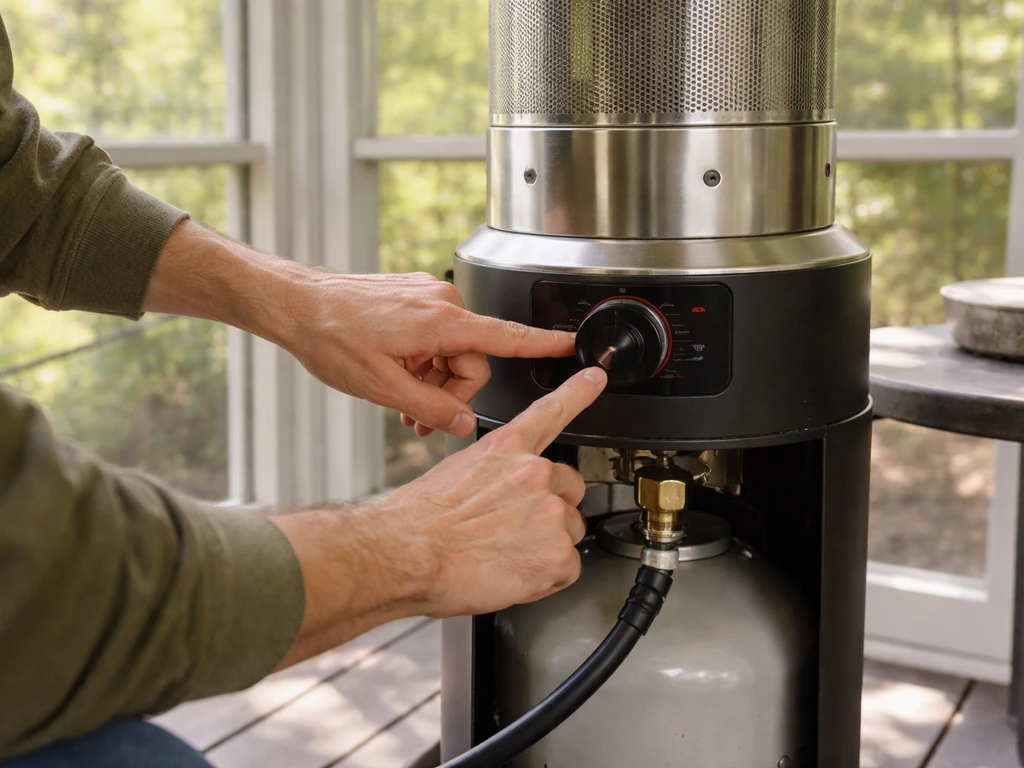
A screened porch is not the place to discover your heater has a problem. Running a malfunctioning gas heater in a partially enclosed space amplifies every risk. Take five minutes before the season's first use and work through these checks.
Gas leak check (propane and natural gas heaters)
Mix a 50/50 solution of water and dish soap in a spray bottle, connect your regulator or gas line, and turn the gas on without igniting. Spray the solution over every connection point: regulator fitting, hose connections, and the valve body. Bubbles mean gas is escaping. Don't run the heater until you find and fix the leak. Napoleon's manual is explicit: never leak test with an open flame or while smoking. That applies to everyone, every time.
Ignition and thermocouple function
Turn the valve to the pilot or ignite position, hold the knob in, and attempt ignition. If the pilot lights but goes out when you release the knob after 30 to 45 seconds, the thermocouple almost certainly isn't generating enough millivoltage to hold the gas valve open. This is one of the most common patio heater faults and one of the most important to fix before enclosed-space use, because a heater that ignites unreliably may release unburned gas before shutting down. A thermocouple replacement is straightforward on most mushroom-style heaters and costs under $20.
Tilt switch verification
Most freestanding gas patio heaters have a tilt switch that cuts the gas if the unit tips over. With the heater off and tank disconnected, gently rock the unit and listen or feel for the switch mechanism. If yours has a known tilt switch issue where it shuts off even when the heater is level, get that resolved before running it on a porch. A heater that shuts itself off isn't just inconvenient. It's releasing gas into your screened space.
Burner and fuel path inspection
Look at the burner head and emitter screen for spider webs, insect debris, or corrosion from sitting outdoors. A partially blocked burner changes the combustion pattern and can produce more CO and soot. Clean any debris out with a soft brush before the first use of the season. For electric heaters, inspect the power cord and plug for cracks, fraying, or corrosion on the prongs. Damaged cords on an outdoor heater used in a humid environment are a shock hazard.
The honest bottom line on screened porch use
If you have an electric patio heater that's rated for damp or outdoor conditions, a screened porch is a perfectly reasonable place to use it. If you are deciding whether a patio heater can be used on a deck, the safest choice is usually an electric model rated for outdoor use, especially in semi-enclosed areas can a patio heater be used on a deck. Get the clearances right, use a proper outdoor outlet with GFCI protection, and you're in good shape.
If you have a propane or natural gas heater, be honest about how enclosed your porch actually is. On a breezy summer night with wide-open screens and genuine cross-airflow, a well-maintained heater placed with proper clearances carries manageable risk. On a calm winter night with the porch mostly sealed up, you should not run a gas heater in that space. The manufacturer manuals, NFPA guidance, and CPSC all point the same direction here: combustion heaters need real outdoor ventilation, and a screened porch doesn't automatically provide it. If you're in this situation regularly, the practical fix is switching to an electric infrared heater for porch use and saving the propane unit for fully open outdoor settings. Similar decisions apply when thinking about using a patio heater under an awning, beneath a canopy, or in a garage, where the same ventilation logic applies.
Whatever setup you're running, always install a CO detector if gas combustion is involved anywhere nearby, never leave the heater unattended, and shut it off completely before going inside. Those three habits are worth more than any product specification.
FAQ
What counts as “well-ventilated” on a screened porch, practically speaking?
Use airflow as your test, not how “open” it looks. If you can feel steady cross-breeze when standing a few feet from the heater, screens are wide open, and doors or windows can exchange air, ventilation is more likely adequate. If the porch feels still, especially with a solid roof or three-side screening, treat it as semi-enclosed and avoid gas entirely.
Can I use a propane patio heater on a screened porch if I crack a door or window nearby?
Sometimes, but you cannot assume a small gap fixes the carbon monoxide problem. A door cracked in a different room may not create direct cross-airflow through the heater area. If the porch itself stays mostly still air, the safer decision is switching to an electric patio heater.
Are carbon monoxide detectors enough protection if I run a gas patio heater on a screened porch?
A CO detector is a safety layer, but it is not a permission slip to run gas in a semi-enclosed space. If the detector alarms, you must shut the heater off immediately and leave the area. Also place the detector where it can actually sense the air you breathe, and test it per the manufacturer schedule.
Is it safer to run the gas heater for a short time, like 20 to 30 minutes?
Short duration can reduce risk, but it does not eliminate carbon monoxide accumulation. CO can build quickly when airflow is limited, such as on calm nights or under a partial roof. If your porch acts semi-enclosed, the safer approach is not using the gas heater at all.
Can I place the electric patio heater very close to the screen or screening frame?
You should treat screening and window frames as nearby combustibles for placement purposes. Heat can scorch fabrics, vinyl trim, or dry organic materials even if the screen itself does not ignite. Follow the model’s clearance diagram to combustibles, and keep additional distance from curtains, rugs, and furniture.
Does a covered roof or ceiling over the screened porch change the recommendation for gas heaters?
Yes. A solid roof and overhead cover reduce dilution of combustion gases and can trap heat flow downward, changing both CO behavior and clearance effectiveness. Even if you do not fully close the sides, overhead restriction makes gas use much less reliable.
Can I use a gas heater if the screens are open but the porch is still enclosed on the sides?
If the heater area still lacks real cross-breeze, assume it behaves like a semi-enclosed space. Wide screens help, but the decision should be based on whether air actually moves around the heater while it runs.
What if my gas patio heater uses an auto-shutoff or an oxygen depletion sensor, is it still risky?
Safety shutoffs help, but they do not guarantee protection in every semi-enclosed situation. A device may only respond after CO has already risen, and malfunctioning sensors or restricted airflow can lead to late or inconsistent response. Manual ventilation restrictions still apply.
How can I tell if my screened porch is “too enclosed” for a gas heater before using it?
On the night you plan to use it, stand where you would place the heater and check for noticeable airflow, also check whether air movement changes when you open nearby doors or windows. If you cannot feel meaningful air exchange at the heater level, treat it as too enclosed and use electric instead.
What’s the safest choice if I want heat on a porch but I’m unsure about ventilation?
Choose an electric infrared patio heater rated for outdoor use, with a GFCI-protected outlet and model-clearance distances to combustibles. That avoids combustion byproducts entirely, which is the core reason gas heater use becomes problematic on screened or semi-enclosed porches.