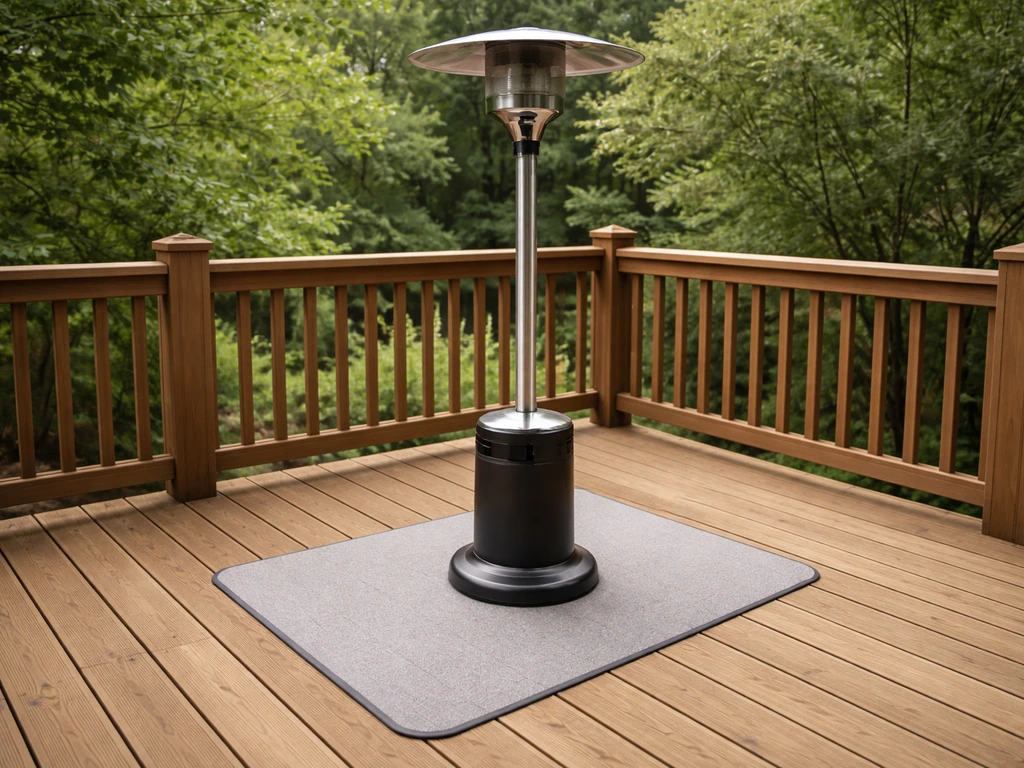
Yes, you can use a patio heater on a deck, but you need to meet a few non-negotiable conditions first: the right heater type for your setup, a non-combustible base under the unit, correct clearances from railings and overhead structures, and a surface that can handle radiant heat without melting or discoloring. Skip any one of those and you are looking at warped composite planks, a tripped tilt switch, or worse. Get them right and a deck is one of the best places to run a patio heater.
Can a Patio Heater Be Used on a Deck? Safety Checklist

Grant Mercer
19 Jun 2026
When it's a clear yes, and when it isn't
A freestanding propane tower heater or an electric infrared heater on a wood or composite deck is generally safe when placed with proper clearances, a stable level base, and a heat barrier underneath if needed. Where things go wrong is when people push the heater up against a railing, set it directly on composite decking without any barrier, or use it under a low overhang with no clearance to spare. Natural gas patio heaters mounted on posts or walls are a slightly different story since they are fixed installations that require a licensed gas line connection, but the deck-surface and clearance rules still apply to the radiant heat they produce.
The situations where you should not run a patio heater on a deck: a small, enclosed deck with no airflow and a low roof (this applies especially to propane and natural gas heaters, which need ventilation), a deck with badly weathered or structurally compromised boards that cannot support the heater's weight when wind-loaded, or any setup where you cannot physically achieve the manufacturer's minimum clearances. If you are also thinking about a screened porch or an awning overhead, those setups have their own specific rules worth looking at separately. In general, you can use a patio heater under an awning, but you must follow the clearance and ventilation rules for your specific heater model and setup.
Your deck surface changes everything
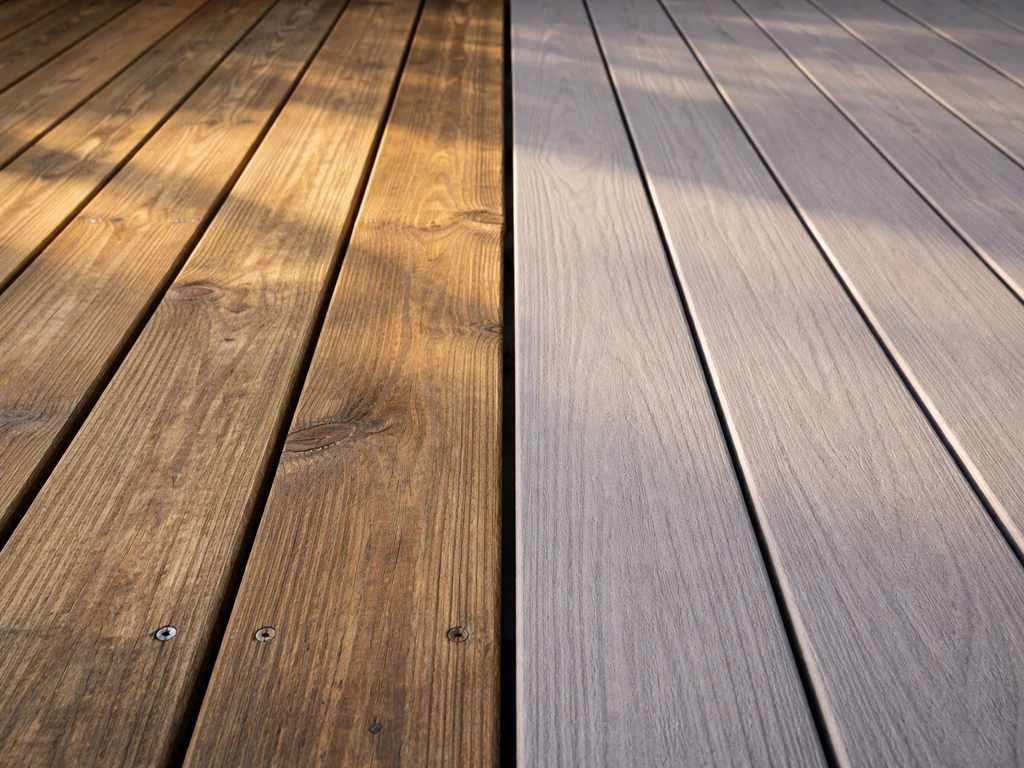
Not all decking reacts to heat the same way, and composite decking is the one that catches most homeowners off guard. Composite planks like Trex have a lower heat tolerance than pressure-treated lumber. Trex themselves state that high-heat sources should not be placed directly on their decking without a heat barrier underneath. Their own FAQ and installation guides specifically call for a fire-resistant material under the heat source plus a protective surround to shield the decking from radiant and conductive heat. This is written for fire pits, but a gas mushroom heater running full-tilt at close range puts out enough radiant heat to cause the same problem: discoloration, softening, or warping of the planks.
| Deck Material | Heat Tolerance | Base/Barrier Needed? | Notes |
|---|---|---|---|
| Pressure-treated wood | Moderate | Recommended | Still combustible; keep direct flame and radiant heat away |
| Composite (e.g., Trex, TimberTech) | Low to moderate | Yes, required | Melts and discolors more easily; never place heater directly on surface without a pad |
| Concrete or stone pavers | High | Not required | Best surface for a patio heater; no heat barrier needed under the unit |
| Cedar/redwood | Moderate | Recommended | Combustible and can scorch; use a non-combustible pad |
| PVC/vinyl decking | Low | Yes, required | Highly sensitive to heat; avoid high-output heaters directly above surface |
If your deck is composite, grab a non-combustible pad, heater mat, or a set of pavers and place them under the heater's base before you fire it up. Products like DeckProtect are specifically tested for use on Trex and similar composites. A simple set of square concrete pavers from a hardware store also works and costs almost nothing. The goal is to break the conductive and radiant heat path between the heater base and the decking surface.
Gas, propane, or electric: placement isn't the same for all three
The type of heater you are using changes what you need to watch for on a deck. Here is how to think about each one.
Propane tower and tabletop heaters
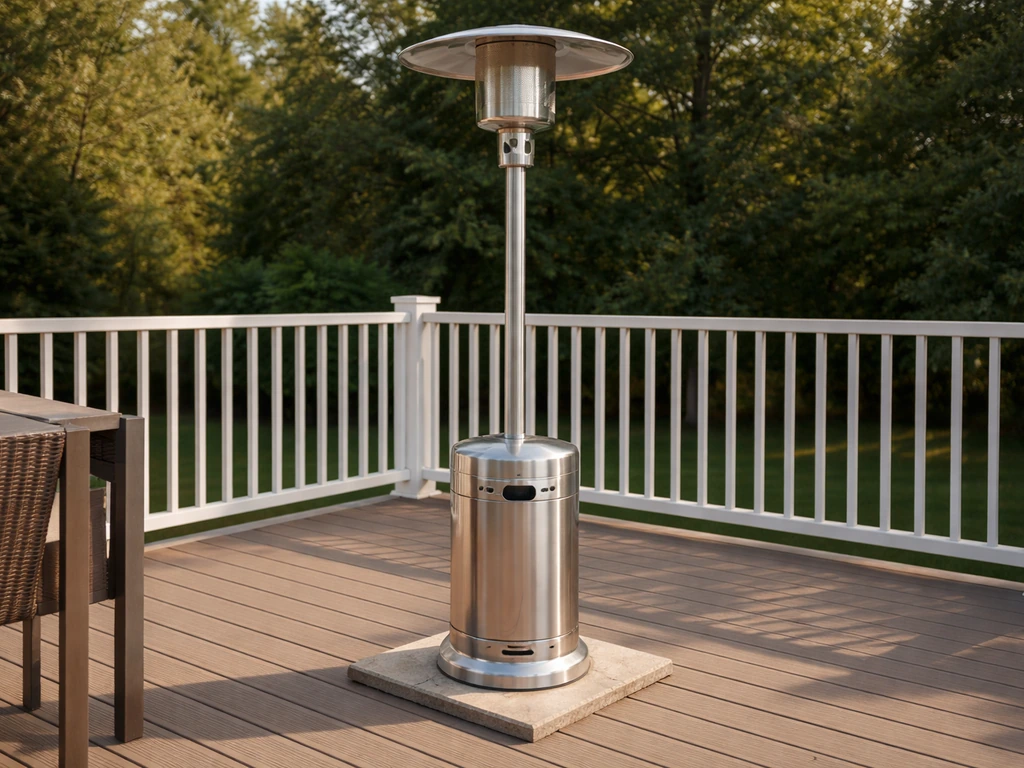
These are the most common portable heaters and the ones people most often drag onto a deck without thinking through clearances. The burner sits at the top of the unit and radiates heat outward and downward through a reflector dish. Because the flame is at height, the deck surface below is usually not the main concern for radiant heat, but the area around and above the heater is. You need real open-air ventilation around a propane heater. On a fully enclosed or covered deck, combustion byproducts build up and the flame can starve of oxygen, leading to ignition failures or incomplete combustion. Propane heaters belong on a deck with good airflow, not in a tight corner or tucked under a low canopy. If you are using a canopy or awning overhead, also review the heater's clearance-to-overhead-structures requirements so the radiant heat has enough space to dissipate tucked under a low canopy.
Natural gas heaters
Natural gas units are usually mounted or semi-permanent and connected to a gas line. If you are adding one to a deck, the gas line routing and connection must comply with local gas codes and should be done by a licensed plumber or gas fitter. The same clearance-from-combustibles rules apply once the heater is running, and the deck surface below a wall-mounted or post-mounted gas infrared heater still needs to be evaluated for radiant heat exposure if the unit is mounted low.
Electric infrared heaters
Electric infrared heaters are the most deck-friendly option overall. There is no open flame, no combustion, and no need to worry about gas leaks or ventilation in the same way. Wall-mounted or ceiling-mounted electric models like those from Infratech are designed specifically for covered outdoor spaces and direct the heat precisely where you want it. The main considerations for decks are keeping the heating element at the correct distance from combustible surfaces above and below, protecting the unit from moisture (not all electric heaters are rated for wet locations), and making sure your deck's electrical circuit can handle the load. Electric infrared patio heaters should be protected from moisture, since not all models are rated for wet locations. On a covered deck, electric infrared is usually the safest and simplest choice.
Clearances: the numbers that actually matter
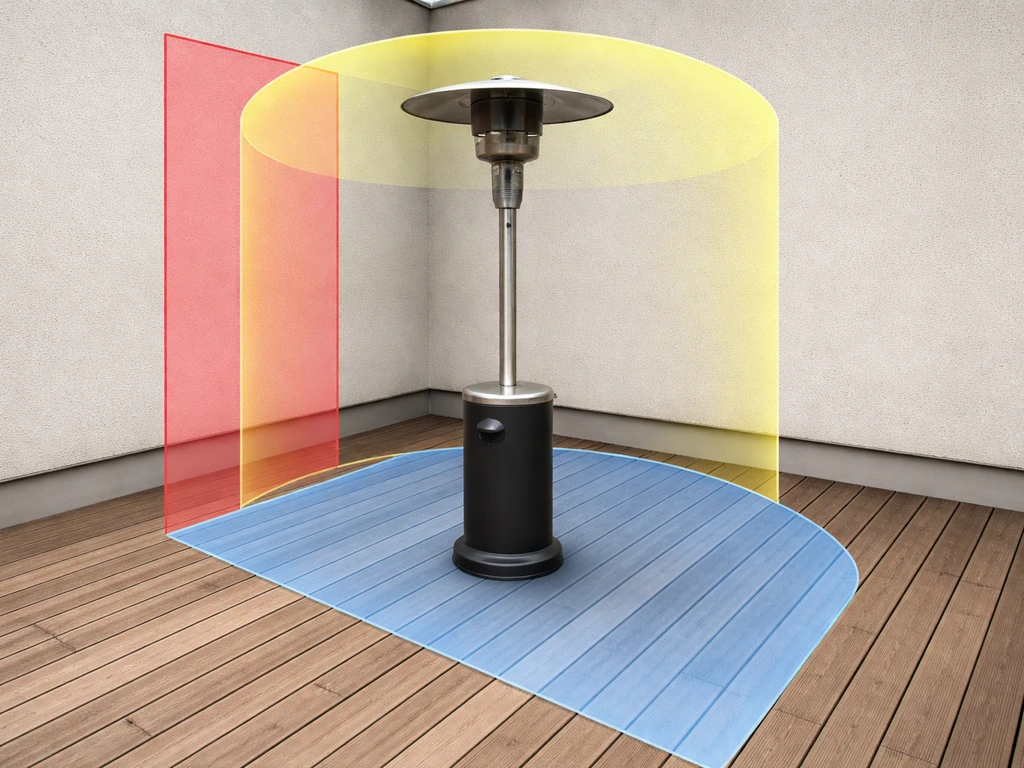
Every patio heater manufacturer publishes clearance requirements in their manual, and those numbers are not suggestions. They are the distances you must maintain between the heater and any combustible material, including your deck railings, overhead beams, furniture, and walls. Ignoring them is the single fastest way to create a fire hazard on a deck. Here is what the major brands specify and what you should use as a practical baseline.
| Heater / Source | Side Clearance | Top/Overhead Clearance | Front/Below Clearance |
|---|---|---|---|
| Fire Sense (gas tower) | 24 in from sides | 36 in from top | Check manual for below |
| AZ Patio Heaters (tabletop/tower) | 24 in from sides | Per manual | 3 ft from front of reflector |
| Infratech (electric infrared) | 18 in all four sides minimum | 36 in directly in front of element | Per installation sheet |
| Mr. Heater | Per combustibles section in manual | Per manual | Per manual |
| General safe baseline (all types) | 24 in minimum sides | 36 in minimum overhead | 36 in from front of emitter |
Pull out your manual and find the clearance diagram before you place the heater. If you no longer have it, look up your model number online or check the manufacturer's website for a PDF. The clearances shift depending on whether the heater is freestanding, wall-mounted, or tilted, which is worth noting for mounted electric units where tilt changes the angle of the heat output and therefore the effective clearance to the surface below.
Pay special attention to deck railings. A wood or composite railing 20 inches from the side of a propane tower heater puts you right at or below the minimum clearance. Same goes for overhead pergola beams on a covered deck. Measure with a tape before you plug in or light up.
Get the base right and protect the deck surface
Stability is a safety issue, not just a convenience one. A top-heavy propane tower heater on an uneven deck surface can tip over, and most modern heaters include a tilt switch that cuts the gas if the unit falls. That is a good backup, but it is not a substitute for a properly leveled, stable setup. Place the heater on a flat section of decking, use a non-combustible base pad underneath (concrete pavers, a heater mat, or a purpose-made deck protector), and if you are on composite decking, that pad is not optional.
- Use a concrete paver set, a heater mat, or a product rated for composite decking under the heater base
- Make sure the heater is fully level before lighting it, especially on older decks where boards may have shifted
- For tabletop propane heaters, verify the table itself is rated to hold the weight and heat output
- Do not run the heater on a surface with gaps wide enough for a dropped component or ember to fall through to the structure below
- Anchor or weight the base if you are in an area with significant wind; gusts can destabilize tower heaters even without tipping them
Wind on a deck also affects flame behavior in propane heaters. A sustained gust can blow out the burner, which then requires you to wait at least five minutes before attempting to relight to let any accumulated gas dissipate. Fire Sense's manual specifically calls this out: if the burner flame is blown out by wind, turn the heater off and wait a minimum of five minutes before relighting. Do not shortcut this, especially on a wood or composite deck where a gas buildup and reignition can send flame in an unexpected direction.
When your heater acts up on the deck: what to check first
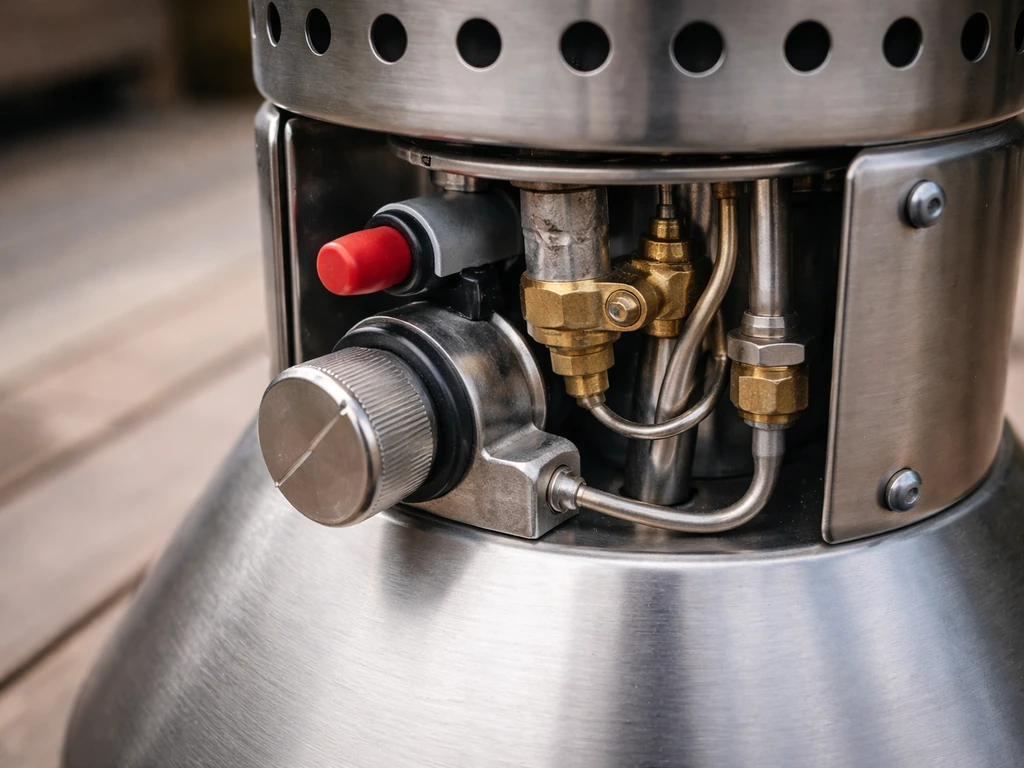
A deck setup introduces a few specific failure modes that you might not run into on a concrete patio. If your heater is giving you trouble, here is where to start before assuming you need parts or a service call.
Won't ignite or ignites then dies immediately
On a deck, the most common culprits are wind interference and a dirty or misaligned thermocouple. Wind can prevent the pilot flame from staying in contact with the thermocouple long enough to generate the millivolt signal needed to hold the gas valve open. Try shielding the burner area from wind briefly during startup. If the heater still dies within a few seconds of lighting, the thermocouple is almost certainly the issue. It sits right next to the pilot flame and if it is coated with debris, bent away from the flame, or simply worn out, it will not send enough current to keep the gas valve open. Thermocouples are inexpensive and easy to replace on most freestanding heater models.
Tilt switch keeps shutting the heater off
If the heater clicks off shortly after ignition and you did not knock it over, the tilt switch may be tripping on its own. This happens when the heater is set up on an uneven surface (very common on older decks with warped or settled boards) or when the internal tilt switch mechanism has become sticky or corroded. First, re-level the heater using the base leveling feet if your model has them, or slide a thin shim under one side of the base pad. If the deck itself is noticeably sloped, that is a real problem for tower heaters. If leveling does not fix it, the tilt switch itself may need to be tested or replaced.
Flame is weak or heater output seems low
Low output on a propane heater on a deck is often a regulator issue triggered by cold propane tanks or a pressure regulation lockout. If the tank is low or cold (common on a cool evening when you first go to use the heater), the regulator can enter a safety lockout mode. Turn the heater off, close the tank valve, wait 30 seconds, then slowly reopen the tank valve before trying to relight. If the problem persists, the regulator may need replacement. Also check that the burner orifice is not clogged with spider webs or debris, which is extremely common in heaters stored on decks between seasons.
Your pre-run checklist for deck use
Before you light up or plug in a patio heater on a deck for the first time this season, or any time you move it to a new location, run through this checklist. It takes about five minutes and prevents the most common problems. A patio heater can warm nearby surfaces, but it is not designed to melt snow in any controlled or reliable way.
- Identify your deck material: composite, wood, vinyl, or concrete/pavers. If it is composite or vinyl, place a non-combustible pad or pavers under the heater base before proceeding.
- Pull up the heater's manual (search model number plus 'manual PDF' if you don't have it) and locate the clearance-from-combustibles diagram. Write down the required side, top, and front clearances.
- Measure from the heater body to every nearby combustible surface: railings, walls, overhead beams, furniture, curtains, or planters. Every measurement must meet or exceed the manufacturer's minimums.
- Check that the heater is level using a small bubble level on the base. Adjust feet, shim the base pad, or relocate to a flatter section of the deck if needed.
- For propane heaters: check the tank connection for leaks using soapy water on the hose and fittings. Bubbles mean a leak; do not light the heater until the fitting is tightened or replaced.
- For electric heaters: verify the outlet or hardwired circuit is rated for the heater's wattage, check the power cord for any damage, and confirm the unit is rated for outdoor/wet location use if your deck is exposed to rain.
- Check the burner and orifice area for spider webs, insect nests, or debris. Clear them with a soft brush before lighting.
- Confirm the tilt switch is functional by gently rocking the heater slightly and verifying the safety mechanism responds.
- During first light, stay nearby and watch for any unexpected flame behavior, unusual odors, or discoloration on the deck surface below the heater.
- After shutting down, let the heater cool completely before covering or moving it, and store propane tanks upright in a well-ventilated area away from the deck structure.
One last thing worth knowing: if your deck is covered and you are wondering whether a patio heater is safe under an awning or canopy overhead, that is a separate clearance question with its own set of rules. The same goes for screened porches, where ventilation and combustible-screen proximity both factor in. The checklist above applies to all of those situations, but the overhead clearance step becomes even more critical in those setups.
FAQ
If I put a heat pad or pavers under a patio heater, can I ignore the clearance distances to the railings and overhead beams?
Measure the pad thickness and size so the heater base sits fully supported and level, then verify the manual’s clearance-to-combustibles numbers still work with the added height. For composite decks, choose a barrier product rated for heat exposure and use it only under the heater’s footprint, not as a substitute for side or overhead clearances.
Can I use any patio heater model on a deck if I keep a heat barrier underneath?
No. Using a heater that is meant for a different installation type (for example, a model designed for wall mounting on a freestanding deck setup) can change the effective radiant angle and make the manufacturer clearances invalid. Confirm in the manual that your exact heater model is approved for freestanding deck use, or follow the required mounting orientation.
Is it safe to run a propane patio heater on a deck that has a canopy but still feels open?
It depends on the heater type, but for most covered setups the safer assumption is no, do not. Propane and natural gas heaters require appropriate ventilation, and “covered” can trap combustion byproducts and reduce oxygen availability. If you are under an awning or pergola, you must maintain both overhead radiant clearances and any combustion airflow requirements listed for your specific model.
My propane patio heater went out in the wind, can I relight right away?
If the unit has a tilt switch, a relight is sometimes allowed after re-leveling, but you should not immediately try again when airflow or wind may have blown the burner out. Turn the heater off and follow your manual’s relighting wait time, which is often at least 5 minutes for wind-blown propane, then only relight once stable flame is confirmed.
If the heater base is non-combustible, why do composite decks still need a barrier pad?
You should never assume the deck board is the same as “fire-resistant.” Even if the heater has a non-combustible base, the surrounding radiant heat can discolor or soften composite and some treated woods. Always use a barrier under the heater base on composite decks and keep the manual’s spacing from rails and nearby furniture.
What’s the biggest mistake people make when using an electric infrared patio heater on a deck?
Start by checking the circuit rating on the heater and your breaker, then confirm the heater is suitable for outdoor use with the appropriate wet-location rating if it will be exposed to rain or mist. Many electric infrared patio heaters also need proper clearance to combustible surfaces above and below, so a “no flame” heater still needs the clearance check.
The deck boards are a little uneven, what should I do before setting up a tower heater?
If the deck is uneven, the risk is not just tipping, it is also that the heater’s tilt mechanism may trip and shut the unit down repeatedly. Use the heater’s leveling feet if available, or place shims under the non-combustible base pad to bring the heater level, then confirm it remains stable when bumped.
What should I do if my deck layout makes it impossible to meet the heater’s minimum clearances?
Not if you cannot achieve the manual’s minimum clearances for that exact installation. “I moved it closer to fit” is a common failure mode because railings and overhead elements reduce safe air space. If the heater must be moved and the clearances cannot be met, choose a different heater type, different mounting location, or a different placement plan.
After storage, my heater lights but shuts off quickly, what should I check first?
Before using the heater for the season, inspect for spider webs and debris at the burner area and pilot components, then verify the thermocouple position and condition if the heater uses one. If the unit ignites and then shuts off quickly, cleaning alone may not fix a worn thermocouple, replacement may be needed.