Yes, you can manually light most gas patio heaters even when the electronic igniter fails. If you're lighting a mosaic-style patio heater specifically, the steps can differ a bit, so follow this guide for how to light mosaic patio heater safely.
How to Light a Patio Heater Manually Safely Today

Grant Mercer
7 May 2026
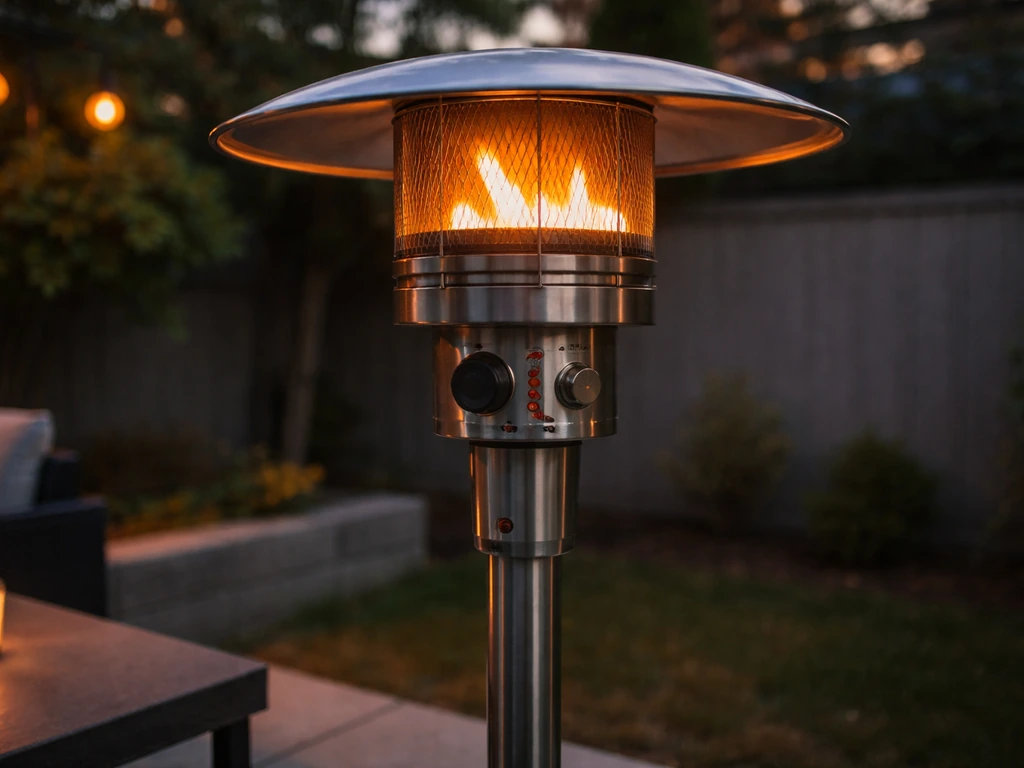
The process involves pushing in the control knob, turning it to the PILOT position, holding it down while applying a flame, and then holding it for another 30 to 45 seconds so the thermocouple heats up and locks the gas valve open. That's the core of it.
The rest of this guide walks you through the exact steps safely, covers the most common reasons it still won't work, and helps you figure out which part is causing the problem if the flame won't catch or won't stay lit.
First, figure out your heater type and control setup
Before you touch anything, you need to know what you're working with. Most residential freestanding patio heaters run on propane (LP) from a standard 20 lb tank, though some larger or permanently installed units use natural gas via a dedicated line. The lighting procedure is essentially the same for both fuel types, but if you have a natural gas unit hard-piped to your house, the stakes of a gas leak are higher and you need to be more cautious about shutting off the supply line if something goes wrong.
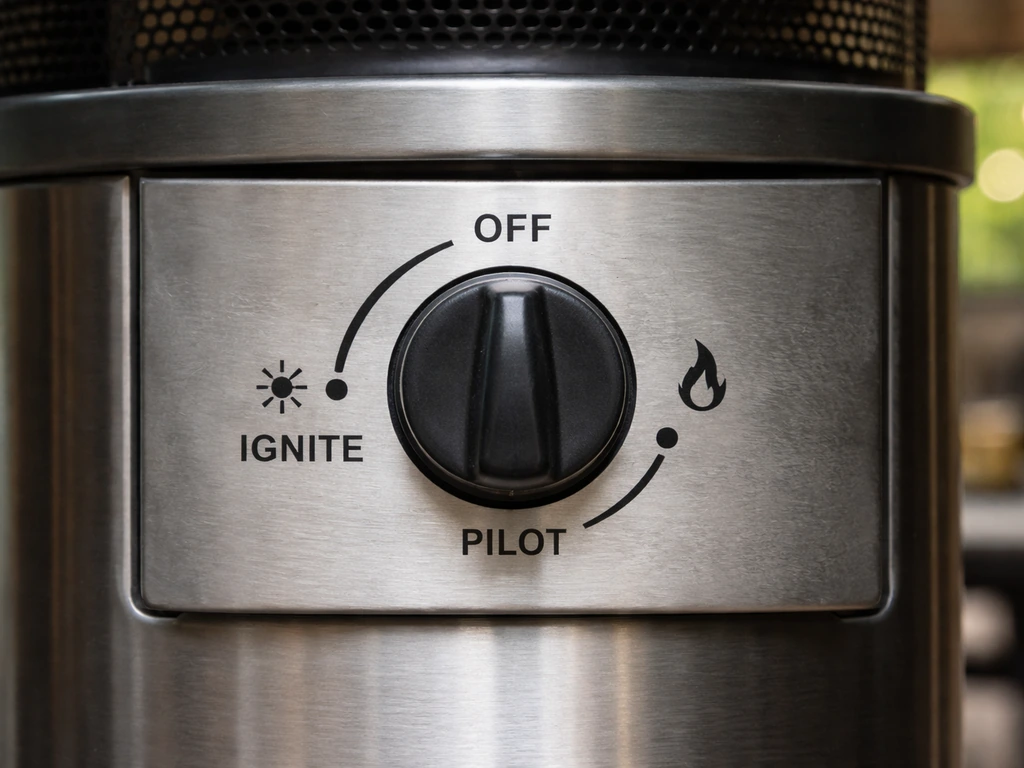
The bigger variable is the control knob setup. Virtually every gas patio heater on the market uses a safety valve knob with at least three positions: OFF, PILOT, and one or more heat settings (LOW, MEDIUM, HIGH or a variable range). Some knobs are labeled clearly; others use icons or just arrows. Locate your knob now and make sure you can read the labels.
If the markings are worn off, look up your model manual before proceeding. Brands like AZ Patio Heaters (models like the HLDS01-WHDK), Hiland, Mosaic, Vulcan, and others all use this same basic valve design, so the steps below will apply across most of them. The main difference from model to model is whether the igniter is a push-button spark igniter built into the knob, a separate piezo button, or a more modern electronic ignition.
If yours has a separate igniter button, you'll use it during the lighting step. If the igniter is broken or missing, you'll use a long-reach lighter instead.
Safety checks before you attempt ignition
Don't skip this part. Working with propane around an open flame requires a few non-negotiable checks first.
- Check for gas smell. Before you do anything, sniff around the base of the heater and the regulator connection. If you smell rotten eggs or sulfur, do not attempt to light the heater. Move away, turn off the tank valve, and let the area air out before investigating the source of the leak.
- Confirm the propane tank is not empty. Pick it up or rock it slightly. An empty 20 lb tank feels significantly lighter than a full one. A full tank weighs about 37 lbs total; an empty one is around 17 lbs. If you're not sure, swap in a known good tank before troubleshooting.
- Check the regulator connection. The regulator screws onto the tank valve (usually left-hand thread, so it tightens counterclockwise). Make sure it's snug. A loose connection won't supply gas reliably and can also allow gas to escape.
- Open the tank valve slowly. Turn the handwheel on top of the tank counterclockwise to open it. Open it fully, then back it off a quarter turn. This is standard practice to prevent the valve from seizing in the open position.
- Check clearances. The heater should be at least 3 feet away from any overhead obstruction and at least 2 feet from any side wall, overhang, or furniture. Most manufacturers require this as a minimum. More is always better.
- Make sure the heater is on level ground. Patio heaters have a tilt switch (also called a rollover switch) that shuts off the gas valve if the unit tips past a certain angle, usually around 15 to 20 degrees. If the heater is on uneven ground or a slope, the tilt switch may trigger and prevent ignition. Get it level before you try to light it.
- Have your long-reach lighter ready. A standard BBQ lighter or fireplace lighter works. Do not use a standard short cigarette lighter; you need your hand well away from the pilot area during ignition.
How to manually light a patio heater: step by step
This procedure covers the standard push-and-turn valve found on the vast majority of freestanding propane patio heaters. If you are wondering how to light a pyramid patio heater, the manual lighting steps are very similar, but you should still verify your model's control layout first how to manually light a patio heater. If your specific model has a different control layout, check your manual, but this will get most people through it.
- Make sure the control knob is in the OFF position. If you've been turning it or if the heater was left in any other position, rotate it clockwise to OFF first and wait at least 5 minutes before proceeding. This clears any accumulated gas.
- Locate the pilot light access point. On most mushroom-style freestanding heaters, there's a small opening or gap near the base of the emitter head, or a small glass panel near the burner. This is where you'll insert the lighter flame. On some models the pilot tube is visible as a small metal tube near the main burner.
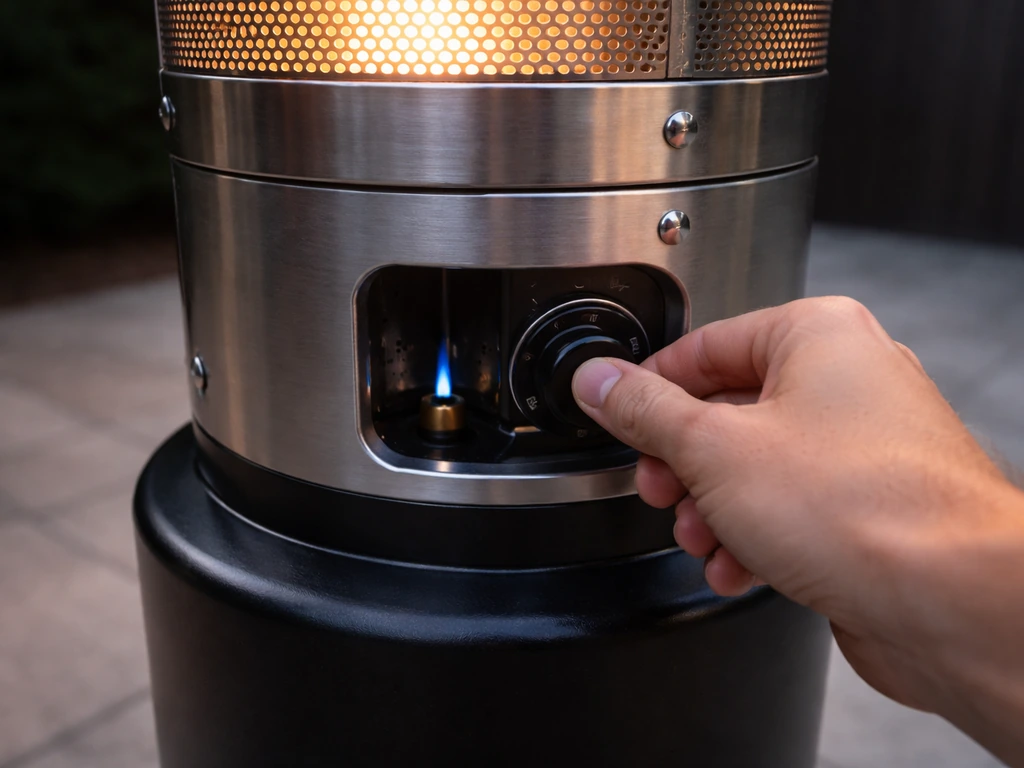
- Push the control knob in firmly and turn it counterclockwise to the PILOT position. You need to push it down against spring pressure to engage the gas valve bypass. On AZ Patio Heaters models, for example, the knob pushes in and turns counterclockwise to reach PILOT. Keep it pushed in the whole time.
- While holding the knob in at PILOT, insert your long-reach lighter into the pilot access area and click the flame on. If your heater has a working igniter button, press that instead. You should hear a small click and see a small blue pilot flame appear at the pilot tube.
- Once you see the pilot flame, keep the knob pushed in and held at PILOT. Hold it there for at least 30 to 45 seconds. This is the critical step most people rush. The thermocouple is a small sensor positioned in the pilot flame; it needs time to heat up to the point where it generates enough voltage (around 25 millivolts) to hold the gas valve open. Letting go too early kills the flame every time. Some manuals call for 45 seconds; the Easy Radiant Works Series PH manual specifically requires 45 seconds of hold time.
- After holding for the full 30 to 45 seconds, slowly release the knob. The pilot flame should remain lit. If it goes out, wait 90 seconds (this allows the thermocouple to cool and the valve to reset), then repeat from step 3.
- Once the pilot is stable, turn the knob from PILOT to LOW or your desired heat setting. The main burner should ignite from the pilot flame with a soft whomp. You're lit.
- If you can't get the main burner to light from here, make sure you're turning the knob far enough. The variable heat range starts just past PILOT and runs through LOW to HIGH. Don't stop halfway.
Why it won't ignite or won't stay lit
If you've followed the steps above and the heater still won't light or keeps dying, one of a handful of things is causing it. Here are the most common culprits and what to check for each.
The pilot lights but goes out when you release the knob
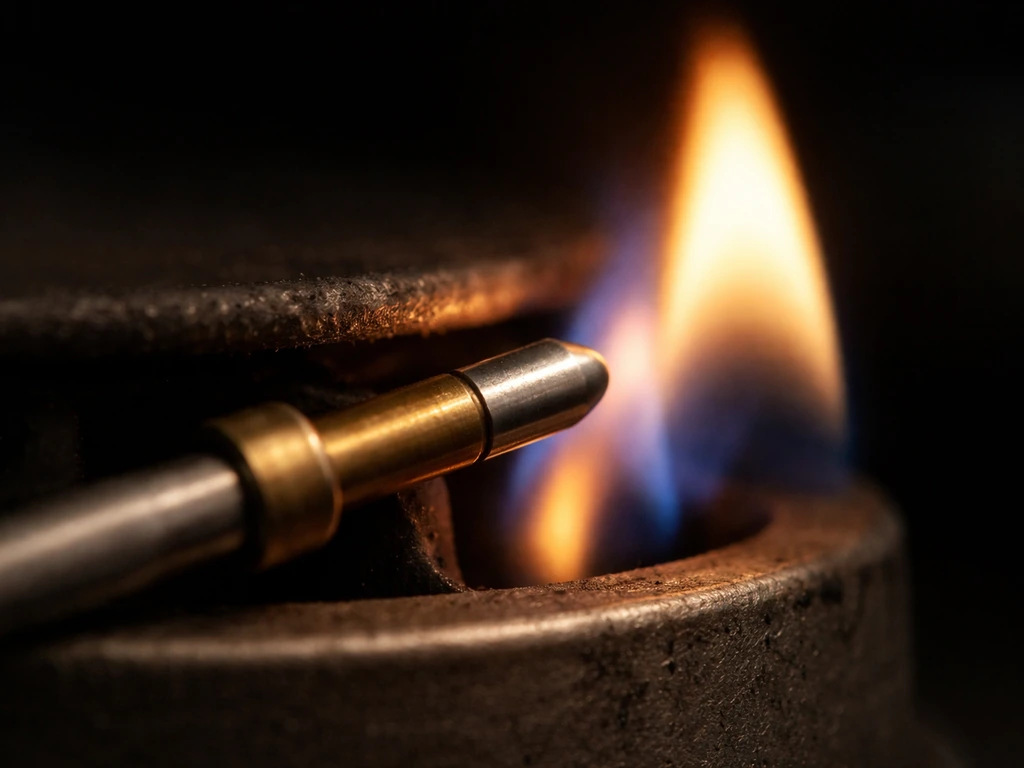
This is almost always the thermocouple. The thermocouple is a small probe that sits in the pilot flame; when it gets hot enough, it generates a small electrical current that signals the gas valve to stay open. If you release the knob and the flame dies immediately, either you didn't hold it long enough (try 45 to 60 seconds next attempt) or the thermocouple is faulty, coated in debris, or positioned incorrectly. A thermocouple that's slightly bent away from the flame won't heat properly. A thermocouple that's corroded or worn out won't generate enough voltage. This is one of the most common failure points on any propane patio heater.
No spark from the igniter, or the igniter clicks but nothing happens
A dead or weak igniter is the reason most people end up searching for how to manually light a patio heater in the first place. A dead or weak igniter is the reason most people end up searching for how to manually light a patio heater in the first place how to light a patio heater. The igniter module can fail from moisture, corrosion at the wire connection, or simply from normal wear.
If you hear a weak or absent click, or if the igniter sparks but the spark isn't landing near the pilot tube, the igniter itself or its electrode tip is the issue. For now, a long-reach lighter bypasses this problem entirely.
But if you want the igniter to work again, you'll need to inspect the electrode tip for carbon buildup (clean it with fine sandpaper or a wire brush), check that the wire from the igniter module to the electrode is seated and not corroded, and test whether the module itself is generating a spark.
Gas flow is weak or inconsistent
If you get a flame but it's very small, flickering, or orange instead of blue, suspect a gas flow problem. The most common cause is a tripped OPD (Overfill Protection Device) on your propane tank. This happens when you open the tank valve too quickly; the OPD detects the sudden pressure surge and restricts flow.
OPW describes that an overfill prevention valve closes automatically during a delivery attempt when the tank reaches a high level, and flow must be reset to resume normal operation restricts flow and requires reset. Fix it by turning off the tank valve completely, turning the heater control knob to OFF, waiting about 30 seconds, then reopening the tank valve slowly.
A clogged burner orifice or a partially clogged regulator can also reduce gas flow. If the problem persists after the OPD reset, inspect the orifice with a flashlight for debris or spiderwebs, which are surprisingly common.
The heater keeps shutting off after a few minutes
If the heater lights fine but shuts off after a short time without being touched, the tilt switch is the first thing to investigate. The tilt switch is a safety device that cuts power to the gas valve if the heater tilts beyond its safe angle. On uneven surfaces, a soft patio mat, or windy conditions, this can trigger repeatedly. Make sure the heater is on a flat, stable surface. Some heaters also have a thermal safety cutoff that activates if the unit overheats, but this is less common in normal outdoor conditions.
How to tell which component is the real problem
Once you know the symptom, you can narrow down the likely part pretty quickly. Here's a practical decision guide.
| What you observe | Most likely cause | Quick test or next step |
|---|---|---|
| Pilot lights, goes out when you release the knob | Thermocouple failure or misalignment | Try holding 60 seconds; if still fails, check thermocouple position in flame and test with multimeter (should read ~25mV when hot) |
| No spark from igniter, or weak/missing click | Faulty igniter module or corroded electrode | Use long-reach lighter as workaround; inspect electrode tip and wire connection for corrosion |
| Spark present but pilot won't light | No gas reaching pilot (OPD trip, valve issue, empty tank) | Reset OPD by closing tank fully, waiting 30 sec, reopening slowly; verify tank has fuel |
| Flame very small or orange/yellow | Clogged orifice or restricted gas flow | Inspect orifice for debris; reset OPD; consider regulator replacement if persistent |
| Heater lights but shuts off on its own | Tilt switch triggered or thermal cutoff | Level the heater; check tilt switch wiring for damage; ensure adequate clearance |
| Control knob won't push in or feels stuck | Gas valve internal fault | Do not force it; the valve likely needs replacement |
Testing the thermocouple
If you have a multimeter, you can confirm a thermocouple failure in about two minutes. With the pilot lit and the thermocouple fully heated (hold the knob for 45 seconds), set the multimeter to millivolts DC and connect the probes to the thermocouple lead and the valve body. A healthy thermocouple should read between 15 and 30 millivolts. Under 10 millivolts and the valve won't hold open reliably. Zero reading means the thermocouple is dead. Replacement thermocouples are widely available for under $15 and are one of the easiest patio heater repairs you can do.
Testing the tilt switch
The tilt switch is usually a small mercury or ball-bearing switch in the wiring circuit between the thermocouple and the gas valve. If you suspect it's falsely triggering, set the heater on a known-flat surface and use a level to confirm it's not leaning. If the heater shuts off even when perfectly level, disconnect the tilt switch from the circuit temporarily (with the heater fully off and the gas valve closed) and test whether the heater stays lit without it. If it does, the tilt switch itself is faulty and needs to be replaced. Never permanently bypass the tilt switch; it's a genuine safety device.
After it's lit: what to check and how to keep it working
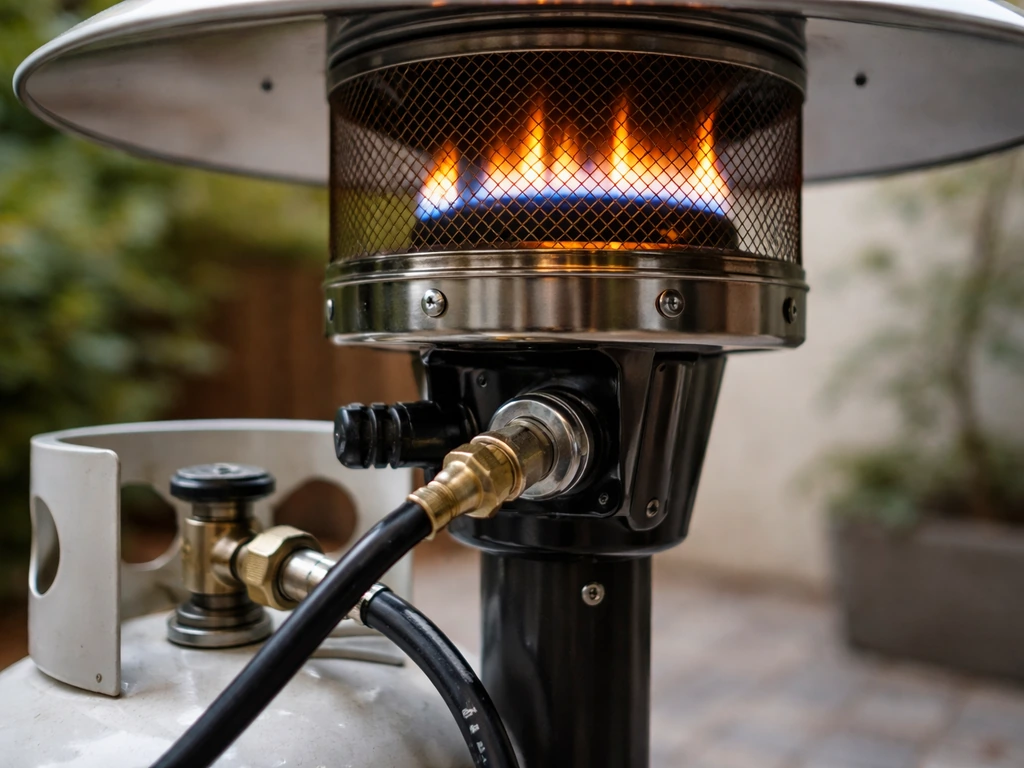
Once you have a stable flame, stand back and watch it for about two minutes before walking away. A healthy patio heater flame should be blue at the pilot and produce a consistent, orange-red glow from the emitter head above. If the flame is sputtering, uneven, or keeps pulling toward one side, that's worth investigating before the next use.
- Listen for hissing. Any hissing sound near the tank connection, regulator, or hose while the heater is running is a warning sign. Turn everything off and check fittings with a soapy water solution. Bubbles mean a leak.
- Check the emitter screen. The wire mesh screen at the top of a mushroom heater should glow evenly. Dark spots or uneven heating usually means the screen is damaged or the burner orifice is partially blocked.
- After the season, cover the heater or store it indoors. Moisture is the number one enemy of the igniter, thermocouple, and burner orifice. A fitted cover extends the life of all these parts significantly.
- Clean the thermocouple tip annually. A light sand with fine-grit sandpaper or a clean cloth removes oxidation and improves conductivity. This alone prevents a lot of 'won't stay lit' calls.
- Inspect the regulator hose for cracks each season. Propane hoses degrade over time, especially when exposed to UV and temperature swings. If you see any cracking, chalking, or soft spots, replace the hose before using the heater.
- Store propane tanks outside, upright, and away from heat sources. Never store a connected propane tank indoors or in a garage.
When to stop and call for service
Most of what goes wrong with a patio heater is DIY-fixable: a thermocouple swap, a new igniter module, cleaning a clogged orifice, or replacing a faulty tilt switch. But there are situations where you should put the tools down. If you smell gas and can't identify the source after a leak test, call a gas technician.
If the control valve itself is sticking, leaking internally, or not responding to the knob, replace the valve or the whole heater rather than trying to repair the valve internals. If you have a natural gas heater on a hard-piped supply and you're seeing persistent ignition issues, a licensed plumber or gas fitter should inspect the supply line and valve. The repair cost is almost always less than the risk of getting it wrong.
If you're working with a specific brand and need the exact lighting procedure for your model, the steps can vary slightly. Hiland heaters, pyramid-style heaters, and Mosaic heaters each have their own quirks worth looking into before assuming a part has failed. The manual lighting procedure above covers the vast majority of cases, but when in doubt, pulling your specific model's manual is always the right move. If you still have trouble getting ignition or a stable pilot, the vulcan patio heater manual for your exact model is a good adjacent reference to confirm the control steps.
FAQ
What should I use if the igniter is broken, and how far should I keep my hand from the burner?
Use a long-reach lighter or grill-style match so your hand stays away from the burner head. Keep the heater pointed upright and hold the knob at PILOT long enough for the thermocouple to heat, usually 45 to 60 seconds, before releasing. If the flame keeps going out every time, stop repeating the same attempt, since you may be clearing gas into the air without fixing the underlying fault.
If the pilot won’t stay lit, how many times can I retry the manual lighting before troubleshooting the cause?
Wait until the heater cools and the valve is fully turned to OFF before trying again. Then reopen the propane tank valve slowly and repeat the lighting sequence once more. If you still cannot get a stable pilot after a couple attempts, address likely causes like thermocouple failure, blocked pilot tube, or a weak igniter, rather than continuing to hold the knob down.
How do I tell if the heater is burning correctly after I light it manually?
Blue flame at the pilot and a steady glow from the emitter head usually indicates proper combustion. If you see a tall yellow flame, persistent heavy soot, or a strong smell of unburned gas, shut the heater OFF and stop using it until you confirm gas flow and burner/orifice cleanliness. Soot or yellow flame often points to restricted airflow or partial clogging.
My heater markings are worn off, how do I confirm which knob position is PILOT versus OFF?
In most setups, the control knob labels are more important than shape or branding, but the positions can be mislabeled when markings wear off. If OFF, PILOT, and the heat settings are not clearly readable, look up your exact model manual or the valve diagram before turning anything, because forcing the knob to the wrong position can prevent the pilot from lighting.
What does it mean if I can light the pilot, but the heater shuts off right after I release the knob?
If the pilot lights but dies when you release the knob, the thermocouple is the prime suspect, but also check that the pilot flame is actually hitting the thermocouple tip. A bent or misaligned thermocouple will not heat correctly even if it is new, and debris can block the pilot flame path.
If my heater sparks but the pilot does not catch, should I still troubleshoot the igniter or focus elsewhere?
If the spark happens but it does not land near the pilot tube, manually lighting with a long-reach lighter can get you by, but the root issue is usually the electrode alignment or carbon buildup on the electrode tip. Clean the electrode tip and verify the wire connection to the igniter module is tight and not corroded, then test for a strong spark near the pilot area.
Why does the flame look weak or flicker, and how do I reset it correctly on propane versus natural gas?
With propane, a common cause of weak flame or no steady pilot is restricted tank pressure due to OPD activation from opening the tank valve too quickly. Turn off the tank valve fully, set the heater knob to OFF, wait about 30 seconds, then reopen the tank valve slowly. If you are on natural gas, this “OPD reset” won’t apply, so shift to checking regulator flow and supply pressure issues.
My heater keeps shutting off, how do I know whether it is the tilt switch or overheating protection?
The tilt switch can trigger on uneven surfaces, over-soft patio mats, and high wind. Confirm the heater base is on a hard, stable, level surface, then ensure the heater is not leaning or rocking. If it still shuts off when level, you can do careful diagnostic checks, but do not permanently bypass safety devices.
What multimeter readings should I look for to confirm a thermocouple problem?
If you use a multimeter, measure millivolts DC after the pilot has been heating the thermocouple for the recommended hold time (around 45 seconds). A healthy reading is typically in the 15 to 30 mV range, under 10 mV usually will not reliably keep the valve open, and zero often indicates a dead thermocouple.
When should I stop DIY troubleshooting and replace parts or call a professional?
Do not remove or bypass the thermocouple, tilt switch, or valve wiring in a way that leaves the heater unsafe. If the control valve itself leaks internally or does not respond correctly, replacement is usually safer than attempting to repair valve internals. Any persistent ignition issue on a hard-piped natural gas heater should be inspected by a licensed gas fitter.
Can wind or patio surface conditions cause manual lighting to fail even if the parts are fine?
Outdoor conditions like wind can pull the flame and prevent the thermocouple from heating consistently. Try lighting on a calm day, or shield the area from gusts temporarily (without blocking required clearance). If the pilot keeps drifting away from the thermocouple, you will see it repeatedly extinguish when you release the knob.