To get the right Westinghouse electric patio heater manual, flip the heater over or check the back of the pole and find the model number label, then go to westinghouselighting. com and download the PDF directly from that model's product page. The two most common freestanding 1500W models are the WES31-15110BLK and the WES31-1588, and their manuals cover the same core topics: assembly, operation, tilt/safety shutdown, cleaning, and grounding.
Westinghouse Electric Patio Heater Manual: Find Model Fast

Grant Mercer
3 Jul 2026
If you need the westinghouse WES31-15110BLK 1500W freestanding patio heater manual, look up the exact model number and download the Owners Manual PDF from the Westinghouse product page. If your heater won't turn on or keeps shutting off, the answer is almost always one of three things: a tripped tilt switch, a wiring or grounding issue at the outlet, or a control setting you haven't toggled yet.
Find Your Exact Model Before You Do Anything Else
Using the wrong manual is a real problem. Westinghouse sells multiple electric patio heater variants, and while the WES31-15110BLK and WES31-1588 look nearly identical and share the same 1500W/120V spec, their control layouts differ enough that following the wrong instructions will just waste your time. The WES31-1588, for example, has two separate buttons: the right button controls heat, and the left button controls the built-in LED lighting independently. If you're looking at a WES31-15110BLK manual and don't see that explained, you'll be confused about why the left button doesn't seem to do anything useful.
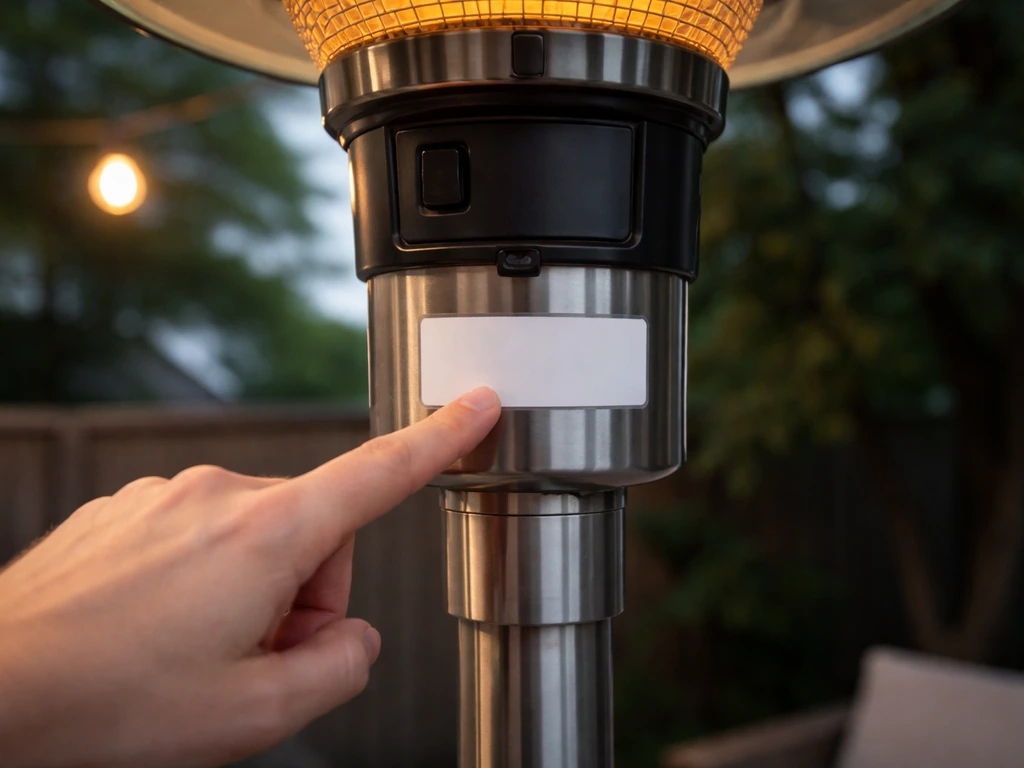
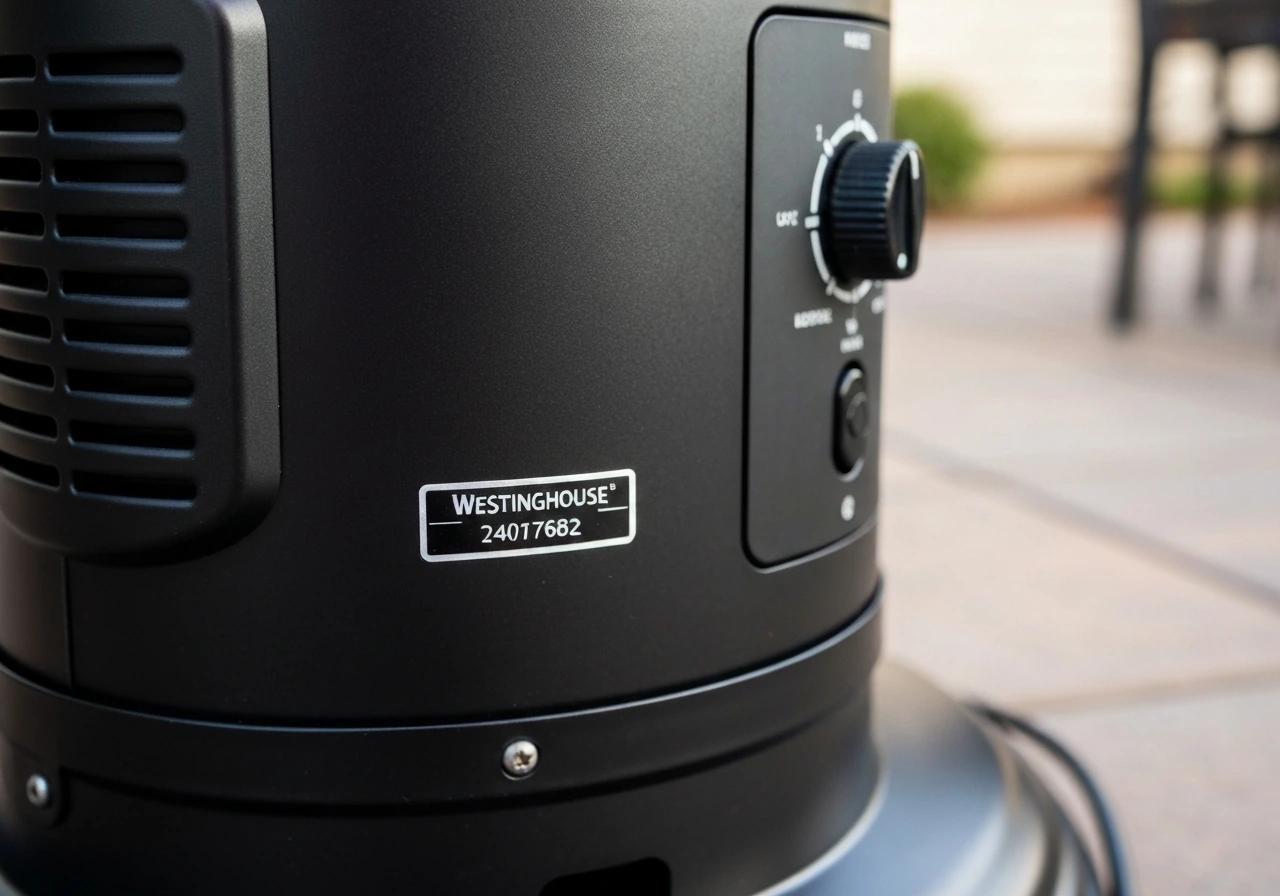
The model number label is almost always on a sticker near the base of the pole, on the underside of the base plate, or on the back of the heating element housing. Look for a string that starts with WES31 and is followed by more numbers or letters. Write it down exactly, including any suffix like BLK or color codes, because those can indicate a different SKU with a different manual version.
If the sticker is worn off, check your original purchase receipt or the box if you still have it. Failing that, search the Westinghouse website using the physical dimensions and wattage (1500W is the most common), and compare the components photo in each available manual against what you're actually looking at.
Where to Get the Manual and What's Actually Inside It
Westinghouse hosts owner's manual PDFs directly on their product pages at westinghouselighting. The Westinghouse WES31-1588 owner manual follows the same overall section structure, including Components, Assembly, Operation, For your safety, Cleaning and storage, Specifications, Grounding instructions, and Warranty [Instruction Manual](https://www. sylvane. com/cdn/shop/files/owner-manual-westinghouse-wes31-1588-electric-standing-patio-heater.
pdf? v=2212039477311351531). com. Search your model number and look for the "Owners Manual" download link on the product detail page.
You can find the Westinghouse 1500W freestanding patio heater manual for your specific model by searching its model number and using the [Owners Manual](/westinghouse-1500w-freestanding-patio-heater-manual) download link on the product page. The WES31-1588 page, for instance, lists the manual right there. If you can't find it through the main site, a direct Google search for your model number plus "instruction manual PDF" usually surfaces the document quickly.
Every Westinghouse electric patio heater manual I've seen follows the same structure, and knowing what each section covers saves you time flipping through pages.
| Manual Section | What It Actually Covers |
|---|---|
| Components | Labeled diagram of every part: base, pole sections, heating element, control panel |
| Assembly | Step-by-step build order, fastener locations, what to check before first power-on |
| Operation | How to use the controls, what the buttons do, tilt safety behavior |
| For Your Safety | Electrical warnings, tilt/fall shutdown rules, power cord instructions |
| Cleaning and Storage | How to clean inside and out, storage requirements |
| Specifications | Power supply (120V/60Hz), max wattage (1500W), dimensions |
| Grounding Instructions | Grounding requirements, cord modification warnings |
| Warranty | Coverage terms and how to make a claim |
The sections you'll use most for troubleshooting are Operation, For Your Safety, and Grounding Instructions. Assembly is critical if you've recently moved or rebuilt the heater, because an incorrectly seated pole section can interfere with the tilt sensor.
Controls and Settings Explained in Plain English
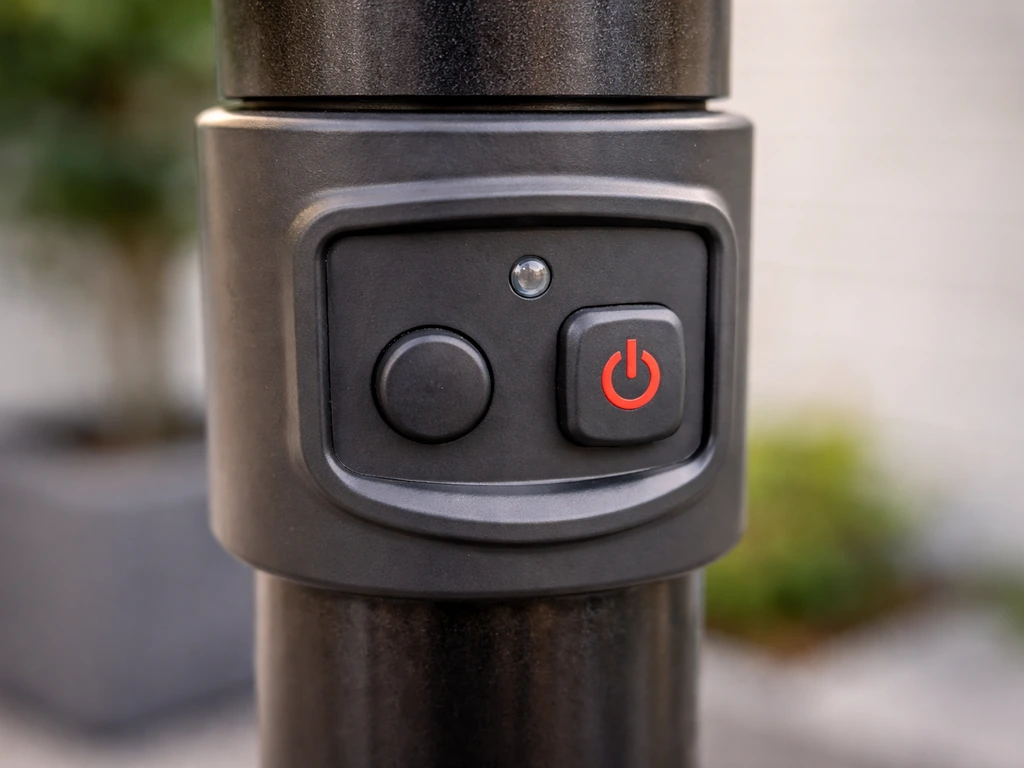
Most Westinghouse electric patio heaters in this lineup have a straightforward control panel on the unit itself. On the WES31-1588, the right button is your heat on/off toggle and the left button handles the LED ring lighting separately. This trips people up because they hit the left button first, see the lights come on, assume the heater is working, then wonder why there's no heat. Always use the right button to activate the heating element.
These units run on standard 120V/60Hz household current at 1500W maximum. That means they draw about 12.5 amps, which matters for circuit loading. If you're plugging into a circuit that already has other high-draw appliances on it, you're risking a tripped breaker every time the heater cycles. A dedicated 15-amp outdoor circuit is ideal. The manual's Specifications section will confirm the exact wattage for your model.
If your model has a thermostat dial rather than just an on/off button, turn it fully clockwise to start, confirm the heater fires up, then dial back to your comfort level. Starting at the lowest setting and wondering why it doesn't come on is one of the most common setup calls I see.
Heater Won't Turn On or Keeps Shutting Off: Work Through This First
This is where most people need help, and the manual actually gives you the diagnostic order if you read it carefully. Here's how to work through the most common failures systematically.
Step 1: Check the outlet and circuit
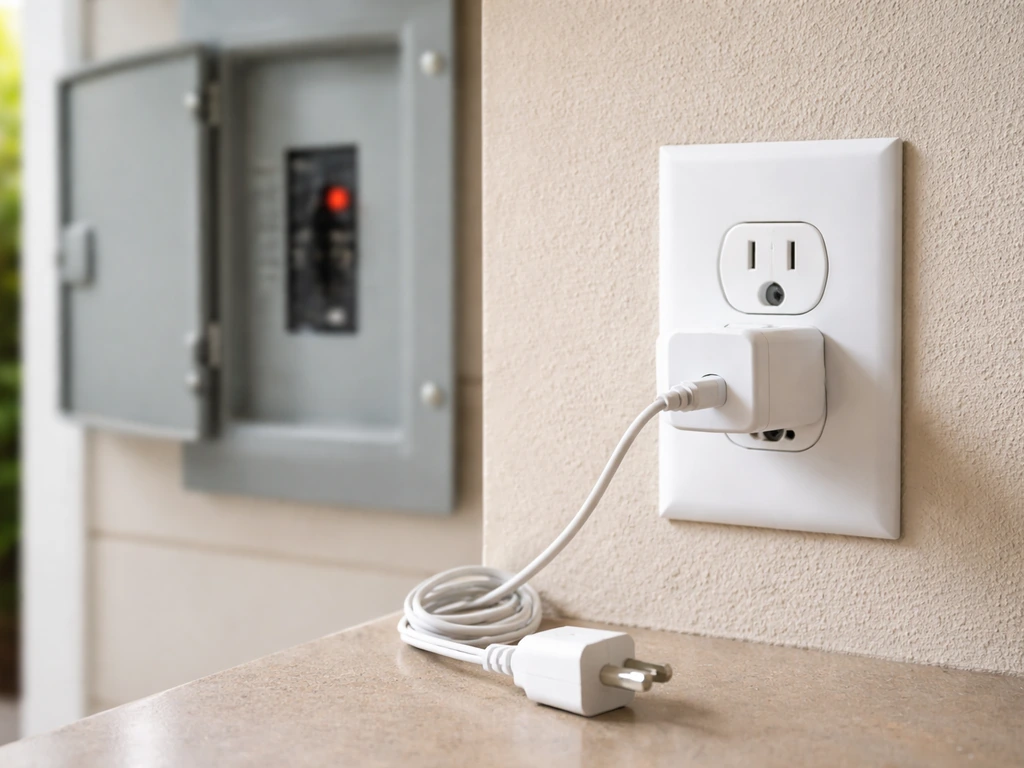
Plug something else into the same outlet and confirm it works. Then check your breaker panel for a tripped breaker, especially on outdoor circuits which often have GFCI protection at the breaker rather than the outlet. Reset any tripped breakers before assuming the heater is faulty. The WES31-15110BLK manual is explicit that the heater requires a properly grounded outlet and warns that improper grounding creates an electrocution risk. If you're using a power strip or extension cord, stop. These heaters need to be plugged directly into a grounded wall outlet.
Step 2: Check the tilt switch
Both the WES31-15110BLK and WES31-1588 manuals describe the same automatic tilt/fall safety behavior: if the heater tilts too much or falls over, a hidden switch cuts power instantly. Once the heater is back upright on a flat, even surface, it reactivates automatically. If your heater randomly shuts off, especially outdoors where wind or an uneven surface might be shifting it, this is the likely culprit. Make sure all four feet are sitting flat and the ground isn't sloped. Even a slight lean on soft grass or pavers can trigger the switch on some units.
Step 3: Check the power cord and connections
Physically inspect the power cord from the plug all the way to where it enters the heater body. Look for kinks, fraying, cuts, or any signs of damage. The WES31-1588 manual specifically warns against operating the heater if the power cord is damaged, and the WES31-15110BLK manual says never to modify the power cord and never to use an adapter with this product. If the cord is damaged in any way, don't try to tape it or splice it. That's a stop-and-call-for-service situation (more on that below).
Step 4: Check the control settings
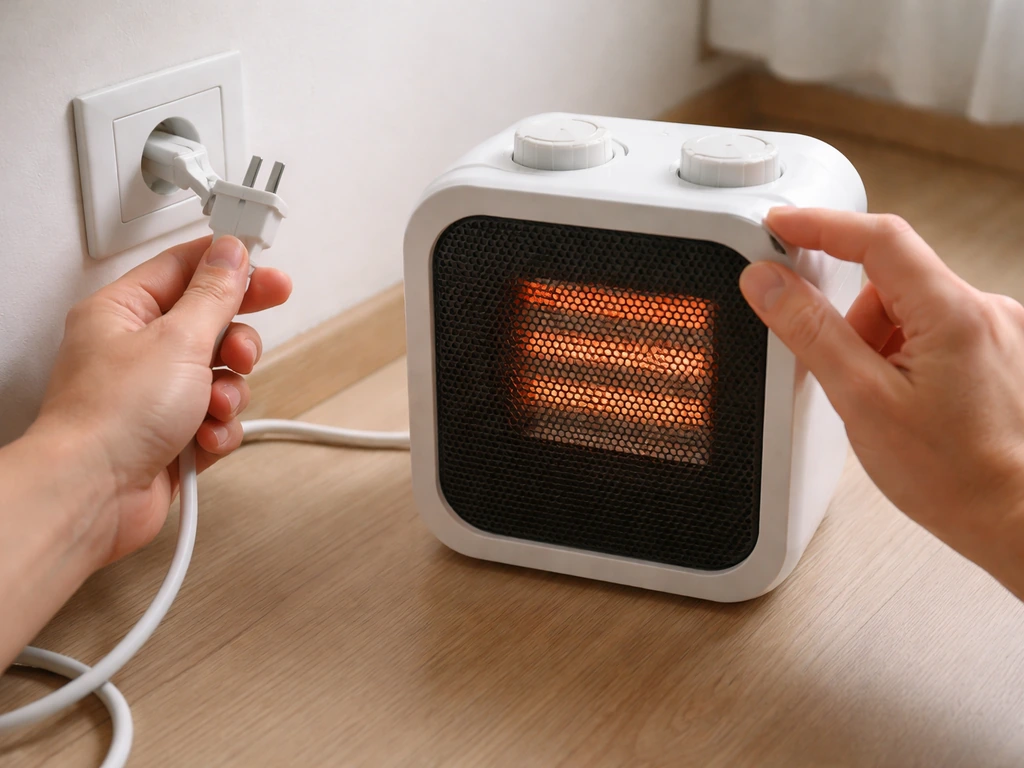
If the heater receives power but nothing happens, confirm you're pressing the correct button for heat (not just the LED button if your model has two). If there's a thermostat, turn it to maximum. If there's a timer function, make sure it isn't set to zero or already expired. Some users have accidentally set a countdown timer and then couldn't figure out why the heater shut off after 30 minutes.
Step 5: Overheat shutdown
If the heater ran for a while and then shut off and now won't restart, it may have triggered its overheat protection. Unplug it completely and let it cool for at least 10 minutes before plugging back in. The WES31-15110BLK manual specifically calls out waiting at least 10 minutes after turning off before touching the unit, and that same cooling window applies here. If it shuts off again after restarting, the heater is being blocked from adequate airflow or the overheat sensor itself may be failing.
Safety Systems: What the Tilt Switch and Overheat Shutdowns Are Actually Doing
Westinghouse's For Your Safety section is worth reading in full, not skimming. The tilt/fall protection is a physical switch, not a software setting. It's designed so that if the heater tips (say, a gust of wind or a pet bumping into it), power cuts immediately rather than leaving a 1500W element glowing near the ground or against flammable material. The manual describes this as automatic deactivation when tilted too much or dropped, with automatic reactivation once the heater is back on a flat surface.
What the manual implies but doesn't state explicitly is that a faulty or stuck tilt switch will mimic other failures. If the switch contacts are corroded or the mechanism is stuck in the tripped position, the heater will appear completely dead even on a flat surface with perfect power. This is a legitimate DIY diagnosis but requires disassembly to reach the switch, which takes you into territory where you're working around live wiring. See the final section before attempting that.
The grounding instructions section is also safety-critical and not just legal boilerplate. The manual explicitly states not to modify the power cord and that no adapter should be used with this product. Using a two-prong adapter on a three-prong plug removes the ground, which means any fault in the heater's wiring has no safe path to dissipate and instead goes through you. Outdoors and near moisture, this is a serious risk.
Cleaning and Maintenance: What the Manual Actually Says to Do
Both the WES31-15110BLK and WES31-1588 manuals are consistent on cleaning procedure, and it's simpler than most people expect. Here's the exact process the manual describes:
- Turn the heater OFF using the control panel, not just the outlet switch.
- Unplug the unit completely from the wall outlet. Do not clean it while powered.
- Wait for the heater to cool completely before touching any surfaces.
- Wipe down the exterior with a soft cloth only. No abrasive pads, no solvents.
- Do not use gasoline, paint thinner, or any chemical cleaners on any part of the heater.
- To clean the interior (the reflector housing and element area), use an air compressor or vacuum cleaner with a nozzle attachment to blow or suck out dust and debris.
- Inspect the power cord and plug for any damage while you have the unit unplugged.
- For storage, place the heater back in its original box and store it in a cool, dry location.
The interior cleaning step matters more than most people realize. Dust buildup inside the reflector housing acts as insulation around the heating element, which raises operating temperature and can trigger the overheat shutoff more easily over time. If your heater is shutting off sooner than it used to, cleaning the interior should be the first maintenance step before assuming a component has failed.
For seasonal storage, the manual's advice to use the original box is practical because it protects the reflector from scratches and keeps the pole sections from bending in transport. If you've already discarded the box, wrap the heating element housing in a towel and store the unit upright rather than laying it on its side.
When to Stop DIYing and Call for Service
There are specific situations where continuing to troubleshoot yourself creates more risk than just calling a qualified technician or replacing the unit. Know where these lines are.
- The power cord is damaged, frayed, kinked hard, or has exposed wiring. Do not use tape or splice it yourself. The WES31-1588 manual explicitly says not to operate with a damaged cord.
- The heater was dropped or has visible physical damage to the housing, pole, or base. The manual warns against using the heater if it has been dropped or damaged, even if it appears to still work.
- You've confirmed the tilt switch is stuck but reaching it requires disassembling the control panel or element housing near the wiring harness. Working inside a 1500W appliance without proper electrical training is where things go wrong.
- The heater trips your home's GFCI outlet or circuit breaker repeatedly. This signals a leakage current somewhere in the unit, which is an electrocution hazard that requires a technician.
- The heating element glows unevenly, flickers, or produces sparks. Shut it off immediately and don't restart it.
- You notice a burning smell that isn't just the normal first-use dust burn-off. Persistent burning odor after the first few uses indicates something is overheating that shouldn't be.
For issues beyond basic cleaning, outlet checks, and tilt switch resets, your two practical options are contacting Westinghouse customer support with your model number for warranty or parts guidance, or deciding whether a repair cost makes sense versus the price of replacement. If you need the Westinghouse 1500W freestanding electric patio heater manual, use your exact model number so the troubleshooting and safety steps match your unit. A 1500W freestanding infrared heater in this category typically retails under $150, so if a repair quote exceeds roughly half that, replacement is usually the better call.
If you're working through a specific model variant like the WES31-15110 or a general 1500W freestanding version, the troubleshooting logic above applies across the whole lineup since Westinghouse uses the same safety architecture in all of them. Other brands like Paramount follow similar tilt-switch and overheat-protection designs, so if you've worked on one of those, the diagnostic approach here will feel familiar. If you need the Paramount patio heater manual, follow the model-specific instructions for controls, safety warnings, and troubleshooting steps.
FAQ
I can’t find the model number label, how else can I confirm the correct Westinghouse electric patio heater manual for my unit?
If your sticker is missing, use the heater’s control layout plus the LED heat behavior to narrow the SKU. For example, on the WES31-1588 the LED button can work independently while heat only responds to the other button. That combination can help you avoid downloading the wrong “same wattage” manual.
What should I watch for when downloading a Westinghouse electric patio heater manual PDF (revisions, versions, or multiple downloads)?
Don’t rely on the product page preview if you see different PDF versions (for example, Rev/A vs Rev/B). Download the specific PDF that matches your exact model string (including color or suffix like BLK) and keep a copy for future troubleshooting.
If the power cord looks damaged, can I keep using the heater and patch it until I get a manual or replacement part?
Stop using the heater if you notice any exposed copper, deep cuts, melted spots, or the cord feel becomes stiff or brittle near the plug or where it enters the unit. Taping or heat-shrinking over damage is not a safe substitute, and you should contact support or replace the heater.
Can I use an extension cord with a Westinghouse electric patio heater that is 1500W?
Yes, but only if you already know your extension cord rating. Use a heavy-duty outdoor cord that is properly grounded, and avoid long or undersized cords because they can overheat under 1500W loads. If you can’t verify the cord’s gauge and outdoor rating, plug directly into a grounded wall outlet instead.
My heater won’t turn on, how do I tell whether the problem is the breaker or a GFCI outlet?
A tripped GFCI can happen at multiple points. The circuit breaker may trip, or an outlet-mounted GFCI may trip even if the breaker looks fine. Test the outlet with another device, press the GFCI “Test/Reset” buttons, and only then retest the heater.
Why does my Westinghouse heater shut off intermittently outdoors even when it seems positioned correctly?
For shutdown that looks like “random” power loss, confirm two physical conditions first: level ground and correct foot contact. If the heater is on pavers that rock slightly or on uneven decking, the tilt sensor can keep cutting power. Move it to a flat, hard, level surface and retest.
What’s the best restart process if the heater shut off due to overheat protection and now won’t heat right away?
If it runs briefly then stops, overheat protection is a common cause. Unplug and cool for at least 10 minutes, then restart with clear airflow around the reflector housing. Don’t operate under a low cover, and avoid blocking the intake or surrounding it with items that trap heat.
I only see the LED lights, but no heat. What control mistakes commonly cause this with these Westinghouse models?
For controls with both heat and LED features, verify you are activating the heat control, not the independent LED button. Also check for a thermostat dial setting and for any timer mode that might be set to a short countdown. These are setup issues, not heater failures, and they can look identical to a malfunction.
How can cleaning affect overheating and shutoff, and what parts should I clean first according to the manual logic?
Interior cleaning is more than aesthetics. Dust buildup can insulate the reflector housing and cause faster overheat shutdown. If you cleaned the exterior only, do the manual’s interior cleaning steps next (after the unit cools and is unplugged).
My heater behaves like the tilt switch is stuck, should I try to repair it myself or get service?
If the heater repeatedly trips tilt protection even when on flat ground, the tilt mechanism may be stuck or corroded. Disassembly to reach the tilt switch increases risk around wiring. At that point, it’s usually better to contact support for parts or service rather than forcing the mechanism.
When does it make more sense to replace the heater instead of paying for repair, based on typical 1500W pricing?
For safety decisions, a practical rule is to avoid paying for extensive troubleshooting when the cost approaches replacement pricing. The article notes a threshold around half the typical retail cost for a 1500W freestanding model. If repair quotes exceed that, replacement is often the more economical and safer path.
What troubleshooting sequence should I follow so I don’t waste time, especially if the heater is totally unresponsive?
After a correct manual match, your troubleshooting order should still start with outlet power and safety controls. If everything powers correctly but the unit is dead, that’s when grounding, cord integrity, and then tilt/overheat logic matter most, before considering any component-level repair.