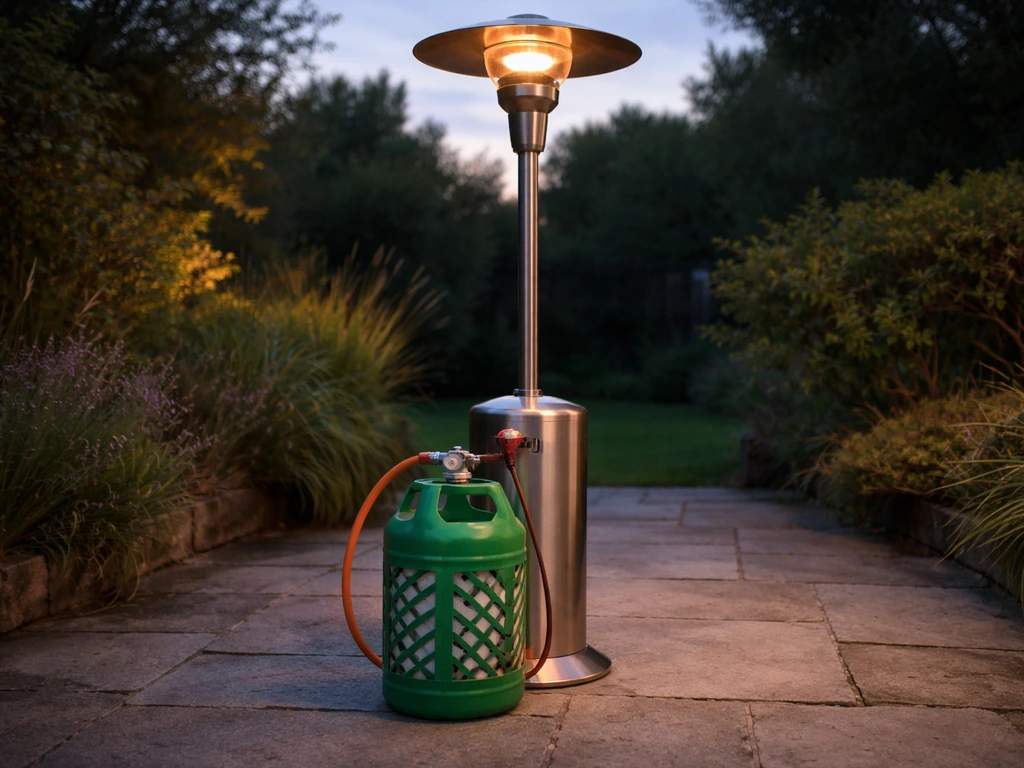
Calor Patio Gas is simply propane, sold in distinctive green cylinders and branded specifically for outdoor use. It is the same LPG propane you find in red Calor cylinders, just packaged and named for patio heaters, BBQs, and garden appliances. If your patio heater manual says it runs on propane, a Calor green patio gas cylinder in either the 5kg or 13kg size is the correct fuel. Everything else, from picking the right regulator to staying safe while connecting it, flows from that one fact: patio gas equals propane.
What Is Calor Patio Gas in UK Patio Heaters

Grant Mercer
28 Jun 2026
What Calor Patio Gas actually is
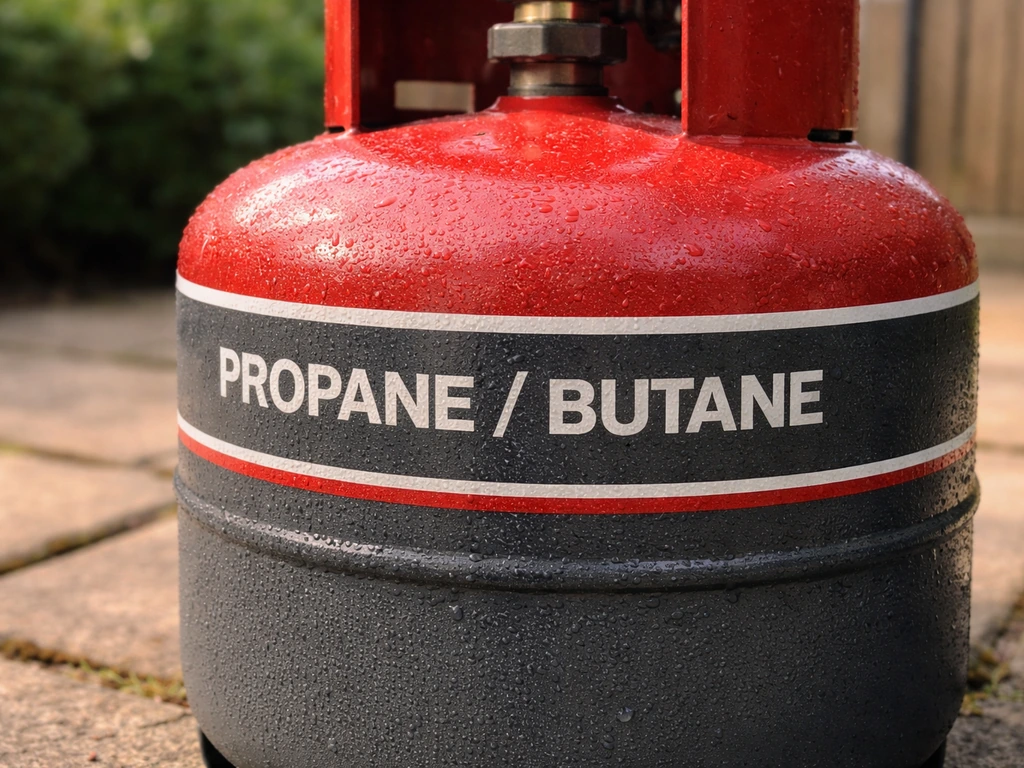
Calor sells two main types of LPG for home and leisure use: propane and butane. They are chemically different gases, stored at different pressures, and they need different regulators. Patio Gas is Calor's consumer-friendly name for propane stored in green cylinders, designed specifically for outdoor use. Propane performs well in cold weather and low temperatures, which is exactly why it is the right choice for a patio heater sitting outside on a spring evening. Butane (sold in blue Calor cylinders) performs poorly below about 5°C and is better suited to indoor or sheltered appliances like camping stoves.
The key takeaway is that 'Patio Gas' is not a unique fuel blend. It is a marketing term Calor uses to make it easy for consumers to pick the right cylinder for outdoor heating. If you have ever wondered why the cylinders at the garden centre are green, that is the visual shorthand: green equals patio gas equals propane for outdoor use.
Where patio gas is used and how patio heaters are fuelled
The vast majority of standalone freestanding patio heaters sold in the UK run on propane. The cylinder typically lives inside the base of the heater (the weighted pedestal section), with a short hose running up to the burner assembly. Some table-top models sit the cylinder right underneath on a small shelf. Either way, the setup is the same: propane cylinder, regulator, hose, and burner. Calor recommends the 5kg green cylinder for lighter use and the 13kg cylinder if you want longer burn times between swaps, and both sizes use the same regulator connection type.
It is worth knowing that 'patio heater fuel' and 'BBQ gas' are effectively the same thing in the UK. A green Calor patio gas cylinder works for both. The heater's manual might say 'propane only', and that is what you are buying when you pick up a green Calor cylinder. Red Calor cylinders also contain propane, but they are primarily aimed at commercial or industrial use and use a different connection (a bullnose fitting rather than the 27mm clip-on used by patio gas cylinders), so stick with the green cylinder for a standard patio heater.
Identifying your cylinder type and checking compatibility
Before you connect anything, you need to confirm three things match: the gas type your heater requires, the cylinder you have, and the regulator fitting. Getting any one of these wrong either means the heater will not work or, more seriously, creates a safety risk.
Check the heater label and manual first
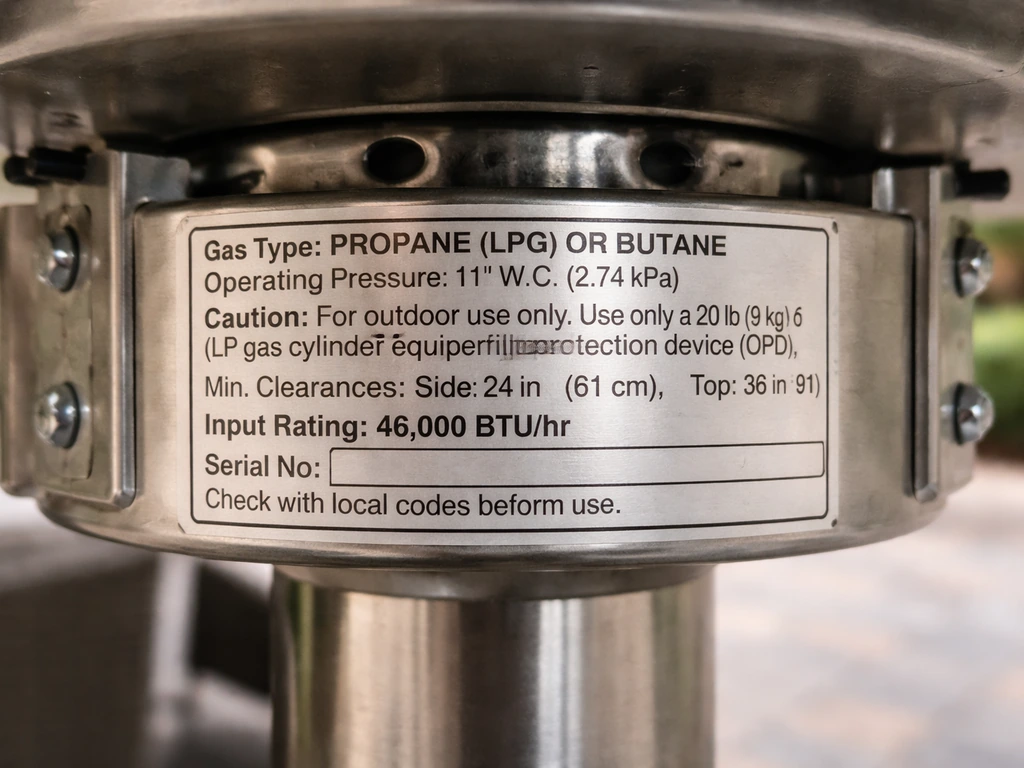
Look for a data plate or sticker on your heater, usually on the base or the underside of the burner head. It will state the gas type (propane or butane), the operating pressure in mbar, and often the gas consumption in kW or g/h. A standard UK patio heater will say propane and 37 mbar. If it says butane or 28 mbar, you have an appliance that should not be used with a patio gas cylinder and needs a different setup.
Identify the cylinder by colour and fitting
Calor's colour coding makes this straightforward in most cases. Green cylinders are patio gas (propane). Blue cylinders are butane. Red cylinders are propane but for commercial use with a different valve. The patio gas 5kg and 13kg green cylinders have a 27mm clip-on valve, which is specific to this cylinder family. If the regulator in your hand clips onto the valve with a 27mm collar and a simple push-and-turn lock, you have the right cylinder and regulator pairing for patio gas.
| Cylinder type | Colour | Gas | Valve connection | Typical use |
|---|---|---|---|---|
| Calor Patio Gas 5kg | Green | Propane | 27mm clip-on | Patio heaters, small BBQs |
| Calor Patio Gas 13kg | Green | Propane | 27mm clip-on | Patio heaters, larger BBQs |
| Calor Butane 4.5kg | Blue | Butane | 21mm clip-on | Indoor/sheltered appliances |
| Calor Propane 6kg/19kg (red) | Red | Propane | Bullnose screw fitting | Commercial/industrial use |
Do not try to force a regulator onto a valve it does not naturally fit. Calor's own safety guidance is explicit on this: if the connection does not go on easily, stop and check that you have the right regulator for the cylinder. Forcing mismatched fittings can damage the valve and create a gas leak.
Confirm the regulator pressure matches
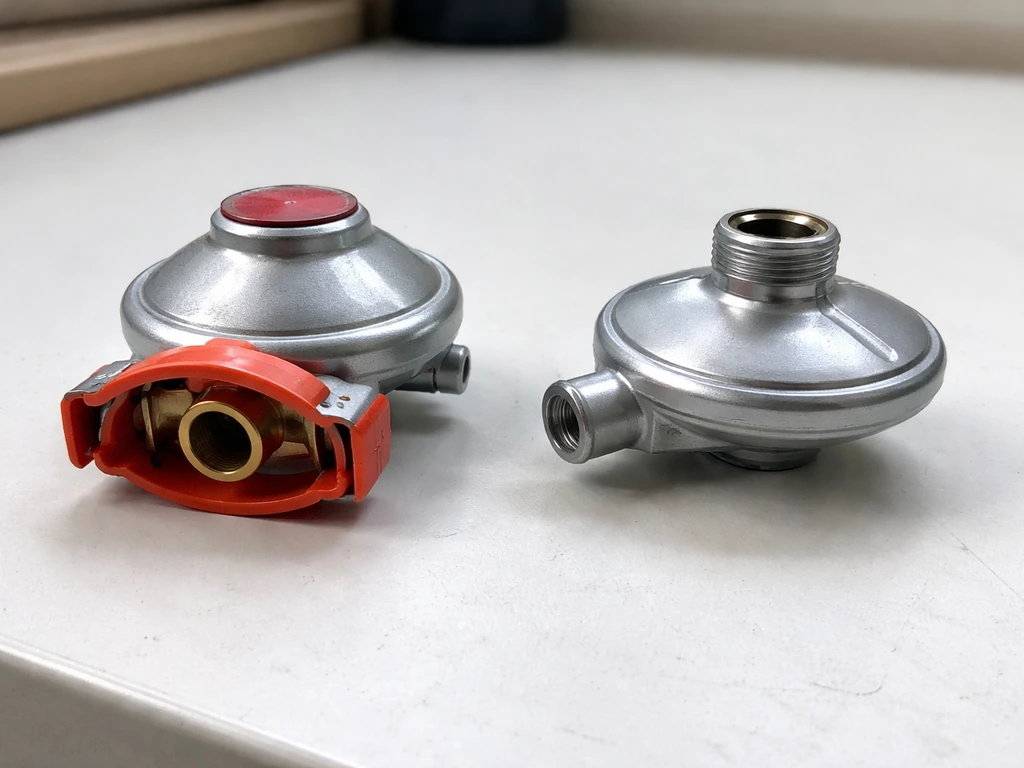
For a Calor patio gas cylinder connected to a standard UK patio heater, you need a 37 mbar propane regulator with a 27mm clip-on cylinder connection and an 8mm hose outlet. Calor and third-party suppliers (including Cadac) sell these specifically labelled as 'patio gas regulators'. A butane regulator outputs around 28 mbar and will not deliver enough pressure for a propane appliance. They are physically different fittings anyway, so you cannot accidentally swap them if you are using the correct cylinder, but it is worth double-checking the mbar rating printed on the regulator body before you connect it.
How to buy or exchange a Calor patio gas cylinder
Calor cylinders work on a deposit and exchange scheme. The first time you buy one, you pay for both the gas and the cylinder deposit (the cylinder legally remains Calor's property throughout). When the cylinder is empty, you take it back to a Calor stockist and exchange it for a full one, paying only for the refill.
To find where to buy gas for a patio heater, look for a Calor stockist and check they exchange green patio gas cylinders. This is sometimes listed as 'Refill Only' at the point of sale, meaning you must hand over an empty cylinder to get a full one. You cannot just buy a second full cylinder without another deposit unless you are starting fresh.
For most homeowners, the easiest sources are large DIY stores, garden centres, petrol stations, and some supermarkets. Calor's website also has a stockist finder. If you are in a situation where you have the wrong cylinder at home (for example, a butane setup and a propane patio heater), the practical solution is to return the incorrect cylinder to the retailer where you bought it and start a new deposit agreement for a patio gas green cylinder.
You cannot simply swap gas types at the exchange point because the deposit agreements are separate. To find out exactly how much a patio gas bottle costs, you will need to look at the cylinder size and whether you are paying a deposit or refill price.
If you are unsure about the right cylinder size, the 5kg is easier to handle and fits inside most patio heater bases without issue. Calor’s guide specifies that patio heating uses the [5kg](https://appliances-help. calor. co.
uk/hc/en-us/articles/360007329078-Which-Calor-Gas-Bottle-do-I-need) and 13kg “Patio Gas” bottle sizes. If you want the quickest way to buy patio gas, check which cylinder size fits your heater base and then purchase a compatible Calor green cylinder from a local retailer or online buy a green Calor cylinder. The 13kg gives you roughly 2. 5 times more burn time and is better value per kilogram of gas, but it is heavier and may not fit inside smaller heater bases.
Check your heater's manual for the maximum cylinder height and weight it will accept.
Connecting patio gas to your heater safely
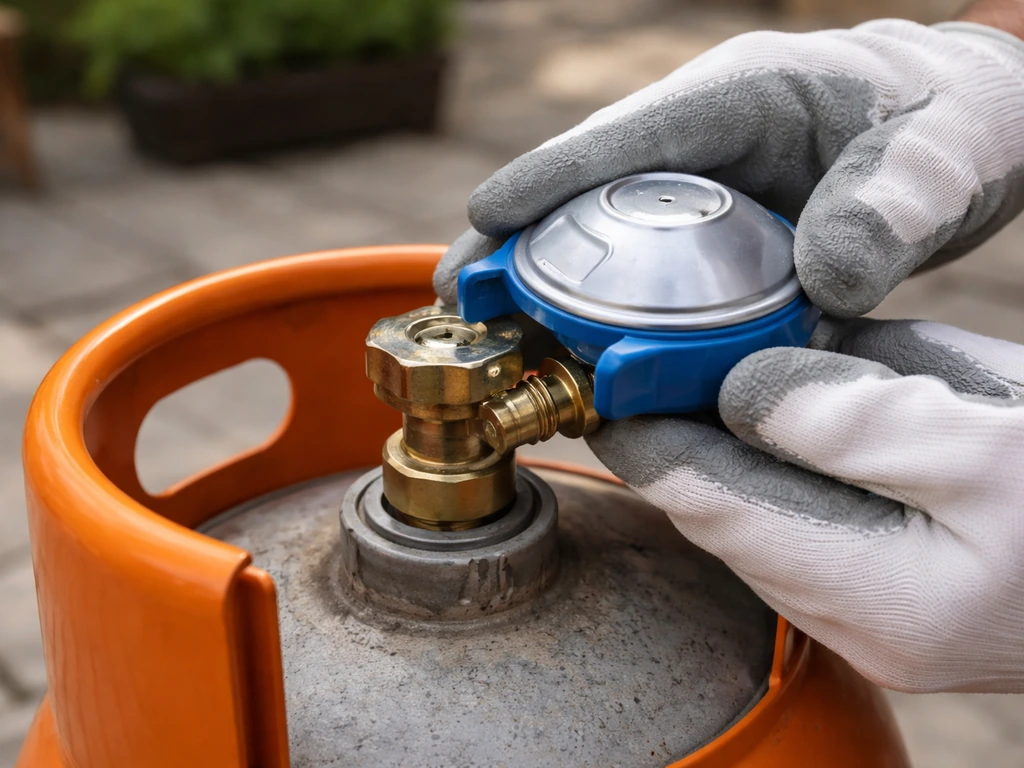
Take your time with the connection process. Gas is unforgiving of shortcuts. Work outdoors or in a well-ventilated space, keep ignition sources away, and never rush.
- Inspect the regulator before fitting it. Check the 27mm clip-on collar and the sealing face for cracks, debris, or damage. Wipe it clean with a dry cloth if needed.
- Make sure the cylinder valve is in the OFF (closed) position before attaching the regulator.
- Push the regulator clip-on collar onto the cylinder valve and twist to lock it in place according to the regulator instructions. Do not force it. It should seat cleanly and lock without excessive effort.
- Connect the hose to the regulator outlet (8mm push-fit or screw fitting depending on the hose) and connect the other end to your patio heater's gas inlet. Make sure both ends are fully seated.
- Open the cylinder valve slowly (usually a quarter to a half turn) and immediately perform a leak check before lighting the heater.
- Apply leak detection solution (or a soapy water mixture with washing-up liquid) to every connection point: regulator-to-cylinder, regulator-to-hose, and hose-to-heater. Watch for at least 30 seconds. Any bubbles mean you have a leak. Close the valve immediately, disconnect, and investigate before proceeding.
- If there are no bubbles, you have a gas-tight connection. Follow your heater's ignition procedure to light it.
One thing that catches people out: some patio heater hoses are sold separately from the regulator, and the hose end that connects to the heater uses a different fitting size than the regulator outlet. Check both ends of your hose match your specific regulator and heater inlet before you start. A regulator rated at 37 mbar with a 27mm clip-on cylinder connection and an 8mm hose nozzle is the standard combination for a Calor patio gas setup, but your heater's manual will confirm the exact hose size it needs.
Troubleshooting gas-related problems with your patio heater
A large proportion of 'my patio heater won't light' and 'it keeps going out' calls come down to the gas supply side rather than a failed component inside the heater. Work through the gas setup first before assuming the thermocouple or igniter is at fault.
Heater won't light at all
- Wrong gas type: If you have a butane cylinder connected to a propane-rated heater, the pressure will be too low and the heater simply will not fire. Confirm your cylinder is the correct green patio gas (propane) cylinder.
- Wrong regulator: A butane regulator on a propane cylinder is a physical mismatch, but a propane regulator rated at the wrong pressure (some older regulators are pre-set at different values) can also cause problems. Check the mbar rating on the regulator body.
- Regulator not fully locked on: If the 27mm clip-on is not fully engaged, gas flow will be restricted or absent. Remove and re-seat it.
- Cylinder valve not open: This sounds obvious but it is easy to forget, especially on a new cylinder exchange. Open the valve before testing.
- Empty cylinder: A cylinder that feels light and produces no hiss when the valve is opened is empty. Exchange it.
Heater lights but won't stay lit
This is the classic thermocouple symptom, but the gas supply is still the first thing to rule out. A partially blocked regulator, a kinked hose, or a cylinder that is nearly empty can all cause the flame to drop below the level the thermocouple needs to stay satisfied. The thermocouple is a safety device: if the flame goes out or drops too low, it cuts the gas supply within 30 to 60 seconds. If your heater lights and then goes out after about a minute, do the following checks before replacing any parts.
- Check the cylinder is not nearly empty. A 5kg cylinder running low will have inconsistent pressure, especially in cooler temperatures.
- Inspect the hose for kinks or tight bends that restrict gas flow.
- Perform a fresh leak check on all connections. A slow leak can drop the supply pressure just enough to cause intermittent flame failure.
- Check the burner head and venturi tube for blockages (spider webs, debris, and insect nests are common). A blocked venturi disrupts the air-to-gas mix and can cause the flame to lift off the thermocouple sensor.
- Consider wind: patio heaters are susceptible to wind even with reflectors in place. Flames flickering and extinguishing in gusts are not always a gas problem.
Low or weak flame
A flame that is smaller than usual or that struggles to reach the main burner ring points to low gas pressure reaching the appliance. The most common causes are: a nearly empty cylinder, a regulator that is failing or frost-locked (in very cold conditions, moisture in the gas can ice up inside the regulator), or a hose that is kinked or partially blocked. If you suspect frost on the regulator, bring the cylinder and regulator into a warmer space for 20 to 30 minutes and try again. Never apply direct heat to a gas cylinder or regulator.
When to stop DIY and call for help
If you have confirmed the correct gas type, a working regulator at 37 mbar, clean connections, and a leak-free setup, and the heater still fails to light or stay lit, the fault is likely inside the appliance. Common internal failures include a worn thermocouple, a faulty piezo igniter, or a blocked gas valve orifice. These are all repairable on most patio heater models with basic tools.
However, if you smell gas persistently after closing the cylinder valve, notice damage to the cylinder, hose, or regulator body, or are not confident in any step of the connection process, close the valve, move the cylinder to a safe outdoor space away from ignition sources, and contact a Gas Safe registered engineer or call Calor directly.
A Reddit discussion on propane BBQ cylinder pressure highlights that using the wrong regulator or spec for UK setups is a common practical issue people run into Gas Safe registered engineer or call Calor directly. Gas is not something to push through uncertainty on.
FAQ
Is Calor patio gas propane, or is it a different fuel blend?
It is propane, not a unique blend. Calor uses “patio gas” as the consumer name for propane sold in green cylinders for outdoor appliances, so the heater must specify propane and the correct regulator pressure (typically 37 mbar).
Can I use a blue Calor butane cylinder with a patio heater marked for propane?
No. A propane patio heater needs propane at the appliance pressure, commonly 37 mbar. Blue cylinders are butane and require a different regulator output (around 28 mbar), so the heater may not light properly or may shut down due to low flame.
What if my regulator only says 27mm clip-on but I cannot confirm the mbar rating?
Do not connect it until you can read the regulator’s output pressure. Match the mbar rating to your heater data plate (often 37 mbar for propane patio heaters). If the mbar is missing or unreadable, replace the regulator rather than guessing.
How do I tell which regulator and hose sizes I need without relying on colour alone?
Check the heater’s data plate or manual for gas type and operating pressure, then verify the regulator connection and hose outlet size on the regulator and hose ends. Colour helps, but the fittings and pressure are what must match for safe operation.
Why does my patio heater go out after 1 minute even though it lights?
That pattern often points to the safety thermocouple not staying heated, usually because the flame is dropping too low. Common causes are a nearly empty cylinder, frost-locked regulator in cold weather, kinked or partially blocked hose, or insufficient pressure from a wrong regulator.
What should I do if I suspect frost on the regulator?
Move the cylinder and regulator to a warmer space for about 20 to 30 minutes, then try again. Avoid direct heat from candles, heaters, or hot water, since warming the cylinder or regulator improperly is unsafe.
Is it safe to “top up” or refill a Calor patio gas cylinder yourself?
No. Calor cylinders run on a deposit and exchange scheme, and the cylinder is still Calor property. If you need more gas, exchange your empty cylinder for a full one at a Calor stockist rather than attempting any DIY refilling.
My cylinder fits, but the regulator does not clip on easily. What does that mean?
It means the connection is mismatched. Stop and re-check you have the correct patio gas (green) cylinder family and the correct 27mm clip-on regulator. Forcing the connection can damage the valve or create a leak.
What is the difference between the green 5kg and green 13kg patio gas cylinders in practice?
The 13kg cylinder offers roughly 2.5 times more burn time, but it is heavier and may not fit some patio heater bases. Before buying, confirm the maximum cylinder height and weight your heater can accept in the manual.
Can I use patio gas cylinders with other LPG appliances like BBQs and camping stoves?
A green patio gas (propane) cylinder can work with BBQs designed for propane. For camping stoves, only use cylinders and regulators that match the stove’s specified gas type and pressure, since many small appliances are designed for different connections and setups.
How can I check for leaks before turning the heater on?
After connecting, ensure the joints are properly seated and look for any misalignment. If you have leak detection fluid, apply it to the connection points and look for bubbling before lighting. If you smell gas, close the cylinder valve immediately and move to a safe ventilated area.
What should I do if I smell gas persistently after closing the cylinder valve?
Treat it as a serious leak risk. Move the cylinder to a safe outdoor area away from ignition sources and contact a Gas Safe registered engineer or Calor for advice. Do not attempt to continue using the heater until it is checked.