Most portable patio heaters run on propane (LP gas) from a cylinder or bottle. Some larger, permanently installed models run on natural gas piped from your home supply. The fuel your heater uses is not a choice you make at the hardware store: it is fixed at the factory and printed on the data plate. Use the wrong gas, the wrong regulator, or the wrong pressure, and the heater either won't light, won't stay lit, or burns dangerously. Check the label first, match the regulator and bottle to what the label says, and you'll be set up correctly in about ten minutes.
What Type of Gas for Patio Heater: Propane vs Natural Gas

Grant Mercer
7 Jun 2026
Which fuel does your patio heater actually use?
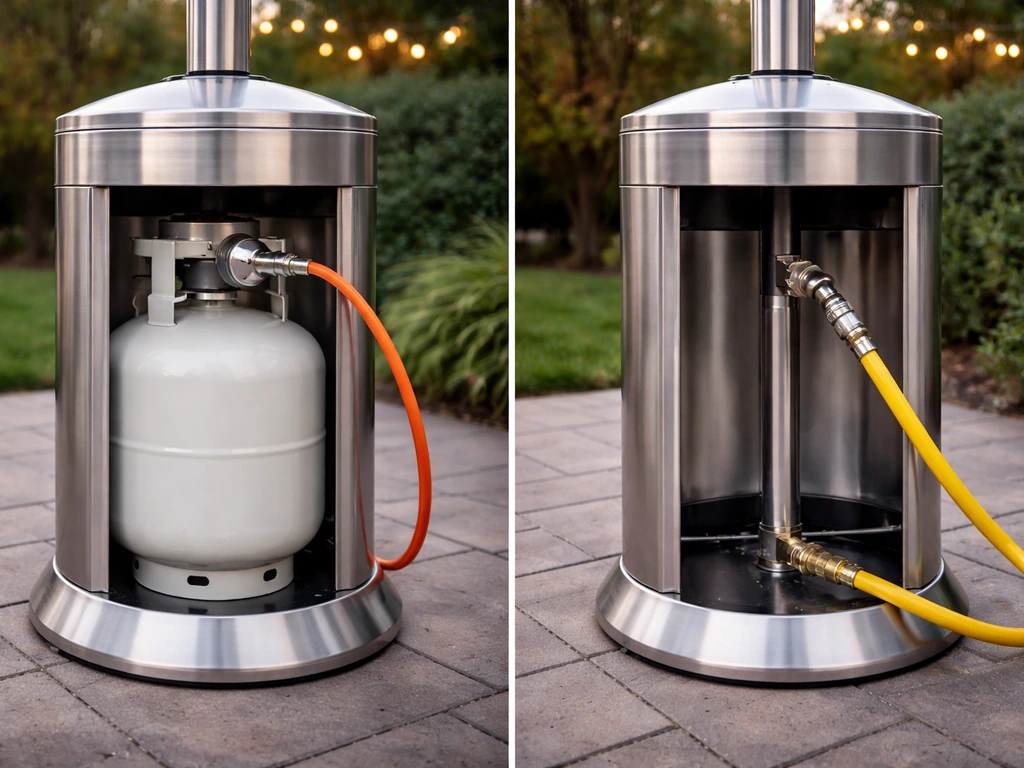
There are two fuel paths: propane (also called LP gas or LPG) stored in a cylinder you can carry and exchange, and natural gas delivered through a fixed pipeline connection. The vast majority of freestanding and tabletop patio heaters sold for home use are propane-only. Natural gas models exist, but they are usually wall-mounted or ceiling-mounted infrared heaters intended for semi-permanent outdoor rooms, garages, or patios where a gas line has been run.
The definitive answer for your specific unit is on the data plate, which is usually riveted or printed on the back of the heater head, on the base collar, or inside the gas compartment door. Look for a gas category code or a fuel type label. In the US you will see something like 'Use only propane/LP gas' or a manifold pressure listed in inches of water column (W.C.). In the UK and EU, the plate uses gas category codes: G20 means natural gas, G31 (or G30/G31) means LPG/propane. If the plate shows G31 and a pressure in the 26.5 to 37 mbar range, you need propane. If it shows G20 and a pressure around 20 mbar, you need a natural gas connection.
How to confirm the right gas for your exact model
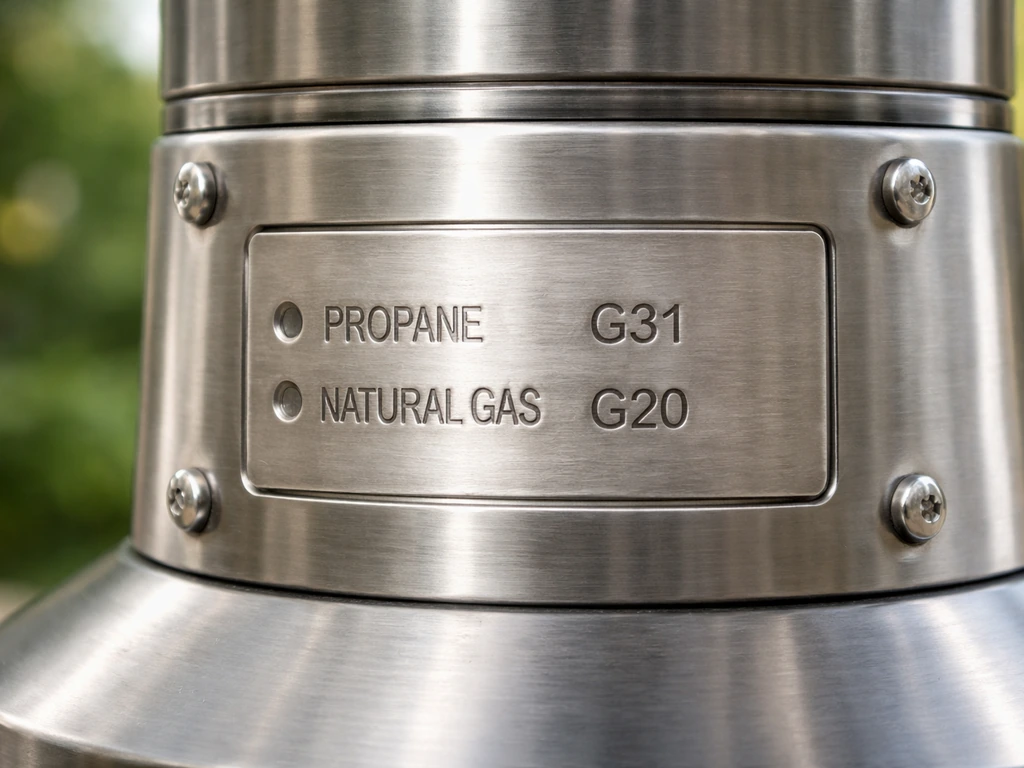
Start at the data plate, but check three other things as well, because the label tells you the fuel type while the other details confirm the whole setup is correct.
- Data plate / rating label: find the fuel type, gas category code (G20/G31), and the required supply or manifold pressure. Write these down. This is your reference for everything else.
- Owner's manual: pull the PDF if you've lost the paper copy. Manufacturer manuals list fuel type, manifold pressure, and injector/orifice diameter in the specifications table. For example, the Heatmaxx SRPH33A-645F lists 'Liquid propane,' manifold pressure 11" W.C., and injector diameter 0.0846" (2.15 mm). If your manual gives an injector size, it confirms the heater is calibrated for one specific gas.
- Regulator/governor: the regulator connected to the gas inlet should be preset to match the fuel. On propane models in the UK, the factory-preset governor outputs 37 mbar. On US propane models, the regulator should deliver 11 inches W.C. to the manifold. If the regulator came with the heater, it is already set for the correct fuel. If someone has swapped it, verify the output pressure matches the data plate.
- Injector / orifice: this is the small brass fitting inside the burner tube with a drilled hole. Natural gas injectors have a larger hole than propane injectors because natural gas is delivered at lower pressure and lower energy density. If you see signs a previous owner worked on the burner, verify the injector size matches the manual's specification before lighting.
One important rule from NFPA 54: do not attempt to convert an appliance from the gas type shown on the rating plate unless an approved conversion kit is available for that exact model from the manufacturer. Gas conversion is not just a matter of swapping the cylinder or regulator. It requires changing the injector orifice and resetting the governor pressure. If a conversion kit exists for your model, the manufacturer or a local distributor can supply it. If it does not exist, the heater is not convertible.
Propane vs natural gas: real-world performance and cost
If you have a choice between models (say, you're buying new and have a gas line available), here's the honest comparison across the things that matter day to day.
| Factor | Propane (LPG cylinder) | Natural Gas (pipeline) |
|---|---|---|
| Heat output | High; propane has roughly 2500 BTU/ft³ versus about 1000 BTU/ft³ for natural gas, so propane delivers more heat per volume | Good, but requires larger orifice and higher flow rate to match the same BTU output |
| Cold weather performance | Can weaken below about -20°F (-29°C) as liquid propane struggles to vaporize; regulators can frost in damp sub-freezing conditions | Unaffected by outdoor temperature; pressure is maintained by the mains supply |
| Availability | Portable; exchange cylinders available at hardware stores, supermarkets, and fuel suppliers | Requires a fixed outdoor gas line, professional installation, and proximity to the meter |
| Running cost | Higher per BTU in most markets; cylinder exchange adds convenience cost | Generally lower per BTU where mains gas is available |
| Setup flexibility | Place the heater anywhere within hose reach; no permanent plumbing needed | Fixed location only; heater must be near the gas outlet |
| Safety concern | Propane is heavier than air and sinks to the floor if it leaks, concentrating near ignition sources | Natural gas is lighter than air and disperses upward, but both require the same leak-check discipline |
For most homeowners with a freestanding patio heater, propane is the only practical option and it works excellently. Natural gas makes sense only if you are installing a semi-permanent infrared heater in a covered outdoor space and already have a gas line run outdoors. If you live somewhere that regularly drops below 20°F (-7°C) in the evenings, be aware that a nearly-empty propane cylinder can produce a weaker flame as vaporization slows in the cold. Keeping cylinders at least one-quarter full and storing them in a slightly warmer spot (not indoors, but out of direct wind) helps.
Gas bottle setup: sizes, regulators, connections, and hose checks
Cylinder sizes
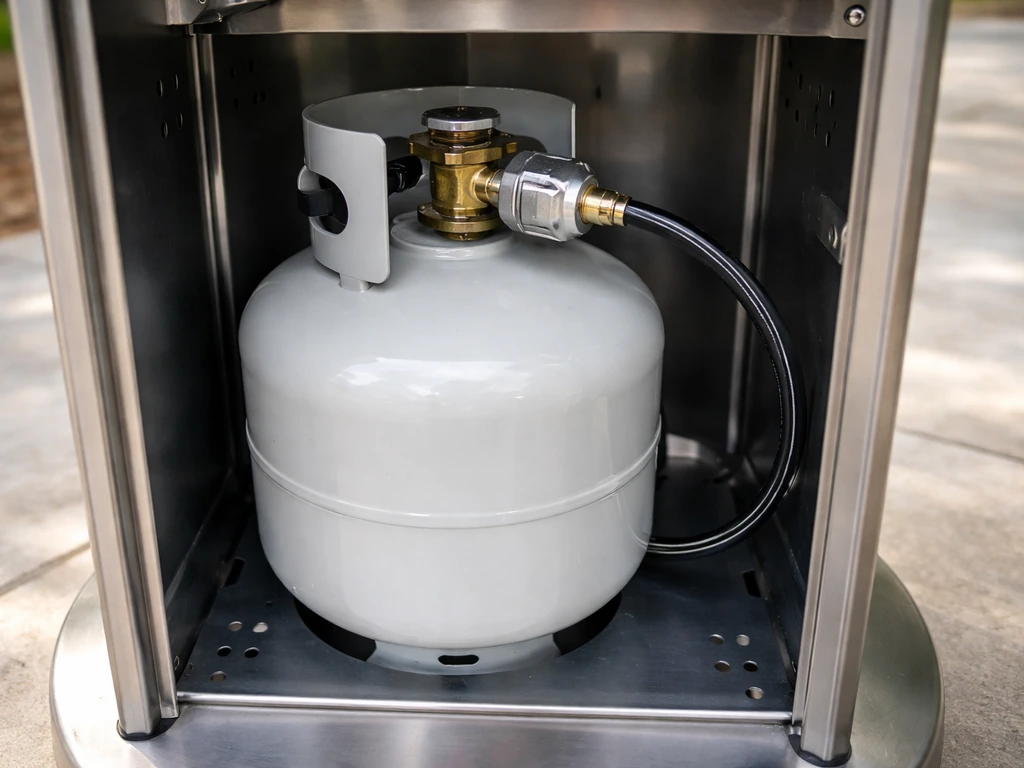
For most portable patio heaters, a standard 20 lb (9 kg) propane cylinder is the right choice in North America. It fits the base compartment of most full-size freestanding heaters and gives several hours of run time at full output. In the UK, the common sizes for patio heaters are 5 kg and 13 kg Calor Patio Gas cylinders. Calor Patio Gas is the brand name used in the UK for propane cylinders intended for patio heaters, including common 5 kg and 13 kg bottles Calor Patio Gas cylinders. The 5 kg bottle is light enough to carry and swap easily; the 13 kg lasts longer and suits a heater used regularly through the season. Smaller tabletop heaters may use a 1 lb (0.45 kg) disposable canister, though these are expensive per hour of heat and only appropriate for small directional units.
Regulators: matching pressure to your heater
The regulator is the fitting that attaches to the cylinder valve and drops the high storage pressure inside the cylinder down to the safe working pressure the heater needs. Getting this right is not optional. In the UK, propane patio gas cylinders use a 27 mm clip-on valve, and the correct regulator outputs 37 mbar. A UK LPG supplier’s “Standard Propane regulator 37mbar” listing also specifies an operating pressure of 37 mbar and details on the regulator connection type (POL and hose nozzle types) to help match the right regulator to your setup blank" rel="noopener noreferrer">operating pressure 37 mbar. Butane regulators are set to 28 to 30 mbar and use a different connection entirely, so you cannot accidentally swap them. In the US, most propane cylinders use a blank" rel="noopener noreferrer">Type 1 / QCC1 threaded connection, and the regulator should deliver 11 inches W.C. to the appliance. This is usually a two-stage regulator that first drops the tank pressure to an intermediate level, then reduces it again to the stable 11" W.C. the burner needs.
If your heater came with a regulator, use it. If you need to replace it, match the output pressure to the number on the data plate exactly. Do not use a generic adjustable regulator set to 'approximately' the right pressure. A UK user replacing an old regulator should also check whether it carries a BS 3016 marking: regulators marked BS 3016 are over ten years old and should be replaced as a matter of routine safety.
Hose and connection checks
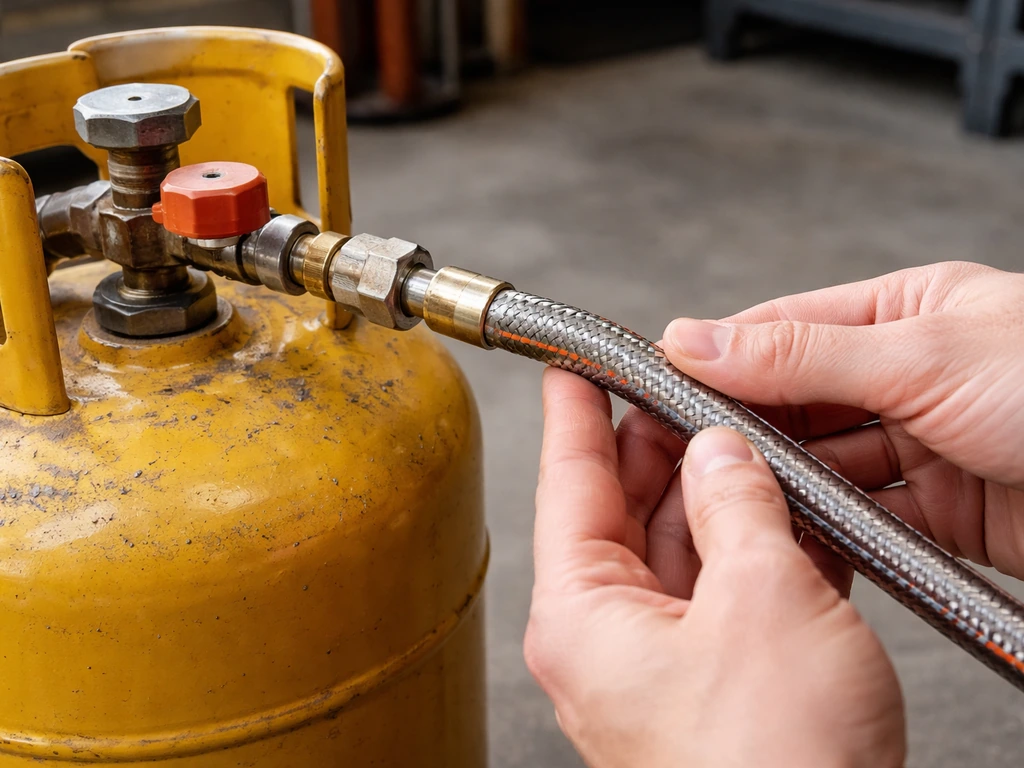
Inspect the gas hose every time you reconnect a cylinder. Look for cracks, splits, kinks, or signs of rodent damage along the full length. The hose should be routed so it cannot be stepped on, kinked around a corner, or pulled tight when the heater is moved. Most patio heater hoses have a rubber or reinforced PVC outer jacket; replace the hose if you see any damage to this jacket, not just if you can see gas tubing underneath. Hose connections should be hand-tight plus a small additional turn with pliers at most. Over-tightening flare fittings can crack the seat and create a leak.
Verifying your setup is safe before you light
Every time you connect a new cylinder or reconnect after storage, do a soap test before you try to light the heater. This takes two minutes and has prevented more than a few serious accidents.
- Mix a soap solution: one part washing-up liquid (dish soap) to three parts water, or equal parts mild detergent and water. You want a mixture that produces stable bubbles.
- Connect the cylinder and regulator fully, but do not try to light the heater yet.
- Open the cylinder valve slowly, one full turn.
- Apply the soap solution generously to every connection point: the cylinder valve-to-regulator joint, the regulator outlet, and both ends of the hose where it connects to the heater valve.
- Watch for 10 to 15 seconds. Any bubbles growing at a connection point indicate a gas leak.
- If you see bubbles, close the cylinder valve immediately, do not try to light, and tighten the connection. Repeat the test. If bubbles persist, replace the fitting or hose before proceeding.
- If no bubbles appear at any point, the setup is gas-tight and you can proceed to ignition.
Also check that the heater's tilt safety switch is in the upright position and that the unit is on a flat, stable surface before you attempt to light. The tilt switch is a safety device that cuts gas flow if the heater tips over. If it is slightly out of position or faulty, the heater will not light or will shut off almost immediately after ignition, which can be confused with a gas problem. A quick way to check: make sure the heater is perfectly level, then attempt ignition again. If it still shuts off within a few seconds, the issue is likely the thermocouple or tilt switch, not the gas supply.
What happens when the wrong gas or wrong setup is used
These are the most common symptoms caused by a gas mismatch, wrong regulator pressure, or incomplete setup, along with what to check.
Won't ignite at all
If the igniter clicks but nothing lights, first rule out empty or closed cylinder. Then check that the regulator is properly clicked or screwed onto the valve and that the hose is not kinked. A regulator set to the wrong pressure (too low) may not be delivering enough gas to the pilot to sustain ignition. If you recently replaced the regulator with a butane unit on a propane heater (or vice versa), the pressure mismatch is almost certainly the problem. Confirm the regulator output pressure matches the data plate requirement.
Lights but won't stay lit
This is usually a thermocouple problem or a tilt switch issue, but it can also be caused by incorrect gas pressure. If pressure is too low, the pilot flame is too small to heat the thermocouple sufficiently, and the safety valve cuts gas flow after a few seconds. The fix: verify the regulator pressure is correct for your model, check that the pilot flame is positioned directly on the thermocouple tip, and inspect the thermocouple for corrosion or physical damage. If the thermocouple looks burnt, bent away from the flame, or corroded at the tip, replacing it is a straightforward DIY repair on most models.
Weak flame or yellow/orange flame with soot
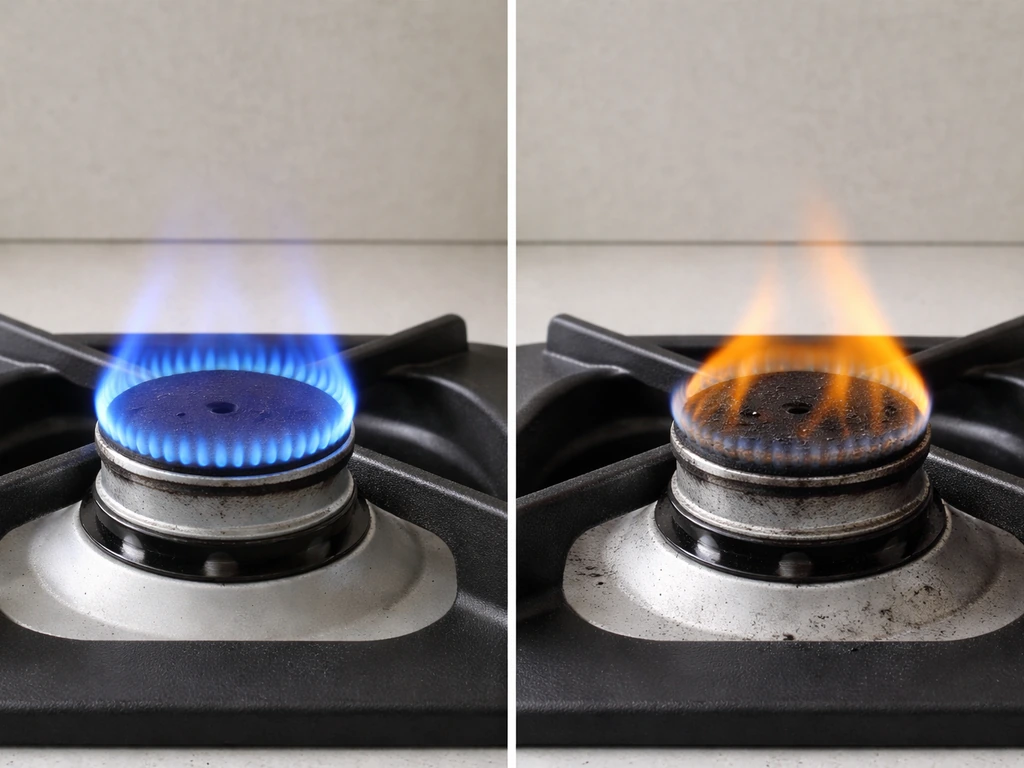
A healthy propane flame is blue with a small blue inner cone. A yellow or orange flame, soot on the emitter screen, or a flame that looks lazy and low usually means incomplete combustion. This can be caused by: an injector orifice that is too large for the gas being used (natural gas orifice on a propane supply), supply pressure that is too high, or a partially blocked burner. If someone fitted a natural gas conversion injector to a propane unit without adjusting the governor, the oversized orifice will flood the burner with too much gas relative to available air. Stop using the heater, check the injector against the manual's specification, and replace it if it does not match.
Flame is present but heat output feels low
A nearly-empty cylinder in cold weather is the most common cause. Propane vaporizes more slowly as temperature drops, and a cold cylinder with low liquid level may not sustain full pressure. The regulator can also frost up in damp sub-freezing conditions, restricting flow. Swap to a full cylinder and see if the output improves. If low output persists with a full cylinder at normal temperatures, check for a partially closed cylinder valve, a kinked hose, or a regulator that is past its service life.
You smell gas but cannot see a flame problem
Close the cylinder valve immediately. Do not attempt to light the heater or operate any electrical switches nearby. Move away from the area and allow it to ventilate. Propane is heavier than air and will pool at ground level near any low point or drain. Only return to troubleshoot once you cannot smell gas, and perform a full soap test on every connection before attempting to light again. If the smell returns after the test shows no visible leaks, stop using the heater and have it inspected by a qualified gas technician. This is not a DIY boundary to push past.
Safety rules for working with patio heater gas
These are not optional extras. They come directly from manufacturer manuals and LPG safety guidance, and each one exists because someone ignored it and something went wrong.
- Always use the fuel type printed on the data plate. Never substitute butane for propane or natural gas for LPG without a manufacturer-approved conversion kit and the correct injector change.
- Never attempt to convert the appliance from the gas specified on the rating plate unless an approved field-conversion kit exists for your exact model number. This is an NFPA 54 requirement, not a suggestion.
- Store and use propane cylinders outdoors in an upright position. Never use a patio heater indoors, in a garage, tent, or any enclosed space, regardless of how well you think it is ventilated. Carbon monoxide buildup is odorless and fatal.
- Keep the cylinder away from the heater's heat source. Most manufacturers require the cylinder to be in the base compartment with the specified hose length, keeping it at a safe distance from the burner.
- Replace any regulator that shows signs of damage, corrosion, or is marked BS 3016 (UK), as these are over ten years old. A regulator failure can cause uncontrolled gas flow.
- Perform a soap test every time you reconnect a cylinder, not just when you suspect a problem.
- If you smell gas strongly at any point, close the cylinder valve, move away, ventilate, and do not attempt to relight until the source has been found and corrected.
- Do not use an open flame to check for gas leaks. Use only soapy water.
- Do not leave a connected cylinder unattended in direct sunlight for extended periods. Elevated cylinder temperature increases internal pressure.
- Never swap injectors or orifice fittings unless you are following a manufacturer conversion kit with documented specifications. An incorrectly sized orifice creates either a dangerously rich mixture or a flame that cannot sustain ignition.
Your next steps in plain language
Find the data plate on your heater right now and write down the fuel type, gas category code, and the required pressure. Match those numbers to a correctly rated regulator and the right cylinder for your market: in the UK that means a 37 mbar propane regulator with a 27 mm clip-on fitting for a 5 kg or 13 kg patio gas bottle; in the US it means a QCC1-connected two-stage propane regulator delivering 11" W.C. with a standard 20 lb cylinder. Connect everything, do the soap test, and then light. If the heater misbehaves after a correct setup, the next place to look is the thermocouple and tilt switch, not the gas supply. And if you ever smell gas and cannot identify the source immediately, close the valve and call a qualified technician. That boundary is worth respecting.
Once you have your gas type and setup confirmed, it also helps to know exactly which regulator fits your cylinder valve style, what a replacement gas bottle costs, and where to buy refills locally. If you want the most reliable option, use a local retailer or refill exchange that specifically sells patio gas cylinders and matching regulators for your area where to buy patio gas. Once you know your heater is set up for the right gas type, you can use local options like gas station exchanges and patio gas suppliers to buy refills for your cylinder where to buy refills. Replacement patio gas bottle costs vary by region and bottle size, so check pricing for your exact cylinder type replacement gas bottle costs. Those details vary by region and by which brand of cylinder you are using, so they are worth checking separately once you know whether you are on a standard propane setup or a specific patio gas bottle type.
FAQ
How do I confirm the right gas type if my heater label looks unclear or missing?
Look for the heater’s data plate and match three items: the fuel type (propane/LP vs natural gas), the gas category code (like G31 for propane or G20 for natural gas in many regions), and the manifold pressure or regulator output listed in mbar or inches W.C. If the plate gives only a fuel type but not pressure, use the regulator pressure specifically specified for that model, not a generic number.
Can I use propane in a natural gas patio heater (or the other way around) if the connection fits?
No. Propane patio heaters and natural gas patio heaters are typically built with different burner orifices and safety control settings. Even if the fittings look similar, using the wrong gas can cause delayed ignition, frequent shutdowns, or incorrect flame characteristics (sooting or an overly lazy flame). Only use the gas type shown on the rating plate for your specific unit.
What if I want to switch from propane to natural gas because I have a gas line available?
If your unit is propane-rated, you still cannot “convert” to natural gas just by changing the cylinder. Conversion requires an approved conversion kit for that exact model, and it usually involves changing the injector/orifice and setting pressure controls. If there is no approved kit, the heater should remain in the original fuel configuration.
Do I need to match the regulator connector shape, or only the pressure?
In the US, many propane cylinders use a QCC1 (Type 1) connection with a regulator that delivers 11 inches W.C. If your heater requires a different regulator output on the data plate, matching the cylinder connection alone is not sufficient. In the UK, propane patio gas setups commonly use a 27 mm clip-on valve and a regulator output around 37 mbar for the heater to function correctly.
Is it safe to use an adjustable regulator if I set it near the correct pressure?
Neither. You should use a regulator that outputs exactly what the data plate calls for. A generic adjustable regulator set “close enough” can still cause problems like a weak pilot that won’t hold a thermocouple, or overfeeding that leads to yellow flame and soot. The regulator output needs to match the plate requirement precisely.
How often should I inspect or replace the gas hose on a propane patio heater?
Replace the hose if you see any cracking, splits, kinks, or damage to the outer jacket (even if gas tubing isn’t visible). Also ensure the hose route cannot be stepped on, pinched, or pulled tight when moving the heater. Damaged hoses are a common cause of leaks and intermittent ignition.
When exactly should I do a soap test, and what should I do if bubbles show up?
Do a soap test after every reconnection or cylinder change, and also after replacing any hose or regulator. If bubbles appear, tighten only to the specified limit (hand-tight plus a small additional turn), then recheck. If bubbles persist, stop and do not operate the heater until the connection or part is corrected by a qualified person.
Why does my heater light briefly, then shut off, even though the gas type is correct?
If the heater shuts off within a few seconds after lighting, first think safety control, not fuel. A misaligned pilot flame that isn’t heating the thermocouple, a failing thermocouple, or an tilt switch issue can cause the gas valve to cut off. Confirm the heater is perfectly level before ignition, then check pilot placement and thermocouple condition.
What does a yellow or sooty flame mean, and does it always point to a gas mismatch?
A yellow, orange, or sooty flame usually indicates incomplete combustion. Common causes include incorrect injector/orifice for the gas type, supply pressure that’s too high for the burner, or a partially blocked burner/emitter. Stop using the heater and verify injector specs and pressure against the data plate and manual.
How does cold weather affect propane patio heater performance?
Yes, in cold weather propane performance can drop when the cylinder is nearly empty because vaporization slows. Keeping the cylinder at least one-quarter full helps maintain consistent pressure. Also protect the regulator from damp sub-freezing conditions where it can frost and restrict flow, without placing the cylinder indoors.
What should I do if I smell gas but can’t tell where it’s coming from?
Don’t rely only on “smell.” If you suspect a leak or you cannot identify the source immediately, close the cylinder valve, do not try to ignite or flip switches, and ventilate the area. Only troubleshoot further once you cannot smell gas, and redo a soap test. If the smell returns with no visible leaks, stop and get a qualified inspection.
Can I use a smaller propane cylinder than the one recommended for my heater?
For portable propane heaters, confirm cylinder size and compatibility with your base compartment, but focus on the regulator and plate requirements first. Using the common North America 20 lb cylinder is typical, but using a different cylinder size may change how long it runs and whether your heater’s compartment supports it securely.