Patio gas costs more than standard propane in the UK mainly because of how it's sold, not what's inside the cylinder. You're paying for a packaged leisure product distributed through retail chains, with deposit systems, exchange logistics, and seasonal demand all baked into the price. The gas itself is essentially propane (or sometimes a propane/butane blend), but the supply chain wrapped around it is completely different from bulk or trade propane, and that difference shows up directly on the price tag.
Why Is Patio Gas More Expensive Than Propane in the UK?

Grant Mercer
30 Jun 2026
What 'patio gas' actually means vs standard propane
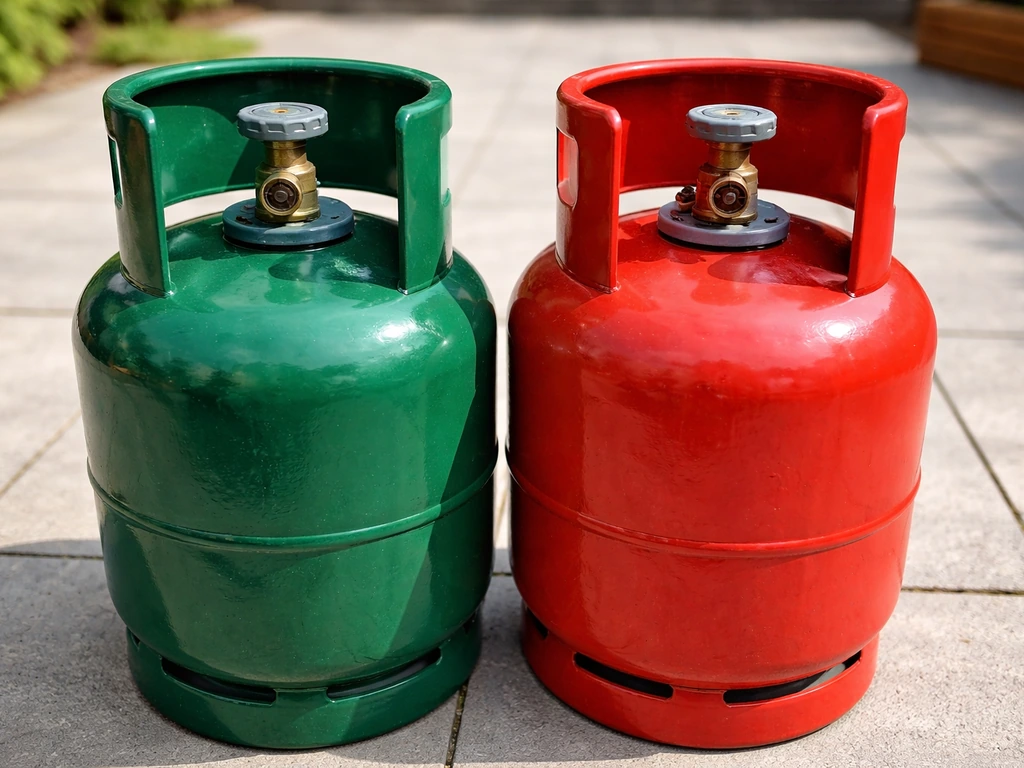
In the UK, 'patio gas' is a retail marketing term, not a distinct type of gas. Calor's green patio gas cylinders (sold in 5kg and 13kg sizes) contain propane, and Flogas sells an equivalent leisure propane cylinder under similar branding. The green colour coding and 'patio gas' label are part of a packaged leisure product range aimed at BBQs, patio heaters, and camping use. Adams Gas and other suppliers describe the same product in similar terms: propane, packaged for outdoor leisure use, sold through a cylinder exchange or refill model.
The confusion arises because 'propane' cylinders also exist as red or grey cylinders sold through plumbers' merchants and trade suppliers, typically in larger sizes for heating, caravans, and commercial use. Same gas, different packaging, different supply chain, very different price. Some patio gas cylinders can also contain a propane/butane blend depending on the supplier or season, which is worth knowing if your heater is sensitive to fuel composition. The key takeaway: when someone asks whether patio gas is propane or butane, the honest answer is usually propane, but it pays to check the label.
Why patio gas costs more: the real reasons
Cylinder deposits and exchange infrastructure
When you buy a patio gas cylinder for the first time, you're paying a deposit on the cylinder itself plus the cost of the gas inside. Calor's exchange model works by returning your empty cylinder and paying only for a refill, but that infrastructure (collection points, transport, inspection, refurbishment) has real costs that get absorbed into the per-kg gas price. Trade propane is often supplied by bulk delivery or in customer-owned cylinders, so those overhead costs simply don't exist in the same way.
Retail channel markups and distribution
Patio gas flows through leisure and DIY retail channels: garden centres, supermarkets, hardware stores. Each step in that chain adds margin. A standard propane cylinder from a gas merchant or a direct supplier like Adams Gas bypasses several of those intermediaries. The product that lands on a supermarket shelf next to the BBQ charcoal has travel, storage, retailer margin, and brand licensing costs in the price, none of which have anything to do with the energy content of the gas.
Seasonal demand spikes
Patio gas demand peaks sharply in spring and summer when everyone fires up their heaters and BBQs at once. Suppliers price accordingly. If you are wondering what happened to patio TV dinners, it often comes down to how tastes, supply chains, and retailers changed over time. Standard propane used for heating and industrial purposes has a more consistent year-round demand curve, which smooths out pricing. If you're buying a 5kg patio gas cylinder in May, you're buying at peak season. The same volume of propane from a trade supplier in January often costs meaningfully less per kg.
Small cylinder penalty
Smaller cylinders almost always cost more per kg of gas than larger ones. A 5kg patio gas cylinder has higher per-unit packaging, handling, and logistics costs than a 13kg cylinder, which is itself more expensive per kg than a 47kg propane cylinder used for home heating. If you're running a patio heater regularly, consistently buying 5kg cylinders is the most expensive way to buy propane you'll find.
How to compare costs properly
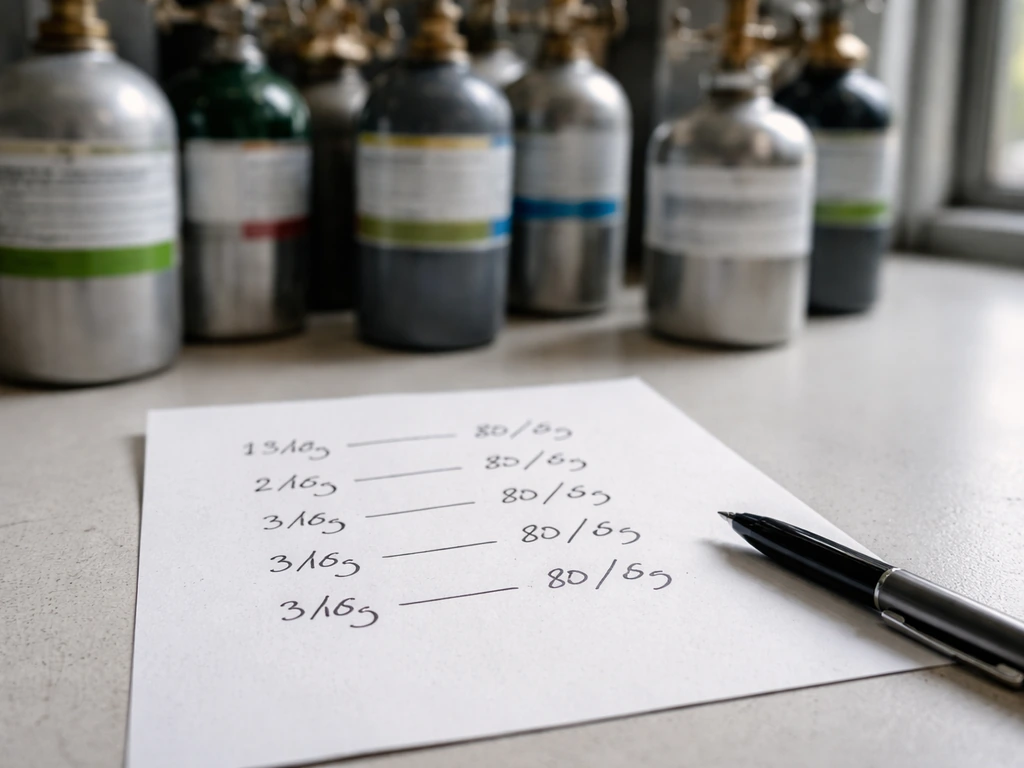
Retail prices are almost useless for comparison until you convert everything to the same unit. Here's how to do it in three steps.
- Price per kg: Divide the total cost of the cylinder refill by the weight of gas in kg (not the cylinder weight). This strips out the cylinder size effect and lets you compare any two products directly.
- Price per kWh: Propane contains roughly 50.33 MJ/kg (higher heating value). Divide that by 3.6 to get approximately 13.98 kWh per kg. So if you're paying £4.00/kg for patio gas, that's about 28.6p per kWh of energy. Compare that to any other fuel or energy source you like.
- Runtime per cylinder: Check your heater's gas consumption rate in kg/h (it's usually in the manual or on the product spec sheet). Divide the cylinder fill weight by that figure. A 13kg cylinder running a heater that burns 0.43 kg/h gives you roughly 30 hours of run time. Calculate cost per hour and you'll see very quickly which cylinder deal is actually cheaper.
| Cylinder | Typical fill weight | Approx. retail price (June 2026 exchange) | Approx. price per kg | Approx. kWh per kg | Cost per kWh |
|---|---|---|---|---|---|
| Calor Patio Gas (green, small) | 5 kg | ~£20–£24 | ~£4.00–£4.80 | ~14 | ~29–34p |
| Calor Patio Gas (green, large) | 13 kg | ~£40–£48 | ~£3.08–£3.69 | ~14 | ~22–26p |
| Standard propane (trade/direct) | 47 kg | ~£80–£110 | ~£1.70–£2.34 | ~14 | ~12–17p |
The table above uses approximate mid-2026 exchange/refill prices as a rough guide only as prices vary by supplier, location, and whether you're exchanging or buying new. The core point holds: trade propane is substantially cheaper per kWh than retail leisure cylinders, and the 5kg patio gas cylinder is the most expensive option by a significant margin.
Checking your patio heater is compatible before you switch cylinders
Before you go hunting for a cheaper propane supply, you need to confirm your heater will work safely with whatever cylinder you source. Are gas patio heaters banned in the UK? The rules vary by local authority and by the type and fuel source, so it's important to check the specific guidance for where you live. There are three things to check: the regulator pressure, the connector type, and what the heater manual actually says.
Regulator pressure: 28mbar vs 37mbar
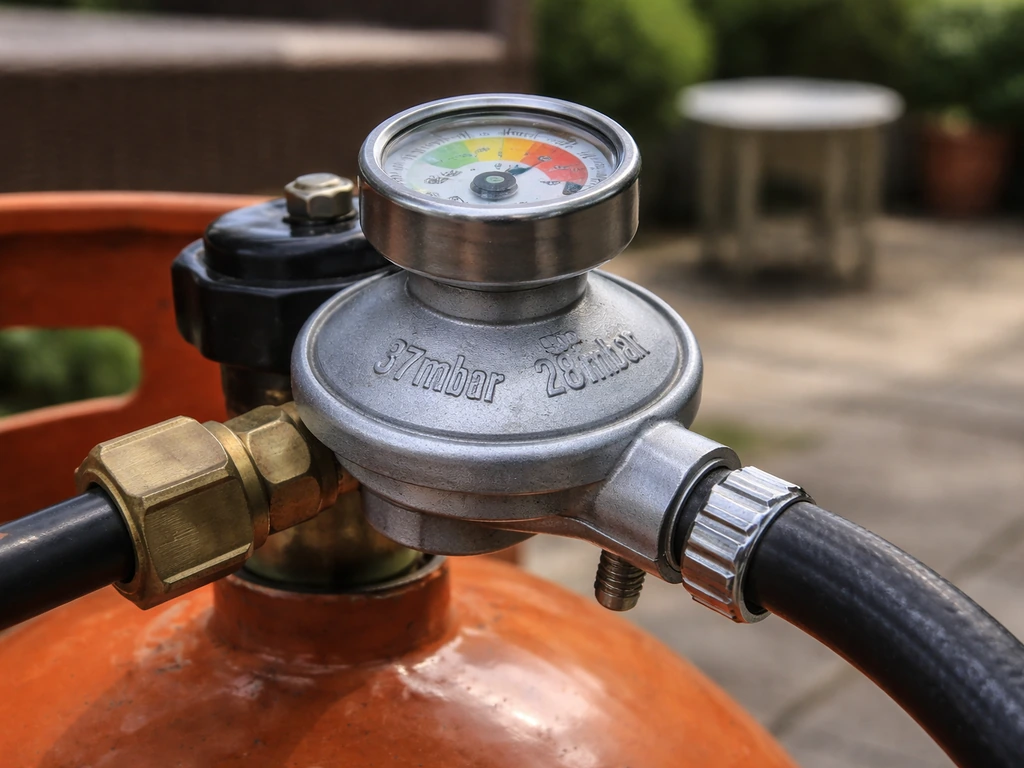
UK patio heaters designed for propane (including patio gas) use a regulator set to 37mbar outlet pressure. Butane regulators are set to 28mbar. These are not interchangeable. If you connect a butane regulator to a propane cylinder or vice versa, you'll either get too much or too little pressure, which causes combustion problems and is a safety hazard. Your heater manual will specify the required regulator outlet pressure, usually listed as 'G31 propane 37mbar' or 'blank" rel="noopener noreferrer">G30 butane 28-30mbar'. Most standard outdoor patio heaters sold in the UK use 37mbar propane. If you want to cook with patio gas, make sure your appliance is designed for propane and the correct regulator pressure so it burns safely and efficiently.
Connector type: the 27mm clip-on
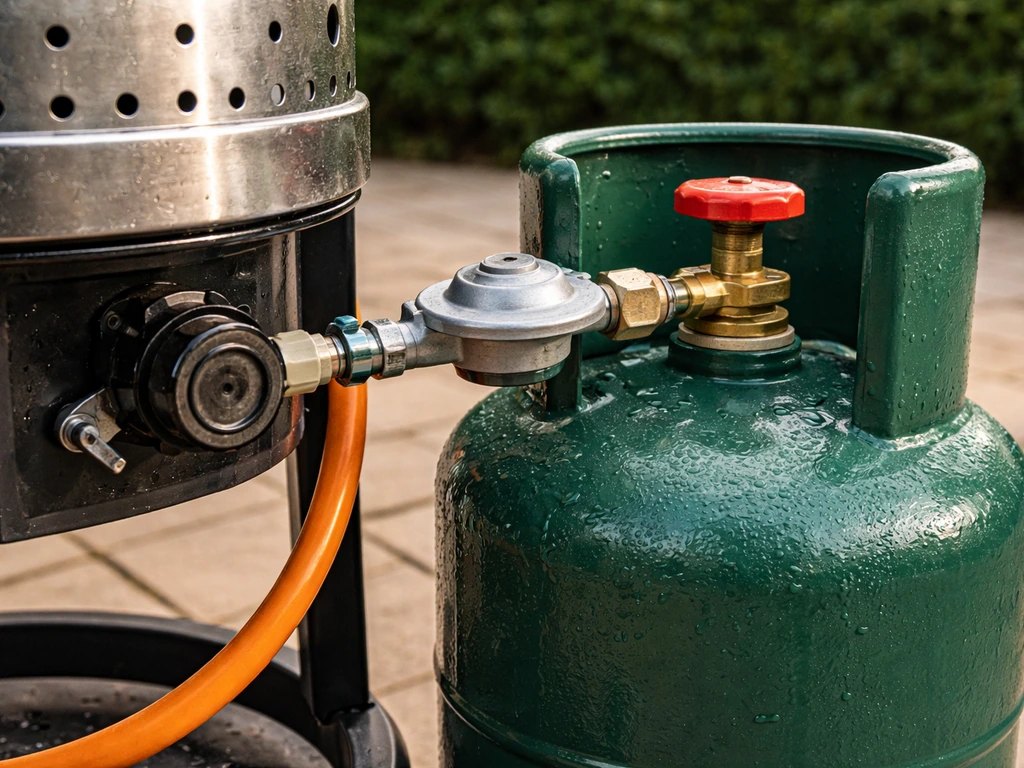
Calor's green patio gas cylinders and Flogas leisure cylinders use a 27mm clip-on valve. This is different from the screw-in POL connectors used on larger trade propane cylinders. The regulator needs to physically match the cylinder valve. Calor's own patio gas regulator, Flogas's equivalent, and third-party options from brands like Bullfinch all specify '37mbar, 27mm clip-on' for patio gas use. If you switch to a larger trade cylinder, it may use a different valve type entirely, so confirm compatibility before buying a new regulator.
What the manual says
Your heater's instruction manual should list the approved gas types (typically 'propane, butane, or their mixtures') and the required regulator outlet pressure. Some manuals specify both 30mbar and 37mbar options by model variant. If you don't have the manual, the manufacturer's website or a manual lookup resource is worth checking before you assume compatibility. Using the wrong regulator pressure is one of the most common causes of combustion problems in patio heaters, and it's completely avoidable. If you’re seeing smoke from a pellet patio heater, that can also point to incorrect regulator pressure or other combustion issues combustion problems in patio heaters.
Fitting the regulator safely
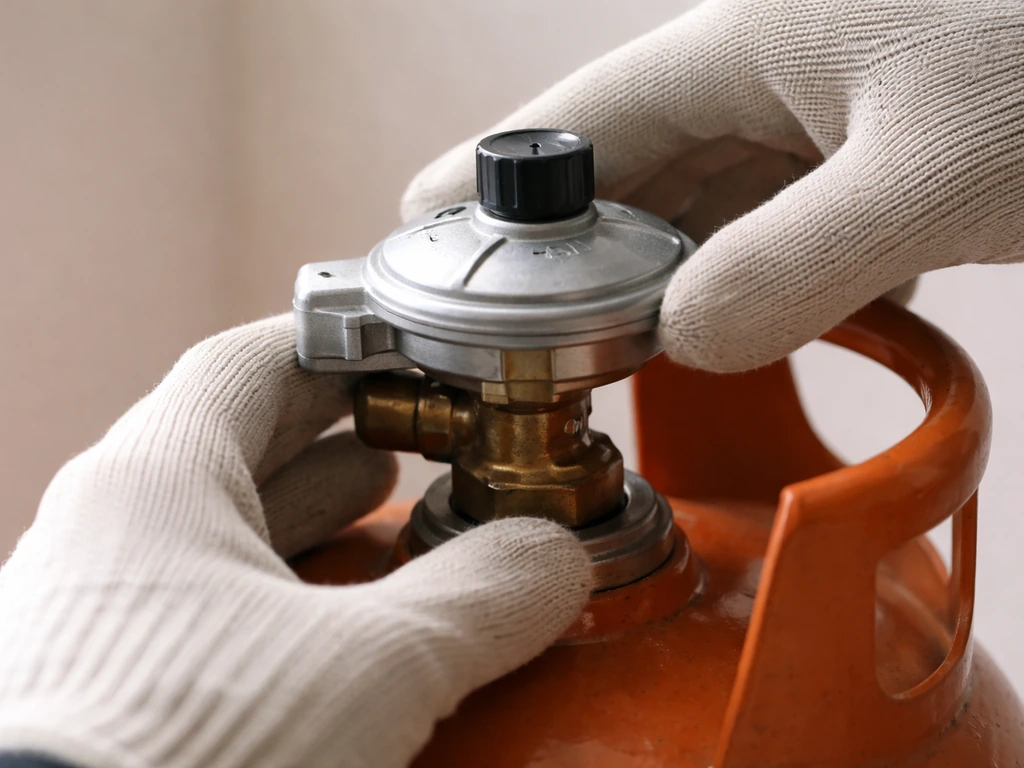
When connecting a clip-on regulator, make sure the regulator control is in the off position before you start. Press the clip firmly onto the cylinder valve until it locks. Flogas's guidance is clear on this: the regulator must seat fully and lock into position to seal correctly. A partially seated regulator can allow gas to escape around the seal. After fitting, turn on slowly and check for gas smell around the connection before lighting anything. If you smell gas at the connection, turn off, disconnect, and inspect the regulator for damage before trying again.
How fuel choice affects burner performance
Getting the fuel and regulator combination wrong shows up quickly in how your heater burns. Here are the symptoms to watch for and what usually causes them.
- Yellow or orange flame instead of blue: Usually means incomplete combustion, which can be caused by wrong regulator pressure, a partially blocked burner, or a gas/air mixture problem. A yellow flame also produces soot, which will coat the burner head over time.
- Black soot deposits on the burner or glass: A direct sign of poor combustion. Check regulator pressure first, then inspect the burner for blockages (cobwebs and insects are surprisingly common culprits).
- Heater won't stay lit or pilot flame keeps going out: Can indicate low gas pressure from a near-empty cylinder, a cold cylinder struggling to vaporise gas in winter, a faulty thermocouple, or a blocked pilot jet.
- Weak or tiny flame that fades: Often a cold-weather vaporisation problem, especially if you're using a butane-heavy blend in temperatures below 5°C. Propane vaporises down to around -42°C, while butane stops vaporising below about 2°C. If your 'patio gas' contains a significant butane fraction, this is a real issue in cold weather.
- Ignition clicks but won't light: Could be a wet or sooty pilot assembly, a depleted cylinder, or a regulator not seated correctly. Start with the regulator fit and cylinder level before pulling the heater apart.
Pure propane performs better in cold conditions precisely because of its lower vaporisation temperature. If you're running a patio heater in autumn or early spring evenings when temperatures drop, a cylinder confirmed to contain propane (not a propane/butane blend) will give you more consistent performance. This is one practical reason to care about what's actually in your cylinder, not just what the label says.
Best ways to save money on patio heater fuel safely
Switch to a 13kg cylinder if you're still buying 5kg
This is the single easiest win for most people. The price per kg drops significantly when you move from a 5kg to a 13kg cylinder, and the cylinder itself isn't much bigger physically. Check that your heater storage area or patio setup can accommodate it, verify the same 27mm clip-on regulator works (it does for Calor and Flogas patio gas), and make the switch.
Compare suppliers directly
Don't assume your local garden centre has the best price. Adams Gas, Flogas, and independent LPG suppliers often offer online ordering with delivery or local stockist exchange at lower per-kg rates than major retail chains. Get two or three quotes for a 13kg refill before you commit to a supplier. The difference can be several pounds per fill, which adds up over a season.
Check if a cylinder exchange group works for you
Calor's exchange system allows you to swap within an exchange group without paying for a new cylinder agreement, which reduces the upfront cost of switching cylinder size. If you already have a Calor cylinder and want to move to the 13kg version, you may be able to do a straight exchange rather than paying a new deposit. Check Calor's exchange terms directly as the groupings and rules are updated periodically.
Consider a bulk propane account for high-usage situations
If you're running multiple patio heaters, or using gas for heating, cooking, and a BBQ, it may be worth looking at a 47kg trade propane cylinder on a direct account with a local LPG supplier. For BBQs, patio gas generally works because many patio gas cylinders contain propane and use the correct regulator setting can patio gas be used on bbq. You'll need a regulator that fits the larger cylinder's valve (a different connection style from the 27mm clip-on), but the per-kWh savings are substantial. This is a bigger setup change but completely practical for anyone using significant volumes of gas.
When to stop DIY and call a professional
Fuel and regulator swaps are straightforward DIY tasks as long as you're working with the correct, matching components. But there are situations where you should stop and get qualified help. Carbon monoxide can be produced by any fuel-burning appliance, including some patio heaters, especially if they burn inefficiently or are used in poorly ventilated areas. If you smell gas anywhere other than at a connection you're actively working on, turn off the cylinder and ventilate the area immediately.
Do not light anything. If a heater has combustion problems that persist after you've confirmed correct regulator pressure, a clean burner, and a full cylinder, the issue may be inside the gas valve, thermocouple, or burner assembly, and those components carry real safety risks if mishandled. A Gas Safe registered engineer is the right call for anything involving internal gas fittings, valve replacement, or a suspected leak you can't trace to an obvious external connection.
FAQ
If patio gas is really just propane, why don’t retailers sell it at the same price as trade propane?
Even when the fuel is the same, the retail offer includes packaging, cylinder exchange or refill handling, retailer margin, and often seasonally timed stock. Trade propane pricing also depends on delivery terms and whether the cylinder is customer-owned, so the overheads are structured differently even if the propane content matches.
Can I buy a trade propane cylinder and use it on a patio heater that currently uses patio gas?
Only if the regulator and cylinder valve connection are compatible and the appliance is rated for the gas type. Patio gas typically uses a 27mm clip-on valve and a regulator set for about 37mbar propane outlet pressure, so you may need a different regulator and possibly a different cylinder connector, not just a different cylinder.
What should I do if my heater works but the flame looks wrong after I change cylinders or regulators?
Stop using the heater and re-check three things in order: the cylinder is the correct gas type for the manual, the regulator outlet pressure matches the requirement (propane versus butane settings), and the regulator is fully seated and sealed (no hissing or smell at the connection). Wrong regulator pressure is one of the most common causes of smoky or unstable combustion.
Is it safe to interchange butane and propane regulators on patio heaters to save money?
No. Propane and butane regulators are set to different outlet pressures, typically around 37mbar for propane and around 28-30mbar for butane. Using the wrong setting can cause poor combustion or incorrect flame behaviour, and it is avoidable by following the heater manual’s specified regulator rating.
Do 5kg patio gas cylinders cost more per kg only because they’re smaller, or are there other costs too?
Smaller cylinders usually have a higher per-kg share of packaging, handling, and exchange logistics, but the pricing also reflects how often suppliers need to restock retail volumes during peak season. That combination often makes 5kg the worst per-kg value, especially if you buy during spring and early summer.
How can I compare prices fairly between patio gas and bulk propane if I don’t have per-kWh pricing?
Convert everything to the same unit and account for exchange versus new buy. Use per-kg or per-litre gas cost plus the cylinder size, then compare using an estimated energy basis (kWh) or per-kg as a starting point. Also confirm whether your comparison includes the cylinder deposit, because exchange models can change the effective cost over a season.
Does patio gas performance change in cold weather, and is that because of vaporisation or the blend?
It can change due to both vaporisation behaviour and the exact mixture. Pure propane tends to give more consistent performance in colder conditions, while propane/butane blends can reduce output as temperatures fall. If your heater is used in early spring or late autumn, checking what’s actually in the cylinder label matters.
What if I don’t have the heater manual, can I still figure out the correct regulator pressure?
Yes, start by searching the exact model number and checking the manufacturer’s stated approved fuels and regulator outlet pressure. If you cannot confirm it, don’t guess, because the pressure rating and connector type must match. You can also look for the specification printed on the heater body or existing regulator documentation.
Should I switch from exchange refills to a direct-account trade supply to save money?
It can, especially if you use multiple cylinders or run heaters regularly. The tradeoff is setup effort, ordering terms, and space for larger cylinders. If your usage is occasional, the simpler retail exchange model may still be cheaper overall once you factor deposits, delivery frequency, and availability.
If I smell gas, how do I decide whether it’s an emergency or just a connection issue I can fix?
Treat any gas smell as serious. If the smell is around a connection you were actively working on, turn off, ventilate, and re-seat or inspect the regulator seal and clip fit. If the smell is elsewhere, or you cannot identify the leak quickly, stop and get qualified help rather than continuing attempts to operate the heater.
Can a propane cylinder contain different mixtures depending on supplier or season?
Yes. Some leisure cylinders are propane, while others can be propane/butane blends depending on the supplier and seasonal formulation. That means your heater can behave differently from one refill to the next if it is sensitive to fuel composition, so it’s worth checking the label each time you swap cylinders.