You can safely run a charcoal grill on a patio if you follow a few non-negotiable rules: keep the grill at least 10 feet from your home and any combustible surface, never place it under an overhang or awning, use a chimney starter instead of lighter fluid, and never let it burn in or near an enclosed space where carbon monoxide can build up. Those four things alone eliminate the vast majority of patio grilling accidents.
Charcoal Grill Patio Safety: Setup, CO Risks, and Fixes
Grant Mercer
27 May 2026
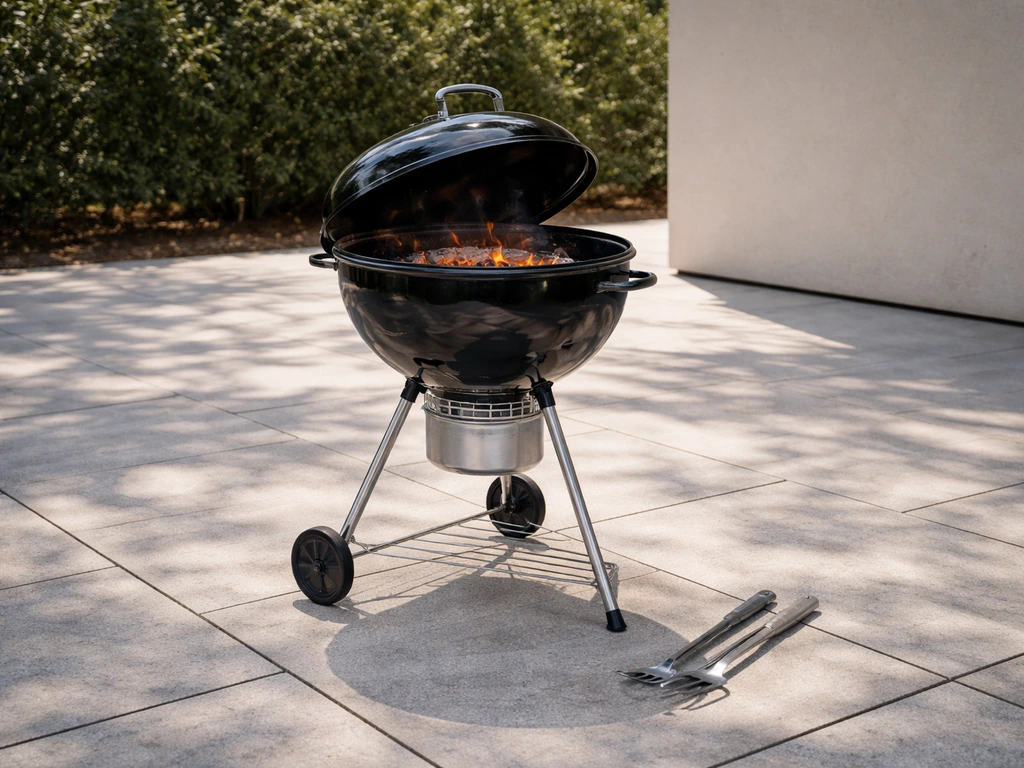
Why charcoal grill patio safety is different from gas grilling
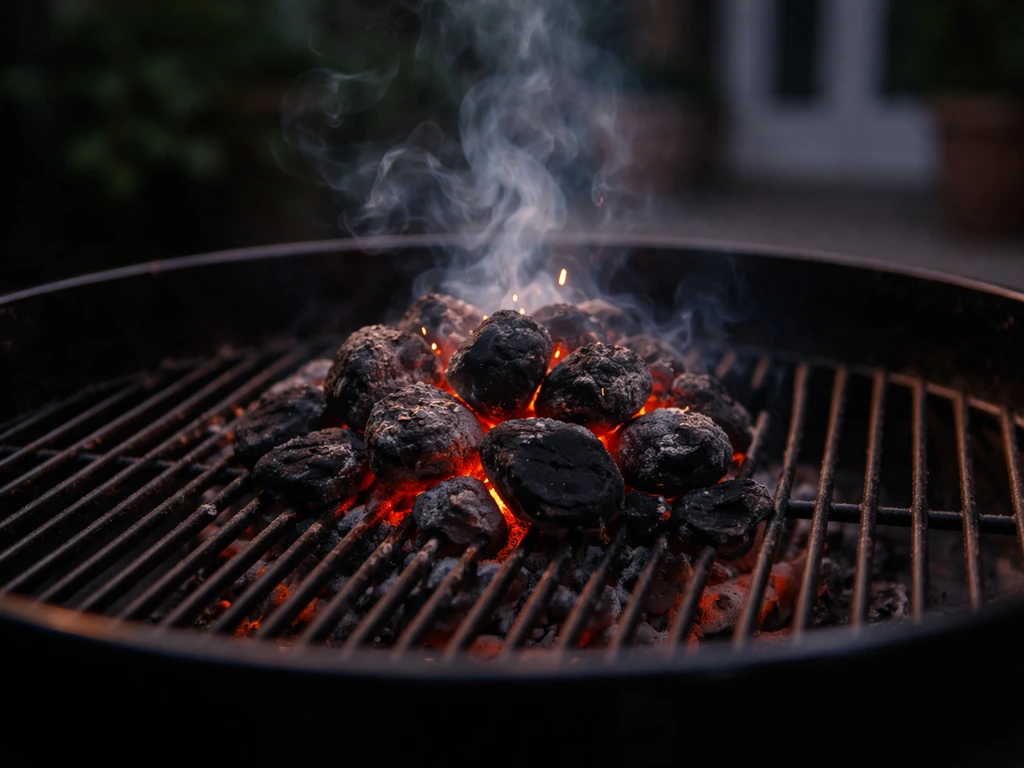
Charcoal isn't just a different fuel, it's a different kind of hazard. When charcoal burns, it produces carbon monoxide, and CO is odorless, colorless, and can kill without giving you any warning signs until it's too late. The CDC and CPSC have both flagged charcoal grill CO poisoning as a serious, recurring cause of death, specifically in situations where people move grills into garages, carports, or enclosed patios to escape rain or cold. Even a partially enclosed patio, like one with a low roof, solid walls on two sides, or a screened enclosure, can concentrate CO to dangerous levels faster than you'd expect.
Fire spread risk is also higher with charcoal than most people realize. Live embers can travel several feet in a breeze, igniting nearby furniture, wood decking, or awning fabric. Grease drips onto hot coals and produces flare-ups that can reach several feet high in seconds. And unlike a gas grill you can shut off instantly, a charcoal fire has to burn down or be suffocated, which means you're managing an active heat source for hours, not minutes. That's the setup this guide is built around: treating your patio grill like a controlled, manageable system, not just a backyard appliance you light and forget.
Where to place the grill on your patio
The single most important decision you'll make is where the grill sits. The International Fire Code and guidance from multiple fire departments and state agencies converge on the same number: 10 feet of clearance from any combustible construction or surface. San Antonio Fire Department bulletin excerpted from the 2021 International Fire Code also notes a ten-foot safe distance from combustible construction or combustible surfaces [10 feet of clearance from any combustible construction or surface](https://www. sa.
gov/files/assets/main/v/1/safd/documents/fuel-burning-cooking-devices-open-burning-and-bbq-pits-in-residential-occupancies-code-requirements. pdf). That means 10 feet from your home's siding, wood fencing, patio furniture, and especially from overhangs, awnings, and covered porch roofs. Napoleon's manual puts the minimum at 5 feet on all sides, but for charcoal, where embers and flare-ups are a real variable, 10 feet is the number I'd use.
Napoleon's charcoal grill safety guidance says its manuals recommend a minimum clearance of 5 feet on all sides (about 1. 5 meters).
Just as important: the grill should never go under any overhead structure. The 2021 International Fire Code (IFC §308.1.4) explicitly prohibits operating charcoal burners beneath any balcony, porch, roof overhang, deck, or veranda. This matters even if your patio cover is metal or treated wood, because accumulated heat and sparks under a low ceiling create a fire risk, and because any overhead structure will trap CO near breathing height.
Keep the grill away from doors, windows, and vents. The CDC specifically flags grills placed near those openings as a CO hazard, because CO can drift inside your home even when you're grilling outdoors. If your patio door is nearby, position the grill so prevailing wind carries smoke away from the opening, and keep the door closed while you cook. The same goes for any intake vents for HVAC or exhaust fans on the exterior wall.
| Placement Factor | Minimum Safe Distance / Rule |
|---|---|
| Home siding or combustible wall | 10 feet |
| Overhead structure (awning, overhang, porch roof) | Do not use underneath, period |
| Doors, windows, and vents | Keep grill upwind and at least 10 feet away |
| Wood decking or combustible flooring | Use a grill mat; do not place on bare wood |
| Patio furniture (fabric, cushions) | At least 5 feet, ideally 10 feet |
| Neighboring structures or fences | 10 feet clearance |
If your patio is made of concrete or stone, you're in good shape for surface safety. If it's composite decking, pavers over a wood subframe, or wood planks, place a grill mat or a piece of cement board under the grill before you light anything. Embers drop from the bottom vents, and they will scorch or ignite an unprotected wood surface.
Safe lighting and fuel handling
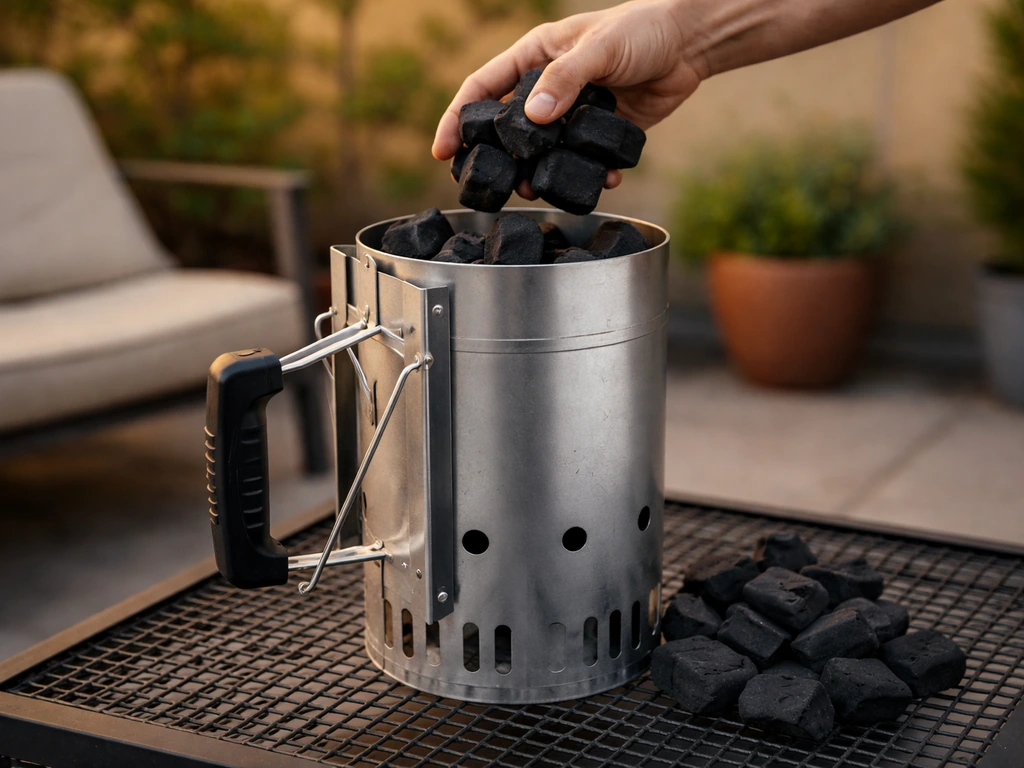
Use a chimney starter, skip the lighter fluid
A chimney starter is the right way to light charcoal on a patio. You load charcoal into the top chamber (a standard chimney holds roughly 4 pounds or about 100 briquettes), stuff a couple sheets of newspaper or a fire starter cube into the bottom, and light it from the bottom. The coals are ready in 15 to 20 minutes with no accelerants involved. Kingsford and Weber both recommend this method specifically because it avoids saturating the grill with volatile liquids, which is where most ignition accidents start.
Lighter fluid works, but it introduces real risk. If you add fluid to coals that are already partially warm, or if you add too much, you can get a sudden flare that sends a fireball several feet into the air. Weber's guidance actively argues against lighter fluid, and on a patio where you're closer to structures and overhead cover than you'd be in an open yard, I'd follow that advice. If you do use lighter fluid, apply it only to cold, unlit charcoal, use it sparingly, let it soak in for 30 seconds before lighting, and never add more fluid to coals that are already lit or warm.
Chimney placement and safe lighting steps
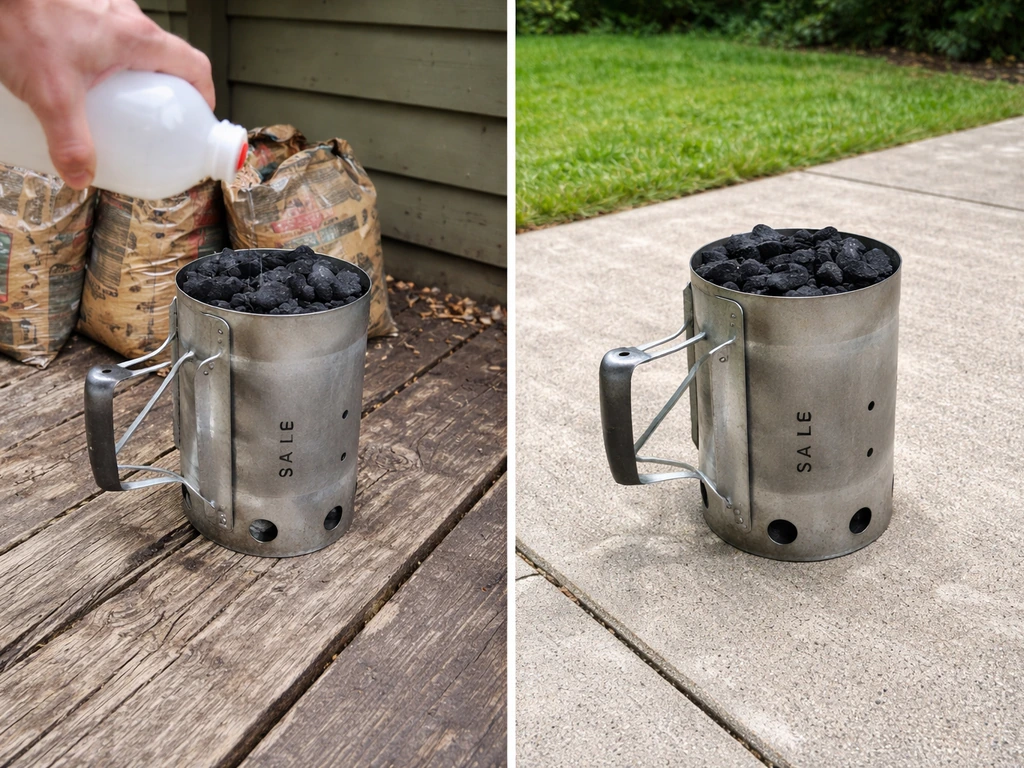
- Set the chimney starter on a non-flammable surface, like bare concrete or a stone patio slab, away from any combustible material while it loads and ignites.
- Use heat-resistant gloves when handling the chimney, especially when pouring hot coals into the grill.
- Pour coals slowly and directly into the charcoal grate to avoid splashing live embers.
- Set the empty chimney down on a non-flammable surface to cool, never on wood, plastic furniture, or near guests and pets.
- Wait until the coals have a light gray ash coating (usually 15 to 20 minutes) before spreading them and placing food on the grill.
Fuel storage on the patio
Store charcoal bags in a dry location away from any heat source, ideally inside a shed or garage in a sealed container. Don't stack bags near the grill while you're cooking. Lighter fluid should be stored with the cap tightly sealed, away from direct sunlight, and away from any flame or heat source. Keep both out of reach of children. If you run a patio heater near your grilling setup, the same separation rules apply: fuel, ignition sources, and heat-producing appliances need space between them, and the charcoal grill and the patio heater should never share a tight corner of the patio.
Managing hazards while the grill is running
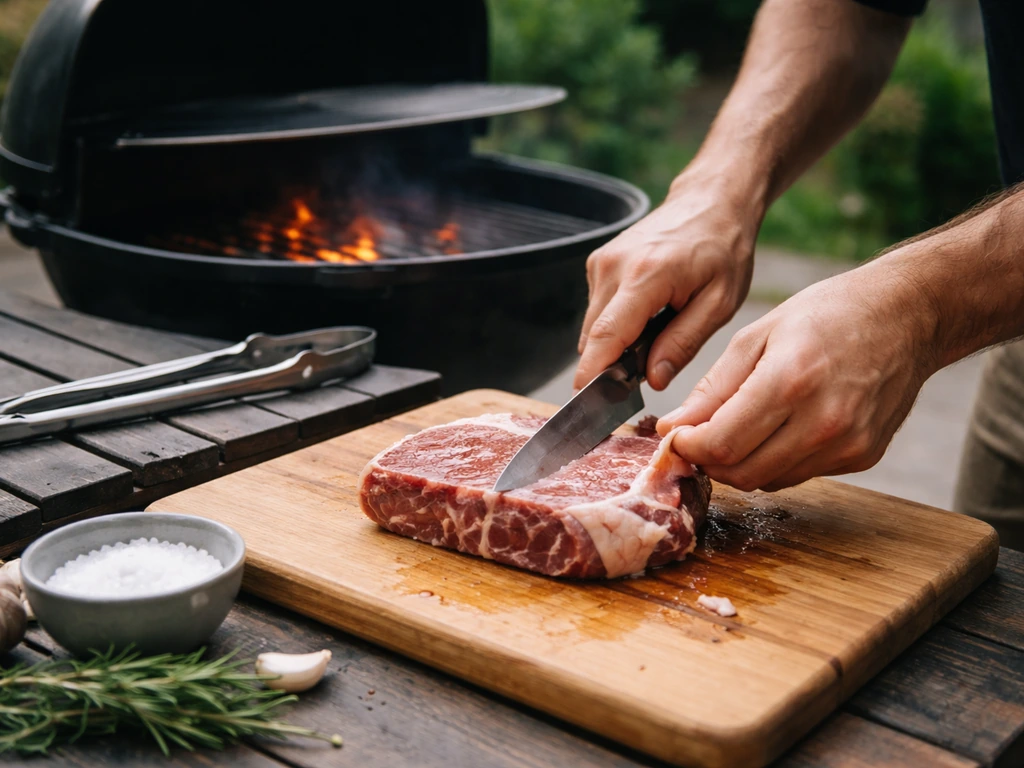
Flare-ups
Flare-ups happen when fat or grease drips onto hot coals and ignites. On a patio, they're more dangerous because you're working in a more confined space than an open yard. The right response is to close the lid immediately. Closing the lid cuts off airflow and smothers the flare fast. Do not squirt water onto the coals, water hitting a grease fire causes a steam explosion and can scatter burning grease. Do not use a spray bottle of water as a flare-up tool on charcoal. If the flare persists after closing the lid, keep the lid closed and move food to a cooler zone of the grill using long-handled tongs.
To reduce flare-up frequency, trim excess fat from meat before grilling, avoid placing fatty cuts directly over the hottest coals, and clean grease buildup from the bowl of the grill regularly. Use the same patio setup and safety rules, then cook the steaks over direct heat and flip as needed to build a great sear grilling. A cleaner grill is a safer grill, and on a patio where flare-ups have less room to be harmless, that maintenance habit matters. For steak specifically, use a hot sear over direct heat, flip only once, and move to indirect heat to finish without burning the outside how to cook patio steaks on the stove.
Wind and embers
Wind is your biggest variable on an open patio. It can send embers 5 to 10 feet from the grill, and any furniture cushion, potted plant arrangement, or wood railing within that radius becomes a potential ignition target. If it's noticeably windy, orient the grill so the open side faces away from your home and nearby furniture, check the surroundings before lighting, and have a garden hose or a bucket of water within reach, not to douse the grill, but to handle any smoldering spot that lands nearby. Never grill under an awning in any wind condition.
Ventilation and CO during the cook
Even on an open patio, CO can accumulate if the cooking area is surrounded by solid walls, screens, or closely spaced patio panels. Make sure air can move freely around and away from the grill. If you're grilling near a wall or fence, check wind direction and make sure smoke (and CO) is moving away from your house and away from where people are sitting. If anyone nearby starts feeling dizzy, has a headache, or feels nauseated while the grill is burning, treat it as a potential CO exposure immediately: get everyone outdoors and into fresh air, and call for medical help. CO symptoms can escalate fast.
Don't walk away
CPSC's grilling safety guidance is direct on this: keep the grill attended. A charcoal grill can go from stable to flaring in seconds if grease hits the coals or wind kicks up. On a patio, where furniture and structures are close, an unattended flare-up has a very short path to becoming a structural fire. Keep someone watching the grill, or close the vents and lid if you need to step inside briefly to reduce heat output and lower risk.
Cool-down, ash disposal, and storage
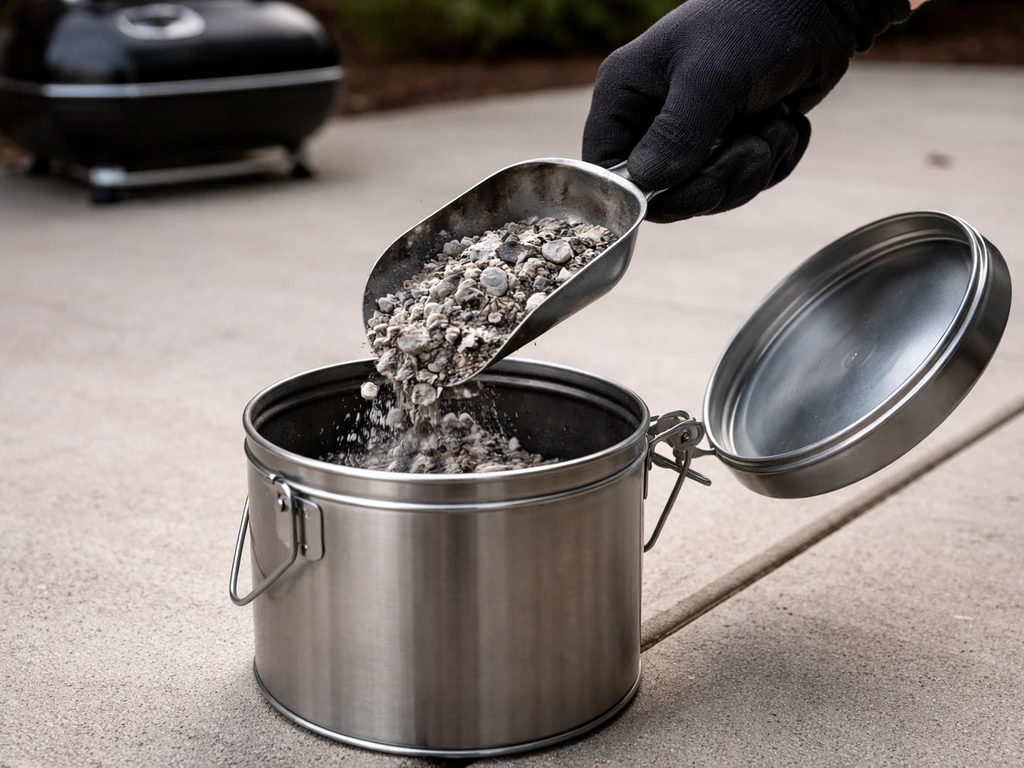
When you're done cooking, close all the grill vents and the lid damper completely. This cuts off oxygen to the coals and lets them suffocate rather than burning down on their own. Weber recommends leaving the dampers closed overnight to be sure coals can't re-ignite. This is the right habit: close everything, walk away, and don't touch it again until the next day.
Ash disposal is where a lot of people make a dangerous mistake. Ash from charcoal can hold heat for up to 48 hours, even when it looks completely gray and cold. Never dump ash into a paper bag, cardboard box, plastic bin, or regular household trash can. Instead, let the grill sit with vents closed for at least 24 hours, then carefully transfer ash into a metal container with a metal lid. You can add a little water to the ash in the metal container to be absolutely certain, then let it sit outside on a non-combustible surface before disposing of it in your regular trash.
Weber's owner's guide is clear that you should never store the grill or move it to a covered area until you're sure the ashes and charcoal are fully cold. Covering or storing a grill with residual heat traps CO and can re-ignite embers if airflow is reintroduced. Once it's confirmed cold, store the grill in a covered but ventilated area, never inside an attached garage with poor airflow, and never with residual ash still in the bowl if you can help it.
What to do in an emergency on your patio
Flare-up turning into a structure fire
If a flare-up escapes the grill and ignites a nearby surface, act immediately but don't take unnecessary risks. For a very small smoldering spot on a non-grease surface, a garden hose can handle it. For a grease fire on the grill itself, keep the lid closed and let it smother. Do not use water on a grease fire under any circumstances. If the fire has reached patio furniture, a fence, or your home's exterior, don't try to fight it yourself: get everyone out, call 911, and meet them outside. The USFA's guidance is explicit: if you're unsure whether it's safe to use a fire extinguisher, get out and call for help.
If you do keep a dry-chemical ABC fire extinguisher on your patio (which is a good idea), know how to use it before you need it: pull the pin, aim at the base of the fire, squeeze the handle, and sweep side to side. But if the fire is large, spreading, or near your home, skip the extinguisher and call 911.
Smoke and CO symptoms
CO has no smell and no color. The warning signs are physical: sudden headache, dizziness, nausea, confusion, or someone feeling unexpectedly tired near the grilling area. If this happens, NIOSH/CDC guidance is clear: stop what you're doing, get everyone into fresh air immediately, and call for emergency medical help. Don't go back inside to grab anything.
Don't wait to see if the symptoms improve outdoors first; call 911 and let them assess. If your home has a CO detector and it's alarming, treat it as real: leave, call 911, and don't re-enter until it's been cleared by emergency responders. Opening windows or doors does not reliably reduce CO to safe levels fast enough, so evacuation is the right response every time.
Your quick safety checklist
Before you light
- Grill is positioned at least 10 feet from the home, fencing, and furniture.
- No overhead structure (awning, porch roof, overhang) is above or near the grill.
- Grill vents on the bottom are clear and not blocked by ash from the last session.
- Grill bowl is clean of excess grease buildup.
- A grill mat or non-combustible surface protector is under the grill if your patio surface is wood or composite.
- Chimney starter is ready on a non-flammable surface; lighter fluid (if you're using it) is applied only to cold coals.
- Heat-resistant gloves are within reach.
- Doors and windows near the patio are closed or positioned upwind of the grill.
- A garden hose or bucket of water is accessible nearby.
- Patio heater or other heat sources are separated from the grill by a safe distance and not running directly adjacent to it.
After you're done
- All vents and lid damper are fully closed.
- Grill is left to cool for a minimum of 24 hours before ash removal.
- Ash is transferred to a metal container with a metal lid, not plastic or paper.
- Metal ash container is placed on a non-combustible surface outdoors.
- Grill is not moved to a covered storage area until it is completely cold.
- Charcoal bag and any lighter fluid are stored away from the grill and heat sources.
- Grill area is checked for any embers or smoldering material on nearby surfaces.
If you follow this setup consistently, charcoal grilling on a patio is genuinely low-risk. The accidents that make the news almost always trace back to one of a few avoidable mistakes: grilling too close to the house, grilling under an overhang, moving a still-warm grill into a closed space, or dumping ash too soon. Nail those four things and you've eliminated the most serious hazards.
If you're also running a patio heater nearby, give it the same respect you give the grill: keep them separated, keep both attended, and build the same safe shutdown habit into both devices. A patio that's set up with clearances, clean equipment, and an emergency plan in place is a patio you can actually relax on. For a safer experience, use this patio grill setup guidance to plan clearance, ventilation, and emergency steps before you light the coals.
To get the best results with a char-broil patio bistro electric grill, follow the manufacturer’s temperature and preheat steps and keep the unit positioned for safe airflow a patio you can actually relax on.
FAQ
Can I use a charcoal grill patio if it has a screen enclosure or partial walls?
Yes, but only if air can circulate freely around the grill. If your patio is roofed on three sides, screened in tightly, or bordered by high solid panels, CO can build faster than expected. Treat it like an enclosed area, increase clearance from walls, and position the grill so prevailing wind carries smoke away from doors and seating.
Is it safe to grill under a covered patio if I keep the lid open and use a chimney starter?
Do not use your grill under a gazebo, pergola, balcony, or any structure with a low ceiling, even if it is open on the sides. Sparks and embers can land upward and CO can get trapped beneath the overhead surface, raising both fire and poisoning risk.
How long should I wait before moving or covering the charcoal grill after cooking?
Wait until the coals are fully cold before moving or covering the grill, and do not store it in an attached garage even if you think it is safe. Residual heat can reignite embers, and trapped airflow can also concentrate CO inside enclosed spaces.
What should I do if someone gets a headache or feels dizzy while I am grilling?
If you smell smoke indoors, feel headachy, or anyone shows CO symptoms while the grill is burning, stop immediately and get everyone outside into fresh air. Do not rely on opening windows or cracking doors to fix it quickly, and call emergency medical help if symptoms are more than mild.
What is the safest way to light charcoal on a patio, and what are the do's if I use lighter fluid anyway?
A chimney starter is the safest option because it avoids saturating charcoal with volatile liquids. If you must use lighter fluid, apply only to cold, unlit charcoal, use it sparingly, allow soaking time before lighting, and never add more to already ignited or warm coals.
Do grill mats make a combustible deck safe under a charcoal grill?
Use a grill mat only for embers and heat protection on non-combustible surfaces, and make sure it extends beyond the grill base where ash can drop. If your mat is thin or worn, it is not the same as a full non-combustible pad, and you should replace it rather than trusting it.
When should I use water versus closing the lid for charcoal grill flare-ups?
Keep a water source for small smoldering spots, but do not use water to fight grease flames. For grease flare-ups on the grill, close the lid to smother, keep the lid closed if the fire persists briefly, and move food with long-handled tools to a cooler area.
Why is it dangerous to throw out charcoal ash right after cooking, even if it looks gray?
Clean and maintain a consistent safety routine, then store your grill so residual ash is not present. Ash can hold heat for a long time, so dumping it into anything non-metal and fast is a common cause of hidden smoldering.
How should I position my charcoal grill patio setup when it is windy?
Place the grill so wind pushes smoke and CO away from your home, doors, and vents. If it is windy enough that embers could travel several feet, keep extra space from cushions and furniture, and do not grill under an awning regardless of wind direction.
How long can I leave the grill alone on a patio while I grab something?
Never leave a charcoal grill unattended, even for a quick task inside. Grease flare-ups and wind-driven ember drops can change the situation in seconds, and a patio has less room for a small incident to remain small.
Should I use an ABC fire extinguisher on a charcoal patio fire, or call 911 right away?
An ABC extinguisher is fine for many small fires, but do not treat it as a substitute for evacuation. If flames are spreading, near the home, or you are unsure it is safe to use, get everyone out and call emergency services.