To turn on a Fire Sense patio heater, press and hold the control knob down for 3 to 5 seconds, then while still holding it, press the red igniter button repeatedly until the pilot flame catches. Once the flame is lit, keep holding the knob for 20 to 30 seconds before releasing it slowly. If the flame stays on, you're good. If it goes out the moment you let go, that's almost always a thermocouple issue, and there's a straightforward fix for that below.
How to Turn On and Light a Fire Sense Patio Heater

Grant Mercer
23 Jun 2026
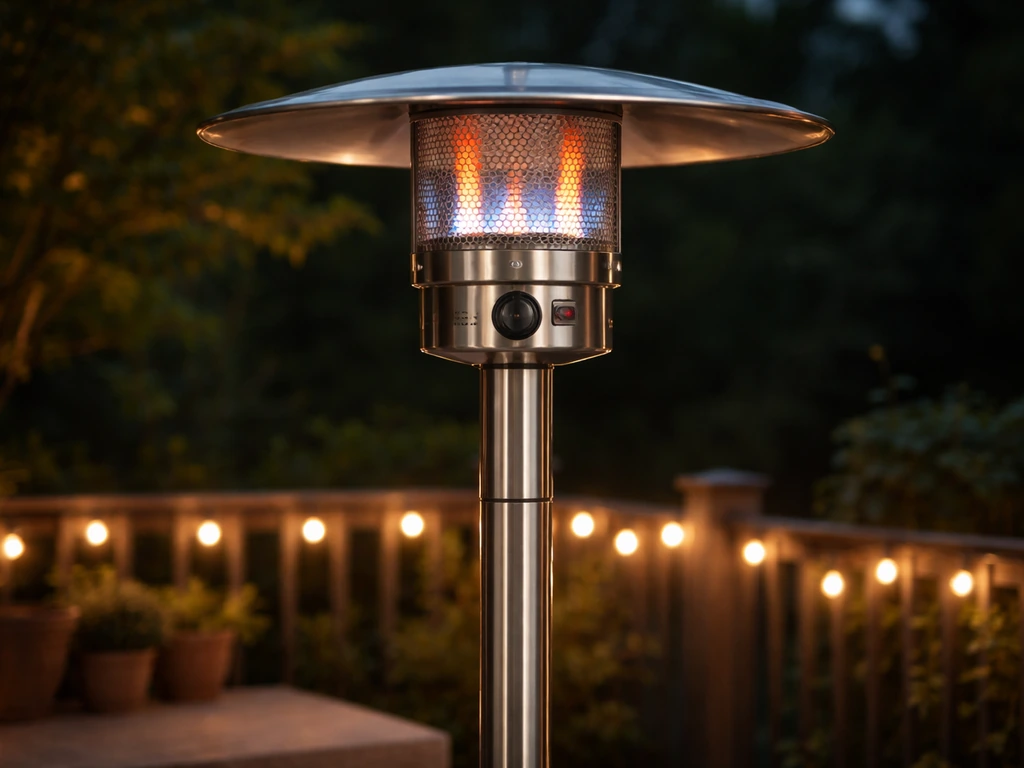
Quick safety checks before you light anything
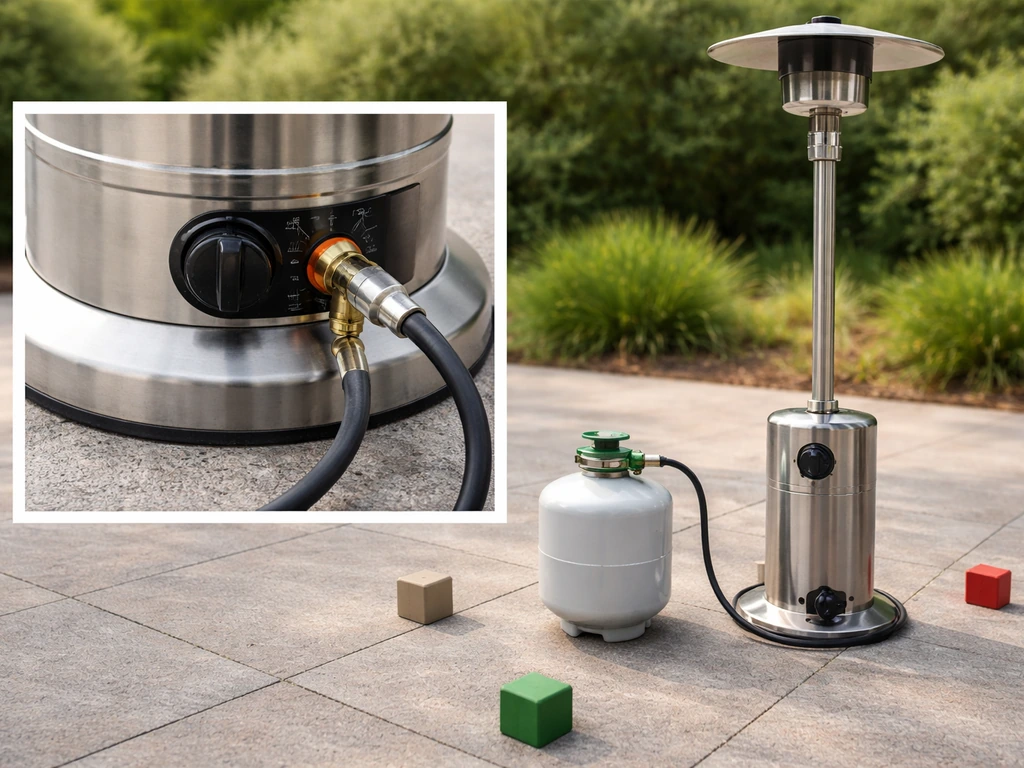
Before you even touch the control knob, run through these checks. They take about two minutes and they matter, because propane ignition mistakes can go from inconvenient to dangerous fast.
- Position the heater outdoors only, never inside an enclosure, garage, screened porch, or tent. The manual is explicit: outside any enclosure, full stop.
- Check your clearances. For most Fire Sense tabletop models, that's at least 18 inches above the unit and 24 inches to the sides, away from any combustible material including patio umbrellas and fabric chairs.
- Wind check: if it's blowing harder than 10 mph, wait. Fire Sense manuals specifically say not to operate the heater above that threshold. The flame will struggle to stay lit and there's a real risk of re-lighting near accumulated gas.
- Do a quick soap-water leak check on the hose connections before first use of the season. Bubbles mean a leak, and a leaking hose needs to be replaced before you do anything else.
- If you've just had the heater off and there was a gas smell or the flame went out unexpectedly, wait at least 5 full minutes before attempting to relight. That wait time isn't optional. It gives any accumulated gas time to dissipate.
- Check the igniter battery. On most Fire Sense models, there's a AA battery inside the ignition chamber on the front of the control box. If the igniter clicks weakly or not at all, replace it first.
One more thing worth mentioning: the burner and emitter screen get genuinely red hot during operation. Once it's running, treat the top section like you would a stovetop burner. Keep kids and pets back, and never try to adjust or inspect the burner head while it's lit.
Identify your Fire Sense model's ignition method first
Fire Sense makes a wide range of heaters, and the ignition setup isn't identical across every model. The general process is the same, but knowing what you're working with helps you avoid confusion during the lighting sequence.
Control knob plus push-button igniter (most common)
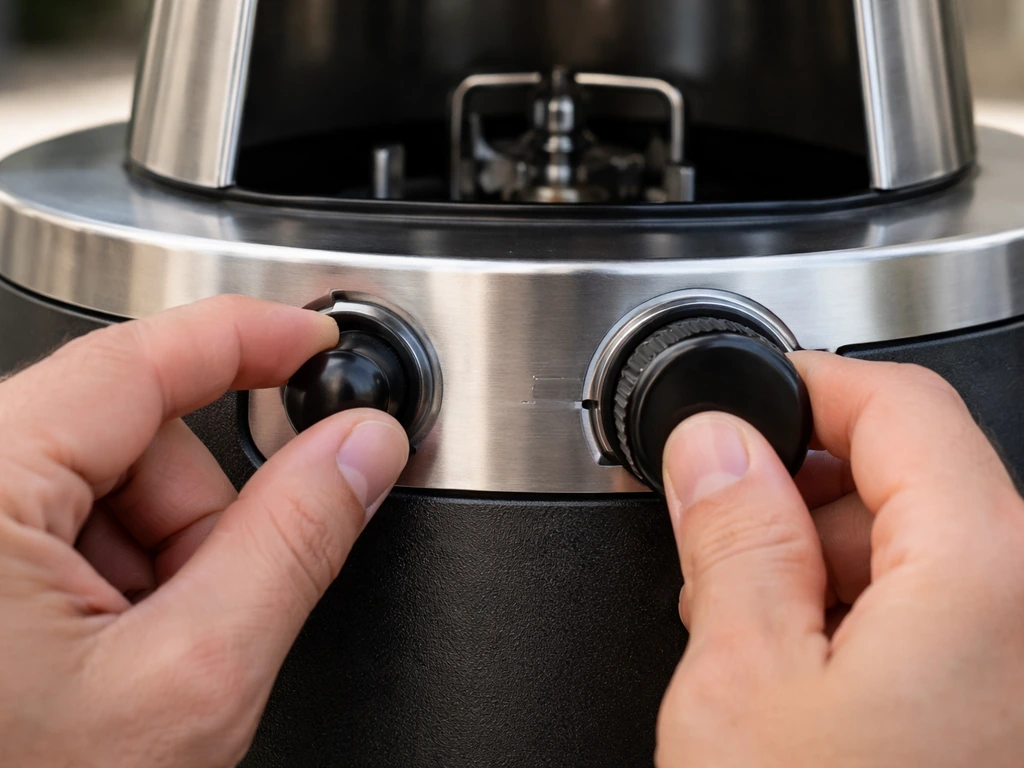
This is the setup on the majority of Fire Sense standing and tabletop propane heaters, including the PH01, PH01-S, and most of the stainless steel tower-style units. You'll see a single control knob (usually marked OFF, PILOT, LOW, and HIGH) and a separate red igniter button nearby on the control box. This is what the step-by-step below is written for.
Combination knob with integrated igniter
Some models combine the ignition button directly into the knob itself. On these, you press down on the knob to both open the gas flow and trigger the spark. The sequence is the same conceptually, but you're pressing the knob itself rather than a separate button.
Remote control models
A handful of higher-end Fire Sense models include a remote. If yours has one, you still typically need to complete the manual ignition sequence the first time before the remote can control heat levels. Check your specific model's manual for whether remote start requires a pilot to already be established. The manual lookup section at the end of this article explains how to find yours.
Step-by-step: how to turn on and light your Fire Sense heater
This sequence applies to the control knob plus igniter button setup, which covers most Fire Sense models. If you have an integrated knob igniter, the same steps apply, just press down on the knob itself instead of a separate button. If you have an integrated knob igniter, the same steps apply, just press down on the knob itself instead of a separate button, which is also the kind of setup you can use as you learn how to start patio heater for your model.
- Make sure the control knob is in the OFF position. Give it a moment after turning it off before you start, especially if the heater was recently running.
- Open the propane tank valve slowly, one full turn counterclockwise. You don't need to crank it all the way open.
- Press the control knob in firmly and turn it to the PILOT position simultaneously. On some models you push first, then turn to PILOT while still holding it down.
- Hold the knob down continuously. This keeps the gas valve cracked open for the pilot. Do not release it.
- After holding for 3 to 5 seconds, press the red igniter button. Press it once, pause half a second, press again. Repeat this several times. You should hear a click each time. The pilot flame should catch within 5 to 10 clicks. If you can see the pilot area, look for a small steady blue flame.
- Once the pilot flame is lit, keep holding the control knob down for 20 to 30 seconds. This is the step most people skip and it's exactly why the heater goes out when they let go. You're heating the thermocouple so it can signal the gas valve to stay open.
- After 20 to 30 seconds, release the control knob slowly. If the pilot flame stays on, you're past the hardest part.
- Turn the control knob from PILOT to LOW or HIGH to bring up the main burner. The burner should ignite from the pilot flame within a few seconds.
- Let the heater run on LOW for a minute or two before turning it up to HIGH, especially on a cold start. Some manuals suggest letting the pilot flame run for up to 10 minutes on first use to stabilize gas pressure and ensure consistent burn.
If the wind picks up while you're trying to light it, shield the base briefly during ignition, then back off once the flame is established. Don't hover over the heater while pressing the igniter. If you are switching from a Fire Sense setup to another outdoor heater brand, you can also follow this overview for how to start hampton bay patio heater.
If it won't light: troubleshooting failed ignition
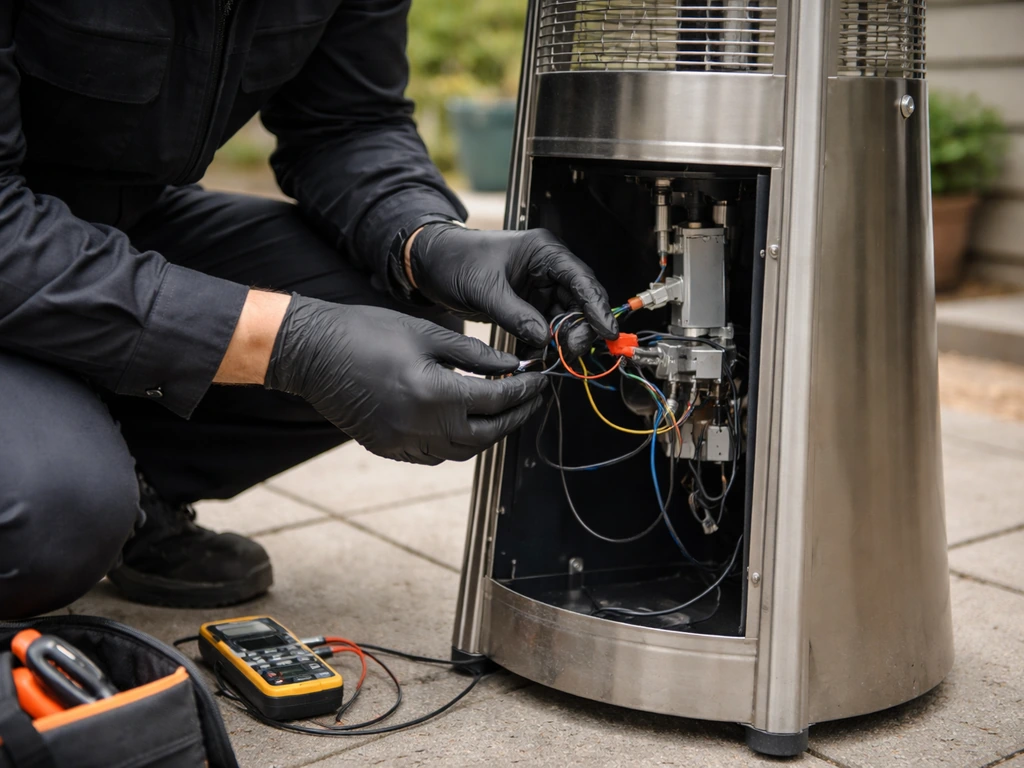
If you're pressing the igniter and nothing is happening, or the pilot keeps going out immediately, work through these in order before assuming you need a new part. If troubleshooting points to an ignition setup issue, revisit the step-by-step guide on how to turn on and light your Fire Sense heater for the exact control knob and igniter sequence.
No click from the igniter
A dead or weak AA battery in the ignition chamber is the most common reason the igniter makes no sound or a faint click. Replace it. The battery compartment is typically on the front face of the control box. A fresh battery should produce a sharp, audible click every time you press the button.
Clicking but no flame
- Confirm the propane tank has fuel. Even if you think it does, swap it with a known full tank to rule this out.
- Make sure you opened the tank valve before pressing the igniter. The knob has to be in the PILOT position and pressed down for gas to flow.
- Check that the hose connection is snug at both the tank and the heater. A loose fitting lets gas escape before it reaches the pilot.
- Inspect the pilot orifice and gas passages for debris or blockage. Insects, particularly spiders, are notorious for nesting in the pilot tube during storage. A can of compressed air directed into the pilot area (heater off, tank disconnected) can clear minor blockages.
- Wait the full 5 minutes if you've had a failed ignition attempt. Trying over and over without waiting lets gas accumulate, which is both dangerous and counterproductive.
Pilot lights but main burner won't come on
If the pilot flame is steady but the burner doesn't ignite when you turn the knob from PILOT to HIGH, the pilot flame may be too weak or misaligned to ignite the main burner. The Fire Sense LPG commercial model patio heater troubleshooting guide covers the pilot-versus-burner symptom pattern, including checks for alignment and cleaning or inspection steps rather than only recommending part replacement blank" rel="noopener noreferrer">pilot lights but the burner won't come on. Check that the pilot flame is actually touching or very close to the thermocouple. If the flame is small and flickering, low gas pressure or a partially blocked orifice is likely the cause. Also confirm the main gas orifice isn't blocked, the same spider-nesting problem applies there too.
If it lights but won't stay lit: the most common fixes
This is the most frequently reported problem with Fire Sense heaters. You get the pilot to catch, let go of the knob, and the flame dies within seconds. Or the burner lights but shuts off after a few minutes. Here's what's actually happening and how to fix it.
You're not holding the knob long enough
This is the fix for the majority of people who write in frustrated about their heater going out. The thermocouple is a small metal probe that sits in the pilot flame. When it gets hot enough, it sends a tiny electrical signal that tells the gas valve to stay open. If you release the control knob before the thermocouple reaches operating temperature, the valve closes and the flame dies. Hold the knob down for a full 20 to 30 seconds after the pilot lights. Count it out. Most people let go after 5 to 10 seconds.
Thermocouple is worn out or misaligned
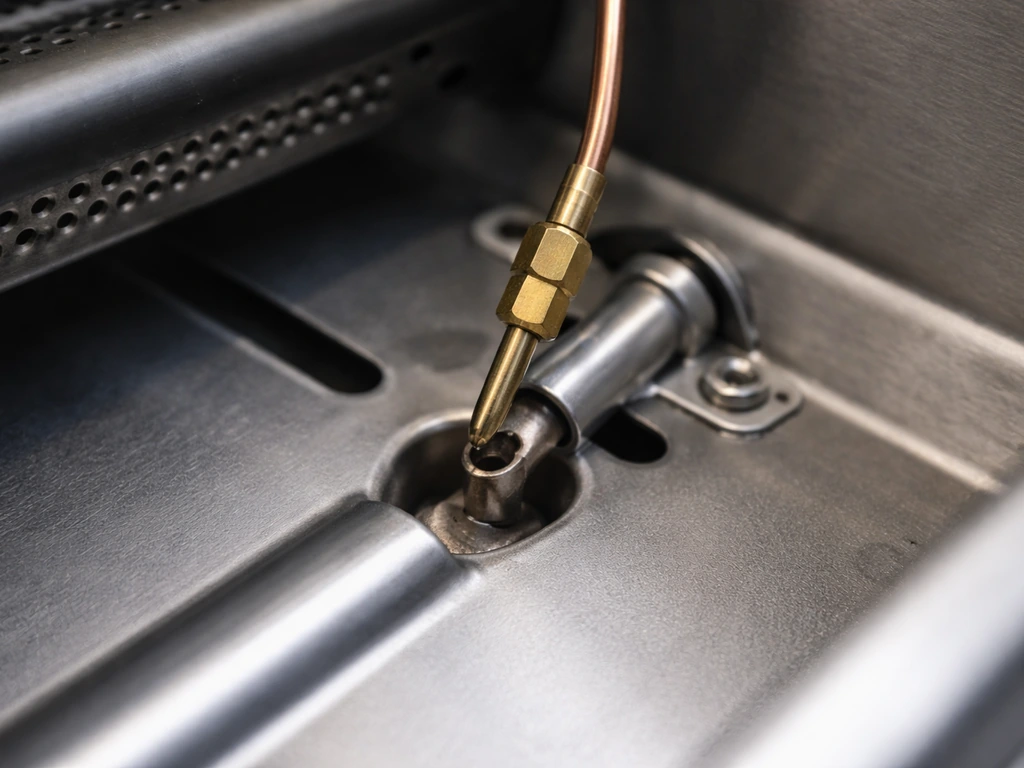
If holding the knob for 30 seconds still doesn't keep the flame on, the thermocouple itself is the most likely culprit. Fire Sense manuals explicitly list a faulty thermocouple as the primary cause when the burner flame goes out immediately after ignition. The thermocouple tip needs to sit directly in the pilot flame, not beside it or below it. If it's been bumped, bent, or corroded, it may not generate enough voltage to hold the valve open. Replacing a thermocouple on most Fire Sense models is a straightforward DIY job: disconnect the old one, thread in the new one, and position the tip back in the pilot flame.
Low gas pressure
A nearly empty propane tank, a tank that's been left in cold temperatures, or a regulator that's gone into bypass mode can all result in insufficient gas pressure. If your tank is below about 20 percent full, the pressure drop is real. Some manuals suggest letting the pilot run on low for up to 10 minutes to stabilize pressure before turning the heat up. If the problem only happens on cold days, try storing the tank somewhere slightly warmer before use, or simply replace it.
Wind shutting the flame down
Even a light breeze hitting the pilot area at the wrong angle can extinguish the flame mid-operation. If the heater keeps going out on breezy days, reposition it so the base isn't exposed to direct wind, or relocate to a more sheltered spot. Remember: the manufacturer recommends not operating the heater in winds above 10 mph regardless.
A quick reference for won't-stay-lit symptoms
| Symptom | Most Likely Cause | Fix |
|---|---|---|
| Flame dies immediately when you release the knob | Not holding knob long enough, or thermocouple not heated | Hold knob 20–30 seconds; if still failing, check thermocouple |
| Flame dies within a minute or two of running | Faulty or misaligned thermocouple | Reposition tip into pilot flame; replace thermocouple if needed |
| Flame dies on moderate heat or high setting | Low gas pressure or near-empty tank | Replace tank; let pilot run 10 min on low before turning up |
| Flame goes out intermittently | Wind or pilot flame instability | Move heater to sheltered area; check for drafts |
| Pilot lights but burner won't come on | Pilot too weak or main orifice blocked | Check gas pressure; clean orifice with compressed air |
When to stop DIYing and get proper help
Most ignition problems on a Fire Sense heater are fixable without tools or specialist knowledge. But there are situations where the right move is to stop, look up your specific manual, or contact Fire Sense support directly.
- You smell gas at any point during or after your ignition attempts and can't identify the source. Do not attempt to relight. Shut the tank valve off and move the heater away from any ignition sources.
- The hose or regulator is visibly cracked, kinked, or damaged. The manual is clear: do not operate the heater until original equipment replacement parts are installed. A damaged hose is not a field repair.
- You've replaced the thermocouple and the heater still won't stay lit. At that point, the gas valve itself may be failing, which is beyond typical DIY scope.
- Any part of the control box shows corrosion, melting, or physical damage from a previous flare-up.
- The heater is a commercial or higher-BTU model. Those have stricter service requirements.
To find your exact manual, go to ManualsLib or Manualzz and search your model number (printed on the label inside the base or on the back of the control box). Fire Sense model numbers typically follow a format like PH01-S, PH08-SB, or a five-digit number like 61541. Your manual will have a complete troubleshooting table specific to your unit, including part numbers for the thermocouple and regulator if you need replacements.
If you can't locate your manual, contact Fire Sense customer support directly through the Balkene Home website. They're generally responsive and can help you identify the right replacement parts for your model, which is much better than guessing at a hardware store.
If you're working through ignition issues on a different brand, the process is similar but the thermocouple specs and control layouts do vary. The approach here, checking battery, holding the knob long enough, and verifying thermocouple position, applies broadly to propane patio heaters, not just Fire Sense. If you want the exact startup sequence for a Hiland patio heater, follow the Hiland-specific lighting steps for your control setup. But always default to your model's specific manual for timing and safety instructions.
FAQ
Can I use the remote to start the Fire Sense patio heater, or do I need to light the pilot manually first?
Yes, but only after you confirm the pilot is already lit or you are following your model’s instructions for “ignition first, remote second.” On many units, the remote controls gas flow only after a pilot thermocouple signal is established, so if you try remote start before the pilot holds, the heater may shut down.
What should I do if the igniter won’t light the pilot after a few tries or I smell propane?
Don’t keep pressing the igniter if you smell strong propane or the pilot keeps failing. Turn the control knob back to OFF, wait several minutes for gas to dissipate, then restart from the lighting sequence. If the smell persists after waiting, stop and contact support.
If the pilot lights, then the heater shuts off after a few minutes, what’s the most likely cause?
If the heater relights reliably but turns off later, that is often not the ignition timing. Common causes include a thermocouple that is drifting slightly out of the flame area, low tank pressure developing as the gas warms or cools, or a burner/orifice partially blocked by debris.
How can I tell whether the thermocouple is positioned correctly without making the problem worse?
For safety, you should not “test” the thermocouple position while the unit is lit. Wait until it cools completely, then check that the thermocouple tip sits inside the pilot flame (not next to it). If it was bumped during cleaning or shipping, repositioning it usually fixes the immediate shutoff issue.
My Fire Sense has a knob that ignites when pressed, how do I troubleshoot the igniter if there is no separate red igniter button?
If your unit uses an integrated knob igniter, the battery issue can still exist. Check the AA battery in the ignition compartment if your model has one, then verify you press the knob fully and hold long enough for the thermocouple to heat.
How do I deal with wind when I’m trying to light it, without creating a ventilation or safety issue?
Try to shield the base and keep the pilot area out of direct gusts during ignition, but don’t block airflow permanently. Once the flame is established, keep the heater positioned so wind doesn’t hit the control box and pilot area directly, and follow the manufacturer guidance about operating above about 10 mph wind.
Could changing propane tanks cause starting problems, and how should I check that before replacing parts?
If you switch fuel tanks and the problem starts right away, confirm the propane tank is seated properly and the valve is fully open. A regulator or tank left in very cold conditions can reduce gas pressure enough that the pilot is weak or the burner won’t ignite.
Why does my burner not ignite when I turn the knob from PILOT to HIGH?
If moving from PILOT to HIGH causes the pilot to go out or the burner to fail to ignite, the pilot flame may be too weak or not close enough to the thermocouple, or the main burner/orifice may be partially restricted. Also confirm you are turning the knob deliberately to HIGH after the full hold time, not immediately after pilot catches.
The igniter makes a faint click or no sound, is the battery always the culprit?
If the pilot flame looks normal but the igniter sounds weak, check the AA battery first, then watch for a sharp, audible click when pressing the button. If there is no click after a fresh battery, the ignition module or wiring may be the issue, and you should consult the model’s manual or support.
What’s the best next step when my symptoms don’t match the common troubleshooting cases?
If you cannot find your model’s manual or the troubleshooting table doesn’t match your exact control layout, stop guessing on part numbers. Use the model number from the label on the base or control box to request the correct thermocouple or regulator from Fire Sense support so you don’t install an incompatible component.