For most homeowners, propane is the easier starting point because you can buy a heater and fire it up this weekend without touching your home's gas lines. But if you already have a natural gas hookup on your patio, or you're willing to run one, natural gas wins on long-term running cost and convenience. The right answer depends on two things: what your patio already has, and how often you actually use the heater.
Patio Heater Natural Gas vs Propane: Cost, Performance, Safety

Grant Mercer
25 Jun 2026
How patio heaters are fueled: the basics
Both natural gas and propane are combustible hydrocarbon gases, and at the burner level they work the same way: gas mixes with air, ignites, and produces radiant heat. The practical differences come from how each fuel is delivered to your heater.
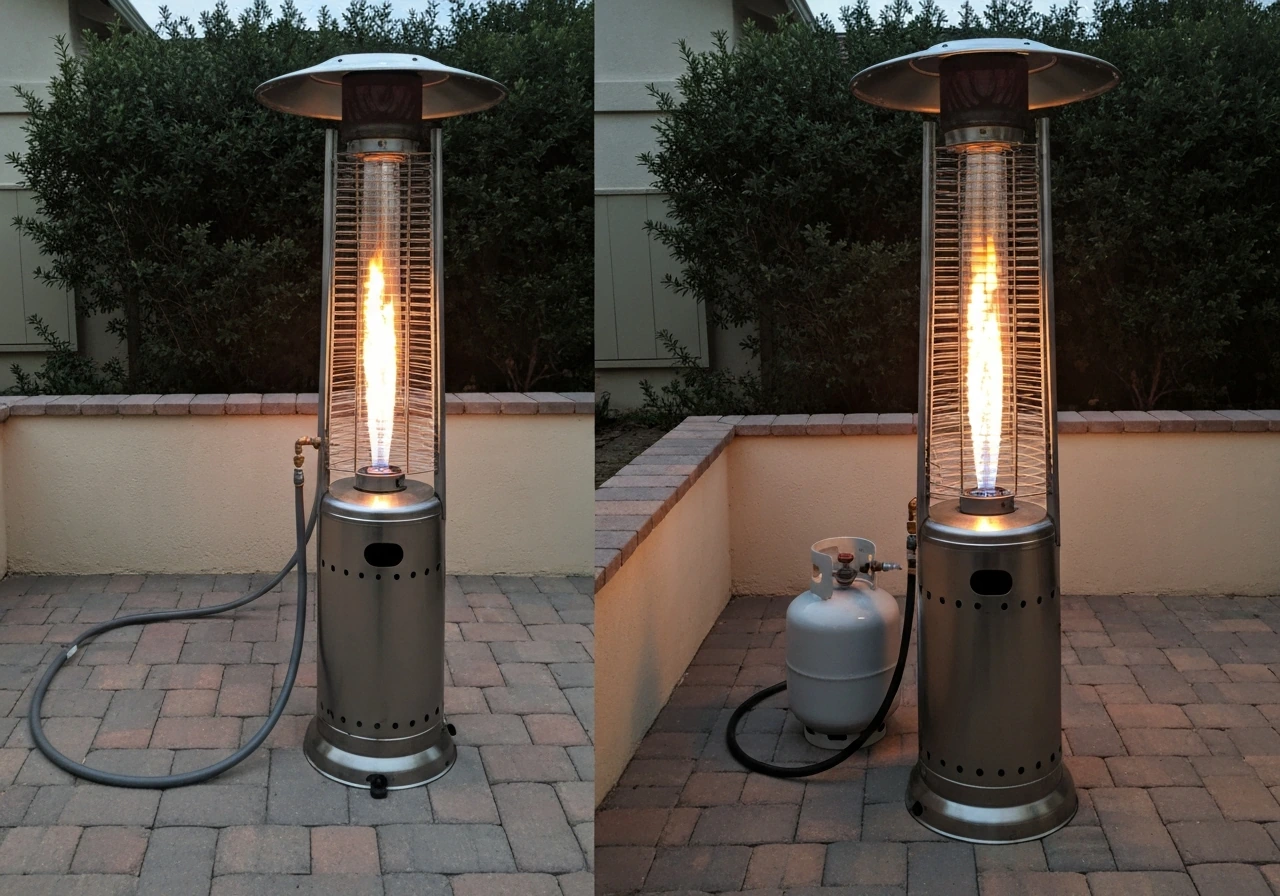
A propane patio heater runs from a portable cylinder, usually a standard 20 lb tank (the same size as a backyard grill tank). Propane is stored as a liquid under pressure, typically 100 to 200 psi in the cylinder before it hits the regulator. The regulator steps that down to around 10 to 11 inches of water column (WC), which is roughly 0.36 to 0.40 psi, and that's the pressure the heater's burner actually sees. One gallon of propane contains about 91,600 BTU of energy, and propane runs at about 2,500 BTU per standard cubic foot.
A natural gas patio heater connects directly to your home's gas supply line, the same pipe that feeds your furnace or stove. Natural gas operates at a much lower appliance pressure, around 3 to 3.5 inches WC at the manifold. One therm of natural gas equals exactly 100,000 BTU, and your utility bills in therms or CCF. Because the supply is piped, there's no tank to refill or swap, but there's also no moving it once installed.
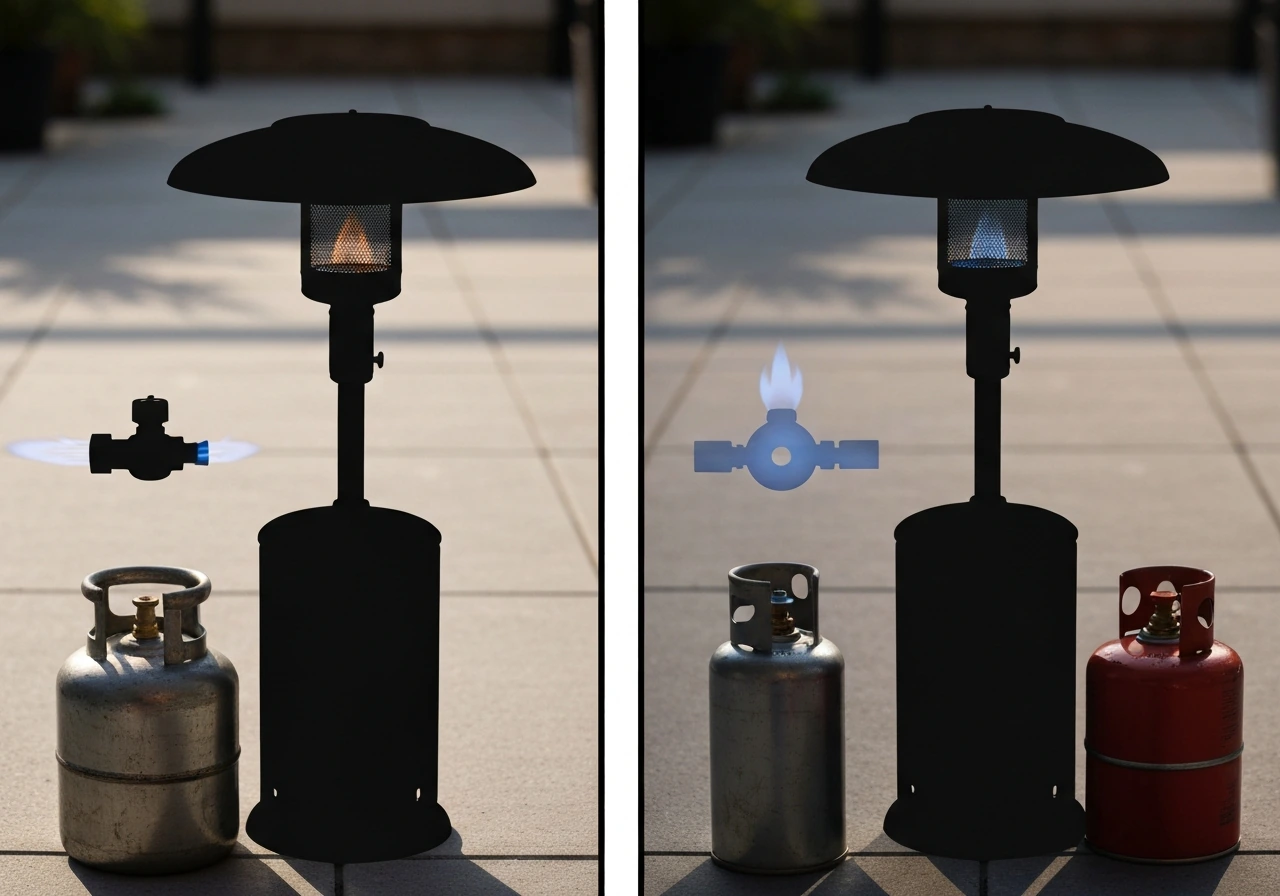
The key mechanical difference is that propane and natural gas use different orifice sizes in the burner because the gases have different energy densities and pressures. A propane heater has a smaller orifice than a natural gas heater running at the same BTU rating. This is why you can't just swap tanks or hoses between the two fuel types without a proper conversion kit, and why running the wrong fuel through an unconverted heater is dangerous.
What it actually costs to run each type
This is where natural gas pulls ahead for heavy users. Here's how to think through the math using your own utility rates.
A typical full-size patio heater (mushroom-style tower or tabletop) is rated around 40,000 BTU/hour. At that output, a natural gas heater burns 0.40 therms per hour. If your utility charges around $1.20 per therm (a common mid-range U.S. rate), that's about $0.48 per hour to run. A propane heater at the same 40,000 BTU/hour burns roughly 0.44 gallons of propane per hour (40,000 divided by 91,600 BTU per gallon). At retail propane prices around $3.50 to $4.50 per gallon, that's $1.54 to $1.98 per hour. Natural gas is typically 3 to 4 times cheaper per hour of heat output.
| Factor | Natural Gas | Propane |
|---|---|---|
| Fuel unit | Therm (100,000 BTU) | Gallon (91,600 BTU) |
| Typical U.S. price | ~$1.00–$1.50/therm | ~$3.00–$5.00/gallon |
| Cost at 40,000 BTU/hr | ~$0.40–$0.60/hr | ~$1.30–$2.20/hr |
| Fuel availability | Piped, unlimited supply | Tank refill/swap required |
| Upfront convenience | Requires installed gas line | Ready out of the box |
If you run your heater 3 to 4 hours a week through a 6-month season, the difference adds up to $100 to $200 or more per season just in fuel. The longer you run it, the more the natural gas math makes sense. For occasional use, a propane heater easily wins on simplicity.
Setup and installation: what's actually involved
Propane setup
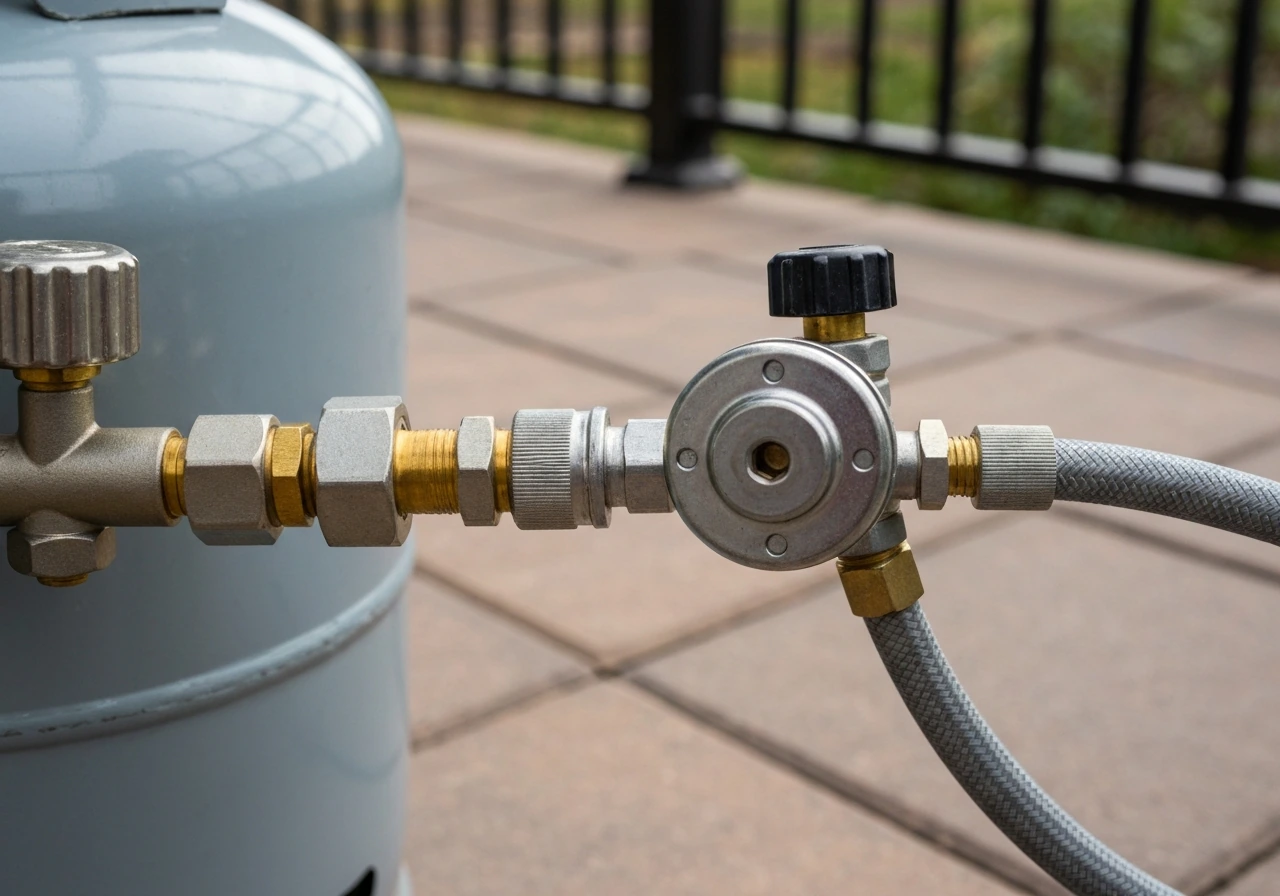
Propane is genuinely plug-and-play. You attach a 20 lb cylinder to the hose and regulator on the heater, open the valve, and you're ready. The regulator is built into the heater's supply hose assembly and is pre-set to deliver the right pressure (10 to 11 inches WC) to the burner. There's no installation work, no permits, and no plumber required. The tradeoff is that a 20 lb tank gives you roughly 20 to 25 hours of runtime at full heat, so you'll need to keep a spare or plan for refills.
Natural gas setup
Natural gas requires a dedicated gas line run to your patio, which in most jurisdictions requires a permit and a licensed plumber or gas fitter. If you already have a gas stub-out on your patio (common on patios that were built for a gas grill), connection is straightforward. If not, running new line can cost $300 to $800 or more depending on distance and your local rates. The heater connects via a flexible gas connector to a shutoff valve, and you'll need to confirm your supply pressure is in the right range for the appliance. Most natural gas patio heaters require 3 to 3.5 inches WC at the manifold. Once it's connected, you never touch the fuel supply again.
Converting between fuels
Some patio heater models can be converted between natural gas and propane using a manufacturer-specific conversion kit, which typically includes a replacement orifice, a different regulator, and updated instructions. Do not attempt a conversion without the correct kit for your exact model. Swapping just the tank or hose without changing the orifice will result in either a dangerously large flame (converting NG to LP without changing the orifice) or a starved, unreliable flame that won't stay lit. Always check with the manufacturer before attempting a conversion, and confirm that your local code allows field conversions on portable heaters.
Real heating performance: BTUs, wind, and comfort
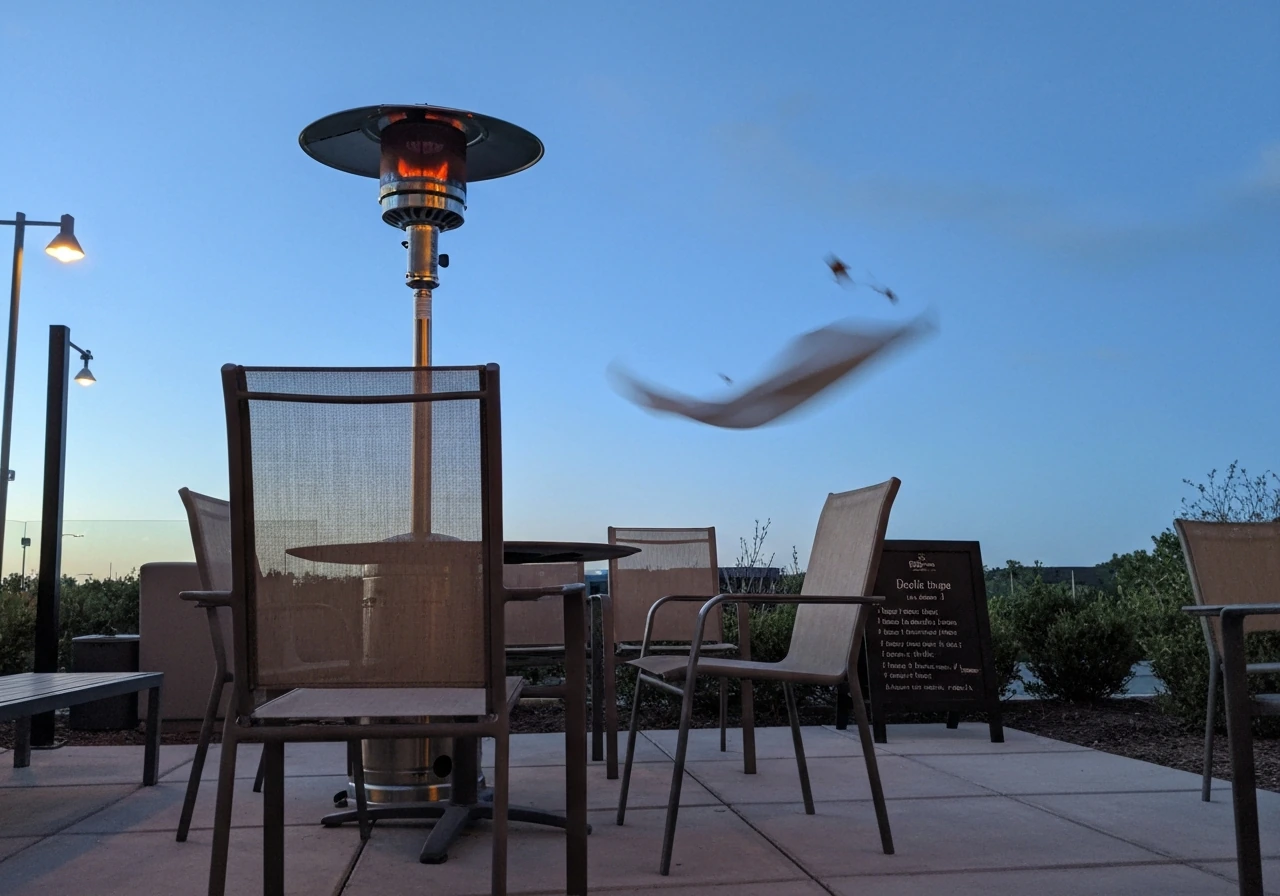
Both fuel types can deliver the same BTU output from the same heater design. A 40,000 BTU propane heater and a 40,000 BTU natural gas heater feel identical when the air is calm. The fuel source doesn't change how warm the heater feels standing nearby.
Where differences do show up is in consistency. A natural gas heater has essentially unlimited fuel at stable pressure, so it runs at full rated output every single time. A propane heater's performance can fluctuate based on tank level and temperature. When a propane tank gets below about a quarter full, pressure can drop and flame output can weaken noticeably. In cold weather (below about 40°F), propane vaporizes less efficiently, which means you can experience reduced output or difficulty staying lit even from a full tank. Regulator frosting, where moisture or cold causes the regulator to partially lock up, is a real issue in cold climates and shows up as a weak or sputtering flame.
Wind is the real enemy of both types. Patio heaters are not wind-proof appliances. Consistent wind above about 10 mph will noticeably reduce perceived heat output and can trigger the tilt/tip-over safety switch on freestanding models if the heater sways. Neither fuel type handles wind better than the other at the burner level, though a natural gas heater with a fixed base can be positioned more permanently in a sheltered spot, while a propane heater on wheels might end up in a less ideal location.
Control response is identical between the two. Both use the same style of gas valve and ignition system, whether that's a piezo push-button or an electronic igniter. Flame adjustability and the time-to-heat experience are the same.
Safety and code: what you need to know before you fire it up
Propane safety
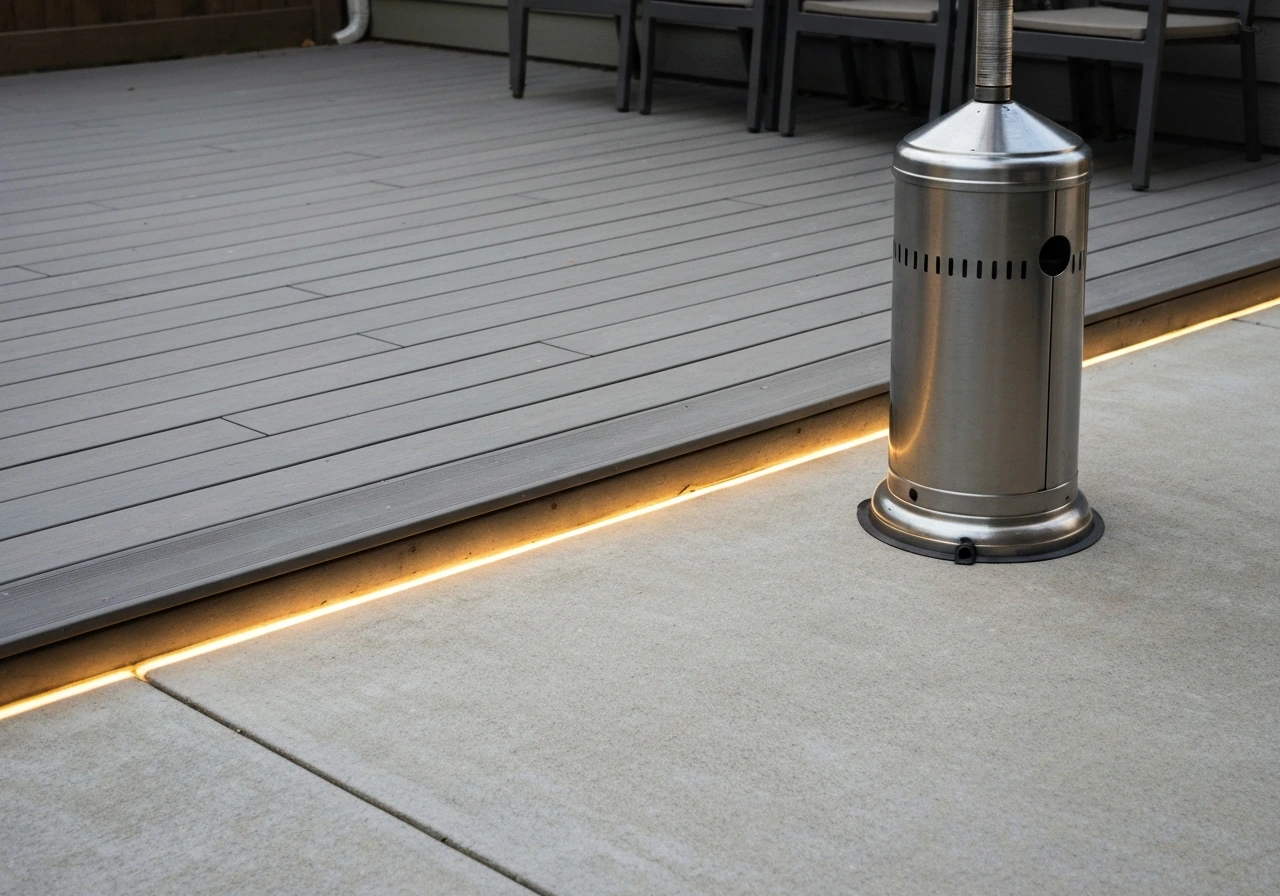
Propane is heavier than air, which means a leak pools at ground level and can accumulate under a deck or in a low-lying corner of a patio. If you want the full checklist for are propane patio heaters safe use, including what to do before lighting and how to avoid leaks and carbon monoxide risks, see the rest of the propane safety section. Always sniff around the base of the heater and the regulator connection before lighting, especially if the heater has been sitting unused. A soapy water solution brushed on fittings will bubble immediately if there's a leak. Never store propane cylinders indoors or in an enclosed garage. NFPA 58, which governs propane storage and use, requires cylinders to be kept a minimum distance from building openings, ignition sources, and ventilation intakes. A common reference distance is 10 feet from doors, windows, and dryer vents. Cylinders must be stored and used in an upright position.
Propane patio heaters are strictly outdoor appliances. Using one in an enclosed space, including a screened porch or a partially enclosed patio, can create carbon monoxide buildup. NFPA guidance is clear: use them only in well-ventilated outdoor conditions.
Natural gas safety
Natural gas is lighter than air and dissipates upward if there's a leak, which makes it slightly less likely to pool dangerously than propane. That said, a gas leak near any ignition source is still a serious hazard. All natural gas patio heater installations should have a manual shutoff valve within reach of the appliance. Follow the clearance-from-combustibles distances specified in your heater's installation manual, and treat them as minimums, not suggestions. Most manuals specify clearances to walls, overhead structures, and patio covers.
For natural gas heaters, the gas line connection and initial pressure test should be done by a licensed professional in most states. Even if you're comfortable with DIY work, gas line connections that fail inspection can void your homeowner's insurance. After installation, use the same soapy-water leak check on all fittings before first use and at the start of each season.
Both types: general best practices
- Never leave a running patio heater unattended, especially around children or pets.
- Turn off the gas supply at the source (tank valve or shutoff valve) when the heater is not in use.
- Inspect the regulator hose for cracks, kinks, or weathering at the start of each season. Replace it if there's any visible damage.
- Keep the heater upright. The tilt switch cuts gas flow if the heater tips, but it's a backup, not a substitute for stable placement.
- Clean the burner and pilot assembly annually to prevent spider webs, mud dobbers, or debris from blocking the orifice.
Choosing the right heater for your patio and lifestyle
Here's the honest shortcut: if you want to buy something this weekend and use it immediately with zero installation work, get a propane heater. If you want a quick answer to where to buy, look for propane patio heaters at major retailers, home improvement stores, and online marketplaces, then verify the fuel type matches propane cylinders buy something this weekend. It's the right choice for renters, people with small patios, and anyone who uses a heater occasionally or wants to be able to move it around. The fuel cost per hour is higher, but if you're running it 20 hours a season, the difference is under $30.
If you're a homeowner who uses your patio heater heavily, already has a natural gas line nearby, or is building out a permanent outdoor living space, natural gas is worth the upfront installation cost. If you're still comparing options, this gas vs propane patio heater guide can help you weigh the tradeoffs before you commit. You'll save on fuel every season, never run out mid-party, and have a cleaner installation with no tank to manage. It's also the better option if you're adding a built-in or wall-mounted heater to a pergola or covered patio.
One thing to think about: heater style. Freestanding tower heaters (the classic mushroom-cap style) are almost always propane. Many wall-mounted, post-mounted, and built-in patio heaters are designed for natural gas. If you're drawn to a specific heater design, check what fuels it supports before deciding anything else.
| Situation | Best Fuel Choice |
|---|---|
| No existing gas line, want to start now | Propane |
| Renting or need portability | Propane |
| Heavy use (4+ hours/week) | Natural gas |
| Permanent outdoor living space | Natural gas |
| Already have a gas stub-out on patio | Natural gas |
| Cold climate below 40°F regularly | Natural gas (more consistent pressure) |
| Occasional weekend use only | Propane |
| Built-in or wall-mounted installation | Natural gas |
Troubleshooting by fuel type: ignition, won't stay lit, and common fixes
This is the section you'll come back to when your heater acts up. The root causes differ slightly depending on whether you're on propane or natural gas, so I've broken it down by fuel. For deeper dives on specific failure modes, the thermocouple and tilt switch guides on this site go into step-by-step detail.
Propane heater troubleshooting
Won't ignite at all: Start with the obvious, is there gas in the tank? A 20 lb tank at roughly a quarter full or less can have too little pressure to light reliably. Next, check that the tank valve is fully open and the hose connection is snug. If you hear clicking but no flame, the pilot orifice or pilot tube may be blocked by a spider web, mud dobber nest, or debris. These tiny insects love to nest in unused heaters over winter. Remove the top assembly and visually inspect the pilot tube. A can of compressed air or a thin wire can clear a soft blockage.
Lights then goes out within 30 seconds: This is almost always a thermocouple issue. The thermocouple is a small probe that sits in the pilot flame. It generates a tiny voltage that tells the gas valve it's safe to stay open. If the thermocouple tip is coated in carbon, bent away from the flame, or worn out, it won't generate enough signal and the valve shuts off as a safety measure. Try repositioning the tip so it's fully in the pilot flame. If that doesn't fix it, replace the thermocouple. They're inexpensive ($10 to $20) and a common DIY repair.
Weak flame or low heat output: On propane, this usually points to low tank pressure. Check tank level first. In cold weather (below 40°F), propane vaporizes more slowly, and this is a real cause of weak output. If the regulator or hose feels cold or frosty, you're likely dealing with regulator freeze-up caused by moisture in the gas or extreme ambient cold. Bringing the tank indoors to warm up (not near any flame or ignition source) and then retrying often resolves it. If the problem persists with a full warm tank, the regulator itself may be faulty or stuck in lock-up and needs replacement.
Pilot lights but main burner won't come on: This is often a thermopile issue rather than a thermocouple issue. Thermopiles generate more voltage and are used to power the main gas valve. A weak or failing thermopile will let the pilot stay lit (thermocouple is fine) but won't open the main valve. You can test thermopile output with a multimeter. A healthy thermopile typically produces 300 to 750 millivolts; below 300 mV, replace it.
Natural gas heater troubleshooting
Won't ignite: With natural gas you're not going to run out of fuel, so skip the tank check and go straight to the gas supply. Is the shutoff valve open? Is the main gas supply to the house on? If yes to both, check the pilot orifice for blockage, exactly like propane. Spider webs and debris affect natural gas heaters just as much. The igniter electrode should be clean and positioned about 1/8 inch from the pilot hood. If it's carboned up or cracked, it won't produce a reliable spark.
Lights then goes out: Same thermocouple/thermopile logic as propane. On natural gas heaters the thermocouple and thermopile fail in the same way. Carbon buildup on the tip is the most common cause. Clean it gently with fine steel wool, reposition it in the flame, and retry. If it still won't stay lit, replace it.
Weak flame on natural gas: This is less common than on propane because you have a stable piped supply, but it does happen. The most likely causes are a partially clogged burner orifice or a supply pressure issue. A partially blocked orifice can be cleaned with a soft brush and compressed air. Do not use a metal pick to clean a gas orifice as you can enlarge it and alter the fuel-to-air ratio. If you suspect low supply pressure, that's a job for your gas utility or a licensed technician with a manometer. Natural gas manifold pressure should be around 3 to 3.5 inches WC. Anything significantly lower points to a supply or regulator problem upstream.
The tilt switch: affects both fuel types
Almost every freestanding patio heater, propane or natural gas, has a tilt switch (sometimes called a tip-over switch) that cuts gas flow if the heater leans past a set angle. If your heater shuts off unexpectedly and relighting it immediately works fine, but then it shuts off again, put a level on the base. Even a slight lean on an uneven patio surface can trigger the switch. On some models, a faulty tilt switch will interrupt gas flow even when the heater is perfectly upright. You can test this by gently tapping the base while the heater is running. If it shuts off, the switch is hypersensitive or faulty and needs replacement. This is a straightforward part swap on most models.
One last note: if you ever smell gas and can't identify a clear cause, shut off the fuel at the source immediately, move away from the heater, and don't attempt to relight it. That situation calls for a licensed technician, not a DIY fix.
FAQ
Can I switch a patio heater from natural gas to propane (or back) without replacing parts?
If you have a natural gas heater but want to use propane, you generally cannot just change the tank. You need the exact manufacturer conversion kit (orifice, regulator, and instructions) for that model. Using the wrong hardware changes the fuel-to-air mixture and can cause a flame that is too large, burns improperly, or intermittently shuts off.
How can I tell whether a patio heater is actually set up for natural gas or propane?
Look for two things before you buy. First, confirm the heater is rated for the fuel type on your site (NG or LP). Second, check the required manifold pressure or operating pressure range in the manual, because some “natural gas” models are actually tuned for specific supply pressures.
Can I connect a patio heater using the same hose or parts I use for my gas grill?
Yes, but only if your setup matches the heater’s required supply pressure and has the correct fittings. For natural gas, you still need a code-compliant connection, typically to a shutoff valve and approved flexible connector. For propane, you need the hose and regulator assembly rated for patio heater use, not generic grill parts.
What part should I replace first if my heater keeps shutting off, thermocouple or thermopile?
If the heater lights but will not stay on, the usual culprit is the safety control that holds the gas valve open, commonly the thermocouple (shorter timing failures) or thermopile (can power the main valve). Replacing the wrong part can waste money, so follow the symptom patterns (pilot-only vs pilot then main, and how quickly it shuts off).
Why does my propane heater get weak in cold weather even with a full tank?
If propane output drops as temperatures fall, you may be running into vaporization issues and, sometimes, regulator freeze-up. A practical test is to warm the tank and regulator area (keep it away from ignition sources) and retry. If performance returns when warm but fails again in the cold, plan for a colder-climate strategy like insulating the regulator correctly per manufacturer guidance or ensuring tank exchange happens with a full, warm tank.
What else besides tank level affects how long propane heaters run?
Do not assume tank level alone predicts runtime. Propane tanks can show “liquid present” but still provide inconsistent pressure if the regulator is icing or if the tank is very cold from recent transport. In addition, frequent short starts can reduce effective usage because the system must re-stabilize each time.
How do wind and patio layout affect performance, and what can I do to reduce the impact?
Try to avoid starting a heater under nearby obstructions. Heat feels lower in wind because the airflow carries away the radiant heat before it reaches your body, and it can also trigger the tip-over switch on freestanding models if the heater rocks. Use a permanent sheltered location for a tower heater if possible, or reposition so prevailing wind hits less directly, while still keeping clearances and ventilation requirements.
Are propane and natural gas leaks equally dangerous, and where should I check for leaks?
For propane, leaks are a bigger concern at ground level because propane is heavier than air and can accumulate in low areas. For natural gas, leaks dissipate upward but are still dangerous. Either way, if you smell gas, shut off the supply at the source, leave the area, and do not relight until inspected.
What are the first checks to do when the heater won’t light for propane vs natural gas?
On propane heaters, a quick and common fix for weak ignition or failure to light is confirming the tank valve is fully open and the hose connection is snug, then checking for debris in the pilot path (often insect nests). On natural gas heaters, you typically skip the tank check and instead verify the house shutoff valve is open and focus on the pilot or igniter cleanliness.
Can I use either type of patio heater under a pergola or covered patio?
The safest approach is to follow the heater’s manual for clearance to combustibles and to treat those distances as minimums, not targets for “closer if I’m careful.” Also verify the patio cover, railings, and overhang do not trap exhaust products. If you can smell combustion, notice soot, or see abnormal burner color, increase clearance and stop using it until corrected.
My heater shuts off unexpectedly but relights. How do I know if it is a tilt switch vs a fuel or ignition problem?
If your natural gas heater has stable performance but sporadic shutdowns happen, check for a leaning base and any safety switches before you assume a fuel problem. A level placed on the base helps diagnose tilt switch triggers. If the heater shuts off and restarts reliably when you adjust it, the switch is often hypersensitive or failing.
What should I budget and plan for before choosing natural gas if I do not already have a patio gas line?
Generally, natural gas requires a permit and licensed connection in most areas, and that work is tied to your meter, shutoff valve, and required pressure regulation. A DIY gas-line connection can fail inspection and may impact insurance coverage. If you do not already have a patio stub-out, budget not just for the heater but also for permitting, trenching, and the gas fitter’s labor time.
How do I calculate which fuel is cheaper for my exact usage and local prices?
Yes, you should treat fuel price as a variable, not a fixed number. If your propane price per gallon or natural gas rate per therm changes significantly from the example ranges, the break-even usage time will move. A quick decision aid is to compare cost per hour at your actual utility prices, then multiply by your weekly hours across your typical season length.