Propane patio heaters are safe to use when they're set up correctly outdoors, the hose and regulator are in good condition, connections are leak-free, clearances from combustibles are maintained, and the built-in safety features like the tilt switch and thermocouple are working. When choosing a unit, one key decision is whether a natural gas setup is better than propane for your patio layout and fuel availability Propane patio heaters. They become genuinely dangerous when used indoors or in enclosed spaces, when there's a gas leak at any connection, when the burner ports are blocked, when hoses are cracked or kinked, or when the heater tips over without a functioning shutoff. The good news: most of those risks are preventable with a quick pre-season inspection and a few minutes of attention before each use.
Are Propane Patio Heaters Safe? Safety Checks and Fixes

When propane patio heaters are safe vs. when they're not
A propane patio heater is safe when all of the following are true: it's used outdoors in a well-ventilated area, the tank and regulator are correctly matched, there are no leaks at any connection, the heater is on a stable level surface with adequate clearance from anything combustible, and the ignition and flame-sensing components are working properly. That covers the vast majority of everyday backyard and patio use.
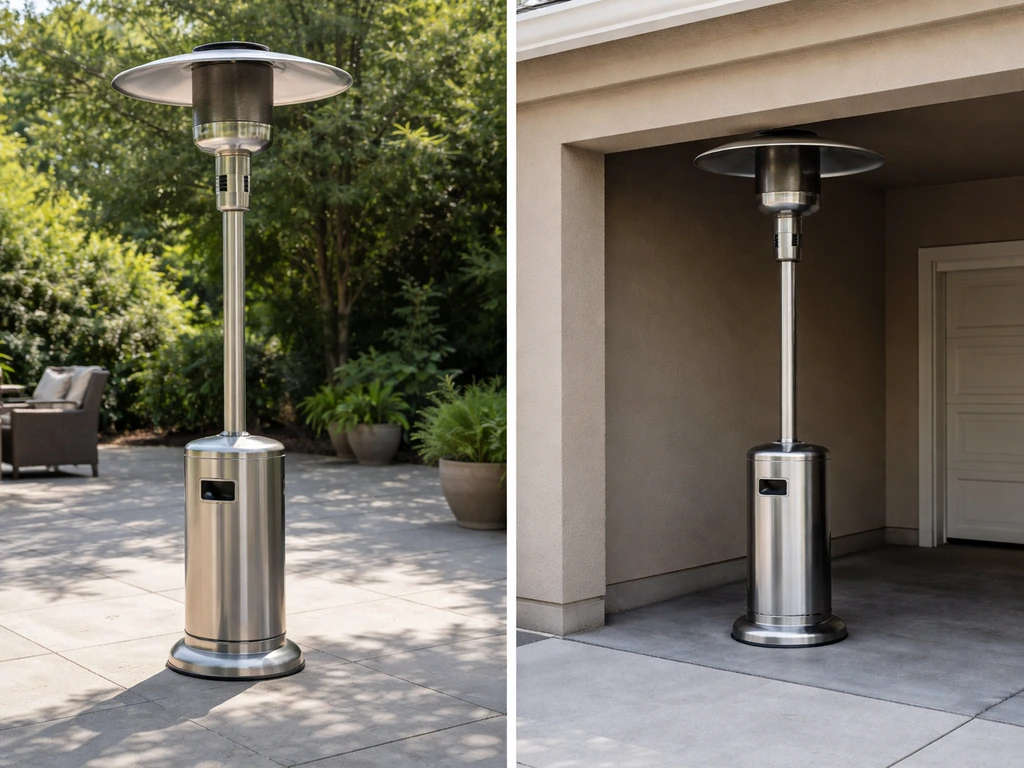
It is not safe, and you should stop using it immediately, in any of these situations: you smell gas or hear it hissing, the heater is inside a garage, screened porch, tent, or any enclosed or semi-enclosed space, the hose is cracked or visibly deteriorated, the regulator has been dropped or damaged, the pilot lights but the main burner keeps dropping out without explanation, the heater wobbles or leans, or any structural part (emitter screen, reflector, burner cap) is cracked or missing. Each of those conditions is a real hazard, not just a legal disclaimer.
The real hazards to know about
Gas leaks
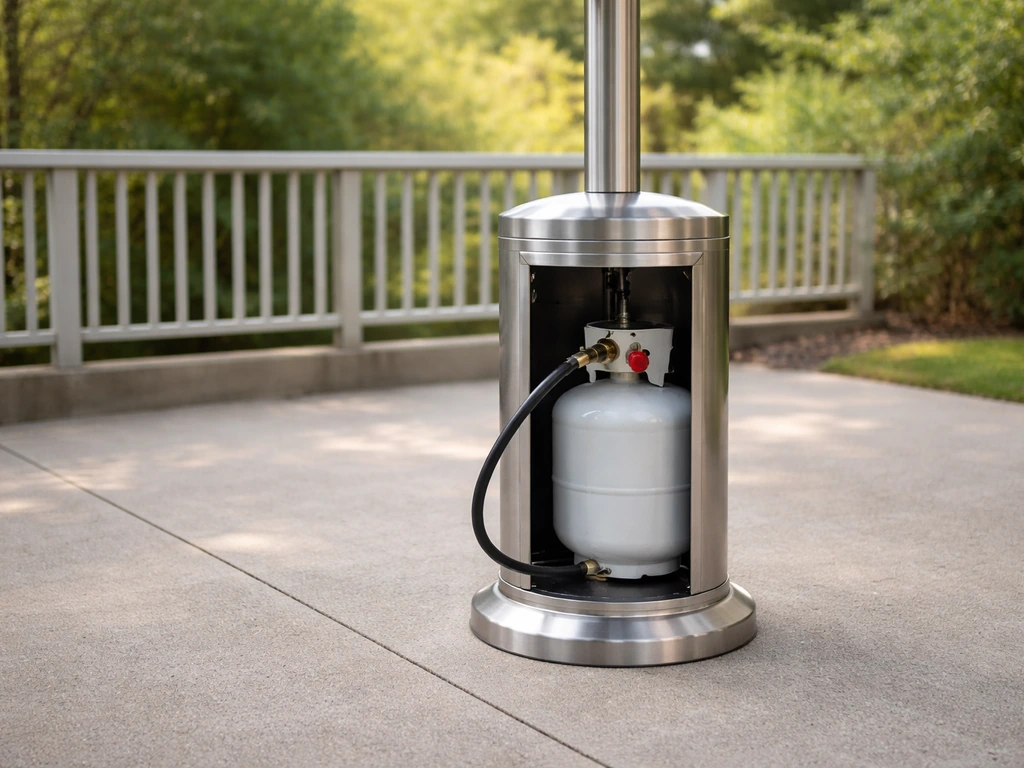
Propane is heavier than air, which means a leak doesn't just dissipate, it pools at ground level and can ignite from a spark or pilot flame well away from the source. Leaks most often happen at the connection between the hose and the gas control valve, at the regulator-to-tank fitting, or in a hose that has aged, cracked, or been physically damaged. If you ever hear gas escaping or catch that rotten-egg sulfur smell, turn the tank valve off clockwise immediately, move away from the heater, and don't try to relight it until you've found and fixed the source.
Carbon monoxide and ventilation
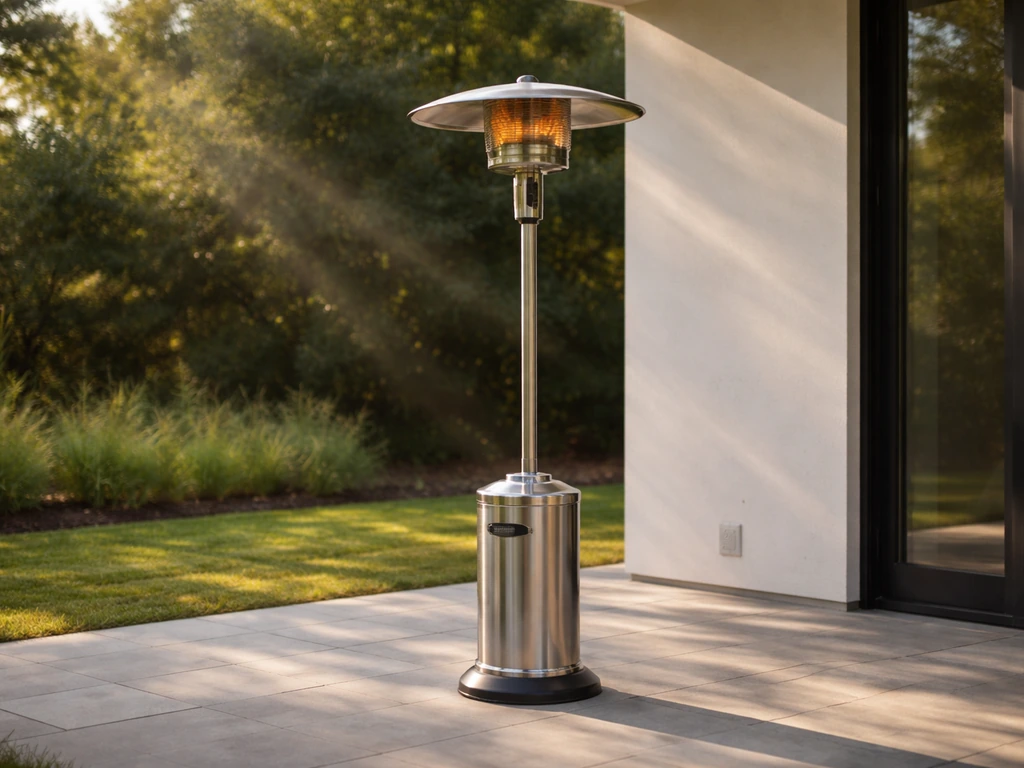
Propane patio heaters are designed and approved for outdoor use only, full stop. Using one indoors, in a garage, under a low deck, or inside a large tent creates a carbon monoxide risk that increases quickly in still air. CO is colorless and odorless, so you won't notice it building up. Even if combustion looks clean, a blocked burner port or a restricted emitter can cause incomplete combustion and elevated CO output. Outdoors with good airflow, this isn't a concern. Bring the heater inside, and it absolutely is.
Burns and fire from hot surfaces
The emitter, reflector, and upper housing get extremely hot during operation and stay hot for several minutes after shutdown. Keep children and pets away from the heater while it's running and for at least 10 to 15 minutes after you turn it off. The open flame at the burner is a direct ignition source for anything flammable that gets close enough, including furniture cushions, overhead string lights, patio umbrellas, and low tree branches.
Tip-over risk
Tall freestanding mushroom-style propane heaters are top-heavy by design. A gust of wind, a tripping hazard, or uneven ground can topple one onto combustibles. Most heaters sold today include an anti-tilt switch that cuts gas flow when the unit goes past a certain angle, but that switch can fail or be bypassed, and even a functioning tilt switch doesn't prevent the physical damage of the heater falling. Always place the heater on level ground, away from foot traffic, and check that the base is stable before lighting.
Hose and regulator damage
The rubber hose connecting your tank to the control valve degrades over time from UV exposure, heat cycles, and physical wear. A hose that looks intact on the outside can have micro-cracks that open up under pressure. The regulator, which steps down the cylinder pressure to a usable level, can also enter a safety lockout mode (sometimes called a bypass mode) if the tank valve is opened too quickly or a downstream valve is open when the tank is turned on. A regulator that has been dropped should be replaced, not tested to see if it still works.
Check your setup before the first use of the season
Tank and fuel line compatibility
Most freestanding patio heaters use a standard 20 lb propane cylinder. Confirm your tank size matches what the manual specifies, and make sure the regulator is the correct type for your heater. Do not mix regulators between heater models or use a regulator that came with a different appliance. The POL or QCC fitting must seat fully and hand-tighten securely before you open the tank valve.
Hose condition and connections
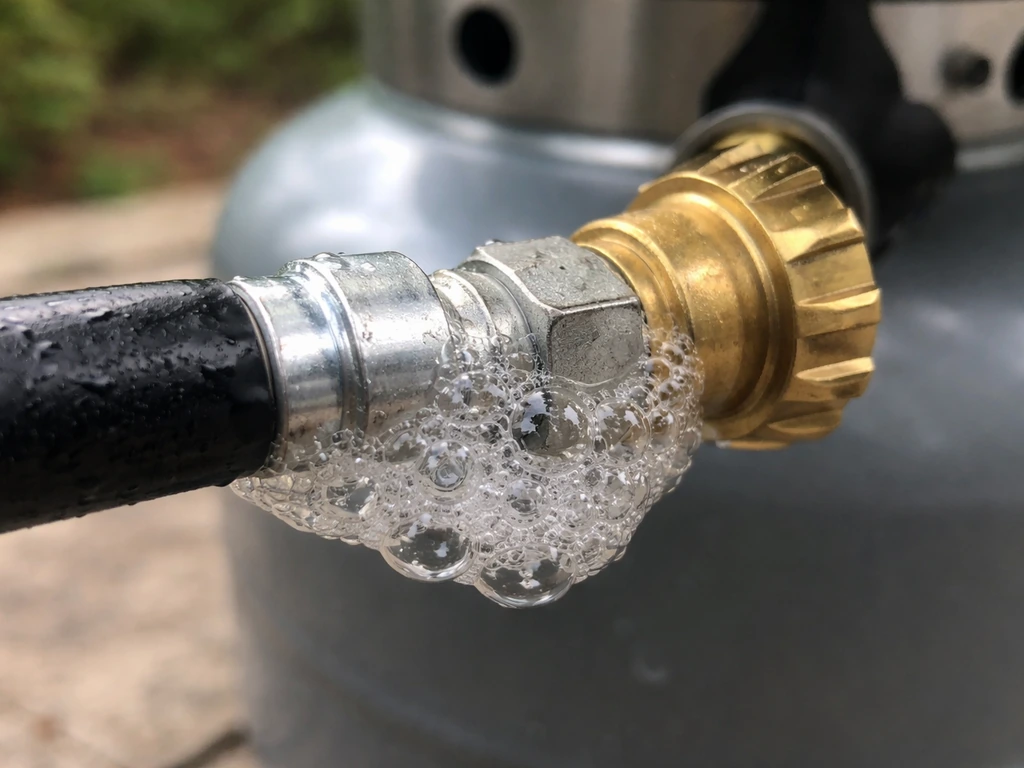
Run your hand along the full length of the hose and look for cracks, kinks, abrasion, or brittleness. Any of those is a replacement trigger, not a wait-and-see. Once the hose looks physically sound, do a leak test at every connection: the tank-to-regulator fitting, and the regulator/hose-to-gas-control-valve connection. Mix up a solution of dish soap and water, brush it onto each fitting, then slowly open the tank valve. Bubbles forming at any point mean you have a leak. Try tightening that connection and re-test. If bubbles still appear after tightening, shut the tank off and replace the component. Never use a flame to look for a gas leak.
Clearance from combustibles
Every heater manual specifies minimum clearance distances, and you should look yours up rather than guessing. As shown in the Synergy Patio Heater manual, installation should maintain minimum clearances to combustibles, with an example of 24 inches (61 cm) above the heater for the stated configuration. As a practical baseline, many freestanding models require at least 24 inches (61 cm) from the sides and rear to any combustible surface, and at least 36 inches (91.5 cm) of clearance above the emitter head. That rules out operating under a low patio umbrella, directly under a deck overhang, or against a wall or fence. If you're not sure about your specific model's clearances, look up the manual before lighting it.
Ventilation and placement
Outdoors in open air is the only acceptable placement. If your patio has a roof but open sides, that's generally fine as long as you maintain overhead clearance and there's natural airflow. If you are deciding between a gas vs propane patio heater, the ventilation and safety checks matter just as much for propane. A screened-in porch, a gazebo with solid walls, or any space that restricts airflow is not acceptable, regardless of how large it feels. The heater needs fresh air both for safe combustion and to prevent CO accumulation.
Safe lighting and operation every time
The right way to light it
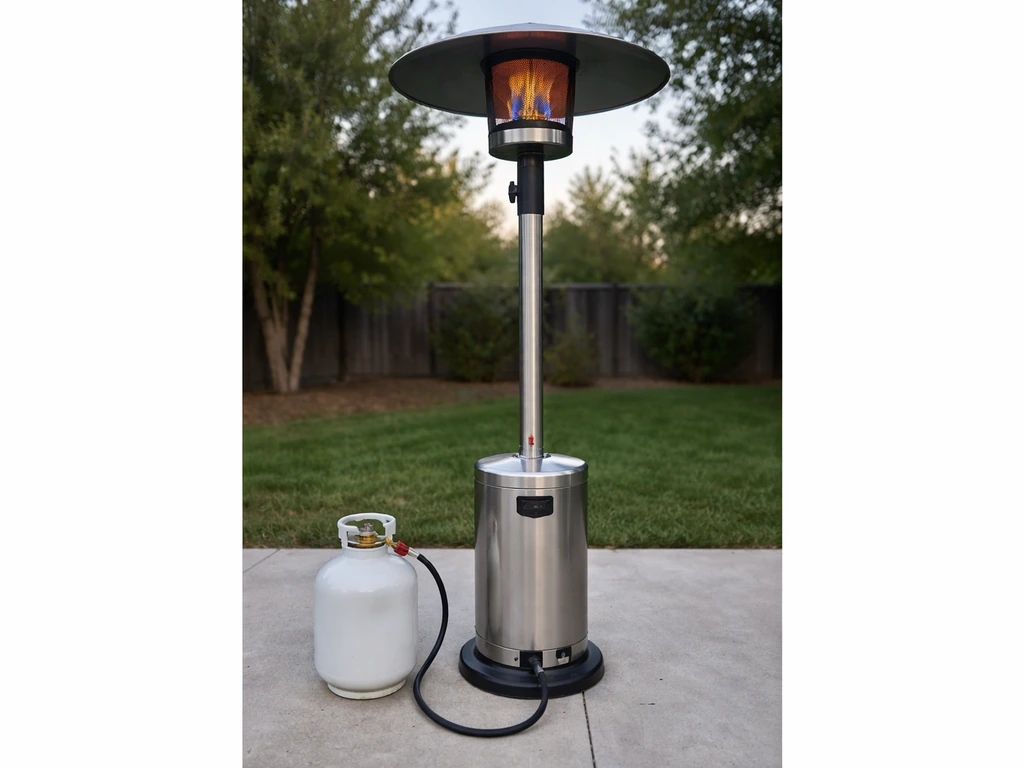
- Place the heater on a level, stable surface outdoors before doing anything with the gas.
- Check the hose for kinks or visible damage.
- Connect the tank if it isn't already, and hand-tighten the regulator fitting.
- Open the tank valve slowly, about a quarter turn at first, then fully open.
- Wait 5 seconds for gas to reach the valve before attempting ignition.
- Follow your model's ignition sequence: typically push and hold the control knob in to the pilot position, press the igniter, and hold the knob in for 30 to 60 seconds to heat the thermocouple before releasing.
- If the flame drops when you release the knob, the thermocouple hasn't heated enough. Wait 30 seconds and try again.
- Once the pilot holds, turn the knob to your desired heat setting.
Shutting it down safely
Always turn the control knob to the off position first, then close the tank valve clockwise. Don't just close the tank and let the gas in the line bleed out through the burner. After shutdown, leave the heater where it is until it cools completely before moving or storing it. Never move a lit or still-hot heater.
When it won't stay lit: thermocouple and tilt switch issues
If your heater lights but the flame drops as soon as you release the control knob, the most likely cause is a thermocouple that isn't generating enough voltage to hold the safety valve open. The thermocouple is a metal probe that sits in the pilot flame. When it's heated, it sends a small electrical signal to the gas valve that says 'flame is present, stay open.' If the probe is dirty, misaligned so the pilot flame doesn't fully engulf it, or simply worn out, that signal is too weak and the valve closes as a safety response. This is the heater working correctly, not malfunctioning. It's protecting you from unburned gas being released without a flame to ignite it.
The tilt switch is the other common culprit. It's a gravity-sensitive switch that cuts gas flow if the heater tips past a certain angle. If the switch itself is faulty or the heater is on a slightly uneven surface, it can trigger a false shutoff. Before replacing anything, try the heater on a confirmed-level surface. If it still won't stay lit, check whether the pilot flame is actually wrapping around the thermocouple tip. If it's not, gently reposition the thermocouple so it sits in the hottest part of the flame. If the problem persists, the thermocouple is the first thing to replace. It's an inexpensive part and a straightforward DIY swap on most models.
A regulator in lockout mode can also look like a won't-stay-lit problem. If the main burner lights briefly but then drops out, try this reset: turn everything off, disconnect the regulator from the tank, wait two minutes, reconnect, open the tank valve slowly, and reattempt ignition. If the regulator keeps going into lockout, it may need replacement.
Maintenance and repair safety basics
What to inspect every season
- Hose: look for cracks, brittleness, kinks, or abrasion along the entire length. Replace if in doubt.
- Regulator: check for dents, corrosion at the fitting, or signs of damage. A regulator more than 5 years old or one that has been dropped should be replaced.
- Burner ports: spider webs, insect nests, and debris are the most common cause of blocked ports, which create uneven flames or flashback. Use a thin wire or compressed air to clear the ports gently.
- Emitter screen: look for rust, holes, or warping. A damaged screen affects flame distribution and should be replaced.
- Thermocouple: look for corrosion or physical damage at the tip. A thermocouple that fails the hold test after cleaning and repositioning needs to be replaced.
- Anti-tilt switch: verify it hasn't been manually bypassed or damaged. Most tilt switches are inline on the gas valve circuit and can be tested by deliberately tilting the heater slightly while it's running to confirm shutoff.
- Tank valve and connections: check for corrosion on the valve outlet and the regulator fitting.
Cleaning the burner and vents
Always turn off the tank and allow the heater to cool completely before doing any cleaning or inspection inside the burner housing. Clear spider webs and debris from the burner ports with a soft brush or compressed air. Never use water inside the burner assembly. If the emitter screen has significant rust buildup, clean it carefully or replace it. A partially blocked burner port doesn't just cause poor heating, it causes incomplete combustion, which produces more CO and can create a yellow, sooty flame that deposits carbon on the emitter.
What's reasonable DIY vs. when to call a pro
Replacing a thermocouple, clearing burner ports, swapping a hose and regulator, or resetting a tilt switch are all reasonable DIY tasks for someone comfortable with basic tools and propane safety. What goes beyond DIY: repairing a cracked gas control valve, modifying a regulator, repairing (rather than replacing) a damaged hose, or working on the internal gas valve assembly. If a leak persists after you've tightened a fitting and replaced the hose, and you can't isolate the source, don't keep testing. At that point, the control valve itself may be the problem, and that's a part replacement or professional service call.
Your routine safety checklist and when to stop using the heater
Run through this quick check before each use, especially at the start of a new season or after the heater has been in storage.
| Check | What to look for | Action if problem found |
|---|---|---|
| Hose condition | No cracks, kinks, or brittleness | Replace hose before use |
| Connection leak test | No bubbles with soapy water at all fittings | Tighten fitting and retest; replace component if bubbles persist |
| Clearances | Minimum 24 in. from sides/rear, 36 in. above emitter | Reposition heater before lighting |
| Level placement | Heater stable, no wobble | Level the surface or reposition |
| Burner ports | No visible blockage or debris | Clear ports with wire or compressed air |
| Emitter screen | No holes, heavy rust, or warping | Replace screen |
| Thermocouple | Flame holds after releasing knob | Clean/reposition tip; replace if still fails |
| Anti-tilt switch | Heater shuts off when tilted | Test switch; replace if not functioning |
| Tank level | Adequate propane for intended use | Replace tank if nearly empty |
Stop using the heater right now if any of these are true
- You smell gas at any point before, during, or after operation.
- You hear gas hissing from the hose, regulator, or valve.
- Soapy water produced bubbles at any connection and you haven't replaced the leaking component yet.
- The hose is visibly cracked, kinked, or deteriorated.
- The heater was tipped over, even if it appears undamaged.
- The emitter screen, reflector, or burner assembly is cracked or has pieces missing.
- The flame is yellow and sooty rather than blue with an orange tip, indicating incomplete combustion.
- The anti-tilt switch does not shut off the gas when the unit is tilted.
- Any gas-carrying component (valve, hose, regulator) has visible corrosion or physical damage.
Storage and the off-season
When storing the heater for winter or any extended period, always disconnect the propane cylinder. Store the cylinder outside or in a well-ventilated shed, never in a basement, attached garage, or enclosed storage space. Keep the cylinder away from heat sources and direct sunlight. Cover the heater or store it in a protective bag to keep insects and debris out of the burner assembly. A spider web in the burner ports is one of the most common causes of ignition problems at the start of a new season, so a quick inspection before the first use of spring is worth the five minutes it takes.
If you're still weighing whether propane is the right fuel type for your setup, the safety profile of propane compares favorably to natural gas in terms of portability and shutoff simplicity, but each fuel type has its own considerations worth understanding before you buy. The bottom line on safety is straightforward: propane patio heaters earn their reputation as safe, practical outdoor appliances when they're maintained, set up correctly, and used where they're designed to be used. They become a genuine hazard when those conditions aren't met. A 10-minute pre-season inspection and a habit of doing the soapy-water leak test each season covers most of the risk.
FAQ
Can I use a propane patio heater under a roof if the sides are open?
Usually yes, as long as there is real natural airflow and you still meet the clearance distances to ceilings, rafters, walls, and nearby combustibles. A covered patio can be acceptable, but a recessed or enclosed alcove under the roof is not. If the heater is near an overhang or ceiling, verify the model’s minimum overhead clearance before lighting.
How close can patio furniture or umbrellas be to a propane heater?
Don’t rely on “feels far enough.” Use the manual clearance and treat moving items like umbrella fabric, cushions, and tablecloths as combustibles even if they are not directly adjacent. Also remember hot surfaces stay hot for several minutes after shutdown, so cover or move items only after the heater has fully cooled.
What should I do if I smell gas but I can’t find the leak?
Shut off the tank valve clockwise immediately and leave the area. Do not try to relight or tighten “just one more time.” Recheck the hose and both connection points with the soap-and-water test, and if bubbles still cannot be isolated, replace the likely suspect parts (typically hose or regulator) or have a professional inspect the gas control valve.
Is it safe to run a propane patio heater on a windy day?
It can be, but wind increases the risk of tip-over and can blow heat toward nearby combustibles. Place the heater on level, stable ground away from foot traffic, keep it clear of umbrellas and overhead branches, and avoid operating it when gusts are strong enough that you can see it move or wobble.
Can I leave a propane patio heater unattended while it’s on?
You should not. Because the flame and hot surfaces are ignition and burn hazards, it is safest to stay nearby while it runs. If you must leave the area, turn the control knob off and close the tank valve, then wait for complete cooling before moving or covering anything.
Why does my heater light, but the flame goes out right after I release the knob?
The most common cause is a thermocouple issue, but also check that the pilot flame actually wraps the thermocouple tip and that it is positioned correctly. If the pilot is properly enveloping it and the problem repeats, the thermocouple often needs replacement rather than continued relighting.
My heater won’t stay lit and I heard the regulator “locked out.” How do I handle that?
Try the regulator reset sequence: turn everything off, disconnect the regulator from the tank, wait two minutes, reconnect, then open the tank valve slowly and attempt ignition. If it repeatedly goes into lockout, replace the regulator. Avoid repeated ignition attempts because raw gas can accumulate if the safety shutoff keeps closing.
Can I check for leaks using a lighter or match?
No. Never use a flame to locate a leak. Use the soap-and-water method on every connection while the tank valve is opened slowly, and if you see bubbles, shut off and replace the leaking component rather than continuing to test.
What’s the best way to store the propane cylinder during winter?
Disconnect the cylinder and store it outside or in a well-ventilated shed, never in a basement or attached garage. Keep it away from heat, sunlight, and ignition sources. Store the heater cover separately or ensure it is kept dry and clean so debris does not enter the burner ports.
Is it okay to clean the burner with water or rinse the inside?
No. Do not use water inside the burner assembly. Wait until the unit is completely cool, then clear spider webs and debris from ports using a soft brush or compressed air. If rust buildup is significant, clean it carefully or replace affected parts as needed.