For most UK patio heaters running on a standard Calor or Flogas patio gas cylinder, you need a 27mm clip-on propane regulator set to 37 mbar outlet pressure. That covers the vast majority of 5kg and 13kg patio gas bottles you'll find at garden centres and DIY stores. If your heater runs on butane instead, the figure changes to 29 mbar and the cylinder connection is different. The key is to confirm your heater's gas type and required pressure from its rating plate before you buy anything, because fitting the wrong regulator is both a safety risk and a reason your heater won't work properly.
What Regulator for Patio Gas Heater You Need to Fit

Grant Mercer
10 Jul 2026
How a patio gas regulator actually works
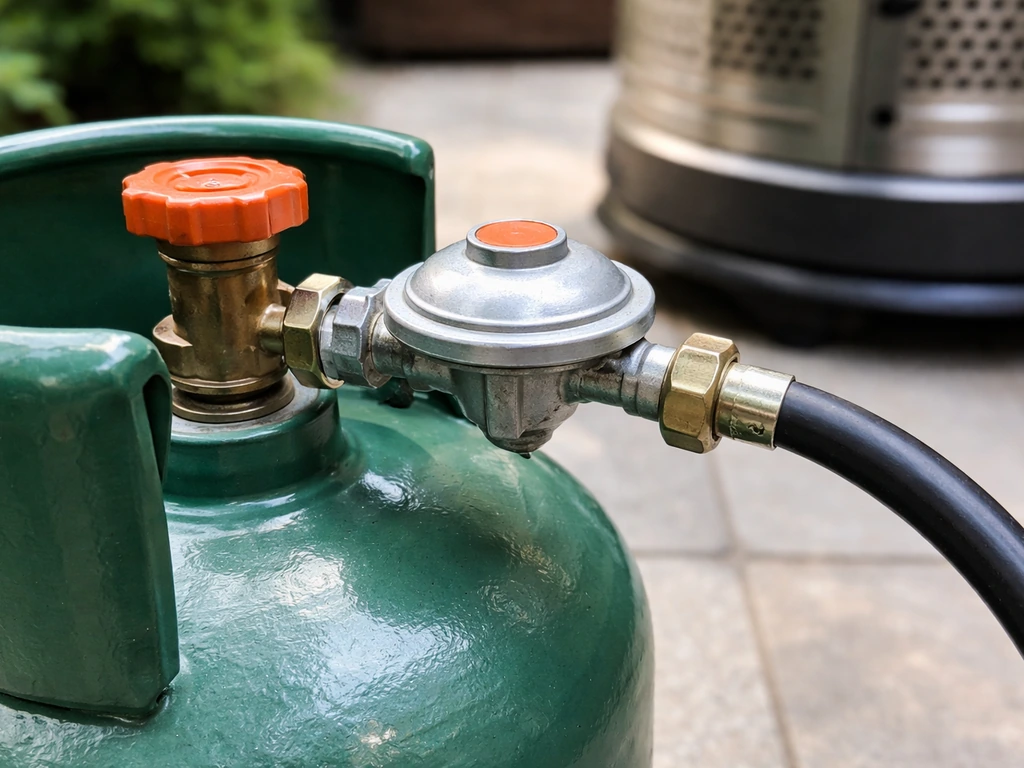
The regulator sits between your gas cylinder and the hose that feeds your heater. Its job is to take the high and variable pressure inside the cylinder and reduce it to a stable, usable pressure that your appliance expects. Without it, the heater would receive wildly fluctuating pressure that would either starve the burner or blow it out entirely. The regulator locks that outlet pressure at a fixed value, typically 37 mbar for propane or 29 mbar for butane, as defined under BS EN 16129.
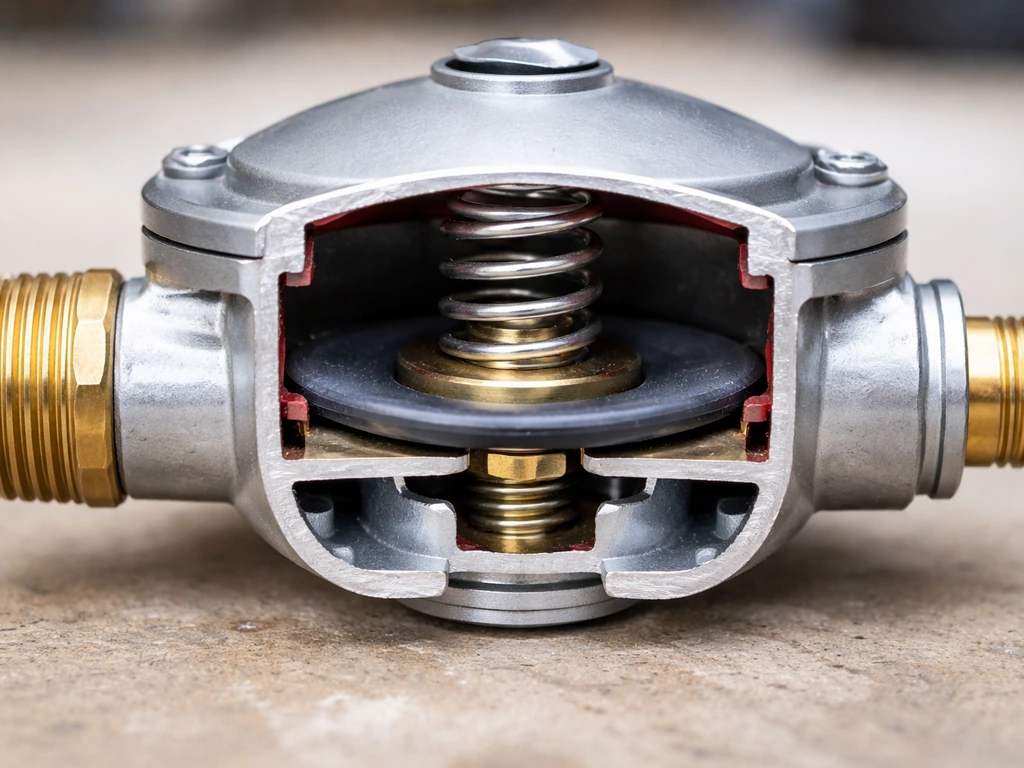
Inside the regulator is a diaphragm and a spring that constantly balance against each other to maintain that outlet pressure. As the cylinder pressure drops when the gas runs low, the regulator compensates to keep the outlet steady. You'll also hear about OPSO devices (over-pressure shut-off). These are safety features built into some regulators that cut the gas supply if the outlet pressure spikes beyond a safe threshold due to a regulator fault. If an OPSO trips, the gas supply stops and it cannot be reset by you at home. That requires the gas supplier. So if your heater suddenly goes dead and you can't get gas to flow even from a full cylinder, a tripped OPSO is worth investigating before you start blaming the heater itself.
When you're choosing a regulator, the specs you need to match are: outlet pressure (mbar), inlet connection type (how it attaches to the cylinder), and outlet connection type (how the hose attaches to it). Get all three right and everything fits cleanly. Miss one and you'll either be forcing a connection that doesn't seal or pulling gas at the wrong pressure.
Identify your heater's gas type and connection before buying
Start at the heater itself, not a retailer website. Find the rating plate, which is usually a metal or foil sticker on the base of the heater, on the burner housing, or inside the pole near the gas connection point. It will state the gas type (propane or butane), the required inlet pressure in mbar, and the gas consumption in kW or g/h. That mbar figure is the number your regulator must match. If you are trying to figure out where to buy gas for your patio heater, start by matching your heater’s gas type (propane or butane) to the cylinders sold locally where to buy gas for patio heater.
If you've lost the rating plate or it's illegible, dig out the manual. The regulator spec is almost always listed in the installation section, and many manuals describe the supplied regulator as something like "27mm snap-on compact regulator operating at 37 mbar." If you don't have a paper copy, search the brand name and model number plus the word "manual" and you'll usually find a PDF.
Next, look at the cylinder you're using or planning to use. Patio gas cylinders (Calor Patio Gas, Flogas, Gaslight) have a 27mm valve at the top designed specifically for a clip-on regulator. This is different from a standard propane cylinder with a threaded POL or bullnose fitting that requires a screw-on regulator with a W20 or similar nut. Mixing these up is a common and dangerous mistake. A 27mm clip-on won't screw onto a threaded valve, and a screw-on regulator won't clip onto a 27mm patio bottle valve. The cylinder valve type tells you the regulator family you need.
Choosing the right regulator for common UK patio heater setups
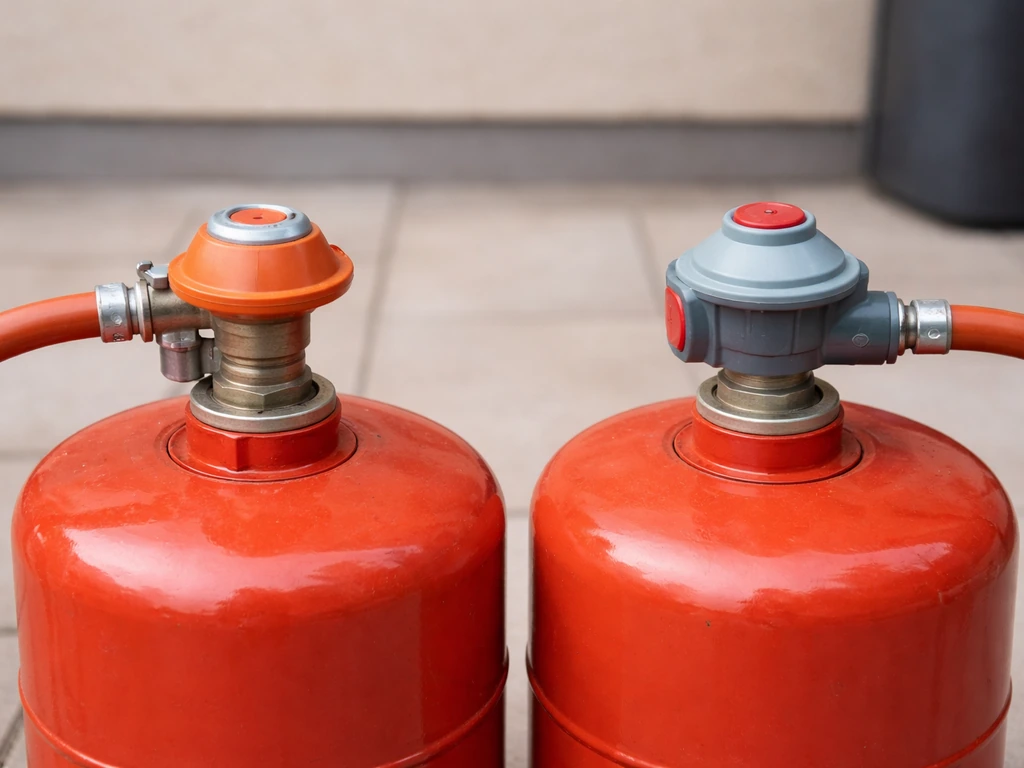
The table below covers the most common UK combinations. If your setup matches one of these, you can buy with confidence. Most outdoor patio heaters sold in the UK are designed around the propane patio gas system. If you are trying to source the right patio gas, you can usually find propane bottles and refills at garden centres, DIY stores, and gas suppliers Most outdoor patio heaters sold in the UK are designed around the propane patio gas system.
| Setup | Gas type | Cylinder | Regulator type | Outlet pressure |
|---|---|---|---|---|
| Standard UK patio heater (most common) | Propane | Calor Patio 5kg or 13kg, Flogas 6kg/11kg, Gaslight 5kg/10kg | 27mm clip-on propane regulator | 37 mbar |
| Older or budget patio heater (butane) | Butane | Calor butane 4.5kg or 7kg | Butane clip-on or screw-on regulator | 29 mbar |
| Larger commercial-style patio heater | Propane | Standard propane 19kg cylinder with bullnose/POL valve | Screw-on propane regulator (W20 / POL fitting) | 37 mbar |
For the vast majority of readers, the first row is your answer: a 27mm clip-on propane regulator at 37 mbar. If you are wondering about the price, the cost of a patio gas bottle varies by size and supplier, so it helps to check current local prices how much is a patio gas bottle. Both Calor and Flogas sell these directly, and independent gas suppliers like Jefferson Gas stock them too. They fit all standard patio gas bottles including the 5kg and 13kg Calor Patio Gas bottles and equivalent Flogas cylinders. If you're also buying a new hose, look for one rated to BS EN 16436-1 Class 2 for LPG vapour-phase use, typically orange or red, and sized at 8mm internal diameter. A 1 metre length is usually sufficient for a freestanding patio heater.
If you're running a larger heater off a 19kg cylinder with a threaded bullnose valve, the clip-on doesn't apply. You need a screw-on regulator with the correct inlet connection for that valve type. Check the cylinder supplier's guidance and confirm the thread type before ordering. A propane pigtail hose with a POL fitting at the cylinder end and a W20 (5/8" left-hand thread) nut at the regulator end is a common setup for these larger cylinders.
Fitting the regulator and hose correctly
Connecting a 27mm clip-on regulator
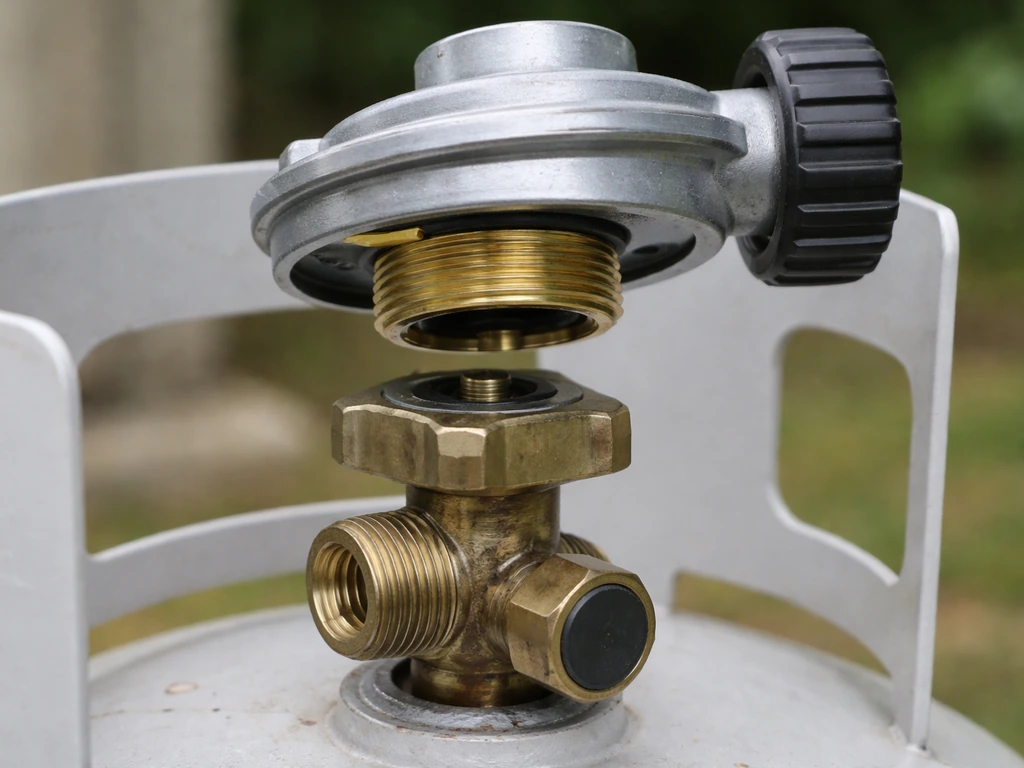
- Make sure the cylinder valve is fully closed before you start.
- Align the 27mm regulator inlet over the top of the cylinder valve. The clip-on mechanism has a collar that seats over the valve head.
- Press down firmly and turn the regulator clockwise to lock it onto the valve. You should feel and hear it seat positively. A loose connection here is a gas leak waiting to happen.
- Attach the hose to the regulator outlet. Most use a nut-and-tail fitting. Hand-tighten first, then snug it with a spanner, but don't overtighten or you'll damage the seal.
- Connect the other end of the hose to the heater's gas inlet. This is usually a threaded connection. Again, hand-tighten then snug with a spanner.
- Before opening the cylinder valve, perform a leak test (covered in the next section).
Connecting a screw-on regulator (bullnose/POL cylinder)
Note that propane connections often use left-hand threads, meaning you turn anti-clockwise to tighten. This is intentional and designed to prevent accidental connection to natural gas fittings. If you're fighting the thread and it won't tighten, check whether you're turning the right direction. The face-to-face seal between the cylinder valve and the regulator inlet must be clean and free of debris for a gas-tight connection. Do not use PTFE tape on gas compression fittings unless specifically instructed by the manufacturer, as it can interfere with the seating.
Checking for leaks before you light anything
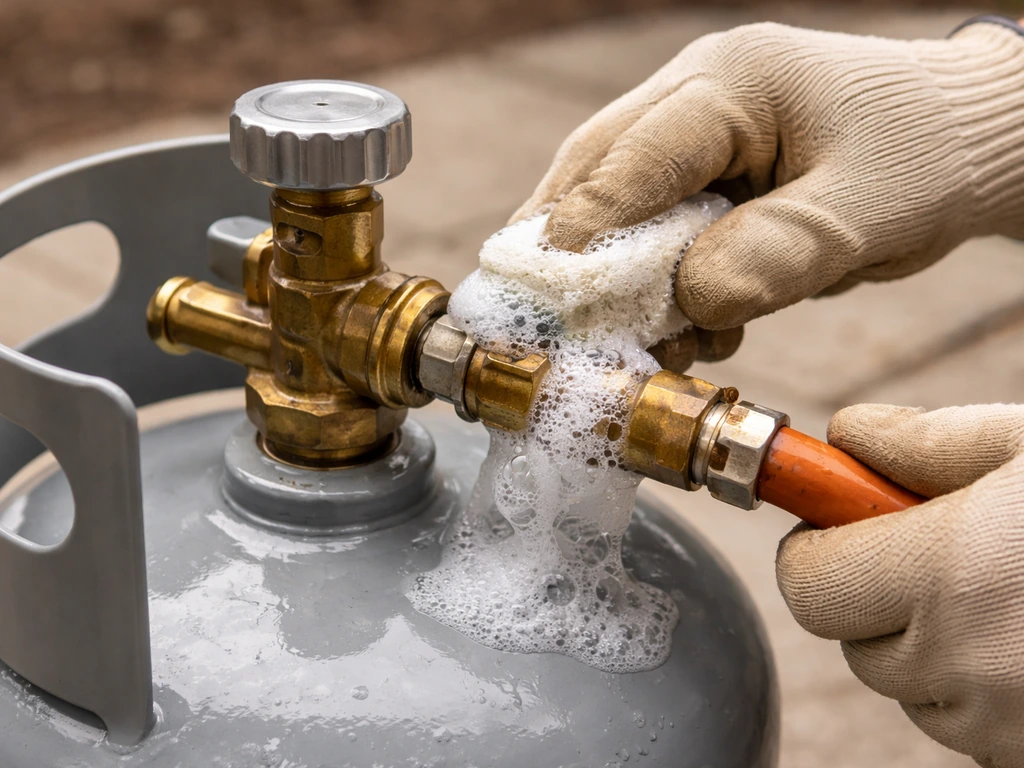
This step is not optional. Before you light the heater after fitting a regulator, you must check every connection for gas leaks. Mix a small amount of washing-up liquid with water to make a soapy solution, then apply it generously to the regulator-to-cylinder connection, the hose connections at both ends, and any threaded joints. Open the cylinder valve slowly. Watch each joint for 30 seconds. Growing or multiplying bubbles mean gas is escaping.
If you see bubbles, close the cylinder valve immediately, do not attempt to light the heater, and investigate the connection. The most common cause is a missing or damaged washer or O-ring on a hose fitting, or a regulator that hasn't fully seated on the cylinder valve. On clip-on regulators, remove and reseat the regulator on the cylinder. On threaded connections, check the washer and retighten. If bubbles persist after reseating and retightening, stop and replace the component. Never try to fix a live gas leak with the cylinder open.
Also check the condition of the hose itself before use. Look for cracks, perishing, kinks, or scorch marks. A hose that has been stored in direct sunlight or near the heater burner for several seasons may look fine externally but be deteriorating inside. If in doubt, replace it. Hose is cheap compared to the risk.
Regulator fits fine but the heater still won't light or stay lit
Getting the regulator right is necessary but not always sufficient. Patio heaters have their own failure modes that look like a gas supply problem but aren't. Here's how to work through them.
Heater won't ignite at all
- Cylinder valve not open: sounds obvious, but check it's fully open before anything else.
- Air in the gas line: if the cylinder is new or was recently disconnected, there may be air trapped between the regulator and the burner. Hold the ignition button for 10 to 15 seconds to purge it before sparking.
- Regulator not fully engaged: with clip-on types, if the regulator isn't fully seated and locked, gas flow may be restricted or absent. Remove and refit it, pressing firmly down before turning to lock.
- Low fuel in the cylinder: a near-empty cylinder can have insufficient pressure to hold the gas valve open. Shake the cylinder gently or weigh it to check how much is left.
- Igniter fault: if you can smell gas faintly at the burner but there's no spark, the ignition electrode or piezo unit may be the issue, not the regulator at all.
Heater lights but won't stay lit
This is almost always a thermocouple issue in a standard patio heater. Patio Comfort’s troubleshooting sheet also points to a “Faulty Thermocouple (Replace Thermocouple)” as a common cause of heaters that light but then go out thermocouple issue. The thermocouple is a small sensor positioned in the flame path. When the flame heats it, it generates a tiny electrical signal that holds the gas safety valve open. If the thermocouple is faulty, dirty, or positioned incorrectly, it doesn't generate enough signal, the safety valve closes, and the flame dies within a few seconds of releasing the control knob. The fix is usually to clean the thermocouple tip gently with fine emery paper, check it's correctly positioned in the flame, or replace it entirely. Thermocouples are inexpensive parts and are one of the most common patio heater repairs.
Cold weather can also cause the heater to drop out. Butane performs particularly poorly below around 5 degrees C because it struggles to vaporise at low temperatures. If you're using butane and the heater is unreliable in cold weather, switching to propane (and the corresponding regulator) is the practical solution. Propane vaporises reliably down to around minus 40 degrees C.
Another possibility is the tilt switch or overheat safety cutout. Most freestanding patio heaters have a tilt switch at the base that cuts the gas if the heater tips or is knocked. If yours has been moved around, check the tilt switch hasn't been triggered. On many models this resets automatically when the heater is stood upright and level, but some require you to hold the control knob in and wait a few seconds before reattempting ignition.
Weak or uneven flame after fitting a new regulator
If the flame is noticeably weaker than before or burns unevenly, double-check the outlet pressure rating on your new regulator matches your heater's requirement exactly. A 29 mbar butane regulator on a heater that needs 37 mbar propane will produce a weak, unsatisfying flame. The heater may light but it won't perform correctly. Also check the burner ports for blockage from insects or debris, especially at the start of the season.
Safety rules and when to stop DIYing
Things you should always do
- Always match the regulator's outlet pressure to the figure stated on the heater's rating plate.
- Always perform a soapy water leak test after fitting or refitting a regulator.
- Always close the cylinder valve when the heater is not in use.
- Always use hose rated to BS EN 16436-1 Class 2 for LPG vapour-phase applications.
- Always use the heater in a well-ventilated area. Patio heaters are designed for outdoor use only.
- Replace hose and washers if they show any signs of cracking, perishing, or damage.
Things you should never do
- Never force a regulator onto a cylinder valve if it doesn't seat properly. Forcing a mismatched fitting is how serious leaks happen.
- Never use a regulator or hose that isn't rated for the gas type you're using. Propane and butane equipment are not always interchangeable.
- Never attempt to reset an OPSO safety device yourself. If the gas supply has stopped due to a suspected OPSO trip, contact your gas supplier.
- Never store a connected gas cylinder indoors or in an enclosed space.
- Never use a naked flame to check for leaks.
When to call a professional
Most regulator fitting and heater troubleshooting is reasonable DIY territory. But there are clear lines. If you smell gas and cannot identify the source after a systematic leak test, stop using the appliance and contact your gas supplier or the National Gas Emergency line. If the regulator or cylinder valve is physically damaged, do not use it. If you've replaced the thermocouple and the heater still won't stay lit, and you've ruled out gas supply issues, a registered Gas Safe engineer can assess whether the safety valve or control assembly has failed. Patio heaters are repairable, but a faulty gas valve is not something to patch around.
One final note: if you're also deciding which type of gas to use, which cylinder to buy, or where to source patio gas locally, those questions tie directly into which regulator you'll need, since the cylinder type determines the connection. Getting the gas type and cylinder sorted first makes the regulator choice straightforward.
FAQ
Can I use any propane regulator on a Calor or Flogas patio gas bottle?
No, you generally should not. The safest approach is to match the regulator’s outlet pressure and the cylinder valve type. If you use a regulator meant for a different cylinder connection (for example, threaded POL vs 27mm clip-on), you can end up with a poor seal or the wrong regulated pressure, which can cause mis-burn or a safety shut-off.
What happens if I fit a regulator with the wrong mbar rating (37 mbar vs 29 mbar)?
If the heater needs 37 mbar propane (typical UK setup) and you fit a 29 mbar butane regulator, you may still get ignition but performance will be weak or unstable. Always confirm the required mbar on the heater’s rating plate or installation instructions, and buy the regulator that matches that exact value.
Do I need a specific type of hose and regulator together, or can I mix brands/specs?
Use an LPG vapor-phase regulator that is compatible with the patio gas system (and match the cylinder connection size). For hose, the article notes BS EN 16436-1 Class 2 LPG vapor-phase and an 8mm internal diameter are typical, but if your hose is an older type or the heater manual specifies otherwise, follow the manual for hose and regulator pairing.
Is the soapy water leak test really necessary every time I change a regulator?
You should not rely on odor alone. Do the soapy leak test after fitting, and keep the cylinder valve open slowly while watching each joint for a short period. If you see growing bubbles, close the valve immediately and do not attempt to light until the connection is reseated or replaced.
My regulator doesn’t seem to fit properly, can I force it or adjust it?
Not usually, because regulators are designed to be matched to a specific cylinder valve and pressure requirement. If your regulator won’t clip on cleanly or a screw-on type won’t seat properly, stop and check the cylinder valve type and thread direction (some are left-hand). For clip-on systems, the regulator must fully seat on the 27mm valve before you consider it fitted.
If the heater suddenly won’t run even with a full cylinder, could the regulator be the problem?
If the regulator includes an OPSO over-pressure shut-off and it has tripped, you typically cannot reset it yourself. Gas supply will stop even if the cylinder is full, and you’ll need the gas supplier to check the regulator or the system cause. Treat a “dead” heater with a full cylinder as a potential OPSO issue before deeper troubleshooting.
Where exactly should I look on the heater to confirm the regulator specs?
Yes. If the regulator spec you bought says one outlet pressure but the heater requires another (or the heater is designed for the other fuel type), the burner can under-fuel or over-fuel, leading to weak flame, delayed ignition, soot, or shut-down. The rating plate is the deciding document, not the retailer listing.
Why does my butane patio heater struggle in winter, even though the regulator is correct?
In cold weather, butane can struggle because it may not vaporise adequately below roughly 5 C, leading to poor output or drop-outs. A practical workaround is switching to propane (with the correct propane regulator). If you must use butane, consider keeping the cylinder sheltered and warmer, but the long-term fix for reliability is using propane for colder conditions.
My heater lights but goes out right away. What should I check first?
If the heater shuts down within a few seconds of releasing the control knob, the thermocouple circuit is the first thing to test. The article recommends cleaning the thermocouple tip carefully, confirming it sits correctly in the flame, or replacing it if needed. Don’t bypass the safety control, and if it still fails after a proper thermocouple replacement, get a Gas Safe engineer to inspect the safety valve/control assembly.
Do I need to replace the hose regularly, or just when it looks damaged?
Always inspect the hose for perishing, cracks, kinks, or scorch marks before use, even if it looks okay outside. A hose can degrade internally after long storage or heat exposure. If there’s any doubt about condition, replace it rather than trying to reuse an old or suspect hose.
Can I use PTFE tape on the regulator or hose connections to improve the seal?
Do not put PTFE tape on compression-type gas fittings unless the heater or regulator manufacturer explicitly tells you to. On most patio setups, the seal should come from the correct washer or O-ring and proper seating. Tape can interfere with how the parts seat, potentially worsening leaks or preventing correct sealing.
What should I do if I smell gas or I’m not sure where the leak is coming from?
If you smell gas and cannot identify the leak through a systematic check, stop using the appliance, keep it off, and contact your gas supplier or the emergency gas line. Also stop immediately if the regulator or cylinder valve is physically damaged. A damaged gas component is a replace-not-repair situation.