Yes, a patio heater can melt snow, but only a little, and only under the right conditions. A full-sized propane mushroom heater (around 40,000–46,000 BTU) will soften and melt thin surface snow directly beneath and around it, especially on a calm, mild winter day. An electric patio heater can do the same on a smaller scale.
Will a Patio Heater Melt Snow? What to Do Now
Grant Mercer
8 Jul 2026
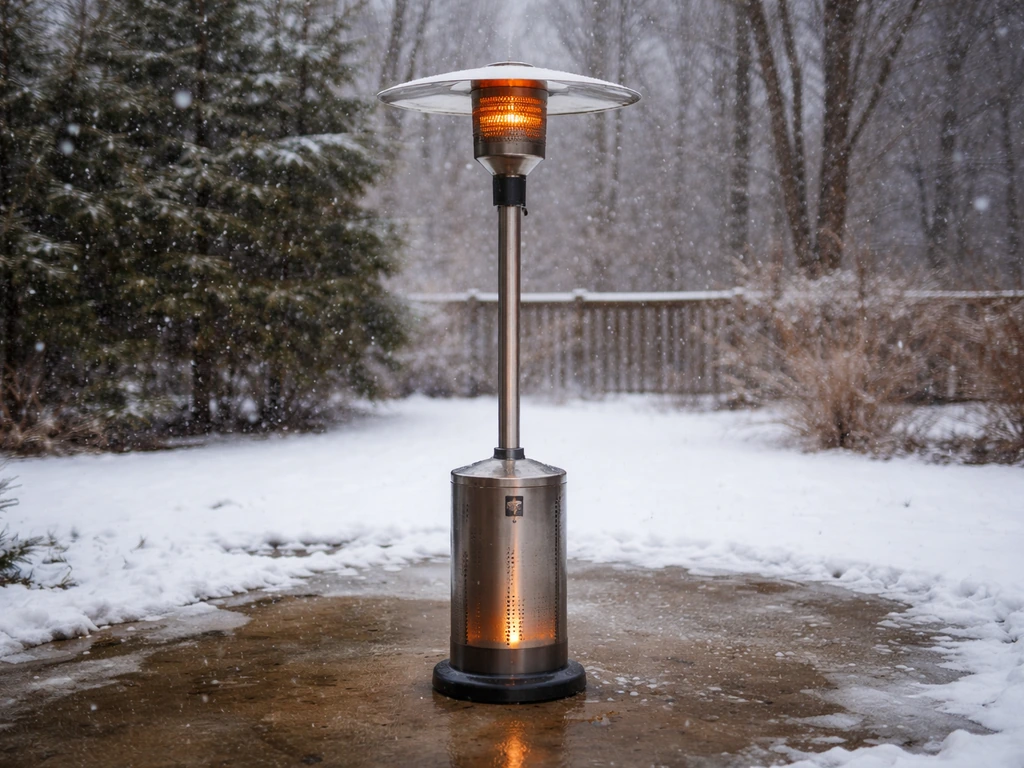
Some electric patio heaters are designed for outdoor use, but you should still check the manufacturer instructions and safety rating for leaving them outside in winter An electric patio heater. Neither one will reliably clear a thick snow accumulation or break through a solid sheet of ice, and trying to use them as a primary snow-clearing tool is both inefficient and, for gas models, genuinely dangerous if you're not careful about ventilation and placement.
Why patio heaters struggle with snow (the physics, quickly)
Melting ice or snow takes a surprising amount of energy. The latent heat of fusion for ice is about 334 kilojoules per kilogram, meaning every kilogram of ice sitting at 0°C needs 334 kJ of heat delivered to it just to become water, before you've even warmed it up.
On top of that, outdoor conditions are working against you: wind strips heat away from the surface before it can do useful work, cold ambient air means more energy loss through convection, and on clear nights the snow radiates heat upward into the sky, which is colder than the air. A patio heater radiates heat outward in a cone pattern, and most of that heat is going into the air above the snow, not into the snow surface itself.
The closer and more directly a heater can deliver heat to the snow, the better it works. The thicker, windier, and colder the conditions, the less effective it becomes.
How different heater types perform on snow
Not all patio heaters throw heat the same way, and that matters a lot when you're dealing with snow or ice.
Propane and natural gas heaters
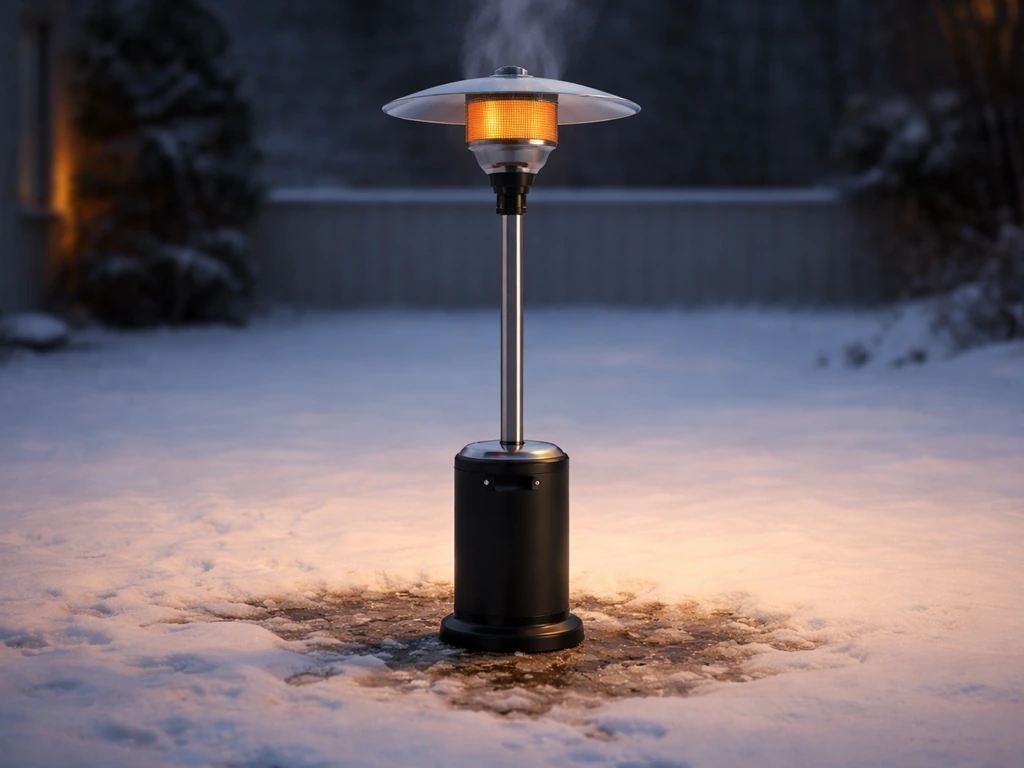
These are your best bet for snow melting among common patio heater types. A standard freestanding propane heater at 40,000–46,000 BTU puts out serious radiant heat in a roughly 360-degree pattern beneath the emitter head. If you position it close to a snow-covered surface, you can melt a roughly 6–10 foot diameter zone of light snow over 30–60 minutes depending on depth and ambient temperature. The key word is 'light' -- we're talking about a dusting of 1–3 inches. Deep snow (6 inches or more) acts as its own insulator, and you'll just heat the top layer while the bottom stays frozen solid.
Electric patio heaters
Electric infrared and quartz heaters are typically sized for human comfort, not bulk heating. Most wall-mount or freestanding electric models run between 1,500 and 3,000 watts (roughly 5,100–10,200 BTU equivalent), which is substantially less raw output than a full propane unit. Sizing guidance for outdoor electric radiant heaters suggests planning around 100–150 W per square meter for covered patios, and considerably more for exposed spaces.
At those output levels, electric heaters will warm a snow surface and may melt a thin dusting directly in front of the emitter, but they won't clear snow meaningfully from an open area. That said, electric heaters carry zero carbon monoxide risk, which makes them the safer option in any situation where you might be tempted to work in a partially enclosed space.
If you are considering using a patio heater in a garage, avoid it because enclosed or partially enclosed spaces can create serious ventilation and carbon monoxide safety risks patio heaters in a garage.
Quick comparison by heater type
| Heater Type | Typical Output | Snow Melting Ability | CO Risk | Best Use Case |
|---|---|---|---|---|
| Propane (freestanding) | 40,000–46,000 BTU | Moderate: light snow in calm conditions | Yes — outdoors only | Open patios with light snow dusting |
| Natural gas (fixed) | 40,000–50,000 BTU | Moderate: similar to propane | Yes — outdoors only | Permanent deck/patio installations |
| Electric infrared/quartz | 1,500–3,000W (5,100–10,200 BTU) | Low: surface-level dusting only | None | Covered patios, enclosed-ish spaces |
Safety risks you need to know before you start
This is not a section to skim. Using a patio heater around snow and ice introduces real hazards that go beyond normal warm-weather use.
Carbon monoxide: the invisible danger
Propane and natural gas heaters produce carbon monoxide (CO) as a byproduct of combustion, especially when combustion is incomplete. CO is colorless and odorless, and at high concentrations it can incapacitate you before you realize anything is wrong. CPSC notes that CO poisoning symptoms can mimic the flu, which is especially deceptive in cold-weather scenarios.
Every propane patio heater manual I've seen includes an explicit 'FOR OUTDOOR USE ONLY' CO hazard warning, and that warning becomes more critical in winter when people are tempted to pull heaters into garages, covered porches, or canopy tents to escape the cold. Don't do it. If you're working with a blank" rel="noopener noreferrer">gas heater near snow, you need full open-air ventilation. If the space is even partially enclosed, switch to electric or move outside entirely.
If you’re wondering can you use patio heater on screened porch, treat it like a partially enclosed space and choose electric or keep full open-air ventilation. (The question of whether gas heaters are safe in garages or screened porches comes up a lot on this site, and the answer is consistently the same: fresh air is non-negotiable. )
Fire risk and clearance to combustibles
NFPA guidance requires at least 3 feet (1 meter) of clearance between a propane patio heater and anything that can burn. Mr. Heater’s installation/owner’s manual documentation includes clearance-to-combustibles requirements, which constrain how close the heater can be placed to materials that can burn blank" rel="noopener noreferrer">clearance between a propane patio heater and anything that can burn. In a snow scenario, that means you need to think about wooden decking, patio furniture, planters, fabric covers, and especially the heater's own cover if it's still partially on. Wet materials that dry out under radiant heat can ignite faster than you expect. Mr. Heater's own installation manuals specify clearance-to-combustibles requirements that apply regardless of weather conditions.
Frozen regulators, blocked burners, and frost on components
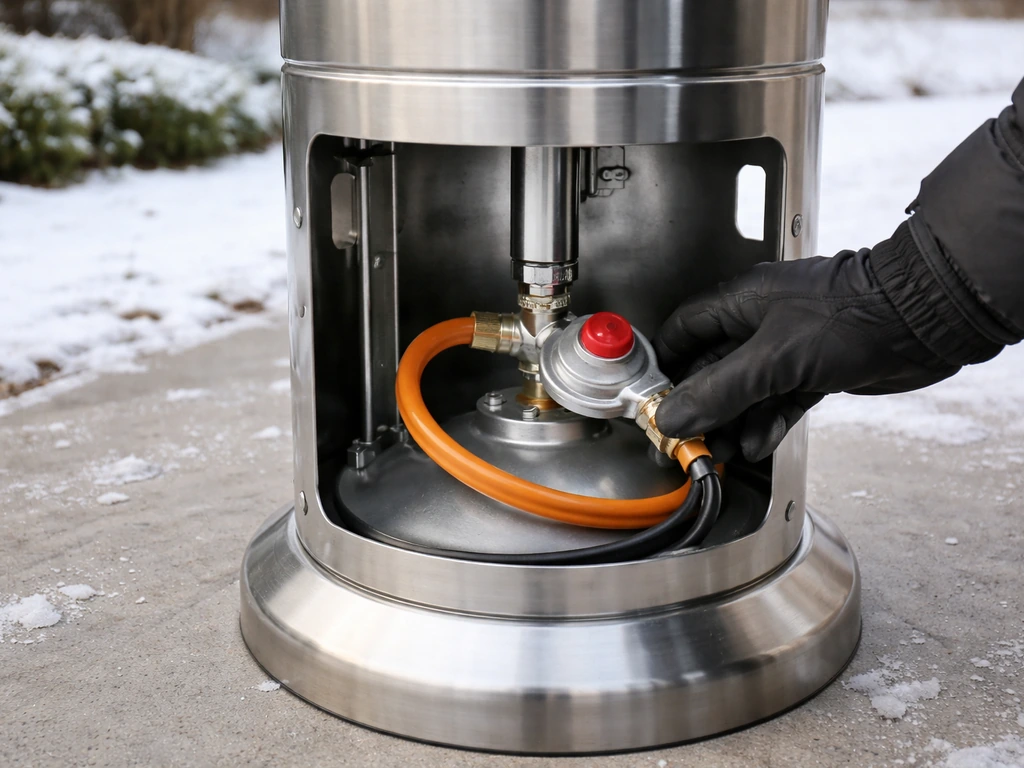
Cold weather and moisture are hard on propane heater components. Ice can form on regulators and restrict gas flow, causing weak or unstable flames. Frost or condensation inside the burner assembly can cause uneven combustion. If your regulator looks frosted or your flame is sputtering and weak, don't force it.
Let the unit warm up slowly, or bring it inside temporarily to thaw the regulator before relighting. Forcing a partially frozen regulator to flow full pressure can trigger the OPD (Overfill Protection Device) or cause the regulator to lock out, which looks a lot like an ignition failure.
On this site, that kind of symptom also overlaps with thermocouple and flame-sensor issues, so if your heater won't stay lit after you've dealt with frost, the troubleshooting path for thermocouple failures is worth reviewing.
Blocked vents on fixed gas heaters
If you have a fixed natural gas patio heater connected to your home's gas line, check that snow or ice hasn't blocked any venting components. The EPA specifically calls out clearing snow and ice from outdoor appliance vents in winter as a way to prevent CO buildup. A blocked vent on a fixed appliance is a serious issue, not a DIY workaround.
Slip hazards from meltwater
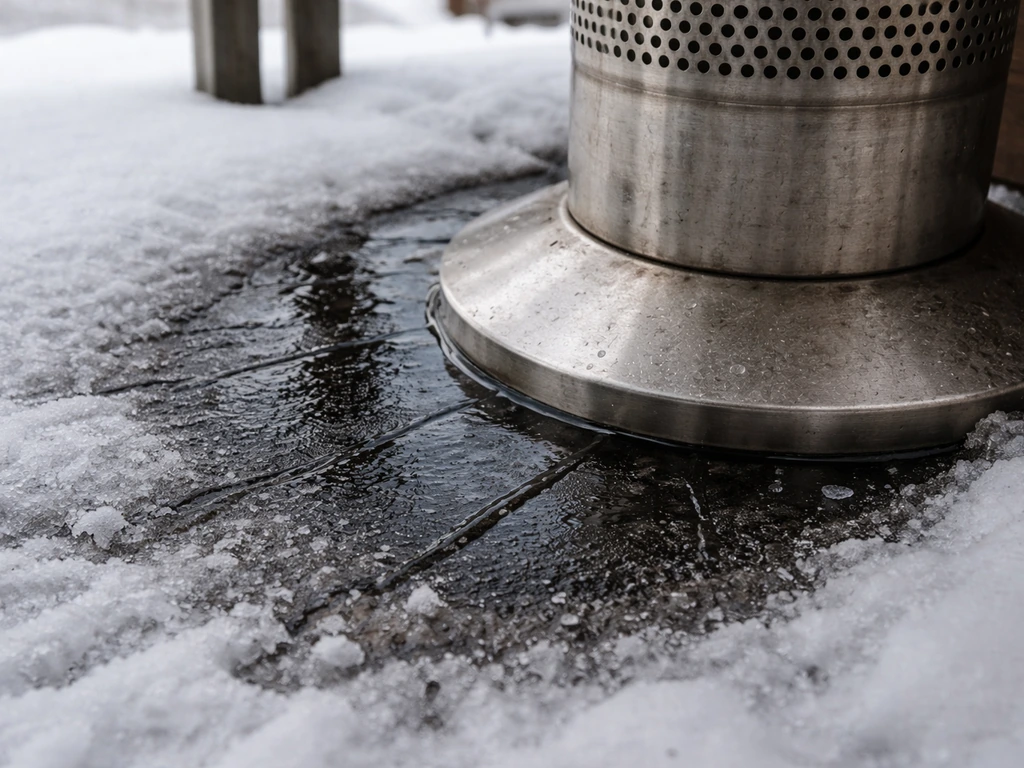
When a patio heater does melt snow, the resulting meltwater runs outward and refreezes at the edges of the heated zone. That creates a classic halo of black ice around your heater. On a deck or patio, that's a serious fall risk. Have something to manage runoff (towels, absorbent mats, or a squeegee) and treat the perimeter with an appropriate ice melt product once the snow is cleared.
How to use a patio heater to melt snow safely (step by step)
If conditions are right and you've decided to use your heater to clear light snow, here's how to do it without damaging the unit or creating new hazards.
- Check the heater first. Make sure there's no ice or frost on the regulator, gas connections, or burner assembly. If there is, bring the unit (or just the propane tank and regulator) indoors to thaw for 15–20 minutes before connecting. Never use a heat gun or open flame to thaw a regulator.
- Clear the base area manually first. Use a broom or brush to knock away snow from the base, the pole, and around the heater's feet. You don't want the heater sitting in a puddle of its own meltwater or tipping on uneven snow.
- Choose an open, wind-protected spot. Radiant heat is dramatically less effective in wind. Even a 10 mph breeze can cut your effective heating radius significantly. Position the heater on the leeward side of a wall or fence if possible, but never in an enclosed space with a gas heater.
- Maintain 3 feet of clearance from all combustibles. That means furniture, railings, covers, planters, and anything fabric or wood. Check above the heater too -- the emitter head throws heat upward as well as outward.
- Light the heater using normal procedure. If it doesn't light after two or three attempts, stop and troubleshoot before continuing. A heater with ignition problems shouldn't be force-lit near snow and moisture.
- Run it at full output for 20–30 minutes and observe. You should see melting directly under and around the emitter within 10–15 minutes if the conditions are favorable. If you're not seeing any melting after 30 minutes, the snow is likely too deep, the temperature too low, or wind losses are too high.
- Manage meltwater actively. As snow melts, push water away from the heater base with a squeegee or push broom so it doesn't refreeze around the unit.
- When done, shut off fully and let cool before moving. Don't drag a hot heater through snow.
Realistic expectations: what a patio heater actually can and can't do
Here's where I want to be direct with you: a patio heater is not a snow-removal tool. It's a comfort heater that happens to put out enough heat to soften light snow in a localized area. Understanding the limits will save you time and frustration.
- Light snow (1–3 inches): A full-size propane heater can melt this over a roughly 6–10 foot diameter area in 30–60 minutes on a calm day at temperatures around 25–32°F. Results get worse as temperature drops.
- Deep snow (6+ inches): Expect very limited results. The snow insulates itself, and you'll melt the top while the base stays frozen. You'll use a full tank of propane and still have snow to shovel.
- Sheet ice: Almost useless. Ice is dense, has low surface area, and conducts heat into the ground before it melts at the surface. Ice melt chemicals are far more effective here.
- Windy conditions: Radiant heater effectiveness drops sharply in wind. At 15–20 mph, you may see almost no measurable surface melting even with a 46,000 BTU heater.
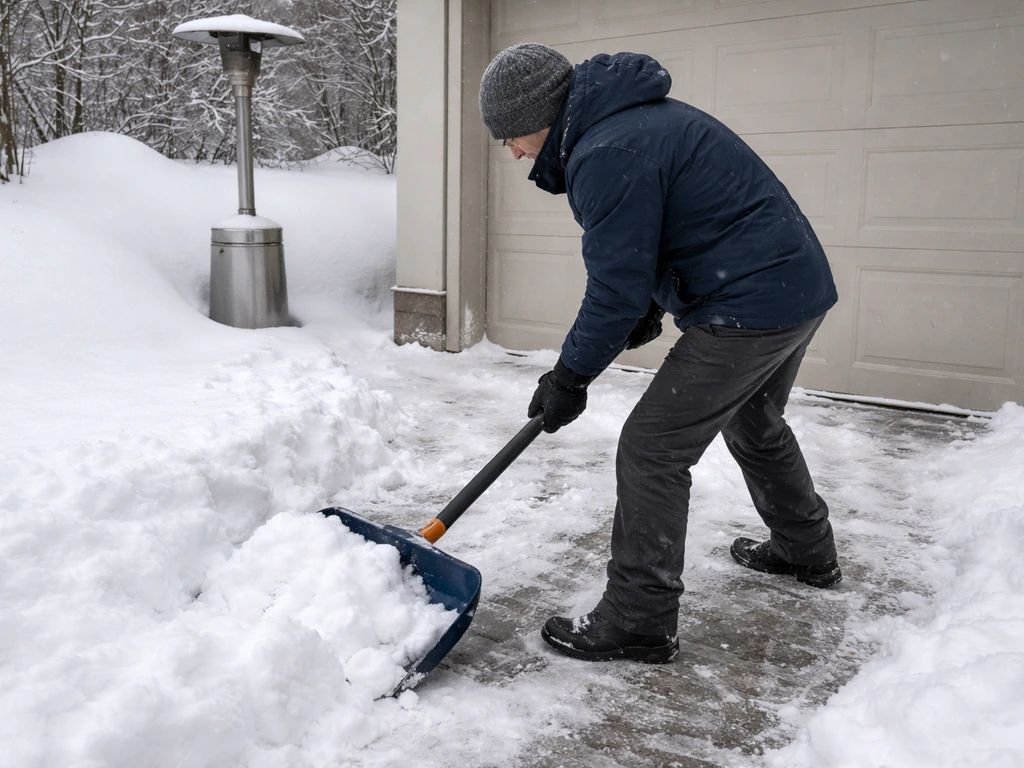
- Time expectations: Don't expect a patio heater to clear snow faster than a shovel. A good shovel clears a 10-foot patio in under 10 minutes. A heater takes 30–60 minutes to melt the same area, and you still have to deal with the slush.
Purpose-built snow-melt systems use controlled heat flux based on ASHRAE-developed calculations that account for snowfall rate, wind, ambient temperature, and latent heat of fusion simultaneously. They're also embedded in the surface, delivering heat directly where it counts. A freestanding patio heater does none of that, which is why the comparison is so lopsided.
When to skip the heater and use better tools
There are situations where reaching for the patio heater isn't just ineffective, it's the wrong call entirely. Here's when to put it away and grab something else.
- More than 3–4 inches of snow: Shovel first, then use the heater for residual thin layer or dusting if you want.
- Solid ice on the surface: Use calcium chloride or calcium magnesium acetate ice melt instead. Calcium chloride works down to around -25°F and is effective on surfaces where other products struggle. Always check the product label for compatibility with your decking material (wood, composite, concrete, pavers) before applying.
- Temps below 20°F (-6°C): At these temperatures, heat loss is too high for a patio heater to make meaningful progress on snow in typical outdoor conditions.
- Any partially enclosed space (garage, screened porch, canopy tent): Use electric only, or don't bother. CO risk from gas heaters in enclosed spaces is not worth it.
- Heater won't light or stay lit: Don't troubleshoot in the snow and cold with wet hands. Move the heater to a dry, open area before diagnosing.
For surface-level snow on a deck or covered patio, a combination of physical shoveling plus a light application of a surface-safe ice melt product will always outperform a patio heater on both speed and thoroughness. If you’re wondering can you use a patio heater under an awning, focus on ventilation and safe placement so heat and exhaust do not build up. The heater's real value in winter is keeping you warm while you work, not replacing the work itself.
When to stop and get your heater checked out
Cold-weather use is a stress test for patio heaters, and winter is when hidden problems show up. If you notice any of the following during or after a snow-season attempt, stop using the heater and run through a proper diagnostic before the next use.
- The heater won't ignite after 2–3 normal attempts: Could be a frozen regulator (temporary), a dead igniter (replaceable), or the start of a thermocouple failure. Don't keep clicking -- you risk flooding the burner with unlit gas.
- The flame lights but won't stay lit: Classic thermocouple or flame-sensor symptom. The safety circuit is shutting down the gas valve because it doesn't sense a stable flame. This is a common, fixable problem -- but fix it dry and indoors, not in a snowstorm.
- Flame is weak, yellow, or uneven: Could be moisture in the burner, a partially clogged orifice, or low gas pressure from a cold or nearly empty propane tank. Propane pressure drops in cold weather as liquid propane struggles to vaporize.
- You smell gas without a flame: Shut off the tank valve immediately and don't attempt to relight until you've found and addressed the leak.
- The unit has been sitting outside through a hard freeze with no cover: Inspect the burner assembly, regulator, and all gas connections before relighting. Moisture intrusion can cause real damage.
Most ignition and flame-retention problems on propane patio heaters are DIY-repairable with the right part and a bit of patience. The troubleshooting guides on this site walk through ignition failures, thermocouple replacements, and regulator issues step by step. But if you're seeing symptoms like a strong gas smell, visible damage to burner components, or a flame that behaves erratically even after you've addressed the obvious causes, that's a call for a qualified gas technician rather than a DIY fix. Don't push past your comfort level with gas appliances, especially after a rough winter season.
One last note: winter weather raises the same ventilation and placement questions that come up in other contexts on this site -- whether a heater is safe on a deck, under an awning, or in a partially covered outdoor space. Yes, positioning a patio heater under a canopy is sometimes doable, but the key is maintaining safe clearance, airflow, and proper placement for the heater type under an awning. The rules don't change in snow; they just become more important because people are more likely to push heaters into marginally enclosed spots to get out of the cold. Always prioritize airflow and clearance, no matter the season.
FAQ
If my patio heater melts some snow, will it create slippery black ice?
Use it only for a small “target zone,” because meltwater will refreeze at the edges. Plan for a halo of slick ice around the unit, then clear the softened snow manually and handle the perimeter with a surface-appropriate ice melt product or absorbent mats.
Can I run a propane patio heater in my garage to melt snow near the door?
For gas units, you should not. A patio heater should stay in full open air, and even a garage with the door cracked can be enough to trap carbon monoxide. If you need heat while clearing snow, use an outdoor-safe setup or an alternative heating method designed for that environment, and keep gas appliances outside.
Will a patio heater melt a thick snow pile or break up ice so I don't have to shovel?
No. In thick snow or solid ice, radiant heaters mostly warm only the top layer and leave the base frozen, so you can end up with partial melting, then refreezing that makes the surface harder to remove. For more than a light dusting, shoveling plus an appropriate ice melt is usually more reliable.
How close should I place the patio heater to snow for best melting results?
You generally want the heater close enough that radiant heat reaches the surface before wind and cold pull heat away. If you are getting little effect, move it closer within the manufacturer’s clearance-to-combustibles limits, or reduce the exposure area (heat a smaller section at a time).
What should I watch for on decks or patios besides the heater clearance rules?
Avoid melting snow directly onto materials that can be damaged by heat, such as some finishes or fabrics (chair covers, planters with dry foliage, decorative textiles). Because radiant heat dries wet materials quickly, keep combustibles at the required clearance and remove anything that could ignite as it warms.
My propane heater is acting weird in the cold (frost or sputtering). What should I do before trying to melt snow again?
If you see frost on the regulator, weak sputtering flames, or ignition that fails after a relight attempt, stop and let the heater warm and thaw slowly rather than forcing operation. If it still won't run normally, switch to electric for comfort, and have the gas heater serviced.
I have a fixed natural gas patio heater, can I just clear snow around it if the vent looks blocked?
Check for blocked vents on fixed natural-gas models. If the heater’s vent or components are packed with snow or ice, that can raise carbon monoxide risk. Clear only what the manufacturer instructs, and do not operate a heater with suspected vent blockage.
Is it better to keep the patio heater running continuously until everything is cleared?
Use the heater to warm and soften, then finish with a shovel. Repeated heating while the surface keeps refreezing wastes fuel and can increase hazard from repeated meltwater refreeze cycles around the unit.
What’s the safest “workflow” to clear light snow using a patio heater?
You should not treat it as a primary ice-clearing tool. If you’re on a deck or in a covered area, consider the safer workflow: shovel first (or after a short softening period), then apply a surface-safe ice melt to the remaining film, while keeping the heater only for personal warmth.
When should I stop troubleshooting and call a professional instead of trying to fix the heater?
Stop using it if you smell gas, see visible damage to the burner, or have erratic flame behavior even after basic checks. These are signals to get a qualified technician, especially after cold-weather symptoms where components like regulators and flame sensors may be affected.