When people say 'gas patio heater,' they almost always mean a heater plumbed to a natural gas line in your home. 'Propane patio heater' means a freestanding unit running off a portable cylinder, typically a standard 20 lb tank. Both burn fuel and produce heat, but how you set them up, refuel them, and troubleshoot them is completely different. If you have a gas line on your patio already, natural gas is usually the more convenient long-term choice. If you don't, propane gets you up and running this weekend with no contractor needed.
Gas vs Propane Patio Heater: Differences, Setup, Fixes

Grant Mercer
27 Jun 2026
What 'Gas' Actually Means on a Patio Heater
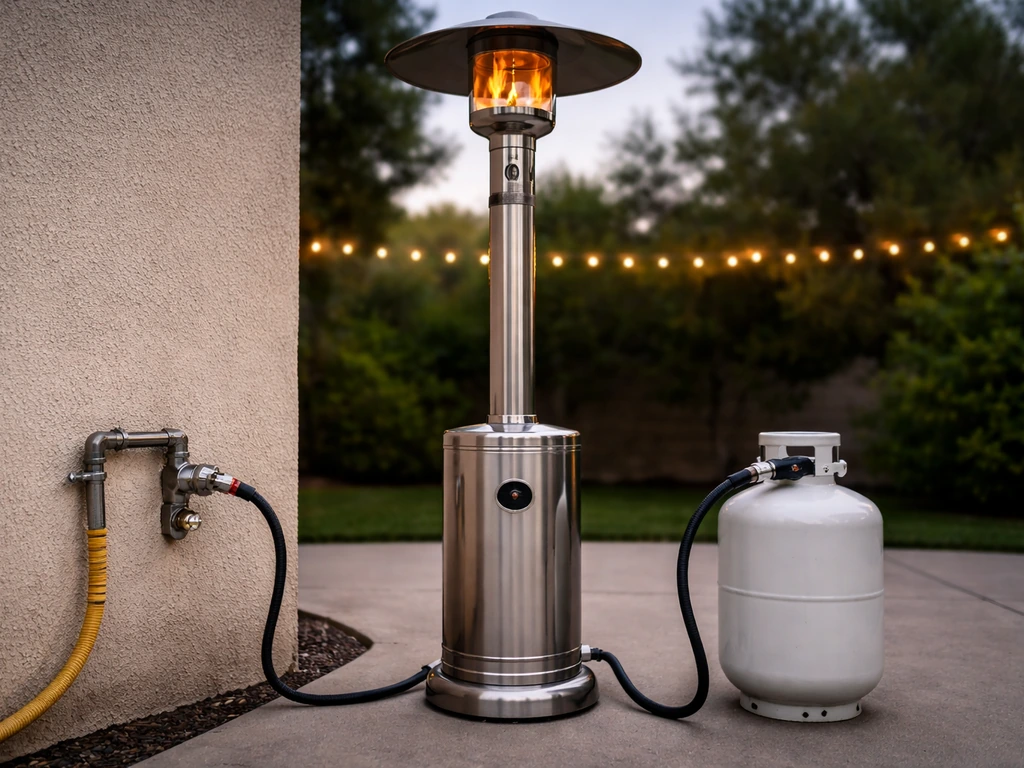
The terminology trips people up constantly. In the patio-heater world, 'gas' usually refers to natural gas (NG), delivered through a fixed piping system at pressures no greater than 1/2 psi (3.5 kPa) at the inlet. That's the same piping that feeds your stove or water heater. A natural-gas patio heater gets hard-plumbed into that system, usually by a licensed plumber or gas tech, and then it sits in one spot permanently.
Propane (LP/LPG) is a completely different fuel. It's stored as a compressed liquid in a cylinder, and a pressure regulator on the tank steps the pressure down to a safe operating level, typically around 11 inches of water column (about 2.74 kPa) at the appliance inlet. The ANSI/CSA Z83.26 standard that governs these heaters allows for a maximum of one 20 lb (9.1 kg) cylinder on a self-contained propane unit. Most full-sized mushroom-style patio heaters you see at hardware stores are built around that 20 lb cylinder.
Here's the important safety point right up front: never connect an unregulated propane cylinder directly to a patio heater. Every propane heater ships with a specific regulator and hose assembly, and you must use that assembly. The regulator isn't optional equipment. It's what keeps the fuel delivery pressure within the range the burner was designed for.
Cost and Convenience: Setup, Refills, and Running Costs
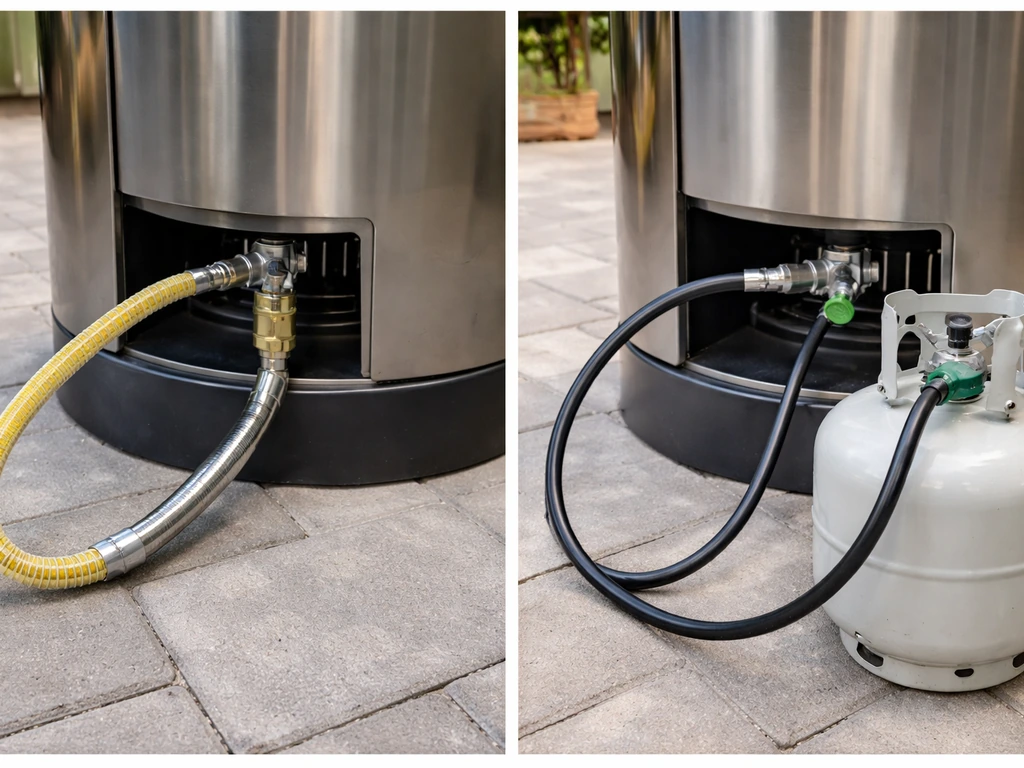
Natural gas wins on running cost. A full-sized NG patio heater outputs around 40,000 BTU/h, and at typical US natural gas rates you're looking at roughly 48 cents per hour of operation. Typical full-sized natural-gas patio heaters are commonly marketed around 40,000 BTU/h and are advertised to heat about a 20-foot diameter area, with an example estimate that works out to about 48 cents per hour of operation. Propane costs more per BTU, so expect to pay more per hour running a propane heater at the same output. The exact difference depends on your local gas and propane prices, but propane is generally 2 to 3 times more expensive per BTU than natural gas in most US markets.
The setup story is very different though. Natural gas requires running a gas line to your patio, which means a permit, a licensed contractor, and upfront costs that can run several hundred to over a thousand dollars depending on how far the line needs to go. Once it's done, you never refuel. Propane has zero setup cost beyond buying the heater. You pick up a filled 20 lb cylinder at any hardware store or exchange kiosk, thread it in, and you're heating. If you're ready to buy, you can find where to buy propane patio heater units at many hardware stores and online retailers filled 20 lb cylinder. The trade-off is that you have to keep track of fuel level and either refill or exchange the tank when it runs out, which happens at an inconvenient time more often than not.
| Factor | Natural Gas | Propane |
|---|---|---|
| Setup cost | High (gas line installation, permit, contractor) | Low (buy heater, attach cylinder) |
| Fuel cost per hour | ~$0.48/hr at 40,000 BTU | Higher, typically 2-3x NG rate per BTU |
| Portability | None, fixed location | Portable, move it anywhere outdoors |
| Refueling | Never, continuous supply | Refill/exchange 20 lb tank as needed |
| Cold weather performance | Consistent | Reduced below 40°F (5°C); cylinder can frost over |
| Long-term convenience | High, set and forget | Requires monitoring fuel level |
Heat Output and How Each Type Handles Real-World Conditions
A properly sized patio heater of either fuel type can put out 40,000 BTU/h and cover roughly a 20-foot diameter circle (around 314 sq ft). On paper, heat output is essentially identical between NG and propane versions of the same heater model. In practice, the difference shows up in cold weather and windy conditions.
Propane has a known cold-weather problem: liquid propane needs to vaporize inside the cylinder to produce the gas the burner needs. When temperatures drop below about 40°F (5°C), a propane heater runs at reduced efficiency, and in a prolonged cold snap you may see frost forming on the outside of the cylinder. That frost is actually a sign of rapid vaporization pulling heat out of the tank. If the cylinder gets heavily frosted over, the vapor pressure drops low enough that the burner won't sustain a flame. The fix is simple but annoying: wait for the cylinder to warm up and unfrost before trying to relight. Natural gas doesn't have this problem at all since your supply pressure stays consistent regardless of outdoor temperature.
Wind is the other real-world factor. Some manufacturers design their heaters to meet the ANSI Z83.26 standard with wind- and rain-resistant burner designs. If your patio is exposed, look for models certified to that standard regardless of fuel type. Neither fuel type inherently handles wind better than the other, but the burner and emitter design matters a lot.
Safety and Code Considerations
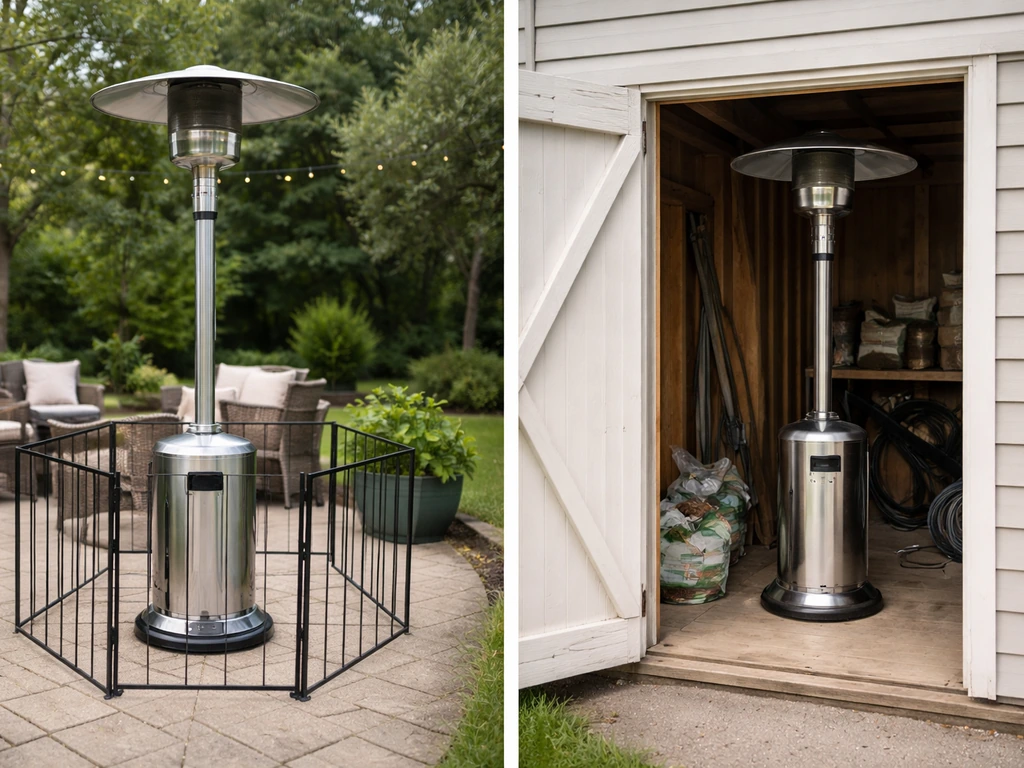
Both natural gas and propane patio heaters are designed for outdoor use only. That's not a suggestion, it's a code requirement. Running either type in an enclosed space creates carbon monoxide risk and can reach explosive fuel-air concentrations. Every manual I've seen is explicit about this, and the ANSI/CSA Z83.26 standard that governs these appliances is built around open-air operation.
Propane deserves extra attention on leak safety because you're dealing with a pressurized cylinder you're connecting and disconnecting yourself. Before every first use of the season and after any cylinder change, do a leak check on every connection between the cylinder valve, the regulator, the hose, and the heater valve. The method is straightforward: mix dish soap and water, brush it onto each connection, then slowly open the cylinder valve. Bubbles forming at any joint mean you have a leak. Close the valve immediately, tighten the connection or replace the component, and recheck before lighting. Never do a leak check on a hot heater or near any open flame.
Natural gas leak checks follow the same soapy-water logic at the connection point where the heater hooks into the fixed gas line. Because that line is always pressurized, even a small, persistent gas smell should send you straight to shutting off the supply valve and calling a pro. Don't try to light the heater while troubleshooting a suspected line leak.
On the code side, natural gas line work almost always requires a permit and inspection in the US, and it must be done by a licensed contractor. Attempting to tap a gas line yourself is not just a DIY safety risk, it can void your homeowner's insurance and create serious liability. Propane has no permit requirements for simple cylinder-fed portable heaters, but local fire codes sometimes restrict propane storage quantities near structures. Check your municipality's rules if you're keeping spare cylinders on hand.
Can You Convert a Propane Heater to Natural Gas (or Vice Versa)?
Sometimes yes, but only with the correct model-specific conversion kit, and never by improvising. Natural gas and propane have different energy densities and different operating pressures, so the burner orifices that meter the fuel flow are different sizes for each gas. Swap fuels without changing the orifice and you'll either starve the burner of fuel (if running propane orifices on NG) or create an over-rich, potentially dangerous flame (if running NG orifices on propane). The regulator also needs to be set or swapped for the correct fuel, which is why proper conversion kits include both orifice components and regulator adjustments or replacement springs. Conversion guidance for making a propane to natural gas change generally emphasizes using the correct conversion kit, with orifice and regulator changes rather than ad-hoc adjustments conversion kits include both orifice components and regulator adjustments or replacement springs..
Conversion kits are model-specific. The kit for one manufacturer's heater won't necessarily work on another brand even if the heaters look identical. Before assuming a conversion is possible, check with the manufacturer or pull the serial number and contact their parts line. Some heaters are simply not rated or approved for conversion, and the manufacturer will tell you that clearly.
Here's where I'd draw the DIY line: if a conversion kit exists for your specific model and includes clear step-by-step instructions, following those instructions carefully is reasonable DIY work. What you should never do is drill out orifices to change their size, swap in random orifice fittings from another appliance, or try to adjust the regulator without the proper conversion components. Those approaches bypass the engineering the appliance was approved on, and they can create a genuinely dangerous heater. If no conversion kit exists for your model, the answer is to buy the right heater for the fuel you have rather than improvise.
Troubleshooting by Symptom
Most patio heater problems come down to one of three symptoms: it won't ignite at all, it lights but won't stay lit, or the flame is weak. The cause is often fuel-type-specific, so here's how to approach each one.
Won't Ignite
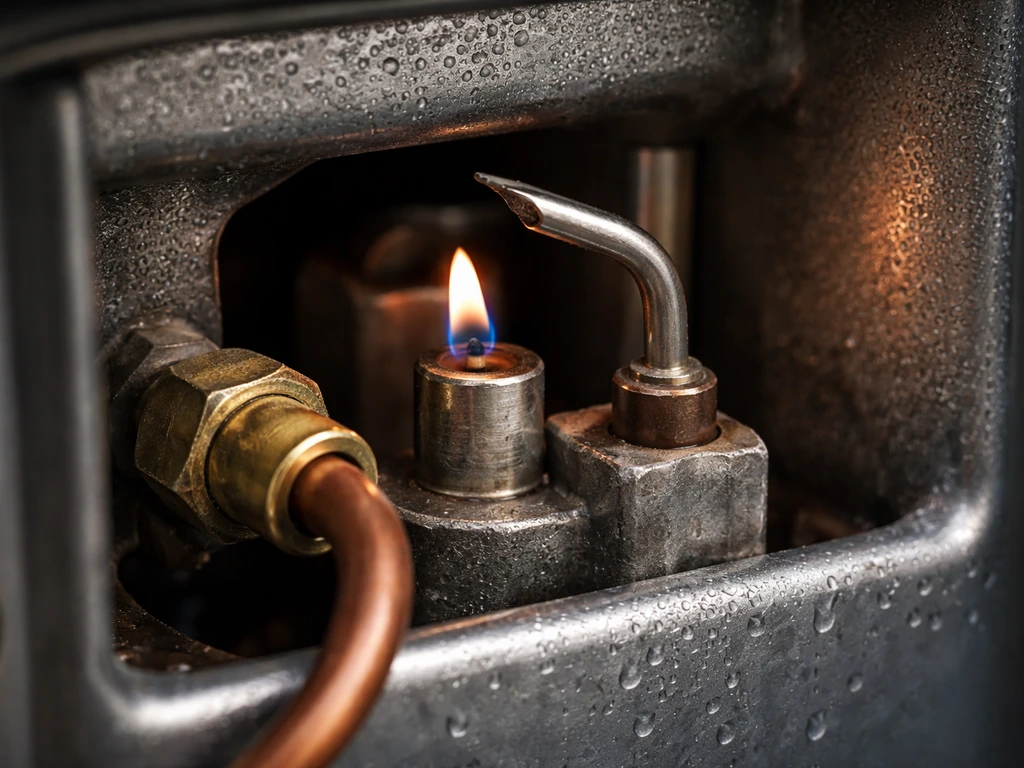
On a propane heater, the first thing to check is the obvious: is there fuel in the cylinder? A frosted-over cylinder in cold weather (below 40°F) is a specific version of this problem where there is fuel but vapor pressure is too low to sustain ignition. Wait for the tank to warm up. If the tank is fine, check that the cylinder valve is fully open and that the regulator is properly seated. Air trapped in the gas line after a cylinder change can also prevent ignition. Open the gas valve slowly and wait 30 to 60 seconds before attempting to light, which gives any trapped air time to purge.
For both fuel types, a blocked pilot orifice or pilot tube is a common culprit. Spider webs and debris love to nest in pilot tubes during storage. Visually inspect the pilot assembly. If the igniter is clicking but nothing is lighting, try a manual light with a long-reach lighter at the pilot to rule out an igniter electrode problem versus a fuel delivery problem. A clogged orifice needs to be cleared carefully with a thin wire or soft brush, never a drill bit.
Lights but Won't Stay Lit
This is almost always the thermocouple (also called the flame sensor or thermopile depending on the heater design). The thermocouple is a small probe that sits in the pilot flame. When it gets hot, it generates a tiny voltage that holds the gas valve open. If it's dirty, misaligned, or failed, the valve shuts off the moment you release the ignition button and the heater goes out. Check that the thermocouple tip is positioned in the pilot flame, not just near it. Clean any carbon buildup off the tip with fine steel wool. If cleaning and repositioning don't fix it, replace the thermocouple. It's a straightforward part swap on most heaters and one of the most common maintenance repairs.
Also check your tilt switch. Freestanding patio heaters have a safety tilt switch that cuts gas if the heater tips over. If the switch is faulty or the heater is on an uneven surface, it can read as 'tilted' even when it's upright, causing the flame to cut out. Verify the heater is on a level surface and check whether the tilt switch is functioning correctly.
Weak or Low Flame
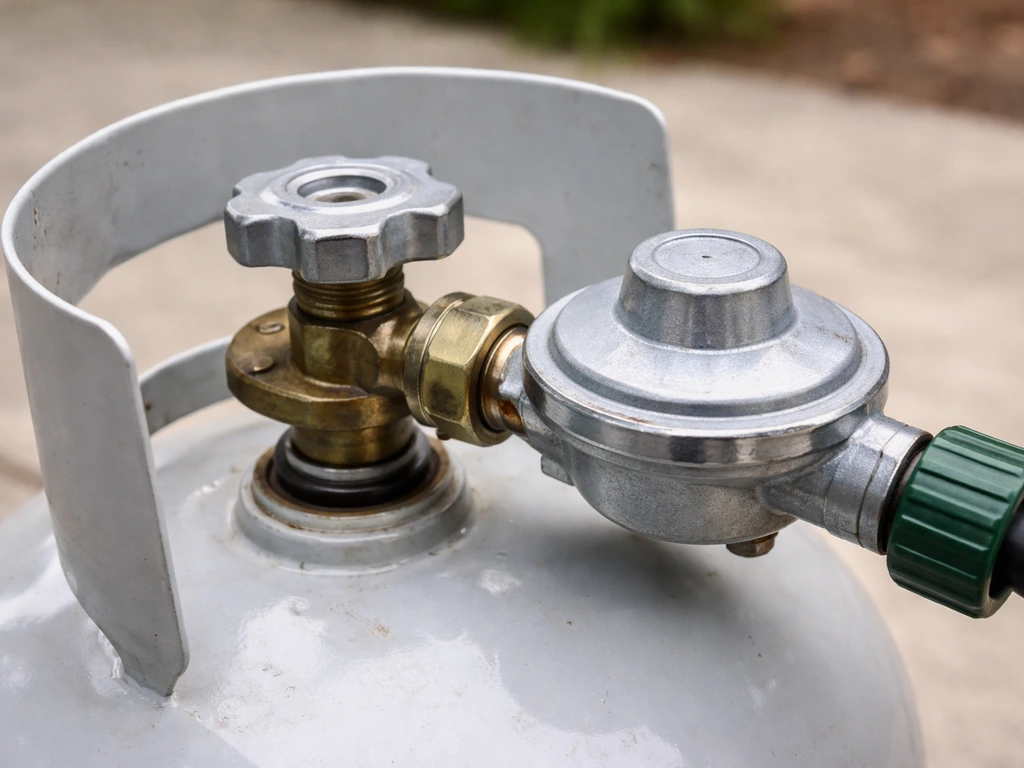
On propane, low gas pressure is the usual cause. Check how full the cylinder is and whether the regulator is fully engaged. Propane regulators can go into a 'bypass mode' if you open the cylinder valve too quickly, which restricts flow. Close the cylinder valve, disconnect the regulator, wait 30 seconds, reconnect, and then open the cylinder valve very slowly. On NG heaters, low supply pressure usually points to an issue upstream with the gas line or supply valve, which warrants a call to your gas utility or contractor. On either fuel type, a partially blocked main orifice can also reduce flame height. Inspect and clean the burner orifice if flow is confirmed adequate at the regulator.
DIY First Checks and Maintenance
Whether you're running natural gas or propane, patio heaters need basic maintenance at the start of each season. These checks take about 20 minutes and prevent most of the common failures.
- Inspect the burner screen and emitter for debris, rust, and spider webs. Clear any blockages with a soft brush. A clogged burner screen is one of the most common reasons for weak heat or ignition failure.
- Check the pilot assembly. The pilot orifice is tiny and clogs easily. Use a soft brush or thin wire to clear it. Never use a drill bit or anything that could enlarge the orifice.
- Inspect the thermocouple tip for carbon buildup. Clean it gently with fine steel wool and confirm it's positioned so the pilot flame contacts the tip directly.
- On propane heaters, inspect the regulator and hose for cracks, kinks, or wear before the first use of the season. Replace the hose and regulator assembly if you see any damage. Do not patch a gas hose.
- Do a leak check at every gas connection using soapy water before lighting. For propane, check the cylinder valve, regulator connection, hose, and heater inlet. For NG, check the shutoff valve and the flex connector at the heater.
- Confirm the tilt switch moves freely and resets correctly by gently rocking the heater slightly and checking that it returns to the upright position without binding.
- Check that the main gas valve knob turns smoothly from OFF through PILOT to HIGH and back. A stiff or sticky valve sometimes needs replacement rather than lubrication.
On natural gas heaters, also check the flex connector that links the fixed gas line to the heater. These connectors can corrode or develop micro-cracks over time, especially outdoors. If the connector shows any rust, corrosion, or visible damage, replace it before using the heater. This is a quick job but it's important, as a failing flex connector is a slow gas leak you might not smell until it's significant.
Which One Should You Choose?
Here's a simple way to make the call. Run through these questions and the answer usually becomes obvious. If you're still deciding between gas options, this guide on halogen patio heater vs propane can help you weigh the practical tradeoffs.
- Do you already have a natural gas line on or near your patio? If yes, NG is almost always the better long-term choice. Lower running cost, no refueling, consistent pressure in cold weather.
- Are you renting, moving soon, or want flexibility to move the heater around? Propane wins every time. You own the heater outright and it goes where you go.
- Do you use the heater during cold snaps below 40°F regularly? Natural gas handles cold weather better. If your winters are mild or you mostly heat in fall evenings, propane is fine.
- Is your budget for setup costs limited? Propane has essentially zero setup cost beyond the heater purchase. Natural gas line installation is a real expense.
- Do you want the lowest cost per hour of heat? Natural gas, if you use the heater frequently enough for the line installation cost to amortize over time.
- Are you putting the heater in a semi-covered area like a pergola or gazebo? Both types are outdoor-only appliances. Neither is appropriate for fully enclosed spaces, full stop.
If you're still on the fence, propane is the practical starting point for most homeowners. You can always add a gas line later if you find yourself burning through cylinders regularly. Going the other direction, from a fixed NG setup back to propane, is less common but also possible with the right heater choice. For more detail on comparing these fuel types side by side, the topic of natural gas vs propane patio heaters goes deeper on the fuel chemistry and efficiency differences. And if safety is your primary concern before buying, the piece on whether propane patio heaters are safe addresses ventilation, carbon monoxide risk, and safe storage in detail.
Whatever you choose, the troubleshooting steps above apply to both fuel types. Start with the simple checks: fuel supply, clean pilot, thermocouple position, leak-free connections. Most patio heater problems are fixable at home in under an hour with basic tools. Know when to stop though. If you smell gas and can't identify the source, if a conversion requires parts you can't verify are correct, or if the gas valve itself is faulty, those are jobs for a qualified technician. A patio heater is an appliance worth keeping, not one worth gambling on.
FAQ
Can I attach my propane patio heater to a larger propane tank (like a 100 lb tank) instead of a 20 lb cylinder?
It can, but only if your heater is explicitly listed for cylinder connection and you use a regulator and hose assembly that matches the heater model. Never “borrow” a regulator from another propane appliance, because flow rates and settings differ and can cause weak flame or unsafe overpressure.
When should I do a propane leak check, and can I test while the heater is hot or running?
Do it off-cycle and only after the burner is fully off and cool. For soapy-bubble checks, keep the cylinder valve closed during setup, then open it slowly just long enough to observe bubbles. If you find a leak, do not attempt ignition, and replace the leaking component rather than tightening repeatedly.
Should I store a patio heater with the propane cylinder attached, or disconnect it first?
Most patio heaters should be stored with the cylinder disconnected (for propane) and the valve closed. Keeping an attached propane cylinder in storage can increase risk if a connection loosens, and it also complicates leak checks next season. For natural gas units, turn off the supply valve and protect connections from moisture.
If a heater says “gas patio heater,” does that mean it can use either natural gas or propane?
No. “Gas patio heater” models run on natural gas only unless they are designed and approved for conversion with a specific kit. If you try to run NG hardware on propane without the approved conversion components, you can end up with the wrong gas mixture and an unsafe flame pattern.
After I swap propane tanks, do I need to do anything special besides refueling?
Because cylinder connections are a common failure point, treat them as a routine variable. After any cylinder change, re-seat the regulator, then perform the connection leak check before lighting. Also inspect the regulator inlet for debris, which can prevent a proper seal.
How can I tell if my gas vs propane patio heater is burning correctly versus having a problem?
Check the flame color and behavior. A normal flame is stable and primarily blue, while yellow, lazy flames or soot buildup suggest incorrect fuel-air mixture, partial blockage, or wrong parts. If the flame is abnormal and you cannot correct it by cleaning the pilot or burner, stop and verify you have the correct fuel type and parts for that model.
What should I do if my propane cylinder gets frosted over and the heater won’t stay lit?
Yes, but do it carefully. If you see frosting on the cylinder, bring the cylinder back to a warmer location only if you can do so safely and follow the manual. Do not thaw with open flame or high heat, and only reattempt lighting once frost has cleared and the cylinder can sustain vaporization.
My heater’s flame is weak, what are the most common causes for propane versus natural gas?
A persistently weak flame often points to reduced flow, especially for propane. Confirm the cylinder level is sufficient, verify the regulator is fully seated and not under tension, and inspect for partially blocked burner orifice debris. For natural gas, weak flame usually means supply pressure or an upstream restriction, so it may require utility or contractor help.
Can wind or cold weather make my natural gas heater act like it has a propane-style fuel problem?
Sometimes, and often it’s a “model rating” issue. If you see frost or repeated ignition failures in cold weather, choose a model with the manufacturer’s cold-weather guidance and consider wind protection. Also keep the heater at its recommended clearance distances, because airflow affects burner performance and can mimic “fuel pressure” symptoms.
My propane or natural gas heater shuts off like it’s tipping over, but it’s not. What else could cause that?
Yes. If the heater has a tilt safety switch, it can trip even when “upright” if the heater sits on sloped or uneven ground, or if legs are not fully extended. Level the surface, confirm the burner assembly is seated as designed, and test after repositioning before replacing parts.
What should I do if I smell gas or propane but the heater is off?
A small odor can be tricky, so treat it based on fuel type. For natural gas, if you smell gas and cannot pinpoint the source immediately, shut off the supply valve and call a pro, do not attempt ignition. For propane, never ignore a smell near cylinder connections, because small leaks can increase quickly when the system is pressurized.
If a conversion kit exists, can I convert between natural gas and propane myself, and what parts must be included?
Yes, for the heater specifically, but don’t assume “universal” works. Conversion requires a model-specific kit, and it also includes the correct regulator adjustment or replacement. Before buying parts, verify the serial number and that the kit is approved for your exact model and fuel direction.