
If your Garden Treasures or Garden Sun patio heater won't start or keeps shutting off, the fix almost always comes down to one of three things: a thermocouple that needs cleaning or replacing, a tilt switch that's tripped or faulty, or a gas supply issue upstream of the burner. Before you dive into any of that, you need the right manual for your exact model, because the part numbers, clearance specs, and ignition steps differ between the PG183H, PG171H-B, PG169T-A, HSS-RS-GH, and other units in this line. The Garden Sun Heater HSS-A-GH manual also uses the ANSI Z83.26-2007 and CSA 2.37-2007 gas-fired outdoor infrared patio heater language in its model-specific documentation blank" rel="noopener noreferrer">MODEL: HSS-A-GH and the manual’s model-specific gas-fired infrared patio heater language. If you are looking for the sunjoy patio heater manual, you can usually match it by model number first, then use the diagrams and troubleshooting sections to confirm the right part and steps. This guide walks you through finding your model, reading the manual's diagrams, and doing the actual repair work today.
Garden Treasures Patio Heater Manual and Won’t Light Fixes

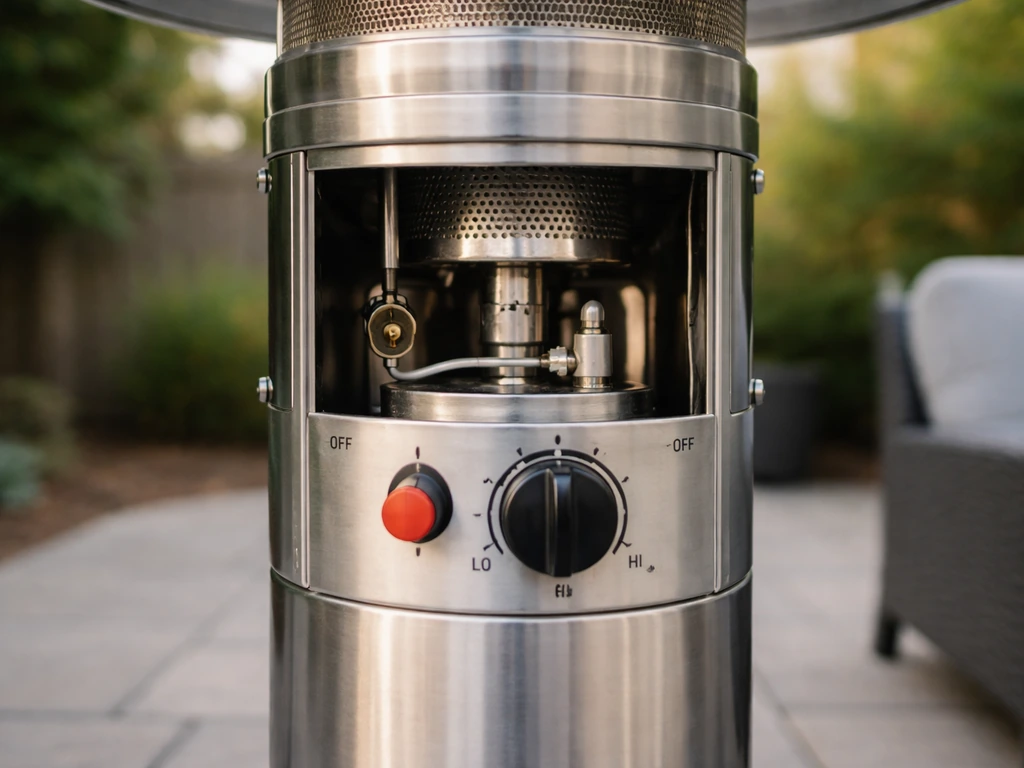
Confirm your heater brand and model first
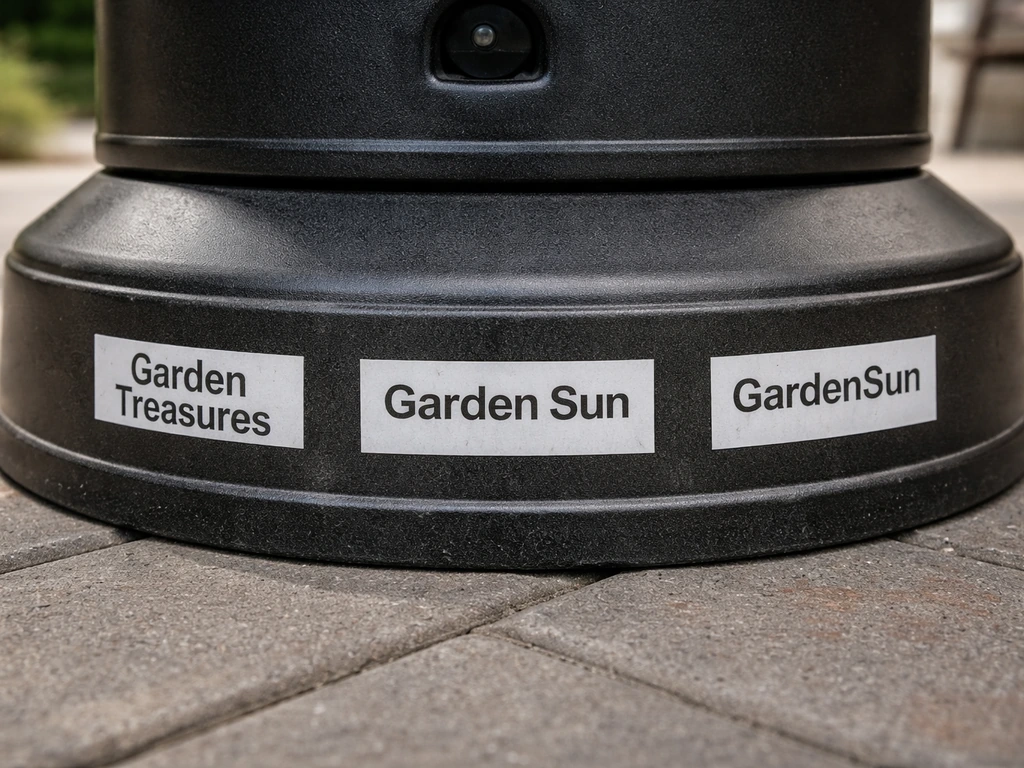
"Garden Treasures," "Garden Sun," and "GardenSun" are all names that have appeared on similar-looking LP gas patio heaters sold through Lowe's and other retailers over the years. They share a lot of design DNA, but they are not the same product, and using the wrong manual can send you chasing the wrong parts. The model number is the only way to know for sure what you have.
The model label is almost always on the base of the heater, either on a sticker on the pole or on the metal base housing itself. Look for a silver or white label with "MODEL #" or "ITEM #" printed on it. Common models you might find include:
- PG183H (Item #0749293) — Outdoor LP Gas Patio Heater, 47,000 BTU, propane, sold by Garden Treasures via Lowe's
- PG171H-B (Item #0574423) — Garden Treasures Living, LP gas, also sold via Lowe's
- PG169T-A and PG169T-C — additional Garden Treasures LP patio heater variants
- HSS-RS-GH — Garden Sun Heater, outdoor patio heater with its own separate owner's manual
- HSS-A-GH — Garden Sun infrared patio heater (ANSI Z83.26-2007/CSA 2.37-2007 certified)
- HSS-A-SS — another Garden Sun patio heater variant
Write down both the model number and the item number if there is one. Also record your serial number, the PG183H manual has a dedicated "Attach Your Receipt Here" block with fields for serial number and purchase date. That serial number matters if you ever need to call customer service or order parts. Once you have the model number in hand, search for it directly on ManualsLib, ManualMachine, or the Lowe's document portal. If you have the Fire Sense patio heater manual 60788, use the model-specific instructions before ordering any parts. Searching "Garden Treasures PG183H manual PDF" or "Garden Sun HSS-RS-GH owner's manual" will get you there fast.
How to actually use the manual once you have it
Most people download the PDF, skim it once, and then ignore it. Don't do that. These manuals are genuinely useful if you know where to look. Here's how the PG183H manual is laid out, and the other Garden Treasures/Garden Sun manuals follow a very similar structure: The Garden Treasures Living PG171H-B manual page includes a table of contents with sections such as Product Specifications, Preparation, Safety Information, Operating Instructions, Troubleshooting, and a Replacement Parts List PG171H-B manual table of contents sections like Safety Information and Troubleshooting.
| Section | What's in it | When to use it |
|---|---|---|
| Product Specifications | BTU rating (47,000 for PG183H), fuel type (Propane-LP), gas supply (20-lb cylinder), manifold pressure (11 in. W.C.), max supply pressure (150 PSI), min supply pressure (5 PSI), safety features list (thermocouple and tilt switch) | Before you start — confirm your gas setup matches |
| Safety Information | Minimum clearance to combustibles (44 in.), leak test procedure, post-use cooling warning (45 minutes), gas dissipation warning (5 minutes) | Before every session, and again after any repair |
| Assembly Instructions | Hardware list, regulator connection steps, hand-tighten warnings | When reassembling after any part swap |
| Operating Instructions | Ignition sequence, alternate lighter procedure, leak-check bubble steps | When the heater won't start |
| Care and Maintenance | Cleaning schedule, hose inspection, storage checks, do-not-submerge warning for control valve | Start of season or after storage |
| Troubleshooting | Symptom-by-symptom fault list (located toward the back of the manual, after Care and Maintenance) | When you have a specific failure symptom |
| Replacement Parts List | Part names with part numbers — thermocouple (2409043), ignition pin (2409604), tilt switch (2310662), igniter (2408276) | When you've confirmed a part needs replacing |
The parts diagram is one of the most underused pages in the manual. It's a labeled exploded-view drawing of every component. When you're staring at the burner assembly and trying to figure out which part is which, cross-reference that diagram. For the HSS-RS-GH, the ManualsLib version has separate Troubleshooting and Service Safety sections, so make sure you're reading Troubleshooting specifically for DIY checks.
Safety checks before you touch anything
Gas heaters require a few non-negotiable steps before any troubleshooting. These aren't suggestions.
- Shut off the gas valve at the tank completely before inspecting any connections, hoses, or burner components.
- If you smell gas at any point during troubleshooting, stop immediately. The PG183H manual is explicit: wait at least 5 minutes for gas to fully dissipate before attempting anything else. Move away from the heater and don't create any ignition source.
- After a session, don't touch the emitter dome or top of the heater for at least 45 minutes. The manual states this clearly: allow the emitter and dome to cool before touching. Burns from residual heat are a real risk.
- Check your clearances. The PG183H requires a minimum of 44 inches of clearance to any combustibles overhead. If you've moved the heater under a pergola or overhang, measure before you operate.
- After connecting a fresh propane cylinder or after any reassembly, do a leak test. Mix dish soap and water and brush it on every gas connection (regulator fitting, hose connections, valve). Turn the gas on slowly and watch for bubbles. Bubbles mean you have a leak — do not light the heater.
- Inspect the hose. After any period of storage or non-use, look for abrasion, cuts, kinks, or wear along the entire length of the gas hose. A compromised hose is a replacement job, not a repair.
- When reconnecting the regulator to the LP cylinder, hand-tighten only. The PG183H manual specifically says do not use any tools on this connection, and warns against debris in the regulator valve head or burner ports.
Ignition troubleshooting: failed ignition, no spark, blocked burner
"Won't start" problems on these heaters almost always fall into one of three categories: no gas reaching the burner, no spark, or a blocked burner port. Work through them in order.
Check gas flow first
Make sure the tank valve is fully open. A partially open valve can produce enough gas to smell but not enough to ignite reliably. Also confirm the tank isn't empty, it happens more often than people admit. If the regulator has been in storage, it may need a moment to reset: turn the gas fully off, wait 30 seconds, then open slowly.
No spark from the igniter
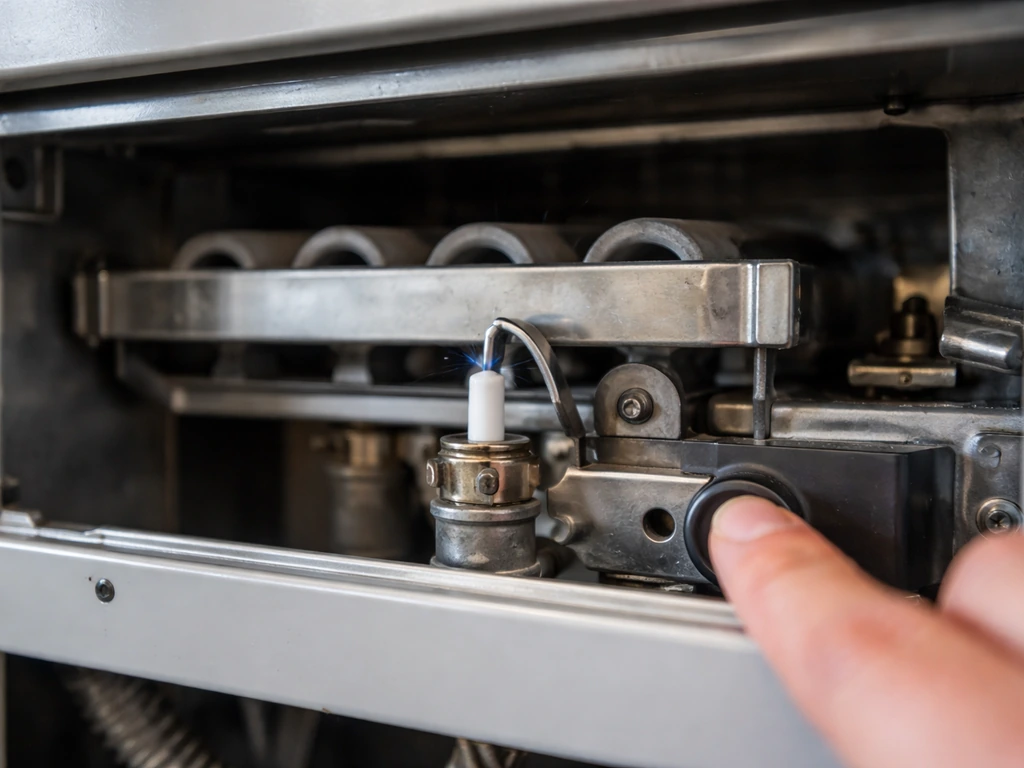
Press the igniter button and watch (or listen) for a click and visible spark at the ignition pin near the burner. If there's no click at all, the igniter module itself may have failed. If there's a click but no visible spark, the ignition pin (part 2409604 on the PG183H) may be dirty, corroded, or misaligned. Clean the tip with fine steel wool and make sure the gap between the pin and the burner is correct, usually 3 to 5 mm. Also check that the igniter wire hasn't come loose from the back of the igniter button.
Spark present but no ignition
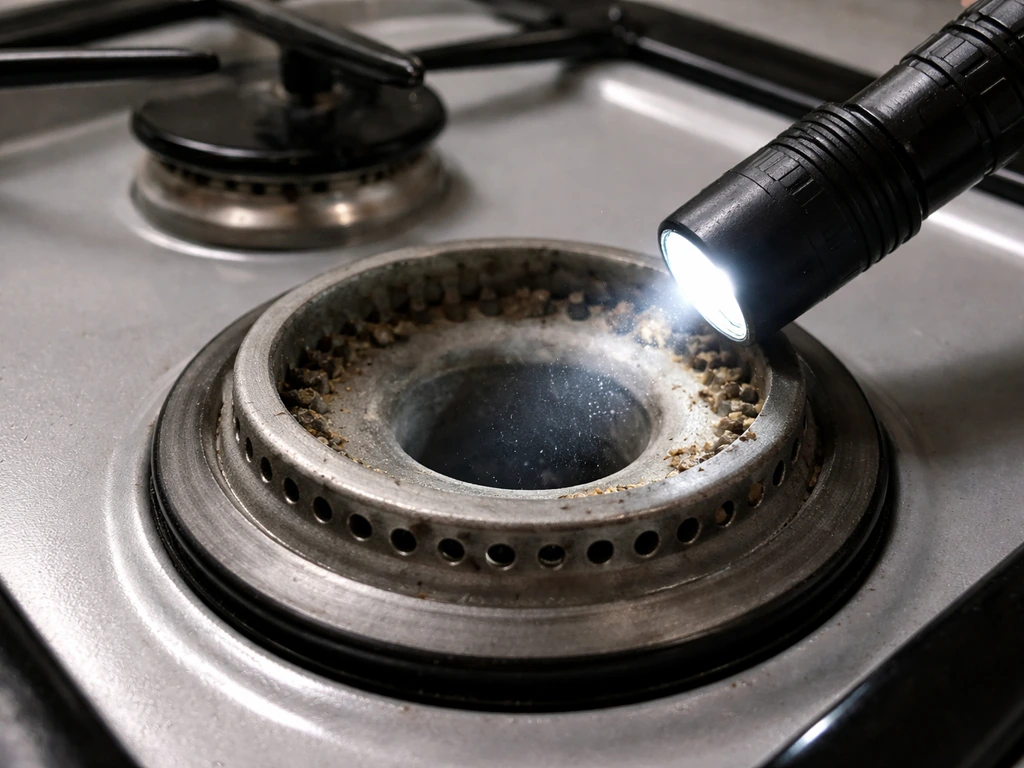
If you're getting a spark but the burner won't catch, there are two likely causes. First, the burner ports may be blocked by insects (spiders are notorious for nesting in gas orifices during storage), debris, or corrosion. Remove the burner emitter screen if your model allows it and inspect the ports. A compressed air blast or a soft brush can clear them. Second, you may be holding the control knob in for too long before pressing the igniter. This is called out specifically in the Garden Sun HSS-RS-GH manual: holding the control knob for more than 10 seconds before igniting will cause a ball of flame upon ignition. Turn, wait about 5 seconds, then spark.
Using the alternate ignition method
The PG183H manual includes a backup ignition procedure that most people don't know exists. If the built-in igniter fails, you can use a long-reach lighter inserted through the hole on the bottom of the burner diffuser, from the back side opposite the control panel. Turn the knob to the pilot position, push and hold it in, then bring the lit flame to the opening. This gets you operational while you order a replacement igniter. Just make sure you're using a long-reach lighter to keep your hand away from the burner area.
Won't stay lit: thermocouple and valve fixes
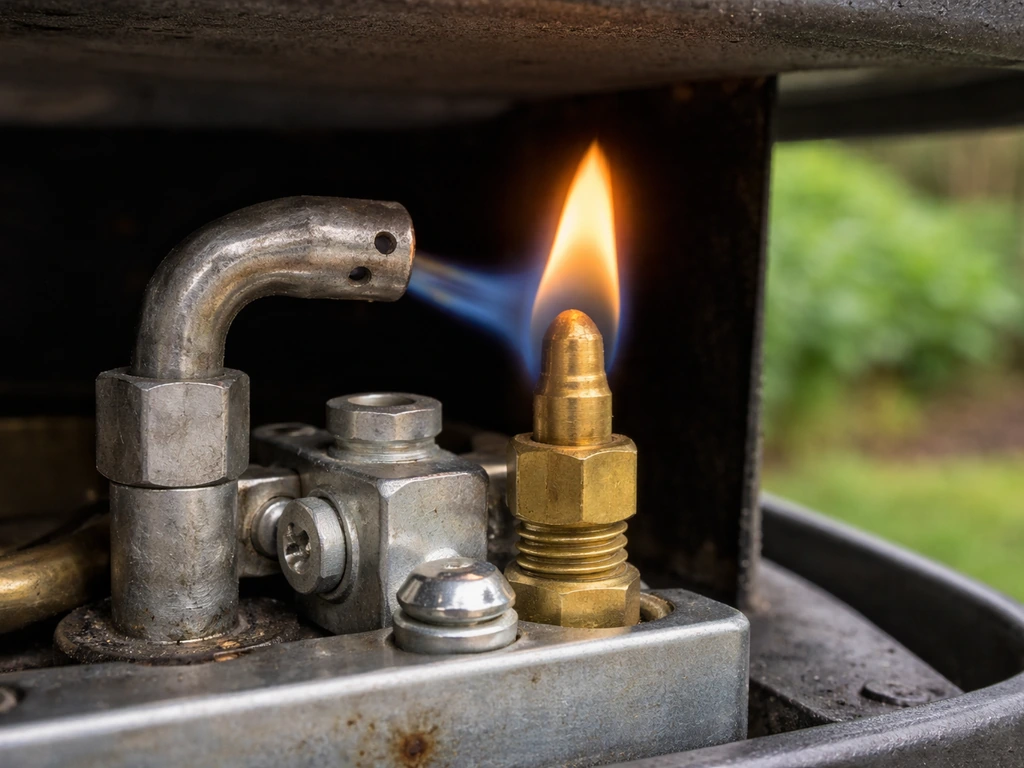
This is the most common complaint with Garden Treasures and Garden Sun heaters. The heater lights, you hold the knob in, and the moment you release it the flame goes out. That's almost always the thermocouple. The thermocouple is a safety device: it generates a small electrical voltage when heated by the pilot flame, which signals the gas valve to stay open. If it's not generating enough voltage, the valve snaps shut.
Cleaning the thermocouple
Turn off the gas and let everything cool completely. The thermocouple is the small copper-tipped probe positioned right in the pilot flame path, you can identify it by cross-referencing the parts diagram in your manual (part 2409043 on the PG183H). Use fine-grit sandpaper or steel wool to gently clean the tip of the thermocouple. Carbon buildup and oxidation are the most common reasons it stops reading correctly. Reinstall, re-light, and test.
Replacing the thermocouple
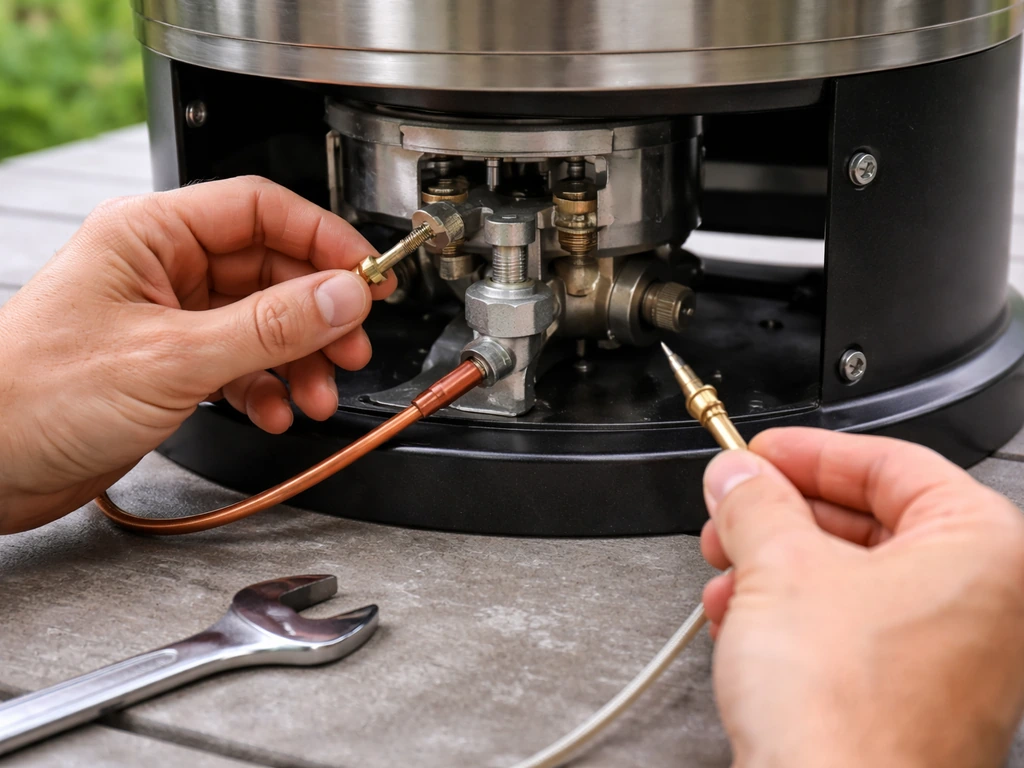
If cleaning doesn't fix it, replacement is the next step. Thermocouples for these heaters are inexpensive (usually under $15) and are a standard DIY repair. Disconnect the old thermocouple by unscrewing the nut that connects it to the gas valve (hand-tighten the replacement, do not overtighten). Make sure the tip of the new thermocouple sits correctly in the pilot flame path. If the flame is touching the thermocouple tip, give it about 30 to 45 seconds of holding the knob before releasing, to allow the thermocouple to reach operating temperature.
Other won't-stay-lit causes
Low propane pressure is another cause. If the tank is nearly empty, or if the regulator is failing, the flame will be weak and the thermocouple won't get enough heat to generate proper voltage. Try a fresh tank. Also check that the pilot orifice isn't partially blocked, a weak pilot flame that barely touches the thermocouple tip will cause intermittent shutoff even with a good thermocouple. Use compressed air to blow out the pilot assembly after ensuring the gas is off.
Tilt switch and other safety shutoffs
Garden Treasures and Garden Sun heaters include a tilt switch as a core safety feature, it's listed in the Product Specifications section of the PG183H manual alongside the thermocouple. The tilt switch is designed to cut gas flow if the heater tips past a certain angle, preventing a fire hazard from a knocked-over heater.
The problem is that tilt switches can also shut the heater off when it hasn't actually tipped over. Worn-out switches, heaters on slightly uneven ground, or a loose internal connection can all trigger a false shutoff. Here's how to check it:
- Make sure the heater is on a completely flat, stable surface. Even a slight lean on pavers or grass can be enough to trigger the switch on an aging unit.
- Locate the tilt switch using your manual's parts diagram (part 2310662 on the PG183H). It's typically inside the base housing.
- With the gas off and the heater cool, open the base panel and visually inspect the tilt switch wiring. Look for loose connector pins or corroded terminals.
- If you have a multimeter, test the tilt switch for continuity when the heater is upright. There should be continuity (closed circuit) when upright, and the circuit should open when tilted. A switch that shows no continuity even when perfectly upright has failed and needs replacing.
- Replacement tilt switches are inexpensive and model-specific — use the part number from your manual's Replacement Parts List to order the correct one.
One thing worth noting: if the heater shuts off reliably after a set number of minutes of operation (not at startup), and the tilt switch checks out fine, look at the thermocouple again. As it ages, a thermocouple can generate enough voltage to hold the valve open initially but drop below the threshold after a few minutes of heating. This creates a frustrating pattern where the heater seems to work and then dies. Replacement is the fix.
What to do if you can't find the manual
If your model number doesn't turn up a direct manual hit, you have a few good options before giving up.
Workarounds for missing manuals
Try ManualsLib and ManualMachine with your exact model number. If you also need a patio glow fire pit manual, use the same approach to locate the correct model documentation before troubleshooting ManaualsLib and ManualMachine. If that fails, search the Lowe's document portal directly, several Garden Treasures manuals (PG183H, PG171H-B, PG169T-A, PG169T-C) are hosted there as PDFs. If you have an item number from the product label but not the model number, search that instead.
If you genuinely can't find a manual for your specific model, the next best option is to use a closely related model's manual as a reference. The PG183H and PG171H-B share very similar assemblies, the same safety feature set (thermocouple and tilt switch), and comparable parts diagrams. For Garden Sun models, the HSS-RS-GH manual on ManualsLib has a full troubleshooting section and replacement parts list that applies broadly to that product family. Use the parts list to cross-reference component descriptions and identify what you're working with, even if part numbers differ slightly.
Call customer service before returning to the store
The PG183H manual includes this specific guidance: before returning the heater to your retailer, call customer service at 1-800-643-0067 (Monday through Friday, 8 a.m. to 8 p.m. EST). They can help you identify your model, locate documentation, and in some cases send replacement parts. This is worth the call, especially if the heater is otherwise in good shape and you're dealing with a single failed component like a thermocouple or tilt switch.
When to stop and call a professional
Most of what's covered here is genuinely within DIY reach. But there are a few situations where the right call is to stop and get a qualified technician involved. If you've replaced the thermocouple and the heater still won't stay lit, there may be a fault inside the gas valve itself. Gas valve replacement on LP appliances requires proper leak testing with calibrated equipment, and if it's not done right it's a serious hazard. Similarly, if you find any cracking or visible damage to the gas hose or regulator, don't try to patch it. Replace those components with manufacturer-specified parts or have a technician do it. Installation must also conform to local codes or, where no local codes apply, to the National Fuel Gas Code (ANSI Z223.1/NFPA 54) and propane-specific standards CSA B149.1/B149.2, that's not a formality, it's a legal and safety requirement.
If you're working through similar troubleshooting on other brands, the same thermocouple-first diagnostic approach applies to Endless Summer, Fire Sense, and Sunjoy patio heaters, all of which share this general safety valve architecture. If you need the Endless Summer patio heater manual for your exact model, use your model number and item label to find the correct instructions and parts diagrams. The specific part numbers and manual layouts differ, but the logical repair sequence is nearly identical to what's described here.
FAQ
I only see an item number on my Garden Treasures patio heater, how do I confirm I have the right “garden treasures patio heater manual” for parts?
Look for a label that says “MODEL #” or “ITEM #” on the base or the sticker on the pole, then record serial number too. If you only have the item number, use it to locate the closest match in the manual portals, but still verify the part diagram before ordering because different models can use similar knobs with different ignition pilot geometry.
After cleaning the pilot or replacing the thermocouple, why does my heater light but still shut off right away?
Before you clean or replace anything, confirm you are igniting the correct control position (pilot versus main), and that the control knob is held in long enough after reassembly. After a thermocouple install, the valve may not stay open immediately, so hold for about 30 to 45 seconds while the pilot heats the new sensor.
My pilot flame looks smaller than normal, could that cause the thermocouple problem, and what should I check first?
A weak flame can be caused by low propane, but also by a partially blocked pilot orifice or a dirty pilot assembly. With the gas off, use compressed air to clear the pilot area, then retest the pilot flame height against the manual’s description of proper pilot contact with the thermocouple tip.
How can I safely confirm whether the heater has spark when troubleshooting the garden treasures patio heater manual won’t light issue?
Do not test for “spark” by holding metal tools near the ignition pin or by aiming the flame at the burner. The safer check is to observe a spark at the ignition pin when pressing the igniter button, and if there is no click or no spark, focus on the igniter module and wiring connections rather than reworking the gas valve area.
What should I do if my igniter clicks but there is no spark near the burner?
If you get a click but no visible spark, the ignition pin is often dirty or misaligned. Clean the tip carefully (fine steel wool), then verify the gap to the burner or pilot area is within the manual’s stated range (commonly 3 to 5 mm) before assuming the igniter module is bad.
What’s the best way to handle blocked burner ports (spider webs or debris) when the heater won’t catch?
Insect blockage is common after storage, even if the heater “looks clean.” Clear the burner ports by inspecting the burner/emitter area allowed by your model, then blow out with compressed air or use a soft brush, and confirm the burner ports are fully clear before reassembly.
My heater shuts off after a few minutes of running, how is that different from the usual thermocouple failure at startup?
If the heater lights but doesn’t stay on after several minutes, it can be a thermocouple that weakens as it warms. Re-check that the pilot flame continues to consistently touch the thermocouple tip, then replace the thermocouple if cleaning does not restore stable operation after the delay.
How do I tell whether my tilt switch shutoff is real tipping or a false trigger?
A false tilt shutoff can occur on slightly uneven ground or if the internal tilt switch connection is loose. First, place the heater on level, stable footing and avoid operating on soft or sloped surfaces, then retest. If it still cuts out, inspect the tilt switch per the manual’s troubleshooting section and consider replacement.
Can I use a closely related manual if I can’t find the exact model number (like PG171H-B or the HSS-RS-GH family manual)?
If you cannot find your exact model manual, using a closely related model’s manual can work only if the safety architecture matches (thermocouple and tilt switch) and the parts diagram names align. Treat the parts list and exploded view as cross-reference tools, then confirm any replacement component descriptions match what’s physically present on your heater.
When is it worth calling customer service instead of ordering parts myself using the garden treasures patio heater manual?
Call customer service if you have both model and serial numbers and you are ordering the right thermocouple or tilt switch. They can help confirm compatibility, and in some cases they may send parts, which reduces the risk of buying an incorrect assembly when manuals differ between near-identical units.
What are the red flags that mean I should not keep DIY troubleshooting and should involve a qualified technician?
Stop troubleshooting and get a technician involved if you suspect gas valve internal faults, you repeatedly fail to keep the heater lit after replacing the thermocouple and clearing the pilot, or you notice any cracking or visible damage on hoses or the regulator. LP gas repairs require leak testing with calibrated equipment, and incorrect work can create a serious fire or explosion risk.