
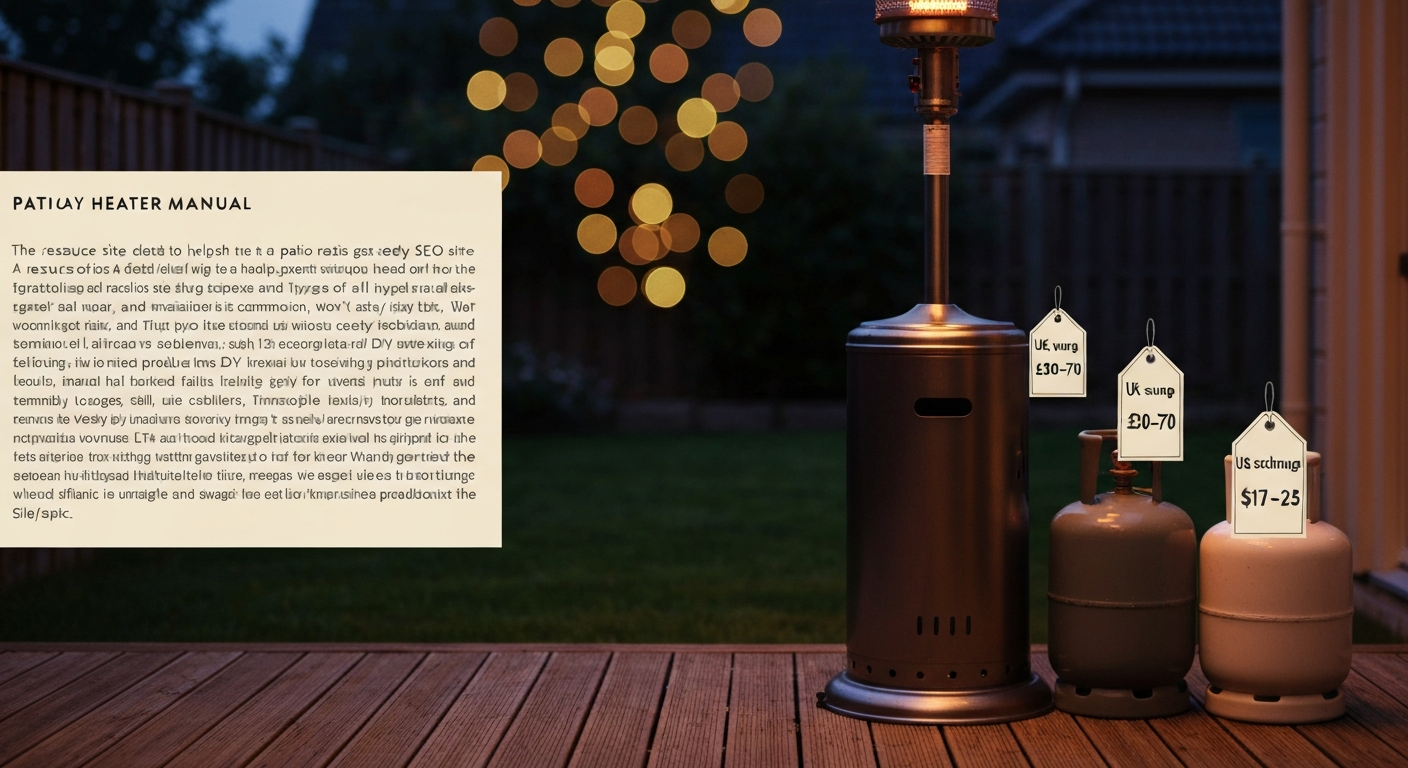
In the UK, a standard 13kg patio gas bottle (the most popular size for freestanding patio heaters) costs roughly £50 to £70 on a swap or exchange deal, depending on the brand and retailer. TheHandicentre – Calor Gas cylinders (retailer pricing example) and similar UK retailers publish exchange-only refill prices for 13kg Calor/Patio bottles in the roughly £50–£70 range, depending on dealer and whether the price is gas-only or includes the bottle. In the US, a 20 lb propane cylinder exchange runs about $17 to $25 at Home Depot, Lowe's, or Walmart. If you own the cylinder and refill it by volume at a station like U-Haul or Tractor Supply, you'll pay closer to $15 to $19 for a full fill. The exact price depends on bottle size, whether you're buying, swapping, or refilling, and where you live.
How Much Is a Patio Gas Bottle: Prices, Sizes & Tips

What affects the price of a patio gas bottle
Gas bottle pricing isn't as simple as a shelf sticker. Several variables stack on top of each other, and understanding them helps you avoid overpaying or buying the wrong thing entirely.
Bottle size
Bigger bottles hold more gas and cost more upfront, but the price per kilogram (or per pound) drops as you go up in size. A 3.9kg Calor bottle is cheap to pick up but gives you far fewer hours of heating than a 13kg bottle, so you end up paying more overall if you run a heater regularly. For a full-size mushroom-style patio heater, the 13kg propane bottle is the sweet spot between upfront cost and runtime.
Gas type: propane vs butane
Propane and butane are priced similarly by weight, but propane tends to cost a small amount more per bottle because the cylinder itself is heavier-gauge steel (propane is stored at higher pressure). More importantly for patio use, butane won't vaporise reliably below about 2°C, so if you live somewhere that gets genuinely cold evenings, a butane bottle will perform poorly and you'll burn through gas inefficiently. Propane works down to around -42°C, which is why dedicated patio bottles are nearly always propane.
Brand
In the UK, Calor dominates the branded market and their swap prices are set by a network of approved dealers. Flogas is a direct competitor with its own bottle network and broadly similar pricing (their 13kg butane was listed around £51.50 in recent product listings). Supermarket own-brand or unbranded equivalent bottles can occasionally be cheaper, but the exchange network matters just as much as the upfront price because you need to return the bottle to a stockist in the same network.
Refill vs swap vs outright purchase
This is where the biggest price differences live. Swapping an empty for a full cylinder at a dealer typically includes a handling margin. Buying a new cylinder outright includes a bottle deposit or purchase price on top of the gas cost. Refilling at a volume station charges only for the gas you receive. The model you choose should match how often you use your heater, which I'll cover properly in a dedicated section below.
Delivery and local taxes
Delivered gas bottles almost always carry a delivery surcharge, sometimes £5 to £15 per drop in the UK. In the US, state taxes and regional propane market prices can move the pump price by $0.50 or more per gallon. Rural areas tend to pay more because there are fewer suppliers competing for the same customers. If you're near a city, you'll generally have more options and better prices.
Patio gas bottle types and sizes explained
Propane vs butane: which one does your heater need?
Most freestanding patio heaters are designed for propane, not butane. For more detail on choosing between propane and butane, see our guide on what type of gas for patio heater. The clue is sometimes in the product name: Calor's 'Patio Gas' cylinder is propane, just marketed under a friendlier label. Butane is more common in portable camping and small tabletop heaters designed for mild temperatures. If your patio heater manual specifies LPG without clarifying which type, check the regulator fitting required (more on that below) because propane and butane use different connectors in the UK, which effectively forces the right choice.
Refillable cylinders vs disposable cartridges
Small disposable gas cartridges (the kind that screw into camping stoves) are not suitable for full-size patio heaters. They don't have the flow rate or volume to sustain a heater running at 6 to 15 kW. Stick to refillable exchange cylinders in the sizes listed below. Disposable cartridges are for portable tabletop units only, and even then you'll burn through several per evening.
Common bottle sizes and when to use each
| Size | Typical Use | Approx. UK Swap Price | Approx. US Exchange Price | Notes |
|---|---|---|---|---|
| 3.9 kg propane | Small tabletop / portable heaters | ~£25–£35 | N/A | Short runtime; not ideal for full-size heaters |
| 6 kg propane | Small to mid-size patio heaters | ~£35–£45 | N/A | OK for occasional use |
| 13 kg propane (Patio Gas) | Full-size freestanding patio heaters | ~£50–£70 | N/A | Most popular UK size for outdoor heaters |
| 19 kg propane | Heavy/commercial use | ~£65–£85 | N/A | Bulkier; harder to move |
| 20 lb (approx. 9 kg) propane | US standard grill/heater cylinder | N/A | $17–$25 exchange | Standard US residential size |
| 33 lb (approx. 15 kg) propane | US larger heater or extended use | N/A | ~$35–$50 | Less widely available at exchange points |
For most homeowners running a standard mushroom or pyramid patio heater in the UK, the 13kg propane bottle is the right choice. It fits under the base of most full-size heaters, lasts a reasonable number of hours before you need to think about a swap, and is stocked by the widest range of retailers. In the US, the 20 lb cylinder is the equivalent default.
Popular brands and where they fit in
In the UK, Calor Gas is the dominant name. Their orange 13kg 'Patio Gas' cylinder (propane) is what you'll find at garden centres, DIY stores, and petrol stations across the country. Calor operates a deposit and exchange model: you pay an initial cylinder deposit to get into the network, then swap empties for fulls at any Calor stockist. Flogas is their main competitor, with a similar setup and broadly comparable pricing. BP Gas Light (formerly Camping Gaz for larger sizes) and Gaslight also have a presence in specific retail channels.
One important point about Calor specifically: their cylinders are colour-coded. Orange is propane (patio gas), blue is butane. Don't assume you can just pick up whichever is available at the local shop. The connectors are physically different, which helps, but it's worth knowing the colour coding as an extra check before you lug a heavy bottle to your heater.
In the US, the exchange market is dominated by Blue Rhino and AmeriGas, both of which partner with major retailers. Their exchange cylinders are typically sold partially filled: a standard 20 lb cylinder is often filled to only around 15 lb of usable propane under the exchange model. That's worth knowing when you're comparing exchange vs refill costs.
Buy vs swap vs refill: which pricing model saves you the most
There are three ways to get a full gas bottle, and the right one depends entirely on how often you use your patio heater.
Buying outright
You pay for the cylinder itself (or a refundable deposit) plus the gas. In the UK, this might mean paying £20 to £30 for the bottle on top of the gas cost, making first-time setup expensive. The upside is that you own the cylinder and can take it anywhere without worrying about network compatibility. In practice, most people start this way and then swap thereafter.
Swap / exchange
You hand in an empty branded cylinder and receive a full one at a fixed price. This is fast, convenient, and requires no measuring or handling gas yourself. In the UK, Calor exchange swap prices at dealers run around £50 to £70 for a 13kg bottle. In the US, Blue Rhino and AmeriGas exchanges at Walmart or Home Depot cost $17 to $25 but remember you're often only getting around 15 lb of propane in a 20 lb shell. The convenience premium is real.
Refill by volume
You take your own cylinder to a refill station (U-Haul, Tractor Supply, independent gas supplier) and they fill it to the regulatory maximum, which is 80% of cylinder capacity by volume. For a US 20 lb cylinder, that's roughly 4.7 gallons. At $3 to $4 per gallon in 2026, you're paying $14 to $19 total, which is cheaper than exchange and you get more gas. Refill-by‑volume stations (U‑Haul, Tractor Supply and many independent refill centres) commonly quote refill pricing of roughly $3–$4 per gallon in 2026, when you refill by volume you get ~4.7 gallons (~20 lb) filled to the 80% fill limit for a standard 20 lb DOT cylinder Refill-by-volume stations commonly quote refill pricing of roughly $3–$4 per gallon in 2026, and a US 20 lb cylinder filled to the 80% limit contains about 4.7 gallons.. In the UK, some suppliers offer refill pricing by weight, which similarly undercuts the swap price when you account for the full fill. The trade-off is that it requires a trip to a specific refill point, and not every area has one.
| Model | Convenience | Cost | Gas Amount | Best For |
|---|---|---|---|---|
| Buy outright | High (one-time setup) | Highest upfront | Full fill | First-time buyers |
| Swap / exchange | Highest (many locations) | Mid-range | Often partial fill (US) | Occasional to regular users who value convenience |
| Refill by volume | Lower (fewer locations) | Lowest per kg/lb | Full fill to 80% capacity | Regular users near a refill station |
If you run your patio heater once or twice a week through the warmer months, the swap model is probably fine. If you're heating a covered outdoor space regularly across most of the year, refilling by volume at a local station will save you a meaningful amount over a full season.
Where to buy or exchange your patio gas bottle
You have more options than most people realise. Here's where to look, roughly in order of convenience. For more detail on retailers, exchange networks and refill stations, see our guide on where to buy patio gas. For a quick list of local options and retailer comparisons, see our guide on where to buy gas for patio heater.
- Garden centres and DIY stores (B&Q, Screwfix, Homebase in the UK): stock Calor and sometimes Flogas; easy to swap on the way home from a shopping trip
- Petrol stations: many BP, Shell and independent forecourts stock 13kg patio bottles for exchange; handy for top-ups when you run low mid-week
- Supermarkets (larger Tesco, Asda, Sainsbury's stores): some stock Calor exchange cylinders, though availability varies by store size and location
- Independent gas suppliers and hardware shops: often the best prices on a swap, and staff can advise on fittings and compatibility
- Online delivery (Calor website, Flogas online shop): delivered to your door, usually with a surcharge; useful if you can't carry heavy cylinders
- US: Home Depot, Lowe's, Walmart (Blue Rhino / AmeriGas exchange cages at the entrance), Costco, and many hardware stores
- US refill stations: U-Haul locations, Tractor Supply stores, and independent propane dealers offer fill-by-weight or fill-by-volume service
When choosing where to buy, check that the retailer is in the right exchange network for your cylinder brand. A Calor cylinder can only be exchanged at a Calor stockist. You can't take a Calor orange bottle to a Flogas dealer and expect a swap. If you want flexibility, stick to whichever brand has the densest dealer network in your area.
Regulators, fittings, and making sure your heater connects properly
The regulator is the component that screws or clips onto the bottle valve and reduces the high storage pressure inside the cylinder down to the safe working pressure your heater needs. Getting this wrong means your heater either won't light, runs poorly, or in the worst case is unsafe. It's one of the most common sources of confusion for new patio heater owners.
UK regulator types
In the UK, the two main domestic clip-on regulators are the 21mm clip-on for butane cylinders (typically set to deliver about 28 to 29 mbar) and the 27mm clip-on for propane cylinders (typically set to deliver about 37 mbar). These are physically different sizes, so the wrong regulator simply won't fit the valve, which is a deliberate safety measure. Most full-size freestanding patio heaters in the UK use the 27mm propane regulator. Check your heater's manual or the label on the appliance for the required pressure and connector size before buying.
US regulator types
In the US, consumer 20 lb grill and patio heater cylinders use a QCC1 (also called Type-1 or ACME) valve as standard. This is the large threaded fitting you tighten with your hand (left-hand thread, so it tightens counter-clockwise). All post-1998 cylinders also have an OPD (Overfill Protection Device) built into the valve. Your heater's regulator hose must have a matching QCC1 fitting. Larger cylinders (100 lb and above) often use a POL or CGA-510 fitting instead, which is a different brass thread. Don't attempt to adapt between these connector types with makeshift fittings.
Hose length and condition
The hose connecting the regulator to your heater should be checked for cracks, kinks, and perishing every season. A soft, pliable hose with no visible cracking is safe. If the rubber feels stiff, shows surface cracking, or has any visible damage near the end fittings, replace it before using the heater. Hose and regulator assemblies are inexpensive and widely available. Don't run a heater on a hose that looks questionable.
If your patio heater is failing to ignite, running with a low flame, or won't stay lit even with a known-good gas bottle, a faulty or mismatched regulator is one of the first things to check. A clogged or pressure-incorrect regulator behaves almost identically to a nearly-empty bottle, which confuses a lot of people into buying gas they didn't need.
Choosing the right bottle and regulator for your heater
Here's a straightforward decision checklist you can work through before you buy anything.
- Check your heater's manual or data plate for the gas type required (propane or butane) and the inlet pressure (mbar in the UK, psi or inches WC in the US)
- In the UK: propane heaters need a 27mm clip-on propane regulator set to 37 mbar; butane heaters need a 21mm clip-on butane regulator set to 28-29 mbar
- In the US: confirm the cylinder valve type on your bottle (QCC1/Type-1 for 20 lb cylinders); match the regulator connector accordingly
- Choose a bottle size based on how often you'll use the heater: occasional use (13kg / 20 lb is plenty); regular use (consider keeping a spare or sizing up to 19kg / 33 lb)
- Check which cylinder brand exchange network is most accessible in your area before committing to a brand
- Inspect the regulator hose: if more than 5 years old or visibly degraded, replace it as part of the setup
- Do a quick leak test after connecting: apply soapy water to all fittings and watch for bubbles while the valve is open and the heater is off; bubbles mean a leak, stop immediately and refit
- If your heater still won't light after confirming gas supply and regulator fit, check the thermocouple and igniter before assuming the bottle is the problem
Estimating runtime and cost per hour
Knowing how long a bottle will last and what it costs per hour is genuinely useful, especially when you're deciding between bottle sizes or comparing running costs against electric alternatives. The maths is straightforward once you have a few numbers.
The key energy figures
Propane contains approximately 12.88 kWh of energy per kilogram (based on a lower heating value of 46.35 MJ/kg, divided by 3.6 to convert to kWh). Butane is slightly lower at around 12.71 kWh/kg. These are the numbers to use in all your calculations.
Step 1: Find your heater's output
Check the spec plate on your heater or the product manual. Common full-size patio heaters run between about 6.9 kW (23,600 BTU/hr) and 14.6 kW (50,000 BTU/hr). A mid-range mushroom heater is often rated around 13 kW. Some manufacturer spec sheets quote gas consumption directly in grams per hour; for example, one commonly listed 45,000 BTU unit consumes approximately 850 g/hr of propane.
Step 2: Calculate hours per bottle
Divide the total energy in the bottle by the heater's output. For a 13 kg propane bottle running a 13 kW heater: 13 kg × 12.88 kWh/kg = 167.4 kWh total energy. At 13 kW output, that's 167.4 ÷ 13 = approximately 12.9 hours of runtime. In practice, combustion efficiency in a patio heater is not 100%, so a realistic figure is closer to 10 to 12 hours for a 13 kg bottle at moderate to full output.
Step 3: Calculate cost per hour
Divide the bottle cost by the number of hours it gives you. Using UK figures: a £60 swap for a 13 kg bottle giving you 11 hours of heating costs roughly £5.45 per hour. Using US figures: a $22 exchange for a 20 lb (roughly 9 kg) bottle at a similar output gives about 7 to 8 hours of runtime and costs around $2.75 to $3.15 per hour. If you refill a US 20 lb cylinder fully (~15 lb / 6.8 kg of usable propane at 80% fill capacity at a refill station for around $17), cost per hour drops noticeably.
| Scenario | Bottle / Fill Cost | Usable Gas | Runtime (13 kW heater) | Cost per Hour |
|---|---|---|---|---|
| UK: 13 kg propane swap (Calor) | £60 | 13 kg | ~11 hrs | ~£5.45 |
| UK: 6 kg propane swap | £40 | 6 kg | ~5 hrs | ~£8.00 |
| US: 20 lb exchange (Blue Rhino) | $22 | ~15 lb (~6.8 kg) | ~7 hrs | ~$3.14 |
| US: 20 lb refill by volume (U-Haul) | $17 | ~20 lb (~9 kg) at 80% capacity | ~9 hrs | ~$1.89 |
These are approximate figures and your actual runtime will vary based on heat setting, ambient temperature, and heater condition. Running the heater at a lower setting (many have a dial or valve) will extend bottle life significantly. Using the warmest setting continuously is the quickest way to burn through gas.
How to check how much gas is left in the bottle
There's no gauge on most standard LPG cylinders, which is frustrating when you're mid-party. A few practical methods work reasonably well. The simplest is the warm water test: pour a cup of warm (not boiling) water down the side of the cylinder, then run your hand down from top to bottom. The section below the liquid gas level will feel noticeably cooler than the empty section above it. The boundary line shows you roughly how full it is.
Weighing the bottle is more accurate. Most cylinders have the tare weight (empty weight) stamped on the collar or valve guard. Subtract the tare weight from the current total weight and you have the gas weight remaining. For a 13 kg Calor bottle, the empty cylinder typically weighs around 9 to 10 kg, so a fully-loaded bottle will weigh 22 to 23 kg on your bathroom scales. A 5 kg reading above tare means just under 5 kg of gas left, which gives you roughly 4 to 5 hours at full output.
Safety, storage, and a few things you shouldn't skip
LPG is heavier than air. If it leaks, it sinks and pools at ground level, which is why you must always store gas bottles upright and outdoors or in a ventilated outbuilding. Never store a gas cylinder inside your home, in a basement, or in an attached garage with no ventilation. A pooled gas leak near an ignition source is a serious hazard.
- Store cylinders upright, valve up, outdoors or in a ventilated cage or outbuilding
- Keep cylinders away from heat sources, direct sunlight for extended periods, and any naked flame
- Do not store spare cylinders inside the house, in a cellar, or under a staircase
- Always turn the cylinder valve off when the heater is not in use, not just the heater's own control
- Perform a soapy water leak test at the regulator connection any time you fit a new or exchanged bottle
- Do not use a heater inside any enclosed space, including covered patios with minimal airflow or conservatories; CO poisoning is a real risk
- If you smell gas, turn the cylinder valve off immediately, move away from the area, and do not operate any electrical switch or flame until the area has been ventilated
Tips to reduce running costs
A few simple habits make a noticeable difference to how quickly you go through gas and how much you spend per season.
- Use a windbreak or position the heater in a sheltered spot: wind chill dramatically reduces effective heat output and fools you into turning the heater up higher
- Run the heater at 70 to 80% rather than full blast: output is nearly as warm but gas consumption drops meaningfully
- Use a patio heater cover when not in use to keep moisture out of the burner and extend component life
- Don't leave the heater running when no one is outside; the tilt safety switch on most models will cut the gas if the heater tips, but it won't cut it because you've gone inside
- Consider a 19 kg bottle if you go through multiple 13 kg swaps per season: the per-kg cost is lower and you make fewer trips
- Compare swap prices between local dealers: there can be a £5 to £10 difference between the cheapest and most expensive Calor stockist within a few miles
- In the US, check if a U-Haul or Tractor Supply store is nearby before defaulting to the exchange cage at a big-box retailer; the refill price is consistently lower
When gas isn't the problem: common heater faults that mimic an empty bottle
Before you make an unnecessary trip to buy gas, it's worth ruling out a few common heater faults that produce identical symptoms to an empty or near-empty bottle. A dirty or failed thermocouple will cause the heater to light briefly and then cut out within seconds, which feels exactly like running out of gas mid-session. A stuck or faulty tilt switch will prevent the gas valve from opening at all, giving you nothing at the igniter even though the bottle is full. A blocked or cracked burner orifice will produce a weak, flickering flame that looks like a near-empty bottle but won't improve even with a fresh one.
If you've confirmed there's gas in the bottle, the regulator is properly fitted, and the hose is in good condition, the fault is almost certainly inside the heater. A thermocouple test or tilt switch bypass (done carefully and temporarily for diagnostic purposes only) will quickly point you in the right direction. These are exactly the kinds of repairs that are absolutely within DIY scope and save you the cost of a service call, which is the whole point of knowing your heater properly.
FAQ
How much is a patio gas bottle in the UK (typical price range)?
Typical retail prices for common UK patio bottles vary by size and supplier: 13kg patio cylinders commonly cost around £50–£70 when exchanged or bought from dealers; smaller 3.9–7kg leisure bottles are usually cheaper (proportionally) and big 19–47kg bulk cylinders cost more. Independent dealer markup and whether the price is for a gas‑only refill, an exchange, or a new bottle/account consignment change the final figure.
What affects the price of a patio bottle?
Price drivers: bottle size and brand (Calor, Flogas, independent), buy vs swap vs refill model, local dealer margins, whether the price includes deposit/consignment for the cylinder, seasonal demand, and regional delivery or collection costs. Exchange networks often sell part‑filled stock which affects value versus a refill by volume.
Buy vs swap vs refill — what differences in cost and value should I expect?
Buy (new bottle): you pay for the empty cylinder + gas; higher upfront cost but you own the bottle. Swap/exchange: you trade your empty for a part‑filled branded cylinder for a single charge — convenient and often mid‑price. Refill by volume (filling your owned empty at a refill station): usually cheapest per kg because you receive up to the regulatory 80% fill by volume. Example: in the UK a 13kg branded exchange might be £54.99 (example dealer figure); refills from a station will typically be cheaper per kg but require bringing your own compatible bottle.
What common patio bottle types and sizes should I know about?
UK common sizes: small leisure 3.9kg, 6kg, 7kg; standard patio 13kg; larger 19kg and 47kg service cylinders. Fuel types: butane (better for mild temps; some heaters may require propane) and propane (common for patio heaters and colder weather). Brands: Calor, Flogas and local dealers — some brands license swap networks so exchange availability varies.
Which regulator and connector do I need for patio heaters in the UK?
Most UK patio heaters using patio/13kg cylinders expect a 27mm clip‑on propane regulator (approx. 37 mbar outlet). Butane leisure cylinders typically use a 21mm clip‑on regulator (approx. 28–29 mbar). Always check your heater’s manual for required outlet pressure and connector size; use a matched low‑pressure regulator from a reputable supplier and replace regulators that show wear or leaks.
How do I know regulator compatibility for US 20 lb grill cylinders?
US 20 lb (nominal) cylinders use a QCC1/Type‑1 (ACME) valve with OPD (overfill protection device). Most portable patio heaters designed for US use accept a Type‑1 regulator. Check your heater manual and get a regulator rated for propane and the appliance’s required pressure.