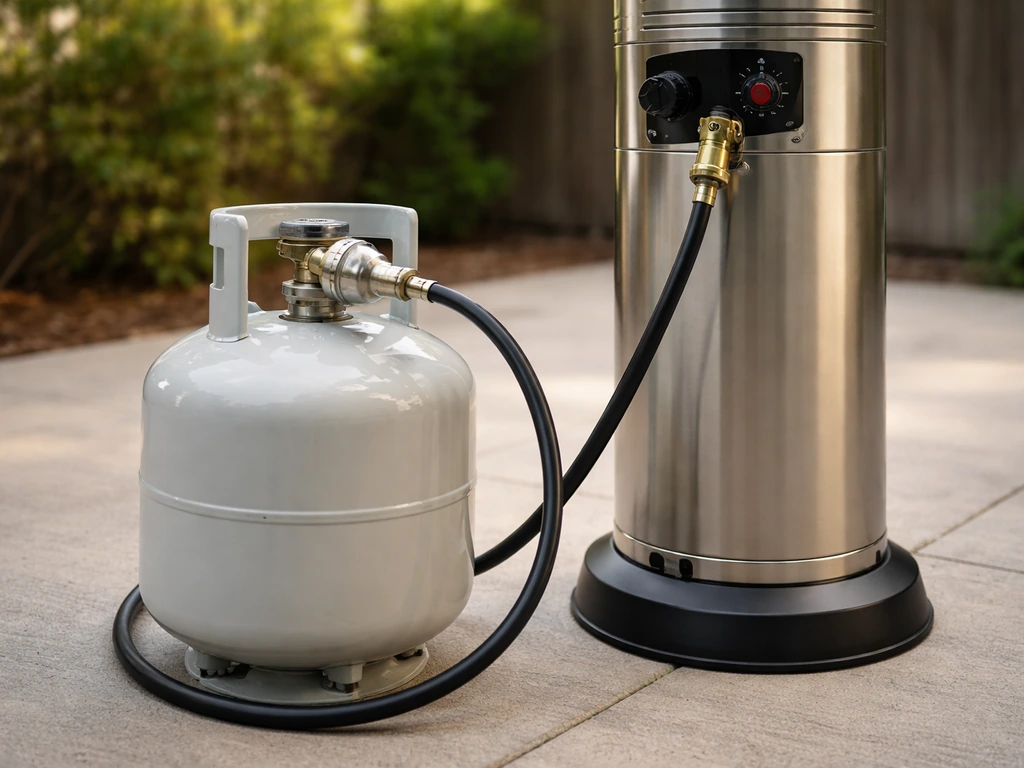
Connecting a gas bottle to a patio heater takes about five minutes and only requires the right regulator, a compatible hose, and a quick soap-bubble leak test before you turn anything on. The order is always the same: bottle first, then regulator, then hose, then heater inlet. Get that sequence right, use the regulator specified for your gas type, and you will have a steady flame with no smell and no drama.
How to Connect Gas Bottle to Patio Heater Safely

Grant Mercer
24 Jun 2026
First, confirm your gas type and regulator setup
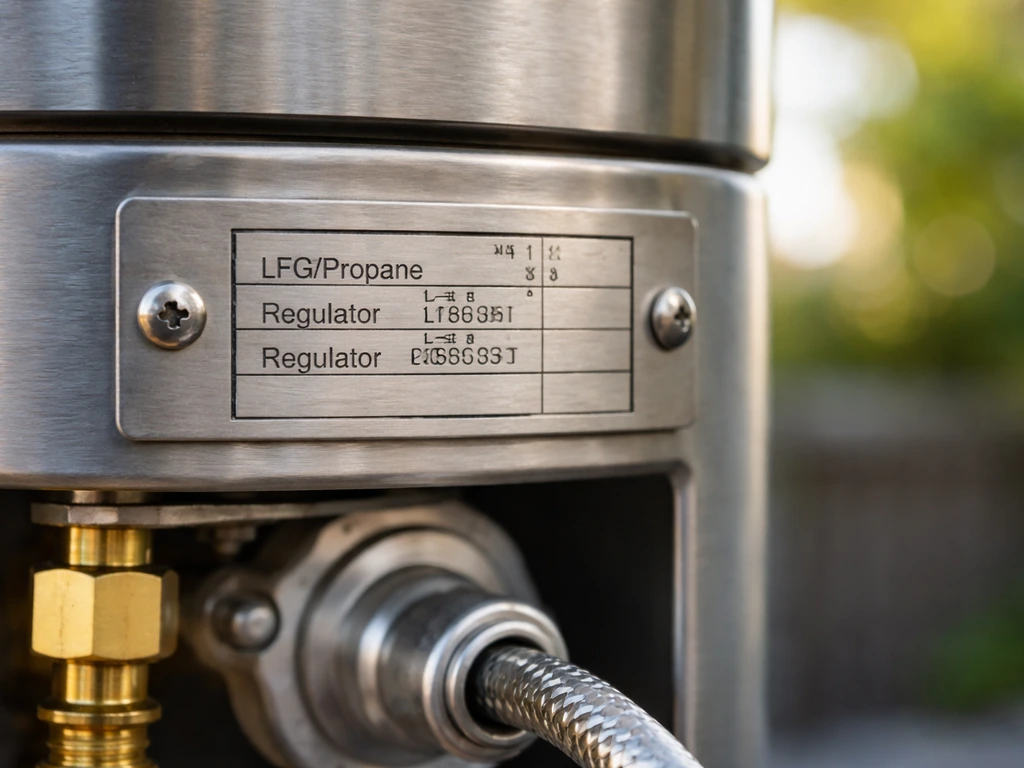
Before you touch any fittings, check the rating plate on your patio heater. It will tell you whether your unit runs on propane or butane (sometimes labelled LPG, which covers both). This matters because propane and butane regulators are not interchangeable. Propane regulators typically output 37 mbar, while butane regulators output 28 mbar, and using the wrong one will either starve your heater or run it dangerously rich. Most outdoor patio heaters sold in the UK are designed for propane and a 13 kg cylinder, though some models like the Callow County SRPH68 will also accept a 15 kg butane cylinder with the appropriate regulator for that gas.
Your regulator must be marked to BS EN 16129 (or the older BS 3016 / BS EN 12864 on legacy equipment). If it is not marked, do not use it. The Sealey DG1 and DG2 manuals are explicit: only use regulators and hoses approved for LPG as stated on the rating plate, and never buy or use a second-hand regulator. The regulator should be supplied with your heater or purchased new to match it. A propane regulator for a standard UK mushroom-style patio heater typically handles an inlet pressure of 1 to 16 bar from the cylinder and steps it down to a steady 37 mbar output at up to 1.5 kg/h flow, which is what the burner needs. A key factor in how long patio heaters burn is the gas cylinder size and the burner flow rate, which varies by model burner needs.
One more thing to check: the connection type between your regulator and the cylinder valve. Propane cylinders in the UK use a POL (bullnose) connector or a clip-on type depending on the cylinder, and critically, propane regulator connections use a left-hand thread. That means you turn the nut clockwise to loosen and counter-clockwise to tighten. If you have never encountered a left-hand thread before, this is the number one reason people think a fitting is stuck when it is actually not yet engaged. On the heater inlet side, the connection type varies by model, so check your manual for the outlet fitting code (examples from the Sealey specs include H50, H51, and H53).
What you need before you start
You do not need much, but you do need the right parts. A missing or wrong item here is what causes 90% of connection problems.
- A full or part-full gas cylinder of the correct type (propane or butane) as specified on your heater's rating plate
- A new or manufacturer-supplied regulator marked BS EN 16129 (or BS 3016 / BS EN 12864) and rated for your gas type and output pressure
- An approved LPG hose to BS EN 16436-1, long enough to reach from the cylinder to the heater inlet without tension
- Hose clips or crimp fittings compliant with Liquid Gas UK guidance (if not pre-fitted to the hose assembly)
- A small bowl of soapy water: one part washing-up liquid to three parts water, or one tablespoon of dish detergent per cup of water
- A soft cloth or brush to apply the leak-test solution
- An adjustable spanner or correctly-sized open-ended spanner for the regulator nut
- Your heater's instruction manual, open to the gas connection and technical data sections
Do not use PTFE tape or thread sealant on LPG fittings unless the manufacturer specifically calls for it. These connections are designed to seal on metal-to-metal faces or on the internal washer/O-ring, and adding tape can actually prevent a proper seal or damage the seat. Check that the regulator has its internal washer in place and that it is not cracked or flattened before you start.
How to connect the gas bottle to your patio heater, step by step
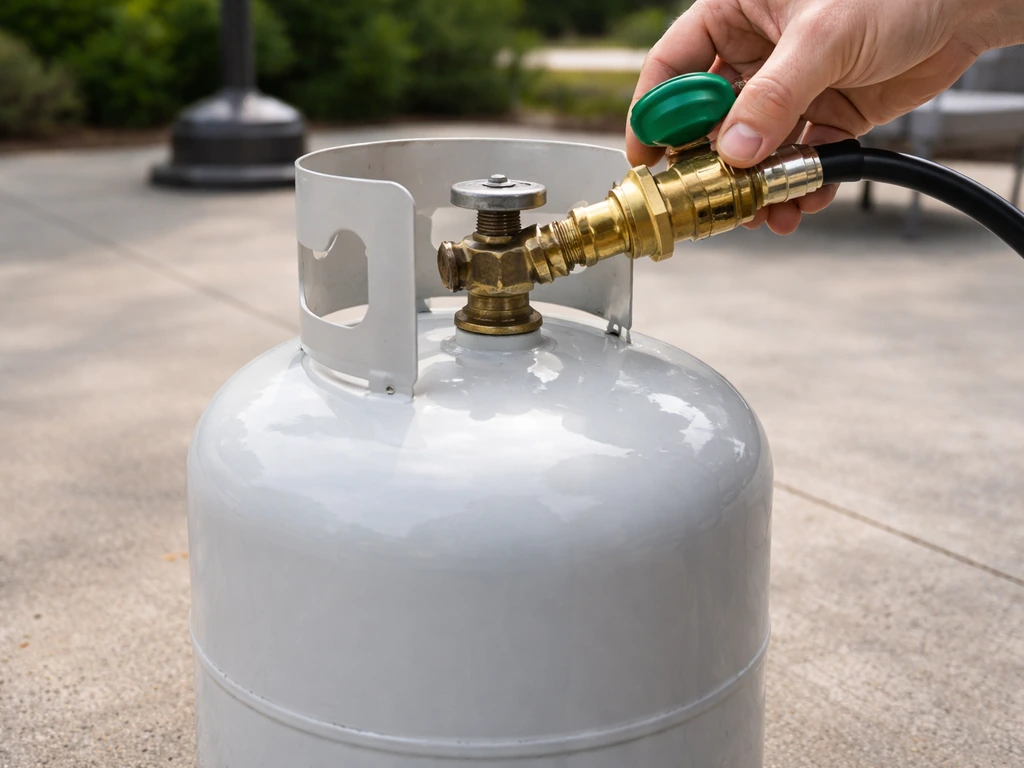
Do all of this outdoors, away from any naked flames, cigarettes, or other ignition sources. Keep a one-metre clearance around you while you work.
- Place the gas cylinder upright on firm, level ground. Never lay a propane cylinder on its side during use or connection.
- Make sure the cylinder valve is fully closed (turned clockwise to shut). Check the valve outlet and the regulator inlet for dirt, debris, or insect webs and wipe them clean with a dry cloth.
- Inspect the regulator. Confirm the internal washer or O-ring is present, soft, and undamaged. If it looks hard, cracked, or compressed flat, replace the regulator or washer before continuing.
- Attach the regulator to the cylinder valve. Remember: propane uses a left-hand thread, so turn the regulator nut counter-clockwise to tighten. Hand-tighten first to make sure it seats squarely without cross-threading, then snug it with a spanner. You should feel it go firm, not force it.
- Connect the hose to the regulator outlet if it is not pre-attached. This end typically uses a standard right-hand thread. Tighten firmly by hand then give it a quarter-turn with a spanner.
- Route the hose to the patio heater inlet, avoiding sharp bends, contact with hot surfaces, or routes where it could be tripped over. The hose should lie without tension or kinking.
- Connect the free end of the hose to the heater's gas inlet. This connection is usually a nut on a right-hand thread. Tighten firmly but do not over-torque, as the fitting seats on a face seal.
- Perform a leak test (detailed in the next section) before opening the cylinder valve fully or attempting ignition.
- Once the leak test passes, open the cylinder valve slowly and fully. A slow open lets the regulator stabilise before any demand is placed on it.
- Follow your heater's ignition procedure: typically turn the control knob to pilot, press and hold it in, spark the igniter, and hold the knob for 15 to 30 seconds before releasing to let the thermocouple heat up.
Leak testing every single time
This is not optional. You should leak-test every time you connect a hose fitting to a gas cylinder, even if you have done it a hundred times before. It takes two minutes and the only tool is a bowl of soapy water.
- Mix your leak-test solution: one part washing-up liquid to three parts water, or one tablespoon of dish soap per cup of water.
- Open the cylinder valve slowly to pressurise the hose and connections, but do not attempt to light the heater yet.
- Apply the soapy solution generously to every connection point: the regulator-to-cylinder joint, the regulator-to-hose joint, and the hose-to-heater inlet joint. Use a brush, cloth, or spoon to daub it on thoroughly.
- Watch for 30 seconds. Bubbles that grow larger or multiply indicate a leak at that point.
- If you see bubbles, close the cylinder valve immediately. Loosen the leaking connection, re-seat it carefully, retighten, then repeat the soap test.
- If the same connection keeps leaking after two attempts at re-seating, stop. Do not light the heater. Check the washer, O-ring, or thread condition, and replace the faulty component before trying again.
- Never perform the leak test near any source of ignition, including pilot lights on other appliances.
A connection that passes the soap test with no bubbles is ready to use. You should also do a quick sniff check at nose level around the connections after opening the valve. LPG has a distinctive added odour (it smells like rotten eggs or strong garlic). Any detectable smell at the fittings means something is wrong, even if the soap test looked clean. Trust your nose and recheck before lighting. A full patio gas bottle typically lasts a limited number of hours depending on the heater’s heat output and how often you run it patio gas bottle lasts.
What normal looks like when you first light it
After a successful connection and clean leak test, light the heater following the manufacturer's ignition sequence. A healthy first light on a propane patio heater looks like this: the pilot catches within two or three sparks, you hold the control knob depressed for around 20 to 30 seconds while the thermocouple heats up, then when you release the knob the pilot stays lit. Turning to the main burner setting produces a steady blue flame with small orange tips, and the heat output builds within 30 to 60 seconds. A 13 kg gas bottle typically lasts much longer on low or medium settings, so your runtime depends on the heater’s flow rate and how often you run it how long a 13 kg gas bottle lasts. There should be no smell of gas, no popping or banging, and the flame should not flutter excessively in still air.
Common problems after connecting and how to fix them
No gas flow, or the heater won't light at all
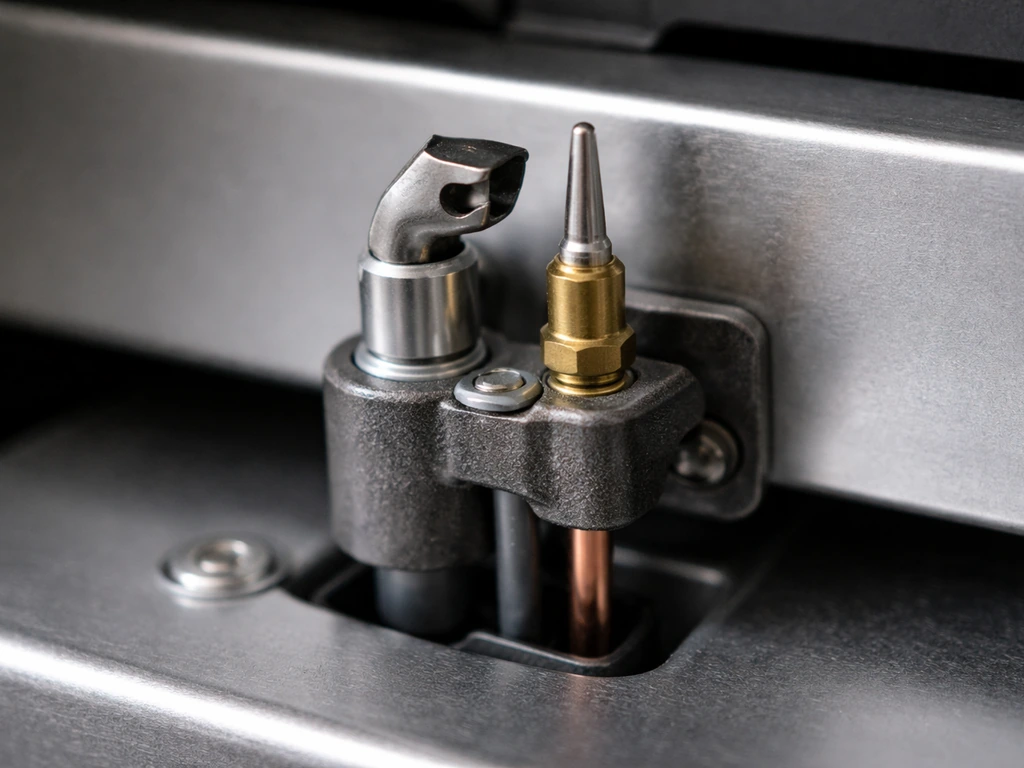
If you open the cylinder valve and press the igniter but get nothing, check the obvious first: is the cylinder actually open? Turn the valve counter-clockwise fully. Next, check whether the regulator has gone into excess-flow lockout. This happens when you open the cylinder valve too fast, and it causes the regulator to shut itself off as a safety measure. Fix it by closing the cylinder valve fully, waiting 30 seconds, then opening it again very slowly, about a quarter-turn per second. If there is still no gas flow and you cannot smell any gas at the burner, the regulator may be faulty or mismatched for the cylinder. Also check that the hose is not kinked, and that the inlet connection to the heater body is fully seated.
Pilot lights but won't stay lit when you release the knob
This is almost always a thermocouple issue, not a connection problem, but a weak or incorrect gas connection can contribute to it. The thermocouple needs a strong, steady pilot flame to heat up enough to hold the gas valve open. If your pilot flame is tiny or flickering, check that the regulator is outputting the correct pressure (37 mbar for propane), that the cylinder has gas in it, and that the pilot orifice is not blocked by debris or spider webs. OutdoorGardenHeaters.com’s patio heater troubleshooting also points to dirty pilot parts or a weak pilot flame and thermocouple not sensing enough heat as common reasons for pilot or light-out problems. Reddit users have flagged spider webs in the burner assembly as a surprisingly common cause of weak pilot flames. If the regulator pressure is fine and the pilot is still weak, the thermocouple itself or the pilot orifice may need attention.
Low flame or flame goes out at full heat
A low flame at full output usually points to one of three things: a nearly empty cylinder, a regulator that is undersized or set to the wrong pressure, or a hose that is kinked or too small for the flow rate. Check the cylinder weight first. If it is not empty, verify that the regulator is rated for propane at 37 mbar output and that its capacity (typically 1.5 kg/h for a standard patio heater) matches or exceeds the heater's rated consumption. A 13 kg propane cylinder running a typical mushroom heater will last several hours of use, so if yours seems to be running out fast, you may have a flow restriction somewhere in the system.
Gas smell during or after connection
If you smell gas at any point, shut the cylinder valve off immediately. Do not attempt to light the heater. Move away from the area, then come back and apply the soap test to identify which joint is leaking. Check the regulator washer and the hose-end O-rings first, as these are the most common leak points. If you find a leak you cannot fix by re-seating and retightening, the component needs replacing. A damaged or worn regulator must be replaced, not repaired. Do not use the heater until you are certain the system is gas-tight.
Cross-threading or a connection that won't engage
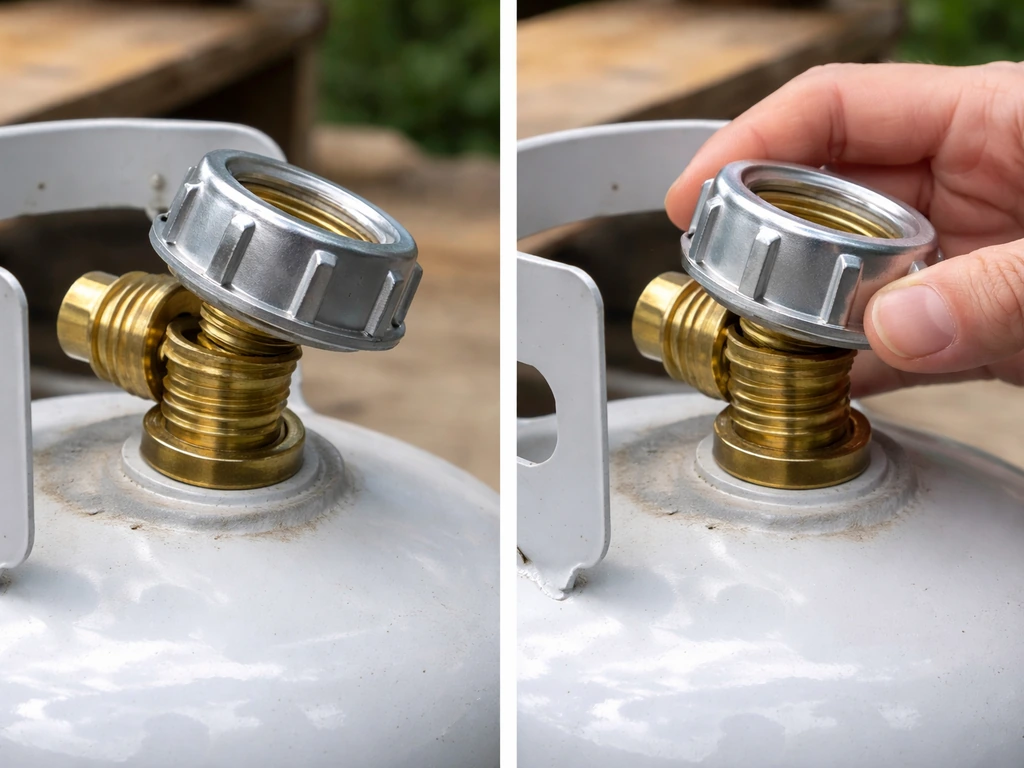
If the regulator nut feels like it is not catching the thread on the cylinder valve, stop and back it off completely. Cross-threading a propane regulator onto a cylinder valve is a serious hazard. Inspect both threads for damage. Check that you have the correct regulator for the cylinder valve type: UK propane cylinders can use a POL connector, a clip-on regulator, or a hand-wheel type depending on the cylinder brand, and they are not all the same. If the inlet connection on the cylinder is a different type from your regulator, you need an adapter or a different regulator, not more force. The cylinder valve thread and regulator inlet connection codes listed in your heater's manual (such as G52 through G61 for inlet types) should match your actual cylinder.
Hose or regulator mismatch
Using a hose or regulator that came with a different appliance is a common mistake, especially when a heater is bought second-hand. The regulator output pressure, hose diameter, and end fittings all need to match your specific heater model. Check the rating plate and manual. If in doubt, buy a new regulator and hose assembly specifically listed for your heater model rather than adapting whatever you have in the garage.
Shutting off properly, storing the cylinder, and keeping the connection maintained
Every time you finish using the heater, turn the gas off at the cylinder valve first, not at the heater control knob. This purges the residual gas from the hose and regulator before you close the heater valve, which reduces the risk of gas sitting in the line during storage. A 48,000 BTU patio heater typically lasts for several hours depending on the fuel type and how high you run it 48,000 BTU patio heater how long does it last. Once the cylinder valve is shut, turn the heater control to off.
If you are storing the cylinder and heater for more than a few days, disconnect the regulator from the cylinder and fit the protective cap back onto the cylinder valve. Store the cylinder upright in a well-ventilated outdoor area, away from direct sunlight and ignition sources. Do not store a gas cylinder in a shed with the hose still attached to the heater, as vibration and temperature changes can stress the fittings over time.
Inspect the hose every season before first use. Look for cracks, abrasion, discolouration, or any stiffness that was not there before. Manufacturers specify hose replacement intervals in the manual, and a hose that looks even slightly degraded should be replaced rather than pressed back into service. If you are wondering how long a patio heater lasts, those maintenance checks and correct parts are a big part of the answer how long does a patio heater last. The regulator seal (the internal washer or O-ring) should also be checked each time you reconnect. These small rubber parts are cheap and readily available, and a hardened or cracked one is the most common cause of a leak at the regulator-to-cylinder joint. Hose clips should be checked for tightness and corrosion, especially if the heater lives outside year-round. Liquid Gas UK’s Consumer Guidance Sheet 17 covers using clips to secure the LPG vapour-phase hose and tubing to BS EN 16436-1 blank" rel="noopener noreferrer">Hose clips should be checked for tightness and corrosion.
| Check item | How often | What to look for |
|---|---|---|
| Regulator washer/O-ring | Every time you reconnect the cylinder | Cracks, hardness, compression set, or missing seal |
| Hose condition | Every season and after any impact or kink | Cracks, abrasion, stiffness, discolouration |
| Hose clips and end fittings | Every season | Corrosion, looseness, damaged threads |
| Leak test (soap and water) | Every time you connect the cylinder | Any bubble formation at joints |
| Cylinder valve and regulator threads | Each connection | Damage, debris, cross-thread marks |
| Flame appearance on startup | Every use | Steady blue flame, no excessive flutter, no odour |
If you are also wondering how long a connected cylinder is likely to last in use, that depends heavily on your heater's BTU rating and how you run it. A 13 kg propane cylinder and a typical high-output patio heater is a common pairing in the UK, and runtime varies considerably depending on the heat setting. Keeping the connections clean and leak-free means every gram of gas in that cylinder goes toward heat rather than escaping at a loose fitting, so regular maintenance pays for itself quickly.
FAQ
Can I use an adapter to fit a wrong regulator or hose to my patio heater and cylinder?
No. LPG regulators and hoses are designed to mate to specific cylinder valve connection types and specific heater inlet fittings. If the cylinder-to-regulator connection type does not match, you need the correct regulator or the correct adaptor specifically rated for that exact connection. Never “make it fit” with generic adapters, extra force, or improvised parts.
What should I do if bubbles appear during the soap-bubble leak test after opening the cylinder valve?
Shut the cylinder valve off immediately, then do not light the heater. Leave the system off and re-seat the leaking joint only if you can do so safely and without damaging the seals. If bubbles keep returning at the same joint, replace the regulator washer/O-ring or the hose/regulator component. If you cannot identify the leaking joint, keep the system off and re-check each fitting systematically.
Is it safe to use PTFE tape on the regulator or hose threads to stop a leak?
Only if your heater or regulator manufacturer explicitly instructs it. Most LPG cylinder fittings are intended to seal using metal-to-metal surfaces or an internal washer/O-ring. Adding PTFE tape can prevent the fitting from tightening correctly, stop the internal seal from contacting, or even damage the seat, making the leak worse.
How can I tell whether my regulator is the correct one for propane versus butane?
Check the rating plate and the regulator marking for gas type and output pressure. Propane regulators are typically set to 37 mbar, butane regulators to 28 mbar. A mismatch can cause starvation (low flame) or an unsafe rich burn (sooting and strong odor). If markings are missing or unclear, do not use it and replace with the correct new regulator.
My heater will light but won’t stay on, is it definitely the thermocouple?
It is commonly the thermocouple, but start by confirming the pilot flame strength and that the pilot is fully heating the thermocouple. If the pilot flame is weak or flickering, first verify correct regulator pressure, confirm the cylinder has gas, and check for blockage around the pilot orifice (debris or spider webs). If the pilot is strong and stable, then the thermocouple or its seating at the pilot assembly becomes the next suspect.
Why did the regulator shut off when I opened the cylinder valve quickly?
That usually indicates excess-flow lockout in the regulator, triggered by opening the valve too fast. Close the cylinder valve fully, wait about 30 seconds, then reopen slowly (around a quarter-turn per second). If it still will not flow and you get no gas odor at the burner area, the regulator may be faulty or mismatched.
What should I do if the flame is unusually low even at full setting?
Check the simplest causes first: confirm the cylinder is not nearly empty by weight, ensure the regulator is for your gas type and correct pressure, and verify the regulator capacity matches your heater’s rated consumption (often around 1.5 kg/h for a common UK mushroom-style heater, but use your heater rating). Also inspect the hose for kinks and confirm hose diameter is appropriate, since small or restricted hoses can limit flow.
Is it okay to store the cylinder indoors if I disconnect it from the heater?
Generally no. Store cylinders upright in a well-ventilated outdoor area, away from direct sunlight and ignition sources. Keep the protective cap on the cylinder valve when the regulator is disconnected, and do not store it in a confined space such as a shed that could increase risk if a leak occurs.
How often should I inspect or replace the hose and seals?
Inspect the hose before first use each season. Replace it if you see cracking, abrasion, discoloration, stiffness, or any change that suggests aging. Also check the regulator internal washer or O-ring each time you reconnect. These seals are frequent leak points and are typically inexpensive compared to the cost and risk of a regulator or hose failure.
What is the safest way to turn off and disconnect everything after use?
Turn the gas off at the cylinder valve first, then move the heater control to off. This helps prevent gas remaining in the hose and regulator during storage. If you are disconnecting for longer storage, remove the regulator and refit the protective cap to the cylinder valve, keeping the cylinder upright and outdoors.