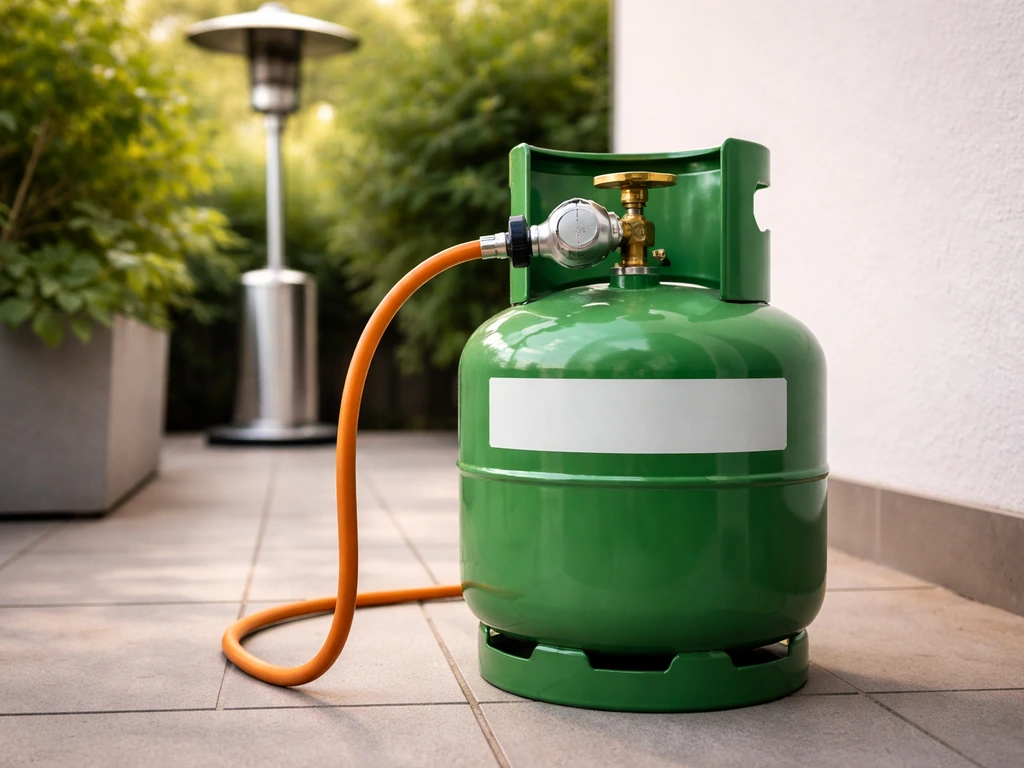
In the UK, patio gas is propane. Specifically, it is a branded category of propane LPG sold in distinctive green cylinders, most famously by Calor but also by Flogas and other suppliers under names like "Leisure Propane." It is not butane. When you see a green cylinder labelled "Patio Gas" at a hardware store or garden centre, you are buying propane LPG packaged and marketed for outdoor appliances like patio heaters and BBQs. For BBQs, the key is using the correct LPG type and matching regulator pressure to your specific appliance. If you are in the US, the equivalent is simply standard propane, and most outdoor patio heaters there run on propane by default.
Is Patio Gas Propane or Butane? How to Check Safely

Grant Mercer
9 Jul 2026
What "patio gas" actually means
The term "patio gas" is a retail branding label, not a separate type of gas. If you are also wondering why patio gas pricing can be higher, the answer often comes down to supply and branding compared with standard propane why is patio gas more expensive than propane. Wikipedia describes it plainly as an alternative brand name for propane in the context of Calor cylinders. Calor's own safety documentation treats "Patio Gas" as a named product category within their propane LPG range. One UK fuel supplier sums it up well: "patio gas (green cylinders) is propane in a different dress." The green colour and the "patio gas" label are just there to make it obvious to consumers that this cylinder is intended for outdoor leisure equipment, as opposed to the red propane cylinders typically used for heating or industrial work.
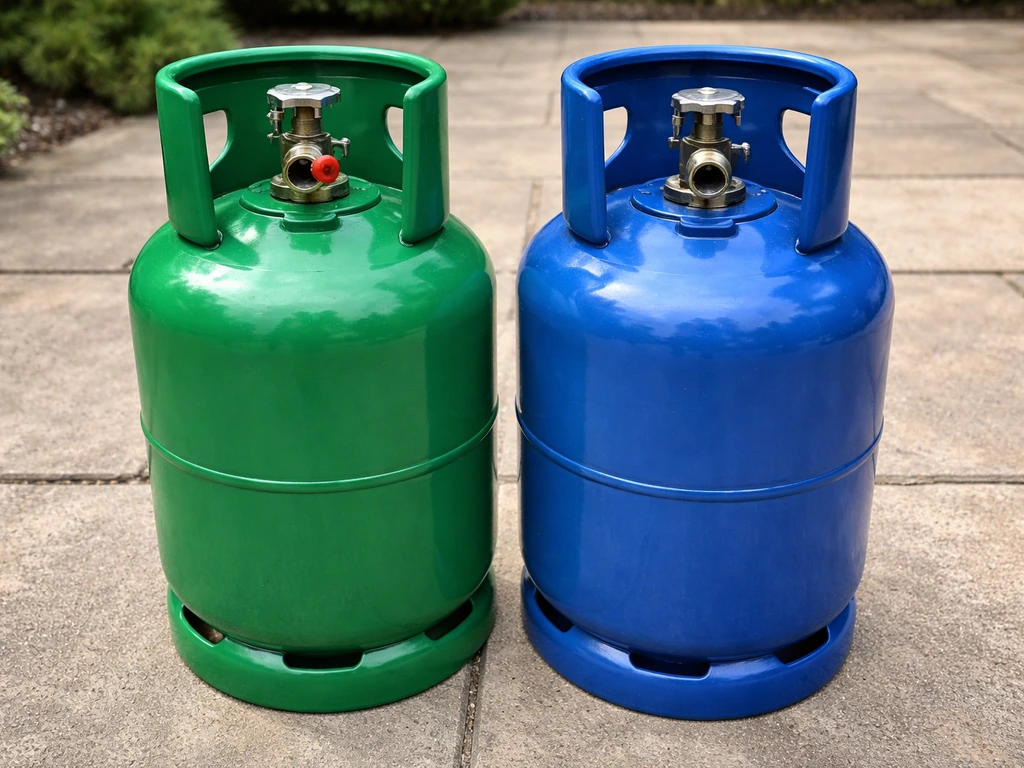
Butane is a different gas altogether. It comes in blue cylinders in the UK and operates at a lower pressure (around 28 to 30 mbar). It is more commonly associated with portable camping stoves and indoor use. Patio heaters, which often live outside year-round, are designed around propane for good reason, which I will get to shortly.
Propane vs butane for patio heaters: why propane wins outdoors
Both propane and butane are LPG (liquefied petroleum gas), but they behave differently at low temperatures and operate at different pressures. This matters a lot when you are running a patio heater on a cold evening.
| Feature | Propane (Patio Gas) | Butane |
|---|---|---|
| UK cylinder colour | Green (patio gas) or red | Blue |
| Standard regulator pressure | 37 mbar | 28–30 mbar |
| Cold weather performance | Works down to around -42°C | Struggles below 0°C |
| Typical outdoor heater compatibility | Yes, designed for it | Not recommended outdoors in cold |
| Common regulator fitting (UK) | 27mm clip-on or POL screw | Clip-on (different size) |
The cold weather issue is the practical deal-breaker for butane. Butane stops vaporising properly as temperatures drop toward freezing, which means your heater can start behaving erratically or simply stop producing enough gas to stay lit. Calor's own guidance flags this limitation. If you have ever had a patio heater that works fine in summer but becomes unreliable in autumn, a butane cylinder could easily be the culprit. Propane vaporises at much lower temperatures, making it the correct and consistent choice for outdoor heaters.
The pressure difference is equally important. blank" rel="noopener noreferrer">Propane regulators are pre-set to 37 mbar, while butane regulators run at 28 to 30 mbar. These are not interchangeable. Your patio heater's burner is calibrated to a specific operating pressure, and feeding it the wrong pressure means the flame will not behave correctly. Liquid Gas UK consumer guidance emphasises that blank" rel="noopener noreferrer">matching the regulator pressure to your LPG appliance is central to safe and efficient operation.
How to confirm what gas your specific patio heater needs
Do not assume. If you are asking can you cook with patio gas, make sure your stove is approved for LPG propane and matches the correct regulator pressure and cylinder type. Even though patio heaters almost universally run on propane, your specific model has a label or manual that tells you exactly what it needs. Here is where to look.
Check the heater's rating plate or data label
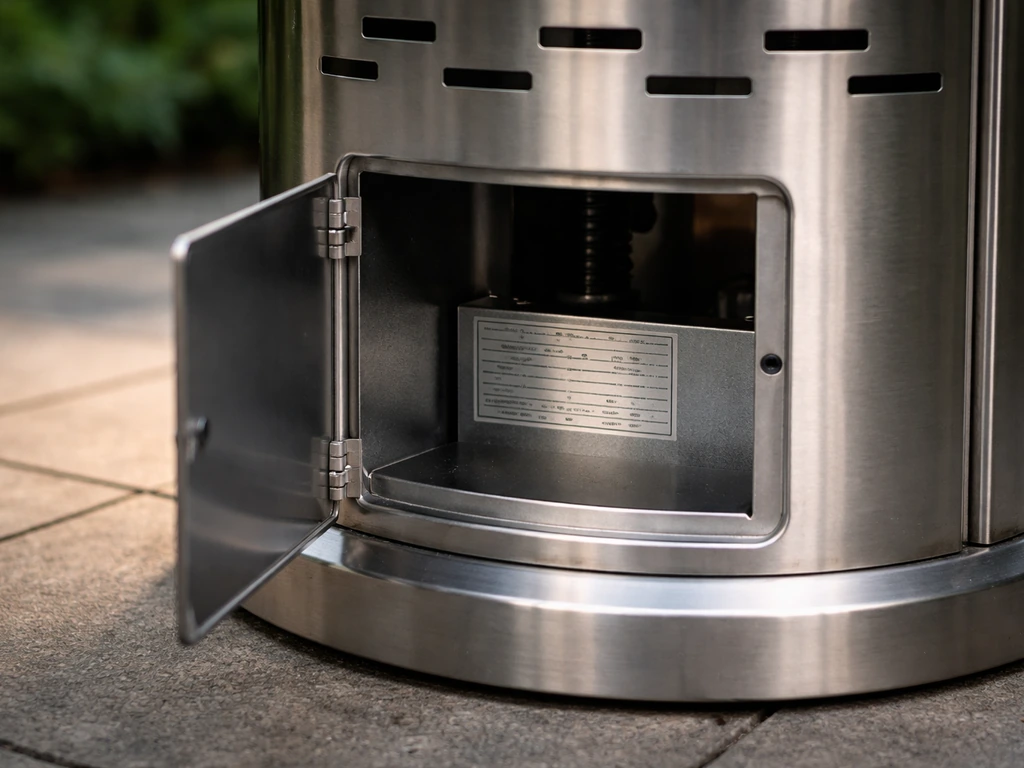
Most patio heaters have a small metal or adhesive rating plate somewhere on the body, often on the base, inside the gas access panel, or on the pole near the burner assembly. This label will state the approved gas type (usually "LPG propane" or "G31") and the operating pressure in mbar or kPa. For example, a label showing 2.8 kPa is roughly 28 mbar, while 3.7 kPa means 37 mbar. If you see 37 mbar or 3.7 kPa, you need a propane regulator and a propane cylinder.
Pull up the owner's manual
The manual will list the gas specification in the technical data section, typically near the front or in an appendix. If you have lost the paper copy, search for the model number (printed on that rating plate) followed by "owner's manual PDF." Most manufacturers post them online. The manual will also give you the correct leak-test procedure, which you should always run after connecting a new cylinder.
Look at the regulator itself
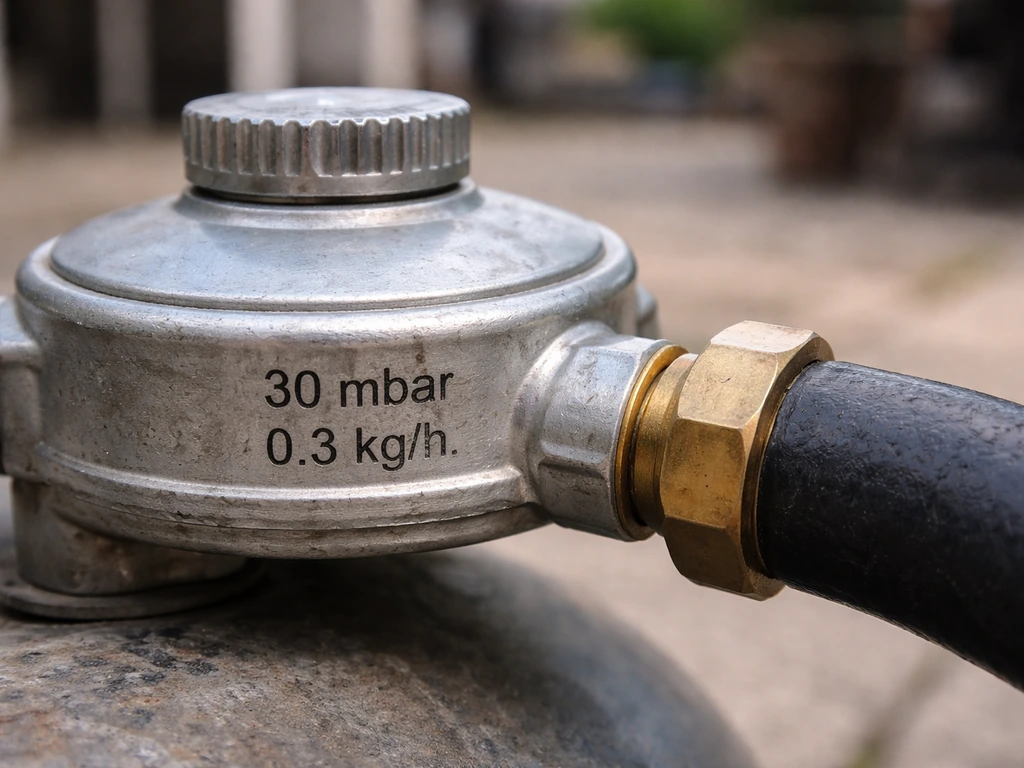
The regulator that connects your cylinder to the heater hose will usually have its output pressure moulded or stamped into the body. A propane low-pressure regulator for patio gas will say 37 mbar. A butane regulator will say 28 mbar or 30 mbar. If the regulator supplied with your heater says 37 mbar, you need propane. If you are unsure about the regulator you have, do not use it until you have verified it matches the heater's rating plate.
Reading cylinder and regulator markings
UK gas cylinders use colour coding as a quick guide, but always read the label rather than relying on colour alone, since different suppliers use slightly different shades. Here is a practical breakdown of what to look for:
- Green cylinder, labelled "Patio Gas": this is propane LPG, typically Calor or Flogas, uses a 27mm clip-on regulator at 37 mbar.
- Red cylinder, labelled "Propane": also propane LPG, same gas, different packaging, often uses a POL (screw-in) or bullnose regulator connection.
- Blue cylinder, labelled "Butane": a different gas, 28–30 mbar, not suitable for most patio heaters.
- The regulator connection type physically prevents you from fitting a butane regulator to a propane cylinder and vice versa in most modern UK cylinders, which is a useful safety feature.
The 27mm clip-on regulator is the one you will most likely encounter with green patio gas cylinders. It clips directly onto the valve on top of the cylinder. The number "27mm" refers to the internal diameter of the clip-on fitting. Bullfinch Gas confirms that a propane cylinder with a 27mm clip-on (as used on Calor Patio Gas and Flogas Leisure Propane) corresponds to a 37 mbar output. If you are shopping for a replacement regulator, make sure the box states 37 mbar and the fitting matches your specific cylinder type.
What goes wrong when you use the wrong gas or regulator
Using the wrong gas or the wrong regulator is not just a performance issue. It can be a safety issue. Pellet patio heaters, like other outdoor heaters, can create smoke or smell depending on fuel quality, airflow, and whether the unit is burning properly do pellet patio heaters smoke. Here is what you will actually see in practice:
- Heater won't light at all: if the pressure is too low (for example, a butane regulator on a propane-spec heater), there may not be enough gas flow to establish a reliable pilot flame.
- Heater lights but won't stay lit: this is a classic symptom. The flame lights but is too weak to keep the thermocouple or flame sensor hot enough to hold the safety valve open. The safety shutoff trips and the flame dies. This looks like a thermocouple fault but is often a gas/pressure mismatch.
- Yellow or orange flame instead of blue: a yellow or heavily orange flame indicates incomplete combustion, usually because the gas-to-air ratio is wrong. This can happen when the wrong gas type is being fed through a burner orifice calibrated for something else. It produces more carbon monoxide and should not be ignored.
- Reduced heat output: even if the heater runs, mismatched pressure can mean the burner is not operating at its rated output, so you get less heat than expected.
- Cylinder frosts up or gas flow drops in cold weather: if someone has accidentally connected a butane cylinder to a patio heater in cold weather, the butane stops vaporising properly as the temperature drops, causing flow to reduce or stop entirely.
The yellow flame issue deserves a specific warning. Do not continue running a patio heater with a yellow or sooty flame. Carbon monoxide is produced in higher quantities when combustion is incomplete, and while patio heaters are designed for outdoor use, a compromised flame in a covered outdoor area or near a door is a real hazard. If you notice this, switch the heater off, disconnect the cylinder, and identify whether the gas type and regulator are correctly matched before lighting it again.
Safe next steps: confirming your setup and getting it right
If you are troubleshooting a patio heater that is not working properly and you are unsure about the gas type, follow these steps in order before doing anything else.
- Turn the heater off and close the cylinder valve fully. Do this before you inspect anything.
- Check the heater's rating plate for the gas type (propane/G31) and operating pressure (should be 37 mbar or 3.7 kPa for most patio heaters).
- Check the regulator's output pressure marking. It must match the heater's specification.
- Check the cylinder label. For a patio heater, you want a green patio gas cylinder or a red propane cylinder, not a blue butane cylinder.
- If everything matches and you still have issues, reconnect carefully and perform a leak test using a dedicated leak-detection spray or soapy water on all connections. Do not use a naked flame to check for leaks.
- After the leak test, follow your manual's lighting procedure step by step. Hold the ignition button for the full duration stated (often 10 to 30 seconds) to allow the thermocouple to heat up before releasing.
- If the heater still will not stay lit after confirming correct gas, correct pressure, and no leaks, the fault is likely a thermocouple, ODS (oxygen depletion sensor), or safety valve issue rather than a gas supply problem.
When to stop and get help
Most gas-type and regulator mismatches are easy to fix yourself by buying the right cylinder or regulator. If you meant the food that used to come in patio TV dinner trays, those products largely disappeared as tastes and packaging shifted over time. However, if you smell gas and cannot identify where it is coming from, leave the area, do not operate any switches, and contact your gas supplier's emergency line. Do not try to trace a serious gas leak yourself. Similarly, if the heater body, hose, or regulator shows physical damage like cracks, corrosion, or burn marks, replace those components before using the heater again rather than trying to patch them.
If you have confirmed the correct gas, correct regulator, and no leaks, but the heater still cuts out or fails to ignite reliably, that points toward a component fault rather than a fuel problem. If you are asking whether gas patio heaters are banned, the rules depend on your country, local building regulations, and sometimes even the type of appliance and fuel connection are gas patio heaters banned. Thermocouple failures, blocked burner orifices, and faulty ODS pilot assemblies are all fixable with the right parts and the right guide, and they are worth diagnosing properly before replacing the whole heater.
One last practical note: if you are comparing costs and wondering whether to switch to a different cylinder type or supplier, it is worth knowing that patio gas cylinders (propane in green bottles) do tend to cost more per unit than equivalent propane in red cylinders from the same supplier. That price difference exists partly because of the packaging and the convenience marketing. The gas inside is the same. As long as your regulator and fittings are compatible, you are not locked into green cylinders if a red propane cylinder with the right regulator works out cheaper for your setup.
FAQ
If patio gas is propane, why do I still have to check the pressure on my regulator?
In the UK, “patio gas” in green cylinders is propane (LPG), but you still must match the heater’s required pressure. If your rating plate says G31 or 37 mbar (3.7 kPa), use a propane regulator for 37 mbar, not a butane or low-pressure regulator.
Can I use a butane cylinder with my patio heater if I change the regulator?
No, don’t swap cylinders on the assumption that both are LPG. Butane and propane have different vaporisation behavior and different operating pressures (roughly 28 to 30 mbar for butane versus 37 mbar for propane), so an incorrect combination can cause poor flame, cut-outs, or incomplete combustion.
What should I do if my patio heater has a yellow or sooty flame?
If you see yellow, sooty, or smoky flames, stop using the heater. Turn it off, disconnect the cylinder, and verify (1) the cylinder is propane labelled for patio use, (2) your regulator output matches the heater rating plate (often 37 mbar), and (3) the burner orifice is not blocked before relighting.
How can I tell whether my existing regulator is for propane or butane?
Yes. If your regulator is stamped or moulded with an output pressure, treat that as the deciding factor. If the marking says 37 mbar, it is for propane, and if it says 28 or 30 mbar, it is for butane. When in doubt, do not operate until you confirm the heater’s specification.
My patio heater works in summer but cuts out in cold weather, is it the gas?
If the heater lights in warm weather but becomes unreliable in autumn or colder evenings, that pattern strongly suggests a butane cylinder problem (butane struggles to vaporise in low temperatures). The practical fix is to use a propane (patio gas) cylinder and the correct 37 mbar regulator specified by the heater.
Can I use red propane cylinders instead of green patio gas cylinders?
You can, but only if the heater is approved for that gas type and pressure. Check the rating plate for the required LPG spec (often G31 or 37 mbar for propane), and ensure the cylinder has a compatible valve connection and regulator setup for your hose assembly.
Do I need to do a leak test after changing cylinders?
Most patio heaters should be checked for leaks after any cylinder/regulator change using the manufacturer’s leak-test method (often soapy water on the connection points). If you detect bubbling or a persistent smell, move away and do not relight.
What’s the safest way to respond if I smell gas near the cylinder or hose?
If you have a suspected gas leak, do not operate switches, do not attempt to relight, and leave the area. Contact your gas supplier’s emergency line. Also inspect hose and regulator condition later only after the risk is gone, since damaged parts should be replaced.