Most outdoor propane patio heaters stop working for one of five reasons: an empty or low propane tank, air trapped in the gas line, a failed igniter, a dirty or failing thermocouple, or a tripped safety switch. If yours won't light at all, start with fuel and ignition. Electric patio heaters that won't work need a different troubleshooting path, starting with power supply and the heater's safety controls electric patio heater not working. If it lights for a few seconds then dies, the thermocouple or ODS (oxygen depletion sensor) is almost always the culprit. Walk through the checks below in order and you'll almost certainly find the cause within 15 minutes.
Outdoor Propane Patio Heater Not Working: Troubleshooting Guide

Grant Mercer
6 Jul 2026
Safety checks before you touch anything
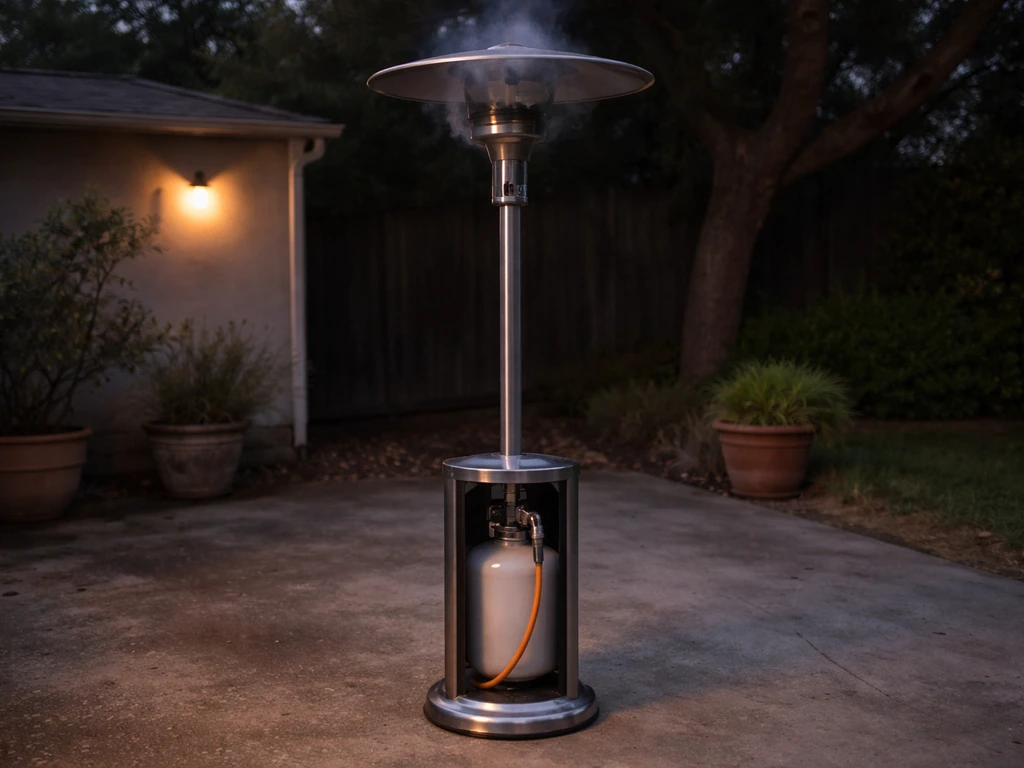
Before diving into diagnostics, run through these non-negotiable safety steps. Skipping them doesn't save time; it creates real hazards with propane.
- Move the heater to an open outdoor area away from walls, awnings, and anything flammable. Propane troubleshooting should never happen in an enclosed space.
- Turn the control knob fully to OFF and leave it there for at least 5 minutes before starting any checks. This lets any residual gas disperse.
- Sniff around the base and the tank connection. A rotten-egg smell means a gas leak. If you smell gas before you've even started anything, close the tank valve, back away, and don't attempt repairs until you've found and fixed the leak.
- Check that the heater is sitting on a flat, stable surface. Most propane patio heaters have a tip-over safety switch (also called a tilt switch) that cuts gas flow if the unit isn't level. A heater on uneven ground can falsely trigger this switch.
- Keep a phone nearby. If anything smells wrong, sounds wrong, or you see a visible gas leak you can't resolve, stop and call a qualified technician.
Check your fuel supply and propane flow first
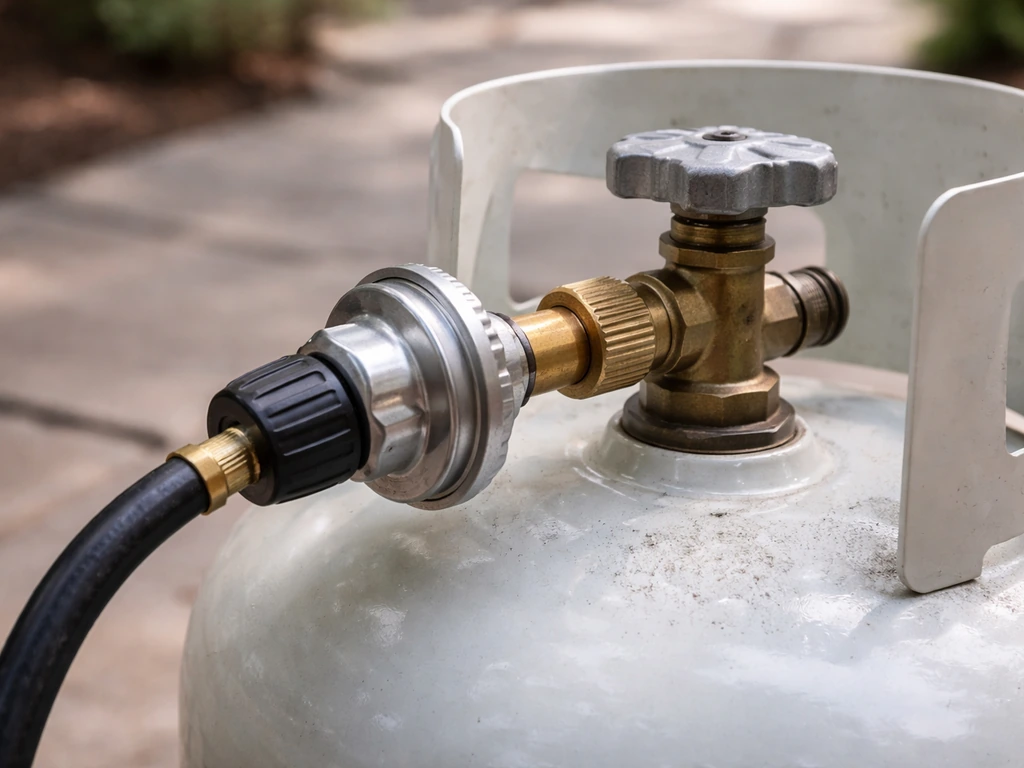
The single most common reason a propane patio heater won't work is an empty or nearly empty tank. It sounds obvious, but it's easy to overlook. Lift the tank. A 20 lb propane cylinder that's nearly empty feels surprisingly light. If you're not sure, pour warm (not hot) water down the side of the cylinder. The level where the tank feels cold to the touch is your current propane level.
If the tank has gas in it, the next check is flow. Open the cylinder valve slowly all the way counterclockwise. A common mistake is opening it too fast, which can trigger the OPD (overfill protection device) valve inside the tank and restrict flow. If you suspect this happened, close the valve completely, wait 30 seconds, and then reopen it slowly. Also check that the regulator hose connection at the tank is hand-tight. A loose connection starves the heater of gas even with a full tank.
Low gas pressure is a separate problem from an empty tank. If the cylinder is full but the flame is very weak or won't sustain, the cylinder valve may not be fully open, the regulator may be failing, or the outside temperature is cold enough to reduce propane pressure. Below about 40°F, propane vaporization slows significantly. If you're troubleshooting in cold weather, bring the tank inside to warm up for 30 minutes first. If pressure is still low with a full, warm tank, per multiple manufacturer manuals including AZ Patio Heaters, the correct action is to turn the valve OFF and replace the cylinder or regulator.
Diagnosing ignition failure (including when the igniter won't spark)
If you have good propane pressure but the heater won't ignite, you're dealing with an ignition path problem. The ignition system on most propane patio heaters is a piezoelectric igniter that creates a spark at the pilot assembly. Press the igniter button and watch (or listen) for a spark near the pilot tip. No click, no spark visible, or a spark that lands in the wrong place are three different problems.
No click from the igniter
If pressing the igniter button produces no click at all, the piezo mechanism itself is dead. Check that the igniter wire (the thin wire running from the button to the pilot area) is connected at both ends. These wires work loose over time, especially after moving the heater in and out of storage. If the wire is connected and the button still doesn't click, the piezo needs to be replaced. Replacements are inexpensive and model-specific, so check your manual for the part number. In the meantime, use a long-reach lighter or a match to manually light the pilot while holding the control knob in on pilot mode. This works perfectly safely as a short-term fix.
There's a spark but no ignition
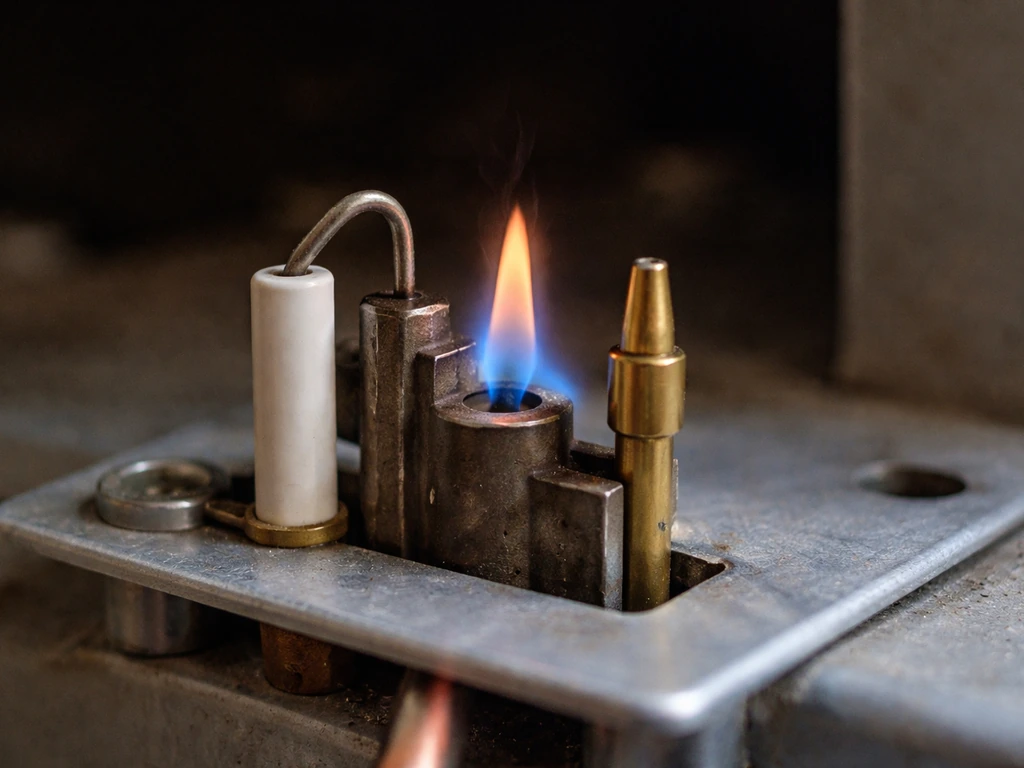
If you can see or hear a spark but the pilot won't catch, the spark isn't hitting the gas stream. This usually means the igniter electrode is misaligned or has a carbon buildup. Look at the electrode tip near the pilot. The gap between the electrode and the pilot hood should be roughly 3 to 4 mm. If it's coated with soot or the tip is physically bent away from the pilot, clean it with a dry cloth or fine-grit sandpaper and gently bend the tip back into position. Also make sure you're actually getting gas flow to the pilot when you hold the knob in: you should smell a faint hint of propane within 20 to 30 seconds of holding the pilot position.
If your heater is a Fire Sense model and the igniter is giving you trouble specifically, that's a well-documented issue with a separate diagnostic path worth looking into. If your Fire Sense patio heater igniter is not working, use the brand-specific ignition checks before replacing parts Fire Sense model. Similarly, Hampton Bay patio heater igniters have their own quirks that differ from generic piezo failures.
It lights briefly then goes out: the thermocouple and safety valve path
This is the most frustrating scenario and the one I get asked about most. The heater ignites, burns for 3 to 10 seconds, and then dies the moment you release the control knob. This is almost always the thermocouple, and it's the most common actual repair needed on a propane patio heater.
Here's what's happening: the thermocouple is a small probe that sits in the pilot flame. When it gets hot enough, it generates a tiny electrical current that tells the gas valve it's safe to stay open. If the thermocouple is dirty, bent away from the flame, or worn out, it doesn't heat up fast enough or generate enough current. The gas valve interprets this as a flame-out safety condition and closes. The result is exactly what you're experiencing: lights, then dies. If your tabletop patio heater still won't stay lit, focus next on the thermocouple and any safety shutoff devices tabletop patio heater not working.
How to check the thermocouple
- Look at where the thermocouple tip sits in relation to the pilot flame. The tip should be directly in the flame, not just near it. If it's bent away, gently reposition it so the tip is fully immersed in the blue part of the pilot flame.
- Check the thermocouple for carbon or soot buildup on the tip. A dirty thermocouple can't read temperature accurately. Clean it gently with fine steel wool or a dry cloth. Don't use water or cleaners.
- Check the connection at the gas valve end. The thermocouple screws into the valve body. If it's finger-loose, hand-tighten it. Don't overtighten; these fittings are brass and strip easily.
- Per AZ Patio Heaters manual troubleshooting, if cleaning and repositioning don't fix it, the thermocouple needs to be replaced. These are typically universal fit and cost under $15 at a hardware store.
One important thing to know: when you hold the control knob in pilot position, you need to hold it for a full 30 to 45 seconds before releasing. Many people release too early. The thermocouple needs that time to heat up enough to hold the valve open. If you've been releasing after 10 seconds, try the full 45-second hold before assuming the thermocouple is bad.
Tilt switch and ODS safety shutdown
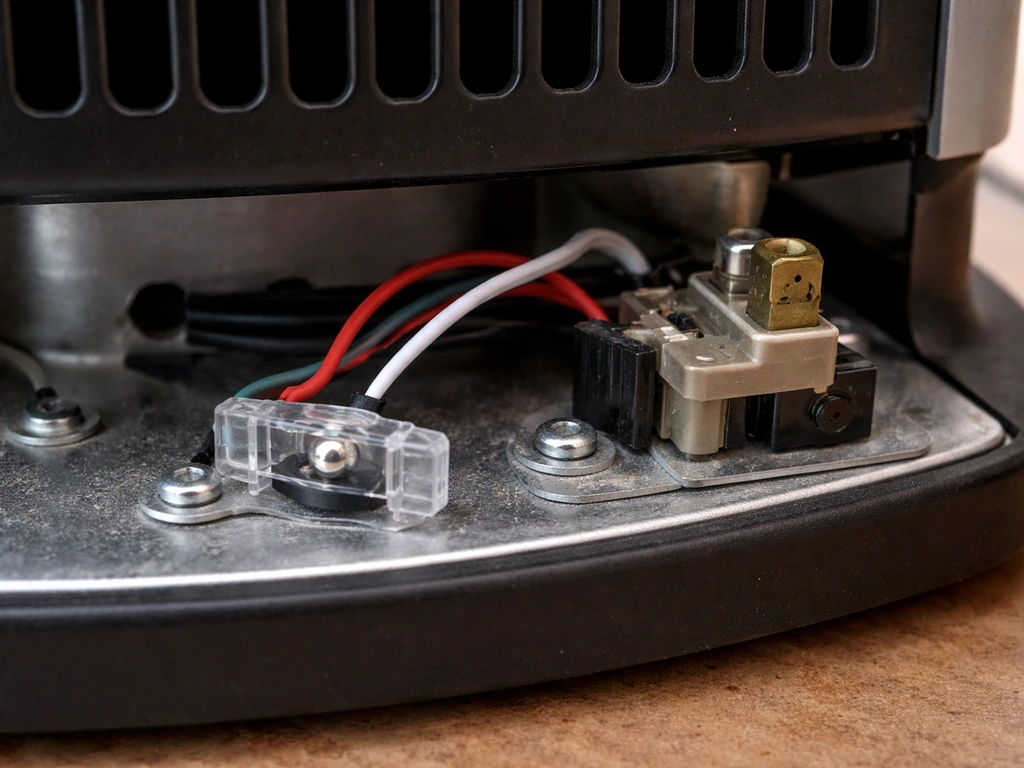
Two other safety devices can cause a brief-light-then-shutoff pattern. The tip-over (tilt) switch is a mercury or ball-bearing switch typically located near the base. If the heater isn't sitting level, this switch cuts gas flow. Set the heater on a flat surface, let it sit for 60 seconds so the switch can settle, and try again. The ODS (oxygen depletion sensor) shuts the heater off if oxygen levels drop, which shouldn't happen outdoors but can trigger if there's partial obstruction around the base burner area.
Purging air from the line and repeating the start procedure correctly
If the heater has been sitting unused, or if you just connected a new propane tank, there's air in the gas line between the tank and the pilot. Air doesn't burn, and it will prevent ignition or cause the flame to sputter and go out. You need to purge it before the heater will work properly.
According to AZ Patio Heaters troubleshooting documentation, to bleed air from the line: set the control knob to pilot, hold it in, and press the igniter repeatedly for up to 60 to 90 seconds (no more than a couple of minutes total). You're pushing air out and getting propane to the pilot. Do not attempt this near any open flame or ignition source other than the heater's own igniter. You should catch a faint smell of propane after 30 to 60 seconds, which tells you the air is cleared and gas is reaching the pilot. At that point, a normal ignition attempt should work.
Also, if you've been troubleshooting a hot heater (one that was running recently), wait at least 5 minutes before attempting to relight. Fire Sense assembly instructions specifically call this out: relighting a hot heater before the gas has dissipated can cause a flare-up at the pilot. This applies especially if you had a failed start and gas may have accumulated around the pilot area.
The correct full start sequence for most propane patio heaters is: (1) open tank valve slowly, (2) press control knob in to PILOT position, (3) hold knob in firmly, (4) press igniter button repeatedly until pilot lights, (5) continue holding knob for 30 to 45 seconds after pilot lights, (6) slowly turn knob from PILOT to LOW then to your desired heat setting. Skipping or rushing step 5 is the most common DIY mistake.
Burner, gas valve connections, and other mechanical causes
If you've confirmed fuel, cleared air, and the ignition path checks out, the next layer is the burner assembly and gas valve connections. These are less common causes but worth checking before assuming you need a major repair.
Burner ports and emitter screen
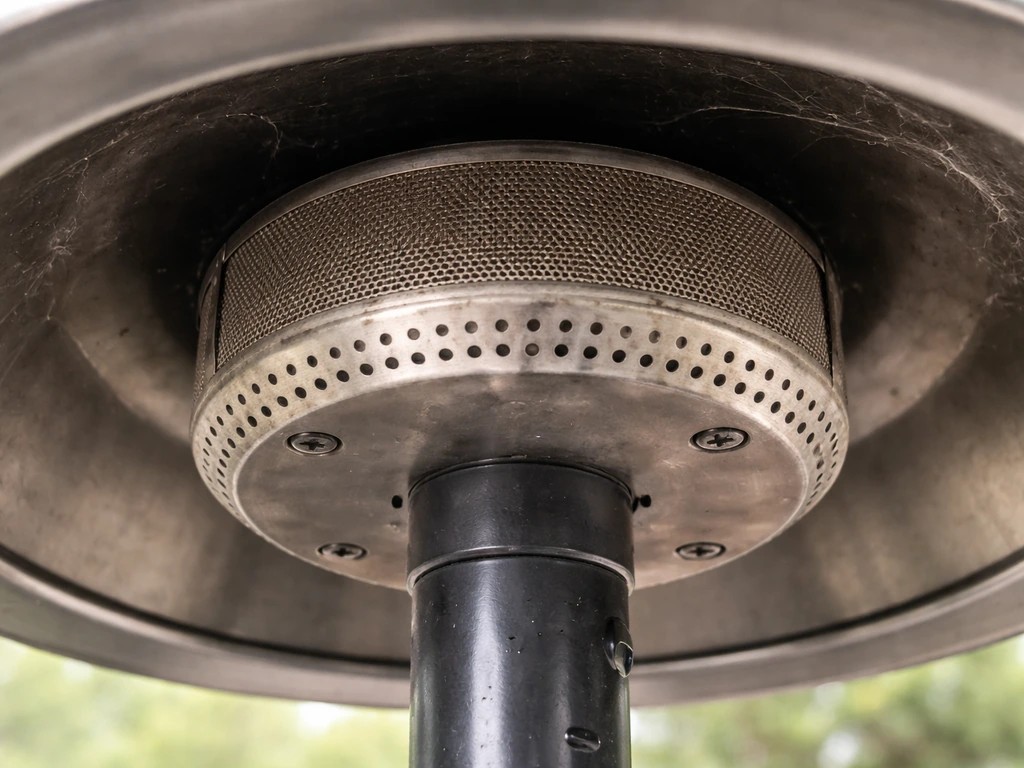
The burner on a mushroom-style patio heater sits at the top of the pole inside the emitter dome. Spider webs, insect nests, and debris are genuinely common culprits, especially if the heater has been in storage. Even a partial blockage in a burner port restricts gas flow and can prevent ignition or cause an uneven, weak flame. Remove the emitter dome (usually held by three screws), take out the burner, and inspect the ports. Clean them with a stiff brush or compressed air. Never use a wire to poke through gas ports; you'll enlarge them and create a pressure problem.
Gas valve and pilot assembly connections
There are two or three threaded connections in the gas path: the regulator-to-valve connection, and the valve-to-pilot-tube connection. Per AZ Patio Heaters troubleshooting documentation, a loose connection between the gas valve and pilot assembly is a documented cause of the pilot not staying lit. Check that both connections are snug. If you loosen and retighten any gas fitting, you must perform a leak test before relighting. Mix dish soap and water, apply it to each fitting with a brush, open the tank valve, and look for bubbles. Bubbles mean a leak. If you find a leak you can't fix by tightening, close the tank valve and contact a qualified technician. Do not modify or attempt to repair the valve body itself.
Regulator failure
Regulators don't fail often, but they do fail. Signs of a bad regulator include a flame that's extremely low even with a full tank, a flame that won't increase past LOW when you turn the knob, or a strong propane smell from the regulator area when the heater is off. A replacement regulator for a standard patio heater costs $15 to $30 and is a straightforward swap: unscrew from the tank, disconnect from the valve, connect the new one, and leak test. If you've eliminated everything else and the heater still behaves strangely, the regulator is the next suspect.
Quick reference: symptom to likely cause
| Symptom | Most Likely Cause | First Action |
|---|---|---|
| No spark from igniter | Dead piezo igniter or disconnected wire | Check wire connections; replace piezo or use match |
| Spark present but no ignition | No gas at pilot (air in line, low pressure, or empty tank) | Purge air from line; confirm tank has fuel |
| Lights then dies within 10 seconds | Thermocouple not heating or misaligned | Hold knob in for 45 sec; reposition or replace thermocouple |
| Lights then dies immediately on release | Thermocouple failure or loose thermocouple connection | Tighten thermocouple at valve; replace if needed |
| Weak flame, won't go higher | Low tank pressure or failing regulator | Replace tank or regulator |
| Won't light at all, no smell of gas | Tank empty, valve closed, or OPD triggered | Check tank level; reopen cylinder valve slowly |
| Heater shuts off randomly | Tilt switch triggered or ODS activation | Level the heater on flat surface; check base clearance |
Testing, maintenance to prevent this again, and when to stop and call someone
Simple DIY testing you can do today
You don't need special tools to diagnose most propane patio heater problems. The soap-and-water bubble test covers all leak checks. A multimeter set to millivolts can test thermocouple output: a working thermocouple generates 25 to 35 millivolts when heated by a lighter flame. Below 20 millivolts, it's failing and needs to be replaced. For igniter testing, the spark should be clearly visible as a blue arc in low-light conditions. If you have to squint to see it or can't see it at all, the igniter isn't producing enough voltage to reliably light the pilot.
Maintenance that prevents most of these problems
- Before storing for winter, turn off the tank, run the heater until it dies (burns residual gas in the line), then disconnect the regulator and cap the tank valve.
- Store the heater upright in a covered area or use a fitted cover. Moisture is the enemy of piezo igniters and thermocouple tips.
- At the start of each season, inspect all gas connections with the soap test before the first light-up.
- Clean the pilot area and burner ports with compressed air once a season. Spiders are genuinely attracted to gas odors and will nest in the pilot assembly.
- If the thermocouple is more than 3 to 4 years old and you're having any pilot issues, replace it preemptively. It costs under $15 and saves a lot of frustration.
- Keep the regulator hose free of kinks and away from the heater base where heat can degrade the hose over time.
When to stop and call a qualified technician
Most propane patio heater problems are genuinely DIY-friendly. But there are situations where you should stop, close the tank valve, and call a pro. If you find a gas leak at a fitting that doesn't seal when tightened, that's not a DIY fix. If the gas valve body is cracked, corroded, or leaking from the valve itself, replace the whole valve or the whole unit. Don't attempt to repair a gas valve internally. If there's any doubt about the regulator or if the heater has ever been dropped, tipped over hard, or flooded, have it inspected before relighting. Per AZ Patio Heaters documentation, if you cannot repair a leak yourself, turn off gas at the cylinder valve and contact the manufacturer or a qualified technician. That's the right call.
If your heater is an electric model rather than propane, the diagnostic path is completely different and most of these steps won't apply. Similarly, if you're working with a tabletop propane heater, the same core principles apply but the scale and access points differ. For brand-specific quirks, particularly with Fire Sense or Hampton Bay units, the igniter systems have known failure modes that go beyond generic piezo troubleshooting. For Hampton Bay patio heaters, a failing igniter can show up as no spark or weak sparking that prevents the pilot from lighting. Most manufacturers post PDF manuals on their websites, and pulling the manual for your specific model is always worth doing before spending money on parts.
FAQ
My outdoor propane patio heater lights for a few seconds, then dies right when I release the knob. What else should I check besides the thermocouple?
Most thermocouple problems show up when you rush the hold time. When relighting, hold the control knob in pilot position for 45 seconds, then release slowly. If it still dies immediately, the thermocouple is likely weak or its tip is not sitting correctly in the pilot flame, rather than simply needing more time.
What should I do if I find a propane leak while troubleshooting a patio heater not working?
If you smell propane strongly (a heavier, more noticeable odor than the faint hint during normal purge) or you see bubbles on the soap-and-water test, do not relight. Close the cylinder valve, ventilate the area, and either tighten only the connection that you can safely access and retest, or call a technician if the leak persists after tightening.
Can repeated failed ignition attempts make the problem worse, and how long should I wait before trying again?
Yes. If the pilot is not catching because spark is hitting the wrong spot or the electrode is too far away, you can get repeated failed starts and gas buildup. Let the heater sit at least 5 minutes after a failed attempt before trying again, then confirm the electrode gap is about 3 to 4 mm and that the spark is clearly landing at the pilot hood area.
How do I tell whether low flame is caused by cold temperatures versus an empty tank or a failing regulator?
A “full” tank can still produce weak flame in cold weather. If it is below about 40°F, warm the cylinder for about 30 minutes (indoors, away from ignition sources), then retest flame height. If it remains extremely low even when warm and the valve is fully open, the regulator becomes a stronger suspect.
After cleaning the burner and emitter dome, what common mistake could still cause the heater to not work?
The burner dome must be reinstalled correctly so air can mix properly and the ODS/tip sensors are not triggered. After cleaning, make sure the emitter dome sits flush and the burner ports are fully unobstructed. An improperly seated dome can lead to poor combustion, sputtering, or safety shutdown.
How can I check whether propane is actually reaching the pilot when my outdoor patio heater won’t light?
If the heater is difficult to ignite, verify propane reaches the pilot before you assume the igniter is bad. While holding the knob in pilot mode, you should notice a faint propane smell within 20 to 30 seconds. If there is no propane odor, suspect a gas flow issue such as a valve not fully open, a restricted line, or an incorrectly connected hose/regulator.
My patio heater seems to work only sometimes. Could the tilt switch cause intermittent “won’t stay lit” symptoms?
If your heater is on a slope or wobbly surface, the tilt switch can cut gas flow. Place it on a flat, stable surface, let it sit undisturbed for about 60 seconds so the switch can settle, then retry ignition.
Should I use a multimeter to test the thermocouple output, and what readings matter?
A multimeter test can help confirm thermocouple failure, but you still need to interpret results carefully. If the thermocouple is producing less than about 20 millivolts when heated, it is likely failing and should be replaced. Also ensure the thermocouple tip is positioned in the pilot flame, because a misalignment can mimic a weak thermocouple.
What’s the best way to purge air from the line after connecting a new propane tank?
If you changed tanks or the heater sat unused, air may be trapped in the line. Use the purge approach by setting to pilot, holding the knob in, and repeatedly pressing the igniter for up to about 60 to 90 seconds total. You should smell a faint propane odor after 30 to 60 seconds, then attempt ignition.
My heater won’t light. How do I tell if it is truly the igniter versus a dirty or misaligned electrode?
Sometimes an “igniter problem” is actually an electrode placement or soot issue. Confirm you have a visible blue spark in low light, then check the electrode gap (about 3 to 4 mm) and clean soot from the tip. Only after spark and alignment look correct should you assume the piezo mechanism needs replacement.