The correct manual for the Paramount Venturi Spiral Flame propane patio heater is the 'USE AND CARE GUIDE OUTDOOR SPIRAL FLAME HEATER' for Item #PH-F122, covering model numbers KLD7003S and KLD7003SS. You can download it free from ManualsLib (search 'Paramount Fitness KLD7003S') or get it directly from JR Home's product page for the PH-F122. If you have the bronze finish model, that's SKU PH-F122-BZ, same manual, same heater family. Everything in this guide maps to that document.
Paramount Venturi Spiral Flame Propane Patio Heater Manual

Grant Mercer
28 May 2026
What this heater actually is, and what 'venturi/spiral flame' means
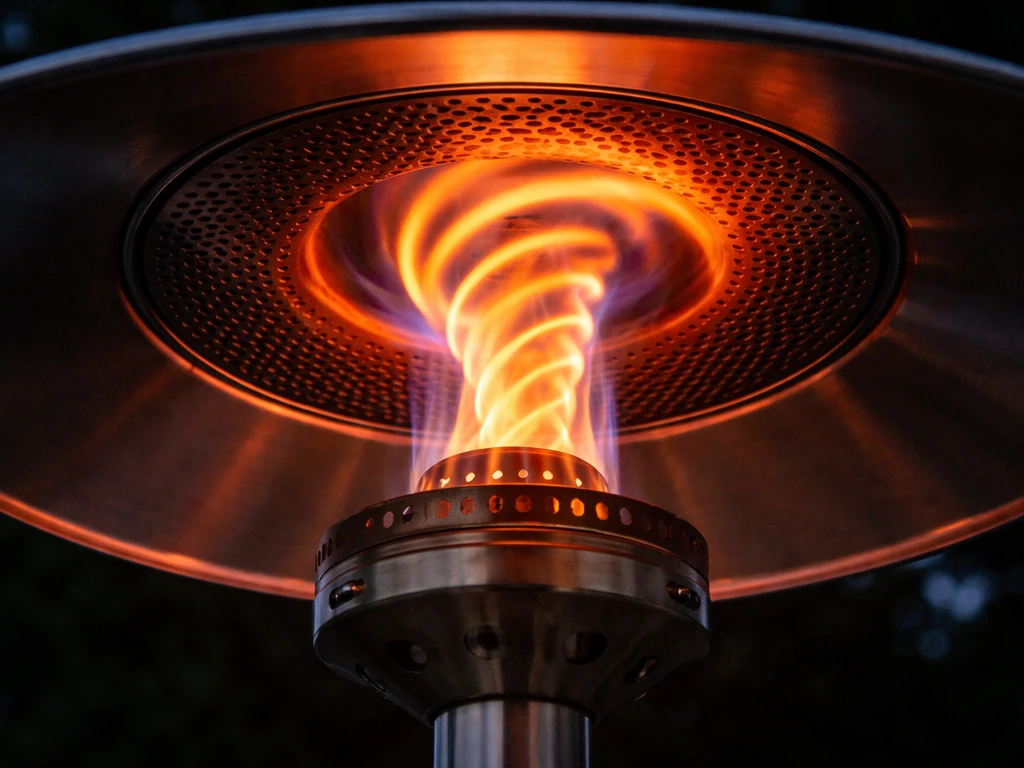
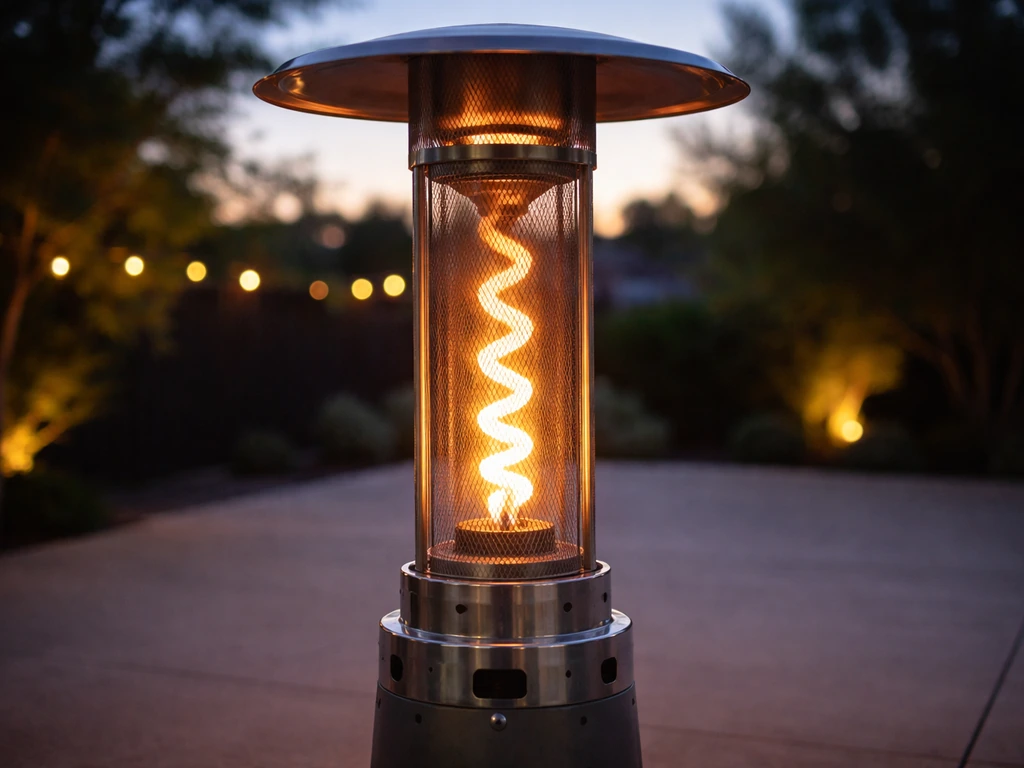
The Paramount Venturi Spiral Flame is a freestanding propane patio heater in the classic mushroom-cap style, sold through JR Home in finishes like bronze (PH-F122-BZ) and grey (PH-F122-GY). It's a mid-range residential heater designed for patios, decks, and outdoor entertaining spaces. The 'spiral flame' part refers to the burner design: instead of a flat, even ring of flame, a swirl-style burner uses internal vanes to spin the air-fuel mix, which produces a visually distinctive spiraling flame pattern and helps stabilize combustion by improving air-fuel mixing before ignition.
The 'venturi' part describes how the burner gets its primary air. As propane flows through the orifice and into the burner throat, the gas jet creates a low-pressure zone that draws in surrounding air, that's venturi action. The air and propane mix inside the burner tube before reaching the flame, which is why proper airflow around the base of the emitter head matters so much. Block that airflow (with debris, a dirty orifice, or a misaligned burner) and the combustion goes wrong fast. You'll see it in the flame color: the manual specifies a healthy flame should be blue with straight yellow tips. Excessive yellow flame or black smoke means the venturi isn't pulling enough air, and the burner needs cleaning.
Key specs and parts to know before you start troubleshooting
Before you dig into any problem, it helps to know what you're working with. The PH-F122 uses electronic ignition powered by a single AA battery (not included, and often forgotten). That one detail solves a surprising number of 'it won't ignite' calls. Here's a quick reference for the components that matter most for DIY troubleshooting:
| Component | What it does | DIY relevance |
|---|---|---|
| Venturi burner / swirl burner | Mixes propane and air before combustion; creates spiral flame pattern | Clogged orifice or vanes = wrong flame color, poor heat |
| Electronic igniter | Produces spark to light the burner; powered by 1 AA battery | Dead battery is the #1 cause of no-spark ignition failure |
| Thermocouple | Senses flame heat and holds the gas valve open; shuts off gas if flame goes out | Faulty or dirty thermocouple = flame lights but won't stay lit |
| Tilt switch (anti-tip device) | Cuts gas if the heater tips beyond a safe angle | Tripped switch causes sudden shutoff; heater must be level to reset |
| Regulator and hose assembly | Reduces tank pressure to operating pressure; controls gas flow | Old or faulty regulator = weak flame, low heat, won't stay lit |
| Control knob / gas valve | Opens/closes gas flow; must be held in to bypass thermocouple during lighting | Must be held in firmly during purge and lighting sequence |
| Reflector / emitter screen | Radiates heat outward; can blacken with soot from combustion issues | Black screen = blocked burner; clean before next use |
Replacement thermocouples for the PH-F122 and PH-F122-BZ/GY are available directly from JR Home, so that part is easy to source if you need it. Keep the model number handy when ordering, not all patio heater thermocouples are interchangeable.
How to find the right Paramount Venturi Spiral Flame manual
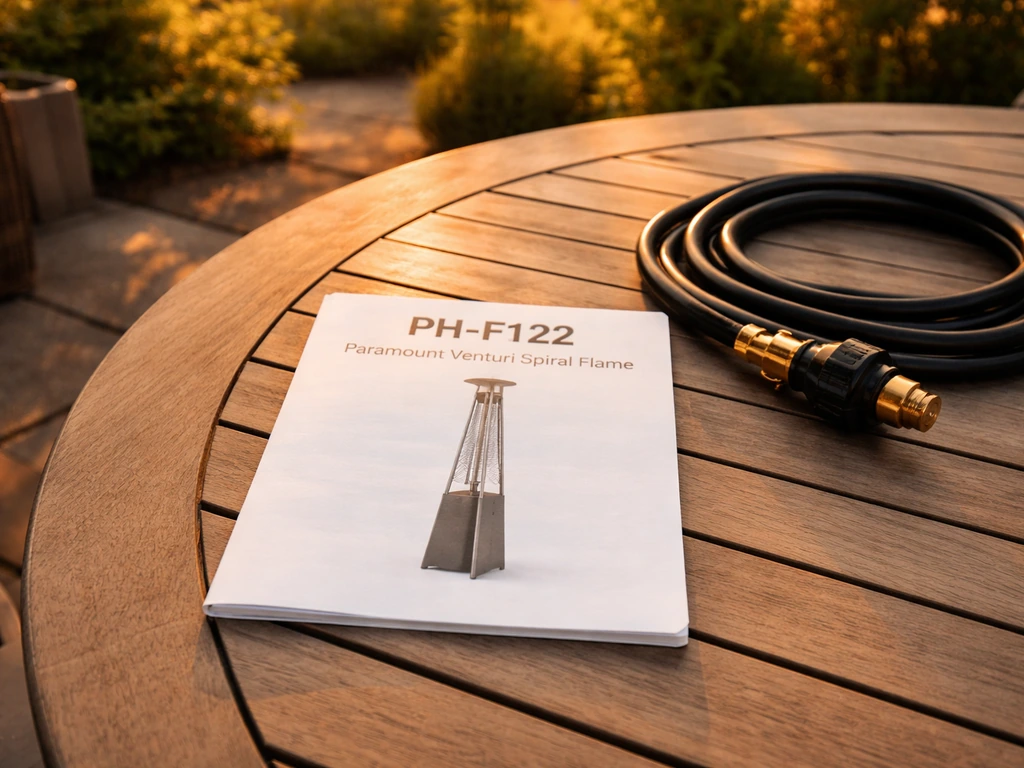
There are two reliable places to get the PH-F122 manual right now. If you are looking for the Master Forge patio heater manual, you can usually find it by searching your model number on the manufacturer or parts-site documentation pages. First, ManualsLib hosts it under 'Paramount Fitness KLD7003S Use and Care Manual', search that exact phrase and you'll find the downloadable PDF. ManualsLib’s Paramount Fitness category listing includes the “KLD7003S” model and indicates that the KLD7003S Use and Care Manual is available as a downloadable manual the PH-F122 manual under “Paramount Fitness KLD7003S Use and Care Manual”. Second, JR Home's product listing for the PH-F122 includes a link to the instruction manual PDF. Both are the same document: the 'USE AND CARE GUIDE OUTDOOR SPIRAL FLAME HEATER' for Item #PH-F122 / Model KLD7003S and KLD7003SS.
If your heater's label shows a slightly different finish suffix (like -BZ for bronze or -GY for grey), don't worry, those are color variants of the same heater family and use the identical manual. If for any reason you can't find the manual or have questions about a specific repair, JR Home's customer support ([email protected]) can help confirm parts and provide documentation. It's also worth knowing that if you've looked at manuals for similar propane patio heaters, like the Bond propane patio heater or Member's Mark gas patio heater, you'll notice the safety sections and basic lighting procedures are quite similar, since all these heaters share the same underlying gas appliance principles.
Assembly and first-use setup: where people run into trouble
Most assembly problems happen at two points: connecting the regulator and purging air from the gas lines. The PH-F122 manual is clear about this, for any initial start or after swapping a propane cylinder, you must hold the control knob in for 2 full minutes before attempting to ignite. This purges air from the gas lines. Skip this step and the heater almost certainly won't light on the first try, which sends people chasing a non-existent igniter or thermocouple problem.
After assembly, always do a leak test outdoors before the first ignition. Apply soapy water to every gas connection (regulator fitting, hose connections, and the valve body). Bubbles mean a leak. Tighten the connection, re-test, and do not proceed until the test is clean. The manual requires this, and it's not optional, propane leaks near an ignition source are a serious hazard. If you've disconnected and reconnected any gas fitting at any point, you run the leak test again.
Installing the AA battery and testing the igniter
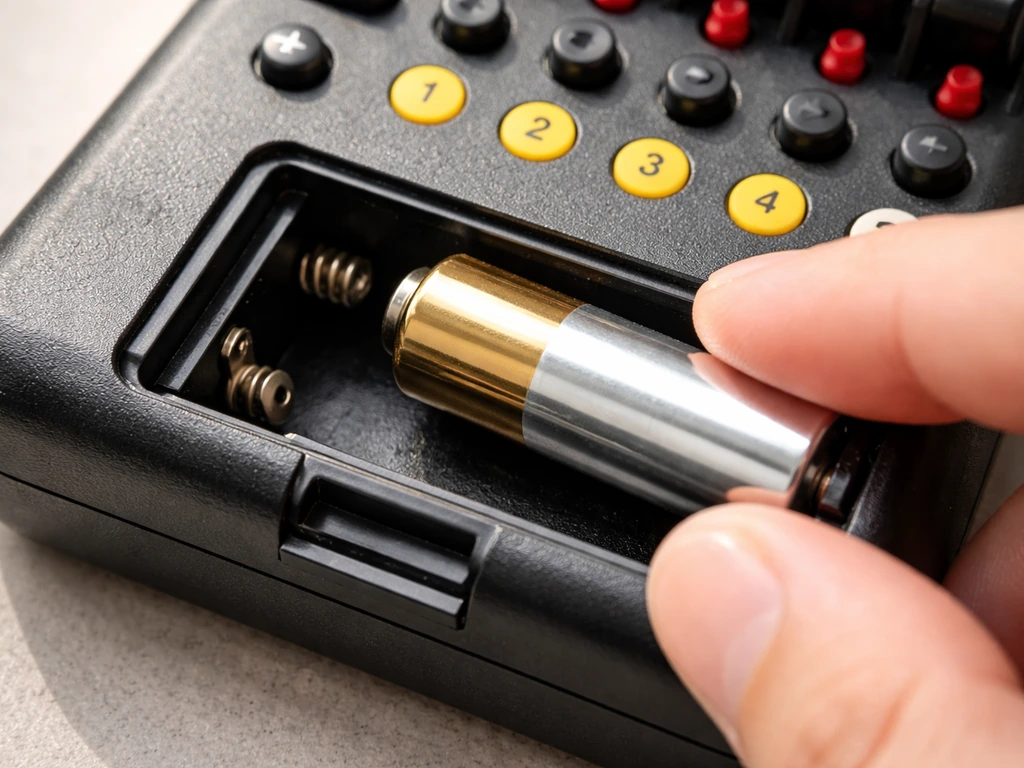
The electronic igniter module on the PH-F122 needs a fresh AA battery installed before first use. The battery compartment is typically located on the control panel area near the control knob. Install the battery, then with the gas OFF, press the igniter button and look (carefully) for a visible spark at the burner tip. If you see a spark but no flame, the gas side has a problem. If you see no spark at all, the issue is in the igniter circuit, start with a new battery before assuming the igniter module has failed.
Step-by-step troubleshooting for the most common problems
Main burner won't light
Work through this in order before assuming anything is broken. The PH-F122 manual's troubleshooting table walks through these exact causes:
- Replace the AA battery in the igniter — this is the most common fix and takes 30 seconds.
- Confirm the gas valve is turned to ON and the tank valve is fully open.
- Check the propane tank level — a near-empty tank causes weak or no ignition.
- Purge air from the lines: hold the control knob in for 2 to 3 minutes before trying to light. This is critical after any cylinder swap.
- Check all hose and regulator fittings for looseness. Hand-tighten any connections that feel loose, then re-do the soap-bubble leak test.
- If there's still no gas flow, the regulator may be in its over-pressure lock-out mode. Close the tank valve, disconnect the regulator, wait 30 seconds, reconnect, and open the tank valve slowly.
- Clean or replace the orifice if the above steps don't resolve it — a partially blocked orifice restricts gas flow to the point where the burner won't light reliably.
- If none of the above works, replace the hose and regulator assembly.
Flame lights but won't stay lit
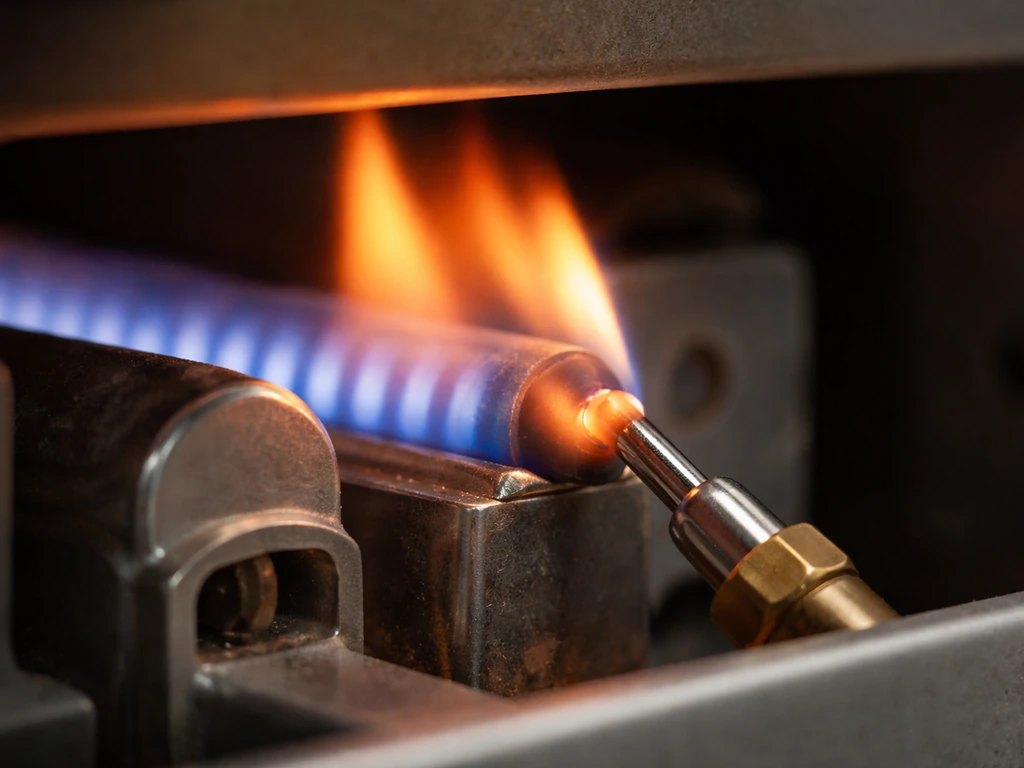
This is almost always a thermocouple issue, but rule out the simpler stuff first. The thermocouple is a small metal probe that sits in the flame path near the burner. When the flame heats it, it generates a tiny electrical signal that holds the gas valve open. If the thermocouple is dirty, mispositioned, or failing, it won't generate enough signal, and the valve closes, the flame goes out within a few seconds of releasing the control knob.
- During lighting, hold the control knob in for at least 30 to 60 seconds after the flame appears. The thermocouple needs time to heat up before the valve will stay open on its own.
- If the flame goes out the moment you release the knob, the thermocouple isn't getting hot enough. Check that the thermocouple tip is actually inside the flame path and hasn't shifted position.
- Gently clean the thermocouple tip with fine steel wool or a soft cloth to remove any oxide buildup that can insulate the probe.
- If cleaning doesn't help, replace the thermocouple. JR Home sells a direct replacement for the PH-F122 / PH-F122-BZ/GY. It's an inexpensive part and a straightforward swap.
- Also check the propane tank level — low gas pressure can starve the flame just enough that the thermocouple never gets fully heated.
Tilt switch shutting the heater off
The tilt (anti-tip) switch is a safety device that cuts gas flow if the heater leans past a safe angle. If your heater shuts off spontaneously, especially outdoors on uneven surfaces or on a windy day, the tilt switch is a strong suspect. Make sure the heater is sitting on a firm, flat, level surface. If the base is wobbling or sinking into soft ground, that's enough to trip the switch. Once you correct the lean and the switch resets, normal operation should resume. If the heater is perfectly level and still shutting off, the tilt switch itself may be faulty and need replacement. Don't bypass or disable the tilt switch, it exists to prevent fire if the heater falls over.
Wrong flame color or black smoke
The manual is specific here: the correct flame appearance is blue with straight yellow tops. If you're seeing a large, lazy yellow or orange flame, or thick black smoke coming from the emitter head, the venturi isn't drawing enough air. This means the burner or orifice is partially blocked. Turn the heater off immediately, black smoke means incomplete combustion, which produces carbon monoxide. Let it cool completely, then remove the emitter assembly and thoroughly clean the burner, paying attention to the venturi air intake slots at the base of the burner tube. Also check whether the reflector and emitter screen are blackened with soot; the manual calls for cleaning those components as well. Once cleaned, the flame should return to the correct blue-with-yellow-tips appearance.
Safety checks and routine maintenance
This heater, like any propane appliance, needs a few regular checks to stay safe and work properly. None of them are complicated, but skipping them is how small problems turn into dangerous ones.
Gas connections and leak testing
Every time you reconnect a propane cylinder or re-attach the regulator hose, do a full soap-bubble leak test at every fitting before lighting the heater. Mix dish soap with water, brush it onto each connection, and watch for bubbles. If you see any, tighten or replace the fitting before proceeding. Never test for gas leaks with an open flame. Do this test outdoors, away from ignition sources. If you smell gas at any point during setup or operation, close the tank valve immediately, move away from the area, and don't attempt to light the heater until you've identified and fixed the source.
Burner cleaning and airflow
Clean the burner at the start of each season and anytime you notice flame color changes. Spiders and insects love to nest in propane burner tubes over winter storage, a blocked venturi tube or orifice is an extremely common cause of ignition and flame problems after the heater has been sitting unused. Use a thin wire or compressed air to clear the orifice, and check the air intake slots at the base of the burner tube. While you're in there, wipe down the emitter screen and reflector. If they've gone dark or sooty, that's a sign of prior combustion problems that need to be addressed.
Thermocouple and tilt switch inspection
Once a season, visually inspect the thermocouple tip to make sure it's positioned correctly in the flame path and shows no signs of heavy corrosion or physical damage. A thermocouple that's been heavily oxidized won't generate a reliable signal even if it's technically intact. Inspect the tilt switch wiring for any signs of cracking, fraying, or corrosion, especially if the heater has been stored outdoors. Both of these components are safety-critical, so if there's any doubt about their condition, replacing them is the right call. They're inexpensive parts compared to the consequences of a failed safety shutoff.
Storage and seasonal prep
- Disconnect and store the propane tank separately from the heater — never store a connected tank indoors or in an enclosed space.
- Cover the heater with a properly fitting cover to keep insects and moisture out of the burner assembly.
- Before storing, close the tank valve completely and burn off any gas remaining in the lines by letting the flame run until it extinguishes naturally.
- At the start of each season, replace the AA igniter battery, check all hose and regulator connections for cracking or brittleness, and do a full leak test before the first light.
- Replace the hose and regulator assembly every few years, or immediately if you see any cracking, stiffness, or damage to the hose.
What owners tend to like (and complain about) on this heater
Knowing what commonly frustrates owners of this specific heater helps set realistic expectations and points you toward the right fixes. The spiral flame design is genuinely attractive and produces a visually interesting burn compared to a standard ring burner. Heat output is solid for a residential propane patio heater, and the venturi-assisted combustion, when clean and properly adjusted, gives a stable flame that holds well in light wind.
The complaints that come up most often are directly tied to the venturi design: the burner is more sensitive to blockages than a simpler ring burner, so if you skip seasonal cleaning, degraded flame performance is almost guaranteed. The thermocouple on the PH-F122 family has also been noted as a fairly common wear item, not unusual for this class of heater, but worth keeping a replacement on hand. The requirement for a AA battery (not included) catches a lot of first-time owners off guard, which is why the igniter 'not working' on first use is such a common complaint. It's almost always just a missing battery. Finally, assembly can be tricky if you rush it, the purge step is easy to skip and creates a frustrating first-lighting experience that makes the heater seem faulty when it isn't.
When to stop DIYing and call for service
Most issues with this heater, dead battery, blocked burner, thermocouple replacement, regulator swap, are well within DIY range for anyone comfortable with basic hand tools and careful about gas safety. But there are limits. If you've done a proper leak test and still smell gas, or if you suspect the gas valve itself is faulty, stop and contact JR Home's customer support ([email protected]) or a local propane appliance technician. The same applies if the tilt switch or thermocouple wiring shows damage you can't trace to a simple connection issue. Gas valve and internal valve body repairs are not DIY territory. The heater is a repairable appliance, but a propane leak that isn't fully resolved is not something to push through on your own.
FAQ
What should I check first if the burner ignites but shuts off a few seconds after I release the knob?
No. If the heater will not stay lit after you release the control knob, the thermocouple is the usual cause, but you should still confirm (1) a fresh AA battery is installed for ignition, (2) the flame is the correct blue with straight yellow tips, and (3) the tilt switch is not tripping from an unleveled base or soft ground.
Do I need to do a leak test every time I change propane tanks or remove the regulator?
Yes, repeat the full soap-bubble leak test any time you loosen, reconnect, or swap a cylinder or regulator hose. Even if the connection “feels” tight, small changes can create a leak, so test outdoors and do not attempt lighting until you see zero bubbles at every fitting.
My igniter clicks but I never see a spark. What does that usually mean for this model?
If you see no spark at the burner tip, install a new AA battery and try again with the gas OFF. A weak or dead battery commonly causes a complete no-spark condition. If you do see a spark but no flame, stop and focus on gas delivery and burner blockage rather than assuming the igniter module is bad.
Why do I have to hold the control knob for 2 minutes before the first ignition after setup?
For this unit, “start” involves more than pressing the igniter. After assembly or after swapping a cylinder/regulator, hold the control knob in for 2 full minutes to purge air from the gas line before attempting ignition. Skipping that step is a frequent reason for first-light failures.
What’s the safest way to handle heavy yellow flame or black smoke after I already tried to light it?
You should not. Do not try to clear a blocked burner by burning it for longer or repeatedly igniting it with abnormal smoke. Turn it off, let it cool completely, then remove the emitter assembly and clean the burner and venturi intake slots before attempting to relight.
The heater keeps turning off outdoors, especially when it’s windy. Could the tilt switch be the cause?
If the heater is leaning, wobbling, or sitting on uneven or soft surfaces, the anti-tip (tilt) switch can interrupt gas flow. Place it on a firm, flat, level surface. If it is level and still cuts out, the tilt switch or its wiring may be faulty, and you should replace it rather than bypassing it.
How often should I clean the burner and venturi on the Paramount Venturi Spiral Flame propane patio heater?
Clean seasonally and also anytime flame color changes. For this model, soot-blackened reflector, emitter screen, and a blocked venturi air path are common after storage. A thin wire and/or compressed air is typically used to clear the orifice and air intake slots at the base of the burner tube.
Can I use any thermocouple replacement from another patio heater brand or model?
Don’t assume all patio heater thermocouples fit. This heater family uses a specific thermocouple, and the manual specifies replacements by the PH-F122 model family. Keep your exact model number (PH-F122 and finish variant) when ordering so you get a compatible part.
If I replace the thermocouple, what positioning or condition issues could still cause shutdown?
Check that the thermocouple tip is positioned in the flame path and is not heavily corroded or physically damaged. If the tip is coated with oxidation or shifted out of the flame, it may not generate enough signal to keep the valve open, causing shutdown right after releasing the knob.
After cleaning or reassembling the emitter, do I need to do anything extra before normal operation?
Yes, but do it with care. If you accidentally loosen or move the heater during cleaning, you may disturb the burner or thermocouple alignment. After reassembly, perform the outdoors leak test again and verify the flame returns to blue with straight yellow tips before normal use.