
The BFC-A-SS is a Gardensun stainless-steel pyramid patio heater sold through Home Depot Canada (Store SKU 1000800424) that puts out 40,000 BTU on a standard propane tank. If you are hunting for the manual, the short version is this: the owner's manual document header actually reads 'Model # BFH-A-SS' even though the unit is marketed and labeled as BFC-A-SS, so search for both identifiers. The full document is hosted on Manualzz under 'Gardensun BFC-A-SS Owner's Manual' and on the Gardensun service center site. If you are looking specifically for the patio heater PH 2800 B manual, the document listings on Manualzz and the Gardensun service center are a good place to start. If you need to confirm details for your specific dcs patio heater manual, the BFC-A-SS Owner's Manual hosted on Manualzz and the Gardensun service center site is a good place to start. Once you have it, the guide below walks you through every major failure mode so you can troubleshoot today even if your download is still loading.
BFC-A-SS Patio Heater Manual and Troubleshooting Guide

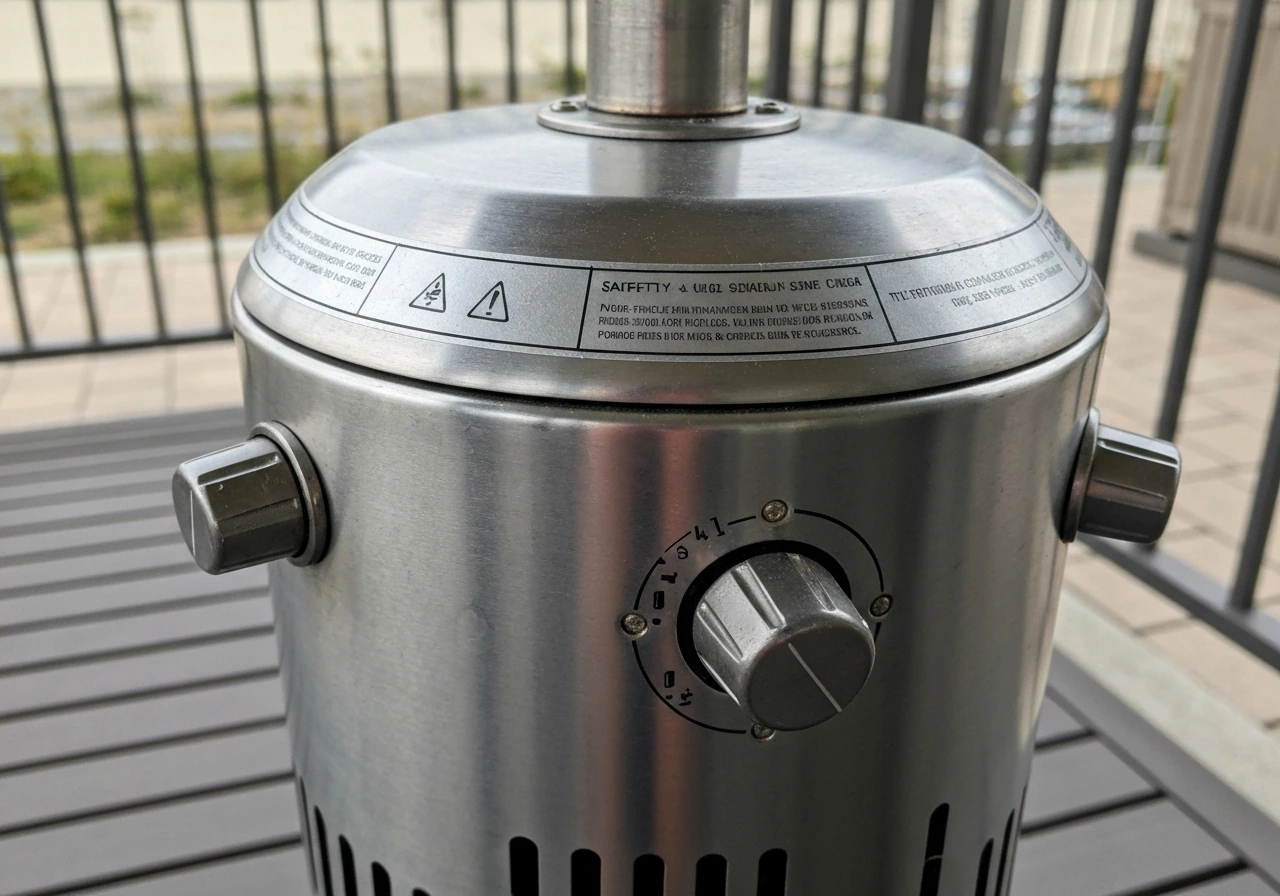
Confirm your exact BFC-A-SS model before you do anything else
Patio heater model numbers can be frustratingly inconsistent between the marketing label on the box, the sticker on the unit, and the header inside the manual. For the BFC-A-SS, here is what to look for so you know you have the right documentation.
- Rating plate or ID sticker: check the base housing or pole of the heater for a sticker showing the model number. On genuine BFC-A-SS units it will read BFC-A-SS, but you may also see BFH-A-SS printed there — these refer to the same heater family.
- Burner assembly: replacement parts listings confirm the BFC-A-SS uses a 3-bolt hole pattern burner (also catalogued as SS-GT BFC-A-SS). If your burner plate has three mounting bolts in a triangular pattern, you are in the right family.
- Safety certifications: the correct manual references ANSI Z83.26 / CSA 2.37 heater standards. If those codes appear on your rating plate or in any documentation you have found, you have the right series.
- Physical description: stainless steel pyramid (triangular tapered glass or mesh flame tube), single propane tank sitting in the base, rotary control knob on the lower housing, igniter button near the knob.
- Retailer SKU cross-reference: if you bought it at Home Depot Canada, SKU 1000800424 ties directly to the BFC-A-SS Gardensun unit.
If the sticker is missing or unreadable, match the burner bolt pattern and the physical pyramid shape. That combination is enough to confirm you are in the BFC/BFH-A-SS documentation family and that the manual and service guide will apply to your unit.
How to find the correct BFC-A-SS manual
The most reliable place to get the full document is Manualzz, where it is listed as 'Gardensun BFC-A-SS Owner's Manual.' The blank" rel="noopener noreferrer">downloadable PDF title says BFC-A-SS but the internal header reads 'Owner's Manual, Outdoor Patio Heater, Model # BFH-A-SS.' Do not let that confuse you. It is the same document. Search for either BFC-A-SS or BFH-A-SS and you will find it.
Gardensun also maintains a service center troubleshooting page on their own website that explicitly references the BFC-A-SS model with targeted disassembly steps and a symptom-by-symptom guide. That page is worth bookmarking alongside the PDF manual because it includes model-specific details (like the igniter arch spacing of 1/4 inch from the thermocouple for BFC models) that are not always in the printed manual.
If you cannot download the PDF right now, the troubleshooting sections below are drawn directly from both the manual's fault table and the Gardensun service guide, so you can work through your problem today without waiting.
One note for comparison: if you have a unit that looks similar but has a slightly different model code, the HSS-A-SS patio heater manual covers another stainless heater in the same broader Gardensun-adjacent family and may fill in gaps if your specific manual is hard to locate. If you are working with an HSS-A-SS model and your BFC-A-SS manual does not match, the HSS-A-SS patio heater manual can fill in the missing steps.
Safety checks before you touch anything
I want to be direct here: working around propane gas is not the same as fixing a squeaky hinge. Before you start any diagnosis, run through every item on this list. None of them take more than two minutes and any one of them could prevent a serious injury.
- Smell test first: if you smell gas near the heater at any point, stop immediately. Turn the cylinder valve fully clockwise to close it. Extinguish any open flames in the area. If the smell continues, step away and call your gas supplier or fire department. Do not attempt to diagnose anything until the gas smell is gone.
- Turn off and cool down: make sure the heater has been off for at least 15 minutes before opening any panels or touching the burner assembly. Metal parts stay hot longer than you expect.
- Ventilation: always troubleshoot outdoors or in a well-ventilated space. Never work on a propane appliance in an enclosed garage or shed.
- Check the regulator and hose: run your hand along the hose from the tank to the heater and feel for cracks, kinks, or brittleness. A damaged hose needs replacement before you do anything else. A quick leak test with soapy water on every connection will show bubbles if gas is escaping.
- Tank level and condition: make sure the propane cylinder is not overfilled (it should weigh no more than what a standard 20 lb tank holds) and that it is not dented, corroded, or past its inspection date stamped on the collar.
- Level surface: place the heater on a flat, level surface before any test-fire. The anti-tilt safety switch will cut gas flow if the unit is even slightly off-level, and you will waste a lot of time diagnosing a problem that is simply the heater being on uneven ground.
- No ignition sources nearby: clear away dry leaves, cushions, or anything combustible within a 3-foot radius before testing ignition.
Heater won't ignite: step-by-step diagnosis
When the BFC-A-SS won't ignite at all, you are working through a short list of likely culprits. Go through them in order rather than jumping to the most complicated fix.
Step 1: Check the obvious stuff first
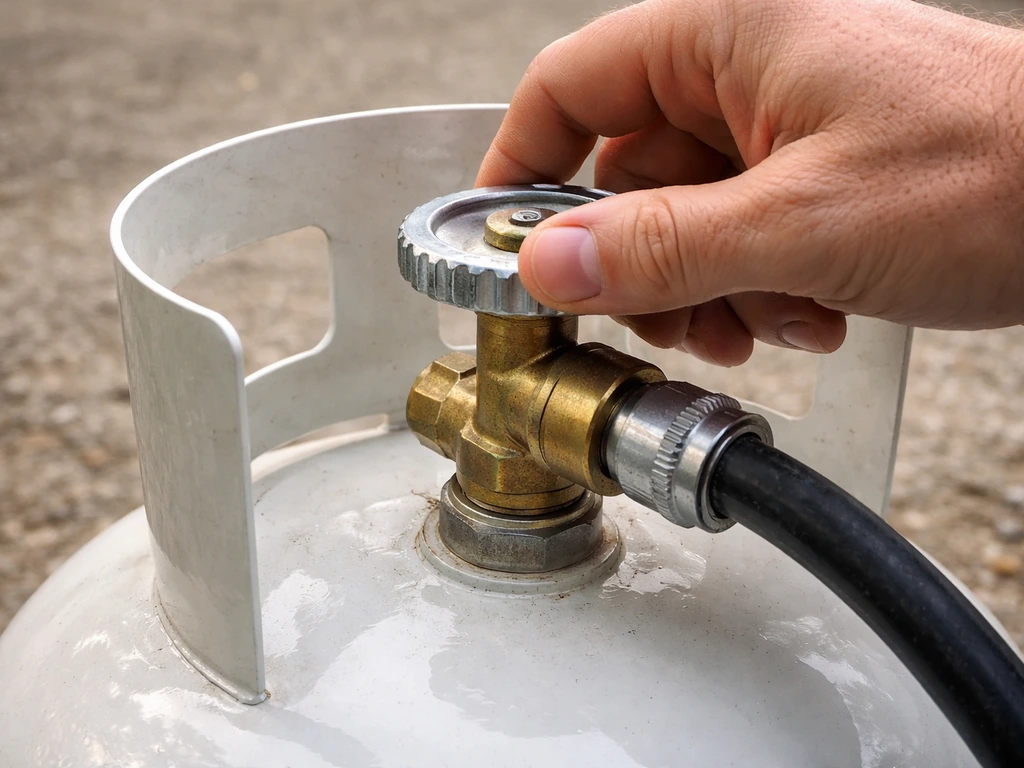
- Open the cylinder valve: turn the tank valve counterclockwise until it stops. It sounds obvious, but a partially closed valve is the most common cause of a no-ignition call.
- Check the temperature: propane loses pressure significantly below 40°F (5°C). If it is cold outside and your tank is less than 1/4 full, low gas pressure may be the issue. Replace or refill the cylinder and try again.
- Bleed air from the gas line: if the tank is new or was recently disconnected, there may be air in the line. Press and hold the control knob in for no more than 1 to 2 minutes or until you can faintly smell gas at the burner. This bleeds the air out and allows propane to reach the pilot.
Step 2: Test the igniter
- Press the igniter button and watch for a visible spark at the pilot. Do this in low-light conditions if possible so the arc is easy to see.
- On BFC models, the igniter arch should be set approximately 1/4 inch from the thermocouple. If the gap is too wide or the arc is missing the pilot entirely, the heater will not light.
- If there is no spark at all, the igniter module has likely failed. The manual's fix for this is straightforward: use a long match or grill lighter to manually light the pilot while holding the control knob in, then replace the igniter module when parts are available.
Step 3: Check for a blocked pilot tube or orifice
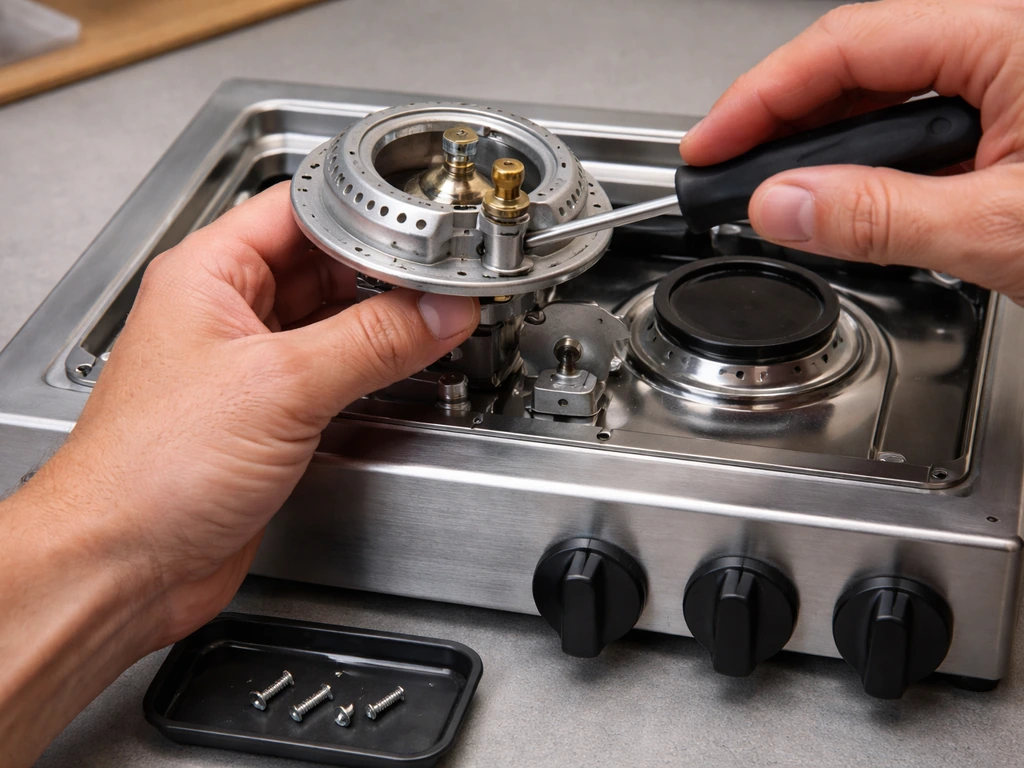
- Remove the four screws from the main head assembly to access the burner and control panel area. The Gardensun service guide walks through this disassembly for the BFC-A-SS specifically.
- Use an air compressor to blow through the pilot tube and all the vents in the center burner. Blockages are common after a heater sits unused for a season.
- If an air compressor is not available, a zip tie or pipe cleaner can clear visible debris. Work gently so you do not widen the orifice.
- Reassemble, then retry ignition following the normal startup sequence: open valve, press and hold knob, spark, hold for 30 seconds after pilot lights, then turn to desired heat setting.
Heater won't stay lit: thermocouple, gas valve, and pilot checks
A heater that lights briefly and then goes out is almost always a thermocouple problem, a dirty pilot, or a loose connection. The BFC-A-SS uses the thermocouple as the primary safety component in the gas circuit: if the thermocouple does not generate enough millivoltage to signal the gas valve, the valve closes and the flame goes out. Here is how to work through it.
| Symptom | Most Likely Cause | Fix |
|---|---|---|
| Pilot lights but goes out when you release the knob | Thermocouple not heating up fast enough or failing | Hold knob in for a full 30 seconds after the pilot lights before releasing. If it still goes out, thermocouple needs replacement. |
| Pilot lights briefly then dies | Dirty buildup around pilot head | Clean the pilot area with a soft brush or compressed air. Dirt interrupts thermocouple heating. |
| Flame goes out a minute or two after full ignition | Loose connection between gas valve and pilot assembly | Tighten the connection at the gas valve fitting. After tightening, perform a soapy-water leak check on that joint before relighting. |
| Pilot never stays lit regardless of hold time | Thermocouple has failed entirely | Replace the thermocouple. It is a relatively inexpensive part and a straightforward DIY swap on the BFC-A-SS. |
To replace the thermocouple: remove the four head-assembly screws, remove the screen cover from the control panel to access the burner assembly, and detach the thermocouple plugs. Slide the plastic collar back from the thermocouple connection, install the new unit in reverse order, and reassemble. The Gardensun service guide describes this exact path for the BFC-A-SS. Thermocouples for this heater family are widely available online and typically cost under $20.
Tilt switch and safety shutoff: what to test and how to fix it
The anti-tilt switch is a safety feature that cuts gas flow completely if the heater tips or leans. When it triggers, you get zero gas, zero flame, no matter what you do with the igniter or control knob. The fix depends on whether the surface is the problem or the switch itself.
Is the surface the problem?
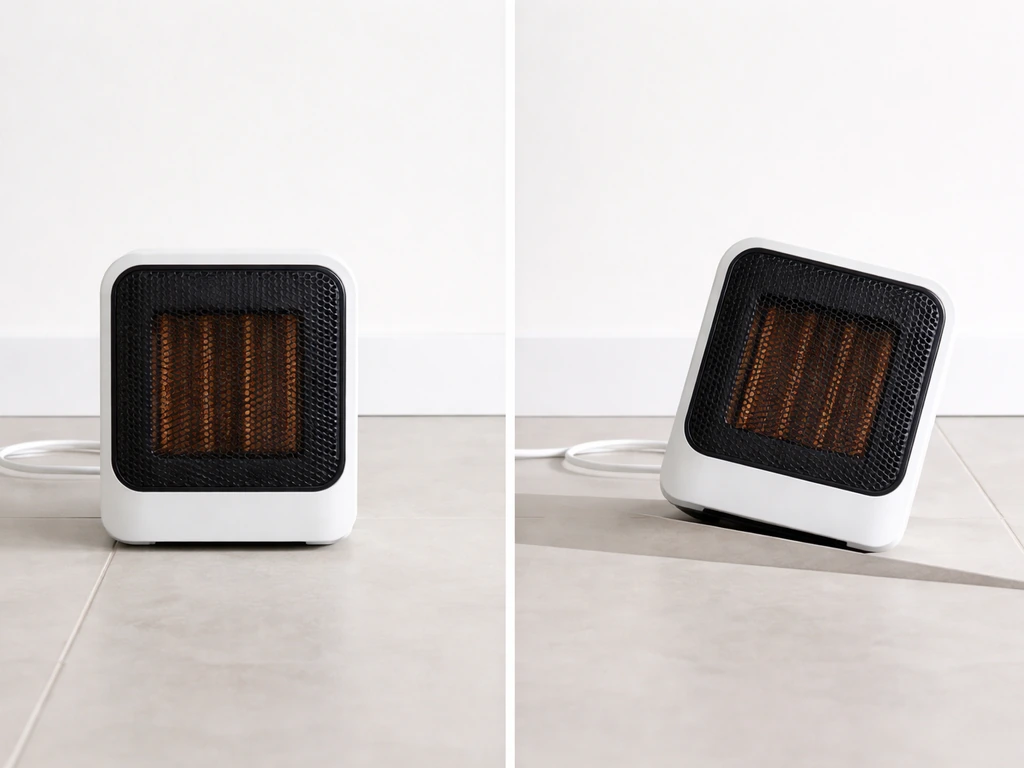
The Gardensun service guide is explicit: place the unit on a flat, level surface before anything else. Even a modest slope can trip the tilt switch. Move the heater to a known-flat surface, try ignition again, and see if that resolves it before going further.
Testing whether the tilt switch itself has failed
The Gardensun service guide includes a specific diagnostic test for the BFC-A-SS when the pilot lights but goes out after turning the unit on. Here is the procedure:
- Remove the four screws from the main head assembly and take off the control panel screen cover.
- Locate the thermocouple plugs. There are two connections: one for the thermocouple itself and one that passes through the tilt switch circuit.
- Carefully cross the two thermocouple connections into each other (swapping them), then attempt ignition.
- If the heater lights and stays lit after crossing the connections: the tilt switch is bad and needs replacement.
- If the heater still will not stay lit after crossing the connections: the thermocouple itself is the faulty component, not the tilt switch.
This test effectively bypasses the tilt switch in the safety circuit so you can isolate whether it is the switch or the thermocouple causing the shutdown. Replacement tilt switches for the BFC-A-SS are available through Gardensun's service center and through parts suppliers that list the SS-GT / BFC-A-SS compatibility. Do not leave the connections crossed for normal operation; this is a diagnostic step only, and the tilt switch is a real safety device that should be functional before you use the heater.
Basic maintenance and when to call for service
Maintenance you should do every season
- Clean the reflector and burner screen: the manual lists 'dirt or film on reflector and burner screen' as a cause of thick black smoke and reduced heat output. Wipe the reflector with a damp cloth and use a soft brush on the burner screen at the start and end of each season.
- Blow out the pilot tube and center burner vents with compressed air before first use each year. Insects and debris love to nest in small gas orifices during off-season storage.
- Inspect the regulator hose every season. Check for cracks, brittleness, or discoloration. Hoses typically need replacement every 5 years even if they look fine.
- Perform a soapy-water leak check on all connections each time the tank is changed. Apply solution, open the valve slowly, and look for bubbles at every fitting.
- Check the igniter arch gap: on BFC models it should be approximately 1/4 inch from the thermocouple. A gap that is too wide or too narrow causes unreliable ignition.
- Store the heater covered and upright. If storing the propane cylinder separately, always use an approved outdoor storage location away from heat sources.
When to stop and call a professional
Most BFC-A-SS problems fall into the DIY-fixable category: blocked pilot, bad thermocouple, faulty tilt switch, weak igniter. But there are situations where you should stop and get a qualified gas appliance technician involved:
- You smell gas and it does not clear after closing the cylinder valve and waiting several minutes.
- The regulator, gas valve, or any part of the internal manifold shows physical damage, corrosion, or cracking.
- You have replaced the thermocouple and the tilt switch and the heater still will not stay lit — this points to a gas valve problem that needs professional testing equipment.
- The pilot orifice appears damaged or enlarged rather than just blocked.
- Any repair requires working on the gas valve assembly itself. Valve internals are not DIY territory.
The BFC-A-SS is a repairable heater with widely available replacement parts, and most of the common failures here are well within a careful DIYer's ability to fix. But gas appliances have a firm line: when you are dealing with a gas valve, a manifold, or a persistent smell of gas that you cannot resolve, that is where you bring in a pro. NFPA 54, the National Fuel Gas Code, provides an authoritative framework for emergency actions around gas leak hazards, including “smell of gas” style guidance and proper emergency handling expectations before troubleshooting persistent smell of gas that you cannot resolve. Gardensun's service center can also help source BFC-A-SS-specific parts and in some cases provide direct support. Reaching out to them with your model sticker details is always a good fallback if you are stuck.
If you are also comparing documentation across similar heaters in this family, the Hiland patio heater manual and the HSS-A-SS patio heater manual cover closely related Gardensun-family units that share the same safety circuit architecture, so troubleshooting steps often translate across models when your specific document is unavailable. If you need the exact procedures for your Hiland unit, use the Hiland patio heater manual to match the steps to your model before you start troubleshooting.
FAQ
My BFC-A-SS patio heater manual header says BFH-A-SS, should I worry I downloaded the wrong document?
Usually no. For this heater family, the internal header uses BFH-A-SS even when the marketing label and sticker show BFC-A-SS. What matters is that your unit matches the BFC/BFH-A-SS documentation family, which you can confirm by the same pyramid body shape and burner bolt pattern. If the dimensions or burner assembly clearly differ, then stop and re-check the model codes before following any replacement steps.
What should I check first if the heater will not ignite at all?
Start with non-removal checks in this order: confirm the propane tank valve is open and the regulator is seated correctly, verify the control knob is fully in the lighting position, and inspect for an obviously blocked pilot area (insects or debris). If you have a match-lighting setup available, do not rely on it as a fix, use it only to confirm whether the pilot circuit can light, then proceed to the thermocouple and connections.
The heater lights briefly and then goes out, why does that happen?
The most common cause is insufficient thermocouple millivoltage to keep the gas valve open. Dirty or misaligned pilot components and loose or corroded connections can also cause the same symptom. Focus on thermocouple condition first, then clean the pilot path, and finally check that all thermocouple plugs and collars are reinstalled correctly.
How do I tell whether the tilt/anti-tilt switch is the problem versus the thermocouple?
Do a controlled placement test on a truly level surface first. If the symptom persists, use the diagnostic procedure described for the BFC-A-SS family to isolate whether the thermocouple is failing to signal the gas valve or whether the tilt circuit is cutting gas. Important caveat: do not treat that isolation as normal operation, reconnect the safety device properly afterward because the anti-tilt switch is there to prevent tipping injuries.
If my igniter clicks but there is no flame, what is the likely next step?
Igniter clicking alone does not mean gas is flowing correctly. If you get zero flame, check the pilot and the safety circuit first, then inspect the ignition path for obstruction. If you confirm the pilot can light but the main flame does not stay on, that shifts the diagnosis toward thermocouple and valve safety response rather than the igniter.
How can I clean the pilot without damaging anything?
Remove debris gently and avoid widening or distorting any pilot openings. Use dry cleaning methods like compressed air or a soft brush if the area is accessible, then reassemble and test. If you find the pilot area heavily fouled, clean until you can see through the pilot pathway consistently, then check connection tightness before replacing parts.
Is it safe to troubleshoot if I smell gas?
No. If you detect a gas smell that does not clear immediately, shut off the propane at the tank, do not ignite anything, ventilate the area, and wait before further checks. If you cannot identify and resolve the leak quickly, stop and contact a qualified gas appliance technician. Troubleshooting gas valves and manifold issues should not be DIY when there is an unresolved leak.
Where can I source a replacement thermocouple and what should I match?
Replacement thermocouples for the BFC/BFH-A-SS family are commonly available online and are often inexpensive. When ordering, match the compatibility listing to the BFC-A-SS/SS-GT family code used by suppliers, and verify the connector style fits your heater before you install it. If your heater uses a different connector or geometry, do not force connections.
Do I really need to level the patio heater before diagnosing problems?
Yes. Even a modest slope can trip the anti-tilt switch, producing a symptom that looks like an ignition or thermocouple failure. Place the heater on a known flat surface and retest before opening the control panel. This step can save time and prevents unnecessary parts replacement.
When should I stop troubleshooting and call a pro?
Call a qualified technician if you have a persistent or recurring gas smell, suspect a damaged gas valve or manifold, cannot confirm the pilot circuit behavior, or if any safety components are malfunctioning repeatedly after replacement. Also, if you are unsure about how to perform the tilt circuit diagnostic safely, treat that as a “do not proceed” condition and get help.