Yes, you can use a propane heater under a covered patio, but only if the space is open on the sides and has enough airflow to prevent carbon monoxide buildup. A breezy pergola or a patio with two or three open sides is generally fine. A three-season room with glass panels, a fully enclosed porch, or any space that traps air is not safe. CPSC’s Carbon Monoxide Information Center guidance similarly advises not to use portable heaters while sleeping in enclosed areas like tents, campers, or vehicles because low-ventilation settings increase carbon monoxide risk blank" rel="noopener noreferrer">enclosed spaces. The difference between a comfortable evening outside and a dangerous CO situation comes down to ventilation, clearance to overhead materials, and whether your specific heater is designed for this kind of use.
Can Propane Heaters Be Used Under a Covered Patio?

Ventilation, clearance, and carbon monoxide risk
Carbon monoxide is the real danger here, not heat or fire. Propane burns cleanly when it gets enough oxygen, but even well-tuned burners produce CO as a byproduct. Outside in open air, that dissipates instantly. Under a cover with restricted airflow, it can accumulate to dangerous levels faster than you'd expect. The NFPA, CPSC, CDC, and Propane Education and Research Council all say the same thing: propane outdoor heaters must not be used in enclosed or semi-enclosed spaces. The CDC specifically flags garages, carports, and areas near doors and windows as risky even when you think there's airflow.
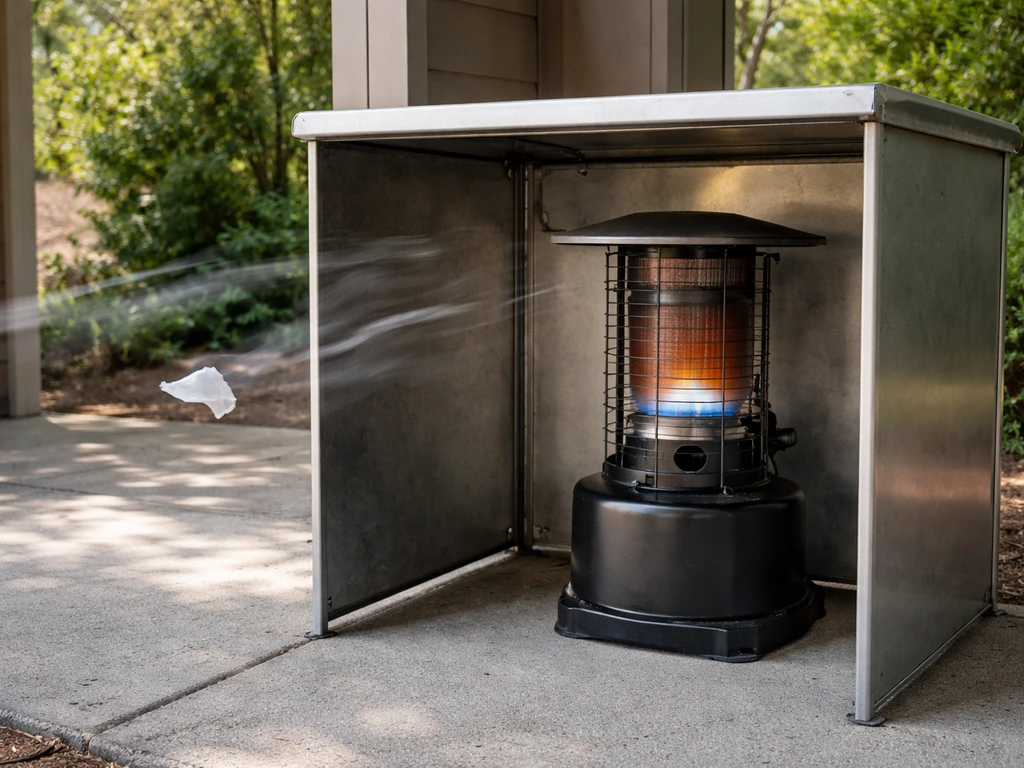
The practical test is this: if you can feel a cross-breeze on your covered patio, and at least two full sides are open, you're likely in acceptable territory. If the air feels still and contained, treat the space as enclosed and don't run the heater. A battery-operated CO detector placed at head height near the heater is a cheap and worthwhile addition to any covered setup, regardless of how open you think the space is.
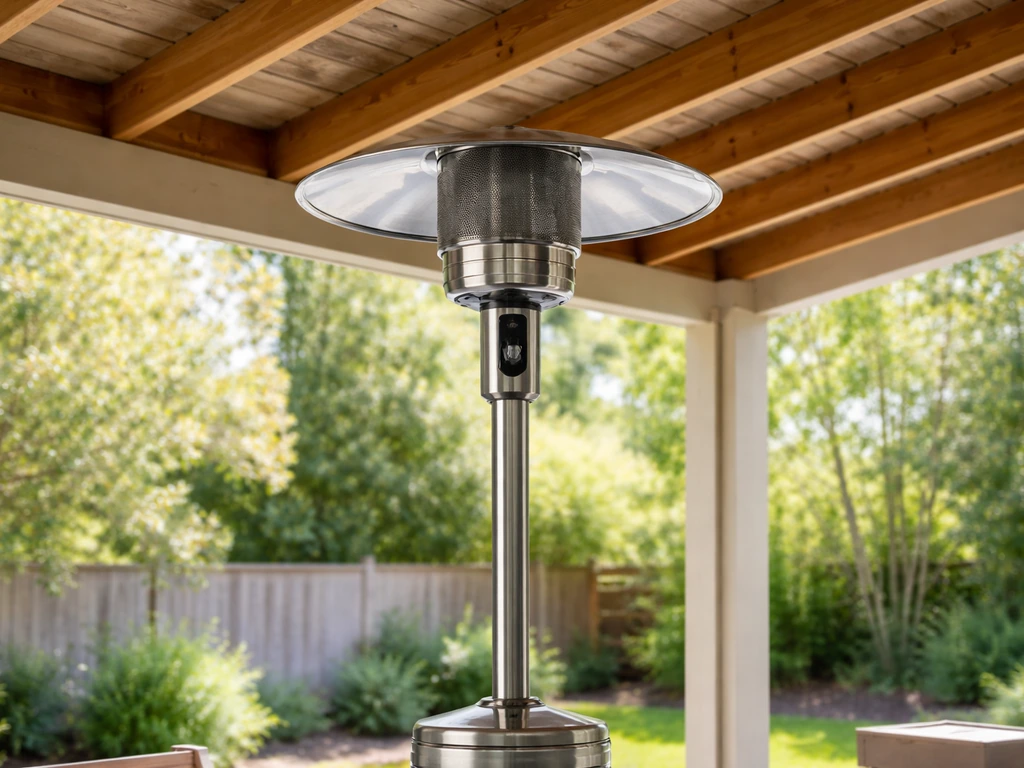
Clearance to the overhead surface matters just as much as ventilation. The Heatstar HSRP37GL/HSRP37MT manual, for example, blank" rel="noopener noreferrer">lists a minimum 16 inches of clearance to combustible surfaces above the heater. Most mushroom-style patio heaters push heat upward in a wide cone, which means your patio ceiling takes the brunt of radiant heat. A wood-framed pergola with a lattice cover or a fabric sail shade can reach ignition temperatures if the heater is running directly underneath with too little overhead clearance. Always check your specific heater's manual for the exact clearance numbers, because they vary by model and BTU output.
Weatherproofing and fire safety under a cover
A covered patio actually does your heater a favor in one way: it keeps rain off the burner head, which reduces pilot and ignition issues caused by moisture. But that protection comes with its own trade-offs. Wind blowback under a roof can redirect flame sideways instead of letting it burn straight, which can trip the tilt switch or cause incomplete combustion. If you're noticing your heater shutting off unexpectedly under a covered area, wind channeling under the roof is a likely cause, not a heater fault.
The hose and regulator connection at the base of the unit are often overlooked. Under a covered patio, these components may be sheltered from direct rain but still exposed to condensation, temperature swings, and insects. Inspect the regulator and hose before each season for cracks, brittleness, or insect nesting inside the regulator vent. A damaged regulator is a fire and gas leak risk that no amount of good ventilation will fix. Propane hoses should be replaced every five years as a baseline, regardless of visible condition.
Overhead cover materials matter a lot for fire safety. Vinyl patio covers and fabric sail shades can melt, drip, or ignite when exposed to sustained radiant heat. Aluminum or steel patio covers are more forgiving, but they'll still conduct and trap heat if clearance is too tight. Concrete, tile, and masonry overhead surfaces are the safest. Whatever your cover material, verify the minimum clearance distance from your heater's manual and add a buffer on top of that, especially if the overhead surface is combustible.
Picking the right heater type for a covered patio
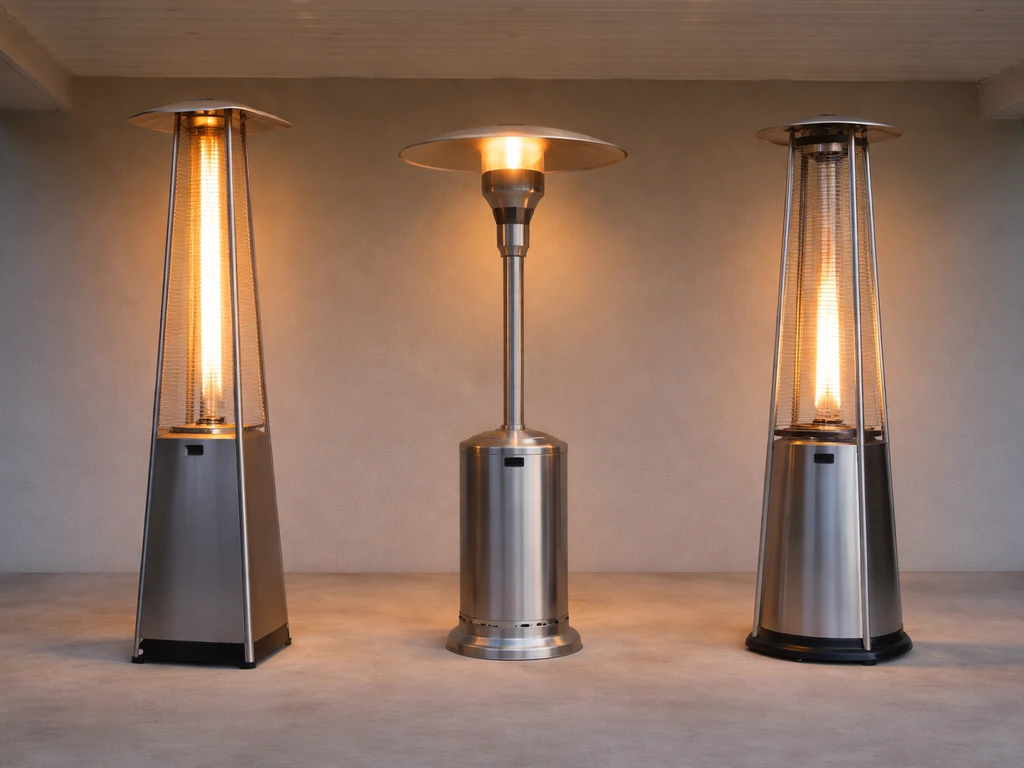
Not all propane heaters are the same, and the type you choose changes how safe and practical a covered-patio setup is. These guidelines also help answer the question of whether you can use a propane fire pit under a covered patio safely covered-patio setup. The most common types homeowners deal with are freestanding mushroom-style heaters, tabletop propane heaters, wall-mounted infrared heaters, and garage-style forced-air heaters. Each has different ventilation requirements, clearance profiles, and best-use scenarios under a cover.
| Heater Type | Heat Direction | Covered Patio Fit | Key Concern |
|---|---|---|---|
| Freestanding mushroom/tower | Upward cone | Okay with high clearance and open sides | Overhead clearance, tilt switch trips from wind |
| Tabletop propane | Upward and outward | Good for low-ceiling covered areas | Proximity to table materials, tip-over risk |
| Wall-mounted infrared (propane) | Directional, downward or outward | Best option for covered patios | Must be hard-plumbed or properly secured; check manual for enclosed-space rating |
| Garage-style forced-air | Forced air, directional | Not suitable for open residential patios | Designed for large semi-open workshops, not casual patios; high CO output |
For most covered residential patios, a wall-mounted infrared propane heater is the most practical and safest choice. These units direct heat downward toward people rather than pushing it upward into a ceiling, and they keep the floor clear of propane tanks and hoses. Models like the Heatstar HSRP37 series are designed with clearance specs built into the manual, so you know exactly what you're working with. If you already own a freestanding mushroom-style heater and want to use it under a cover, it can work, but you need high ceilings (8 feet or more above the heater head), fully open sides, and close attention to overhead clearance. Using a propane fire pit under a covered patio raises its own set of considerations since those units throw heat in all directions at low height, which is a different risk profile than a tower heater. If you are thinking about a Solo Stove, the same ventilation and clearance principles apply because it can still create a higher heat load under a cover propane fire pit.
Manufacturer instructions, codes, and local rules
The manufacturer's manual is not optional reading here. Mi-T-M, Heatstar, and most other brands specifically design their propane patio heaters for outdoor patio and deck use, and their manuals include safety language that defines what 'outdoor' means for that unit. If a manual says 'not for use in enclosed spaces,' that's a legal and liability line as much as a safety one. Ignoring it means you're operating outside the product's approved use, which affects both your safety and your homeowner's insurance coverage if something goes wrong.
On the code side, NFPA 1 (Fire Code) governs outdoor heater placement and use in many U.S. jurisdictions. Beyond that, local building and fire codes vary, and some municipalities have specific rules about propane appliances on covered patios, especially in HOA communities or multi-family buildings. It's worth a quick call to your local fire marshal or building department if you're doing a permanent wall-mount installation, running a hard gas line, or setting up in a shared residential building. The cost of that call is zero; the cost of a code violation or fire investigation is not.
Safe setup checklist before you fire it up
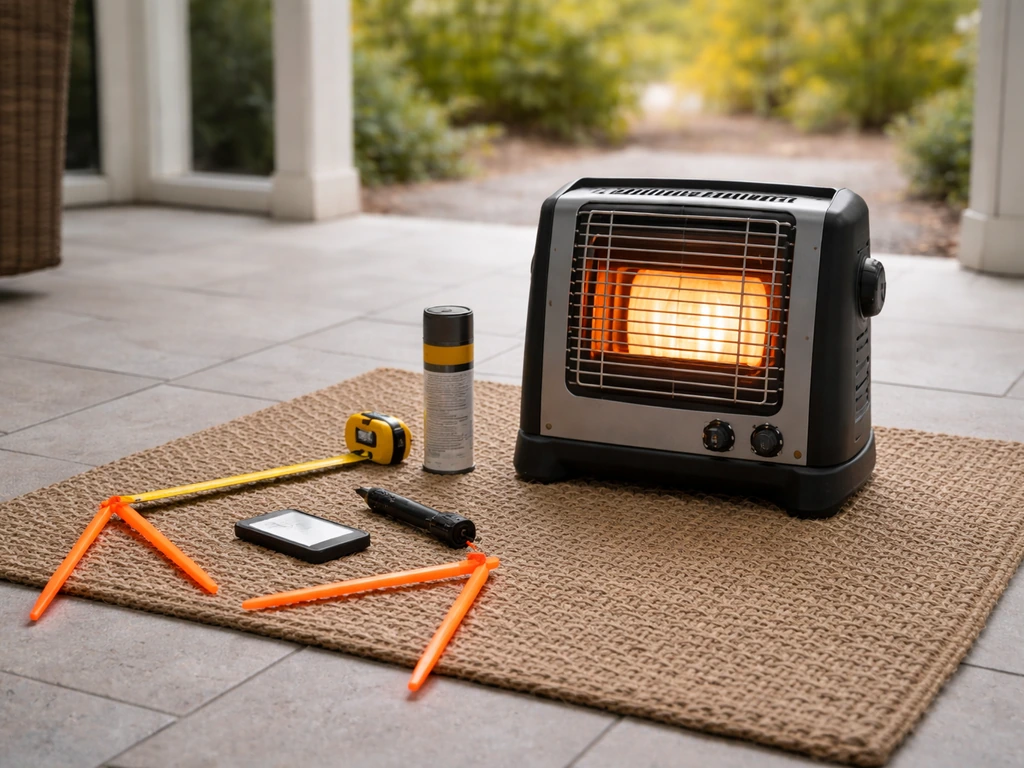
Run through this checklist every time you set up or reposition your propane heater under a covered patio, not just the first time. Conditions change, and a setup that was fine last season may not be fine after a cover repair, new furniture arrangement, or layout change.
- Confirm the patio has at least two fully open sides with no screens, glass, or solid panels blocking airflow.
- Measure overhead clearance from the top of the heater (or burner head) to the ceiling or cover surface. Compare this to the minimum clearance in your heater's manual. Add at least 6 inches of buffer if the overhead material is combustible.
- Check the propane hose and regulator for cracks, brittleness, discoloration, or insect debris. Replace hoses older than five years.
- Perform a leak test: apply soapy water to all connections, open the valve slowly, and look for bubbling. Do not light the heater if you see or smell any leak.
- Verify the heater is on a stable, level surface (for freestanding units) or that wall brackets are secure (for mounted units). Check that the tilt safety switch moves freely and resets correctly.
- Place a battery-operated CO detector at head height within 10 feet of the heater.
- Confirm no combustible materials (furniture cushions, fabric covers, decorations, overhead plants) are within the manufacturer's specified clearance distances on all sides.
- Read your manual's lighting procedure and follow it exactly. Do not improvise ignition on a propane appliance.
Signs that mean stop immediately
- Yellow or orange flame instead of a consistent blue flame (indicates incomplete combustion and higher CO output).
- Smell of propane during or after operation (shut off the valve, leave the area, ventilate before investigating).
- CO detector alarm at any reading.
- Heater repeatedly shutting off, especially under wind conditions (do not override the safety switch; diagnose the cause first).
- Visible scorching, discoloration, or heat damage on the overhead cover surface.
- Any hissing sound near the regulator or hose connections.
When to skip covered use entirely
- The covered area has three or more enclosed sides, regardless of how large the opening is.
- Ceiling height above the heater head is under 8 feet for a freestanding tower-style unit.
- The overhead material is fabric, vinyl, or untreated wood within the combustible clearance zone.
- You cannot perform a proper leak test before use.
- The heater hasn't been inspected or serviced in over two years and shows signs of ignition problems or thermocouple issues.
If your heater is failing to stay lit, struggling to ignite, or has known issues with the thermocouple or tilt switch, fix those problems before moving the unit under any covered space. A heater with a compromised safety system is more dangerous in a covered area than in open air, because the consequences of a failed shutoff are worse when ventilation is limited. Get the heater working correctly first, then worry about placement.
FAQ
What if my covered patio has only one or two openings, is it still okay?
No, even if the patio is partially covered, a space with only one open side, mostly walled-in areas, or a roof that traps air around the heater should be treated as semi-enclosed. If you cannot create and feel a steady cross-breeze at heater height, do not run it there.
Where should I place a CO detector if I run a propane heater under a covered patio?
Check both the heater manual and your CO detector placement. Use the detector at breathing height near where people sit (not only on the wall), test the alarm before each use, and replace the batteries on a regular schedule (for many units, at least annually).
Does the setup need to be rechecked after I change anything on the patio?
Yes, propane heater safety can change with airflow even if the heater and model stay the same. After any cover repair, screen installation, wind-blocking furniture changes, or rearranging umbrellas, re-evaluate ventilation using the cross-breeze test before relighting.
Can I run a propane heater under a covered patio during low-wind or foggy weather?
Not as a rule. Many heaters can be used outdoors, but a covered patio can behave like an enclosed space during low-wind evenings. In calm conditions, use the more conservative approach, for example, avoid operation when the air feels still and you cannot feel airflow at the heater.
What changes if I’m installing a propane heater permanently or using a hard gas line?
If your heater is hardwired or connected to a fixed gas setup, rules can be stricter. Confirm the installation complies with your local fuel-gas and fire code requirements, and verify the manual allows the exact mounting method and location.
What should I inspect on the hose, regulator, and ignition area before using the heater?
A common mistake is assuming “covered” means “safe from rain, so it’s fine.” Water and condensation can still affect ignition systems and regulator vents. Inspect for insect nests or moisture after storms, and do not use the heater if you see cracked hose, frost at connections, or strong propane odor.
My propane patio heater keeps shutting off under the cover, what should I do?
If the heater shuts off unexpectedly, do not keep trying to restart it under a cover. First, confirm ventilation by checking for a cross-breeze and repositioning away from walls or partitions if needed, then troubleshoot the tilt switch, airflow blockage, or wind channeling according to the manual.
Are tabletop or freestanding mushroom-style propane heaters safer or riskier under a covered patio?
Generally, avoid using a tabletop or low-height propane heater under tight roofs. Low units push heat across a larger floor area and have less margin for overhead clearance and heat reflection from nearby surfaces, which can increase ignition risk for nearby combustible materials.
How do I handle clearance if my patio ceiling or pergola has combustible materials?
For clearance, use the manual’s minimum measurement and add a safety buffer if the overhead surface is combustible (wood, fabric, vinyl, or lattice with coverings). Also consider radiant heat and heat buildup on nearby furniture cushions and structural beams, not just the immediate roof above the burner.
Can a forced-air or garage-style propane heater be used under a covered patio the same way as an infrared unit?
It depends on the unit type and how it’s venting internally. Forced-air “garage-style” heaters can circulate combustion products differently than infrared units, so rely on the manufacturer’s defined installation environment and clearance and do not assume they’re interchangeable.