You can use a propane fire pit under a covered patio, but only if specific clearance and ventilation conditions are met. It is not a blanket yes or no. The determining factors are: how high your ceiling or overhang is, how open the sides of your patio are, and what your fire pit's manual actually says about covered or overhead installations. Get those three things right and it's workable. Get them wrong and you're looking at carbon monoxide buildup, scorched rafters, or a fire.
Can You Use a Propane Fire Pit Under a Covered Patio?

Grant Mercer
18 May 2026
The honest answer: covered patio use is conditional
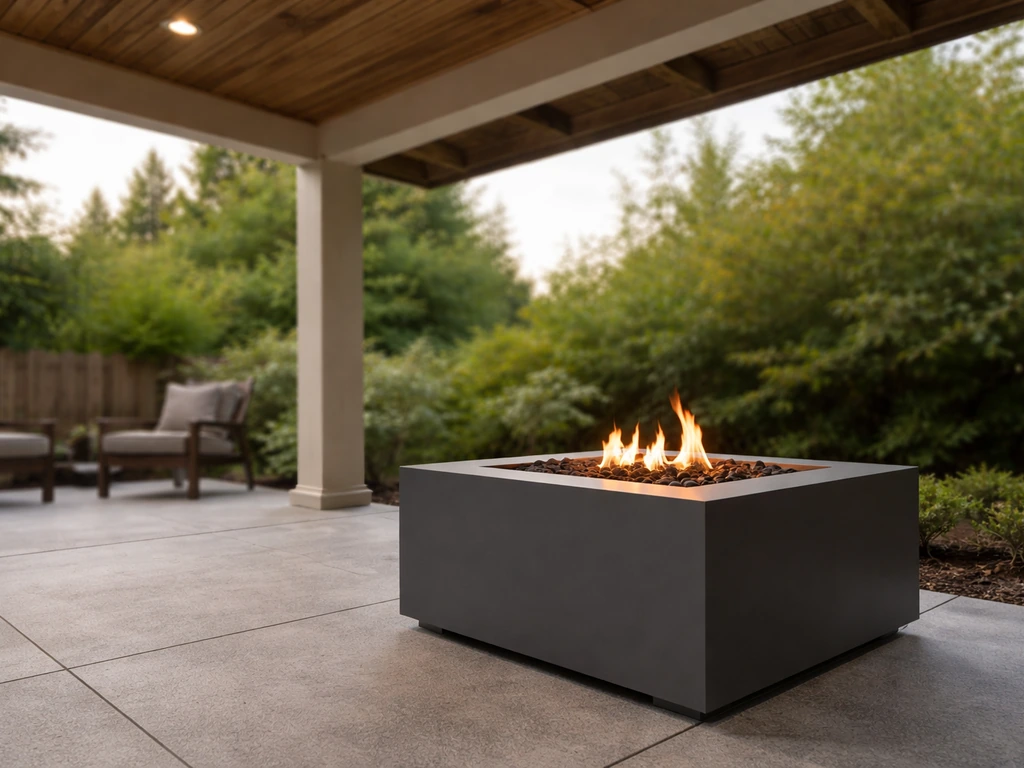
Most propane fire pits are labeled 'FOR OUTDOOR USE ONLY,' which technically includes a covered patio, but the fine print matters. Some manufacturers do address covered installations directly. The O.W. Lee 51-20 Aero manual, for example, specifies that if the fire pit is installed under a ceiling or overhang, you need a minimum of 60 inches (1.5 m) of clearance from the top of the unit to the ceiling. O.W. Lee's 51-20 Aero owner's manual states that if the fire pit is installed under a ceiling or overhang, a minimum overhead clearance of 60 inches (1.5 m) from the top of the unit is required blank" rel="noopener noreferrer">minimum of 60 inches (1. 5 m) of clearance from the top of the unit to the ceiling. EcoSmart Fire goes even further, requiring 72 inches (about 1,830 mm) from the top of the burner to any overhang. These aren't suggestions. They're the manufacturer's minimum conditions for the unit to be considered safely installed. If your patio ceiling is lower than your fire pit's stated requirement, using it under that roof is a hard no.
The risk isn't just heat. Propane combustion produces carbon monoxide, carbon dioxide, and water vapor. Under an open sky, those gases disperse immediately. Under a roof with limited airflow, they can accumulate. Even a partially enclosed patio can trap enough combustion byproduct to become dangerous over an evening of use. That's the core problem that clearance and ventilation requirements are designed to address.
The safety factors that actually determine the answer
Overhead clearance
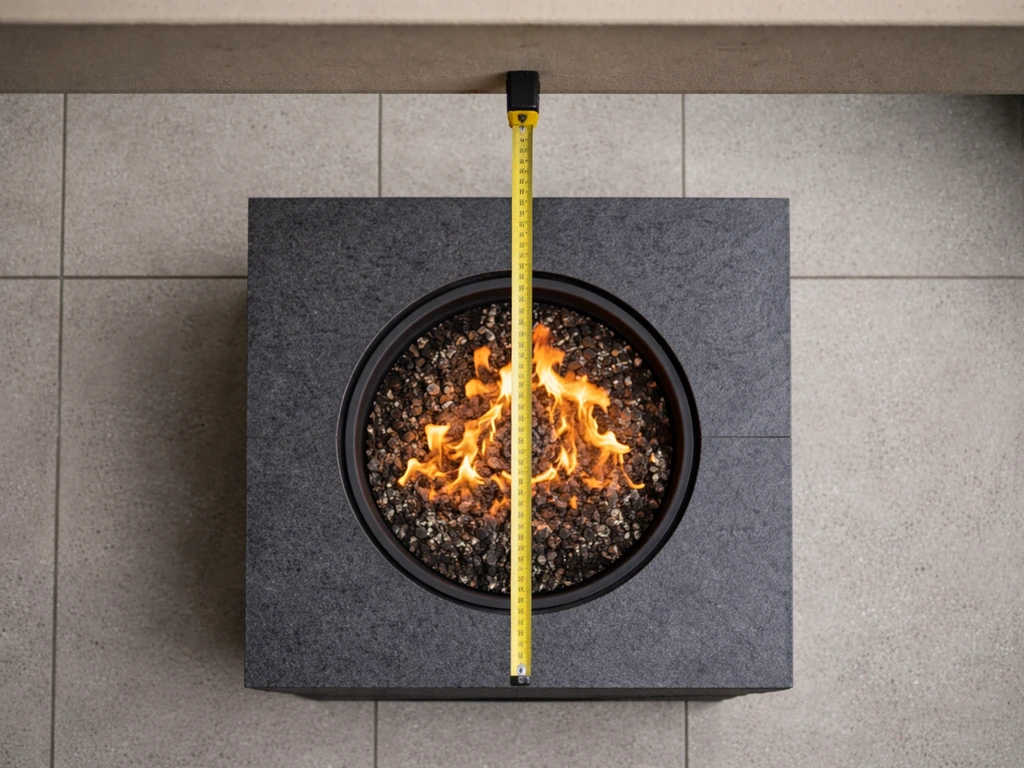
This is the most concrete measurement to check. Measure from the top of your fire pit's flame opening (or the top of the burner assembly) straight up to the lowest point of your ceiling, soffit, or overhang. If you don't have at least 60 inches, you're already below the minimum threshold set by manufacturers like O.W. Lee. If EcoSmart's 72-inch requirement applies to your unit, your ceiling needs to be even higher. A standard 8-foot (96-inch) patio ceiling gives you a reasonable buffer if your fire pit sits low to the ground, but measure it rather than estimating.
Ventilation and airflow
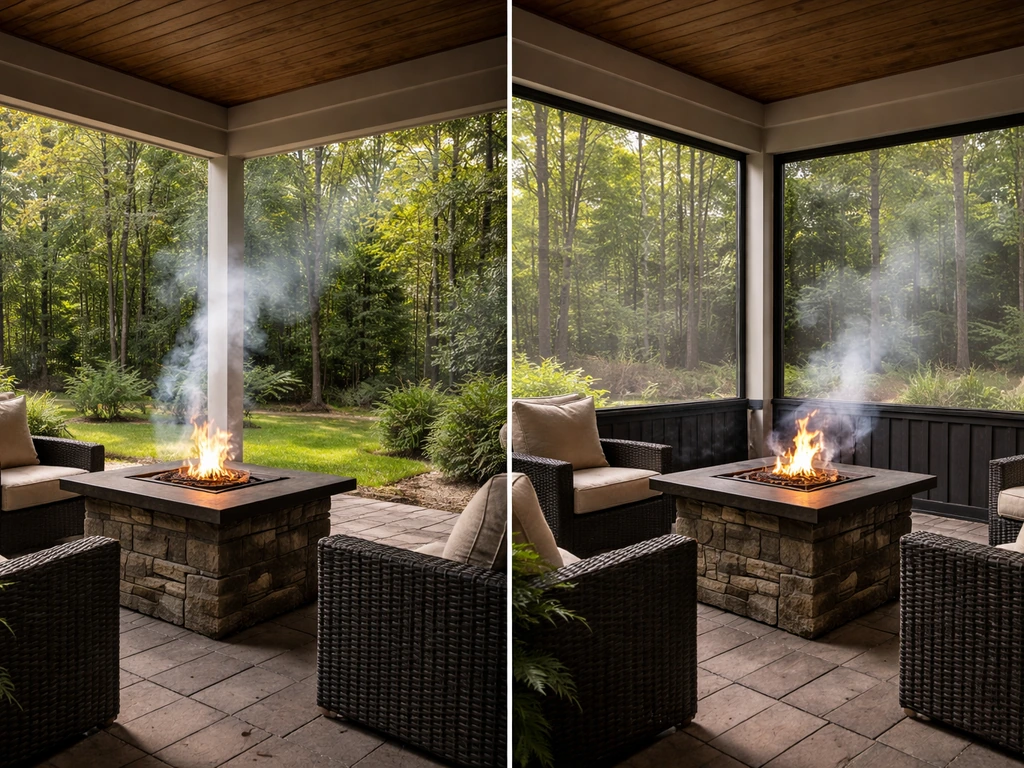
A covered patio with three or four open sides is very different from one with screen walls, glass panels, or solid skirting. The more enclosed the space, the faster combustion gases accumulate. As a working rule, at least two sides of the patio should be fully open to outside air, and there should be no low ceiling pockets directly above the flame where heat and gases can pool. If you can feel a natural cross-breeze while standing at the fire pit's location, that's a positive sign. If the air feels stagnant, treat it as an enclosed space and don't run the fire pit there.
Wall and soffit proximity
Horizontal clearance matters too, though it's often overlooked. Keep the fire pit at least 3 feet away from any wall, column, or vertical surface. Soffits that extend outward from the house can reduce effective overhead clearance on the side closest to the structure, so measure at the closest point of the soffit, not the peak of your patio ceiling. If one side of your patio is directly against the house wall with a low soffit above it, position the fire pit toward the outer edge of the patio where clearances are greatest.
Check your manual before you do anything else
Every propane fire pit ships with an owner's manual that includes installation clearances and approved use conditions. If you don't have the paper copy, search for the model number plus 'owner's manual' or 'installation guide' online. Most manufacturers host PDFs. Look specifically for these things in the document:
- A section titled 'Installation,' 'Clearances,' or 'Safety Instructions' that lists minimum distances to combustible materials
- Language about covered or overhead installations, including specific ceiling height requirements
- Whether the unit is approved for use under a ceiling or overhang at all, since some manuals prohibit it entirely
- The BTU output of the unit, because higher BTU burners (above 50,000 BTU) typically require greater clearances
- Whether the regulator and hose assembly are rated for outdoor use, which affects performance in cold or wet conditions
- Any language about ventilation requirements, minimum open-air exposure, or prohibited enclosure types
If the manual says nothing about covered use, that's not a green light. Contact the manufacturer directly and ask. Using a unit in a way the manufacturer didn't document shifts liability to you if something goes wrong, and more practically, it means you're operating without safety guidance designed for your specific burner and heat output.
Placement tips for real patio setups

Most covered patios fall into a few common configurations, and placement strategy differs for each.
Open-sided pergola or lattice roof
A pergola with open slats or a lattice overhead is the most forgiving covered setup. Combustion gases can escape through the gaps, and you get partial shade without full enclosure. Even here, measure the overhead clearance to the lowest structural beam, not just the open sky above. Center the fire pit under the most open section, away from any solid beams directly above the flame.
Solid-roof patio cover or attached porch
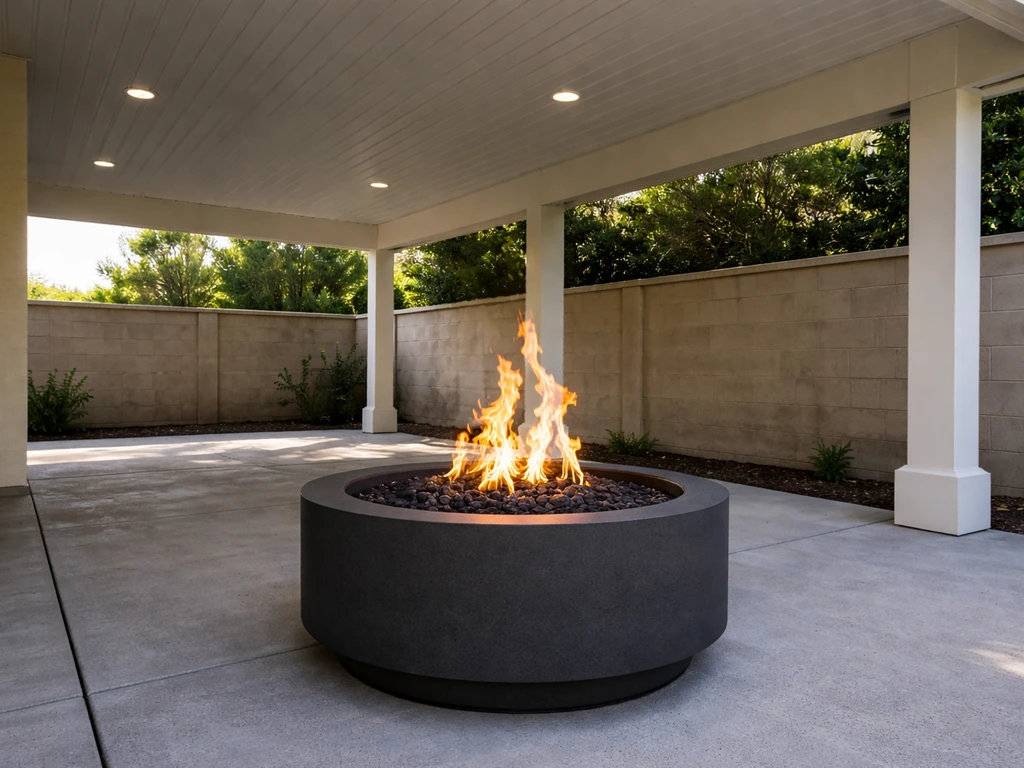
This is the setup that requires the most caution. A solid roof with limited open sides is close to a semi-enclosed space. Here, the 60- to 72-inch ceiling clearance requirement becomes critical, and you should only run the fire pit if at least two full sides are open and there's a clear path for air to circulate. Position the fire pit in the center of the patio or toward the open sides rather than near the house wall. Never use it in a corner where two solid walls meet the ceiling, as that traps heat and gases with no escape route.
Screened-in porch
A screened enclosure significantly restricts airflow even though it feels open. Screens slow air exchange enough that carbon monoxide can reach unsafe concentrations during extended use. Most manufacturer manuals prohibit fire pit use in screened enclosures. Don't use a propane fire pit in a screened porch.
Inspect the unit before every covered-patio use
Under an open sky, a small propane leak is annoying. Under a covered patio, it's a genuine ignition hazard. Before you light up the fire pit under any overhead structure, run through this physical check. It takes about five minutes and it's worth every one of them.
Hose and regulator
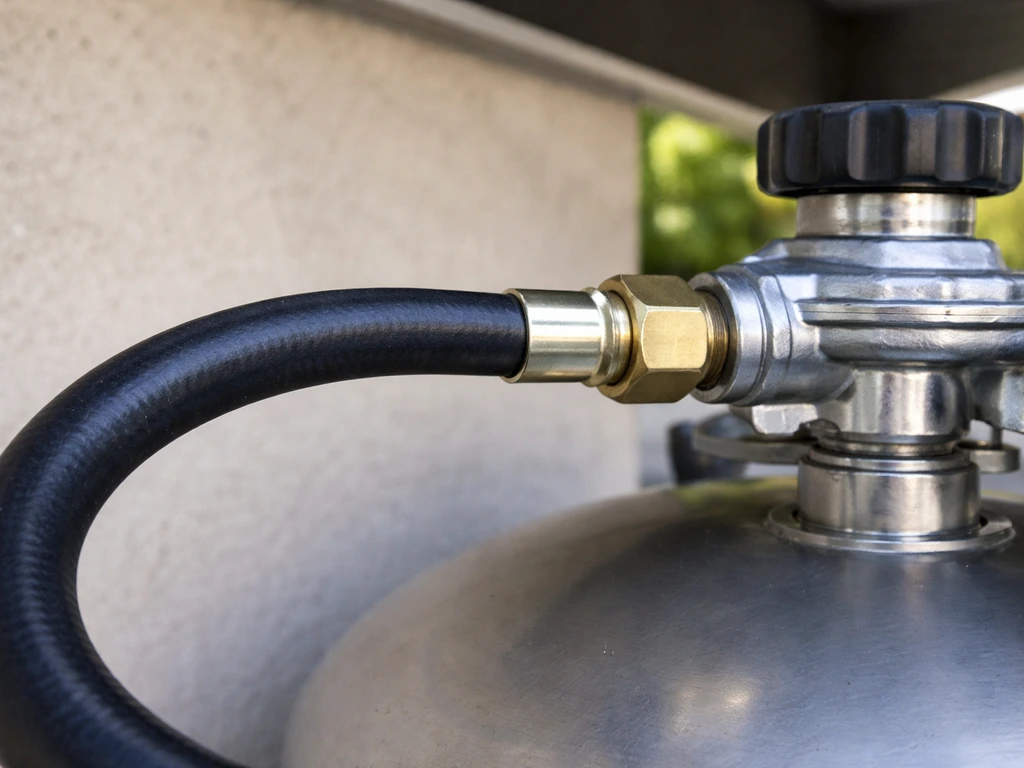
Look over the entire length of the hose for cracks, kinks, abrasion marks, or any section that looks flattened or hardened. Rubber hoses degrade over time, especially if the fire pit sits outside year-round. The regulator connection at the tank should be hand-tight with no visible damage to the threads. To check for leaks, mix dish soap with water and brush it over every connection point: the tank valve, the regulator inlet, and both ends of the hose. Open the tank valve slowly and watch for bubbles. Bubbles mean a leak. Close the tank immediately, don't light anything, and fix the connection or replace the component before proceeding.
Burner and burner ports
Spider webs and insect nests inside burner tubes are one of the most common causes of ignition problems and uneven flames. Use a thin wire or a can of compressed air to clear the burner ports (the small holes along the burner ring or bar). A clogged port forces gas out through unintended paths, which creates unpredictable flame behavior, exactly the kind of thing you don't want under a roof. While you're at it, check that the burner sits level and is secured properly. A shifted burner can direct flame toward a surface it shouldn't reach.
Ignition system
Look at the igniter tip. It should be positioned close to the burner port (usually about 3 to 5 mm gap) and free of carbon buildup or corrosion. A dirty or misaligned igniter is the number one reason a propane fire pit clicks but doesn't light. Clean the tip with fine steel wool or an emery cloth and check the gap. If the igniter uses a battery-powered piezo system, replace the battery if it's been more than a season. Test the spark by pressing the igniter button in a dim environment, you should see a clear blue spark at the tip.
Troubleshooting when it won't ignite or won't stay lit
Ignition and flame-retention problems are especially important to understand when you're using a fire pit under a cover, because the instinct to keep trying to light a unit that isn't cooperating means you may be releasing unburned propane into a partially enclosed space. That's a serious hazard. Here's how to approach these symptoms systematically.
Clicks but won't light
First, confirm the tank has propane and the valve is open. Then check the igniter gap and clean the tip as described above. If the spark is strong but gas isn't reaching the burner, the regulator may have gone into bypass mode, which happens when the tank valve is opened too fast. Close the tank valve, disconnect the regulator, wait 30 seconds, reconnect, then open the tank valve very slowly (about a quarter turn per second). This resets the regulator's overpressure protection. If none of that works, use a long-handled lighter to manually light the burner while holding the control knob in the ignition position. If it lights manually but not by the igniter, the igniter is the problem, not the gas system.
Lights but won't stay lit
A flame that lights and then dies within a few seconds usually points to the thermocouple or thermopile. These are safety sensors positioned near the burner flame. When the flame is present, the thermocouple heats up and generates a small voltage that tells the gas valve to stay open. If the thermocouple is dirty, misaligned, or failing, it doesn't produce enough signal, and the valve shuts off as a safety measure. Clean the thermocouple tip with fine steel wool (no lubricants), then recheck its position. The tip should sit directly in the path of the flame, not beside or behind it. If cleaning and repositioning don't fix it, the thermocouple needs to be replaced. This is a straightforward part swap on most fire pits and costs under $20 for a universal replacement.
Safety stop rules: when to shut it down immediately
Under a covered patio, your threshold for stopping should be lower than it would be in an open yard. Shut the tank valve off and stop using the fire pit if you notice any of the following:
- You smell propane at any point during or after ignition attempts
- The flame is yellow or orange rather than blue, which indicates incomplete combustion and higher CO output
- The flame is uneven, with some ports not burning or the fire pulsing irregularly
- You've attempted to light it three or more times without success, meaning unburned gas may have accumulated
- Anyone nearby reports headache, dizziness, or nausea, which are early carbon monoxide symptoms
- The regulator or hose feels warm to the touch during operation
After shutting off, move everyone away from the patio, leave the area open to air out for at least 10 to 15 minutes, and don't attempt to relight until you've identified and fixed the root cause.
Decision checklist: go or no-go for covered patio use
Use this before every session under a covered area. If you can check every box on the go list, you're in reasonable shape. Any item on the no-go list is a stop condition.
| Condition | Go | No-Go |
|---|---|---|
| Overhead clearance from top of unit to ceiling or overhang | 60 inches minimum (72 inches for some brands) | Less than 60 inches |
| Patio enclosure | At least 2 full sides open to outside air | Screened, glass-enclosed, or 3+ solid walls |
| Manual approval | Manufacturer documentation covers or allows overhead/covered use | Manual prohibits covered use or is silent and manufacturer hasn't confirmed |
| Pre-use leak check | No bubbles at any connection point | Any bubbles or smell of propane |
| Burner ports | Clear of debris, spider webs, and blockage | Clogged ports or visible damage to burner |
| Flame color and behavior | Steady blue flame across all ports | Yellow/orange flame or irregular burning |
| Thermocouple/ignition | Unit lights and holds flame on first or second attempt | Repeated failed ignition attempts releasing unburned gas |
| Distance from walls and house | 3 feet minimum from all vertical surfaces | Positioned in a corner or directly against a wall |
When the answer is just no: safer alternatives
If your covered patio doesn't meet these conditions, you still have good options for adding warmth and ambiance. Electric fire pits and electric patio heaters have no combustion, no CO risk, and no clearance restrictions tied to gas output. They work fine under low-ceiling covered patios and in more enclosed spaces. If you want the gas-fire look specifically, consider moving the propane fire pit to an open area of your yard and using a standalone electric heater under the cover instead. If you want the gas-fire look specifically, consider moving the propane fire pit to an open area of your yard and using a standalone electric heater under the cover instead, which can be a helpful comparison point when you’re wondering do patio heaters need to be covered. That same cautious approach applies to whether can patio heaters be used on a covered porch, since ventilation and clearance still matter standalone electric heater. The site has detailed guidance on propane patio heaters used under covered areas, which share many of the same clearance and ventilation principles as fire pits and are worth reviewing if you're weighing your options.
The bottom line is that a propane fire pit under a covered patio isn't automatically dangerous, but it requires deliberate setup. Measure your clearances, read the manual, check the hardware, and know when to stop. Treat the fire pit like the gas appliance it is rather than a decorative accent, and you'll have a setup that's both comfortable and safe. Propane heaters are subject to the same clearance and ventilation considerations as propane fire pits when used under a covered patio clearances.
FAQ
Can you use a propane fire pit under a covered patio if it’s open-air but there’s a low soffit on one side?
Yes, but treat the soffit side as the limiting factor. Measure overhead clearance at the closest point of the soffit, not the highest part of the patio. If that measurement drops below your fire pit manual’s minimum (for example, 60 inches or 72 inches depending on the unit), do not use it there even if the opposite side looks open.
What if my patio is covered by a pergola with slats, but the wind is calm when I use the fire pit?
A calm day increases the chance that combustion gases linger, especially in partially enclosed areas. If you cannot feel a natural cross-breeze at the fire pit location, pause and reassess your setup. Consider relocating the fire pit to a more open area or avoid using it under that specific portion of the patio.
Is it safe to run the propane fire pit longer under a covered patio to get more heat?
Longer burn times raise risk if airflow is limited, because CO can accumulate in partially enclosed spaces. The safer approach is to use shorter sessions and stop earlier if you notice symptoms like headache, dizziness, unusual soot, or lingering propane odor. If symptoms appear, shut off immediately and ventilate for at least 10 to 15 minutes.
Do I need to worry about horizontal distance from the roof edges or just from walls and columns?
Both matter, but horizontal clearance is specifically about preventing heat damage to nearby vertical surfaces. Also watch roof edges that create pockets, for example when a low structural member extends toward the flame area. If the closest overhead point is reduced by an overhanging structure, it can trigger the same clearance limit as the ceiling requirement.
Can I use a propane fire pit under a screened patio if the flames look strong and the enclosure feels drafty?
No, because screening still slows air exchange compared with open air, which can allow CO levels to rise during extended use. Even if the flame seems normal, most manuals prohibit use in screened enclosures. Treat screened porches as a stop condition.
What should I do if the fire pit clicks but doesn’t light while it’s under the covered patio?
Stop trying repeatedly. Unburned propane can build up in a partially enclosed space. Use the checklist to confirm propane flow, clean and set the igniter gap, and if needed reset the regulator by opening the tank valve slowly after reconnecting. If it still won’t light reliably, do not keep cycling ignition under the cover.
If my fire pit lights and then goes out within seconds under the patio, is it always a thermocouple issue?
It’s a strong possibility, but not the only one. A flame that shuts off quickly commonly points to thermocouple or thermopile problems. Still, also verify the sensor is positioned in the flame path and the burner is level and secured, since misalignment can cause intermittent heating of the safety sensor.
How can I tell whether my patio is too enclosed before lighting?
Do a practical air-movement test at the fire pit location. If you can feel a cross-breeze, that’s a positive sign. If air feels stagnant, treat the space as enclosed and do not operate the unit under that cover. Also avoid corners where two solid walls meet the ceiling, since that traps heat and gases.
Can I use the same clearance measurements for all propane fire pits, or do I need unit-specific measurements?
You need unit-specific measurements. Manufacturers set different minimums from the top of the burner assembly to overhead surfaces, and some require substantially more clearance than others. Always follow your exact model’s manual, and measure from the flame opening or burner top to the lowest overhead point.
What’s the safest alternative if my patio doesn’t meet the overhead clearance requirement?
If your clearance is below the manual minimum, do not operate the propane fire pit under the patio. Safer options include using an electric fire pit or an electric patio heater under the cover, since they have no combustion and no CO risk. For the gas-fire look, consider moving the propane fire pit to an open part of your yard and keeping the covered area for electric heaters.