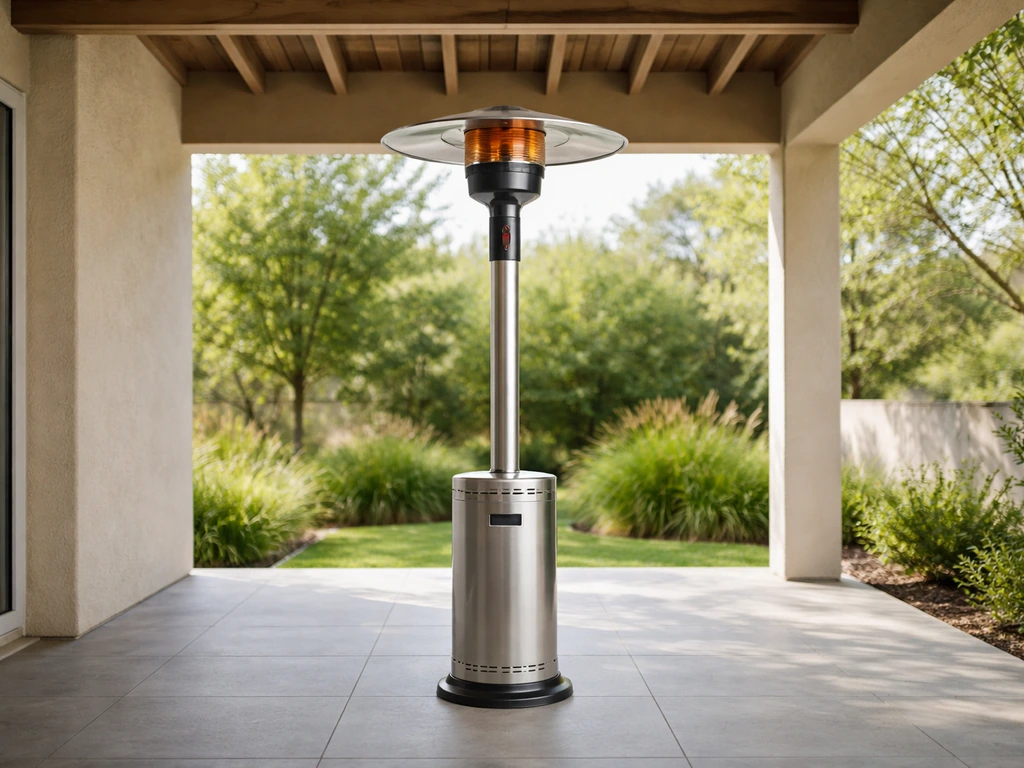
Yes, you can use a patio heater under a covered patio, but the answer depends entirely on your specific heater type, the clearances your roof and walls allow, and whether you have enough airflow. Electric infrared heaters are generally the safest and most flexible option under a roof. Propane and natural gas patio heaters can also work, but they require more careful attention to ventilation and clearance because of combustion exhaust and the risk of gas accumulation in enclosed or semi-enclosed spaces. If your covered patio is open on two or more sides with good airflow, and your heater's manual clearance requirements are met, you're likely fine. If it's walled in on three sides with a low ceiling, you need to slow down and work through the checklist below before firing anything up.
Can You Use a Patio Heater Under a Covered Patio?

The safety decision you need to make first
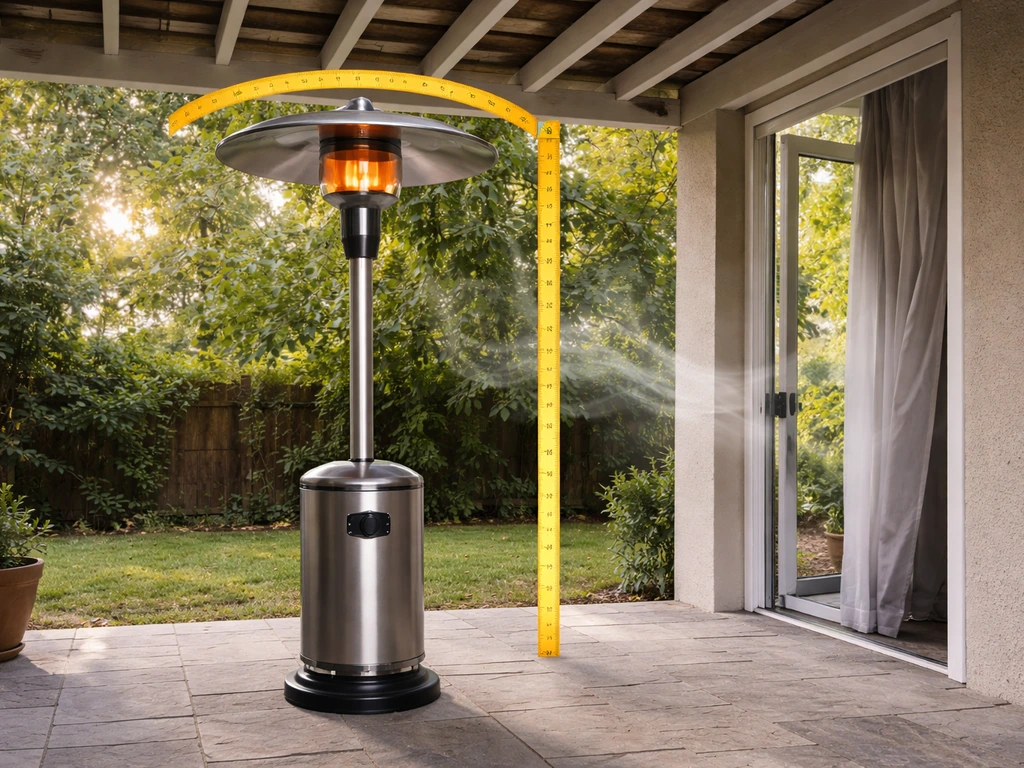
Before you move your heater under a roof, you need to answer two questions: Is there enough overhead and side clearance? And is there enough fresh air? These two factors determine whether your setup is safe or a fire and carbon monoxide hazard. For gas heaters specifically, inadequate ventilation is the critical failure point. Propane and natural gas both produce combustion byproducts including carbon monoxide, and in a semi-enclosed space those gases can accumulate to dangerous levels. Electric radiant heaters don't produce combustion exhaust, which is why they're almost always the better choice for covered patios, screened porches, or pergolas with a solid roof overhead.
Here's the practical safety framework. If your covered patio is fully enclosed (think a three-season room with windows all around), do not use a propane or gas patio heater in it. Period. If it's a traditional covered patio that's open on one or more sides with normal outdoor airflow, a gas heater is workable but you must verify the clearances below. If you're using an electric infrared heater, the ventilation concern is largely removed, but clearance from the ceiling and walls still matters for fire safety and for keeping the unit's controls from overheating.
Clearance, ventilation, and fuel type requirements
Clearance numbers are not suggestions. They're the minimum distances your heater must maintain from combustible materials like wood framing, fabric, vinyl soffits, and furniture. Every manufacturer publishes these in their manual, and they vary by model, so you cannot just pick a number and assume it applies to your unit. That said, here's a realistic picture of what the numbers look like across common heater types.
| Heater Type / Example Model | Overhead Clearance | Side Clearance | Floor Height |
|---|---|---|---|
| Infratech C-Series (electric infrared, wall/ceiling mount) | 12 in (30.5 cm) to ceiling | 18 in (45.7 cm) to adjacent walls | 6–8 ft from floor (varies by listing) |
| AZ Patio Heaters HMXD-A-E (gas mushroom-style) | 24 in (61 cm) on top | 36 in (91 cm) on sides | Check model label |
| AZ Patio Heaters Tabletop Heater | 18 in (45 cm) on top | 24 in (61 cm) on sides | Table height; keep away from overhangs |
| Hiland HSS-A (electric/decorative flame) | 2 ft (61 cm) from top | 3 ft (91 cm) from sides | Per model label |
| Patio-Pal Gas Infrared (overhead/under-surface mount) | 8 in minimum if under non-combustible surface | Per model label | Per installation instructions |
Look at your specific ceiling height and the distance to the nearest wall or soffit before you install anything. A standard 8-foot covered patio ceiling is close to the minimum for many freestanding gas mushroom heaters, which often need 24 inches of clearance above the emitter head. If your emitter sits at 7 feet and your ceiling is 8 feet, that's only 12 inches of clearance, which is likely insufficient for most gas models. For wall-mounted electric infrared heaters like the Infratech C-Series, 12 inches to the ceiling is acceptable per their manual, but you still need 18 inches from adjacent walls.
On the ventilation side, gas-fired heaters must be used only in adequately ventilated areas with ample fresh air per the manufacturer's instructions. This is reinforced by NFPA-based regulations and by basic combustion chemistry. If your covered patio has solid walls on more than two sides, actively assess whether outside air can move freely through the space. A covered concrete slab with a pergola roof and no walls is essentially outdoor use. A covered patio with three walls and a ceiling is approaching enclosed-space territory, and that's where propane patio heaters become genuinely risky.
Placement and weatherproofing under a roof
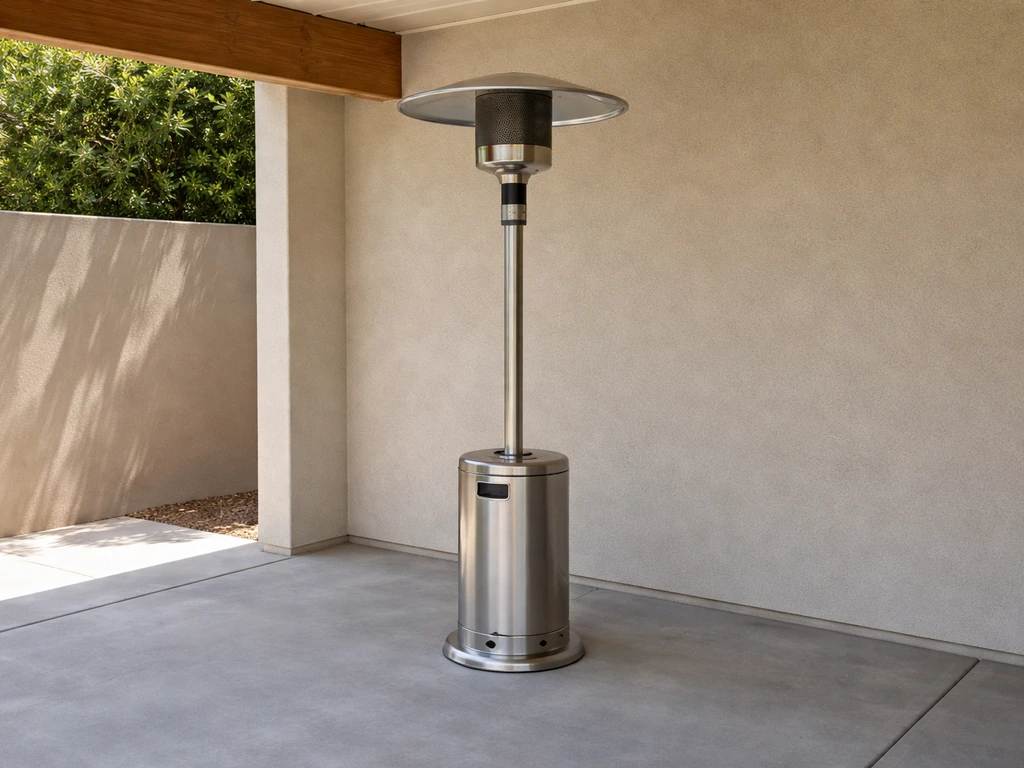
A covered patio actually gives you some real advantages for placement. Rain and wind are reduced, which helps gas heaters stay lit and keeps electric heaters drier. But the roof also changes how heat moves. Without open sky above, heat from your heater reflects and accumulates near the ceiling. That's useful for warming a space, but it also means the area around the emitter gets hotter than it would outdoors. Keep combustibles, including patio curtains, string lights, wood beams, and vinyl ceiling panels, well outside the clearance zones listed in your manual.
For freestanding gas mushroom heaters, place them away from corners. Corners trap heat and restrict airflow around the unit's base, which can affect combustion quality and cause pilot issues. Center the heater in the open portion of your covered patio, at least 3 feet from any wall, and never directly under a low beam or soffit. For wall-mounted or ceiling-mounted electric infrared heaters, the covered patio is actually the ideal environment. Models like the Infratech C-Series and CD-Series are specifically designed for wall and ceiling mounting applications, and a covered patio gives them protection from direct rain while keeping them in an adequately open environment.
Weatherproofing matters even under a roof. Rain can blow in from the sides during storms, and morning condensation is real. Make sure any electric heater you mount is rated for outdoor use (look for an IP rating or an explicit outdoor-rated label). For gas heaters, the tank connection and regulator should be kept off the ground on wet days to prevent moisture from working into the gas line. If you're running an extension cord to an electric heater, it must be an outdoor-rated cord with the appropriate wire gauge for your heater's wattage. Undersized indoor cords are a fire and shock hazard, and this is one of the most common mistakes people make when setting up electric heaters on a covered patio.
Check your specific heater's manual before you do anything else
I can't stress this enough: the clearance numbers in your owner's manual are the controlling document for your heater's safe installation. The table above gives you a ballpark, but a Hiland HSS-A and an AZ Patio Heaters HMXD-A-E have different numbers, and neither of those matches an Infratech C-Series. If you've lost your manual, most manufacturers post PDFs on their websites or on ManualsLib. Pull it up right now before you finalize placement.
Here's exactly what to look for in the manual:
- Find the section labeled 'Clearance from Combustibles' or 'Minimum Clearances.' Note the overhead, side, and front clearance values separately.
- Check whether the manual lists different clearance values for combustible versus non-combustible ceiling materials. Some heaters allow reduced overhead clearance if the ceiling is non-combustible (like concrete or metal), similar to the Patio-Pal's 8-inch rule under non-combustible surfaces.
- Look for any explicit 'do not use in enclosed spaces' or ventilation warnings. If they're there for a gas model, take them seriously.
- Check the mounting height requirement from the floor. Some electric models require 6 feet minimum; others require 8 feet.
- For gas models, locate the 'If You Smell Gas' section and familiarize yourself with the emergency steps before you operate the heater under a roof where gas could accumulate more easily.
- Review the thermocouple and tilt switch descriptions, which most gas heater manuals include. You'll need this when troubleshooting (see below).
If your manual shows the required clearances can't be met in your covered patio, don't try to make it work anyway. Either switch to an electric infrared model (which generally has more flexible mounting requirements) or rethink the layout of your space. A heater that shuts off repeatedly or, worse, ignites a ceiling is not a compromise worth making.
Problems that show up when you move a heater under a roof
Moving a heater into a covered patio setup introduces a few failure modes you might not have seen when using it in the open. Here are the most common ones and how to work through them.
Heater won't ignite
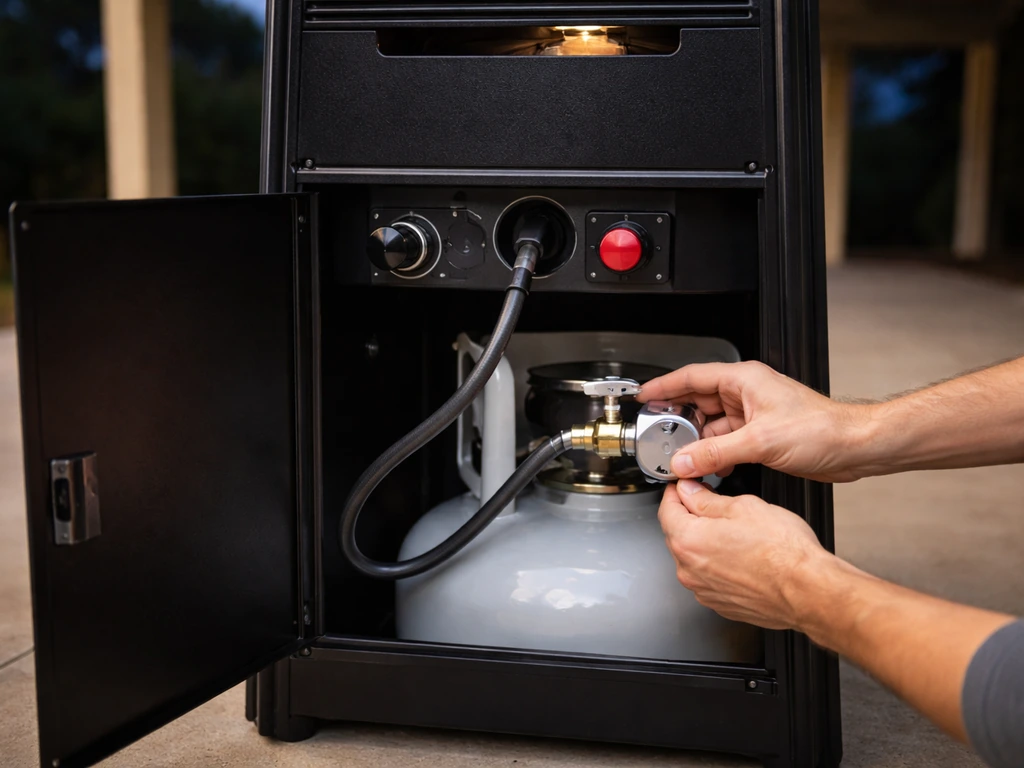
On gas heaters, a failure to ignite after relocation is often caused by air in the gas line (if the tank was disconnected and reconnected), a cylinder valve that wasn't fully opened, or a partially blocked pilot tube. Bleed the air out by holding the control knob in the pilot position for 30 to 60 seconds before attempting ignition. If the heater sat in storage, check the orifice and pilot tube for spider webs or debris. These are the most common blockage culprits. On electric models, a failure to power on after being moved usually points to a tripped GFCI outlet or a loose connection at the power cord.
Heater lights but won't stay lit
This is the classic thermocouple or tilt switch problem, and it's more likely to show up under a covered patio than in the open because moving the heater to a new surface can leave it slightly out of level. The tilt switch and thermocouple are wired in series on most gas patio heaters, meaning if either one fails or is triggered, the heater shuts off and won't stay lit. Check the level of your heater first. Even a slight lean on an uneven patio surface can trip the tilt switch. If the unit is level and still won't stay lit, the thermocouple tip may not be positioned correctly in the pilot flame, or the thermocouple itself may be worn out. A thermocouple is a low-cost part and a straightforward DIY replacement on most tower-style gas heaters.
Heater shuts off after running for a while
If your heater runs fine for 10 to 20 minutes and then shuts off, especially under a covered patio with limited airflow, heat accumulation near the controls is a likely culprit. Some heaters have overheat protection that kills the unit if the ambient temperature around the control box gets too high. For electric heaters, check whether the control area is too close to the ceiling or a wall that's reflecting heat back onto it. The Patio-Pal manual specifically warns that mounting too close to overhead surfaces can overheat the controls. For gas heaters, intermittent shutoff after running can also indicate a weak thermocouple that loses its millivolt output as it heats up. That's a thermocouple replacement job.
Flame looks weak, yellow, or inconsistent
Under a covered patio with restricted airflow, a gas heater's flame can look different than it does in the open. A healthy burner flame on a propane patio heater should be mostly blue with minimal yellow. A consistently yellow or orange flame, especially with soot buildup on the emitter screen, points to incomplete combustion from insufficient fresh air. This is a ventilation problem, not a heater problem, and it's a clear signal your covered patio space is too enclosed for safe gas heater use. If you are considering a propane fire pit instead, the same ventilation and enclosure rules apply because combustion products can build up under a covered patio safe gas heater use. Open up more sides of the space, or make the switch to electric.
Safe operating checklist before you turn it on
Run through this checklist every time you set up or reposition a patio heater under a covered patio, not just the first time.
- Pull your owner's manual and confirm the overhead, side, and front clearance numbers for your model.
- Measure the actual clearance from your heater's emitter to the ceiling, walls, and nearby furniture. If any measurement is under the manual's minimum, reposition before proceeding.
- Confirm your covered patio has open sides allowing natural airflow (for gas heaters, at least two open sides are strongly recommended).
- Check that the heater is sitting on a level, stable surface. Use a small level if you're not sure.
- Inspect the gas connection (for propane/natural gas models) for any signs of wear, cracking, or loose fittings. Apply soapy water to connections and look for bubbling before lighting.
- For electric heaters, verify the power cord is outdoor-rated and properly sized for the heater's wattage. Do not use indoor extension cords.
- Clear a 3-foot zone around the heater of combustibles: patio curtains, tablecloths, cushions, cardboard, paper, and string lights.
- Check that the GFCI outlet is functioning (for electric heaters) by pressing the test and reset buttons.
- For gas models, open the tank valve slowly, wait 30 seconds, then attempt ignition per the manual's lighting instructions.
- After lighting, watch the flame for 2 to 3 minutes. A stable blue flame indicates good combustion. Yellow or sooty flame means insufficient ventilation.
- Check periodically during use that no combustibles have shifted into the clearance zone, especially on windy days when fabric can blow inward.
Your DIY next steps
If you're setting this up today, start by pulling your heater's manual and verifying the clearance numbers against your actual covered patio dimensions. That single step will tell you whether your planned setup is safe or needs adjustment. If you're switching from a gas heater to an electric infrared model because your patio is too enclosed, look for wall-mounted or ceiling-mounted units rated for outdoor use with explicit clearance specs in the manual. Models designed for wall and ceiling mounting, like the Infratech C-Series, are built specifically for this kind of covered installation.
If your existing heater is giving you trouble after moving it under the roof, work through the symptom-based diagnostics above. Won't ignite: check gas supply, bleed the line, inspect the pilot orifice. Won't stay lit: check level, inspect the thermocouple position and condition. Shuts off after running: check for heat accumulation around controls and ventilation quality. These are all fixable problems with basic hand tools and inexpensive parts, and none of them require a service call if you work through them methodically.
One last note: if you're also considering a propane fire pit, a solo stove, or other open-flame appliances for a covered patio, the clearance and ventilation requirements are even more demanding than for a patio heater, and the safety stakes are higher. Stick with purpose-built patio heaters that carry explicit safety ratings and published clearance specs for covered or overhead installations.
FAQ
Can I use a patio heater under a covered patio if the ceiling height is only slightly above the minimum clearance?
Check the heater’s manual for “overhead” or “ceiling” clearance specifically, because many models list two different distances (from the emitter to the nearest ceiling, and from the casing to the nearest wall). If your clearance is borderline, choose a wall or ceiling-mounted electric infrared unit rather than a freestanding gas heater, since electric radiant models typically avoid combustion exhaust requirements.
What if my covered patio is usually open, but I sometimes close screens, curtains, or wind panels?
Yes, but only if the patio is actually outdoors for ventilation purposes, meaning it has enough openings for air exchange and the manual’s fresh-air guidance is still met. A common edge case is a covered patio with a solid windbreak on one side and curtains on the other, which can trap combustion products even though it “feels” open. If you can close anything that reduces airflow, assume it can become unsafe for gas heaters.
How can I tell if my gas heater is getting enough ventilation under a covered patio?
Do not rely on outdoor conditions alone, especially with gas models. Even with a small side opening, low airflow under a roof can cause incomplete combustion (yellow flame, soot) and higher risk of carbon monoxide buildup. Use the symptom indicators described in the article, and if you see persistent yellow/orange flame, soot, or odors, turn it off and do not continue troubleshooting in place.
Is it safe to place a gas patio heater in a corner under a covered patio if I stay within the wall clearance measurements?
For gas heaters, the key is the manual’s specified minimum distances plus real-world airflow around the burner area, not just clearance from walls. Placing a heater in a corner or under a soffit can still meet “wall clearance” numbers while restricting the air needed for proper combustion. If your manual allows corner placement, it will still usually specify extra spacing or orientation requirements.
Can I use a wind shield or cover over the heater while it’s under the patio roof?
Not automatically. Many heaters require clearance around the control box and emitter, so insulating or adding a cover near the unit can block ventilation for controls and increase heat buildup. If you want a wind cover, use purpose-built, noncombustible shielding that is designed for patio heater use and is referenced in the manual, otherwise keep any added materials outside every clearance zone listed.
What’s the safest way to power an electric patio heater under a covered patio, especially with an extension cord?
Most electric infrared patio heaters need an outdoor-rated connection setup, and that includes the cord rating and where the connection sits relative to wet conditions. Use only outdoor-rated extension cords sized for the heater’s wattage, keep the plug and connections off the floor or wet surfaces if possible, and avoid routing cords through areas where they can be pinched by doors or furniture.
Does being under a covered patio change the weatherproofing rules for electric vs gas heaters?
For electric heaters, avoid using them in areas where rain can directly hit the heater’s electrical controls unless the unit is explicitly outdoor-rated for those conditions. For gas heaters, keep the cylinder and regulator positioned as the manual directs so moisture cannot pool where it can affect valves and connections, and never modify regulators or hoses to “make it fit” under a roof.
If my heater keeps shutting off, is it okay to just replace the parts or should I re-check placement first?
If the heater has tip-over protection or overheat protection, it may still function, but frequent trips often indicate a setup problem like being out of level, too close to overhead surfaces, or placed where heat reflects back onto controls. Before replacing parts, verify level on the exact mounting surface and re-check overhead and side clearance to reduce nuisance shutoffs.
Can I put a propane fire pit or other open-flame appliance under a covered patio if the heater is already working there?
Yes, as long as it meets the same overhead and clearance limits and provides ventilation consistent with its manual. Open-flame appliances can create higher heat and more combustion byproducts than infrared heaters, so even small reductions in airflow under a roof can increase risk. The safest approach is to treat enclosed or near-enclosed patios as off-limits for open flame unless the product explicitly states covered-patio use with clear spacing and ventilation guidance.
What should I do if my covered patio is basically a three-season room (mostly windows all around)?
If your covered patio is fully enclosed like a three-season room, the safest decision is to avoid propane or natural gas patio heaters entirely in that space. Electric infrared heaters are the typical alternative, but you still must verify clearance to combustibles and confirm the unit is rated for outdoor use if the room has openable panels or irregular exposure to moisture.