To assemble a Gardenline or Garden Treasures gas patio heater (model PG171H-B, item #0574423), you build from the ground up: wheels to base, cylinder to base, pole through the center, burner and regulator threaded down through the pole, then the dome shielding on top. Once assembled, you connect the regulator to a 20-lb propane cylinder by hand (no tools), run a soap-and-water leak check, install the igniter battery, and follow a specific knob sequence to light it. The whole process takes about 45 minutes if you have the parts sorted and a helper handy for the pole step.
Gardenline Patio Heater Instructions: Step-by-Step Setup

Grant Mercer
29 May 2026
First: confirm your model and gather everything you need
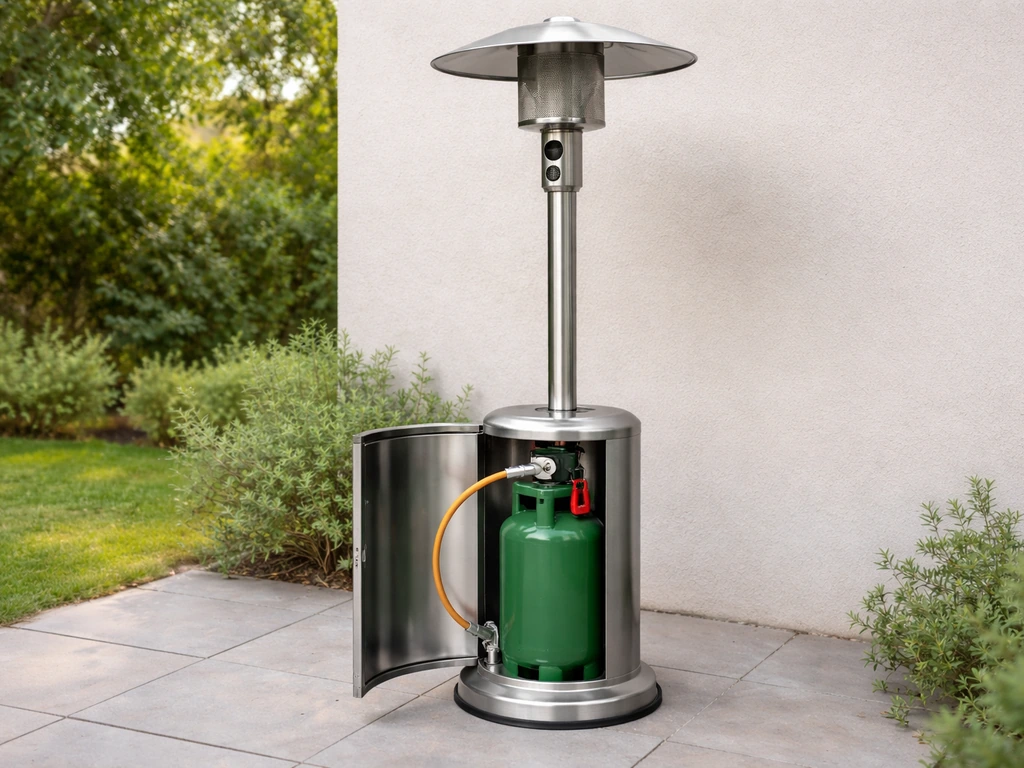
Before you touch a bolt, check that you actually have blank" rel="noopener noreferrer">model PG171H-B (also sold as item #0574423). Look for the label on the base or the pole. This is the 86.6-inch tall, 45,000 BTU/hr unit with a 31.5-inch reflector diameter designed for a standard 20-lb propane cylinder. The assembly steps and hardware sizes in this guide are specific to that model. If your label shows a different model number, your hardware sizes and sequence may differ.
Lay all your parts out on a clean surface before starting. The box should contain: Top Dome (A), KD Dome (B), Cylinder Assembly (H), Burner Assembly (C), Base (I), Pole Assembly (D), Wheel Assembly (J), Table Cover, Table Support Assembly, and Deck Ring. Hardware you should see in the bag: M8 x 15 mm bolts (AA), M8 nuts (CC), M5 x 8 mm black bolts (BB), M5 x 8 mm silver bolts (GG), M5 nuts (HH), M5 washers (II), and ST4.2 x 8 mm screws. If anything is missing, stop and contact the retailer before proceeding.
Tools you'll need for this job:
- Phillips-head screwdriver
- 8 mm wrench or socket
- 5 mm wrench or socket
- Small bowl or spray bottle (for leak check solution)
- Liquid dish soap and water
- One AA battery (for the igniter)
- A second pair of hands for lifting the pole assembly into the base
Safety before you connect anything
This heater is rated for outdoor use only, full stop. Never assemble or operate it indoors, in a garage, or under a low overhang. The combustion process needs unrestricted airflow, and the manual is explicit: do not obstruct the flow of combustion and ventilation air. That means no tight corners, no tents with closed sides, and no walls within the clearance zone.
Keep the propane cylinder valve fully closed the entire time you are assembling the heater. Do not connect the regulator to the tank until the full heater is assembled and you are ready to do the leak check. If you smell gas at any point during the leak check or lighting process, close the tank valve immediately, move away from the heater, and wait at least 5 minutes for any gas to dissipate before going back to it. If the smell persists, keep everyone away and call your gas supplier or the fire department. That is not an overreaction, it is the correct response.
For placement, position the heater on a flat, stable, non-combustible surface. Keep it clear of overhead structures, curtains, umbrellas, and anything flammable. The tilt switch built into this unit (more on that below) will shut off gas flow if the heater tips, but prevention is still better than relying on a safety switch.
Assembly step by step
Step 1: Attach the wheels to the base
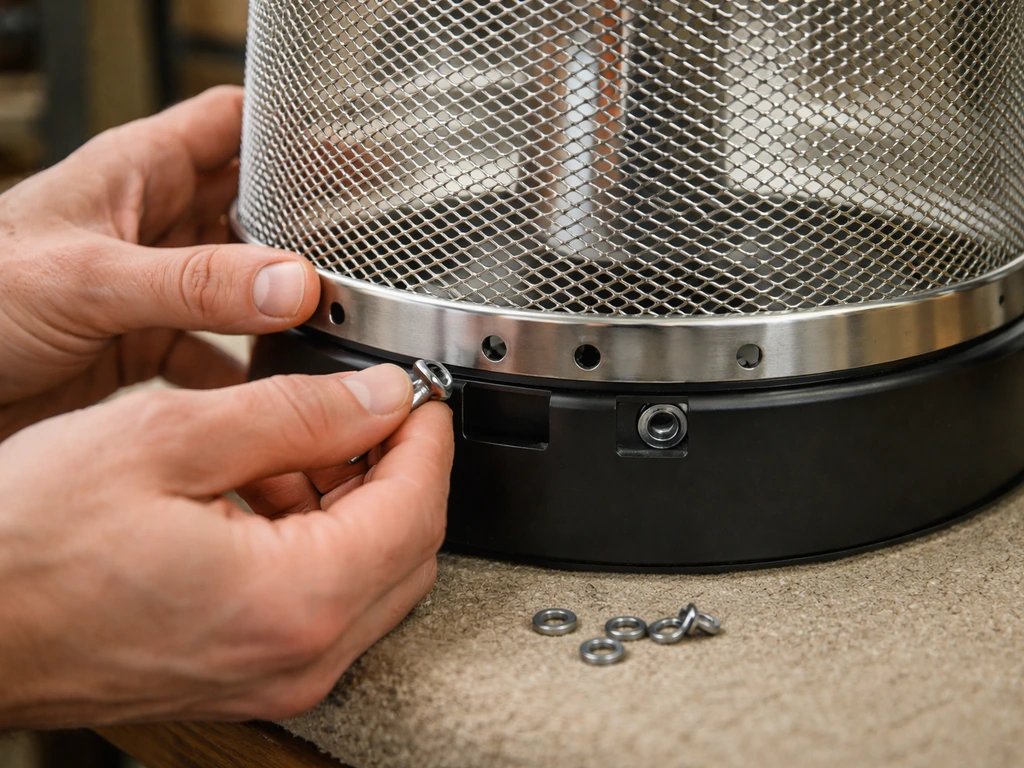
Flip the base (I) upside down on a padded surface so you don't scratch it. Line up the wheel assembly (J) with the mounting holes on the underside of the base. Secure it using the M8 x 15 mm bolts (AA) and M8 nuts (CC). Tighten these snugly with your 8 mm wrench, then flip the base right-side up. The wheels should spin freely and the base should sit level.
Step 2: Mount the cylinder assembly to the base
Set the cylinder assembly (H) into the base. You'll see L-pins already installed on the cylinder assembly, align these with the corresponding holes in the base, then drive the M5 x 8 mm black bolts (BB) through them to lock everything together. These black bolts are the ones specifically sized for this connection, so don't mix them up with the silver hardware.
Step 3: Run the pole assembly up through the center
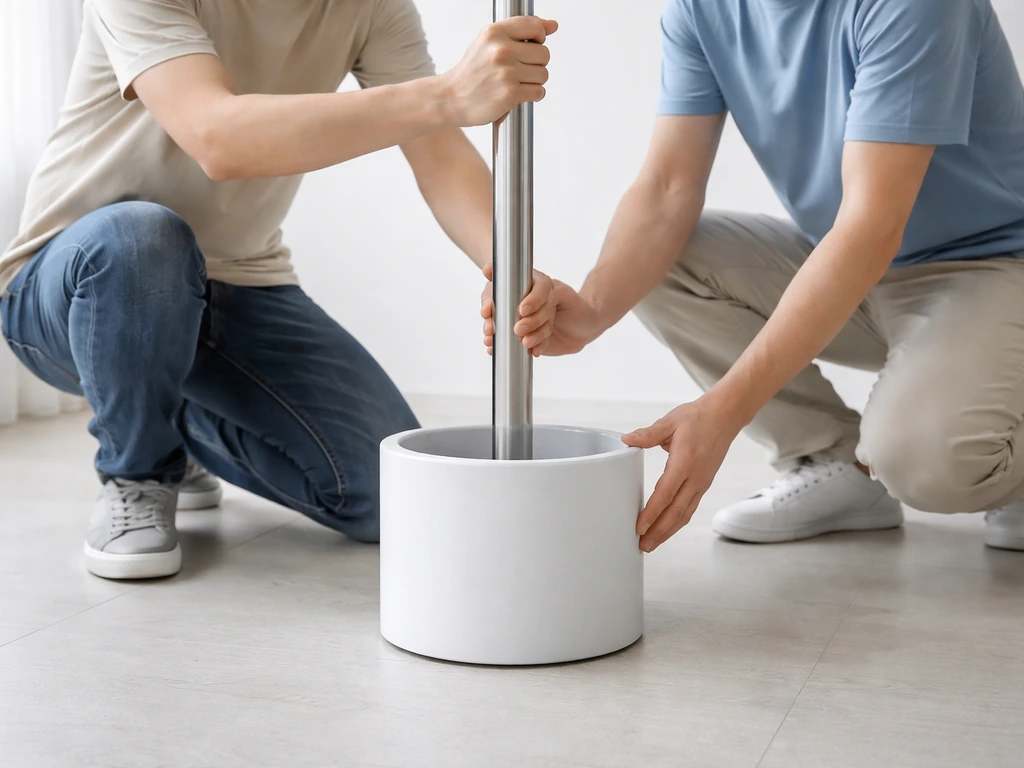
This is the step where a second person really helps. Stand the pole assembly (D) vertically and lower it down into the cylinder assembly in the base. It should seat securely. Before you tighten anything here, move to step 4, you need to thread the regulator and burner down through the pole before the pole is fully secured.
Step 4: Thread the regulator and burner assembly through the pole
The regulator assembly comes pre-attached to the burner assembly (C). Feed the regulator hose down through the top of the pole assembly (D) so the hose runs inside the pole, this protects it from heat and physical damage. Lower the burner assembly (C) down until it rests on top of the pole assembly. Once it's seated correctly, secure it with the M5 x 8 mm silver bolts (GG). Before fully tightening, insert the reflector spacers (JJ) into the top of the burner assembly (C), these hold the dome at the correct distance from the burner and matter for both heat distribution and safety.
Step 5: Attach the dome shielding
Attach the KD domes (B) first, using M5 nuts (HH), M5 washers (II), and M5 x 8 mm silver bolts (GG). Get all the fasteners started before tightening any of them, this keeps the dome sections aligned. Once the KD domes are secure, attach the top dome (A) to the KD domes using the same hardware: M5 nuts (HH), M5 washers (II), and M5 x 8 mm silver bolts (GG). Again, start all bolts before tightening. The dome should sit centered over the burner with no visible gaps or tilting to one side.
One thing worth emphasizing here: any guard or protective component you remove later for servicing must be fully replaced before you operate the heater again. Do not run the heater with the dome assembly partially attached or missing.
Connecting the gas components correctly
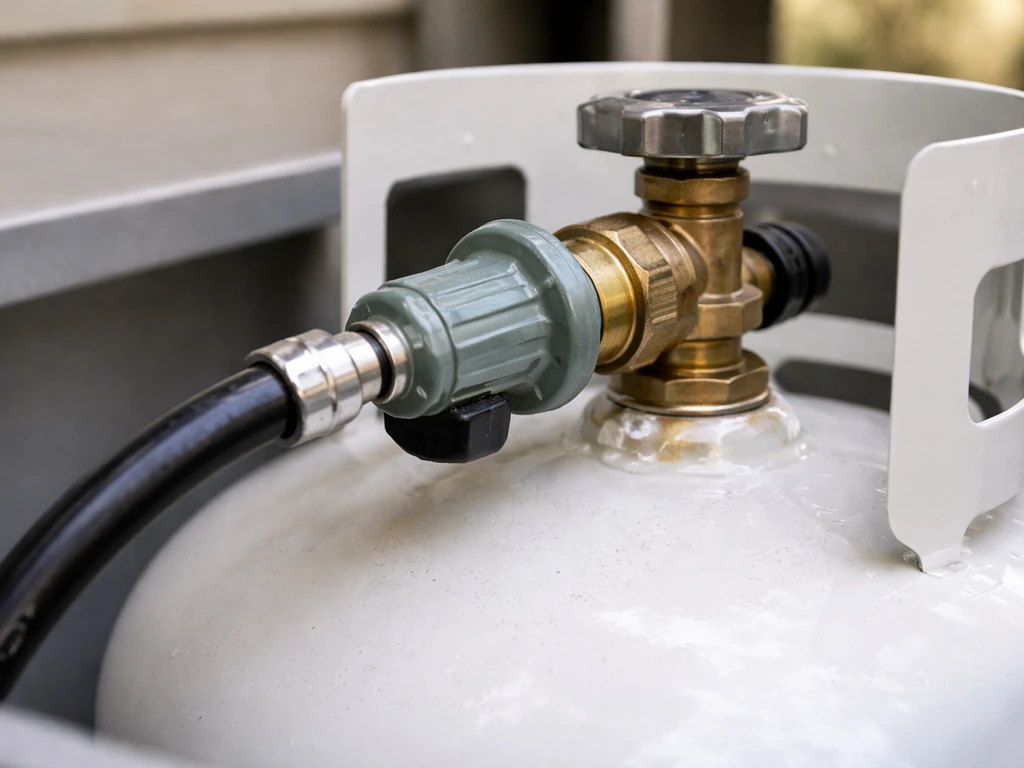
Once assembly is complete, it's time to connect the regulator to your 20-lb propane cylinder. The cylinder sits inside the base enclosure. The regulator fitting is a standard LP connection: line up the threads carefully, then rotate clockwise until tight. The manual is very specific here, hand tighten only. Do not use any tools to make this connection. Over-tightening with a wrench can damage the fitting or the regulator, and a damaged fitting is a gas leak waiting to happen.
With the regulator connected and the tank valve still closed, now is the time to run your leak check. Mix 1 part liquid dish soap with 3 parts water. Using a spoon, brush, or spray bottle, apply the solution to all connection points: the regulator-to-cylinder connection, the hose-to-regulator connection, and any other gas fittings you can see. Open the tank valve slowly. Watch every connection point carefully for 30 to 60 seconds. Bubbles forming at any point mean you have a leak.
If you see bubbles, close the tank valve, loosen the leaking connection slightly, retighten by hand, then reopen the valve and check again. If the same connection keeps bubbling after a second attempt, close the tank valve, do not use the heater, and call customer service. Do not try to seal a leaking gas fitting with tape or sealant, that is not a safe fix on a propane regulator connection.
Also make a note in your calendar: the visible portion of the gas hose needs to be inspected before every single use. If any part of the hose runs inside the heater post (which it does on this model), inspect the full hose assembly at least once a year. Look for cracks, kinks, abrasion, or any discoloration from heat exposure.
First-time startup: checklist and lighting procedure
Run through this checklist before you attempt the first light:
- All dome hardware is tight and no panels are missing
- Regulator is hand-tight on the cylinder
- Leak check passed with no bubbles at any connection
- Heater is outdoors on a flat, stable surface with clear airflow around it
- Nothing flammable is within the clearance zone overhead or to the sides
- Battery is installed in the igniter
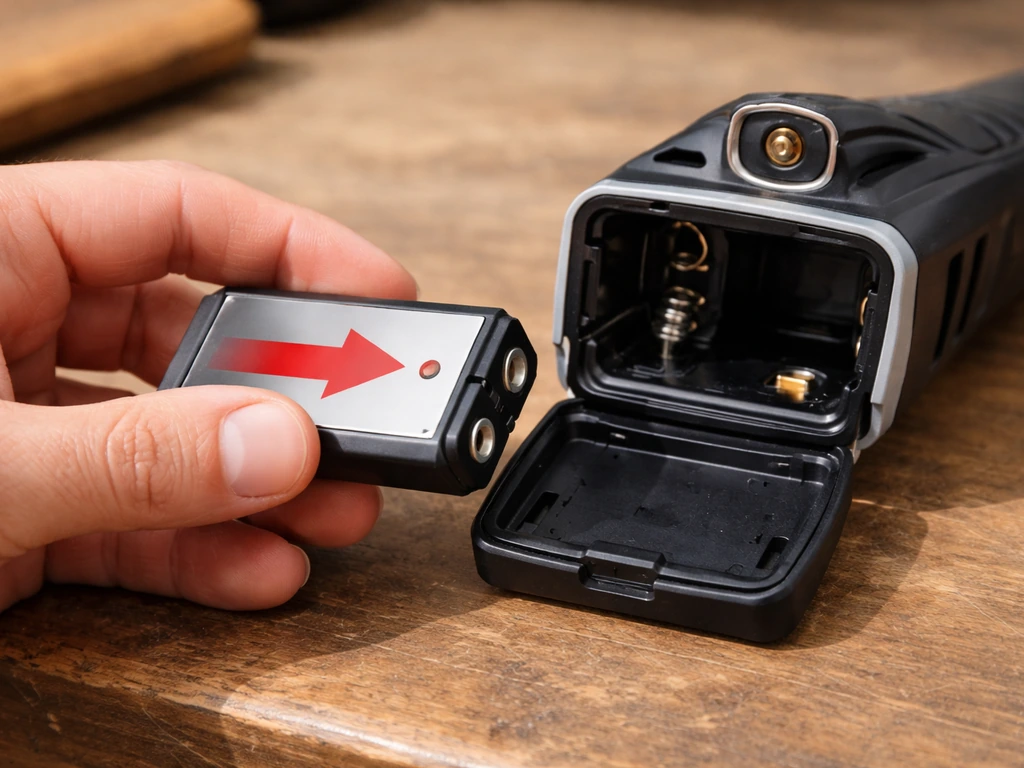
To install the battery: locate the igniter cap on the burner assembly (C). Unscrew it, insert one AA battery with the positive (+) end facing outward (toward you, away from the heater), then screw the igniter cap back on. This is easy to get backwards, and if the battery is reversed the igniter simply won't click.
Now for the lighting sequence. Follow this order exactly:
- Make sure the control knob on the pole is in the OFF position.
- Open the LP gas cylinder valve fully by turning it counterclockwise.
- Push the control knob in and rotate it to the PUSH (ignite) position.
- Push and hold the igniter button (or the control knob itself, depending on the variant) continuously for up to about 5 seconds until the burner ignites.
- Once the burner lights, continue holding the knob in for a few seconds to let the thermocouple heat up and signal the valve to stay open.
- Release the knob slowly. The flame should remain lit.
- Adjust to your desired heat setting.
If the electronic igniter doesn't spark after several attempts, the manual includes an alternative: use a long ignition bar or a match on a long match holder, insert it through the hole on the bottom of the burner diffuser from the back side (the side opposite the control panel), and use it to manually light the burner while following the same knob sequence. If you're working with a patio egg diffuser, follow the manufacturer’s patio egg diffuser instructions to ensure proper fit and safe operation.
If it won't ignite or won't stay lit
This is where most people get stuck after a new assembly, and it almost always comes down to one of a few things. Work through these in order before assuming a part is defective.
| Symptom | Most Likely Cause | What to Check / Do |
|---|---|---|
| No click from igniter | Dead or reversed battery | Remove igniter cap, check battery orientation (+ end outward), replace battery if needed |
| Clicks but no ignition | Gas not reaching burner, or orifice blocked | Confirm tank valve is fully open, check that control knob reached PUSH position, inspect orifice for debris |
| Ignites but goes out immediately | Thermocouple not heated enough | Hold knob in for a full 5 seconds after ignition before releasing |
| Flame goes out after a few seconds | Thermocouple or tilt switch issue | Make sure heater is on perfectly level ground; tilt switch will cut gas if heater is even slightly off-level. If level and still cutting out, thermocouple may need replacement |
| Low or weak flame | Low gas pressure or near-empty cylinder | Weigh or swap the cylinder; a 20-lb cylinder should have adequate pressure above approximately 5 lbs remaining |
| Gas smell without ignition | Gas accumulated near burner | Close tank valve, move away, wait 5 full minutes, then retry from the beginning of the lighting sequence |
The thermocouple and tilt switch are the two safety components built into this heater. If you are trying to turn on a Thermacell patio shield, follow the model-specific startup and ignition steps in our guide for how to turn on Thermacell patio shield. For Thermacell patio shield instructions, follow the included setup steps and placement guidance so the device works safely and effectively thermocouple and tilt switch. The thermocouple is a small metal probe that sits in the flame, it generates a tiny electrical signal that tells the gas valve to stay open. If you need costco patio heater instructions instead, follow the startup and safety steps in that specific manual for your model. If it's not getting hot enough (because you released the knob too soon) or if it's worn out, the valve closes and the flame dies. The tilt switch cuts gas if the heater leans beyond a safe angle, which is great for safety but also means the heater must be perfectly level during use. If your patio surface is slightly uneven, that alone can trigger repeated shutoffs.
If you've held the knob in for a full 5 seconds, the heater is dead level, the cylinder has gas, and it still won't stay lit after two or three attempts with 5-minute waits between them, the thermocouple is the most likely culprit. Thermocouple replacement is a manageable DIY repair on most patio heaters, it's one of the most common fixes covered in detail elsewhere on this site.
Common assembly mistakes and when to stop
A few mistakes show up repeatedly with this style of heater. The most common is routing the regulator hose on the outside of the pole instead of threading it through the inside. If the hose is external, it gets exposed to heat from the burner and can degrade quickly. If you assembled it that way, disassemble the burner and pole sections and re-route the hose properly before using the heater.
Second most common: mixing up the black and silver M5 bolts. The black bolts (BB) go to the cylinder-to-base connection; the silver bolts (GG) go to the burner, dome, and upper assembly. Using the wrong bolt in the wrong location doesn't always cause obvious problems immediately, but it can affect the security of the dome shielding and the burner seat, which are safety-critical.
Third: skipping the reflector spacers (JJ). They look optional but they're not, they set the correct gap between the burner and the dome, which affects both heat distribution and the dome's ability to withstand the radiant heat. If you find the dome getting unusually hot or discoloring rapidly after first use, check that the spacers are in place.
Know when to stop and get help. If any of the following apply, do not operate the heater and contact customer service or a qualified gas appliance technician:
- A gas connection continues to bubble after two retighten attempts
- You smell gas and the odor does not go away after 5 minutes of the tank being closed
- The control knob feels loose, stiff, or doesn't click into the PUSH position correctly
- Any part of the regulator assembly looks cracked, kinked, or physically damaged
- The hose shows cracks, soft spots, or discoloration from heat
- The heater continues to shut off even when perfectly level and the thermocouple has been replaced
Gas appliances are absolutely repairable at the DIY level in many cases, but a persistent gas leak or a damaged regulator is not a place to improvise. The goal is to get this heater running safely and keep it that way, not to force a fix that creates a bigger hazard. If you're comparing experiences with other brands like the Heatmaxx or Costco-branded patio heaters, you'll find the assembly sequence and troubleshooting logic is quite similar across mushroom-style propane heaters, though the specific hardware sizes and lighting sequences do vary by model.
FAQ
My Gardenline patio heater won’t spark, is the AA battery installation the first thing to check?
Yes, but only the correct AA battery orientation. If you install it with the positive (+) end facing the wrong direction, the igniter may not click at all, even though gas is present. Also make sure the igniter cap is screwed back on firmly before lighting attempts.
What should I do if bubbles appear during the soap-and-water leak check?
If you see bubbles at a specific fitting during the leak check, close the propane valve immediately. Then loosen that connection and retighten by hand only, and repeat the soap-water test. If bubbles persist after a second attempt, stop and contact customer service, do not try to patch the connection with tape, sealant, or other DIY products.
Can I route the regulator hose outside the pole if it seems easier?
For this model, the gas hose must be routed inside the pole so it stays protected from burner heat and physical wear. If the hose is outside the pole, disassemble the burner and pole sections, reroute it through the pole, and only then do the leak check and attempt lighting.
Is it okay to tighten the regulator to the propane cylinder with a wrench if it feels loose?
Do not use any tools to tighten the regulator-to-cylinder connection, hand tightening only. Using a wrench can damage the fitting or regulator threads and create a leak risk even if it appears tight at first.
What are safe locations to use the heater if I want to keep it under a patio cover?
No. The heater is designed for outdoor use only with clear combustion and ventilation airflow. Avoid operating it under low overhangs, inside a garage, or under structures that trap heat or restrict air movement, and do not use it in tight enclosed spaces.
My heater keeps shutting off, could the tilt switch be the reason even if the flame looks normal?
If the tilt switch cuts power repeatedly, the heater likely is not dead level on that surface. Place it on a flat, stable, non-combustible area and avoid using it on sloped pavers, uneven gravel, or surfaces that allow rocking. Make small placement adjustments before troubleshooting the thermocouple.
If the heater lights but won’t stay on after holding the knob, how do I decide between thermocouple and other causes?
If you have held the knob for the full required time and it still will not stay lit after a couple of attempts with proper wait intervals, the thermocouple is the most likely cause. The thermocouple has to be hot enough to keep the valve open, if it is worn or not positioned correctly, the flame will die after you release the knob.
What happens if I accidentally use the wrong color M5 bolts in the wrong step?
The black and silver M5 bolts have different roles, black bolts connect the cylinder to the base, silver bolts secure the burner and dome assemblies. Using the wrong bolts can compromise dome centering or burner seating, which matters for safety and heat distribution.
I assembled the dome but I might have missed the reflector spacers, can I still use the heater?
Skipping the reflector spacers changes the burner-to-dome gap. That gap affects both heat distribution and how well the dome handles radiant heat, which can lead to unusual dome overheating or faster discoloration. If you forgot spacers, reinstall them before operating.
Can I run the heater if a dome section or protective part is temporarily off while I check something?
If you removed any guard or protective component for servicing, it must be fully reinstalled before operation. Running the heater with partial or missing dome shielding can create unsafe airflow and exposes parts that are meant to be protected.
How often should I inspect the hose, and what damage means I should stop using it?
Inspect the visible portion of the gas hose before every use, and inspect the full hose assembly at least once per year for cracks, kinks, abrasion, or heat discoloration. If you notice damage, do not operate the heater until the hose is repaired or replaced by a qualified source.
If the electronic igniter fails, what is the correct safe method to manually light the burner?
Use the lighting alternative only when the igniter does not spark after several proper attempts. Insert a long ignition bar or a long match through the hole in the bottom of the burner diffuser from the back side (away from the control panel) and then follow the same knob sequence while maintaining safe distance.