
The Hampton Bay 48,000 BTU stainless steel patio heater sold at Home Depot is blank" rel="noopener noreferrer">model NCZH-G-SS (Internet #302563841). That model number is the starting point for everything: finding the right manual, ordering the right parts, and making sure the troubleshooting steps you follow actually match your heater. If you grabbed a PDF somewhere and it doesn't say NCZH-G-SS on the cover with ANSI Z83.26-2014 and CSA 2. The owner’s manual PDF for model NCZH-G-SS also includes ANSI Z83.26-2014 and CSA 2.37-2014 markings in the document header doesn't say NCZH-G-SS on the cover with ANSI Z83. 37-2014 in the header, you're working from the wrong document.
Hampton Bay 48000 BTU Stainless Patio Heater Manual Guide

Grant Mercer
10 Jun 2026
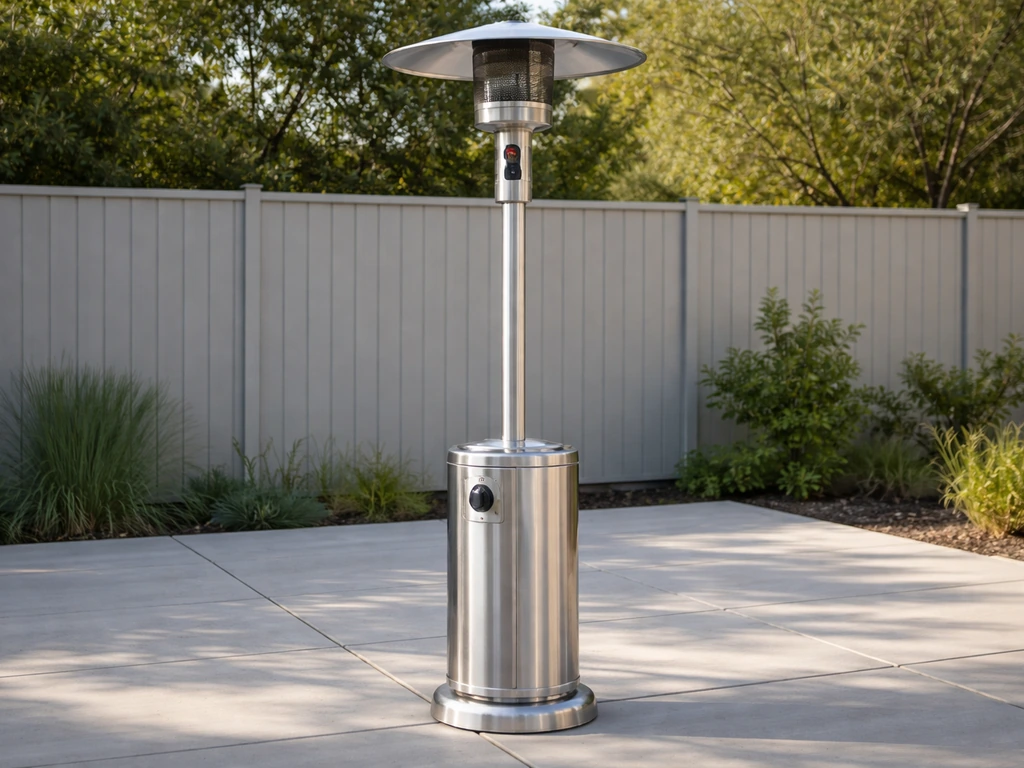
Confirm which Hampton Bay 48,000 BTU stainless model you actually have
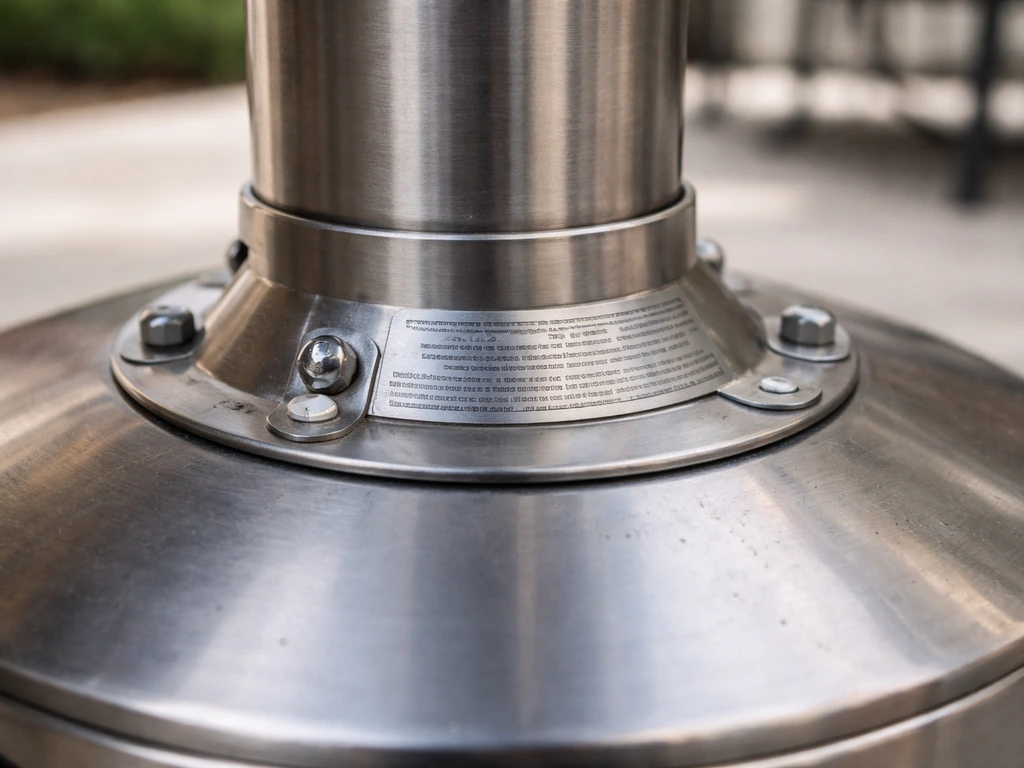
Hampton Bay sells several stainless patio heaters in the 40,000-48,000 BTU range, so before you do anything else, confirm your model. Flip the heater's base or look at the pole near the base for a sticker or stamped label. You're looking for NCZH-G-SS. If you see a different alphanumeric string, you may have a different variant, and the manual content won't match exactly. The 31-inch outdoor gas patio heater, for example, is a completely different unit with its own manual and parts list.
If the label is worn or missing, cross-reference with your Home Depot receipt or the box if you still have it. The store SKU is 1002693240 and the Internet number is 302563841, both of which pull up the NCZH-G-SS listing. You can also search Hampton Bay's support page at homedepot.com using the model number to land on the exact product page where the manual PDF lives.
Where to get the correct manual and how to actually use it
The official owner's manual PDF for the NCZH-G-SS is hosted directly on the Home Depot product page. If you need the Hampton Bay 31-inch outdoor gas patio heater manual, use the exact model number on your heater to download the correct PDF from the Home Depot Resources or Documents section owner's manual PDF. Go to homedepot.com, search the model number or SKU, scroll to the Resources or Documents section, and download it from there. That version is the one confirmed to carry the ANSI Z83.26-2014 / CSA 2.37-2014 safety certifications on the cover, which tells you it's current and matches your unit.
Once you have the PDF, don't just search for 'troubleshooting' and skip straight to the back. The assembly and lighting sections in the first half contain safety prerequisites that directly affect whether your heater will fire reliably. A lot of 'broken' heaters I see are actually just incorrectly assembled ones. The troubleshooting table in the manual is concise, but it does cover the most common failure modes by symptom, so use it alongside this guide.
If you're comparing experiences with other Hampton Bay tabletop or outdoor gas models, the manuals for those follow a similar structure, but the part numbers and BTU ratings are different enough that you shouldn't mix them up. If you are comparing symptoms to other heaters, a quick review hampton bay patio heater guide can help you spot whether you're dealing with the same model behavior or something model-specific.
Assembly, setup, and first-light checklist
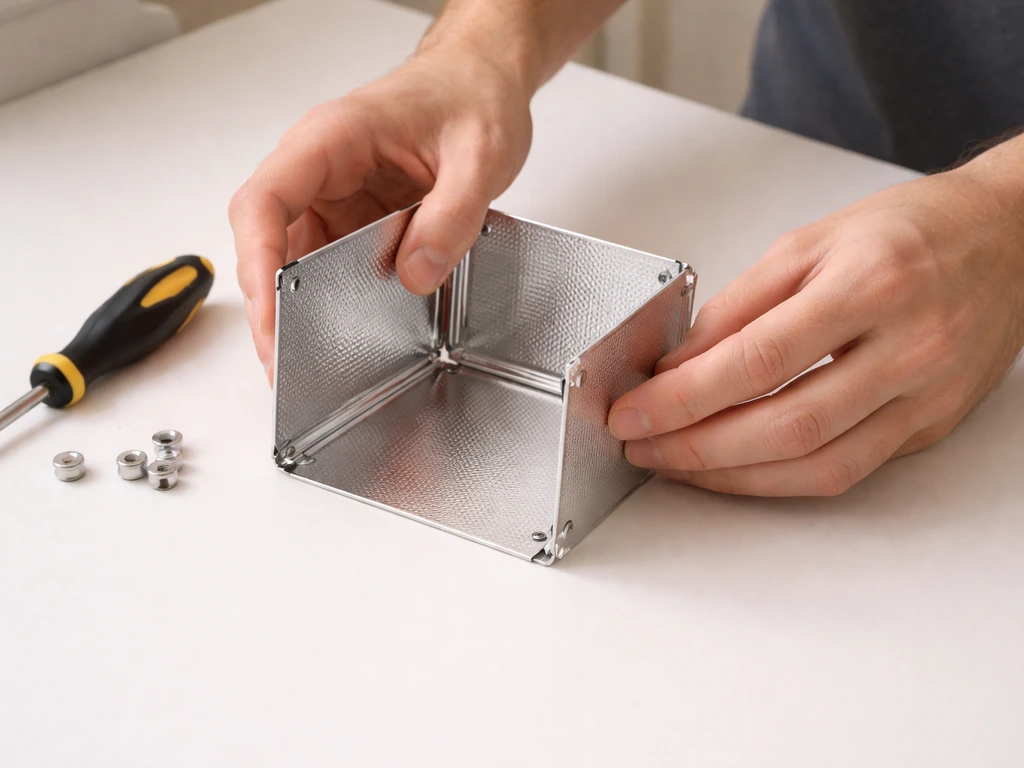
You'll need two things not in the box: a Phillips screwdriver with a medium blade, and leak detection solution (or you can mix your own: 1 part liquid dish soap to 3 parts water). Here's the assembly and first-light sequence from the manual, condensed into a practical checklist.
Assembly sequence
- Slide the three reflector panels together and secure with M6 x 10 screws and cap nuts.
- Slide the reflector plate onto the assembled reflector panels and lock it with screws, cap nuts, washers, and wing nuts at the spacers.
- Insert the head assembly's gas hose down through the pole from the top and secure the head assembly to the pole using the stainless steel bolts provided.
- Connect the lower pole to the upper pole and attach to the base.
- Route the gas hose out from the base and connect to the regulator, then connect the regulator to a standard 20 lb propane cylinder. Use only the included regulator and hose assembly. Swapping in a third-party regulator is a common cause of flame and pressure problems.
Leak test (do not skip this)
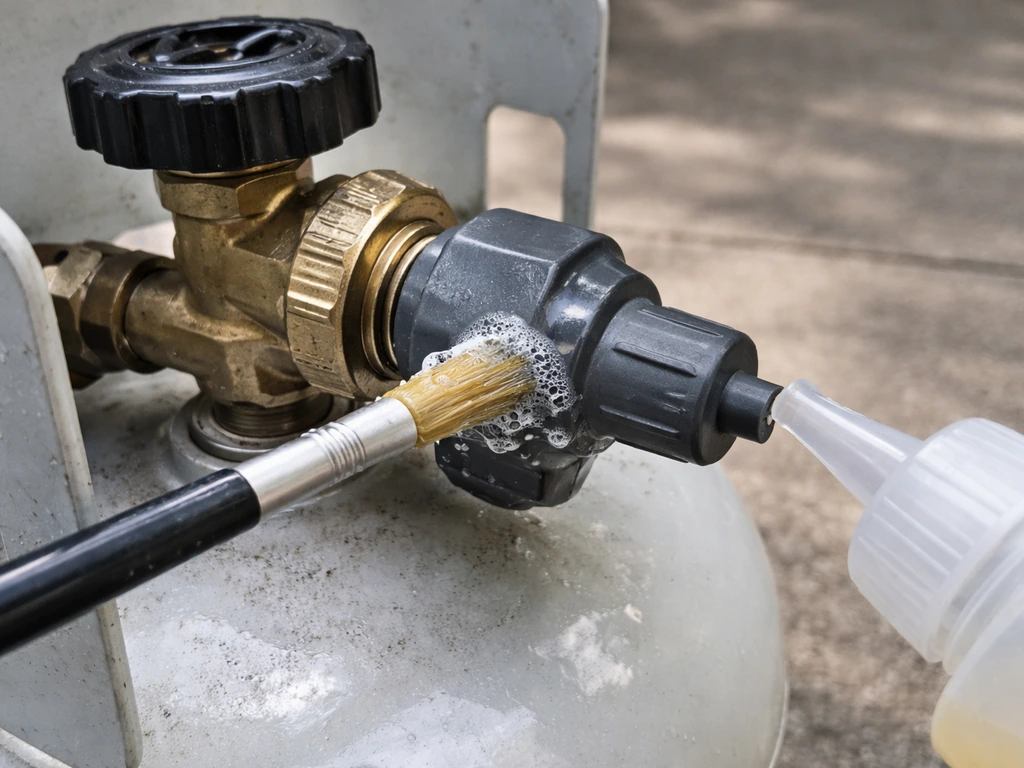
Before the first light and after any time you disconnect the gas, you must do a leak test. Mix 2-3 oz of solution (1 part dish soap, 3 parts water). Open the cylinder valve fully. Apply drops of solution at the hose-to-regulator connection and the regulator-to-cylinder connection. Watch for bubbles. If bubbles appear, close the cylinder valve immediately, tighten the connections, and test again. If they still bubble, do not light the heater. Replace the faulty connection before proceeding. Do this outdoors only, and extinguish any open flames nearby before opening the cylinder valve.
Pre-light operating conditions
- Wind speed below 10 mph. Above that, the flame will be unstable or won't light.
- Temperature above 40°F. Below that, the heater runs at reduced efficiency and a nearly empty tank may not vaporize fuel properly.
- Heater must be fully outdoors, not inside any enclosure, awning, or covered porch without full open-air ventilation.
- Tank should be more than 1/4 full. A low tank combined with cold temps is one of the most common reasons a heater won't light.
First-light steps
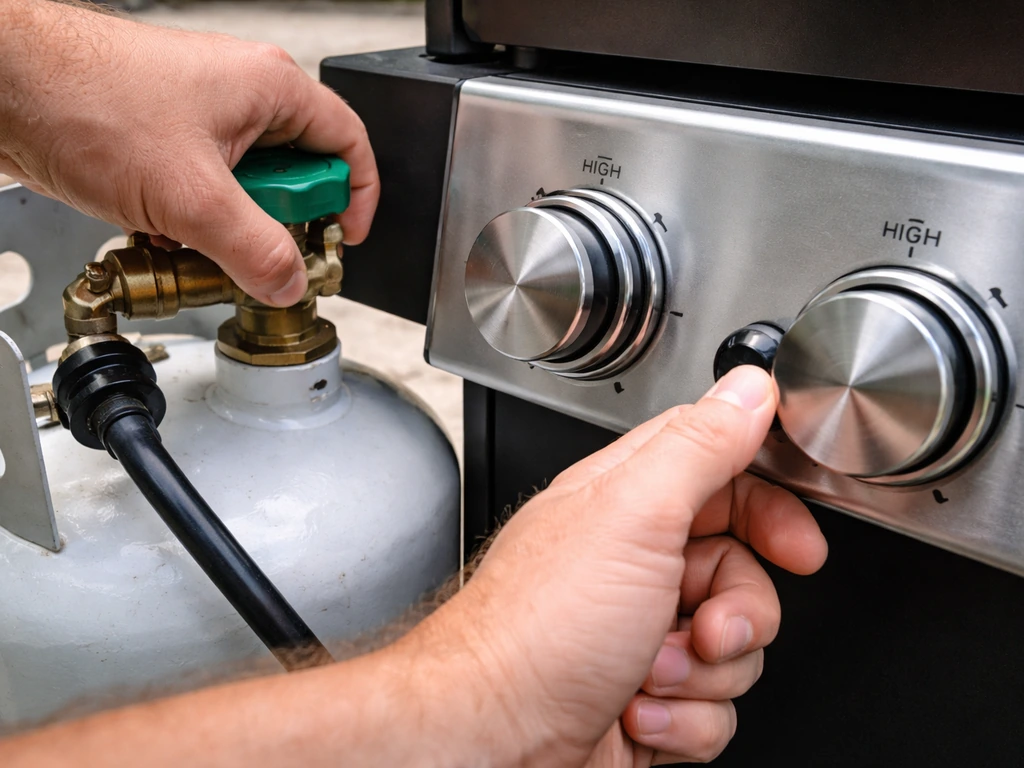
- Turn the propane cylinder valve to fully OPEN.
- Press and turn the control knob to HIGH (counter-clockwise 90 degrees to maximum).
- Hold the control knob pressed in and push the igniter button repeatedly until the main flame lights.
- Keep the control knob pressed in for 10 seconds after ignition to let the thermocouple heat up and hold the gas valve open.
- Release the knob. If the flame stays, you're good.
- Turn the knob to LOW and let the heater run for at least 5 minutes before adjusting to your desired heat setting.
One critical safety note from the manual: do not hold the control knob pressed for more than 10 seconds without igniting the gas. If you keep pumping gas without lighting it, you can build up enough propane for a ball of flame on ignition. If it doesn't light in 10 seconds, release the knob, wait a full minute for the gas to clear, and try again.
Ignition troubleshooting: if it won't light
Work through these in order. Each step either solves the problem or rules out a cause before moving to the next one.
- Check the cylinder valve: make sure it's fully open. A half-open valve restricts flow enough to prevent ignition.
- Check tank level and temperature: if the tank is below 1/4 full or it's under 40°F outside, replace the cylinder with a full one. A frosted-over cylinder means it's almost empty or it's too cold for proper vaporization. Let it warm up before retrying.
- Check the control knob position: it needs to be turned fully to HIGH before pressing in. Partial turns won't open the gas path correctly.
- Check for a blocked orifice or burner: look for spider webs, dirt, or debris in the burner openings. These are genuinely common, especially after the heater has been sitting unused. Clear any visible blockage carefully with a dry brush or can of compressed air.
- Check the igniter spark: press the igniter button and watch for a visible blue spark at the electrode near the burner. No spark means a dead igniter battery or a disconnected/corroded igniter wire. Try manual lighting with a long match or grill lighter through the access point at the burner to confirm gas is flowing first.
- If gas flows but the igniter won't spark: check the electrode connection, look for moisture or corrosion at the electrode tip, and check whether the igniter button clicks when pressed. A clicking button with no spark typically means a cracked electrode or gap issue. A button that doesn't click at all usually means a failed piezo igniter unit.
- If there's no gas smell and the igniter sparks fine: the problem is upstream, either a bad regulator, a crimped or blocked hose, or a stuck cylinder valve. Check the hose for kinks, test with a new full cylinder, and if still no flow, suspect the regulator.
The manual's troubleshooting table also flags dirt or film on the reflector and burner screen as a cause of ignition failure. This sounds minor but a heavily fouled screen can interfere with the airflow needed for a clean light. If the screen looks dark or clogged, clean it before the next attempt (more on cleaning below).
Burner lights but won't stay lit: safety shutoff fixes
If the flame lights and then dies when you release the control knob, the most likely culprit is the thermocouple not getting hot enough to signal the gas valve to stay open. This is the most common 'won't stay lit' failure on any propane patio heater, including the NCZH-G-SS.
Thermocouple issues
The thermocouple is a small probe that sits in the flame path. When it heats up, it generates a tiny electrical current that holds the gas valve open. If it's dirty, misaligned, or failing, it doesn't generate enough current and the valve closes as a safety measure. Make sure you're holding the control knob pressed in for a full 10 seconds after lighting, not 3 or 4.
That's not enough time. If you hold it 10 seconds and the flame still dies on release, the thermocouple tip likely needs cleaning or the thermocouple itself needs replacing. A light scrub with fine steel wool on the probe tip sometimes restores a weak thermocouple. If that doesn't help, replacement thermocouples for the NCZH-G-SS are the correct fix.
Tilt switch behavior
The NCZH-G-SS has a tilt safety switch that cuts the gas if the heater tips past a safe angle. If your heater is on uneven ground, a sloped deck, or if the base isn't fully assembled and level, the tilt switch may be triggering even when the heater looks upright. Move it to a flat, level surface and try again. If the heater lights and stays lit on flat ground but not on your deck or patio, that confirms a tilt switch trigger rather than a thermocouple problem.
Gas flow and pressure problems
Low flame that extinguishes under load can come from a regulator that's stuck in its safety bypass mode. This happens when you open the cylinder valve too fast, which triggers a pressure-relief lockout in the regulator. Fix: turn everything off, disconnect the regulator from the tank, wait 30 seconds, reconnect, open the cylinder valve slowly (about a quarter turn per second), then try lighting again. A regulator that locks out repeatedly even with a slow open may need replacement.
What the flame should look like
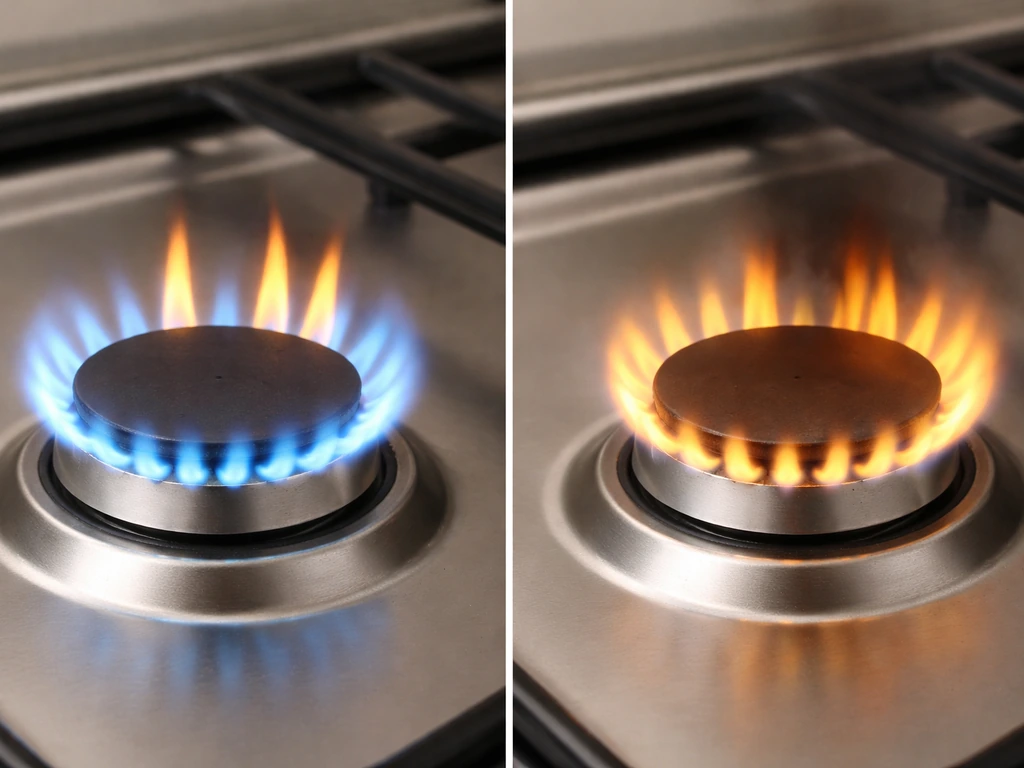
The manual is specific about this: a healthy flame is blue with straight yellow tips. If you see predominantly yellow flames or thick black smoke, there's an airflow obstruction in the burner. Turn the heater off immediately and don't operate it until the obstruction is cleared. This is both a performance issue and a carbon monoxide risk.
Maintenance and seasonal care
After every use
- Turn the control knob to OFF, then close the cylinder valve fully.
- Disconnect the gas line from the cylinder.
- Wait at least 45 minutes before touching or moving the heater. The reflector stays dangerously hot long after the flame is out.
- Check the hose for any new abrasion, cuts, or wear before your next use. This is a manual requirement before each lighting, not an optional step.
Cleaning the exterior and burner
Clean exterior surfaces with warm soapy water and a soft cloth. Never use flammable cleaners, solvents, or abrasive pads on the stainless surfaces. Keep the area around the burner assembly dry while cleaning and do not submerge the control valve assembly. If the control valve gets submerged in water (which can happen if the heater tips into pooled water or a flood), do not use the heater again until the valve is replaced. That's not a 'dry it out and see' situation.
If you see carbon buildup on the dome or burner screen, clean those surfaces with warm soapy water. Carbon deposits are a fire hazard and they also restrict airflow, which leads directly to the yellow-flame and black-smoke symptoms described above. Make this part of your end-of-season cleanup at minimum.
Corrosion prevention
If you're near the coast or in a high-humidity climate, corrosion will come faster than you expect on any patio heater. The manual specifically flags salt-air environments as a reason to check and correct corroded areas frequently. After cleaning, apply a coat of high-quality car wax to the pole and lower body surfaces to protect against moisture. Do not apply wax to the emitter screen or dome areas, only to the pole and lower housing where stainless steel meets the weather.
Storage between uses and off-season
Store the heater upright in a spot sheltered from direct rain, snow, and sun. A cover helps protect the exterior and prevents debris from building up in the air passages of the burner. For off-season storage, you can bring the heater body indoors, but the propane cylinder must be disconnected and stored outside in a well-ventilated area away from children. Never store a connected or disconnected LP cylinder in a garage, basement, shed, or any enclosed building. Install the dust caps on the cylinder valve whenever it's disconnected. Direct sunlight on a stored cylinder is also a no-go due to pressure buildup risk.
When to stop DIYing and call for help
Most NCZH-G-SS problems are solvable with the steps above, but there are situations where the right move is to stop and get a qualified technician or contact Hampton Bay support directly. If you have a Havana bronze commercial patio heater instead of the NCZH-G-SS, follow its specific instructions for ignition, gas setup, and safety checks Havana bronze commercial patio heater instructions. Here's how I think about the decision:
| Symptom / Situation | DIY Action | Stop and Get Help If |
|---|---|---|
| Igniter won't spark | Check battery, electrode connection, clean tip | No spark after replacing igniter unit or if wiring is damaged |
| Flame dies on release (thermocouple) | Hold knob 10 sec, clean probe tip, replace thermocouple | New thermocouple installed correctly and still fails |
| Gas smell with no leak at connections | Turn off immediately, evacuate, ventilate | Always call a technician or gas provider for unexplained gas odor |
| Regulator locks out repeatedly | Try slow-open cylinder method, replace regulator | New regulator still locks out or gas flow feels wrong |
| Control valve submerged in water | Do not use. Replace the valve. | This is always a stop-DIY situation until valve is replaced |
| Corroded gas line or hose with visible cracks | Replace hose with manufacturer-specified part only | If you can't source the correct OEM replacement part |
| Heater won't stay lit after all checks | Document symptoms, model, serial number | Contact Hampton Bay support at 1-855-HD-HAMPTON or via Home Depot product page |
When you contact Hampton Bay support or bring the unit to a service tech, have the model number (NCZH-G-SS), serial number from the label, purchase date, and a clear description of what happens: does it spark, does it light briefly, does it smell like gas, what the flame looks like when it does light. That information cuts the diagnostic time in half and gets you to a resolution faster. If your heater is still under its one-year residential warranty, Home Depot's Hampton Bay support line is the right first call before you spend money on parts.
One more thing worth knowing: the NCZH-G-SS manual's troubleshooting table is intentionally brief. It covers the most common symptoms well, but it doesn't walk through electrode gap specifications or detailed igniter wiring checks. If you've exhausted the manual's guidance and the steps in this article, that's a reasonable signal that you're dealing with a component-level failure rather than a setup or maintenance issue, and professional diagnosis makes more sense than continued guesswork.
FAQ
Can I troubleshoot the propane connections first, and skip the leak test if it worked earlier?
Yes, but only if it is done outdoors and you fully recheck every connection afterward. The manual leak-test procedure applies after any time you disconnect the regulator from the cylinder, or after you loosen and retighten hose fittings, because small leaks can develop at the seal surfaces even if the problem seems intermittent.
What should I do if the heater starts but the flame turns yellow quickly or smokes heavily?
If the flame pattern is unstable or mostly yellow, do not keep trying to relight. The safer approach is to shut it off, inspect for airflow obstruction (burner screen and reflector area), clear any visible debris, and only then retry ignition after the heater is cool.
Is it okay to use the soapy water leak test on the whole heater, including the control valve?
Do not use the dish-soap mix on electrical parts or the control valve body. Apply only to the hose-to-regulator and regulator-to-cylinder connections, wipe away residue after testing, and keep water away from any labeled valve housings or wiring to prevent corrosion and malfunction.
How do I open the propane cylinder correctly to avoid regulator lockout?
Only use a quarter-turn per second style opening on the cylinder valve, and stop if you notice coughing gas odor or abnormal flame behavior. The “fast open” issue can push the regulator into a lockout mode, and repeated fast openings can turn a fixable ignition issue into a parts replacement scenario.
Can I keep the control knob pressed longer than 10 seconds if it seems close to lighting?
No. If it doesn’t ignite within the manual’s 10-second limit while holding the control knob, release the knob and wait a full minute before trying again. Repeatedly holding longer can build up gas and increase the chance of a flare at ignition.
How can I tell whether it’s the thermocouple problem or the tilt switch?
If the flame stays on while the heater is level but goes out when moved onto uneven ground or a slope, the tilt safety switch is the likely cause. For diagnosis, place the heater on a flat, stable surface, and do not operate it where it cannot sit fully upright and assembled.
Should I clean the thermocouple first, or replace it right away when it won’t stay lit?
A thermocouple issue is most consistent with “lights, then dies immediately after releasing the knob.” Cleaning the probe tip can help if it is contaminated, but if it still won’t hold after a proper cleaning and correct 10-second hold time, plan on replacement rather than repeated attempts.
What cleaning products are safe for the NCZH-G-SS, and what should I absolutely avoid?
Warm soapy water is fine for exterior surfaces and carbon on the dome and burner screen, but do not use abrasive pads, solvents, or flammable cleaners. Also avoid submerging or rinsing the control valve assembly, if the heater tips or puddles are present, because the manual treats moisture exposure as a replacement-needed condition.
Can I store the patio heater under a cover with the propane cylinder attached?
Yes, but only as long as the heater is fully upright, protected from debris, and you keep the burner area clear of insects and dust buildup. For off-season storage, use a cover, keep the cylinder disconnected, and follow the manual’s “cylinder stored outside, well-ventilated” rule.
How often should I inspect for corrosion if I live near the coast?
Corrosion risk is higher in salt-air or high-humidity areas, so more frequent inspections are worthwhile. After cleaning, a wax coat on the pole and lower housing helps resist moisture, but never wax the emitter screen or dome areas because it can interfere with heat and airflow.
What information should I gather before contacting Hampton Bay support or a technician?
The most efficient way is to provide: model number (NCZH-G-SS), serial number, purchase date, whether it sparks, whether it lights and how long it stays lit, any gas odor, and what the flame looks like (yellow tips, black smoke, or mostly blue). If you also include what you already cleaned (screen, reflector, thermocouple tip), support can skip redundant troubleshooting steps.