A 13kg LPG cylinder holds 13kg of usable gas. At the consumption rates of most common patio heaters (roughly 0.9 to 1 kg/h at full output), you're looking at around 13 to 14 hours of continuous use. Run the heater on a lower setting and that stretches to 20 hours or more. But those are ballpark figures, and your actual runtime will depend on your specific heater's rated consumption, what setting you use, and what conditions you're heating in. Here's how to work it out properly.
How Long Does a 13kg Gas Bottle Last for a Patio Heater

Grant Mercer
7 Jul 2026
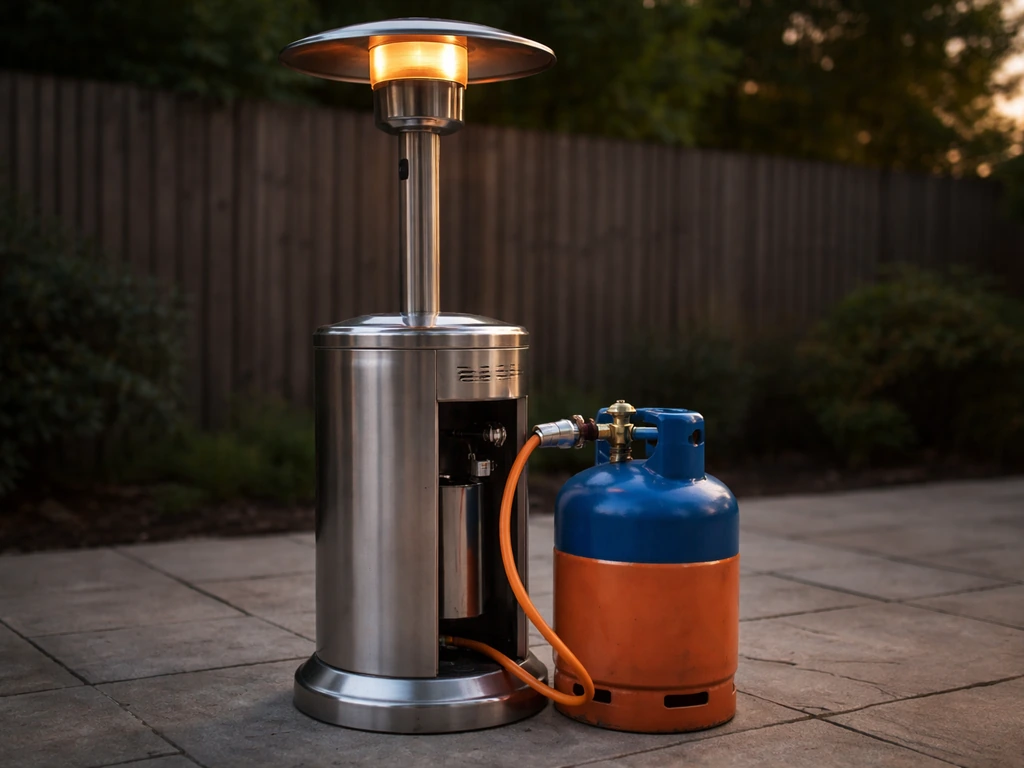
What a 13kg cylinder actually gives you
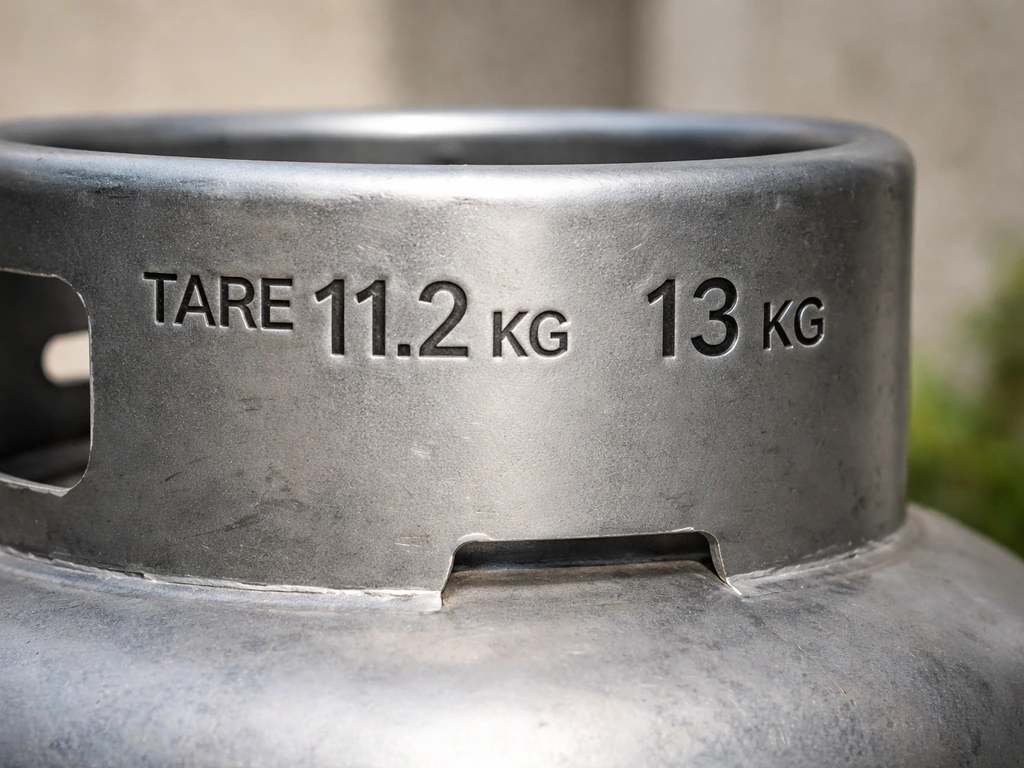
The '13kg' refers to the net weight of LPG inside the cylinder, not the total weight of the bottle itself. The cylinder body (called the tare weight) is separate. A Calor 13kg propane bottle, for example, has a tare weight of around 15kg, so the full cylinder weighs roughly 28kg on your scales. A 13kg butane cylinder has a lighter shell, with a tare weight closer to 12.5kg, so it comes in around 25.5kg when full.
This distinction matters because the tare weight is stamped on the collar of the cylinder. If you want to know how much gas you have left at any point, you weigh the bottle and subtract that stamped tare weight. The result is your remaining LPG in kilograms. That's the number you use for all runtime calculations.
Most UK patio heater cylinders are propane (the red Calor bottles), which works year-round. Butane (the blue bottles) can struggle to vaporise in cold weather below around 5°C, so it's worth knowing which you're using. For runtime purposes, propane and butane have very similar energy per kilogram (propane around 13.8 kWh/kg, butane slightly lower at about 13.7 kWh/kg), so the difference in hours is negligible.
How to calculate runtime from your heater's specs
The most reliable method uses your heater's data plate or manual. Look for one of three figures: rated heat output in kW, heat input in BTU/h, or gas consumption in kg/h or g/h. If you have the consumption figure directly, the maths is simple: divide 13 by the kg/h consumption to get hours. If a heater consumes 0.945 kg/h at full power (as stated for several 13-14kW pyramid heaters), that gives you 13 divided by 0.945, or about 13.8 hours.
If you only have the kW rating, use the standard LPG calorific value formula. Divide the heater's kW output by 13.8 (the kWh per kg for propane) to get kg/h consumption. Then divide 13 by that figure to get your hours.
- Find your heater's rated heat input (kW) on the label or in the manual.
- Divide that kW figure by 13.8 to get approximate gas consumption in kg/h.
- Divide 13 (the kg of gas in the cylinder) by that kg/h figure.
- The result is your estimated maximum continuous runtime in hours.
As a worked example: a 14kW heater uses 14 divided by 13.8, which equals about 1.01 kg/h. Divide 13 by 1.01 and you get roughly 12.9 hours. A lower-powered 10kW heater uses about 0.72 kg/h, giving around 18 hours from the same cylinder. If your heater has BTU/h on the label instead of kW, divide by 3,412 to convert to kW first.
Quick answer: estimated hours by heater output
| Heater Output | Approx. Consumption (kg/h) | Estimated Hours from 13kg Cylinder |
|---|---|---|
| 8 kW (27,300 BTU/h) | 0.58 kg/h | ~22 hours |
| 10 kW (34,100 BTU/h) | 0.72 kg/h | ~18 hours |
| 12 kW (40,900 BTU/h) | 0.87 kg/h | ~15 hours |
| 13 kW (44,300 BTU/h) | 0.94 kg/h | ~13.8 hours |
| 14 kW (47,700 BTU/h) | 1.01 kg/h | ~12.9 hours |
| 15 kW (51,200 BTU/h) | 1.09 kg/h | ~12 hours |
These figures assume full-rated output and a full 13kg of gas. Most heaters are run somewhere between half and full power in real use, so your actual bottle will typically last longer than the full-output estimate.
Real-world factors that change how long the bottle lasts
The calculation above gives you a theoretical maximum. Real life is messier. Here are the main things that will shorten or extend that figure.
Wind
Wind is the biggest variable. Even a light breeze disperses the heated air column before it reaches people, which means the heater feels less effective and people crank it up to compensate. Most manufacturer manuals (including AZ Patio Heaters) explicitly recommend shutting off the heater in high winds, partly for safety and partly because it's burning gas for no benefit. A sheltered patio versus an exposed deck can make a real difference to how long a bottle lasts across a season.
Burner setting
Running the heater on medium rather than full cuts consumption roughly in half. Many people run at around 50-60% of maximum output for everyday use, which means a 13kg cylinder can stretch to 20-25 hours or more. If you have a thermostatic control, the heater cycles on and off, which reduces average consumption further.
Ambient temperature
Cold nights mean the heater is working against a bigger temperature gradient, so you tend to run it higher and longer. Gas demand is naturally higher in autumn and early spring than on a mild summer evening.
Placement and reflector condition
A heater positioned correctly, with a clean and undamaged reflector, directs radiant heat where it's needed. A dented or oxidised reflector scatters heat inefficiently, so more gas is burned to achieve the same perceived warmth. Position matters too: pushing the heater close to a wall or under a pergola reflects radiant heat back towards people rather than losing it to the open sky.
Heater faults that quietly burn through your gas
A poorly maintained heater doesn't just fail to light. It can waste gas in ways that aren't immediately obvious. If you're getting through gas faster than the numbers above suggest, or the heater keeps cutting out and needs relighting, one of these faults is likely the reason.
Thermocouple problems
The thermocouple is a small temperature sensor that sits in the pilot flame. When it detects heat, it sends a signal that holds the gas valve open. If the thermocouple is dirty, misaligned, or failing, the valve closes shortly after ignition, the flame goes out, and you reignite. Each relighting cycle wastes gas through the purge process, and if you're doing it repeatedly across an evening you burn through more than you'd expect. A thermocouple replacement is a straightforward DIY job on most heater models.
Tilt switch triggering
Most freestanding patio heaters have a tilt switch safety cutoff that shuts gas flow if the unit leans beyond a set angle. If the switch is faulty or the heater is sitting on uneven ground, it can shut off intermittently, requiring repeated relighting. Each unnecessary shutdown and restart wastes gas.
Blocked burner jets
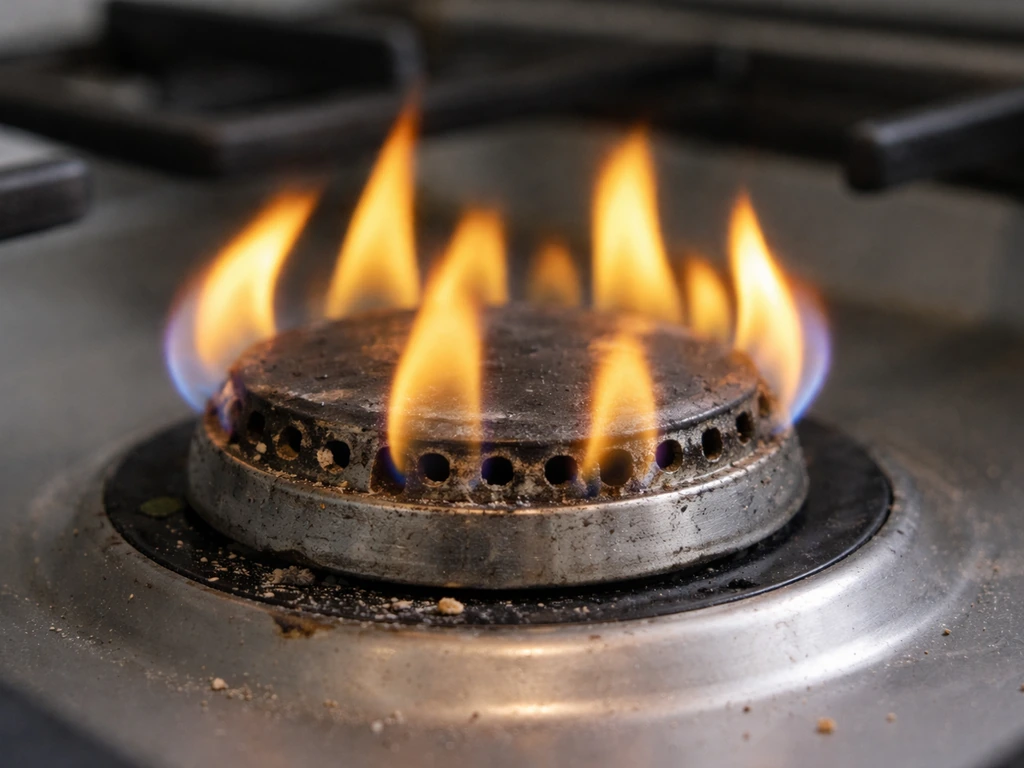
Spiders and insects build nests inside burner tubes over winter. Even partial blockages change the air-to-gas mix, resulting in an inefficient yellow flame rather than a clean blue one. A yellow or orange flame means the gas isn't combusting fully, which wastes fuel and produces more soot. Cleaning the burner jets with a soft brush and compressed air before the season starts is one of the highest-value maintenance jobs you can do.
Ignition faults causing repeated gas release
If the igniter isn't sparking reliably, you may hold the gas valve open for several seconds trying to get it to catch. Repeated failed ignition attempts release unburned gas into the air. This is not just wasteful, it's a safety hazard. If you're clicking more than three or four times without a light, stop and diagnose the igniter before continuing.
Checking for leaks and running a burn-time test
Gas leaks are the most serious cause of wasted gas, and they can be dangerous. Before doing any runtime test, check all connections for leaks. With the cylinder valve open but the heater off, blank" rel="noopener noreferrer">apply a soapy water solution (or a purpose-made leak detection fluid rated to EN14291) to the regulator connection, the hose connections, and any inline fittings. Once you’ve confirmed the regulator and hose connections are leak-free, you can follow the manufacturer’s instructions to connect the gas bottle to your patio heater safely regulator connection. Bubbles indicate a leak. If you find one, close the cylinder valve immediately and do not light the heater. Replace the faulty regulator or hose before use.
Never use a naked flame to check for leaks. Never check for leaks near any ignition source.
To run a simple burn-time test, weigh the cylinder on a set of bathroom or luggage scales before lighting the heater. Note the weight, light the heater, run it at your normal setting for exactly one hour, then weigh the cylinder again. The difference in weight is your actual kg/h consumption at that setting. Multiply that by 13 (or whatever your remaining gas was at the start) and you have your real-world remaining runtime. This is much more accurate than relying on rated figures alone, and it accounts for your actual usage pattern and conditions.
You can also use the weighing method to monitor how much gas you have left at any time. Weigh the cylinder, subtract the tare weight stamped on the collar, and you know exactly how many kilograms remain. Divide that by your measured kg/h consumption and you know how many hours you have left.
Setup and maintenance checks that make every kilogram count
Getting the most from a 13kg cylinder isn't just about the gas itself. If you are trying to pick the right cylinder size, start by matching your patio heater's stated gas consumption in kg/h to the runtime you want. A well-maintained, correctly set-up heater burns more efficiently and runs longer on the same amount of fuel.
- Check the regulator: most patio heaters use a 28-37mbar regulator for propane or a 28mbar regulator for butane. Using the wrong regulator gives you the wrong operating pressure, which affects flame size and combustion efficiency. Check the label on your regulator against your heater's manual.
- Inspect the hose: look for cracks, kinks, or perishing. A hose with any visible damage should be replaced before use, not taped or improvised. Gas hoses have a printed use-by date and should be replaced every five years regardless of visible condition.
- Clean the burner annually: remove the burner head if the design allows, and clean the jets with a fine wire or soft brush. Blow out any debris with compressed air. Reinstall and check for a clean blue flame on startup.
- Check the reflector: clean and straighten the reflector dish. Dirt absorbs radiant heat; a dented reflector scatters it. A clean, smooth reflector delivers more heat to the people below it.
- Confirm the cylinder is in date: LPG cylinders have inspection dates. If the cylinder is old or has visible corrosion, have it inspected or exchanged rather than continuing to use it.
- Position the heater correctly: level ground prevents unnecessary tilt-switch trips. Shelter from prevailing wind improves efficiency. Keep the heater clear of overhanging structures per the manufacturer's clearance requirements.
If after all these checks the heater is still cutting out, showing a weak or irregular flame, or consuming gas far faster than the estimates above, it's worth considering whether the thermocouple, valve, or burner assembly needs professional inspection. Some faults, particularly internal valve issues or gas train components, are beyond reasonable DIY scope, and persisting with a faulty unit is a safety risk.
Pulling it all together
For most people with a standard 13-14kW mushroom or pyramid patio heater: expect around 13 to 14 hours at full power from a fresh 13kg cylinder. At medium power, budget 18 to 22 hours. Those numbers assume the heater is in good condition, the regulator is correct, and you're using the cylinder on reasonably sheltered ground. Use the weighing method before and after an hour of use to dial in your specific number, and do a blank" rel="noopener noreferrer">soapy-water leak check at the start of every season. That's really all you need to stay on top of gas consumption and keep the heater running efficiently.
FAQ
If my cylinder is not fully full, how do I estimate how long it will last?
Use the weighing method. Weigh the bottle, subtract the tare weight stamped on the collar to get the remaining kg of LPG, then divide by your measured kg/h consumption (or the heater’s labelled consumption at your setting). For example, if you have 9.5kg remaining and your heater uses 0.95kg/h, expect about 10 hours.
Does the runtime estimate change if I use propane versus butane?
Not much for the same kg of fuel, because the energy per kilogram is very similar. The bigger practical difference is in cold weather, where butane can struggle to vaporise below roughly 5°C, so the heater may not reach rated output even if the cylinder still contains liquid gas.
What if my heater label says “heat output” in kW but not “gas consumption” or “kg/h”?
You can still estimate by using the kWh per kg approach described in the article, but be careful about output versus input. Make sure you’re using the correct kW figure (usually heat input or rated output on the data plate). If you mix up output and input, your calculated kg/h consumption can be noticeably off.
Should I run the heater at low or medium to make the bottle last longer?
Yes, for both reasons. Lower settings reduce kg/h consumption, and thermostatic models often cycle, lowering average use compared with constant full output. If your heater lacks a thermostat, medium can still be more efficient than full power, but test your real kg/h since “half power” can vary by model.
Why is my gas usage higher than expected even when the heater seems to be burning normally?
Common causes are wind and placement, but also incorrect burner performance. If the reflector is dented or not aligned, heat can be wasted upward or into the space above, which makes people turn it up. Also check that the burner flame is clean and not consistently yellow, a sign of poor combustion that wastes fuel.
How do I do the one-hour burn test without changing my setup mid-test?
Weigh before lighting, then keep the same gas setting, wind exposure, and heater location for the full hour. Don’t open the enclosure or move the heater during the test. If it cycles (thermostat), record whether it stayed on continuously or repeatedly, because cycling affects average kg/h.
Is it safe to weigh the cylinder while it’s connected to the heater?
Do not weigh it while it’s actively connected and running. For safety and accuracy, disconnect from the scales location, keep the test method consistent, and only weigh with the heater off. If you need to move equipment, let it cool and avoid disturbing gas lines.
How can I tell if my thermocouple issue is causing extra gas waste?
Look for repeated relighting events, frequent flame-outs shortly after ignition, or the need to hold the control knob longer than usual. Those purge and restart cycles burn gas without heating people. If ignition holds are increasing over time, it often points to a thermocouple that is dirty, misaligned, or failing.
What flame color or behavior indicates inefficient combustion and wasted gas?
A consistently yellow or orange flame, excessive soot, or a flame that looks patchy instead of steady is a red flag. Mild variation can happen, but if it persists after cleaning, it can mean a burner jet issue or airflow problem, and it typically shortens cylinder life.
How do I interpret the “tilt switch” cutoff if my heater keeps shutting off?
If the unit leans, sits on uneven ground, or the tilt switch is faulty, it can shut gas flow intermittently and force relighting. That increases gas consumption beyond the runtime calculation. Level the base, check stability, and if it still cuts out, the switch may need inspection or replacement.
What should I do if bubbles appear during the soapy-water leak test?
Close the cylinder valve immediately, do not light the heater, and ventilate the area. Replace the faulty component (often the hose, regulator, or an inline fitting) before re-testing. If you are unsure where the leak originates, have the gas supplier or a qualified technician handle it.
How often should I clean the burner jets and check for insect nests?
At least at the start of each season, and more often if you use the heater frequently in the same sheltered spot. Insect blockages can build up over winter, and even partial restriction can cause inefficient combustion that shows up as yellow flames or faster-than-expected gas use.
Can weather and wind make the heater feel hot but still burn more gas?
Yes. Wind can disperse the heat you’re trying to deliver, so the heater may need to be turned up to maintain comfort. That increases kg/h consumption, even if the flame and cylinder seem “normal.” Shelter and correct positioning often reduce gas use as much as changing the setting.