To light a pyramid patio heater, turn the control knob to the Pilot position, push it in and hold it down, then press the igniter button (or use a long lighter) until the pilot flame catches. Once it lights, keep holding the knob for a full 30 to 45 seconds before slowly releasing it. If the flame stays, turn the knob to your desired heat setting. If it goes out on release, you almost certainly have a thermocouple issue, a hold-time problem, or air in the gas line, all of which are fixable.
How to Light a Pyramid Patio Heater Step by Step

Grant Mercer
22 Jun 2026
Before you light: safety checks and confirming fuel type
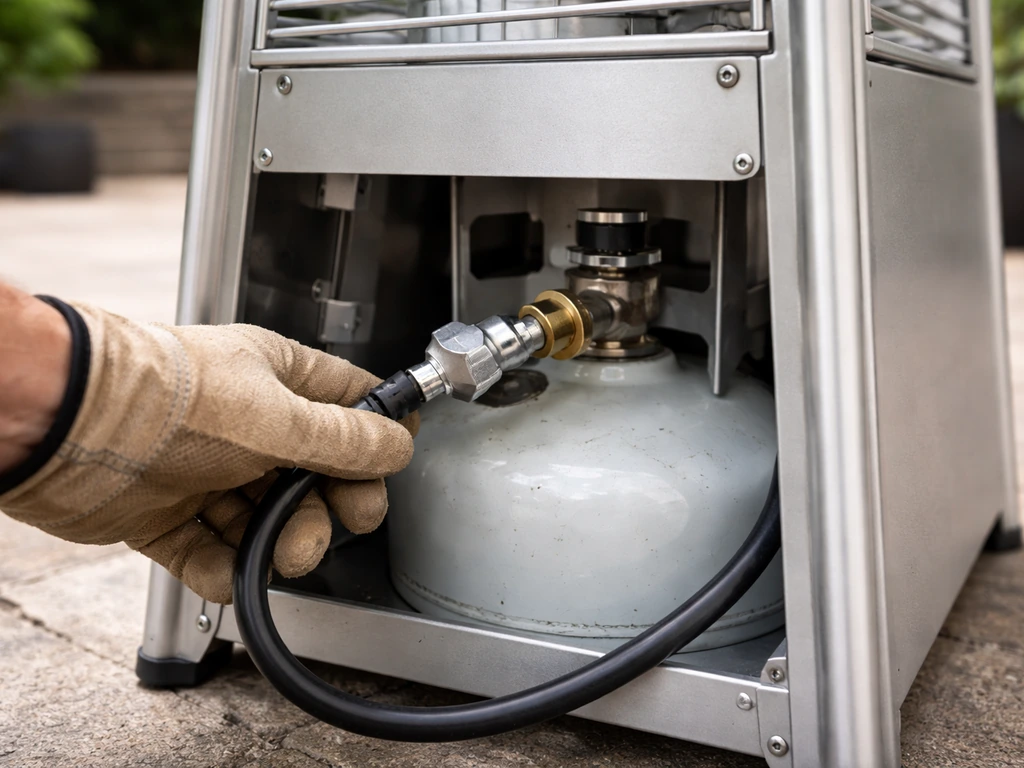
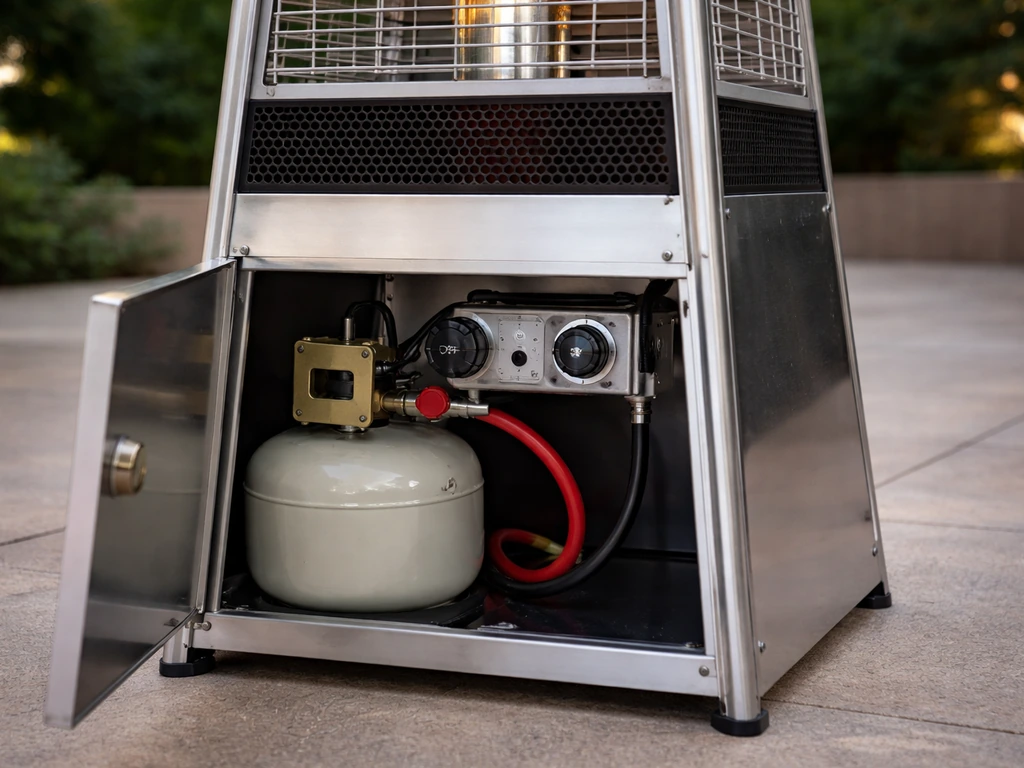
Pyramid patio heaters run on propane (LP gas), usually a standard 20 lb tank that connects at the base. Before you do anything else, take 30 seconds to check these things. After the safety checks, you can proceed to the specific steps for lighting your mosaic patio heater. They matter more than getting the heater lit quickly.
- Smell the air around the base: if you smell propane (that distinctive rotten-egg or skunk odor), stop immediately. Do not press any buttons or turn any knobs. Shut off the tank valve if you can do so without staying near the smell, move away from the heater, and ventilate the area for at least 5 minutes before even thinking about troubleshooting. If the smell is strong or persistent, call your propane supplier or emergency services.
- Check the tank level: a nearly empty tank is a surprisingly common reason a heater won't light. Tilt the tank gently — if it feels weightless, swap it out first.
- Confirm the tank valve is open: hand-tighten it counterclockwise (lefty-loosey for a tank valve is actually clockwise when looking down at the top — turn it counterclockwise from the side to open). Open it slowly, one full turn is enough.
- Check the regulator connection: make sure the hose fitting at the top of the tank is hand-tight. A loose connection means no gas gets through.
- Look for obvious obstructions: spider webs and debris love to collect in the burner tube (venturi tube) during storage. If you can see a blockage at the base of the burner tower, clear it before lighting.
- Set the heater on a level, stable surface: pyramid heaters have a built-in tilt safety switch that will cut off gas automatically if the unit tips more than a few degrees. On an uneven surface, the tilt switch can trip even without an actual tip-over.
What you need before you start
Most pyramid heaters have a piezo electronic igniter built into the control panel at the base, usually a red or black button separate from the main control knob. If yours has one, check the igniter battery. Many units use a single AA or AAA battery housed in a small compartment near the igniter button. A dead battery produces no spark, which is one of the most common reasons these heaters seem completely unresponsive. Pop it out, check it, and replace it if there's any doubt. Even a battery that tests at 1.2V on a meter can fail to produce a strong enough spark under load.
If the built-in igniter isn't working (or your unit doesn't have one), you can light it manually with a long-reach fireplace lighter or a long match. You'll need to get the flame to the pilot opening at the base of the burner assembly while simultaneously holding the control knob in, so a long lighter with a flexible neck is a lot easier than a match. Have it within arm's reach before you start.
- The control knob at the base of the heater (this controls both the pilot and main gas flow)
- The electronic igniter button, if your unit has one
- A fresh AA or AAA battery (check your manual for the correct size) if the igniter seems weak
- A long-reach butane lighter or long matches as a backup
- Your heater's manual, if available — hold times and knob positions can vary slightly by brand
Step-by-step lighting procedure
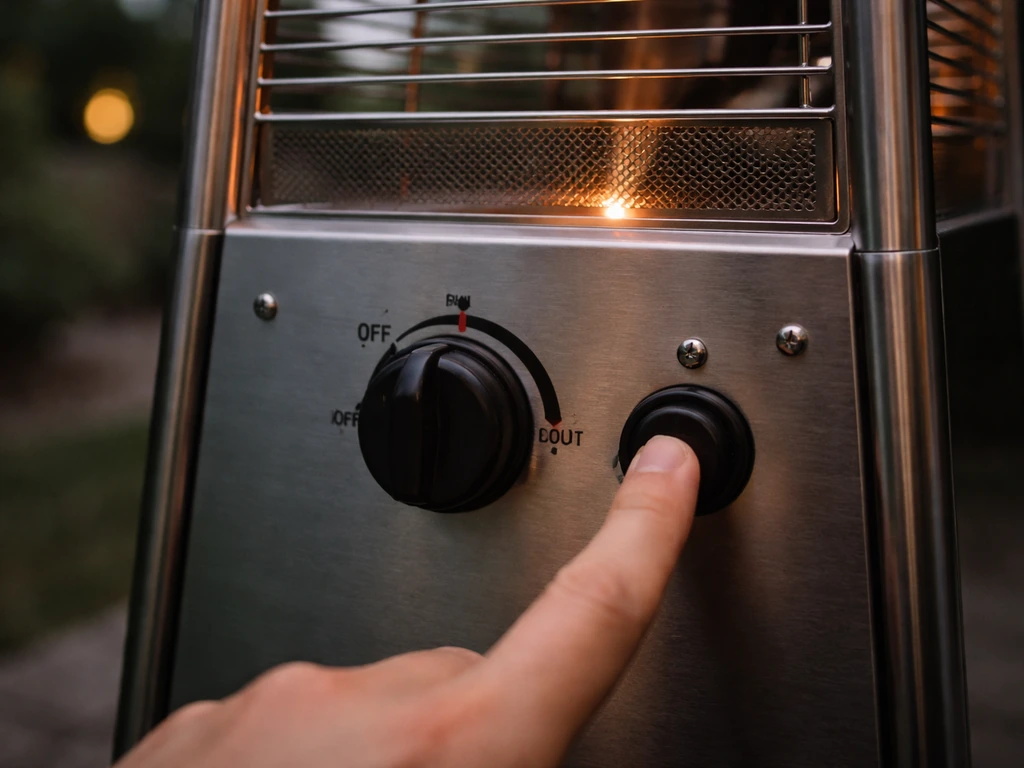
This sequence works for the overwhelming majority of pyramid-style propane patio heaters, including popular brands like AZ Patio Heaters, Hiland, and most of the generic units sold through big-box stores. If you have a Hiland patio heater, use this standard lighting procedure as a starting point, then follow any brand-specific notes in your manual Hilands. If your manual specifies different timing, follow the manual. But this is the standard procedure. These heaters are covered by CSA/ANSI standards for gas-fired outdoor infrared patio heaters, including CSA/ANSI Z83.26-2020/CSA 2.37-2020 and later revisions blank" rel="noopener noreferrer">ANSI Webstore.
- Make sure the control knob is in the OFF position. If you've been fiddling with it already, turn it to OFF and wait 5 minutes for any gas to dissipate before starting fresh.
- Open the propane tank valve slowly — one full counterclockwise turn from the top.
- Push the control knob in slightly and rotate it to the PILOT position. You should feel it click or align with a pilot marker.
- Press the knob all the way in and hold it down. This mechanically opens the pilot gas valve and bypasses the thermocouple safety valve so gas can flow to the pilot burner.
- While holding the knob in, press the igniter button repeatedly (one press per second) until you see the pilot flame light up at the base of the burner tube. If using a manual lighter, position the flame at the pilot opening before pressing the knob in, then hold both simultaneously.
- Important: do not hold the knob in for too long before igniting. One manual specifically warns that holding the valve open for an extended period before ignition can cause a ball of flame when it finally lights. Keep the pre-ignition hold to about 10 to 15 seconds, and if it hasn't lit, release the knob, wait 2 to 3 minutes, and try again.
- Once the pilot flame is lit, keep holding the knob in for a full 30 to 45 seconds. This is the step most people skip. The thermocouple (a safety sensor in the pilot flame) needs time to heat up and generate enough voltage to hold the gas valve open on its own. Release too early and the flame dies immediately.
- After 30 to 45 seconds, slowly release the knob. If the pilot flame stays lit, you're good. If it goes out, see the troubleshooting section below.
- With the pilot holding steady, turn the knob from PILOT to your desired heat setting (LOW, MEDIUM, or HIGH). The main burner should ignite from the pilot flame with a soft whomp sound.
- If the main burner doesn't light within 5 seconds of turning to a heat setting, turn back to PILOT, wait 30 seconds, and try again. Never leave the knob on a heat setting with no flame.
If it won't ignite: quick diagnostics for gas flow and spark
If you're pressing the igniter and getting nothing, no flame, no click, no smell of gas near the pilot, work through this checklist before assuming anything is broken. If you smell propane, do not turn on or adjust the propane controls, and even if the odor stops, do not turn on the supply valves.
No spark at all
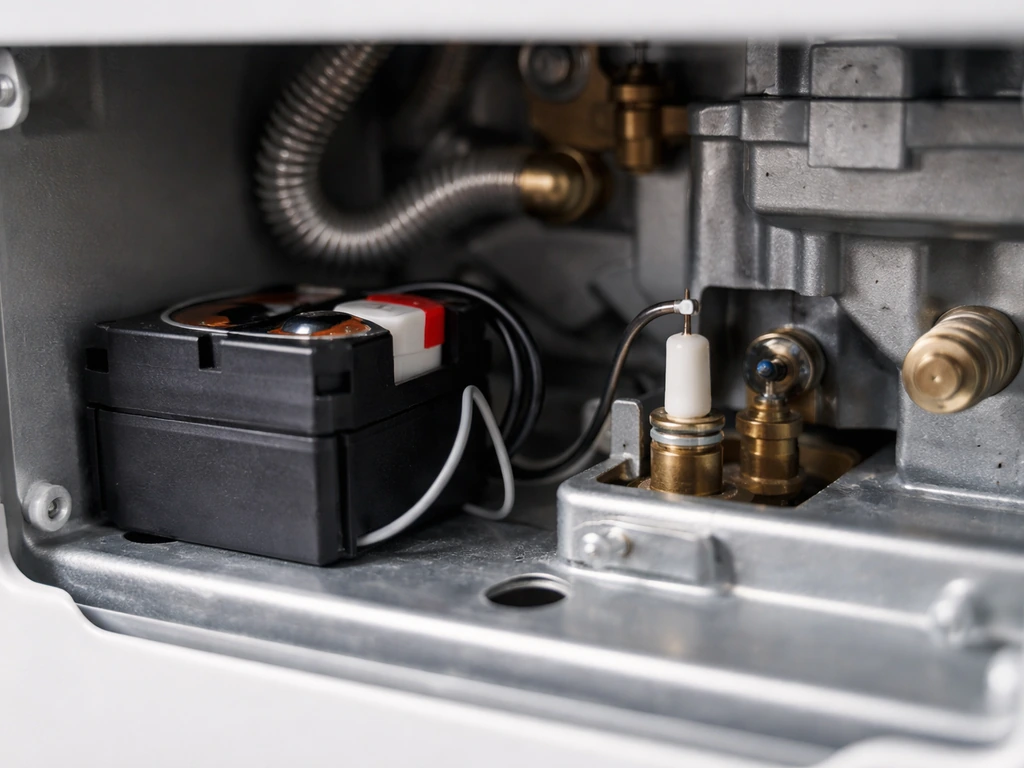
- Replace the igniter battery first. This fixes the problem more often than anything else.
- Check the igniter electrode: it's a small metal rod or tip positioned near the pilot burner. If it's coated in grease, soot, or moisture, it won't spark reliably. Gently clean it with a dry cloth or fine sandpaper.
- Check the gap between the electrode and the burner/pilot hood. Too wide and the spark won't jump across. It should be about 3 to 4mm — close but not touching.
- If the electrode wire has a crack or the tip is broken off, the igniter won't work. You'll need to light manually or replace the igniter assembly.
Spark fires but no flame
- Air in the gas line is the most likely cause, especially if this is a new tank or a tank that was swapped recently. Air gets trapped in the line and needs to be purged before gas can flow freely. To bleed it: hold the control knob in the Pilot position for up to 1 to 2 minutes (keep pressing the igniter periodically) until gas reaches the pilot and it catches. If it hasn't lit after 2 minutes, release, ventilate, wait 5 minutes, and try again.
- Confirm the tank valve is actually open. It sounds obvious, but a valve opened only a quarter turn may not supply enough pressure.
- Check the regulator. If the regulator has gone into its over-pressure lockout mode (this happens when you open the tank valve too quickly or with the heater controls open), gas flow will be severely restricted. Fix: close the tank valve, turn the heater control knob to OFF, wait 30 seconds, then reopen the tank valve slowly.
- Check the pilot orifice for blockage. A clogged pilot orifice or pilot tube won't let gas through. This is usually a job for compressed air or a very fine needle to clear debris from the tiny opening.
If it lights then goes out: thermocouple and tilt switch troubleshooting
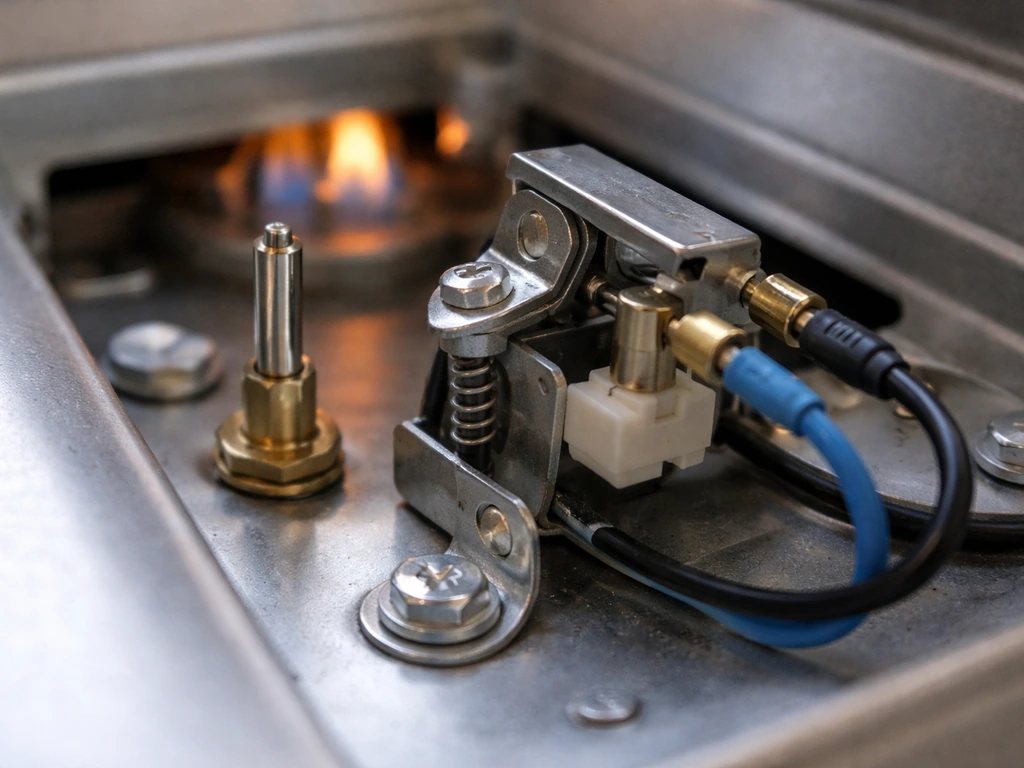
If the pilot lights while you're holding the knob but dies the moment you let go, you're almost certainly dealing with a thermocouple issue. The thermocouple is a small metal probe positioned in the pilot flame. When it gets hot enough, it generates a small electrical signal that tells the safety valve to stay open. If it's not generating that signal, whether because it's not being heated enough, it's dirty, or it's failing, the valve closes and the flame goes out.
Hold time: the most common fix
Before you blame the thermocouple itself, make sure you're actually holding the knob long enough. 30 seconds feels like a long time when you're crouching at the base of the heater. Many people release at 10 or 15 seconds and then think the thermocouple is bad. Try again and count slowly to 45 before releasing. If that fixes it, you're done.
Thermocouple alignment and condition
The thermocouple probe needs to sit inside the pilot flame, not beside it or above it. If the probe is bent away from the flame or has shifted out of position, it won't heat up properly. Look at where the pilot flame burns and check that the probe tip is actually engulfed in that flame. You can gently bend it back into position. Also look for buildup on the probe: a layer of oxidation, soot, or debris insulates the tip and reduces heat transfer. Clean the probe tip carefully with fine steel wool or sandpaper, just enough to expose clean metal.
Tilt switch issues
Pyramid heaters have a tilt safety switch inside the base that cuts off gas if the unit tips beyond a certain angle. If your heater is on slightly uneven ground, the switch can trip even when the heater looks level. Try placing it on a completely flat surface and retry. If the tilt switch itself is faulty (tripped even on level ground), the heater will shut off repeatedly and there's no easy user fix for that, the switch needs to be replaced or inspected by a technician.
Wind
Pyramid heaters are reasonably wind-resistant because the flame is enclosed, but in winds above about 10 mph the pilot flame can still be disrupted enough to cool the thermocouple and trigger a shutdown. If you're in breezy conditions and the heater keeps shutting off, try repositioning it or adding a windbreak. This isn't a malfunction, it's the safety system doing its job.
Quick maintenance to prevent repeat failures
Most ignition problems on pyramid heaters come from neglect over winter storage rather than actual component failure. Fifteen minutes of cleaning at the start of the season prevents the majority of these calls.
- Clean the venturi tube: this is the tube that draws air into the burner. Insects (especially spiders) love to build nests in it during storage. Remove the burner access panel at the base and use a venturi brush or a long, thin bottle brush to clear the tube. Compressed air works well too.
- Clean the thermocouple probe: use fine steel wool or 400-grit sandpaper to lightly polish the tip. This removes oxidation and restores its ability to generate a proper signal.
- Clean the igniter electrode: wipe it clean with a dry cloth. If there's heavy carbon buildup, use sandpaper. Check the gap — it should be about 3 to 4mm from the burner surface.
- Check the igniter battery: replace it annually at the start of the season, even if it still seems to work. Batteries are cheap; a failed ignition at your next outdoor gathering is annoying.
- Inspect all gas connections: mix a few drops of dish soap with water and apply it to the regulator connection, the hose fittings, and the valve connections. Open the tank valve and look for bubbles. Any bubbling means a leak — tighten the connection or replace the component before using the heater.
- Check the burner screen and emitter: clean off any debris, bird droppings, or surface rust from the screen. A blocked screen affects heat output and can create uneven combustion.
- Store with the tank removed: if you're not using the heater for more than a few weeks, disconnect the propane tank and store it separately. This keeps critters from using the gas line as a home and prevents regulator lock-up from slow pressure fluctuations.
When to stop DIY and get service
Most pyramid heater ignition problems are genuinely DIY-fixable: battery swap, air bleed, thermocouple clean, or an adjustment to hold time. You can also consult the vulcan patio heater manual for model-specific troubleshooting steps and safety checks. But there are situations where the right call is to stop and get professional help.
- You smell gas and can't identify where it's coming from: turn off the tank valve if it's safe to do so, move away from the heater, and call your propane supplier. Do not attempt to light the heater.
- The regulator keeps locking out even after the correct reset procedure: the regulator may be failing internally. Regulators are inexpensive to replace, but if you're not comfortable with gas fittings, have a technician do it.
- The thermocouple has been cleaned, positioned correctly, and you're holding the knob for 45+ seconds, but the pilot still won't stay lit: the thermocouple is likely failing and needs replacement. This is a straightforward part swap on most units, but it does involve working with the gas valve assembly. If you're not comfortable with that, get a qualified technician.
- The control valve itself is faulty — for example, the knob spins freely without engaging, or gas flows when the valve is in the OFF position: this is a safety-critical component. Replace it or have it replaced before using the heater.
- The tilt switch is tripping on a level surface: this requires disassembly to test and potentially replace the switch. Fine for a confident DIYer with the right manual, but not a beginner task.
- You've had repeated ignition failures and gone through all the troubleshooting steps without resolution: some problems need a technician's eyes and gauges to diagnose correctly. At that point, continued DIY attempts just burn time and potentially create risk.
The pyramid format is one of the more forgiving patio heater designs to work on because the controls are all at the base and easy to access. Most of what goes wrong with ignition, air in the line, dirty thermocouple, weak battery, regulator lockout, is fixable in under an hour without special tools. If you're dealing with a specific brand, the lighting procedure and troubleshooting steps are similar across popular units like Hiland and Mosaic, though hold times and knob positions can differ slightly, so it's worth pulling up your specific manual if one is available. If you have a Mosaic unit, use the Mosaic patio heater manual for the exact hold time, knob positions, and any model-specific troubleshooting steps.
FAQ
How long should I hold the knob down after the pilot lights, and what if I miss the timing?
Hold the knob in for 30 to 45 seconds to let the safety system confirm the thermocouple is hot enough. If you release early and it goes out, wait a full minute before trying again to avoid repeatedly cycling the safety valve.
What should I do if I smell gas but the pilot will not ignite?
Stop immediately, turn the control knob to Off, and do not press the igniter again. Ventilate the area and check that the propane tank is open and connected firmly before retrying. If the smell is strong or persists, contact a professional.
Why is there no click or spark when I press the igniter button?
Most often it is a dead or weak battery, but also check that the igniter button is fully engaged and the battery contacts are clean and seated. If your unit uses a single AA or AAA, replacing it with a fresh brand new cell usually restores spark.
How do I know the pilot flame is positioned correctly in a pyramid heater?
Look at where the pilot burns at the base. The thermocouple tip should be engulfed by the pilot flame, not touching the edge or sitting beside it. If needed, gently reposition the probe so the pilot heats the tip directly.
Can wind affect lighting even if the heater is designed to be wind-resistant?
Yes. In gusty conditions the pilot can be cooled enough to shut down. Try repositioning the heater to face away from the prevailing breeze, or add a stable windbreak that does not block the heater’s vents or clearance requirements.
What does it mean if it lights while holding the knob, then shuts off as soon as I release?
That pattern usually indicates the safety valve is not staying open long enough for the thermocouple signal. The most common fixes are increasing hold time, cleaning the thermocouple tip, and verifying the probe sits fully in the pilot flame.
What if the pilot lights after several tries, then stops working again later?
Frequent cycling can point to partial blockage, a dirty thermocouple, or intermittent gas flow. Clean the thermocouple tip, confirm the tank valve is fully open, and check for air in the line by repeating the lighting sequence once after a brief wait.
My heater won’t light and I’m not getting any pilot flame or gas smell. What should I check first?
Start with the simplest supply issues: confirm the propane tank is connected, the tank valve is open, and the regulator hose is not kinked. If everything looks correct, the unit may be in a safety lockout state and will often respond after you wait and then retry.
How do I deal with air in the gas line after tank changes or winter storage?
After switching tanks or if it sat unused, gas may need time to reach the pilot. Keep to the correct lighting sequence, try one controlled restart after a short wait, and avoid repeated rapid attempts that can increase safety shutdowns.
Is it safe to use a flame lighter or match if the igniter is broken?
Yes, as a manual backup, but ensure the flame reaches the pilot opening while you hold the knob at Pilot. Use a long-reach tool kept at arm’s length before you start, and never put your face directly over the burner assembly.
What routine maintenance prevents most ignition problems?
A brief cleaning at the start of the season helps a lot. Wipe away debris near the pilot area, inspect the thermocouple tip for soot or oxidation, and verify the igniter battery is fresh before your first lighting attempts.
Does the heater need to be on perfectly level ground to light properly?
It can. A tilt safety switch inside the base may trip if the surface is uneven even when the heater looks level. Place it on a fully flat surface and retry; if it still shuts off on level ground, the switch likely needs inspection.
When should I stop troubleshooting and call a technician?
Stop if you cannot restore pilot flame after checking battery, hold time, pilot-probe position, and cleaning, or if repeated shutdown happens on level ground. Also get help if you suspect a regulator issue, gas leak, or a faulty tilt switch that keeps tripping.