
If you have a Mosaic propane patio heater and need the manual, the model you're most likely looking at is the SRPH32 series (item number FSPTMV5004), which is sold through Academy and a handful of other retailers. The official assembly and user manual is available on ManualsLib and also linked directly from Academy's product page. Once you confirm your model number matches that SRPH32-XXXX format, every lighting sequence, troubleshooting table, and safety check in this guide applies directly to your heater.
Mosaic Patio Heater Manual: Find Model, Troubleshoot Now

Grant Mercer
20 May 2026
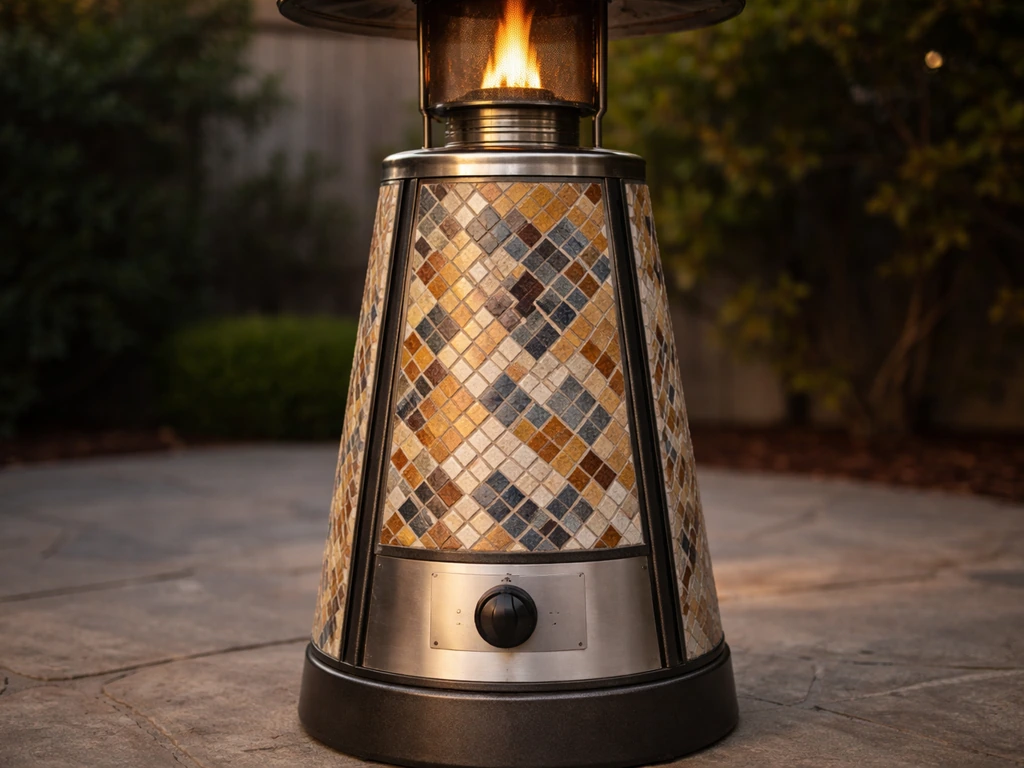
Step 1: Identify Your Exact Mosaic Heater Model
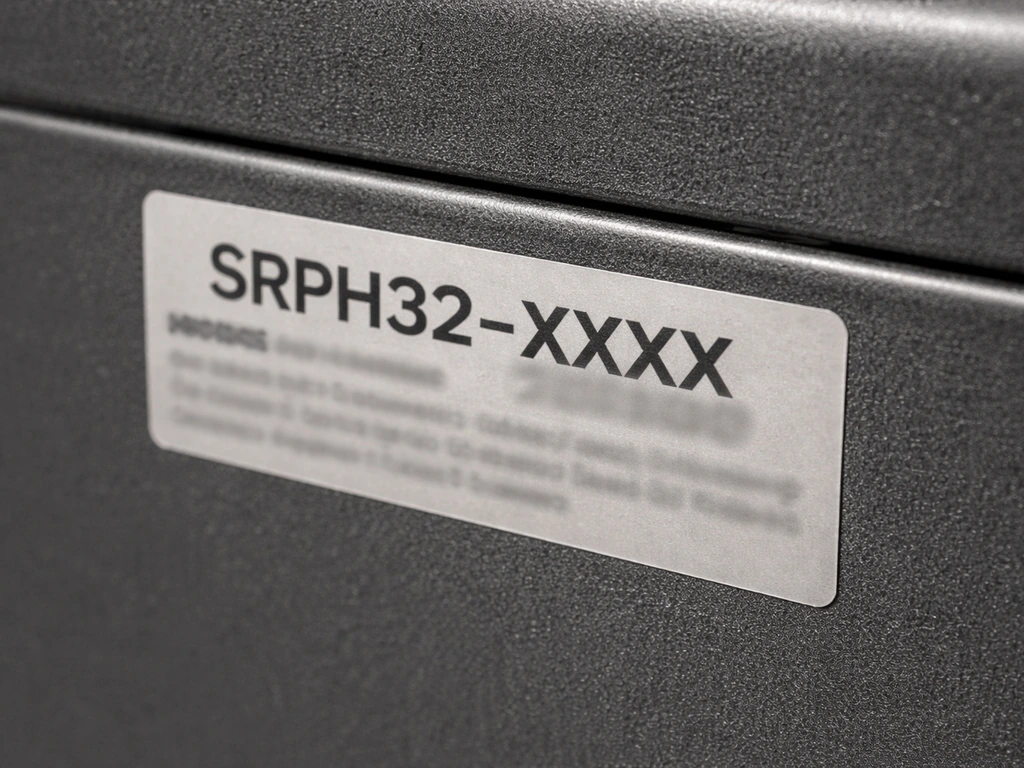
The model number format used on Mosaic heaters is SRPH32-XXXX, where the last four characters identify the specific variant. You'll find this number on a label attached to the heater itself, most commonly on the base or the pole near the regulator connection. The item number FSPTMV5004 is the retail SKU and may appear on your receipt, the box, or the product listing if you bought it online.
To confirm you have the right heater, look for these identifiers on the label at the same time:
- Model number starting with SRPH32
- Item number FSPTMV5004
- Certification line referencing ANSI Z83.26-2014 / CSA 2.37-2014 (this is the US/Canada compliance standard for gas-fired outdoor infrared patio heaters)
- Serial number (a unique production code, usually below or next to the model number)
If your label is faded, check the original box or your purchase confirmation email for the item number. The ANSI/CSA certification line is a useful cross-check: if you see that standard listed, you're working with the correct series and the manual content here applies to your unit.
Step 2: Find the Right Manual
There are two reliable places to pull the correct Mosaic patio heater manual right now. First, go to ManualsLib and search for "Mosaic SRPH32", the full Assembly Instructions and User Manual for the SRPH32 series is hosted there as a PDF. Second, visit the Mosaic product page on Academy's website; look for the "User Manual" section near the bottom of the product listing and download directly from there. Either route gives you the same document.
When you open the manual, cross-check these details against your heater's label before following any instructions:
- Model number (must start with SRPH32)
- Item number (FSPTMV5004)
- BTU rating and propane (LP) designation
- ANSI/CSA certification standard matching what's printed on your label
If your label shows a completely different model prefix, stop and search separately, using the wrong manual for a gas appliance means wrong pressures, wrong ignition sequences, and real safety risks.
Safety Checks Before You Touch Anything Else
I want to be direct here: propane is unforgiving when shortcuts happen. Run through these checks every single time before troubleshooting or attempting to light the heater, not just the first time. If you want a quick, step-by-step overview of the lighting process, use this guide on how to light a mosaic patio heater. If you are trying to get a Mosaic propane patio heater lit, follow the ignition sequence in the manual first, then move on to the safety checks and troubleshooting steps when needed how to light a patio heater.
Leak test the gas connections
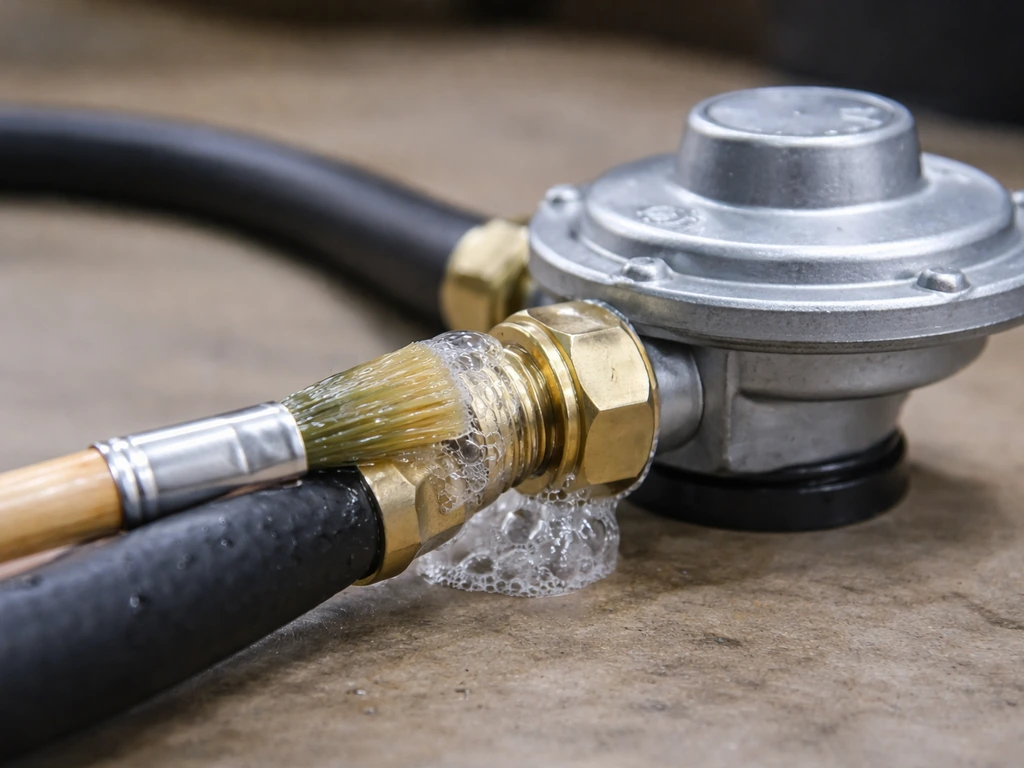
The manual specifies a soap-and-water leak test using a 1-part liquid dish soap to 3-parts water mixture. Mix it up, apply it generously to the hose connection, the regulator, and the cylinder connection, then slowly open the LP cylinder valve. Watch every joint for bubbles forming. If you see bubbles anywhere, close the cylinder valve immediately, tighten or replace the connection, and retest before going any further. Never use an open flame to check for leaks.
Physical condition check
- Inspect the hose for cracks, kinks, or burn marks — replace it if you find any damage
- Make sure the regulator is fully seated and the connection is hand-tight plus a quarter turn
- Check that the heater is standing on a firm, level surface — the tilt switch will cut gas if the unit leans past its safe angle
- Verify the emitter screen isn't blocked by debris, spider webs, or leaves (a common cause of poor ignition and flameouts)
- Confirm the LP cylinder is not empty and is rated for outdoor propane use
One important note from the manual: after using the heater, the emitter and dome stay dangerously hot for a long time. Wait at least 45 minutes after shutting it off before touching, inspecting, or moving any upper components. If you're troubleshooting a heater that was recently running, let it cool completely first.
Lighting the Heater: The Correct Ignition Sequence
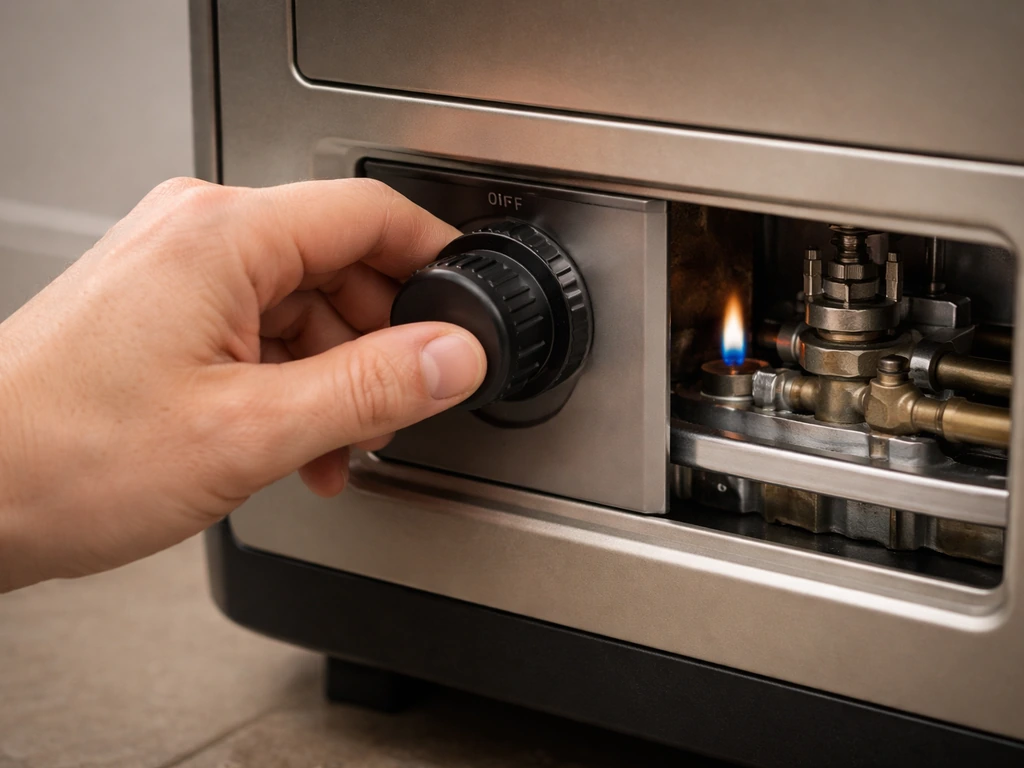
A lot of ignition failures on the Mosaic SRPH32 come down to not following the sequence exactly, especially the 30-second hold. In the Operation section, the manual specifies turning the control knob to OFF, fully opening the LP cylinder gas valve, then pushing in the gas control knob and turning counter-clockwise to LOW until the burner lights and you hear 1 clicking noise, keeping it depressed for at least 30 seconds before releasing blank" rel="noopener noreferrer">keep it depressed for at least 30 seconds before releasing. Here's the correct procedure straight from the Operation section of the manual:
- Turn the control knob to the OFF position and wait a moment
- Open the LP cylinder gas valve fully (turn counter-clockwise until it stops)
- Push in the gas control knob and turn it counter-clockwise to the LOW position
- While keeping the knob pushed in, continue pressing until you hear one clicking noise and the burner lights
- Keep the knob fully depressed for at least 30 seconds before slowly releasing it
- If the flame holds, you can then turn the knob to adjust heat output
The 30-second hold is critical. It heats the thermocouple enough to signal the gas valve to stay open. Release the knob too early and the flame drops out immediately, this is the single most common mistake people make when lighting this heater for the first time or after a long storage period.
If the heater won't light on the first try, the manual gives clear rules: if you smell gas, stop, move away, and wait at least 5 minutes for the gas to fully dissipate before trying again. If you don't smell gas but couldn't get ignition within about one minute of trying, wait 5 minutes before your next attempt. These aren't arbitrary, they prevent gas buildup near the igniter.
Troubleshooting: Heater Won't Ignite at All
If the heater produces no flame and no click, or clicks without lighting, work through these causes in order:
| Symptom | Probable Cause | What to Do |
|---|---|---|
| No flame, no click | Gas cylinder valve is closed | Turn LP cylinder valve counter-clockwise to fully open |
| No flame, clicks present | Pressure too low / empty cylinder | Turn cylinder valve OFF, replace with a full cylinder |
| Clicks but no ignition | Loose connection at ignition pin | Check and tighten the wire connection at the ignition pin |
| Weak or inconsistent spark | Gap between ignition pin and flame orifice is too large | Carefully adjust the pin position so the gap is closer to the orifice |
| No spark at all | Ignition pin has failed | Replace the ignition pin or contact customer service |
For the ignition pin gap issue specifically, you're looking for the ceramic-tipped electrode near the burner head. It should sit close enough to the orifice that a spark reliably jumps the gap. If the tip looks cracked, corroded, or coated with carbon buildup, clean it gently with a dry cloth or fine emery board. If cleaning doesn't restore a consistent spark, the pin needs replacement.
Troubleshooting: Heater Lights but Won't Stay Lit
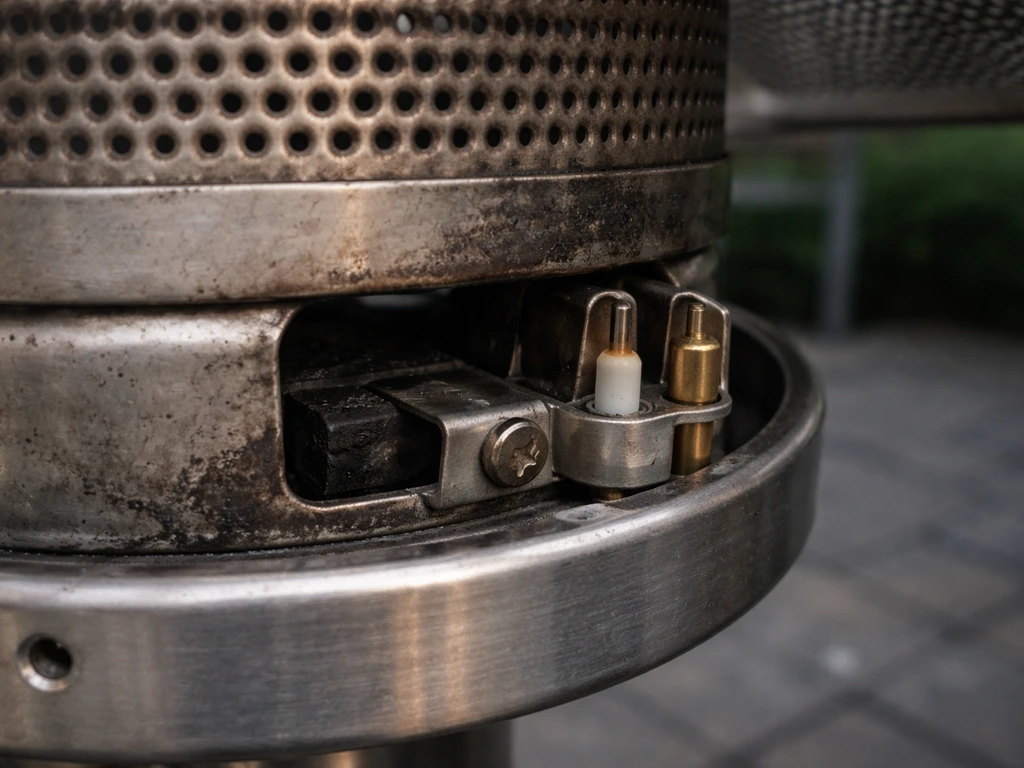
This is the most frustrating problem with any patio heater, and on the Mosaic SRPH32 it almost always traces back to one of four things: a dirty thermocouple, a loose thermocouple connection, a tripped tilt switch, or a failing gas valve. Here's how to work through each one.
Dirty or misaligned thermocouple
The thermocouple is a small metal probe that sits in the flame path. Its job is to generate a tiny voltage when heated, which tells the gas valve to stay open. If soot or residue builds up on the tip, it can't heat properly and the valve closes, killing the flame. Shut off the gas, let the unit cool fully, then gently clean the thermocouple tip with fine steel wool or a dry cloth until the copper or metal surface is clean and bright. Also confirm the thermocouple tip is actually positioned inside the flame path, not angled away from it.
Loose thermocouple-to-valve connection
At the other end of the thermocouple is a threaded connection that screws into the gas valve body. If this fitting is even slightly loose, the electrical signal doesn't reach the valve reliably and the flame drops out. With the gas fully off, hand-tighten this fitting and then give it a small snug turn with a wrench (don't overtighten). Retry the lighting sequence and hold for the full 30 seconds.
Gas valve failure
If you've cleaned the thermocouple, tightened the connection, and the heater still drops flame after a consistent 30-second hold, the valve itself may be failing. A valve that won't stay open is a part replacement, not a DIY repair. At this point, contact Mosaic customer service with your model and serial number, or look up a replacement valve matched to the SRPH32 series specifications.
Tilt Switch and Safety Shutoff Issues
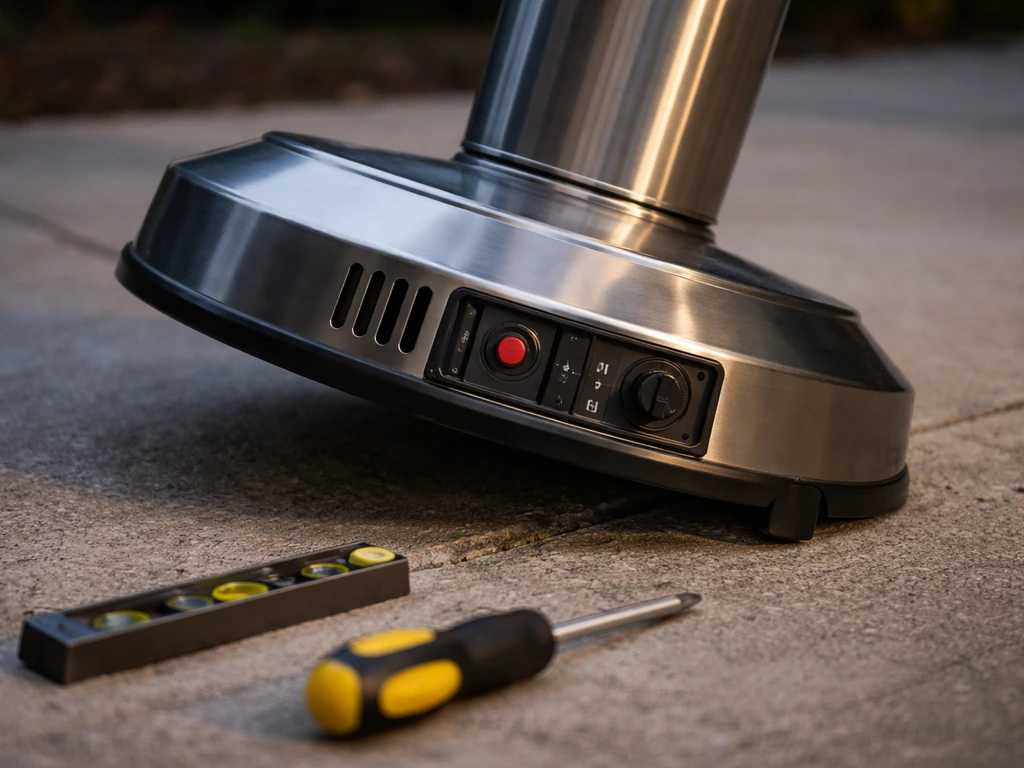
The Mosaic SRPH32 has a tilt switch built into the safety system. If the heater tips past a safe angle, the switch cuts gas flow to prevent fires. This is a feature, but it can also cause phantom shutoffs if the switch is faulty or if the heater is sitting on an uneven surface.
First, rule out the obvious: make sure the heater is standing perfectly level on a stable, flat surface. A slight lean on soft ground or a deck with gaps is enough to trigger a sensitive tilt switch. If the heater shuts off even when it's clearly upright and stable, the tilt switch itself may be broken. The manual's troubleshooting table lists "Tilt switch broken" as a direct cause of flame extinguishing, and the fix is replacement or contacting customer service. A broken tilt switch is not something to bypass or tape over, it's a primary safety device.
To check the tilt switch, gently rock the heater slightly from vertical while it's running (don't tip it dramatically, just confirm it's reacting). If the flame drops out even when the heater is perfectly plumb, that's a strong indication the switch is malfunctioning internally. Replacement tilt switches for the SRPH32 series are available through Mosaic's parts channels.
Routine Maintenance to Keep It Running Right
Most ignition and flameout problems on this heater are preventable with basic seasonal maintenance. Here's what to do at the start of each outdoor season and after any extended storage:
- Clean the burner ports: use a thin wire or a can of compressed air to clear any blocked ports around the burner ring — clogged ports cause uneven flame and poor thermocouple heating
- Clean the emitter screen: remove any debris, insect nests, or oxidation from the stainless emitter with a dry brush
- Inspect and clean the thermocouple tip: light steel wool, clean until shiny
- Check the hose for cracks or brittleness: replace any hose showing surface cracks regardless of whether it's leaking yet
- Inspect all threaded connections: hand-tighten the thermocouple-to-valve fitting and the regulator connection
- Run the soap-water leak test before first use of the season
- Check burner alignment: the burner should sit centered in the emitter assembly with airflow vents unobstructed
Propane regulators can also fail over time, especially if the heater has been stored outdoors through winter. If the flame is consistently low and weak even with a full cylinder and a fully open valve, the regulator may be under-delivering pressure. Regulator replacement is straightforward and inexpensive, and it's a common fix that's often overlooked.
When to Stop and Call a Pro
There are specific situations where the right move is to close the gas valve, step away from the heater, and get a qualified gas technician involved. The manual itself states that only an authorized gas technician should handle certain aspects of this product's installation. Here's where the DIY line stops:
- You smell gas and can't identify or fix the source after the soap test
- The hose, regulator, or any gas-carrying component is visibly damaged or melted
- The heater has had repeated unexpected shutoffs after you've already cleaned the thermocouple, checked the tilt switch, and tightened all connections
- You need to replace the gas valve — valve internals involve gas-path components and are not DIY territory
- There's any sign of corrosion or damage at the cylinder connection point
- You're unsure whether a replacement part is the correct spec for your specific SRPH32 variant
For parts and service, start with Mosaic customer service (contact info is in the manual). Have your model number (SRPH32-XXXX) and serial number ready. For the thermocouple, ignition pin, or tilt switch, you can also search for SRPH32-compatible parts through propane heater parts suppliers, but match specifications carefully before ordering.
Your Next Steps Right Now
Here's a practical checklist to work through today, in order:
- Locate the model label on your heater and confirm the SRPH32-XXXX model number and FSPTMV5004 item number
- Download the SRPH32 manual from ManualsLib or Academy's product page
- Run the dish-soap leak test on all gas connections before attempting any lighting
- Attempt lighting using the exact sequence: OFF, open cylinder valve, push and turn to LOW, hold 30 seconds
- If it won't light: check the cylinder valve is open, swap in a full cylinder if pressure is low, inspect and tighten the ignition pin connection
- If it lights but drops out: clean the thermocouple tip, tighten the thermocouple-to-valve fitting, and confirm the heater is sitting level
- If shutoffs continue after those fixes: check the tilt switch and test the regulator
- If you smell gas at any point, close the cylinder valve immediately and wait 5 minutes before any further action
- If the problem persists after all of the above, contact Mosaic customer service with your model and serial number
If you're also working through a lighting issue on a different brand or style of heater, many of the same thermocouple and tilt switch principles apply across mushroom-style propane heaters, whether you have a Hiland, a pyramid-style unit, or another brand. If you have a pyramid-style propane patio heater instead of the Mosaic SRPH32, follow the specific steps in our guide on how to light a pyramid patio heater. If you are specifically trying to light a Hiland patio heater, the safest approach is still to follow the lighting sequence in that model's manual and perform a leak test before attempting ignition how to light hiland patio heater. The SRPH32 manual process is one of the more clearly documented among this category of heaters, which makes it a solid reference even for cross-brand troubleshooting.
FAQ
Can I use the SRPH32 mosaic patio heater manual if my label shows a different model prefix?
Yes. If your label does not say SRPH32-XXXX, do not use the SRPH32 manual. Even when the heater looks the same, the gas pressures and ignition timing can differ by variant, and the wrong document can lead to incorrect leak-test locations or an incorrect hold time.
My Mosaic patio heater clicks but won’t stay lit, what should I check first?
A “click with no flame” often points to an ignition or gas-safety path, not the burner itself. Before you chase parts, verify the cylinder valve is fully open, confirm the regulator hose is leak-tested, and then re-check the ignition pin gap and thermocouple position in the flame path.
What do I do if bubbles appear in the leak test?
If you see bubbles during the soap-and-water test, close the cylinder valve right away. You should not relight until you correct the specific leaking joint (tighten or replace the connector) and repeat the leak test. Also avoid waiting “a little” with gas present, bubbles mean an active leak.
How long should I wait before checking parts after shutting off the heater?
The manual emphasizes a full cooldown before touching hot upper components. In practice, if the emitter or dome was recently operating, assume it remains hot longer than 45 minutes, especially in cool or windy conditions where heat builds up. Wait longer if any metal still feels warm.
Why does my heater keep shutting off even when it seems level?
It can, especially if the heater is on uneven ground or a deck with movement. If it shuts off unexpectedly, first place it on a stable, level surface, then retest the tilt switch behavior. If it still trips when plumb, treat it as a safety-device fault and do not bypass it.
Is it safe to try DIY adjustments to fix the thermocouple or tilt switch?
You should not attempt to adjust safety or ignition components unless the manual calls for it. For items like the ignition pin condition or thermocouple cleaning, gentle cleaning and repositioning are typically acceptable, but replacing safety-related parts like the tilt switch or gas valve should be handled by qualified service or by OEM-matched components.
What maintenance should I do at the start of each outdoor season?
Yes, seasonal buildup can cause weak ignition and flameouts, even if the heater previously worked. Plan a quick pre-season check: confirm the electrode and thermocouple are clean and correctly positioned, run a leak test every time you reconnect a cylinder, and verify the burner area is free of dust or debris.
How many lighting attempts should I make before waiting longer?
If you cannot get ignition within about one minute, wait at least five minutes before trying again, even if you think the knob hold might have been wrong. The pause helps prevent gas from building near the igniter, and repeated rapid attempts increase the chance of a gas-rich ignition event.
The flame starts briefly but dies right after I release the knob, what does that mean?
In most cases, that indicates the heater is failing to confirm flame heating at the thermocouple (or the safety system is cutting gas). Re-run the sequence precisely, including the full 30-second hold, then clean the thermocouple tip, verify it sits in the flame path, and confirm the thermocouple connection is snug.
When contacting support or ordering parts, what identifiers should I collect from the heater?
Use the label to find both the SRPH32-XXXX variant and the serial number. The variant helps ensure you pull the correct SRPH32- series manual and troubleshoot steps, while the serial number is typically what customer service needs to identify the exact component configuration for parts ordering.