
Most Hiland patio heaters light the same basic way: turn the control knob to PILOT, push it in, hold it down while you press the igniter button (or use a match), and keep holding for about 15 seconds to let the thermocouple heat up before you release. If the flame stays, turn the knob to your desired heat setting. If it doesn't stay lit, or it won't ignite at all, there are only a handful of real causes, and most of them are fixable in under 10 minutes.
How to Light a Hiland Patio Heater Step by Step

Grant Mercer
27 May 2026
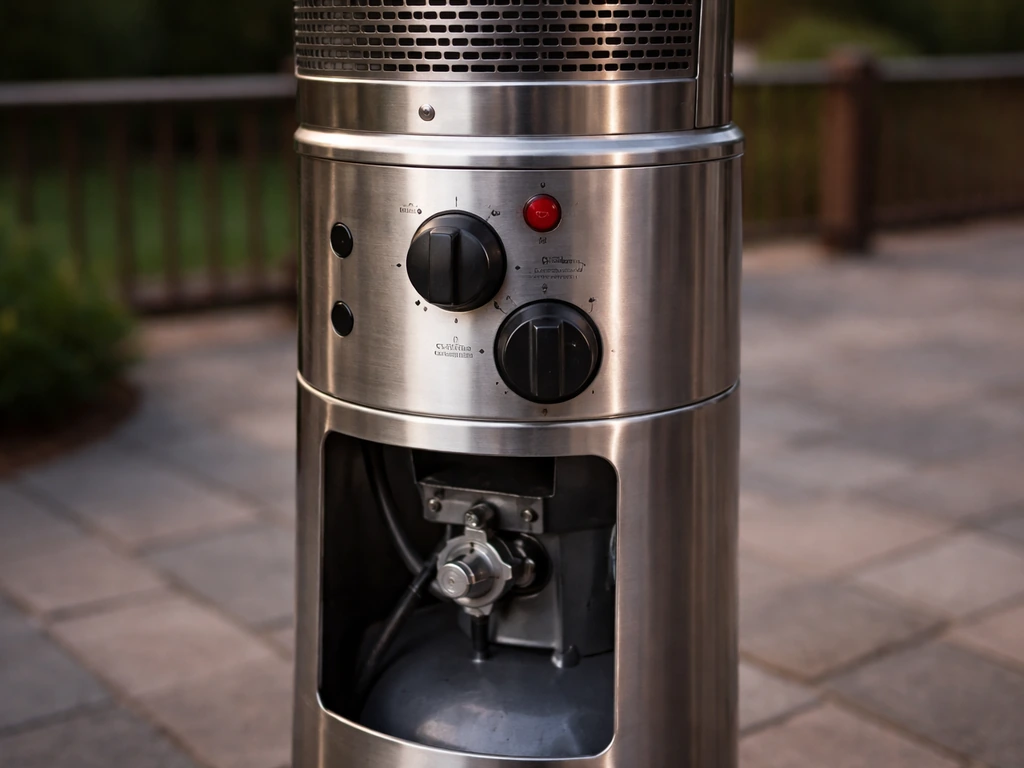
Figure Out Which Hiland Heater You Have
Hiland makes a few distinct heater families and knowing which one you have saves you a lot of guesswork. The most common models you'll run into are the HLDS01 series (the tall, freestanding "flame" patio heaters like the HLDS01-GTHG and HLDS01-GTSS) and the HLDS032 tabletop patio heater. Both run on propane/LP, but the control layout is slightly different and the HLDS01 series has a glass tube on the burner head where you can actually see the pilot flame.
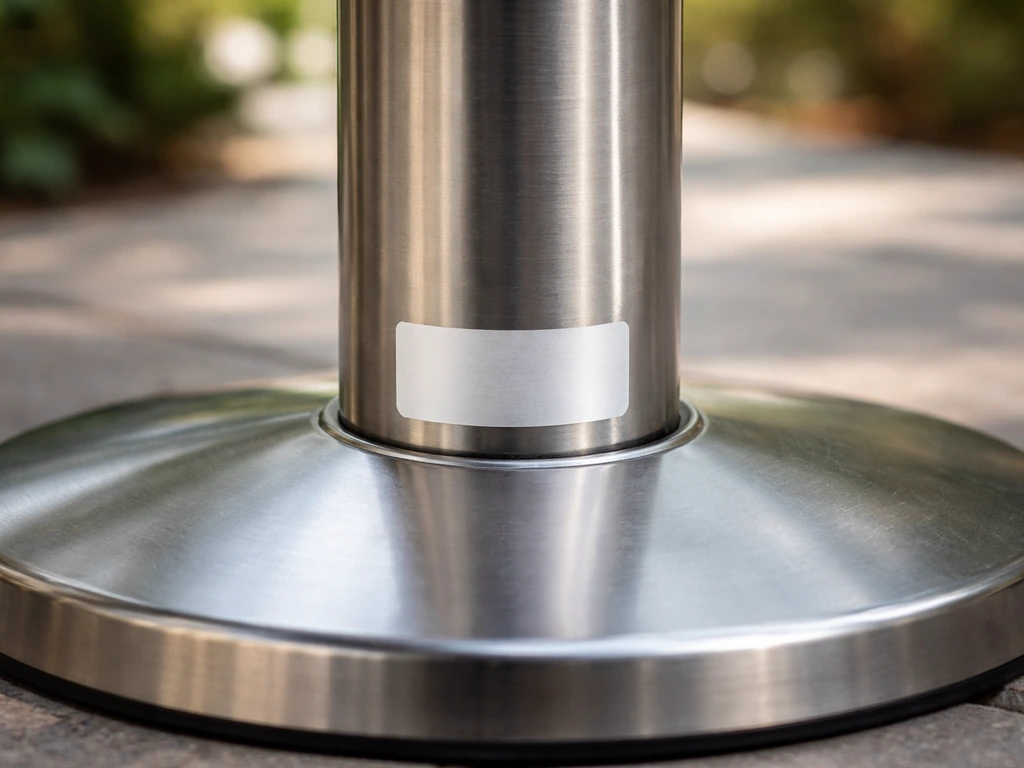
To figure out your exact model, check the sticker on the base or the bottom of the pole. It'll list the model number, BTU rating, and gas type. Once you have that, you can pull up the specific manual online if you need wiring diagrams or parts. For now, here's what to look for on the controls:
- A control knob with positions labeled OFF, PILOT, and HIGH (or LOW/MED/HIGH): this is standard across most Hiland models.
- A push-button igniter, usually a red or black button near the knob: most newer Hiland heaters have this.
- No igniter button at all: some older or budget models skip the electronic igniter entirely and require a match or lighter.
- A small glass viewing tube on the burner head (HLDS01 series): this lets you confirm the pilot is actually lit before releasing the knob.
If you have a pyramid-style or mosaic-style Hiland heater, the ignition sequence is essentially the same, but the burner location and pilot visibility are different. If yours is a mosaic patio heater, follow the same safety and pilot-start procedure, then use the exact lighting steps for your Hiland model how to light a mosaic patio heater. If you have a pyramid patio heater, use the same basic ignition sequence, but pay attention to the burner location and pilot visibility pyramid-style or mosaic-style Hiland heater. The steps below apply to the core HLDS01 and HLDS032 platforms, which cover the vast majority of Hiland units sold at retailers like Tractor Supply, Lowe's, and Ace Hardware.
Safety Checks Before You Try to Light It
Don't skip this part. Propane leaks are not a dramatic Hollywood explosion risk most of the time, but they are a real fire and health hazard, and a few minutes of checking now prevents a genuinely bad situation.
Check for Gas Smell First
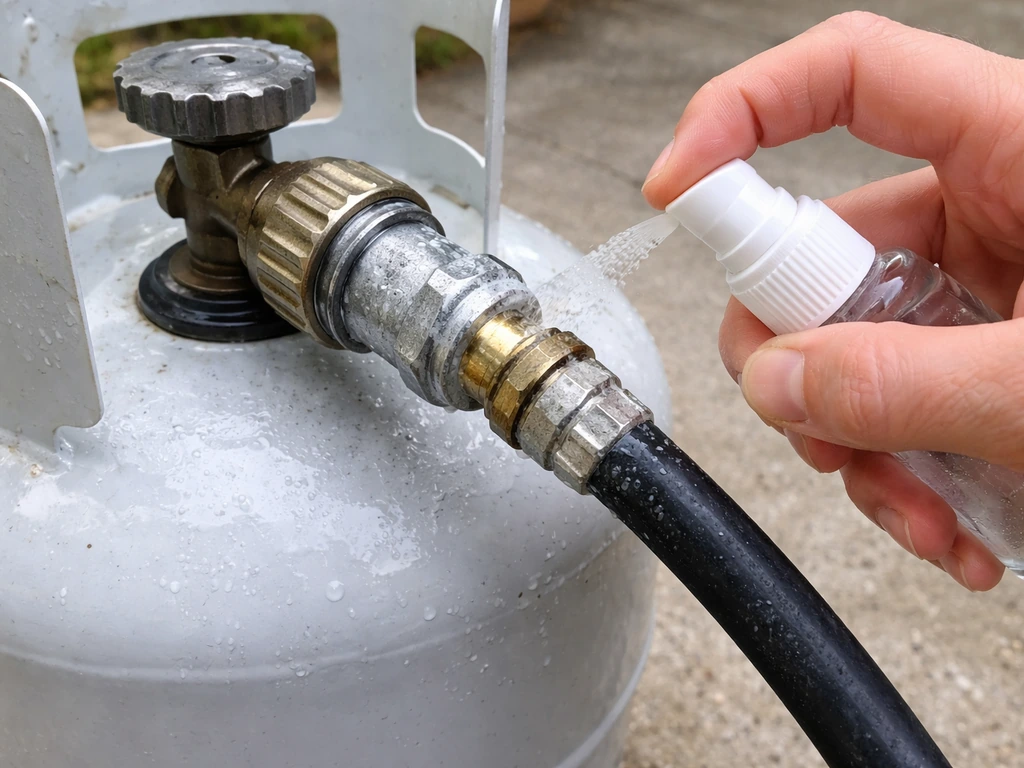
Before you do anything else, sniff around the base, the regulator connection, and the hose. If you smell propane, do not try to light the heater. Close the cylinder valve, move away, and let the area air out for several minutes. Then do a proper leak test before proceeding.
Do a Proper Leak Test
Hiland's own manual spells this out clearly: mix 2 to 3 oz. of leak check solution using one part liquid dish soap and three parts water. Make sure all the heater's valves are in the OFF position, then open the cylinder valve slowly. Apply the soapy solution to the hose-to-regulator connection and the regulator-to-cylinder connection. Watch for bubbles. Bubbles mean gas is escaping at that joint. Tighten the connection, retest, and don't light the heater until it passes. And one important warning from Hiland's own manual: never use an open flame to check for a gas leak.
Placement and Clearances
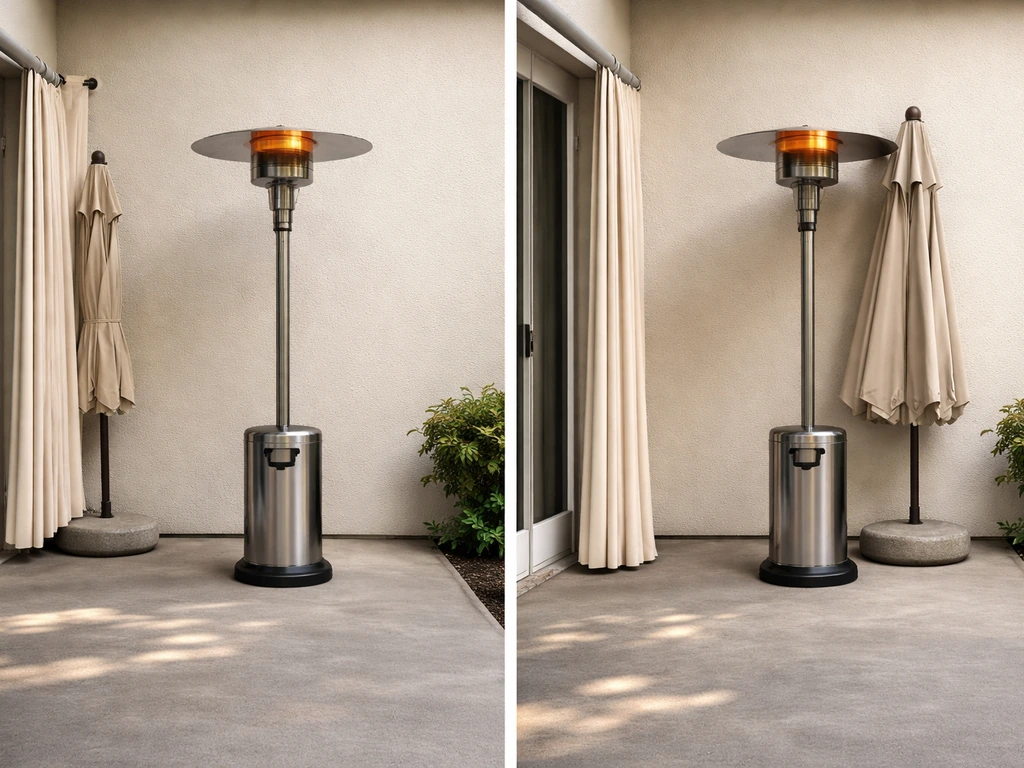
Hiland specifies a minimum of 3 feet of clearance from the sides of the heater to any combustible material, and 2 feet from the top. That means no umbrellas, no pergola fabric, no string lights hanging right above the dome. Move the heater to open space before lighting. Also confirm the heater is on a stable, level surface. These heaters have a tilt switch that will cut the gas if the unit tips, so a wobbly surface will cause it to shut off even after a successful light.
Ventilation
Hiland is explicit here: this heater must be used only in a well-ventilated space. Do not use it inside a building, garage, screened room, or any other enclosed area. This isn't just a legal disclaimer. Propane combustion produces carbon monoxide, and enclosed spaces can reach dangerous CO levels quickly. Outdoors only.
Check the Burner and Reflector Area
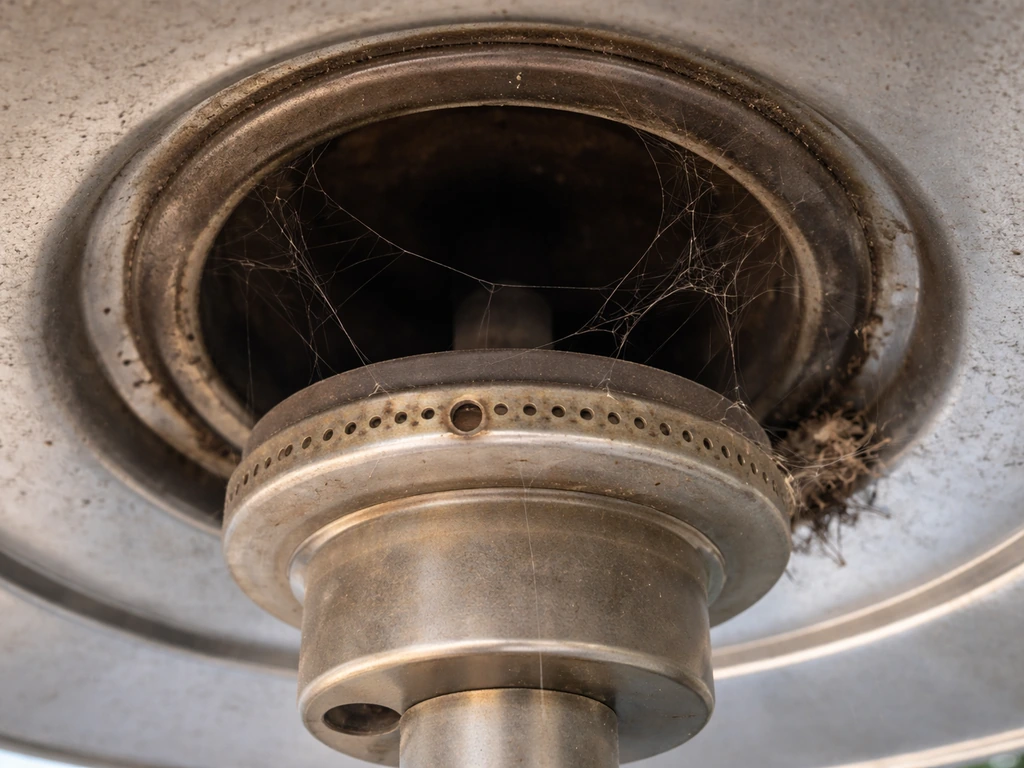
Look up into the reflector dome and at the burner head. Spider webs, debris, and insect nests in the burner ports are one of the most common reasons a heater won't light after sitting unused. Clear anything out with a soft brush or compressed air before you attempt ignition.
How to Light a Hiland Patio Heater, Step by Step
Here's the standard lighting procedure for Hiland heaters. If you need the full walkthrough, see our guide on how to light a patio heater standard lighting procedure for Hiland heaters. I'll cover the igniter version first, then the manual match method.
With the Built-In Push-Button Igniter
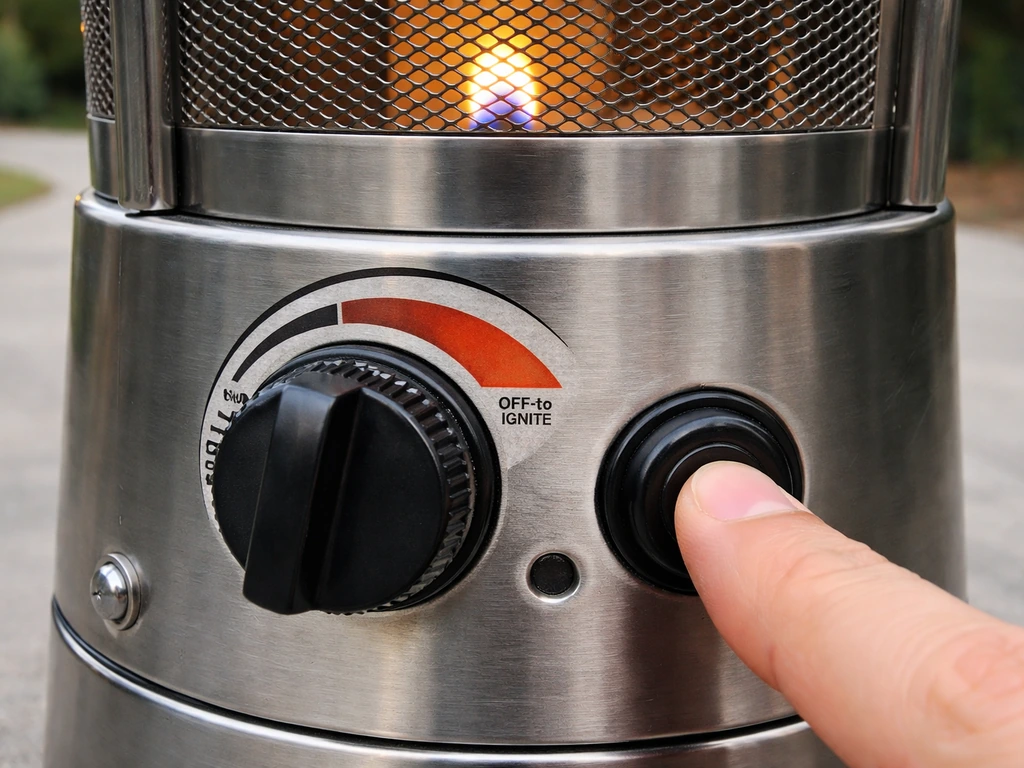
- Make sure the control knob is in the OFF position and the cylinder valve is closed.
- Connect the regulator to the propane tank if it isn't already. Hand-tighten, then snug it with a wrench. Perform the soap leak test from the section above.
- Open the cylinder valve slowly by turning it counterclockwise. Open it all the way.
- Wait about 30 seconds. This lets gas pressure equalize in the line.
- Turn the control knob to the PILOT position.
- Push the knob in and hold it down. This opens the pilot gas valve.
- While holding the knob in, press the igniter button repeatedly (once per second) until the pilot lights. On the HLDS01 series, you can confirm the pilot is lit by looking through the glass viewing tube on the burner head.
- Once the pilot is lit, keep holding the knob in for at least 15 seconds. This is critical: the thermocouple needs time to heat up before it will allow gas to flow. Release too early and the flame goes out immediately.
- After 15 seconds, slowly release the knob. The pilot flame should stay on.
- Turn the knob from PILOT to your desired heat setting (LOW, MED, or HIGH). The main burner should ignite from the pilot.
Manual Lighting With a Match or Long Lighter
If your heater doesn't have an igniter, or the igniter has failed, manual lighting works fine. The sequence is identical except you substitute a long fireplace match or a BBQ lighter for the igniter button. Position the flame near the pilot orifice before you push the knob in, so there's no delay between gas flow and ignition. Do not hold the knob in for a long time before bringing the flame close. Hiland's own manual cautions against this because it lets gas build up and creates a larger-than-expected "ball flame" on ignition.
One more important timing note from Hiland's manual: if the heater was recently turned off, wait 5 minutes before attempting to relight. And if you've just connected a brand new propane tank, allow at least 1 full minute after opening the cylinder valve for any air in the gas line to purge through the pilot orifice before trying to light.
What to Do When It Won't Ignite at All
You're clicking the igniter or holding a match and nothing is happening. Work through these checks in order.
Gas Supply Problems
- Cylinder valve closed: sounds obvious but it happens. Make sure the valve is turned fully counterclockwise (open).
- Empty or near-empty tank: propane tanks can feel heavy but still be low. If you're not sure, swap in a known-full tank.
- Regulator in bypass/overfill protection mode: if you opened the cylinder valve too fast, the regulator's OPD (overfill protection device) can trip and restrict gas flow. Close the cylinder valve, turn the control knob to OFF, wait 30 seconds, then reopen the cylinder valve slowly.
- Cold weather low pressure: Hiland notes that below 40°F (5°C), the heater runs at reduced efficiency. Very cold tanks can frost over and reduce gas pressure. Bring the tank inside to warm up slightly, or try a fresh full tank.
Air in the Gas Line
If you just connected a new tank or reconnected the regulator, there's air in the line that has to be purged before gas reaches the pilot. Hiland's manual says to press the control knob in and hold it for up to 1 to 2 minutes (no more) to bleed the air out through the pilot orifice. You might smell a faint propane odor when the air has cleared. Then try igniting. This is one of the most commonly missed steps after a tank swap.
Blocked Orifice or Pilot Tube
If gas is definitely flowing (you can faintly smell it when you push the knob in) but it still won't light, the pilot orifice or tube may be partially blocked by debris or corrosion. Clear the orifice with compressed air or a fine wire. Don't enlarge the orifice by forcing anything too thick through it. If the blockage won't clear, replacement orifice kits are available for most Hiland models and aren't expensive.
Failed Electronic Igniter
If you hear no clicking at all, or clicking with no visible spark, the igniter has likely failed. Hiland's troubleshooting guide is straightforward on this: use a match to light the pilot in the meantime, and replace the igniter. Check that the igniter wire hasn't come loose from the electrode tip near the pilot burner. Sometimes it's just a disconnected wire, not a dead igniter.
Clicks But No Flame: Regulator, Burner, and Alignment Fixes
Hearing the click and smelling a little gas but no flame catching is one of the most frustrating situations. Here's what's usually causing it.
| Symptom | Most Likely Cause | Fix |
|---|---|---|
| Clicks, faint gas smell, no flame | Air still in line | Hold knob in for up to 2 minutes to purge, then retry ignition |
| Clicks, strong gas smell, no flame | Spark not reaching pilot orifice | Check electrode gap and wire connection; clean electrode tip |
| Clicks, no gas smell at all | Regulator tripped or cylinder valve closed | Close cylinder valve, go to OFF, wait 30 sec, reopen slowly |
| Clicks, spark visible, still no flame | Blocked pilot orifice | Clear with compressed air or fine wire; replace orifice if needed |
| Clicks, spark OK, gas flowing, no catch | Burner misalignment | Check that pilot assembly is properly seated and aimed at main burner |
Burner alignment is worth a separate mention. If the pilot flame is slightly off-center or the burner emitter ring has shifted (often happens after transport or a wind event), the pilot flame may light but not be positioned to ignite the main burner. Open the dome and visually confirm the pilot is pointing at the emitter ring. Gently reseat the burner assembly if it looks shifted.
Thermocouple and Tilt Switch: When It Lights Then Goes Right Out
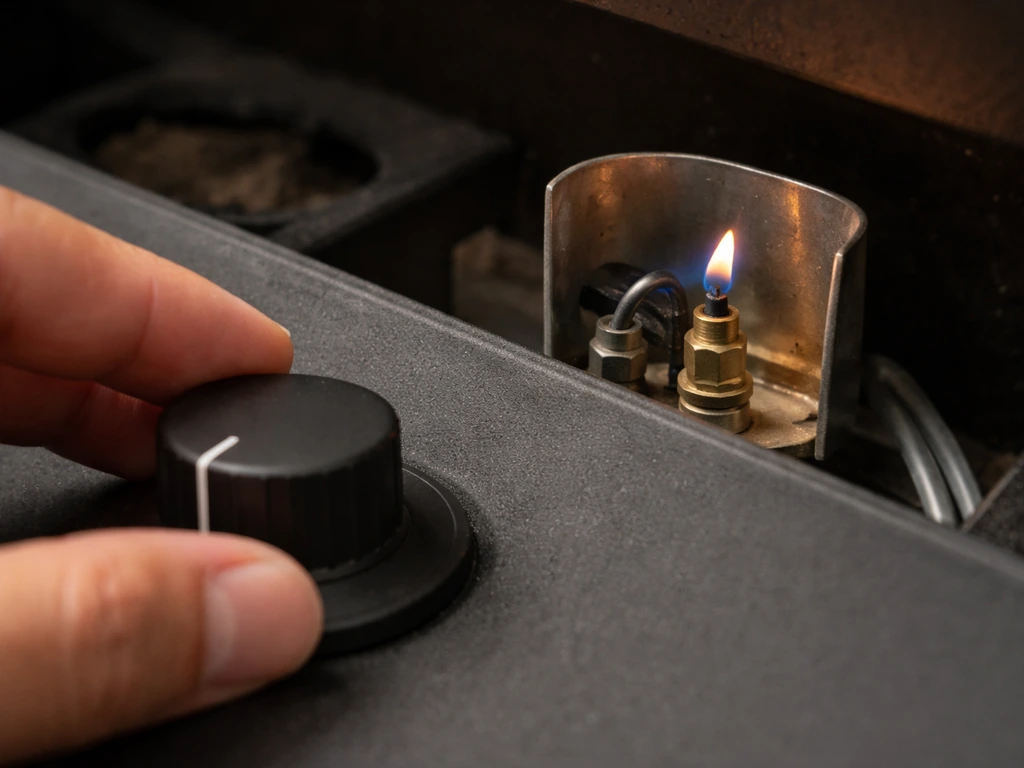
This is the most common complaint after "won't light at all." The pilot catches, you see a flame, you release the knob after a few seconds, and the flame dies immediately. Nine times out of ten, this is a thermocouple issue.
Thermocouple Not Heating Up
The thermocouple is a small metal probe that sits in the pilot flame. When it gets hot enough, it generates a tiny electrical signal that tells the gas valve it's safe to stay open. If you release the knob before it's fully heated, the valve closes and the flame goes out. The fix is simple: hold the knob in for the full 15 seconds after the pilot lights, not just until you see the flame. Count it out. Many people release after 3 to 5 seconds, which isn't long enough.
If you're holding the knob in for a full 15 to 20 seconds and the flame still dies on release, the thermocouple itself may be faulty or dirty. Hiland's manual lists this directly as a cause of "pilot won't stay lit." Also check that the pilot flame is actually contacting the thermocouple tip. The tip should be sitting right in the pilot flame, not off to the side. A dirty pilot burner can shift the flame direction and cause the thermocouple to underperform even when it's working fine.
To clean the thermocouple tip, let the heater cool completely, then gently sand the tip with fine-grit sandpaper or steel wool to remove oxidation. If cleaning doesn't fix it, thermocouples are inexpensive and are among the most straightforward parts to replace on any patio heater. This is well within DIY range.
Loose Connection Between Gas Valve and Pilot Assembly
Another cause Hiland calls out specifically: a loose connection between the gas valve and the pilot assembly can cause erratic pilot behavior including going out after lighting. If the pilot flame looks uneven or weak (not a clean, steady blue flame at the tip), check that all the fittings in the pilot assembly circuit are snug. Tighten any loose connections and re-run your soap bubble leak test afterward.
The Tilt Switch (Auto-Shutoff)
Hiland heaters have a tilt switch (often called the tip-over switch or auto-shutoff) that cuts gas if the heater leans past a safe angle. If the heater is on an uneven surface, or if the tilt switch is malfunctioning, it will kill the flame even when the heater is perfectly upright. Check that the heater is level. If it's level but the tilt switch still seems to be triggering, the switch may need replacement. This is a small, low-cost part, but you should confirm the heater is truly level first using a bubble level before assuming the switch is bad.
If None of This Works: When to Stop and What to Do Next
Most Hiland ignition problems get solved by the steps above. But if you've worked through all of them and the heater still won't light or won't stay lit, here's how to approach what's next.
Check the Manual and Model-Specific Parts
Your model number gets you to the right manual and the right parts. If you need the exact instructions for your unit, find your model in the vulcan patio heater manual right manual and the right parts. Use the mosaic patio heater manual for your exact model so you can follow the right troubleshooting steps and parts list. Hiland manuals for the HLDS01-GTHG, HLDS01-GTSS, and HLDS032 are all available as PDFs from the manufacturer and from retailers like Tractor Supply. The troubleshooting tables in those manuals are actually useful and specific. If you haven't already pulled yours up, do that before ordering any parts.
When to Call for Help
If you smell gas persistently after tightening all connections and passing the soap test, stop and call a qualified technician or your local gas company. Similarly, if the gas valve itself is stuck, the regulator is physically damaged, or any component is visibly cracked or corroded, don't try to force it. Replacement parts for Hiland heaters are widely available and affordable, but gas valves and regulators should be replaced rather than repaired.
Cool-Down and Handling Safety
If you've been attempting to light the heater and it's been running at all, Hiland's manual includes a specific caution: do not touch or move the heater for at least 45 minutes after use. The dome and emitter ring retain significant heat. Work on a cold heater only.
Maintenance Habits That Prevent All of This
Most Hiland ignition failures I've seen come down to neglect between uses, not a defective heater. A few simple habits keep things running reliably season after season.
- Cover the heater when not in use: a good cover keeps insects, moisture, and debris out of the burner and pilot assembly, which are the two most common points of failure.
- Inspect the burner ports at the start of every season: use compressed air to clear any blockages before the first light of the year.
- Check all hose and regulator connections annually: look for cracking, brittleness, or wear on the hose, and replace it if you see any. Hoses and regulators have a service life.
- Keep the thermocouple tip clean: a quick clean with fine sandpaper at the start of each season takes 2 minutes and prevents most "lights then goes out" problems.
- Store the propane tank properly: never store a connected tank inside a building, and always close the cylinder valve when the heater isn't in use.
- Test the tilt switch occasionally: gently nudge the heater while it's running to confirm the auto-shutoff actually works. If it doesn't cut the flame, the switch needs to be replaced before you use the heater again.
Hiland heaters are solid, repairable appliances. The vast majority of ignition problems have straightforward causes and inexpensive fixes. If you're working through a similar issue on a different brand or a pyramid-style or mosaic heater, the underlying thermocouple and gas flow principles are the same, though the specific steps and part numbers will differ. The approach here, identifying your model, checking safety, following the correct lighting sequence, and diagnosing systematically, is the right framework for any propane patio heater.
FAQ
How long should I wait after I turn the knob back to OFF before trying again?
After any failed ignition attempt, wait at least 5 minutes before relighting (and longer if you smell gas). This reduces the chance of gas buildup and lets any residual gas dissipate before you trigger the pilot again.
What should the pilot flame look like, and what if it looks yellow or very small?
A properly operating pilot should be steady and typically blue, with the flame hitting the thermocouple tip area. A weak, uneven, or yellow flame often points to debris in the burner ports, misalignment, or an issue with gas flow, not just a lighting timing problem.
Can I light the heater if it is windy or out in open gusts?
Wind can push the pilot flame off the thermocouple or away from the correct burner area. If you see the pilot flicker or shift when the igniter is engaged, pause lighting and wait for calmer conditions, then verify the pilot is properly positioned before releasing the knob.
Do I need to keep holding the knob if the pilot stays lit briefly?
Yes. You generally must hold the knob in until the thermocouple is fully heated, about 15 seconds. Releasing early can make the pilot appear lit, then go out immediately when the valve shuts.
My heater keeps going out right after I release the knob, but I held it longer than 15 seconds. What’s next?
If it still drops out after a full hold, check that the pilot flame is actually contacting the thermocouple tip. Then clean the thermocouple tip if it’s oxidized. If that fails, plan for thermocouple replacement rather than repeated trial-and-error lighting.
Is it safe to use a shorter match, or should I use a long fireplace match?
Use a long enough ignition source so you can position it near the pilot orifice before pushing the knob in, while keeping your face and hands away from the dome area. If you cannot reach accurately, use a longer match or a BBQ lighter designed for outdoor flame reach.
If the igniter clicks but no spark appears, should I keep trying?
No. If you hear clicking with no visible spark, switch to a manual match to light the pilot temporarily, then troubleshoot the igniter wire and electrode connection. Continuous attempts can waste gas and complicate timing checks.
What should I do if I recently changed the propane tank and the heater won’t light immediately?
After opening the cylinder valve, allow about 1 full minute before attempting ignition. Also be ready for trapped air in the line, which may require holding the knob in for up to 1 to 2 minutes to purge air through the pilot orifice.
Can I check for leaks with a lighter or by watching for bubbles?
Do not use an open flame to check for leaks. The safe method is the soap-and-water solution at the hose-to-regulator and regulator-to-cylinder joints. Bubbles are the indicator you must not ignore.
Where exactly should the heater be placed before lighting?
Place it on a stable, level surface and ensure it has at least 3 feet of side clearance from combustibles and about 2 feet from the top. If it’s leaning, the tilt switch can shut off gas even after a successful pilot start.
What if my heater is on level ground but still seems to trigger the shutoff during lighting?
Confirm level with a bubble level, not just by eye. If it is truly level and it still cuts off, the tilt or tip-over switch may be malfunctioning, and it may require replacement after the other causes (pilot alignment and thermocouple contact) are ruled out.
Do I need to clean the burner ports every time I light it?
Not every time, but it’s a good idea when the heater has been idle for any length of time or when ignition is inconsistent. Check for spider webs, debris, or insect nests in the burner ports and clear them before attempting ignition.
If I smell gas after tightening everything, can I keep trying to light it to test?
No. If gas odor persists after you’ve tightened connections and passed a soap test, stop and contact a qualified technician or your local gas company. Repeated attempts can increase the risk of a serious leak.
How long should I wait before touching or moving the heater after it has been running?
Do not touch or move the heater for at least 45 minutes after use. The dome and emitter ring retain heat and can cause burns even if the flame has gone out.
Does the lighting procedure differ much between the HLDS01 series and the HLDS032?
The core safety and thermocouple timing logic is the same, but the control layout and pilot visibility can differ by series. If your ignition steps or knob labels do not match what you expect, verify your model sticker first and follow the correct manual for your exact unit.