
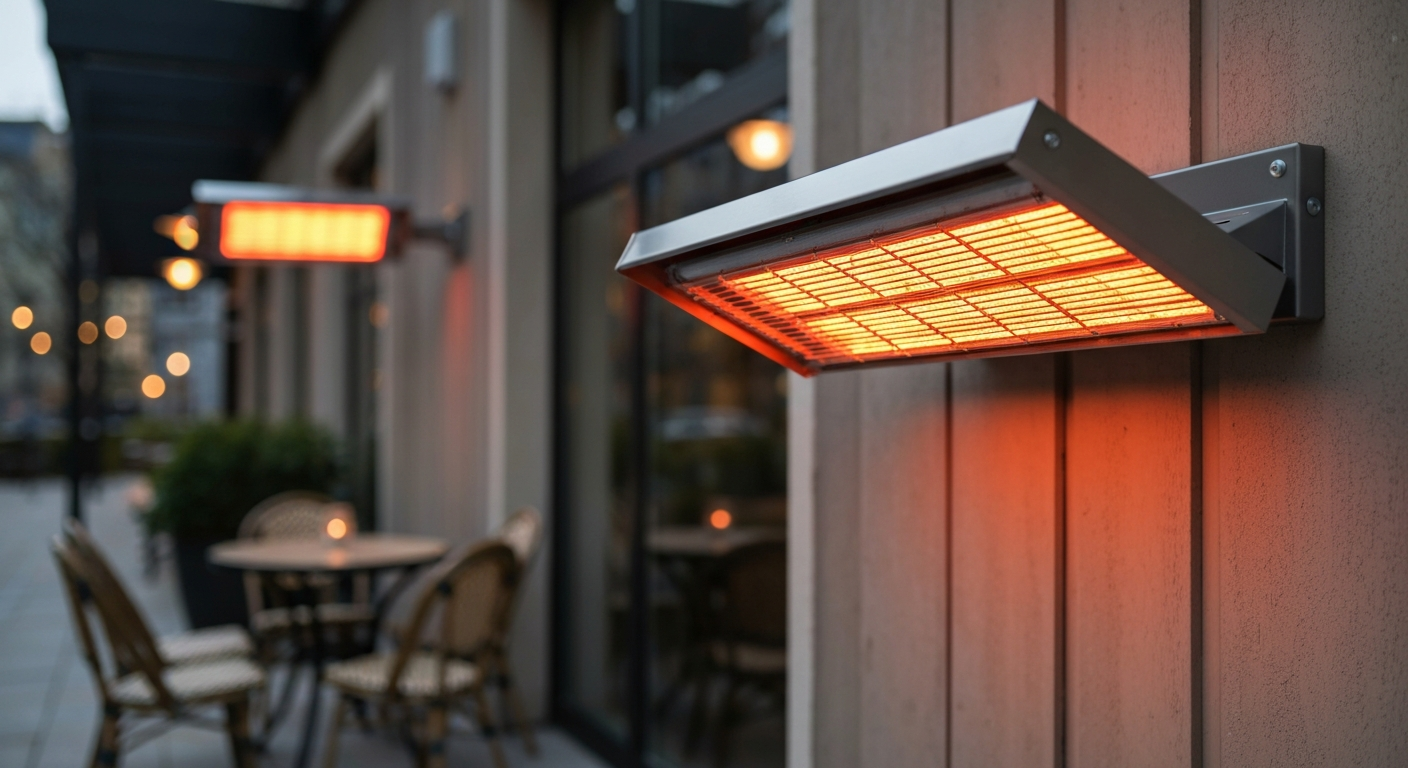
A flat emitter on a patio heater is a flat panel or plate that gets heated, either by a gas burner or by an electrical resistance element, and then radiates infrared energy outward to warm people and objects directly. It is the part that actually does the heating work. Instead of blowing hot air around, it glows (sometimes visibly red) and sends radiant heat in a broad, even pattern across the area in front of it. When your heater stops producing heat evenly, runs hotter in one spot, looks cracked, or shows uneven glow, the flat emitter is one of the first things you should check.
What Is a Flat Emitter on a Patio Heater, Definition & DIY

Grant Mercer
27 Jul 2026
Who this is for
This article is written for homeowners and DIYers who are troubleshooting a patio heater, shopping for a replacement part, or just trying to understand what they are looking at when they open the heater's manual and see the word 'emitter.' You do not need HVAC training to follow along. If you can use a screwdriver and a tape measure, you can diagnose most flat emitter problems yourself and decide whether a part swap is a reasonable DIY job or whether it is time to call a pro. If you are also thinking about how to keep your heater safely positioned or how to store it between seasons, those topics connect directly to emitter longevity and are worth reading alongside this guide. For step-by-step seasonal care and packing tips, see our guide on how to store patio heater.
What a flat emitter actually is
A flat emitter, sometimes called a flat-panel emitter or emitter plate, is the radiating surface inside a patio heater's head assembly. Its job is to absorb heat from a source (combustion gases or an electrical element) and re-emit that energy as infrared (IR) radiation. Think of it like a hot frying pan: the pan surface doesn't blow air at you, but stand close to it and you feel the warmth immediately. That is radiant heat, and a flat emitter works on exactly the same principle, just at a much larger scale and with a much more controlled output.
On a mushroom-style propane patio heater, the flat emitter is typically the screen or perforated metal plate that surrounds or sits above the burner ring. On a wall-mounted or overhead electric infrared heater, it is the broad face panel that covers the resistance elements inside the housing. In both cases the panel's surface temperature climbs into the hundreds of degrees Celsius during normal operation, which is why many owner manuals explicitly note that the emitter screen will turn bright red during use. That red glow is not a fault. It is the emitter doing its job.
How flat emitters work
The physics is straightforward once you separate radiant heat from convective heat. Convective heaters warm the air around them and let that air carry the warmth to you. Radiant heaters, including flat-panel emitters, skip the air entirely. The hot surface emits infrared radiation, which travels in a straight line until it strikes a person, a piece of furniture, or a wall, where it is absorbed and felt as warmth. Wind has almost no effect on this process, which is why flat emitter heaters work so well outdoors on breezy evenings.
The amount of infrared radiation a surface puts out at a given temperature depends on a property called emissivity. A surface with high emissivity radiates more energy per square centimeter at the same temperature than a low-emissivity surface. Manufacturers of patio heater emitters specifically engineer coatings and materials to maximize emissivity, which means more usable heat for the same gas consumption or electrical draw. Some industrial electric flat panels, for example, advertise radiant efficiency figures around 78 to 80 percent, meaning nearly four-fifths of the electrical input comes back out as usable infrared rather than wasted convective heat. The TPI Overhead Flat Panel Heater listing notes radiant efficiency around 78–80% and an emitter life of approximately 25,000 operational hours.
For gas heaters, the burner ring ignites and combustion gases flow across or around the back face of the emitter plate. The plate absorbs that heat, reaches operating temperature (which can easily exceed 500 degrees Celsius on a direct-gas radiant surface), and radiates outward. The flame itself is largely enclosed, making the plate the primary source of warmth rather than the flame. For electric heaters, resistive wires or medium-wave elements embedded behind the panel face do the same thing: they heat the face to operating temperature, and the face radiates.
Types of flat emitters and the materials they use
Not every flat emitter is built the same way. The material the radiating face is made from affects durability, operating temperature, IR wavelength output, and how the emitter behaves when it starts to fail. Materials used for flat emitters commonly include aluminized or heat‑treated steel, stainless steel, extruded aluminum housings, porcelain/enamel‑coated steel, glass‑ceramic panels, and ceramic or quartz composite faces for electric panels, see Flat Panel Infrared Radiant Heaters, Southeast Thermal Systems (materials section) Common radiating faces include aluminized or heat‑treated steel, stainless steel, extruded aluminum housings, porcelain/enamel‑coated steel, glass‑ceramic panels, and ceramic or quartz composite faces for electric panels.. Here are the main types you will encounter on consumer and light commercial patio heaters.
- Aluminized or heat-treated steel: the most common material on mid-range gas patio heaters. Steel with an aluminum coating handles high temperatures well, resists scaling, and is relatively inexpensive to replace. It is what you find on most mushroom-style propane heaters.
- Stainless steel: more corrosion-resistant than aluminized steel, which makes it a better choice in coastal or humid environments. Expect to pay more for stainless emitter screens, but they last significantly longer where salt air and moisture are issues.
- Porcelain or enamel-coated steel: the enamel coating improves emissivity compared to bare steel and provides some corrosion protection, though the coating can chip or crack with thermal cycling over time.
- Extruded aluminum housing with a steel or ceramic face: common in overhead electric flat-panel heaters. The aluminum housing stays cool enough to handle (relatively) while the inner face does the radiating work.
- Glass-ceramic face panels: used by some premium gas heaters (Bromic's Platinum Series being a well-known example). Glass-ceramic tolerates thermal shock well, focuses IR output effectively, and performs well in windy conditions.
- Ceramic or quartz composite faces: found on some electric infrared panels. These materials emit longer-wave infrared, which is absorbed efficiently by skin and clothing and produces less visible glow than quartz lamp elements.
From a repair perspective, the material matters because it tells you what to expect when an emitter ages. Steel panels corrode and can develop rust spots or perforation. Ceramic and glass-ceramic faces crack, especially if water splashes onto a hot surface. Enamel-coated panels may look fine on the outside but develop hairline cracks in the coating that reduce emissivity over time. Any of these can produce the symptoms described in the troubleshooting section below.
Flat emitter vs other emitter types
If you are replacing an emitter or buying a new heater, it helps to understand how flat panels compare to the other common types: radiant tubes, quartz lamp emitters, and ceramic plaques. Each has real tradeoffs.
| Emitter Type | Heat Distribution | Warm-Up Time | Glare/Visible Light | Typical Lifespan | Best For |
|---|---|---|---|---|---|
| Flat panel (gas or electric) | Wide, uniform area coverage | Moderate (2-5 min for gas, faster for some electric) | Low glow; minimal visible light | Up to 25,000 hrs (electric); several seasons (gas) | Covered patios, areas needing even heat |
| Radiant tube (gas) | Linear, directional | Moderate | Low | Several thousand hours | Large commercial spaces, garages |
| Quartz/halogen lamp | Directional, focused | Near-instant (seconds) | High; visible amber/white glow | 3,000-10,000 hrs depending on lamp | Spot heating, ambiance-focused settings |
| Ceramic plaque (gas) | Moderate area, somewhat directional | Moderate | Faint orange glow | Varies; susceptible to cracking | Mid-range gas heaters, tabletop models |
The practical takeaway: if you want broad, even warmth across a seating area with minimal glare, a flat panel emitter is the right tool. If you want near-instant heat for a single spot and don't mind bright visible light, quartz lamp emitters have the edge. For most residential patio setups, the flat emitter's wide footprint and long service life make it the more practical choice. The tradeoff is a slightly longer warm-up time and the fact that blocked or damaged sections of the panel create noticeable cold spots, which is usually how people first notice an emitter problem.
Compatibility: gas, electric, and infrared heaters
One of the most common mistakes people make when ordering a replacement flat emitter is assuming that if a part fits physically, it will work. Gas emitter plates and electric flat-panel emitters are fundamentally different components. A gas emitter plate is a passive metal or ceramic surface heated by combustion gases. An electric flat panel contains resistive elements or lamp assemblies wired to mains voltage. These are not interchangeable, and mixing them up is dangerous.
Within the gas heater category, emitter screens and burner plates are often brand-specific and even model-specific. The geometry of the burner ring, the distance between the burner and the emitter plate, and the orifice sizing all affect how the emitter heats up and distributes radiation. A plate from a different model may sit at the wrong height, allow incomplete combustion, or simply not clip in correctly. The same caution applies to electric panels: the wattage, element type, and voltage rating must match your heater's specifications exactly.
Electric infrared flat-panel heaters (the type typically mounted overhead on a wall bracket or ceiling) are a separate product category from the mushroom-style propane tower heaters most homeowners picture. Both can use flat emitters, but in completely different configurations. If you have an overhead electric infrared heater rated at 240V and 3,000W, you need a replacement emitter element rated to those specs. Do not assume a cheaper 120V panel will work or be safe in that fixture.
How to identify your heater model and find the right replacement emitter
Before you order anything, spend five minutes confirming exactly what you have. This step saves you from returning wrong parts and from making a potentially dangerous substitution. Here is the process I go through on every repair.
- Find the model and serial number label. On most mushroom-style propane heaters it is on a sticker inside the base panel or on the pole. On electric overhead heaters it is usually on the back of the housing or inside the junction box cover. Write down the full model number, not just the brand name.
- Pull the owner's manual using that model number. If you don't have the paper copy, search the model number plus the word 'manual' or check the manufacturer's website. The manual will have an exploded parts diagram that labels the emitter or emitter screen with a part number.
- Measure the emitter before ordering. For a gas emitter screen, measure the outer diameter and inner diameter if it is a ring-style screen, or the length and width if it is a flat plate. For electric panels, note the face dimensions and the element wattage from the label.
- Check the material specification in the manual or parts list. This tells you whether the OEM part is aluminized steel, stainless, ceramic, or something else, so you can judge whether an aftermarket alternative is genuinely equivalent.
- Confirm the fuel type and voltage. For gas heaters, note whether you are running propane (LP) or natural gas, since some emitter assemblies are calibrated differently for each. For electric heaters, confirm the voltage (120V or 240V) and wattage.
- Order OEM parts when possible. Manufacturer replacement parts are specified for your exact heater's thermal geometry. Aftermarket parts can be acceptable if the specs match exactly, but if the dimensions or material rating are even slightly off, heat distribution will be uneven or combustion may be incomplete.
- Cross-reference the part number with the supplier before purchasing. Call or email if the listing is ambiguous. A ten-minute confirmation call is faster than shipping a wrong part back and forth.
A few measurements that matter most: for gas emitter screens, the critical dimensions are the outer diameter, the mounting bracket positions, and the height clearance above the burner. For electric flat panels, the face dimensions and the element wattage are the non-negotiables. Any supplier that cannot confirm these specs for a specific part number is a supplier to avoid.
Signs your flat emitter needs attention
Flat emitters do not usually fail all at once. They degrade gradually, and the symptoms are predictable once you know what to look for. I check for these signs every time I inspect a heater that is not performing the way the owner expects.
- Uneven glow: on a gas heater, parts of the emitter screen glow brighter than others, or some sections stay dark entirely. This usually means blocked burner ports or a cracked/warped emitter plate that is disrupting gas flow.
- Yellow or tipping flames: normally the flame behind a gas emitter should be blue and even. Yellow, orange, or tipping flames suggest incomplete combustion, often caused by debris, insect nests, or a cracked emitter screen interfering with airflow.
- Reduced heat output: if the heater runs at the same setting but noticeably warms a smaller area, the emitter surface may have developed cracks, carbon buildup, or corrosion that reduces its effective emissivity.
- Visible cracks or rust: on steel or ceramic emitters, cracks allow combustion gases to escape unevenly and are a safety concern on gas heaters. Surface rust on steel screens reduces thermal efficiency and can eventually cause structural failure of the screen.
- Popping or crackling noises during operation: some thermal expansion noise is normal, but repeated sharp pops during heating or cool-down can indicate a cracked ceramic or glass-ceramic face.
- Soot or carbon deposits: black sooty buildup on the emitter face means incomplete combustion is occurring, which reduces output and can be a sign the emitter is distorting under heat.
- Visible pest debris: insects, particularly wasps and spiders, build nests inside emitter screens and burner heads during storage. Even a small obstruction blocks burner ports and disrupts the uniform heating of the emitter plate.
Corrosion deserves special attention if your heater lives near the coast or in a humid climate. Salt air attacks steel emitter screens faster than almost anything else. If you are in that environment, inspect your emitter screen at the start of every season and plan on replacing it more frequently than you would in a dry inland climate. Proper off-season storage and using a fitted cover go a long way toward extending emitter life regardless of location.
Basic maintenance to keep your emitter healthy
Most flat emitter failures are preventable with routine maintenance. This does not take long and does not require special tools.
- Inspect the emitter screen at the start of each season and again mid-season if you use the heater heavily. Look for cracks, rust, and pest debris before you light it.
- Clear any debris from the burner area and emitter screen using a soft brush or low-pressure compressed air. Do this with the gas turned off and the heater completely cool.
- Check for insect nests inside the emitter housing. A can of compressed air directed through the screen vents will usually clear minor blockages. For larger nests, carefully disassemble the head per your manual's instructions.
- Wipe the emitter face with a dry cloth when cool to remove dust and surface deposits. Do not use water directly on a hot or warm emitter, especially on ceramic or glass-ceramic faces, as thermal shock can crack them.
- Inspect the mounting hardware holding the emitter screen or plate in place. Loose brackets cause the emitter to sit at the wrong height relative to the burner, which disrupts heat distribution.
- Store the heater under a cover or indoors during extended periods of non-use. This is the single most effective thing you can do to slow emitter corrosion and keep pests out.
When to call a professional instead of doing it yourself
Replacing an emitter screen on a mushroom-style propane heater is a reasonable DIY job: it involves removing a few screws, swapping the screen, and checking for gas leaks with soapy water after reassembly. However, there are situations where you should stop and call a qualified technician. If the burner assembly itself is damaged or corroded, not just the emitter screen, that is a more involved repair involving gas connections that require leak testing with proper equipment. If an electric overhead heater's internal wiring or element connections are involved, and you are not comfortable working with 240V wiring, do not attempt that repair yourself. A wiring error on a 240V heater is not a minor mistake. Similarly, if you find cracked gas fittings, a damaged regulator, or any component that connects directly to the gas supply, turn the gas off and get a professional involved.
Cost and buying guidance
Replacement emitter screens for standard mushroom-style propane heaters typically run between $15 and $45 for aftermarket parts and $25 to $70 or more for OEM parts, depending on the brand and model. Glass-ceramic emitter panels for premium models like Bromic's Platinum series are considerably more expensive, often $100 or above, but they are also designed for much heavier use cycles. Electric flat-panel replacement elements vary widely based on wattage and panel size, from around $30 for a simple resistance element to $150 or more for a full panel assembly with housing.
When shopping, prioritize suppliers who list the compatible model numbers explicitly rather than just the brand. If a listing says 'fits most patio heaters,' that is a warning sign, not a reassurance. Also verify the return policy before buying, especially for aftermarket parts, since dimensional discrepancies are the most common complaint with non-OEM emitter parts.
Safety notes before you start any emitter work
Before you touch any part of your heater's head assembly, shut off the gas at the tank valve and disconnect the regulator hose. Do not rely on the heater's control knob alone to isolate the gas supply. Let the heater cool completely, which typically takes at least 30 minutes after use, before handling the emitter or any adjacent components. Gloves are a good idea even on a cool heater because emitter screens on propane heaters can have sharp edges from corrosion or manufacturing.
After reassembly on any gas heater, always perform a leak check before relighting. Apply a soapy water solution to all gas connections and look for bubbles while the gas is on but the heater is not lit. Bubbles mean a leak. Do not light the heater until you have tightened the connection and confirmed the leak has stopped. This step is non-negotiable. Having a long stem lighter on hand for relighting is also a sensible precaution when working near the emitter area, keeping your hand away from the head during ignition.
On the physical safety side, any time you have the heater's head assembly apart, it is a good moment to inspect the base and pole for stability issues. A heater that tips over near the emitter is a serious fire hazard. Proper anchoring and anti-tip measures should be part of your overall heater setup, not an afterthought. For detailed steps on anchoring and anti-tip measures, see how to secure a patio heater. For instructions on securing your unit, see our guide on how to anchor a patio heater.
FAQ
What is a flat emitter on a patio heater?
A flat emitter (aka flat‑panel or emitter plate) is a flat sheet or panel that becomes hot and radiates infrared (IR) energy to warm people and objects. Instead of primarily heating air by convection, the panel emits radiant heat from its surface (heated by either a gas burner behind the plate or electrical resistance elements behind a face).
How do flat emitters work (gas vs electric)?
Gas flat emitters are heated by combustion or hot flue gases; the burner heats the plate and the plate radiates IR. Electric flat panels use resistive heating elements or embedded strips behind a metal, ceramic or glass‑ceramic face that reaches operating temperature and emits IR. Both produce long‑wave radiant heat that warms surfaces and people directly.
Why would I choose a flat emitter instead of a tube, quartz or ceramic heater?
Flat panels give a broad, more uniform heat footprint with lower local peak intensity and less visible glare than short‑wave quartz or exposed halogen tubes. They’re often quieter and can be more comfortable for long‑duration heating. Quartz/tube heaters heat faster and can deliver more intense, directional or short‑wave IR, useful when quick, focused warmth is required.
What materials are flat emitters made from?
Common faces and housings include aluminized or heat‑treated steel, stainless steel, extruded aluminum, porcelain/enamel‑coated steel, glass‑ceramic, and ceramic/quartz composites for electric panels. Material choice affects emissivity, durability, corrosion resistance and appearance.
What are the main pros and cons of flat emitters?
Pros: wide, uniform heat distribution; lower glare; quieter operation (often); durable looking; good for ambient patio coverage. Cons: can be heavy; operate at high surface temperatures (can glow red on some gas models); may be less instant‑felt than short‑wave units; parts are generally non‑interchangeable across fuel types and brands.
How can I tell if a flat emitter needs repair or replacement?
Signs include: uneven or patchy glow, parts of the plate not heating; visible cracks, warping or corrosion of the plate; persistent yellow/tipped or irregular flames (gas models); soot, carbon buildup or blocked openings; reduced heat output vs normal. Manufacturer manuals list similar diagnostic signs.