A long-stem lighter for a patio heater is exactly what it sounds like: a lighter with an extended metal barrel, usually 10 to 15 inches long, that lets you reach into the emitter or pilot housing of a gas patio heater to manually ignite the pilot flame without burning your hand. Most people need one because their heater's built-in piezo igniter has stopped clicking reliably, and a long-stem lighter is the safe, practical way to bypass that one broken part and still get the heater running while you figure out what else, if anything, needs fixing.
What Is a Long Stem Lighter for Patio Heaters?

Grant Mercer
3 Jun 2026
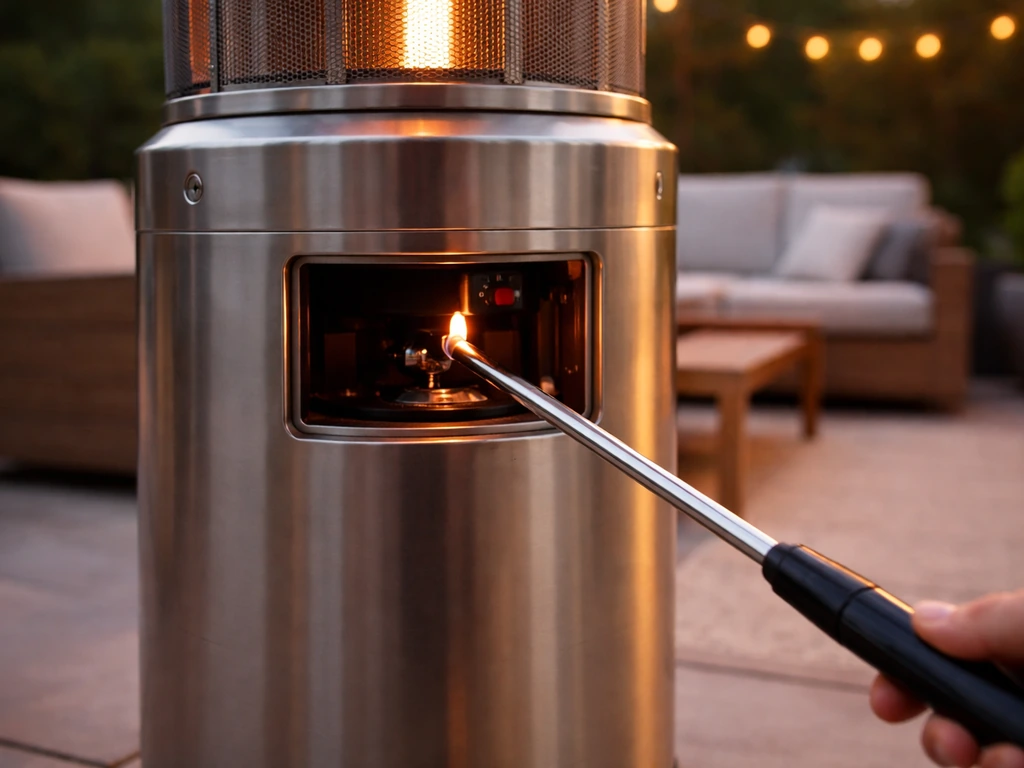
What a long-stem lighter actually is (and why it belongs in your toolkit)
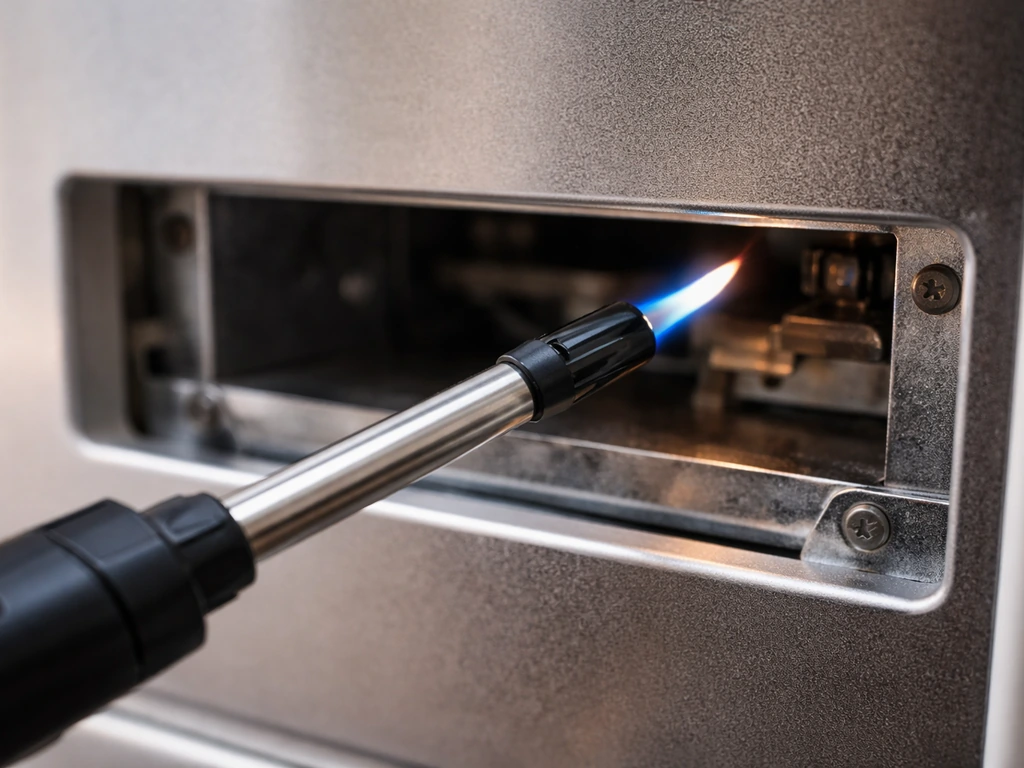
A long-stem lighter, also called a utility lighter, wand lighter, or fireplace lighter, is a butane-fueled lighter with a rigid or flexible neck that extends the flame source away from your hand. For patio heaters specifically, that length matters a lot. The pilot or ignition port on most full-size propane tower heaters is located inside the emitter head, often behind a wire mesh screen and sometimes down inside a glass or metal tube. A standard pocket lighter simply cannot reach it safely, and a match is genuinely dangerous because your fingers end up inches from a gas port while you're holding down a control knob. The long-stem lighter solves both problems.
Beyond just being the right tool for the job, a long-stem lighter becomes a genuine diagnostic instrument when you're troubleshooting ignition failures. If you can light the pilot manually and the heater stays lit, the problem is almost certainly just the electronic or piezo igniter, which is a simple, inexpensive fix. If the pilot lights but the main burner won't hold after you release the control knob, you've narrowed the problem down to the thermocouple or tilt switch. That single manual lighting attempt saves you a lot of guesswork.
How patio heaters ignite (and where the long-stem lighter fits in)
Most residential gas patio heaters use one of four ignition approaches, and the long-stem lighter is relevant to three of them.
| Ignition Type | How It Works | Long-Stem Lighter Role |
|---|---|---|
| Piezo igniter (push-button) | A spring-loaded hammer strikes a crystal to generate a spark at the pilot. Most common on propane tower heaters. | Primary backup when the piezo stops clicking or producing spark. |
| Electronic ignition (battery or AC) | A control module generates an electronic spark. Found on higher-end and commercial models. | Backup when the module or electrode fails; use same technique as piezo bypass. |
| Standing pilot (manual valve) | A continuously burning pilot keeps the gas valve open via a thermocouple. Knob turned to 'pilot' and held while pilot is lit. | Direct-use tool: insert through ignition hole while holding the knob depressed. |
| Match-light / direct manual | No igniter at all; user applies flame directly to the burner. Rare on modern heaters. | Long-stem lighter is the correct tool; a match is technically possible but more hazardous. |
The majority of propane tower heaters sold for home use combine a standing pilot with a piezo igniter. You push and hold the control knob to let gas flow to the pilot, press the piezo button to spark the pilot, then keep holding the knob for 20 to 30 seconds while the thermocouple heats up and tells the gas valve it's safe to stay open. When the piezo fails, the long-stem lighter steps in as the ignition source for that same sequence.
How to safely use a long-stem lighter on your patio heater
Before you touch anything, wait. If the heater was recently on or you've already attempted ignition, let it sit for at least 5 minutes with the gas valve fully off and the propane tank valve closed. This lets any accumulated gas dissipate and removes the risk of a flash ignition. That 5-minute minimum isn't a suggestion, it's the manufacturer guidance you'll find in Fire Sense manuals and similar brands, and it's there because unburned propane near an ignition source is genuinely dangerous.
Step-by-step: standing pilot / piezo-style tower heater
- Set the control knob to OFF and close the propane tank valve. Wait 5 minutes.
- Open the propane tank valve slowly (one full turn counterclockwise).
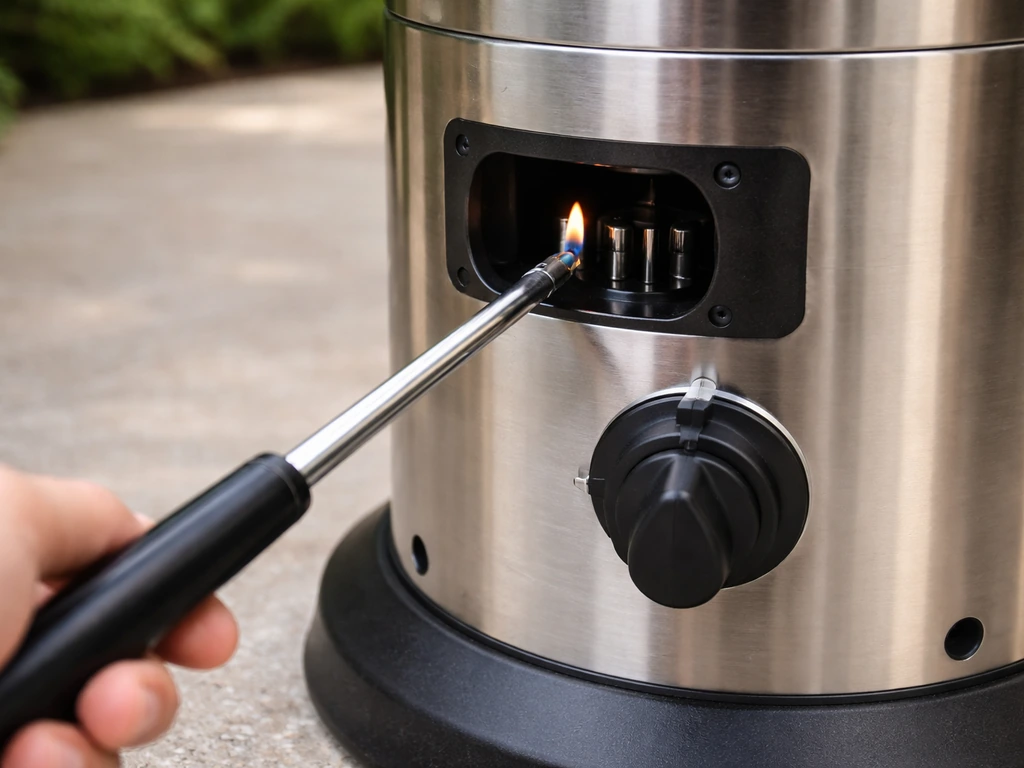
- Locate the ignition hole or pilot access point. On most tower heaters, this is a small opening in the emitter screen or a dedicated hole in the burner housing. Check your manual for a diagram (Figure 4 in the AZ Patio Heaters HLDS01 manual shows this clearly).
- Have your long-stem lighter ready and tested before you start. Confirm it produces a reliable flame at the tip.
- Push the control knob in and turn it to the PILOT position. Keep it fully depressed, which opens the pilot gas flow.
- While holding the knob depressed, insert the lit long-stem lighter through the ignition hole or emitter screen opening and position the flame at the pilot port.
- You should hear or see the pilot catch. If it lights, keep holding the knob depressed for 20 to 30 seconds. This is the thermocouple warm-up period. Do not release early.
- After 30 seconds, slowly release the knob. The pilot should stay lit on its own.
- Turn the knob to the LOW or ON position to bring up the main burner. If the burner ignites and stays on, you're done. The problem was the piezo igniter.
- If the pilot goes out when you release the knob, see the troubleshooting section below.
Step-by-step: tabletop patio heaters
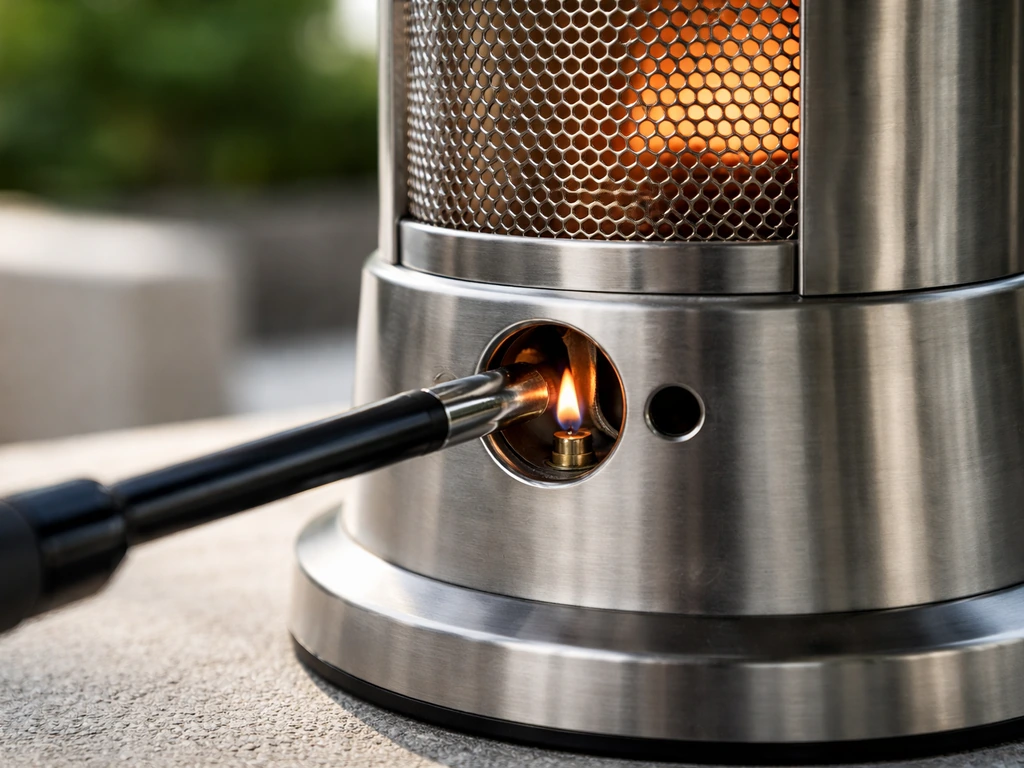
Tabletop models follow essentially the same sequence, but the ignition hole is typically on the side of the emitter screen rather than accessible from above. The Home Depot tabletop heater instructions specifically call for inserting a long-stem lighter into the ignition hole on the emitter screen while holding the control knob depressed. The emitter housing is smaller, so you'll want a lighter with a narrow tip rather than a wide-flame torch style. Hold the lighter steady against the access hole and don't move it around while gas is flowing.
Buying the right long-stem lighter: what actually matters
Not every long-stem lighter is right for every heater. Here's what to look for:
- Length: Aim for at least 11 to 13 inches of stem length. Most full-size tower heaters have their pilot housing 8 to 10 inches inside the emitter, and you want clearance between your hand and the heater body. For tabletop models, a 10-inch lighter usually works fine.
- Tip type: Go with a narrow, pencil-style flame tip rather than a wide torch nozzle. You're inserting this into a small access hole, not lighting a BBQ. A torch-style tip also creates excess heat and turbulence that can destabilize the pilot before it's seated.
- Fuel: Butane-fueled lighters are standard and refillable. Avoid disposable lighters with fixed, non-adjustable flames for this application, because you want flame control.
- Flexible vs. rigid neck: Flexible-neck lighters are useful for tabletop heaters and models where the ignition hole is at an awkward angle. Rigid-neck lighters are perfectly fine for top-access pilot ports on tower heaters.
- Childproof safety: Look for a model with a simple safety button rather than a complex two-handed mechanism. You'll already have one hand on the control knob when you're using this.
- Flame visibility: Some utility lighters have a small window on the fuel reservoir so you can see the butane level. That's genuinely useful here because you don't want to run out of fuel mid-hold during the thermocouple warm-up.
Avoid the ultra-cheap single-use versions you find in checkout lines. They're often unreliable in wind (and patio heaters are used outdoors) and the flame length can be inconsistent. A mid-range refillable utility lighter in the $8 to $15 range is the right tool and will last years with regular use.
Using a manual lighting attempt to diagnose ignition problems
This is where the long-stem lighter becomes more than just a workaround. A deliberate, step-by-step manual lighting attempt is one of the most useful diagnostic moves you can make before you order any parts. The outcome tells you a lot about what's actually broken.
What the result of your manual attempt tells you
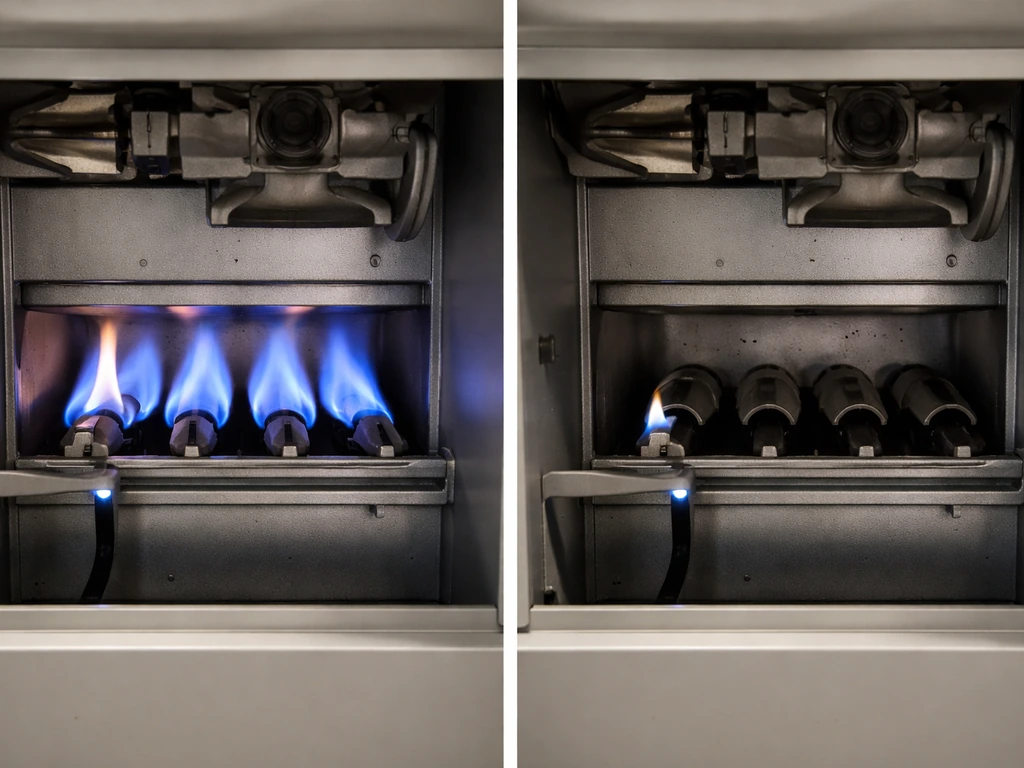
| What Happened | Most Likely Cause | Next Step |
|---|---|---|
| Pilot lit, main burner came on and stayed on | Piezo igniter or electrode is the only problem | Clean or replace the igniter electrode and piezo button |
| Pilot lit, but went out immediately when you released the knob | Thermocouple not sensing heat (failed, dirty, or misaligned) | Inspect thermocouple position; clean or replace thermocouple |
| Pilot lit, stayed on, but main burner went out within seconds of turning to ON | Thermocouple cooling too fast, or pilot blockage reducing flame onto thermocouple | Check pilot orifice for blockage; verify thermocouple tip is in pilot flame path |
| Pilot would not light at all despite lighter reaching the port | Gas not reaching pilot (closed valve, empty tank, regulator issue, or clogged pilot orifice) | Check tank level, regulator, and pilot orifice before assuming igniter failure |
| Heater lights and runs, then shuts off after a few minutes | Tilt/dump switch activated, or thermocouple losing signal over time | Check that heater is on a level surface; inspect tilt switch wiring |
| Pilot lights, main burner lights, but flame is very low or yellow | Low gas pressure, partially clogged burner ports, or regulator issue | Check regulator; clean burner ports with a soft brush and compressed air |
The most common scenario people run into is the pilot lighting fine but the heater shutting off the moment you release the control knob. EngineFix notes that when the pilot ignites but the main burner will not stay lit after releasing the control knob, the thermocouple is the most probable failure because it cools and the gas valve closes the pilot lighting fine but the heater shutting off the moment you release the control knob. That pattern almost always points to the thermocouple. The thermocouple is a small probe that sits in the pilot flame and generates a tiny electrical signal that keeps the gas valve open. If it's not getting hot enough (because it's misaligned, corroded, or failed), the valve closes and the heater shuts down. A manual lighting attempt confirms the gas supply and pilot orifice are fine, and that narrows your repair to one inexpensive part.
Common issues the lighter helps you isolate
Piezo igniter failure
The piezo igniter is the most common single-point failure on patio heaters. The crystal degrades, the electrode corrodes or gets coated in carbon, or the spring mechanism weakens. If your heater lights perfectly with a long-stem lighter but the click-button produces no spark, the igniter is confirmed dead. Replacement igniters are cheap (often under $15) and usually bolt directly in place of the old one.
Thermocouple failure or misalignment
If the pilot lights but the heater won't stay on after you release the control knob, the thermocouple is almost certainly the problem. Before replacing it, look at where the thermocouple tip sits in relation to the pilot flame. It needs to be directly in the flame path, about 3/8 to 1/2 inch into the flame. If it's been bumped out of position, you may be able to bend it back carefully. If cleaning and repositioning don't help, replacement thermocouples for common heater brands are widely available and installation is a straightforward DIY task.
Tilt switch problems
Many patio heaters include a tilt or dump switch that cuts gas flow if the heater is knocked over or leans past a safe angle. To prevent that kind of shutdown, you also want to learn how to keep patio heater from tipping over by using a stable, level base and the right anti-tip setup. If the switch is stuck, faulty, or the heater is sitting on uneven ground, it can prevent the heater from staying lit even when everything else is working. If your heater lights and then cuts out after a few seconds or minutes and the thermocouple checks out, the tilt switch is the next thing to investigate. Make sure the heater is on a flat, stable surface first. If that doesn't help, inspect the switch for corrosion or a stuck ball bearing inside the housing.
Valve and gas supply issues
If the pilot simply will not light even with a known-good lighter positioned correctly at the pilot port, the problem is upstream of the igniter. Check that the propane tank isn't empty, that the tank valve is open, and that the regulator hasn't tripped into its safety shutoff (many regulators lock out after a rapid pressure change and need to be reset by closing the tank valve, disconnecting the regulator, waiting 30 seconds, and reconnecting slowly). A clogged pilot orifice is another possibility and can be cleared with a thin wire or compressed air after disconnecting the gas.
Keeping your lighter ready and your heater in shape
Lighter maintenance and storage
A refillable butane lighter needs almost no maintenance, but a few habits will keep it working when you need it. Refill it before storing the heater at the end of season, but never store it near the heater or propane tank. If you are also figuring out how to store your patio heater, focus on keeping the fuel system safe, dry, and properly protected between seasons how to store patio heater. Propane and butane should both be kept away from heat sources and should never be stored where ambient temperatures exceed 120 degrees F (49 degrees C). Keep the lighter indoors, away from direct sunlight and heat, and test it before each heater season. If the flame is weak or inconsistent, bleed the fuel reservoir (press the refill valve while the lighter is pointed away from you) and refill with fresh butane.
Keeping your heater ready for manual lighting
Once a season, inspect the ignition hole or pilot access point for spider webs, debris, or corrosion. A blocked access hole makes manual lighting harder and is often what causes the piezo to fail in the first place. A soft brush and a blast of compressed air into the pilot port and burner screen keeps things clear. If you're storing the heater for winter, cover it and keep the propane tank disconnected and stored properly outdoors.
When to stop and call a professional
Most igniter and thermocouple repairs are well within DIY range. But there are situations where you should stop, disconnect the gas, and call a qualified technician or contact the manufacturer.
- You smell gas when the heater is off or when the tank valve is closed. This indicates a leak in the regulator, hose, or fittings that needs immediate attention before any ignition attempt.
- The gas valve itself appears damaged, corroded, or leaking. Gas valve replacement on some models requires matching OEM parts and involves working directly on the gas train.
- You've replaced the thermocouple and the heater still won't stay lit, and you've ruled out the tilt switch. At this point the gas valve itself may be faulty, which is typically a more complex repair.
- The heater is over 10 years old, the burner housing shows cracks or rust-through, or the regulator hose is visibly brittle or cracked. Age-related deterioration affects safety components in ways that aren't always visible.
- You're uncertain about a repair at any step. A patio heater technician call is far less expensive than an ER visit.
The goal with this site's approach is always to repair rather than replace, but the repair has to be safe. A long-stem lighter, a systematic manual lighting attempt, and a clear understanding of what the results mean will solve the majority of ignition problems most homeowners face, without requiring any special tools or HVAC training. Start with the manual lighting test, read what the outcome tells you, and work from there. If you still need to secure the heater to your patio, use these anchoring guidelines so it stays stable and safe in windy conditions how to anchor patio heater.
FAQ
How do I tell if I need a long-stem lighter or just a different approach to lighting the pilot?
If the pilot lights only after repeated piezo attempts, or the piezo stops clicking/sparking, a long-stem lighter is the right workaround. If you cannot light the pilot manually at all, the issue is upstream (fuel supply, regulator lockout, or a blocked pilot orifice), and the lighter will not fix it.
What size long-stem lighter should I buy for a propane tower patio heater versus a tabletop model?
For tower heaters, a longer neck (about 10 to 15 inches) helps reach pilot areas inside the emitter head. For tabletop models, choose a lighter with a narrow tip so you can insert it into a side ignition hole without trying to reach from above.
Is a torch-style long lighter safe to use on a patio heater pilot access port?
Usually no. Many pilot ports are small and are meant for a steady butane flame, a narrow utility flame works better, and torch-style flames can overheat or blow debris into the burner area. If the heater’s instructions specify a style or insert point, follow that rather than using a high-heat torch.
Can I use a match instead of a long-stem lighter for emergency ignition?
You can, but it is more likely to put your fingers too close to the gas port while you hold the control knob down. A long-stem lighter keeps the ignition flame farther from your hand and reduces the chance of unsafe positioning.
What should I do if I smell propane after a failed manual lighting attempt?
Stop immediately, turn the heater gas valve fully off, close the tank valve, and wait until any accumulated gas dissipates before trying again. Do not keep retrying or “holding longer” through the smell, because repeated ignition attempts increase the risk of flash ignition.
If the pilot lights manually, but the heater shuts off right after releasing the knob, what is the next most likely cause?
That pattern most often indicates a thermocouple issue (it is not heating enough to keep the gas valve open). Before replacing it, verify the tip sits in the flame path (roughly a half inch into the flame), and clean away any soot or corrosion that might prevent proper heating.
If my heater produces no spark from the piezo button, can I assume the igniter is bad?
If manual lighting successfully ignites and keeps the heater running, then a dead or failing piezo is strongly indicated. Check for obvious electrode corrosion or carbon buildup, but if there is no click-to-spark output at all, replacement is usually the straightforward fix.
My thermocouple seems aligned, but it still will not stay lit. What else should I check?
Inspect the tilt or dump switch behavior. If the heater is on uneven ground, the switch can cut gas flow even when the thermocouple is functioning. Also look for corrosion or a stuck internal mechanism, and confirm the heater sits level and stable before troubleshooting further.
What should I check if the pilot will not light even with a known-good long-stem lighter?
Start with the propane tank content and make sure the tank valve is fully open. Then check the regulator for safety shutoff or lockout, a quick pressure change can trigger it. Finally, consider a clogged pilot orifice, and clear it only after disconnecting gas.
How do I use a long-stem lighter without moving it around while gas is flowing?
Hold the lighter steady at the ignition hole or pilot port for the length of the lighting sequence. Moving the lighter while gas is flowing can interrupt ignition and can also cause inconsistent heating, which may lead you to misdiagnose the thermocouple.
How should I store a refillable long-stem lighter used for patio heater ignition?
Keep it indoors and away from direct sun or heat, and avoid storing it near the propane tank or heater. Refill it before end-of-season storage, and do not store in very hot conditions (avoid environments above about 120°F / 49°C).
What maintenance prevents manual ignition problems from coming back next season?
Once per season, check the pilot access point or ignition hole for spider webs, debris, or corrosion. A soft brush plus compressed air into the access area helps, and it also reduces the chance that the piezo starts failing due to blocked flow paths.