Yes, a patio heater can be used under a roof, but only under specific conditions that depend on the heater type, the manufacturer's clearance requirements, and how open or enclosed the space actually is. Gas-burning heaters (propane or natural gas) need open-air ventilation and a minimum ceiling clearance, typically at least 18 to 24 inches from combustibles, with enough airflow to prevent carbon monoxide buildup. Electric patio heaters are the most flexible and can work in a wider range of covered spaces. The roof itself is not automatically the problem. The problem is when a roof becomes part of an enclosure that traps exhaust gases, cuts off combustion air, or puts a heat source too close to flammable materials overhead.
Can a Patio Heater Be Used Under a Roof? Safe Setup Checklist

Grant Mercer
20 May 2026
What being under a roof actually changes
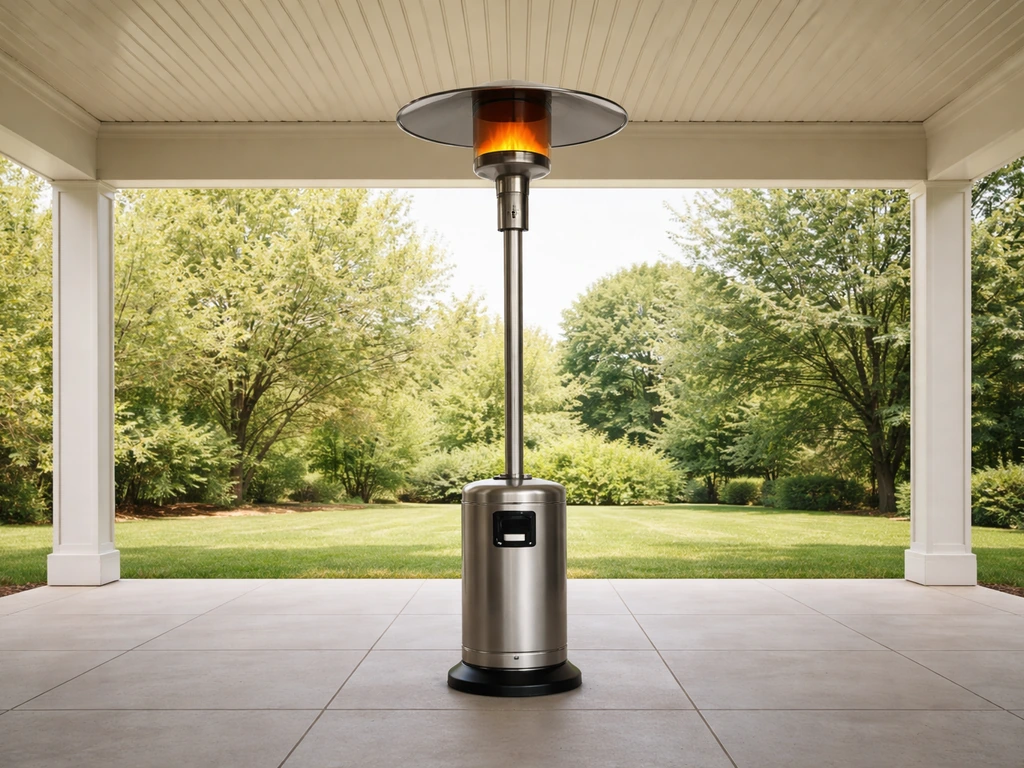
When a patio heater sits in open air, combustion gases rise and disperse. A roof over your head changes that equation in two important ways: it reduces the airflow path above the heater, and it puts a physical surface in the heat column. Whether that matters depends on how open the sides of your space are. A simple pergola or open patio cover with no walls is a very different situation from a three-sided covered porch, an enclosed gazebo, or a garage. The more enclosed the space, the higher the risk.
For combustion heaters, the concern is twofold. First, the roof limits fresh air from replacing the oxygen the heater consumes. When oxygen drops, gas heaters burn less efficiently and can produce carbon monoxide. Second, radiant and convective heat rises and collects under the roof surface. If that surface is wood, vinyl, canvas, or any material with low heat tolerance, you have a fire risk. A flat overhead surface can also trap superheated air that degrades materials even before you see flame. These two issues, CO accumulation and radiant heat damage, are why manufacturers set specific clearance and ventilation rules, and why you need to read your manual before setting anything up under a roof.
Check your heater type first: propane, natural gas, or electric
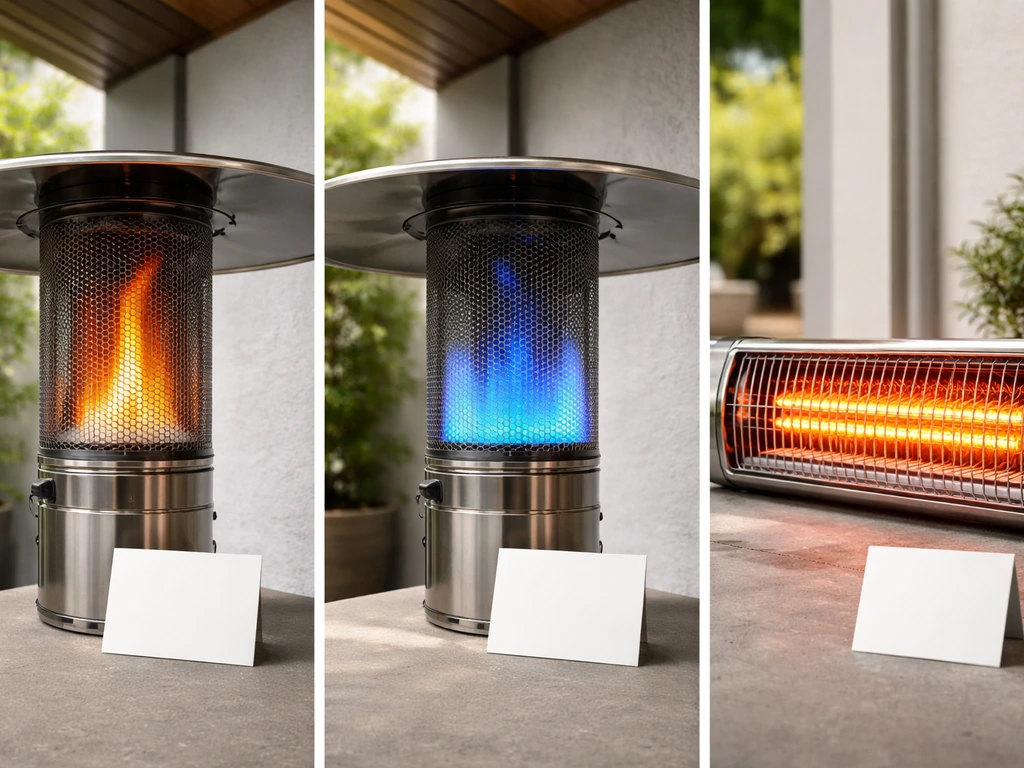
The heater type is the single biggest factor in deciding whether under-roof use is even on the table. Each type carries a different risk profile.
| Heater Type | CO Risk | Fire Risk from Overhead Heat | Covered Space Suitability | Key Requirement |
|---|---|---|---|---|
| Propane (portable) | High | Moderate to High | Open-sided cover only, never enclosed | Continuous ventilation, 18–24" min ceiling clearance from combustibles |
| Natural Gas (fixed) | High | Moderate to High | Open-sided cover only, never enclosed | Same clearances plus proper gas line installation and code compliance |
| Electric (infrared/quartz) | None | Low to Moderate | Most covered spaces including semi-enclosed | Rated clearance to overhead combustibles, waterproof rating for wet locations |
Consumer Reports states directly that gas-burning patio heaters produce carbon monoxide and should never be used indoors, contrasting this explicitly with electric models that don't combust fuel. Gas-burning patio heaters should not be used indoors because they can produce carbon monoxide, so make sure you only use the right heater type for the space you have. That distinction matters a lot when you're sitting under a covered porch. Propane and natural gas heaters are outdoor-only appliances not because of heat output but because they consume oxygen and produce CO as part of normal operation. Electric infrared or quartz heaters don't have that problem, which is why they're the go-to recommendation for semi-enclosed spaces like screened porches or roofed pergolas with partial walls.
Some portable propane heaters, like the Flame King YSN-CHS10, are specifically engineered with an Oxygen Depletion System (ODS) that shuts the gas off when ambient oxygen falls below a safe threshold. If your heater has a certified ODS, tilt shutoff, and fire detection system, it's built with enclosed-area use in mind. But the vast majority of standard freestanding propane patio heaters, the tall mushroom-style units you see on restaurant patios, are not ODS-equipped and are strictly outdoor-only.
What your manual and safety labels actually say
Before you position your heater under any roof, pull the manual. If you don't have it, search the brand and model number plus the word "manual" and you'll almost always find a PDF. The information you're looking for is in the installation or safety section and covers three things: required clearances to combustibles, ventilation requirements, and prohibited use locations.
Here's what real manuals actually say. The Patio Comfort PC02 manual requires no combustible material within 24 inches of the top of the reflector and no closer than 24 inches from combustible walls. The Sunglo Model A270 calls for 24 inches on the sides and rear, 18 inches to the ceiling, and a minimum floor-to-heater height of 84 inches. It explicitly prohibits use in buildings, garages, or enclosed areas and allows overhead cover only when the sides are sufficiently open. This is especially important for questions like can you use a patio heater in a garage with the door open, because garages behave more like enclosed spaces than open air can you use patio heater in garage with door open. The Berner Luminous series specifies an 8-foot minimum clearance below the heater and includes a full table of clearances that changes based on whether an optional shield is installed. These numbers are not conservative estimates. They're based on measured surface temperatures, typically 90°F above ambient, and assume standard combustible construction materials. If your overhead surface is something like canvas, vinyl, or treated wood, you may need more clearance than the minimum.
Also check the safety label physically attached to the unit. Many heaters carry a DANGER: CARBON MONOXIDE HAZARD label, which is a hard stop for any use in enclosed or semi-enclosed spaces. If that label says "outdoor use only," your covered porch with three walls qualifies as a space to be cautious about, regardless of what seems obvious.
The real risks: CO, fire, and overheating
Carbon monoxide
CO is the most serious hazard. The CPSC estimated 18 deaths in a single year from portable propane heater use indoors, and that number reflects how quickly CO can reach dangerous levels in a space that seems open but isn't. CO has no smell and no color. You won't detect it until you're already impaired. A covered patio with walls on two or three sides can allow CO to accumulate faster than you'd expect, especially on a calm night with no wind to push air through. The CPSC notes that portable propane heaters create a carbon monoxide hazard for consumers, and it discusses outdoor-use-only risk patterns and revisions to industry standards. If you're running a propane heater under a roof with limited cross-ventilation, you're in a situation that can turn dangerous within minutes.
Fire hazard from radiant heat
Radiant patio heaters direct infrared heat in a cone upward and outward. Under a roof, that cone points directly at your ceiling surface. Combustible materials don't need to be touched by flame to ignite. Radiant heat can raise surface temperatures enough to degrade, char, or ignite materials over time. Berner's installation documentation notes explicitly that plastics, vinyl siding, canvas, and tri-ply materials can be damaged at temperatures lower than the standard clearance-to-combustibles threshold, which means the 24-inch rule assumes normal building materials. If your patio cover is a canvas shade sail or vinyl lattice, you need extra distance or a different heater type.
Overheating and unit shutoff issues
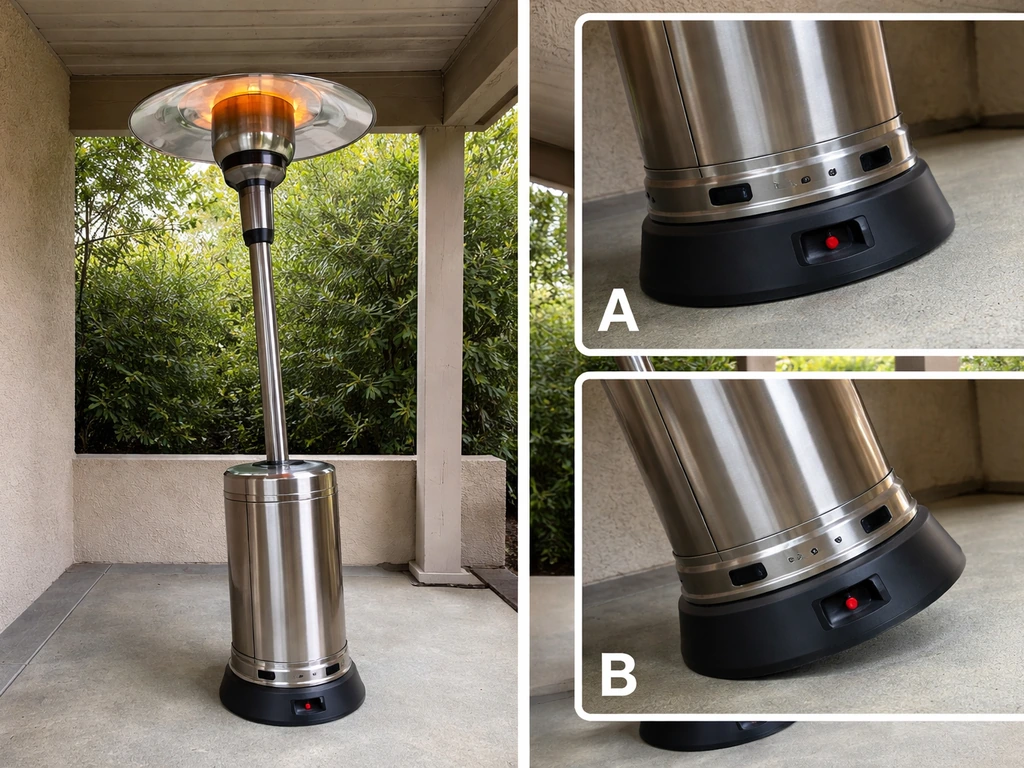
When heat collects under a roof and has nowhere to go, the ambient temperature around the heater itself rises. Most patio heaters include a tilt safety switch and sometimes a thermal cutout, but neither is designed to protect against a hot ambient environment, only against tip-overs or acute overheating of internal components. If your heater keeps shutting off unexpectedly in a covered space, that's worth investigating, not ignoring. It may be a symptom of overheating due to inadequate airflow, not a random malfunction.
Safe setup checklist for under-roof use
Work through this checklist before you turn the heater on. Every item matters.
- Confirm heater type: if it's a propane or natural gas model, verify the space has open sides on at least two opposing sides with no walls, screens, or barriers blocking airflow. If the space is enclosed on three or more sides, switch to an electric model.
- Measure ceiling clearance: find the lowest overhead surface directly above the heater's heat emitter. For most propane heaters, you need a minimum of 18 to 24 inches to any combustible surface. Check your specific manual for the exact number and use that, not the general guideline.
- Identify combustible materials overhead: wood beams, painted surfaces, canvas, vinyl, plastic lighting fixtures, and fabric strings count as combustibles. If any of these are within your clearance zone, reposition the heater or install a non-combustible heat shield per the manufacturer's instructions.
- Check lateral clearance: most manuals require 24 inches of clearance from walls and vertical combustible surfaces on the sides and rear. Don't position the heater flush against a wall or fence.
- Verify the heater stands level and stable: on decking or uneven pavers, use a level to confirm the unit won't tilt. Tilt switches can trip on very slight inclines, and under a confined overhead space, a runaway ignition attempt from a malfunctioning tilt switch is a real hazard.
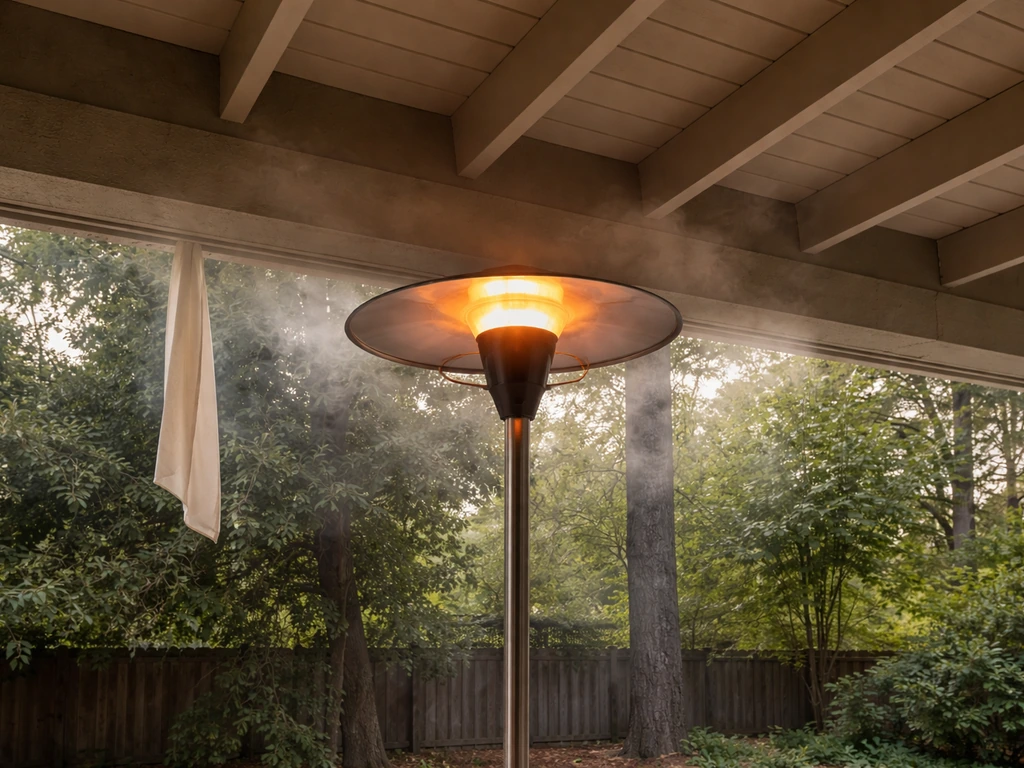
- Confirm airflow path: for combustion heaters, stand in the space and check whether air moves freely through at least two open sides. On a still night, light a stick of incense near the heater's base and watch whether smoke drifts outward or collects. If it collects, you don't have enough ventilation.
- Install a CO detector: if you're using any gas or propane heater under a roof, place a battery-operated CO detector at seated breathing height near the heater. This is not optional.
- Check gas connections before every use: for propane, inspect the hose for cracks, kinks, or wear. Apply soapy water to the regulator connection and valve and watch for bubbles. For natural gas, check the flexible connector and shutoff valve.
- For electric heaters: confirm the unit is rated for outdoor/wet locations (look for UL or ETL outdoor listing), mount or position it so it's not pointing heat directly at a surface within its rated clearance, and use a GFCI-protected outlet.
When to stop and get professional help
Some situations are beyond the reach of a safe DIY decision. Stop using the heater under that roof and get help if any of the following apply.
- Anyone in the space reports a headache, nausea, dizziness, or unusual fatigue while the heater is running. These are classic CO symptoms. Get everyone out immediately and call 911 if symptoms are severe. Don't go back inside until the space has been ventilated and cleared.
- Your CO detector goes off. Treat this as a real emergency, not a false alarm.
- The heater shuts off repeatedly without an obvious cause like running out of fuel. Repeated unexpected shutoffs under a covered space can indicate overheating or CO-induced combustion problems, not just a quirky unit.
- You can't find the manual and can't determine the heater's required clearances or whether it's rated for anything other than open-air use.
- Your installation involves a fixed natural gas line under a permanent roof structure. This requires a licensed gas contractor and local permit in most jurisdictions, not DIY work.
- The overhead structure is part of the building (attached covered porch, sunroom, or similar). In many areas, using a combustion appliance under an attached structure requires inspection under local fire or building code.
- The heater shows signs of rust, burner damage, or regulator issues that weren't there before. Running a damaged heater in a confined overhead space amplifies every hazard.
On the warranty point: most patio heater warranties are voided if the unit is operated outside the conditions specified in the manual. If you run a propane heater in a semi-enclosed space and something goes wrong, you'll likely be on your own with the manufacturer. That's worth knowing before you decide whether the setup is worth the risk.
DIY troubleshooting when it won't operate safely in the space
If you've confirmed your space meets clearance and ventilation requirements but the heater is still behaving strangely, work through the most common under-roof symptoms before assuming the worst.
Heater won't ignite or keeps going out
Under a covered space, wind gusts can be unpredictable, coming in at angles that extinguish the pilot or burner. Check whether the ignition problem only happens in certain wind directions. If so, repositioning the heater a few feet or using a wind-blocking setup that still allows full overhead and cross-ventilation may solve it. If the heater lights, runs for 30 to 90 seconds, and then shuts off, that's almost certainly the thermocouple. The thermocouple needs direct flame contact to stay open, and a heater in a slightly breezy covered space can have a wandering flame. Clean the thermocouple tip with fine steel wool, check that the pilot flame is hitting the thermocouple correctly, and test again.
Tilt switch keeps tripping
Tilt switches on freestanding propane heaters are mercury or ball-bearing based and trip on slight angles. Decking, pavers, and outdoor flooring are rarely perfectly level. Use a standard bubble level to check the base, then adjust the heater feet if adjustable, or place a small rubber-edged leveling pad under the base. If the tilt switch itself is faulty (trips even when the unit is confirmed level), that's a part replacement job. Most tilt switches are accessible under the base cover and are a straightforward swap, but confirm the part number against your model before ordering.
Heater runs but seems weaker or produces visible soot
Soot or yellow-orange flame color on a propane heater that should burn blue or near-invisible is a sign of incomplete combustion, which also means elevated CO output. Under a roof, this is a serious red flag. Check the burner for spider webs or debris blockage, which is one of the most common causes of incomplete combustion in outdoor heaters. Remove the emitter screen if accessible and inspect the burner ports with a flashlight. Clear any blockage with compressed air. If the flame color doesn't return to normal after cleaning, the orifice may be partially blocked or the regulator may be failing. At that point, the heater needs repair before it goes back under any kind of cover.
Electric heater trips the breaker under a covered space
Electric patio heaters draw significant current, often 1,500 watts or more. If yours trips a breaker in a covered outdoor space, first check that it's plugged into a dedicated or adequately rated circuit, not shared with other loads. Outdoor GFCI outlets can also trip more readily in humid covered environments due to moisture ingress in the outlet itself. Try a different GFCI outlet and check whether the heater element shows any signs of damage. If the breaker trips immediately on startup, there's likely an internal short that needs a technician, not a DIY fix.
A quick note on similar situations
A roofed patio is one point on a spectrum of increasingly enclosed spaces. At the safer end is an open pergola with no walls. Further along are three-sided covered porches, then screened enclosures, then garages, and finally fully enclosed indoor spaces. The guidance for using a patio heater in a garage or under a gazebo follows the same core logic: ventilation and clearance are what matter, and gas heaters require significantly more of both than electric ones. If your covered space feels more like a room than an outdoor area, treat it like one when making your safety decision.
FAQ
Can I use an electric patio heater under a roofed porch with two or three walls?
Often yes for electric models, but you still need to keep the heater’s required clearance to the specific overhead surface. As a practical rule, treat a roof with three walls or a low soffit like a semi-enclosed room, and verify the manual’s ceiling clearance and “sides open” language before turning it on.
Is it safe to use a propane patio heater under a roof if the door is open?
It can be unsafe if it has restricted cross-ventilation, because the roof can trap exhaust gases even when the space feels “outdoor.” Also confirm the label on the unit, many propane heaters are explicitly marked outdoor use only or show a DANGER CO hazard.
Can any propane heater with an oxygen depletion feature be used under a roof?
If the heater is not certified for enclosed or semi-enclosed use (ODS, tilt shutoff, and explicit approval), do not use it under a roof. “Oxygen Depletion System” is model-specific, so verify the exact heater has that certification rather than assuming all propane heaters are similar.
If I only run the heater for 10 to 20 minutes, can I reduce the risks under a roof?
Not reliably. If the manual requires specific clearance and ventilation, you cannot “make up for it” by lowering the heater time, running it only briefly, or keeping the thermostat low. CO and radiant heat risks depend on airflow and surface temperatures, not just duration.
What signs on the heater tell me it is not approved for use under a roof?
Look for two things: (1) the installation or safety section that lists prohibited locations, and (2) a “DANGER: carbon monoxide hazard” or “outdoor use only” label. If either indicates enclosed or semi-enclosed prohibition, the heater should not be used under that roof setup even if you think the sides are open.
How do I judge whether my covered area has enough ventilation for a gas patio heater?
For gas units, do not assume “fresh air” based only on open sides. Use the manual’s ventilation requirements and the clearance-to-combustibles distances, and keep the overhead area from becoming a heat trap (for example, low ceilings and flat soffits). If you cannot confirm cross-ventilation, switch to an electric heater rated for covered areas.
What if the ceiling or overhead cover is vinyl, canvas, or fabric instead of hard noncombustible material?
If the overhead surface is canvas, vinyl, treated wood, or anything not rated for high heat exposure, you should use more clearance than the minimum and follow the manual for “special materials.” Radiant heat can damage materials without visible flames, so failing to account for the roof material is a common mistake.
Can an electric infrared heater under a roof still start a fire?
Yes, electric heaters can still be a problem if they are too close to combustibles or if the space traps heat under the roof. Also confirm the outlet and cord rating for outdoor use and make sure the GFCI protection and wiring are suitable for the heater’s wattage.
My propane patio heater keeps shutting off under a covered patio, what should I check first?
If a propane heater shuts off repeatedly under a roof, treat it as an airflow and overheating symptom first, not a random safety feature. Check whether ignition and flame behavior changes with wind direction, inspect for soot or incorrect flame color after cleaning, and verify the base level for tilt switch operation.
Does the floor being slightly uneven affect whether I can use a propane heater under a roof?
A floor level change can matter because tilt switches can trip on slight angles. Before use under a roof, confirm the heater is level with a bubble level on the actual surface, then adjust feet if possible or use an appropriate leveling pad so the unit does not ride on uneven decking.
Will using a patio heater under a roof void the warranty?
Yes for warranty and liability reasons. Most warranties require operation within the manual’s specified conditions, including clearance, allowed spaces, and prohibited locations. Running outside those instructions can void coverage if the heater fails or causes damage.