
Yes, a patio heater can go under a gazebo, but it depends on the type of heater, the clearance you have, and how open the gazebo is. Electric patio heaters are generally the safer and more straightforward choice under a gazebo roof. Gas patio heaters (propane or natural gas) can work too, but they come with stricter ventilation requirements and more ways to go wrong if the space is too enclosed. The key is checking your specific heater's manual for clearance minimums before you ever fire it up under a covered structure.
Can a Patio Heater Go Under a Gazebo? Safety Guide

Grant Mercer
31 May 2026
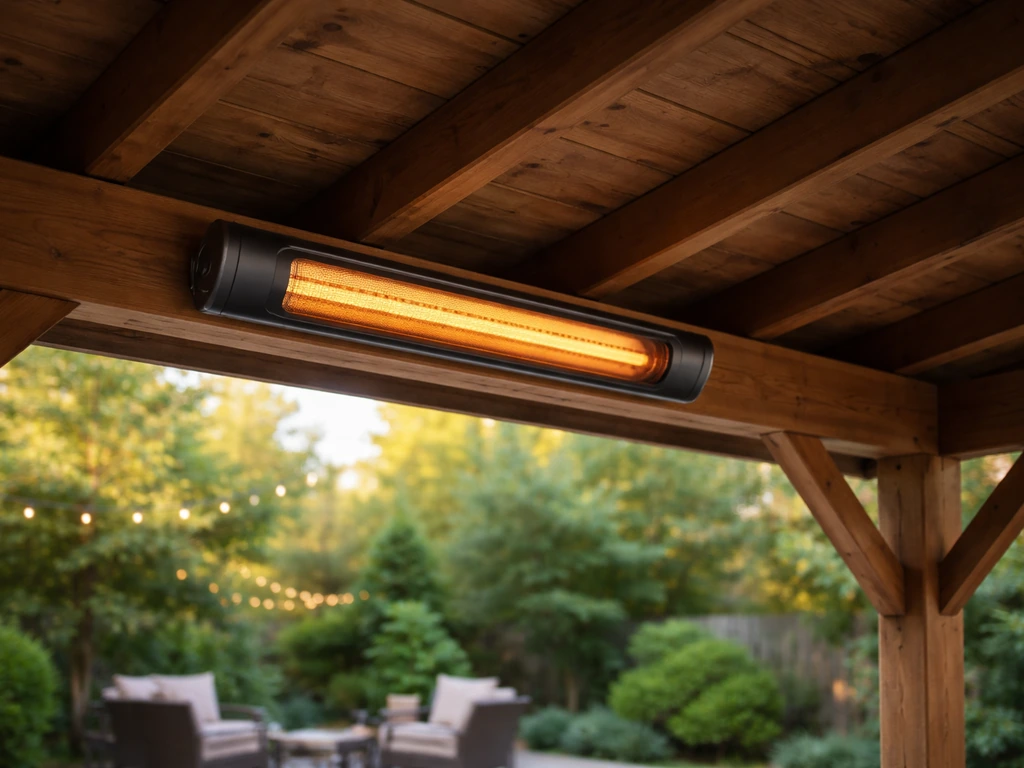
Gas vs electric: what actually changes under a covered roof
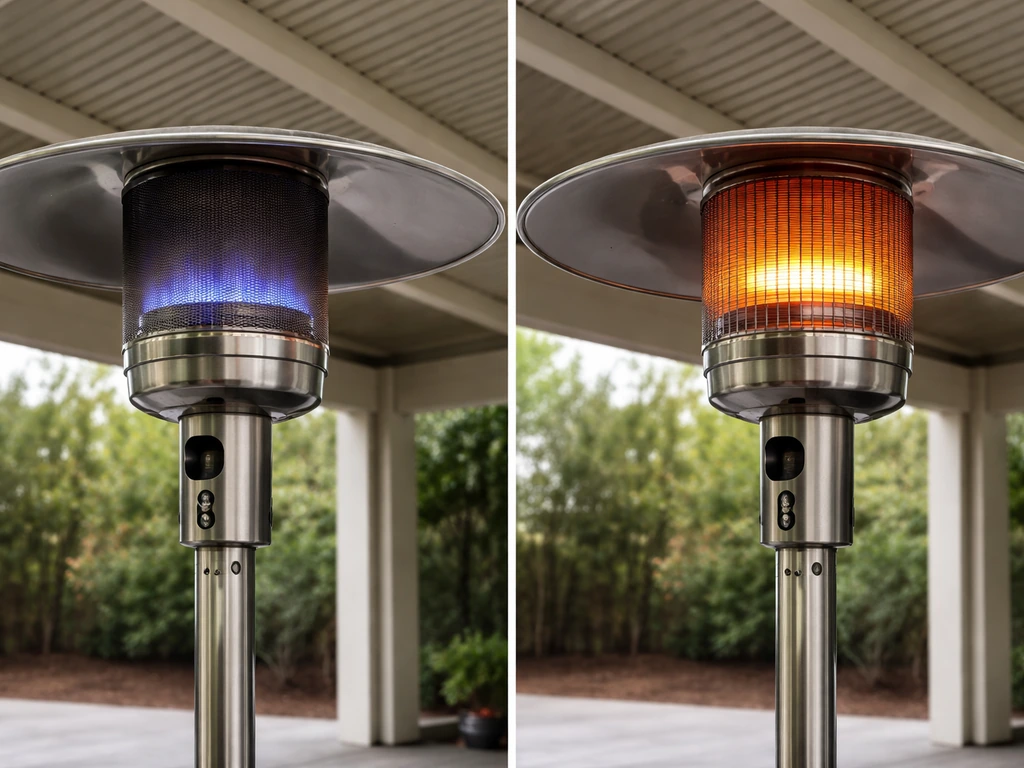
The biggest difference between gas and electric heaters in this situation is combustion. A gas patio heater burns propane or natural gas and produces carbon monoxide as a byproduct. In an open backyard, CO disperses immediately. Under a gazebo, especially one with solid walls, lattice panels, or a low ceiling, that CO can build up to dangerous levels faster than you'd expect. Many manufacturers, including AZ Patio Heaters (the HLDS01 series is a common example), explicitly restrict gas heater use to fully open outdoor settings and call out carbon monoxide hazard by name in their owner's manuals. AZ Patio Heaters manuals for the HLDS01 series emphasize carbon monoxide hazard and restrict operation to fully open outdoor settings rather than covered or enclosed placement blank" rel="noopener noreferrer">AZ Patio Heaters (the HLDS01 series is a common example) explicitly restrict gas heater use to fully open outdoor settings and call out carbon monoxide hazard by name in their owner's manuals.. If you are wondering whether you can use a patio heater in a garage, keep in mind that the same carbon monoxide and ventilation risks apply even if the door is open carbon monoxide hazard. Some generic manuals sold through big-box retailers flatly state: do not use under a roof, awning, or low ceiling.
Electric patio heaters do not burn anything. There's no combustion, no CO, and no flame. That makes them significantly safer under a covered structure, provided you respect clearance distances from the heating element to the roof material above. The main risks with electric heaters are heat buildup against the ceiling and, less commonly, moisture or water intrusion if the gazebo is not adequately sheltered from rain splash.
| Feature | Gas Patio Heater | Electric Patio Heater |
|---|---|---|
| CO risk | Yes, requires open ventilation | None |
| Flame present | Yes | No |
| Works under enclosed gazebo | Not safely | Yes, with clearance |
| Works under open-sided gazebo | Generally yes, with clearance | Yes |
| Tilt switch sensitivity | Yes, critical safety feature | Less common, but present on some models |
| Thermocouple/ignition issues in restricted airflow | Yes, more likely | Not applicable |
| Moisture sensitivity | Low | Moderate (check IP rating) |
If you're set on using a gas heater, the gazebo needs to be open-sided, meaning no solid walls trapping air around the burner. A traditional open pergola-style gazebo with a roof but no walls is borderline acceptable. A fully enclosed fabric or wooden gazebo is not. Bromic Heating, one of the more detailed manufacturers on this topic, also recommends using a heat deflector above the heater when mounting under covered spaces, which reduces the required clearance to the ceiling above.
Clearances and placement: what the numbers actually mean
Every patio heater has a minimum clearance requirement printed in the manual. This is the minimum distance from the top of the heater (or the heating element) to the surface above it. If you don't have this manual, search your model number plus 'owner's manual PDF'. Most manufacturers host them online.
For freestanding propane mushroom-style heaters, clearance to combustibles above is typically 36 inches minimum, though some models require more. Bromic wall-mounted and ceiling-mounted gas heaters specify clearances per mounting type and note that adding a heat deflector can reduce the required ceiling clearance in covered installations. Electric infrared heaters, which are often ceiling or wall mounted, commonly require 24 to 40 inches of clearance below, meaning you need enough ceiling height to mount them at a height where the element is still that far above seated guests while also staying safely below the roof structure.
Placement checklist before you turn anything on
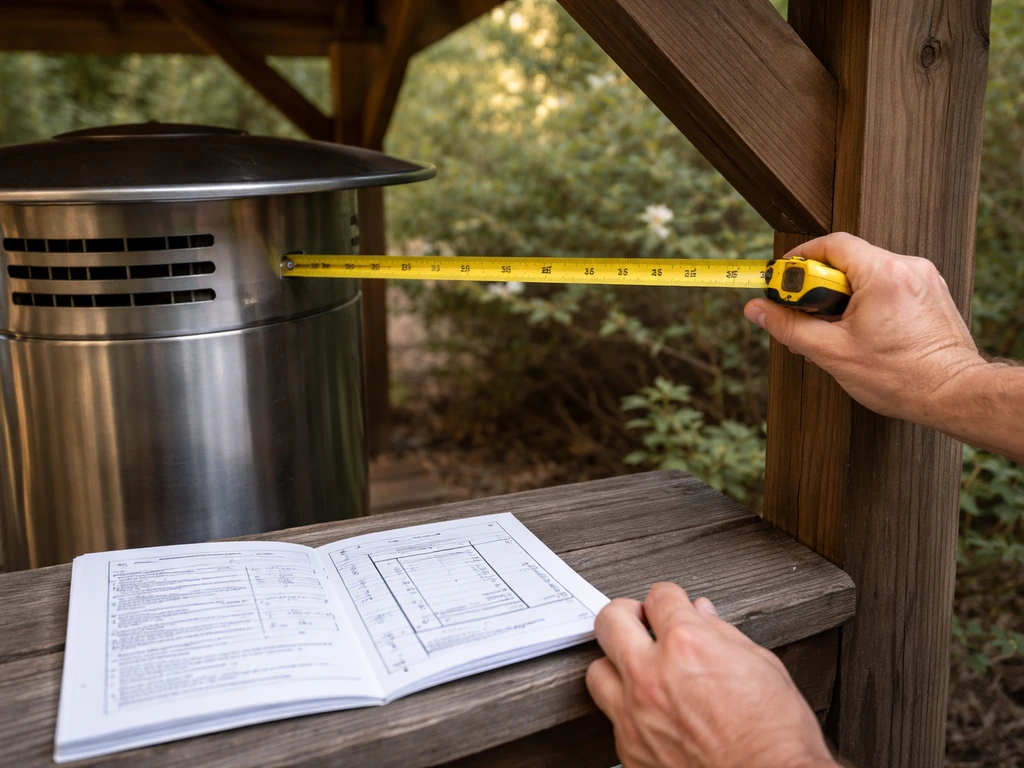
- Pull up your heater's manual and find the minimum clearance to combustibles above, below, and to the sides. Write the numbers down.
- Measure the clearance you actually have in your gazebo from the heater's top (or heating element) to the lowest roof surface. It must meet or exceed the manual's spec.
- Check whether your gazebo has open sides or enclosed walls. Enclosed walls plus a gas heater is a hard stop.
- Identify the roof material. Fabric canopy tops, bamboo, and cedar shingles are combustible. Metal or polycarbonate roofing panels are less so, but clearance still applies.
- Confirm the heater will sit on a flat, level surface. Gas heaters have a tilt switch that cuts the gas if the unit leans more than a few degrees. An uneven gazebo floor or deck board can trigger nuisance shutoffs.
- Position the heater away from curtains, string lights, hanging decorations, and any fabric panels. The minimum is typically 3 feet from any combustible on the sides.
- For electric heaters being ceiling-mounted, confirm the gazebo's structural members can carry the heater's weight and that the mounting hardware matches.
- Check the IP (ingress protection) rating on electric heaters. At minimum, look for IP44 for covered outdoor use. IP55 or higher is better if rain can blow in.
Real fire and heat risks you need to think about
The most underestimated risk under a gazebo is heat buildup at the roof line. A standing gas heater or a mounted electric heater pumps a lot of radiant energy upward. In an open yard that heat just radiates into the air. With a roof 8 or 10 feet overhead, it can pool. Over time, even materials rated as 'outdoor safe' can degrade, warp, or in worst cases smolder if they're repeatedly exposed to heat they weren't designed for. Fabric canopy tops are the worst offenders. If your gazebo has a fabric roof and your heater's clearance puts the element within a few feet of that fabric, don't use a gas heater there.
Condensation is the less obvious risk, particularly with electric heaters in humid climates. When a gazebo's roof traps warm air and the temperature drops at night, moisture can condense on the heater's reflector, electrical connections, or thermostat housing. Over a season, this causes corrosion on contacts and control boards. Mounting electric heaters at an angle (as many manufacturers recommend) rather than flat horizontal helps water shed off the unit.
Airflow restriction is a third issue specific to gas heaters. A gas burner needs a steady draw of fresh air to combust properly and to keep the thermocouple reading correctly. If the gazebo is enclosed enough to reduce that air movement, the flame quality changes, the thermocouple may not stay hot enough to hold the gas valve open, and you get repeated shutoffs or a flame that won't stay lit. This isn't just annoying, it can also mean incomplete combustion and elevated CO output.
How to safely light and verify your heater under a gazebo
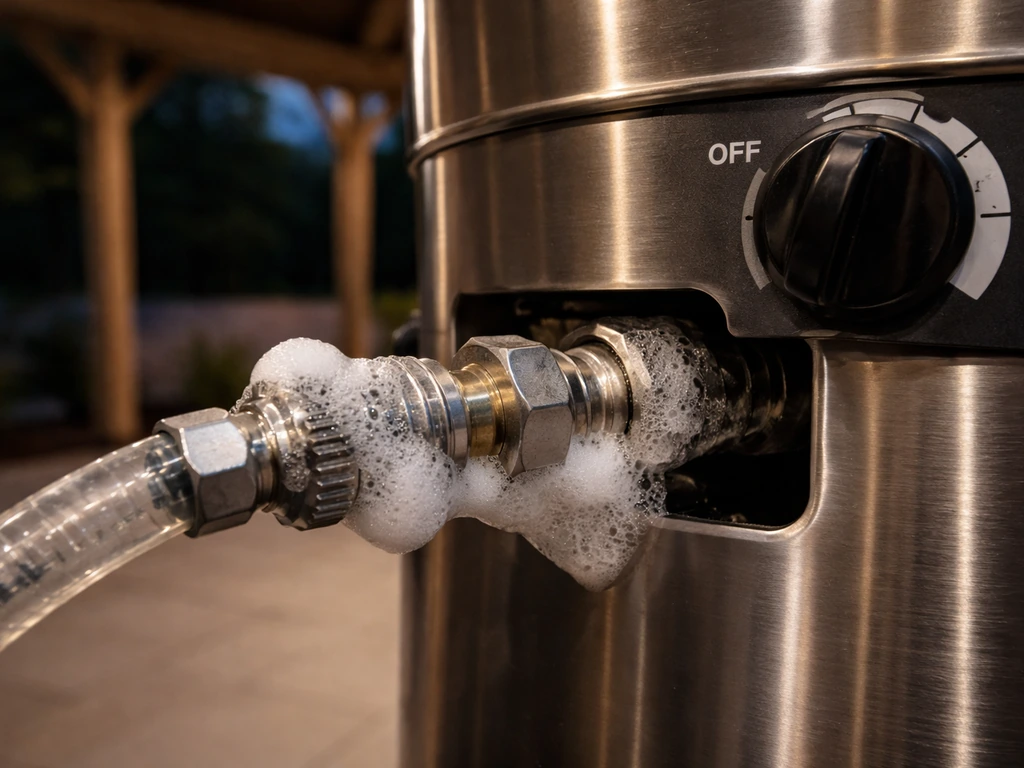
Don't skip this step even if you've used the heater before. Placing it in a new covered environment changes the conditions it operates in.
- Before lighting a gas heater, do a leak check. With the tank valve open and the heater control off, spray soapy water on all connections from the tank valve through the regulator and hose to the burner assembly. Bubbles mean a leak. Do not proceed until the leak is fixed.
- Light the heater and step back. Watch the flame. A healthy gas heater flame is blue with small orange tips. A heavy orange or yellow flame with visible soot means incomplete combustion, often a sign of restricted airflow. If you see this under your gazebo and didn't see it in the open, the enclosure is the problem.
- After 5 minutes of running, check the ceiling material directly above the heater by carefully placing your hand near (not on) the surface. It should feel warm but not hot enough to be uncomfortable. If it's very hot, you need more clearance or a heat deflector.
- For electric heaters, check that the power connection is secure and not near any water path from the roof. If rain can drip onto the cord or connector, reposition or add drip loop protection.
- Test any safety features. On gas heaters, deliberately tilt the unit a few degrees and confirm the flame cuts out (tilt switch working). Return it to level and relight. If it won't relight after a brief tilt test, the thermocouple may not be heating quickly enough, which is worth investigating before relying on the heater.
- Run the heater for a full 30 minutes on your first use under the gazebo, then do a full walkthrough: check for unusual smells, confirm no components are discoloring, and verify the heater has stayed lit consistently.
Common problems that show up specifically under a gazebo
A heater that worked fine in the open yard can develop new problems under a gazebo roof. Here's what to look for and why it happens in covered spaces.
Won't stay lit or keeps shutting off
This is usually the thermocouple failing to hold the gas valve open. Under a gazebo, two things can cause this more often than in the open. First, if the structure is reducing airflow, the burner flame may be slightly weaker or positioned differently, and the thermocouple tip may not be getting enough heat. Second, if the gazebo floor has any flex or unevenness, the tilt switch (a separate safety component in most free-standing gas heaters) may be cutting power to the gas valve when the heater shifts slightly. Check that the heater is on a genuinely level surface and that the tilt switch is not being triggered by vibration or deck movement.
Ignition clicking but not lighting
If the piezo igniter clicks but the burner doesn't catch, check for wind patterns under the roof. Gazebo structures can create unpredictable airflow eddies that blow the pilot flame out before the thermocouple heats up. Try cupping your hand around the burner area while lighting to block any crosswind. If it lights that way but not normally, the igniter electrode gap or the pilot orifice may need cleaning. Propane residue and spider webs (a genuinely common problem in heaters that sit in outdoor structures) clog pilot tubes.
Heater trips off shortly after lighting (thermocouple and ODS)
Some gas heaters have an Oxygen Depletion Sensor (ODS) that shuts the unit down if oxygen levels drop. In a partially enclosed gazebo, this sensor can trigger even when CO levels are not yet dangerous, because the available oxygen near the floor is genuinely lower than in the open. If your heater keeps tripping the ODS under a gazebo that feels enclosed, that's the structure telling you the space is too confined for a gas heater. Open more sides or switch to electric.
Electric heater not producing enough heat
This is less of a safety issue and more of a performance one. Under a gazebo, you might expect the heat to feel more intense because it's trapped, but if the heater is mounted too high or angled away from the seating area, the ceiling absorbs radiant heat that should be warming people. Bromic's guidance for electric heaters specifically addresses this: when ceiling height requires mounting higher than ideal, use a pole extension to lower the element closer to occupant level rather than accepting less effective heat delivery.
When to stop DIYing and call a professional
Most patio heater setup and troubleshooting is reasonable DIY territory. But there are clear lines where you should stop and get a professional involved.
- You smell gas after doing a leak check and tightening all connections. A persistent gas smell is not a DIY fix at this point.
- The heater repeatedly trips the ODS or shuts off due to what appears to be oxygen depletion in your gazebo. The structure needs evaluation, not just the heater.
- You want to run a natural gas line to a permanently installed heater under the gazebo. Gas line installation and connection requires a licensed plumber or gas fitter in most jurisdictions.
- The electric heater you want to install requires a dedicated circuit or a 240V outlet that doesn't exist in or near the gazebo. Have a licensed electrician run the circuit.
- You see discoloration, scorching, or melting on any part of the heater housing, gas hose, or regulator. These components need replacement by someone who can verify the repair is complete.
- The tilt switch or thermocouple replacement didn't fix the shutoff problem after two attempts. There may be a gas valve failure that requires a technician.
- Your gazebo is a permanent structure and you want a permanently mounted overhead gas heater. Permitting requirements vary by location, and many jurisdictions require a licensed contractor for this type of installation.
The covered-space question comes up in several related scenarios beyond just gazebos. If you're still wondering can a patio heater be used under a roof, this covered-space question also applies to awnings and covered patios, not just gazebos. Using a heater under a solid roof, in a garage, or inside a tent all carry their own specific risks worth understanding before you assume the same rules apply. The core principle is consistent: the more enclosed the space, the higher the stakes, and the more important it is to match your heater type to the actual ventilation you have rather than what you wish you had.
FAQ
How open does a gazebo need to be for a gas patio heater to be acceptable?
For gas models, aim for a gazebo that is truly open-sided, with no solid walls or panels around the burner zone that can trap combustion air. If you can feel limited airflow when standing near the heater and you notice the flame looks weak or inconsistent, treat it as too enclosed. When in doubt, switch to an electric heater rather than trying to rely on “mostly open.”
Can I use a patio heater under a gazebo if it has a fabric or mesh canopy top?
Use extra caution. Fabric tops can heat-soak and deform, especially if your heater's required clearance puts radiant energy close to the canopy. If the heater clearance minimum leaves only a small gap to fabric, do not use a gas heater there, and verify the fabric material is rated for outdoor radiant heat exposure. Electric can still be problematic if the clearance to the canopy is too tight.
What clearance should I measure, the top of the heater or the heating element?
Measure the distance exactly as written in your heater’s manual, usually from the top housing or the heating element to the nearest roof surface. If you mount the heater on a stand, pole, or bracket, re-measure after installation because the clearance changes with angle and mounting height.
If my gas heater has worked under a gazebo before, can I assume it is safe for the next season?
No. Conditions change, for example spider webs or dust can clog the pilot and affect combustion, and the heater may sit slightly differently on uneven decking. Re-check level position, inspect burner and pilot openings, and confirm the gazebo still provides the same openness and ventilation you had when it worked.
Does turning the gazebo lights on or adding decorations affect heater safety?
Yes, indirectly. Decorations, plants, and hanging items can block airflow, reduce clearance, or add combustible materials near radiant heat. Keep any decor at least the manual’s minimum clearance away from the heater area, and avoid placing anything that can droop or shift in heat.
Can an electric patio heater be mounted under a gazebo ceiling if there’s not enough clearance?
Only if you can meet the element-to-roof clearance in the manual. If ceiling height forces the heater too high, follow manufacturer guidance to lower it with a rated extension or mounting arrangement so the heating element stays the required distance below the roof and above the floor.
What should I do if my electric patio heater keeps showing condensation or corrosion over time?
First, improve water management, keep the heater from sitting in areas where roof runoff drips directly on it, and confirm the unit is installed at the angle the manufacturer recommends for water shedding. Also check that electrical connections and thermostat housings are sealed as designed, and do not operate the heater if you see corrosion at connection points.
Is it okay to run a patio heater under a gazebo during light rain?
Electric heaters are often designed for outdoor use, but moisture can still affect reflector surfaces, connectors, and controls, especially if rain splash reaches the unit. For gas heaters, avoid operation if the burner controls or vents are getting wet, and keep clear of areas where water can pool or block combustion air intake.
Can I use a patio heater under a gazebo if the heater is on a deck or rug?
Prefer a non-combustible, stable surface that matches the heater’s mounting and base requirements. A rug can shift, trap heat, and create unevenness that affects stability, especially for gas units with tilt safety. Use a properly rated mounting kit or base plate if the manual calls for it.
What are common signs a gas heater is not getting enough airflow under a gazebo?
Look for repeated shutoffs, pilot that will not stay lit, weak or unstable flame, oxygen-depletion sensor trips, or soot that indicates incomplete combustion. If you notice any of these, stop using the heater under that gazebo until you increase openness or switch to electric, because the symptoms often point to higher risk of poor combustion.
Should I ever use a patio heater under a gazebo without the owner’s manual?
No. The manual contains the exact clearance minimums and installation requirements for your model. If you cannot find the PDF for your heater type and series, don’t guess the clearance, instead use an electric heater where you can more reliably meet clearance rules and follow mounting guidance.