For a typical covered patio up to about 200 square feet, one good 40,000 BTU propane heater or two 1,500W electric infrared heaters will usually do the job. Beyond that, plan on one heater per 100 to 150 square feet of occupied seating area, then adjust upward if your space is open to wind, you're in a colder climate, or you want genuine warmth rather than just taking the edge off. The number isn't fixed, it depends on your patio size, how exposed it is, what kind of heaters you're using, and where you place them. Once you know your patio size, you can match it to a propane BTU rating or electric watt output and choose a heater that covers your occupied seating area comfortably what size patio heater do i need. If you're wondering how many BTU you need for your specific patio heater setup, start by estimating the patio’s occupied square footage and factoring in wind exposure how many BTU for patio heater.
How Many Patio Heaters Do I Need? Step-by-Step Guide
Decide your heating goal and patio conditions first
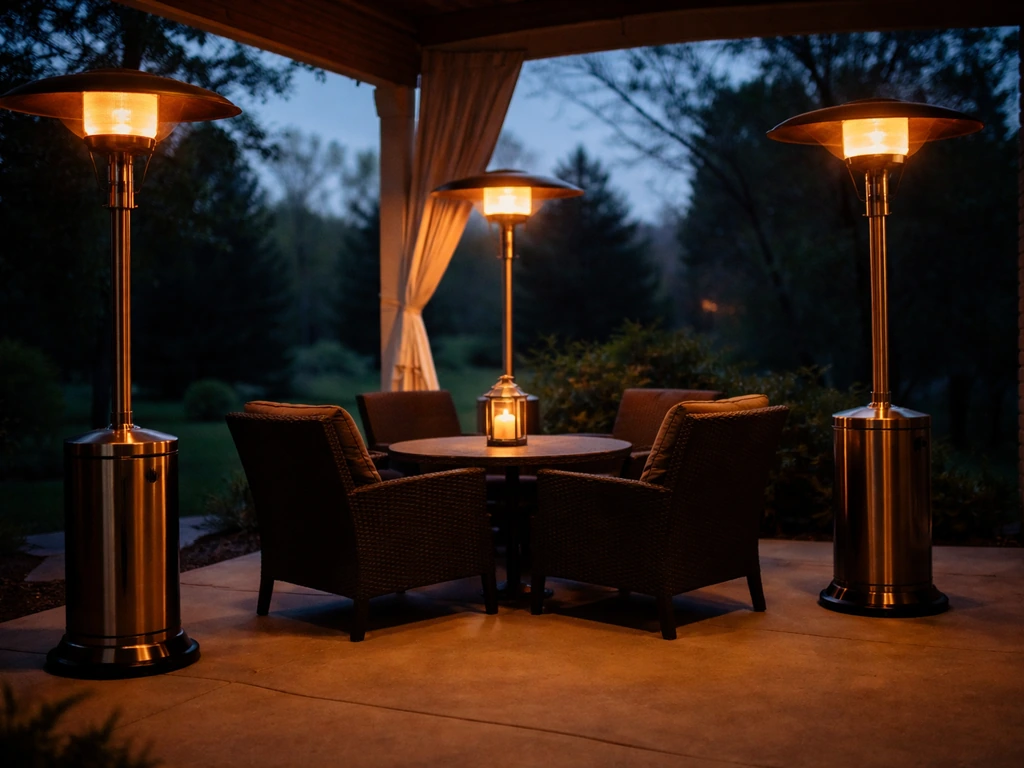
Before you count heaters, decide what you actually want from them. There's a real difference between 'take the chill off on a cool evening' and 'keep people comfortably warm in 40°F weather with a breeze.' The first goal needs fewer heaters running at partial output. The second might mean more heaters, better placement, or adding a windbreak. Be honest about your conditions, this single decision affects everything downstream.
At the same time, think about your patio's physical setup. Ask yourself these questions before you run any numbers:
- Is the patio covered (pergola, roof, awning) or fully open to the sky?
- Is it enclosed on one, two, or three sides, or completely open?
- Does wind regularly blow through the space? From which direction?
- What's your coldest typical use temperature — around 50°F, or pushing into the 30s?
- Are you heating the whole patio or just defined seating zones?
A covered, semi-enclosed patio retains radiant heat well, and heaters work closer to their rated specs there. A completely open deck exposed to wind is a different animal, you could double the heater count and still feel cold because moving air strips warmth away almost as fast as the heaters produce it. In those open situations, a windbreak (even a temporary one) does more good than adding another heater.
Measure your space and calculate your coverage area
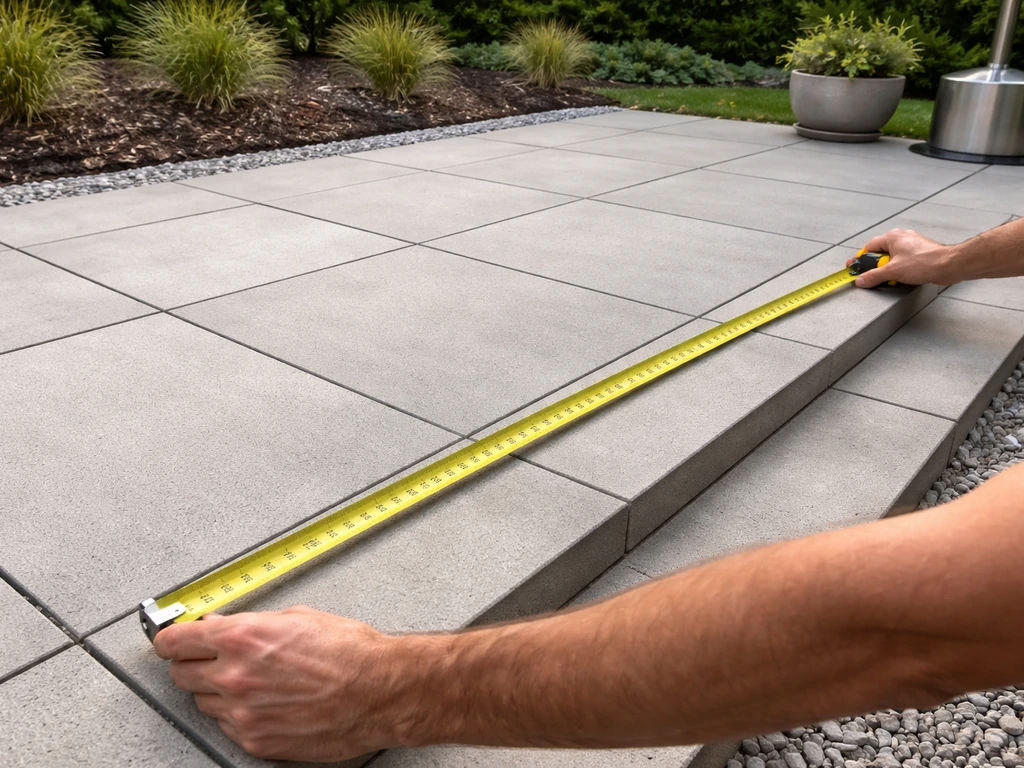
Get a tape measure and find the actual square footage of the area where people will sit or stand. Don't measure your entire yard or the full patio footprint if half of it is walkway or unused lawn. Focus on occupied zones, the dining table area, the lounge chairs, the fire pit circle. Add those zones together and that's your target coverage area.
For a simple rectangular patio, multiply length by width. For an L-shaped or irregular space, break it into rectangles and add them up. Write down the number in square feet, you'll use it in the next step. Also note the ceiling height if you're planning wall-mounted or ceiling-hung heaters, because mounting height changes effective coverage.
Convert heater specs (BTU or watts) into a coverage estimate
Heater specs come in BTU per hour for gas models and watts for electric models. You need to know roughly how much area one unit covers before you can count how many you need. Here are the practical rules of thumb, based on what manufacturer specs and real-world use consistently show:
| Heater Type | Typical Output | Approximate Coverage | Best Use Case |
|---|---|---|---|
| Freestanding propane (mushroom/umbrella style) | 40,000 BTU/h | Up to 300 sq ft (roughly 20-ft radius) | Open patios, larger decks |
| Tabletop propane | 10,000–11,000 BTU/h | ~5-ft diameter (about 20 sq ft) | Close seating around a table |
| Wall/ceiling-mounted electric infrared (1,500W) | 1,500W (~5,100 BTU/h) | Up to 100 sq ft covered space | Covered patios, pergolas |
| Wall/ceiling-mounted electric infrared (2,000W) | 2,000W (~6,800 BTU/h) | Roughly 100–130 sq ft | Covered patios, semi-enclosed |
| Larger gas infrared (mounted) | 13,000–40,000 BTU/h | Varies by model — check manufacturer | Commercial patios, larger open areas |
The 40,000 BTU freestanding propane heater is the workhorse of home patios, one unit is marketed as covering up to 300 square feet. In practice, you'll get comfortable warmth in closer to 150 to 200 square feet of occupied seating, especially if there's any wind. If you're wondering whether 48,000 BTU is good for a patio heater, the same coverage logic applies: focus on your patio size, wind exposure, and whether you're using propane freestanding units or directed electric infrared. For electric infrared, 1,500W is the most common size, and both Porch & Fire and ThermoMate independently rate that output at around 100 square feet for covered spaces. If your heater is measured in watts and you want to compare to a BTU-rated model, use the conversion: 1 watt equals roughly 3.41 BTU per hour. So a 1,500W heater produces about 5,115 BTU/h, nowhere near a 40,000 BTU propane unit, but far more efficient in a directed, covered setup because all that energy goes straight at people rather than heating open air.
One important note: always check the manufacturer's effective coverage, not the maximum listed. A wall- or ceiling-mounted heater aimed at the right angle covers significantly more area than a freestanding unit at the same wattage. The geometry matters as much as the BTU number.
Estimate heater quantity with real-world adjustments
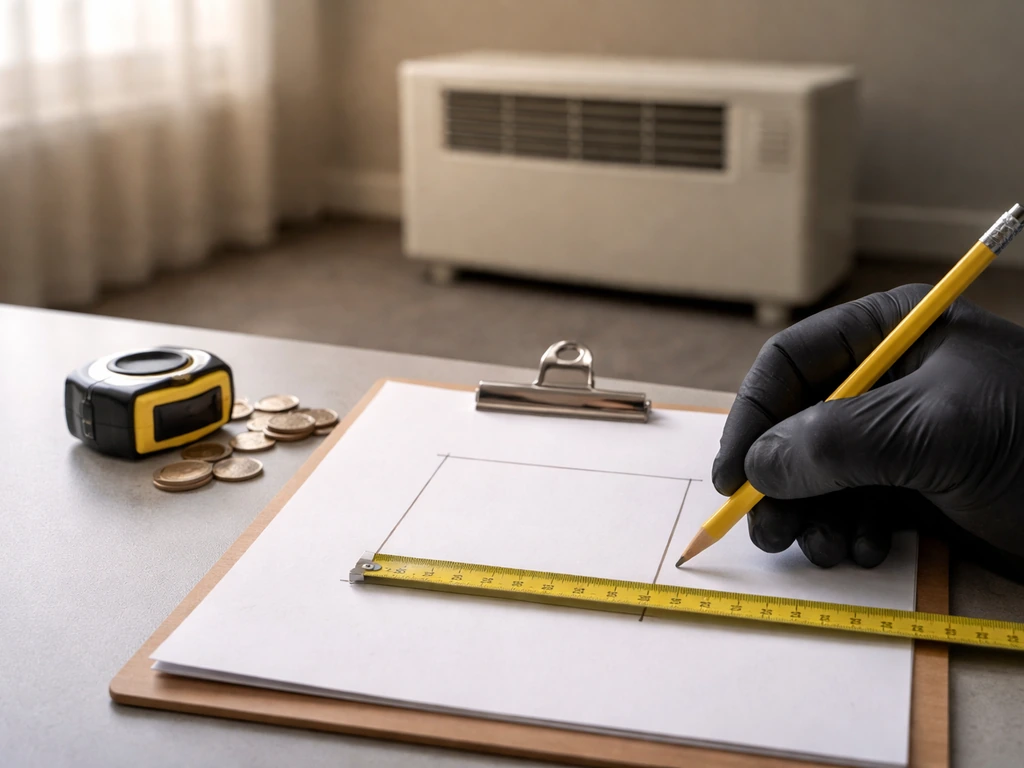
Start with the basic math: divide your total occupied square footage by the realistic coverage per heater (use the lower end of the manufacturer's range for a more reliable result). That gives you a baseline count. Then adjust it using the factors below.
- Divide occupied square footage by per-heater coverage to get your baseline number.
- If the space is fully open with no roof or walls, multiply your baseline by 1.5 to account for heat loss to wind and open sky.
- If the space is partially covered or has one or two walls, keep the baseline or add one heater for larger spaces.
- If you regularly use the patio below 40°F, add at least one extra heater beyond your calculated baseline.
- If you're using electric infrared in an uncovered area, multiply wattage needs by roughly 1.25 — radiant electric heaters work best under cover.
- Round up, not down. It's better to have one heater you occasionally turn to a lower setting than to run all your heaters flat out and still feel cold.
Wind is the single biggest variable that no BTU rating accounts for. Even a 5 mph breeze strips warmth away fast. If your patio is regularly exposed to wind, adding more heaters only partially helps, they'll work overtime just to compensate. A physical windbreak (fence, screen, glass panel, outdoor curtain) on the windward side will do more for comfort than an extra heater. Plan both together if wind is an issue. Radiant-Heater.com’s pro approach similarly cautions that heating “all the air” on an open terrace is inefficient and says to size by genuinely occupied zones while validating geometry, wind exposure, and enclosure level.
Placement plan: where each heater should go and how far apart
Counting heaters is only half the job. Where you put them determines whether you get even warmth or a hot spot in one corner and a cold pocket on the other side. Here's how to think about placement practically.
Freestanding propane heaters
For a single freestanding heater, center it relative to the seating zone, people sitting in a rough circle around it get the most even heat. If you have two or more, space them so their coverage circles overlap slightly rather than leaving a gap in the middle. A heater at the perimeter of a space is often more effective at pushing warmth inward than one placed dead center, especially if wind comes from one direction. Keep them at least 3 feet away from furniture, umbrellas, and any overhead combustibles, and follow the clearance rules in your specific model's manual.
Wall-mounted and ceiling-hung electric infrared heaters
Mount these at a height of 7 to 12 feet above the floor depending on your model, SunStar specifically recommends no lower than 7 feet, and some models like the ReVerberRay DSC series require a minimum of 8 feet above finished floor. The higher the mount, the wider the coverage spread, but warmth intensity drops with distance. Aim the heater at a slight downward angle toward the seating zone rather than straight down. Keep electrical cords and any drapery or combustibles at least 3 feet away from the heater body. For adjacent heaters, maintain at least 18 inches of clearance between units on all sides, and 36 inches directly in front, check your model's manual since these numbers vary.
Spacing between multiple ceiling-mounted units depends on coverage width, but a practical starting point is to space them so the edges of each heater's coverage zone just meet at seating height, overlapping slightly is fine, a gap is not. For a 10-foot-wide covered patio, two well-angled wall-mounted 1,500W heaters on opposite walls will typically cover the space more evenly than one unit in the center.
Propane safety checks before you fire anything up
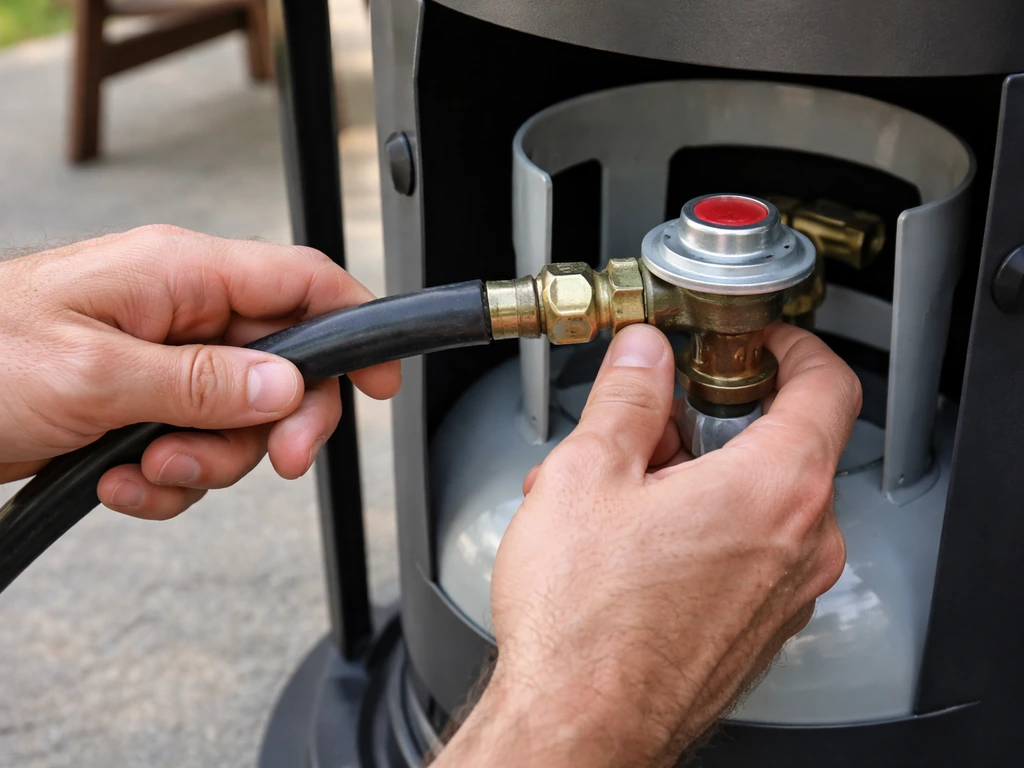
Before running a propane heater, check the regulator connection and hose for cracks or wear, verify the area has adequate ventilation (never use a patio propane heater in a fully enclosed space), and confirm you have the required clearance to overhead combustibles per the heater's installation manual. ReVerberRay’s Gas-Fired Patio Heater Design Guide includes a clearance-by-combustibles concept based on heater mounting angle, with table-based required clearances around the heater for common configurations blank" rel="noopener noreferrer">required clearance to overhead combustibles per the heater's installation manual. A 20-lb propane tank runs a 40,000 BTU/h heater for roughly 10 to 11 hours at full output, factor that into how many spare tanks you want on hand for a longer gathering. To estimate propane use, relate the heater's BTU rating to your burn time at the temperature setting you plan to run how much propane does a patio heater use.
Worked examples for common patio sizes
Small covered patio: 100 sq ft (10 x 10 ft)
This is a compact bistro setup or a small apartment balcony. One 1,500W wall-mounted electric infrared heater handles this comfortably under cover. If it's open to wind, bump to two units or use a single 40,000 BTU freestanding propane heater, which is overkill in size but gives you headroom to run it at half output. One heater, correctly placed and aimed, is the right answer here.
Medium deck: 200 sq ft (10 x 20 ft)
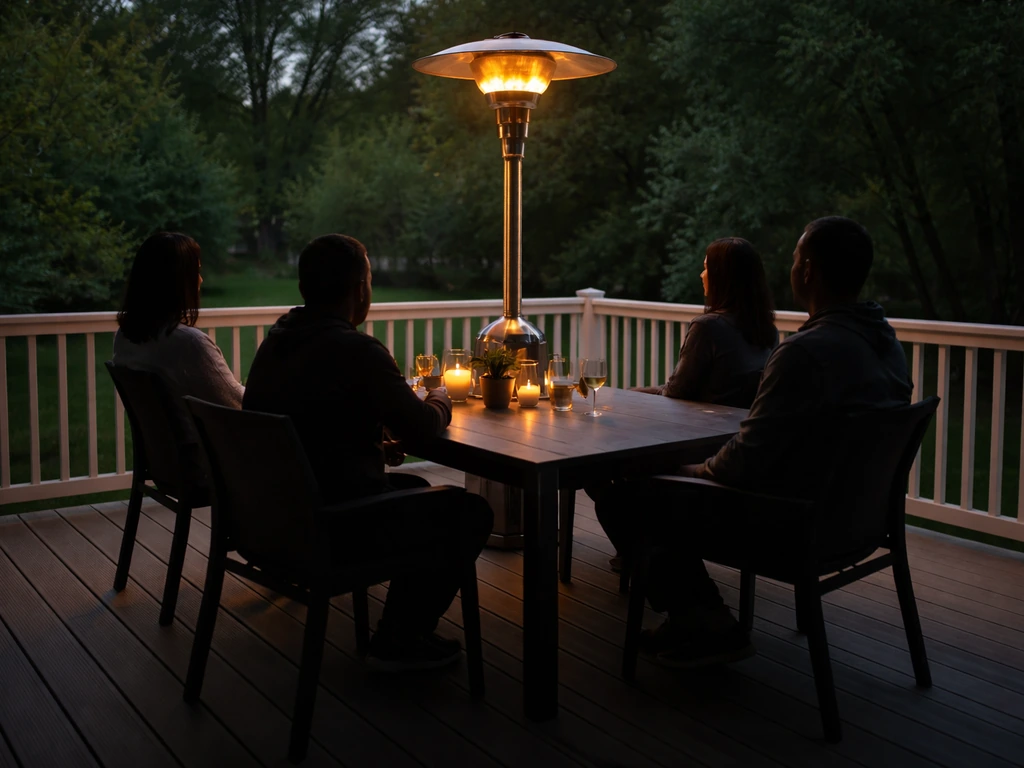
This is the most common residential scenario, a standard deck with a dining table and a few chairs. One 40,000 BTU freestanding propane heater centered near the table handles this under calm, covered conditions. For a fully open deck, use two freestanding heaters placed at opposite ends of the seating zone, or two 1,500W ceiling-mounted electric units if you have a pergola overhead. Two heaters also lets you run one at a time for lighter use evenings, which saves on propane.
Larger gathering space: 400 sq ft (20 x 20 ft)
At this size you're likely dealing with multiple seating zones, maybe a dining area and a lounge section. Baseline math says two 40,000 BTU propane heaters for a covered or semi-enclosed patio, or three if it's open. If you're using electric infrared at 1,500W per unit, you're looking at four units minimum, placed in a grid pattern so their coverage zones tile the space without gaps. For an open space with regular wind, three propane heaters plus a windbreak on the prevailing wind side is more effective than four heaters and no wind management.
Event or wedding use: 600+ sq ft
For larger-scale setups, the same math applies but placement strategy shifts. Perimeter heaters pushing warmth inward tend to work better than heaters clustered in the center of a big open space. Space heaters evenly around the perimeter, roughly every 15 to 20 feet, and plan for a higher heater count than the baseline math suggests, event spaces often have high turnover of outdoor air from people moving in and out. If this is a one-time event, renting heaters rather than buying makes more sense. Rental planning for gatherings involves some specific considerations worth looking at separately, as does the question of how many heaters a wedding-sized event typically needs. For a wedding, you’ll generally need more heaters than a standard patio setup because outdoor air turnover and wind can pull warmth away quickly how many heaters a wedding-sized event typically needs. If you're renting instead of buying, you'll also want to estimate the rental cost for the number of heaters you calculated how much to rent a patio heater.
Common mistakes and quick safety checks
These are the errors I see most often when people set up patio heaters, and they're easy to avoid once you know what to look for.
- Using maximum coverage numbers from the listing instead of effective coverage. A 40,000 BTU heater rated at 300 sq ft in marketing materials realistically heats 150 to 200 sq ft of occupied seating in real conditions. Use the lower number.
- Placing all heaters in the center of the space. Perimeter placement with heaters aimed inward usually distributes warmth more evenly and counters wind better.
- Mounting electric infrared heaters too low. Below 7 feet is a burn and clearance risk. Check your model's specific minimum mounting height and stick to it.
- Ignoring wind entirely when counting heaters. Wind is the biggest variable — one open side to prevailing wind can cut effective heating capacity in half. Add a windbreak before adding another heater.
- Running propane heaters in enclosed or semi-enclosed spaces without confirming ventilation. Even a well-covered patio with three sides closed needs enough air movement for safe combustion and exhaust gas dispersal.
- Not checking the regulator and hose before use, especially at the start of a season. Cracked hoses and faulty regulator connections are fire and leak hazards — do a quick soap-and-water leak check every season.
- Placing freestanding propane heaters on uneven surfaces. Tip-overs are a real fire risk. Most have a tilt-switch safety shutoff, but keeping the heater on a level, stable surface is the first line of defense.
- Thinking more heaters always solves the problem. In a drafty open space, the issue is airflow management, not heater count. Beyond a certain point, adding heaters won't help — fixing the shelter situation will.
One final practical step: before buying any heater, pull up the manufacturer's installation manual for that specific model and check the required clearances, mounting heights, and any coverage tables they publish. Real manufacturer specs are always more reliable than general rules of thumb, and they keep you on the right side of safe installation. If you're also thinking about how much propane you'll burn through or what BTU rating makes sense for your climate, those questions connect directly to how you choose between heater types and sizes once you have your count sorted out.
FAQ
Can I use patio heaters in a screened-in or partially enclosed patio?
Yes, but only when the heaters are designed to be ducted or shielded for that use. Most patio propane units must stay outdoors with adequate ventilation, and many electric outdoor heaters still require weather-safe mounting and clearance. If the space is enclosed or has only partial ventilation, treat it as unsafe and move the heater outside or add proper ventilation and clearance per the model’s manual.
What if my patio is windy, should I just increase BTUs or watts?
If you will be running in wind, start with a higher heater count than the baseline and, more importantly, plan a windbreak on the windward side. A common mistake is adding BTUs without blocking airflow, which leads to rapid heat loss and uneven comfort even if the math says you have enough heaters.
Should I calculate using the heater’s maximum coverage claim or its effective coverage?
Don’t rely on “maximum coverage.” Use the manufacturer’s effective coverage for the mounting style you’re using (freestanding versus wall or ceiling) and base your calculation on the lower end of their stated area range. This reduces the chance that you end up with cold pockets at seating height.
Can I use fewer patio heaters by turning them on in sections?
Yes, and it’s a practical way to reduce overspending. For electric infrared units, consider a layout that lets you turn off some heaters at a time, and for propane consider half-output or cycling between units. The key is to ensure your “active” zone still has overlapping coverage, not gaps between heaters.
Does the heater count change if my seating is only part of the patio?
If your coverage target is based on occupied square feet, then heaters should not be placed only where the heater is visible. Many people center a heater on the patio footprint, which can leave dining or lounge areas under-covered. Anchor the heater plan to the seating zones you measured (dining table area, lounge chairs, conversation circle).
Why does a wall-mounted electric heater seem to cover more than a freestanding one?
Wall and ceiling heaters can cover more efficiently because of geometry and aiming angle, but you still need to count based on coverage at seating height. Use the model’s provided coverage diagram or table, because the same wattage can behave very differently depending on mounting height and angle.
How should I measure patio size so I don’t overbuy heaters?
Most “how many do I need” mistakes come from mis-measuring area. Measure the actual footprint of the occupied seating zone, then add together rectangles for irregular shapes. Also note that umbrellas and large furniture can interrupt the line of sight for infrared warmth, effectively shrinking usable coverage if they block people from the heater.
How do I plan propane heater runtime for a full evening?
For propane, plan for multiple nights by budgeting tank swaps. A common planning shortcut is to estimate runtime at your intended setting, then add at least one spare tank for gatherings that may run longer than expected. If you’re hosting guests who may arrive early or stay late, oversupply the tanks rather than the heater output.
Can I plug multiple electric patio heaters into one circuit with extension cords?
Yes, but you need to follow the electrical and safety limits. For plug-in infrared heaters, use only manufacturer-approved outdoor-rated cords, keep cords protected from water and heat, and avoid overloading circuits. If you’re using hardwired or multiple units, confirm the breaker capacity and follow the installation instructions.
What placement mistakes cause cold spots even when I calculated the right number of heaters?
Start with a conservative placement plan: one heater centered around a conversation zone for small areas, or perimeter and opposite-wall placement for larger spaces. If you have two heaters, you generally want overlap in the middle rather than leaving an uncovered gap. If your patio has a dominant wind direction, place heaters to push warmth inward from the calmer side and manage the windward side.