
Renting a standard propane patio heater (the tall mushroom-style, 40,000-48,000 BTU units you see at restaurants and outdoor events) runs roughly $75 to $95 per day, $260 per week, or around $500 per month, depending on your location and the rental company. Add a delivery fee of $120 to $250 or more round trip, a possible propane tank add-on of $24 to $35, and a deposit due at signing, and your all-in cost for a single-day event rental often lands between $150 and $350 for one heater. Sunny Side Party Rentals notes that a full propane tank may not be included by default, but it can be rented for $35 a possible propane tank add-on of $24 to $35. Here is how to break that down, what moves the price, and how to get an accurate quote in minutes.
How Much to Rent a Patio Heater Cost Today

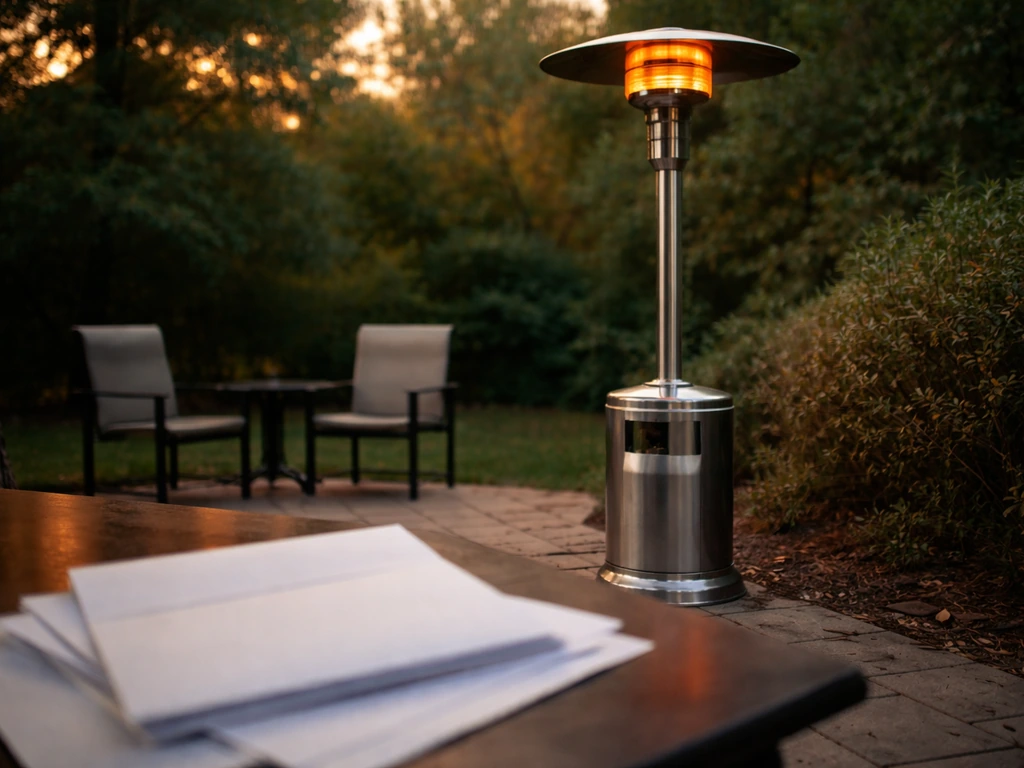
Typical rental price ranges and rate structures
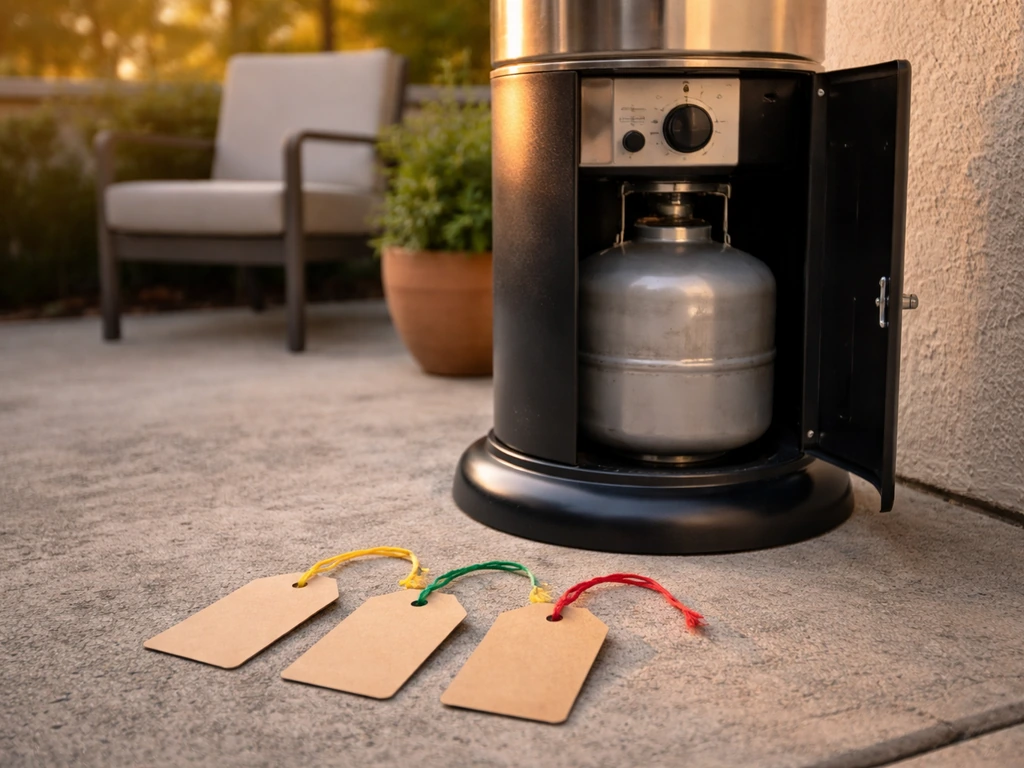
Most rental companies price patio heaters in three buckets: daily, weekly, and monthly. The per-day rate is almost always the most expensive on a per-day basis, so if you need a heater for more than three or four days, moving to a weekly rate saves real money. Some event-focused rental shops skip traditional day rates entirely and price by event length, usually in up-to-8-hour or up-to-24-hour blocks.
| Heater Type / BTU | Daily Rate | Weekly Rate | Monthly Rate | Notes |
|---|---|---|---|---|
| Propane mushroom, 40,000 BTU | $95 | $260 | $510 | Chicago-area example (Buttrey Rental) |
| Propane radiant, 48,000 BTU | $75 | Not listed | Not listed | El Paso example; covers ~18 ft diameter |
| Propane, 40,000 BTU glass tube (8 ft tall) | $192.50 for 3 days | $312 for 3 days (extended) | Varies | Atlanta Party Rentals 2026 price list |
| Tabletop quartz electric, 10,000 BTU | $44.31 | $90.95 | $655.29 | Smaller/electric units use different tiers |
| Event block pricing (up to 8 hours) | Varies by vendor | N/A | N/A | Full propane tank often included |
The spread is real. A $75/day heater in El Paso is not the same product as a $192.50 three-day rental in Atlanta, even though both run around 40,000-48,000 BTU. Regional demand, vendor overhead, and whether delivery is bundled all pull the price in different directions. Always compare apples to apples: make sure the quoted rate is the heater only, and that you know what fuel, delivery, and deposit look like separately.
What drives patio heater rental cost
BTU output and heater size
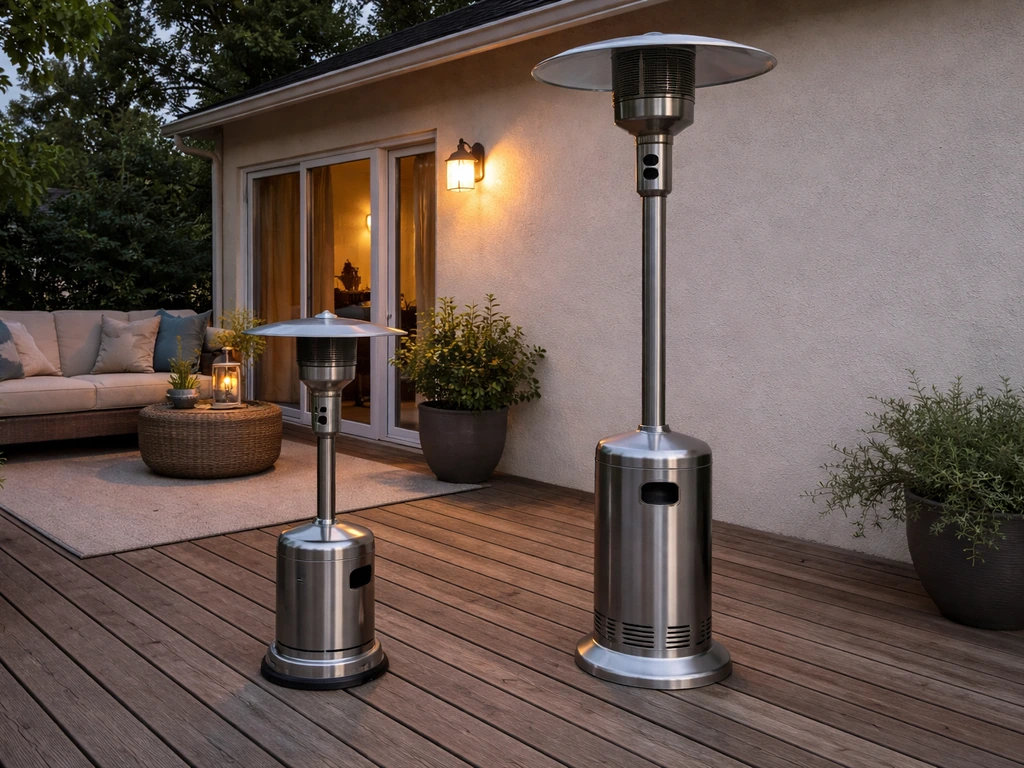
BTU capacity is the most direct pricing lever. To estimate BTU needs for your patio, figure out your space size and typical heat loss so you pick the right BTU capacity for the job. Vendors catalog heaters as separate SKUs by output: a 40,000 BTU unit and a 48,000 BTU unit are listed at different price points, and a 10,000 BTU tabletop quartz unit is priced in a completely different tier. The 48,000 BTU radiant unit at El Paso Tool Rental, for example, is quoted at $75/day and listed with a specific coverage radius of up to 18 feet. Is a 48,000 BTU patio heater good for your space depends on your patio size, ceiling height, wind exposure, and how much heating you need is 48000 btu good for patio heater. If you are trying to figure out how many heaters you actually need for your space, coverage area matters as much as the BTU number itself.
Fuel type: propane vs. electric/quartz
Propane and electric heaters are essentially separate product categories in the rental world, and they price differently. Most tall freestanding rentals are propane because they need no electrical hookup, which makes them flexible for outdoor events. Electric and quartz models (like the 10,000 BTU tabletop unit from Ambridge Home Center at $44.31/day) are cheaper to rent but require an outlet, limit where you can place them, and put out less heat. If your venue has no outdoor power access, propane is almost always the rental option anyway.
Rental length
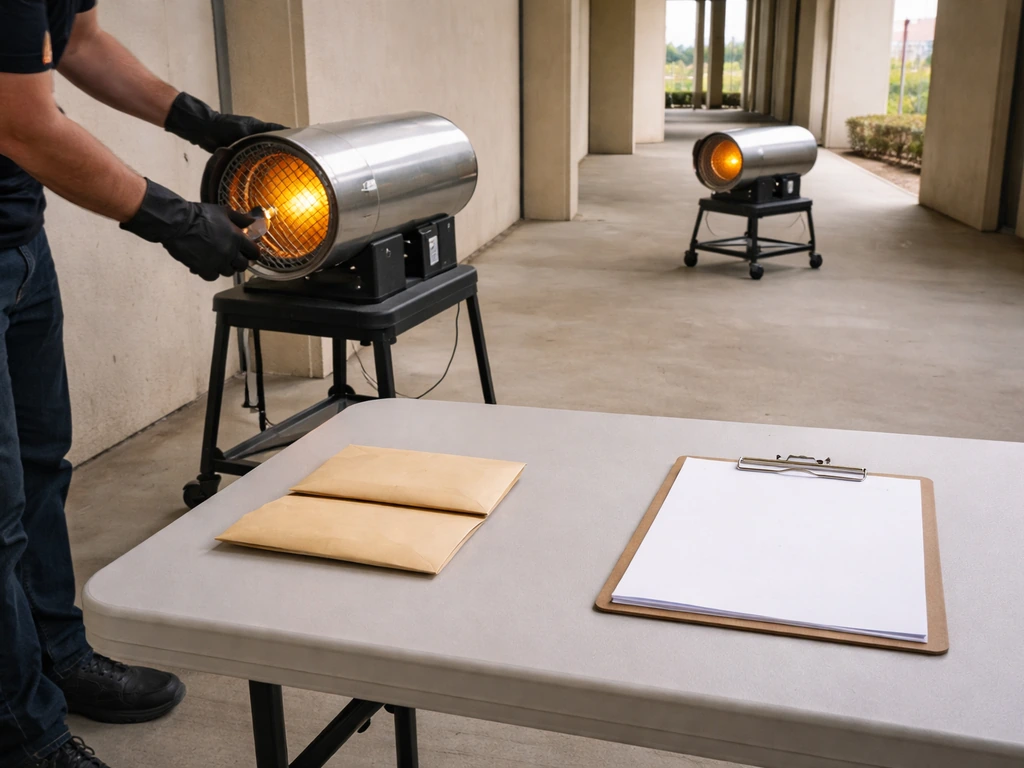
Rental duration has an outsized effect on cost per day. A 40,000 BTU unit at $95/day drops to an effective $37/day on a monthly contract ($510/month). If you are heating a covered patio weekly through fall, renting monthly is far cheaper than stringing together day rentals. Event rental shops often have a minimum rental period (commonly the event day block), and some charge a flat rate for up to 8 hours regardless of whether you use the heater for 2 hours or the full shift.
Season and demand
Pricing and availability both tighten in late fall through early spring in colder climates, which is exactly when demand spikes. If you are planning an outdoor event in October or November, get quotes and reserve early. Some vendors have surcharge pricing or limited inventory during peak demand windows. Conversely, renting in summer in a cold-climate market can get you better rates or easier availability.
Number of units
Renting multiple heaters at once often unlocks better per-unit pricing, especially from party rental companies that handle large event orders. Once you know your guest count and the outdoor space size, you can estimate how many patio heaters you need for a wedding how many patio heaters do i need for wedding. It is worth asking directly whether a multi-unit discount applies. On the flip side, if you are ordering just one heater and delivery is charged separately, a single unit can carry a high effective cost once the round-trip delivery fee is factored in.
Additional fees to expect

- Delivery and pickup (round trip): Budget $120 to $250 as a baseline. Sierra Rental Company states a minimum of $120 round trip for a local radius. Atlanta Party Rentals starts delivery at $250 and goes up with distance. If your venue is far from the rental shop or has difficult access (stairs, loading docks, unusual locations), expect more.
- Propane tank add-on: Some vendors include a full tank with the heater (especially event shops pricing by the 8-hour block). Others charge separately. Sunnyside Party Rentals charges $35 for a tank add-on. Dallas Patio Heater Rentals includes a 20 lb tank but sells a second tank for $24. A 20 lb tank typically runs a 40,000-48,000 BTU heater for around 6 hours, so plan accordingly for longer events.
- Security deposit: Most vendors collect a deposit at signing or on delivery. Party Perfect Event Rental, for example, requires a 50% non-refundable deposit to reserve. J&R Party Rentals collects a deposit on contract signature. Some deposits are refundable on return; some are not. Read the contract.
- Non-refundable charges after delivery/setup: Several rental contracts include clauses that once equipment is delivered and set up, charges become non-refundable even if weather prevents use. J&R Party Rentals specifically notes this for weather-related cancellations post-setup.
- Accessory fees: Covers, hoses, regulators, or extra tanks may be billed separately. Ask upfront.
- Cartage or access surcharges: Party Perfect Event Rental includes language about extra cartage fees for delivery above or below ground level. If your venue has unusual access, flag it when you call.
How to get an accurate quote in minutes
Most rental companies can quote you over the phone or through an online form in under five minutes if you come prepared. The more specific you are, the faster and more accurate the quote will be. Have these answers ready before you call: Most propane patio heaters list fuel consumption in terms of BTU output, so you can estimate how much propane they use per hour how to get an accurate quote in minutes.
- How many heaters do you need, and what size space are you trying to heat? (Coverage area drives BTU tier selection. A 48,000 BTU unit covers roughly an 18-foot diameter; plan from there.)
- What is your rental period? Single day, multi-day, weekly, or monthly?
- What is your event date or start date? This affects availability, especially in peak fall/winter season.
- Do you need delivery, or can you pick up? If delivery: what is the venue address, and are there any access restrictions like stairs, gates, or loading dock requirements?
- Does the quote include propane, or is fuel an add-on? How long is your event? (If it runs longer than 6 hours, you likely need a second tank.)
- What is the deposit structure, and is it refundable if conditions change before setup?
- What happens if the heater does not ignite or will not stay lit after delivery? Does the vendor have a replacement or on-call troubleshooting service, or is the renter expected to handle basic diagnostics?
- Are there any safety instructions included with the unit, and will someone walk you through the hookup on delivery?
That last question matters more than it sounds. A good rental company will walk you through the light-up sequence and confirm the regulator is properly connected before they leave. If they just drop the unit and go, you need to know what to check yourself.
Rental vs. buying: when renting is actually the cheaper choice
Buying a quality 40,000-48,000 BTU propane patio heater runs $150 to $400 at retail. On paper, if you are renting at $75-$95/day, you could own the heater after two or three uses. But that math only holds if you factor in what you actually need. To choose the right patio heater size for your space, start by matching the heater’s BTU output and heat coverage radius to your patio’s dimensions and how sheltered or drafty it is what size patio heater do i need. Here is a straightforward way to think about it:
| Situation | Better Choice | Why |
|---|---|---|
| One-time event (wedding, party, single gathering) | Rent | No storage, no maintenance, no upfront capital. Delivery included. |
| 2-4 events per year | Rent or buy (close call) | At $95/day plus delivery, costs approach ownership price within a season. Buying wins if you have storage. |
| Ongoing use through fall/winter season | Buy or monthly rental | A $510/month rental vs. a $250 owned heater plus propane tips toward ownership quickly. |
| You already own a heater that needs repair | Repair and keep | A thermocouple or regulator fix is typically $10-$40 in parts. Far cheaper than renting long-term. |
| Uncertain how often you will use it | Rent first | Rent once to confirm you actually use the heater, then buy if it becomes a habit. |
If you already own a patio heater that has been sitting in storage with ignition problems or a won't-stay-lit issue, repairing it almost always beats renting. A faulty thermocouple (one of the most common causes of a heater that lights but immediately shuts off) typically costs under $20 to replace yourself. Paying $75-$95 per day to rent while a repairable unit sits in the garage is money wasted.
Before you use a rental heater: safety checks that prevent real problems
Whether you are renting or borrowing a heater, doing a quick pre-use inspection takes about three minutes and can prevent the most common problems: a heater that will not ignite, one that lights and immediately shuts off, or one that creates a safety hazard. Do not assume a rental unit is problem-free just because it came from a vendor.
Check placement and level surface first
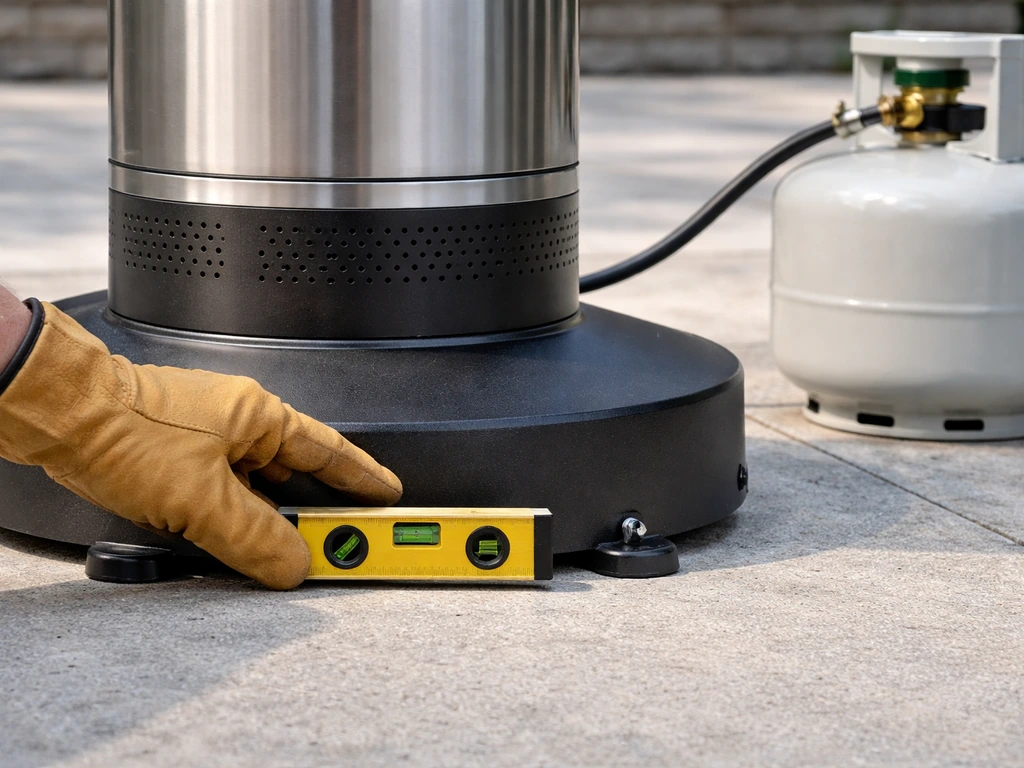
Place the heater on a firm, level surface before connecting anything. Most freestanding propane heaters have a built-in tilt switch that shuts off gas flow if the unit leans past a certain angle. If the heater is sitting on uneven ground or a soft surface, a sensitive tilt switch can trigger a shutoff even when the heater is technically upright. If your unit lights and immediately goes out with no obvious fuel issue, check that the surface is truly level.
Connect the propane tank correctly
Thread the fuel line onto the propane tank valve and hand-tighten, then give it one quarter-turn snug with a wrench. Do not overtighten. Open the tank valve slowly, one full turn. Before igniting, apply soapy water to the regulator connection and hose, and watch for bubbles. Any bubbling means a leak: shut the tank off immediately, disconnect, re-seat the connection, and recheck before proceeding. This is not optional.
If it will not stay lit after ignition
If the heater lights but goes out within a few seconds, the most common culprits on a rental unit are low gas pressure (check the tank level first), a regulator that has gone into safety lockout mode (caused by opening the tank valve too fast), or a thermocouple that is worn out. For a lockout, close the tank valve, disconnect the regulator, wait 30 seconds, reconnect, and open the valve slowly. If the problem persists after two tries, contact the rental company. Thermocouple failure on a rental unit is their responsibility to resolve, not yours. You should not attempt to replace components on rented equipment. Also check that no wind is blowing directly into the burner head: many manufacturers specify not to operate in winds above 10-15 mph, and a gust can trip the safety system just as reliably as a bad thermocouple.
What to tell the rental company when something is wrong
When you call with an issue, be specific: tell them whether the heater will not ignite at all, whether it ignites and immediately shuts off, or whether it lights and stays lit but produces low heat output. Each symptom points to a different root cause (igniter, thermocouple/tilt switch, or regulator/hose restriction), and giving the right description gets you faster help. A rental company with good inventory should be able to swap a faulty unit on the same day, especially for an event in progress. Get that commitment in writing when you book.
FAQ
Is the $75 to $95 per day price the full price, or are there big add-ons I should expect?
In most quotes, the daily rate covers the heater only. Delivery, pickup, a refundable deposit, and propane (or an outlet for electric units) are commonly separate line items. Ask the company for an all-in total that includes round-trip delivery and fuel so you can compare vendors apples to apples.
What’s the cheapest rental option if my event lasts only a few hours?
Many vendors bundle pricing into an event block (often up to 8 hours) rather than charging by the clock. If your heater is only needed for a short window, confirm whether your rental day includes up to the event-length block, and avoid booking a second day just to cover setup and cleanup unless the vendor requires it.
Do I save money by renting a smaller BTU heater instead of the 48,000 BTU model?
Yes, if it matches your patio coverage. The rental price often rises with output, so oversizing can waste money. The better decision is to compare the quoted coverage radius or zone for that specific model and factor wind exposure, because a “bigger BTU” unit may still underperform in gusty conditions.
Can I use a propane patio heater on a covered porch or under a pergola?
You may, but you must confirm clearances and ventilation requirements for that specific model. Covered spaces can increase heat and exhaust buildup, and wind patterns under structures can still trip safety systems. Ask the rental shop whether the unit is rated for your mounting or placement type (open patio vs semi-enclosed).
What happens if my propane runs out early, do rental companies deliver more mid-event?
Some vendors can swap tanks or bring extra propane, but it is not guaranteed and can add a rush fee. Ask whether refills are available, the pricing for additional fuel, and how quickly they can respond if the event runs longer than planned.
Is electric ever a good deal compared to propane for renting?
Electric can be cheaper per day, but it only works if you have a suitable outdoor outlet and you can place the heater safely within the cord reach. If your patio needs an extension cord, confirm it is allowed for that model and that the power capacity is adequate, otherwise propane is usually the practical rental choice.
How many patio heaters do I need if my patio is partially sheltered?
Partially sheltered patios often need fewer units than fully open areas, but you still need to plan for heat loss through drafts and gaps. Use your patio size plus how windy the area is, then ask the vendor whether they recommend one heater per certain coverage footprint for that BTU model in similar conditions.
Do rental companies charge extra if I pick up instead of delivery?
Sometimes pickup can reduce the round-trip delivery fee, but not always, because some companies still charge a handling fee for pickup orders. If the heater is propane, ensure they provide the correct regulator and tank connection items for self-setup, and confirm who is responsible for tank exchange and returns.
How early should I reserve if I’m renting in fall or winter?
Reserve as early as possible, especially for late October through early spring in colder climates, because inventory tightens when demand spikes. Ask whether the vendor can lock your price and availability, and whether surcharges apply during peak weeks.
What’s the best way to request a quote so you get the correct price the first time?
Provide the rental dates, the expected usage window (setup and operating hours), your patio size, and whether you have power available. Also ask the vendor to itemize heater cost, delivery and pickup, deposit, propane or fuel charges, and any minimum rental period so the quote is “all-in,” not just the daily rate.
If a rental heater won’t stay lit, should I troubleshoot or ask for an immediate swap?
Start with basic safety checks (level surface, proper tank connection, and leak check), but if it still ignites and immediately shuts off, request a replacement rather than attempting repairs. Rented units typically should not have component swaps performed by the customer, and a good vendor may swap the heater same day for events in progress.
Are there extra costs or responsibilities when multiple heaters are needed for one event?
Multi-unit orders often qualify for better per-unit pricing, but you may still pay separate delivery, setup, or fuel charges depending on the vendor. Ask whether they deliver and stage multiple heaters on the same route, whether they provide a single combined tank strategy, and how they handle returns if some units are swapped.