For most patios, you need roughly 20 BTUs per square foot of space you want to heat. A 200 sq ft patio needs about a 40,000 BTU propane or gas heater, which also happens to be the most common size sold. But that rule has real limits outdoors, and the right size for your space depends on more than just square footage. Wind exposure, ceiling height, whether your patio is covered or open, and where you actually position the heater all change the math significantly.
What Size Patio Heater Do I Need? BTU and Coverage Guide

Grant Mercer
13 Jun 2026
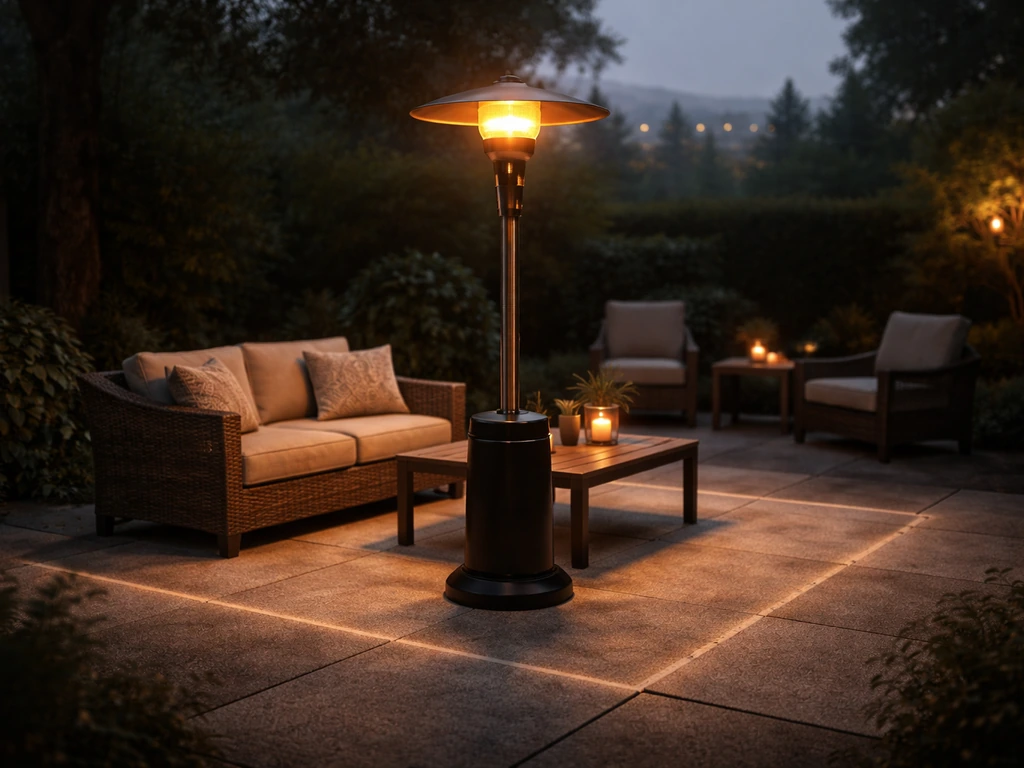
Sizing patio heaters by area and heat output
The 20 BTU-per-square-foot rule comes from Lowe's and a handful of other retailers, and it works well enough as a starting estimate for covered patios with some wind protection. A standard 40,000 BTU mushroom-style propane heater covers roughly a 20-foot diameter circle, which is about 314 square feet. That's the sweet spot for a typical backyard patio or restaurant deck with moderate conditions.
Where it breaks down is on open, exposed patios. Radiant heaters don't warm the air the way a furnace does. They warm people and surfaces directly, which is actually more efficient in calm conditions. But once wind picks up above 5 mph, that radiant warmth gets stripped away from skin and surfaces. A heater rated for 300 sq ft in a calm showroom might only feel comfortable across 150 sq ft on a breezy patio.
| Patio Size (sq ft) | Minimum BTU (calm/covered) | Recommended BTU (exposed/windy) |
|---|---|---|
| 100 | 20,000 | 30,000–40,000 |
| 200 | 40,000 | 46,000–50,000 |
| 300 | 60,000 | Two 40,000 BTU units |
| 400+ | 80,000+ | Multiple heaters recommended |
If you're not sure whether to round up or down, round up. Undersizing is by far the most common complaint. A heater running flat-out all evening to barely keep guests warm isn't sized right for the job.
Choosing the right BTU range for your patio type
Not every patio needs a 40,000 BTU tower heater. Here's how to match output to your situation.
Small covered patio (under 150 sq ft)
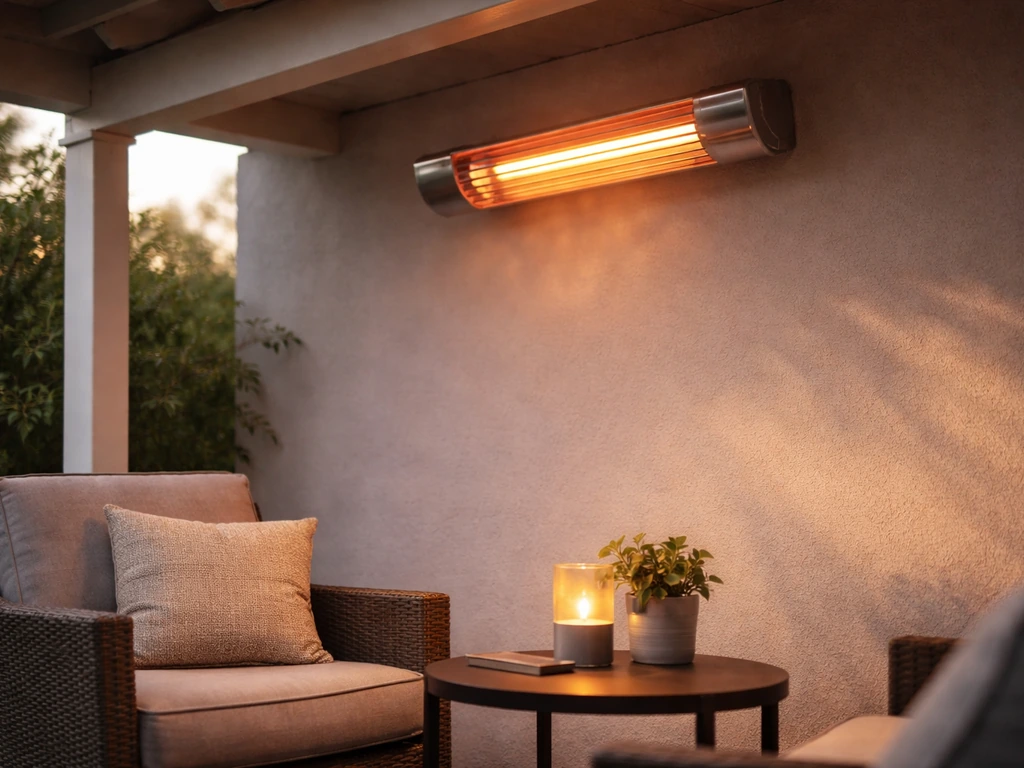
A 25,000–35,000 BTU heater is plenty here. At this size, you're mostly keeping 2–4 people comfortable on a cool evening, not battling wind. An electric infrared wall-mount in the 1,500–2,000 watt range (roughly 5,000–7,000 BTU equivalent) can handle this easily if you have power access.
Mid-size open patio (150–300 sq ft)
This is where the standard 40,000–46,000 BTU propane tower heater lives. If you also need to estimate fuel costs, you can calculate propane consumption based on the heater's BTU rating and burn time how much propane does a patio heater use. One heater handles this well in still air. Add wind, and you want to either go to 48,000 BTU, use a windbreak, or plan for two smaller units placed strategically rather than one large one. In practice, whether 48,000 BTU is good depends on patio size plus wind and seating layout, not just the heater’s rating.
Large or open entertaining space (300–500 sq ft)
Home Depot suggests one heater can heat 1,500–2,000 sq ft of covered space, but that's a best-case scenario for a well-enclosed structure. For a typical open patio in this range, plan for multiple heaters. Two 40,000 BTU units placed at opposite ends of the space will outperform a single 80,000 BTU unit every time because you're eliminating cold zones, not just raising the average temperature.
Gas vs electric vs propane heater coverage differences
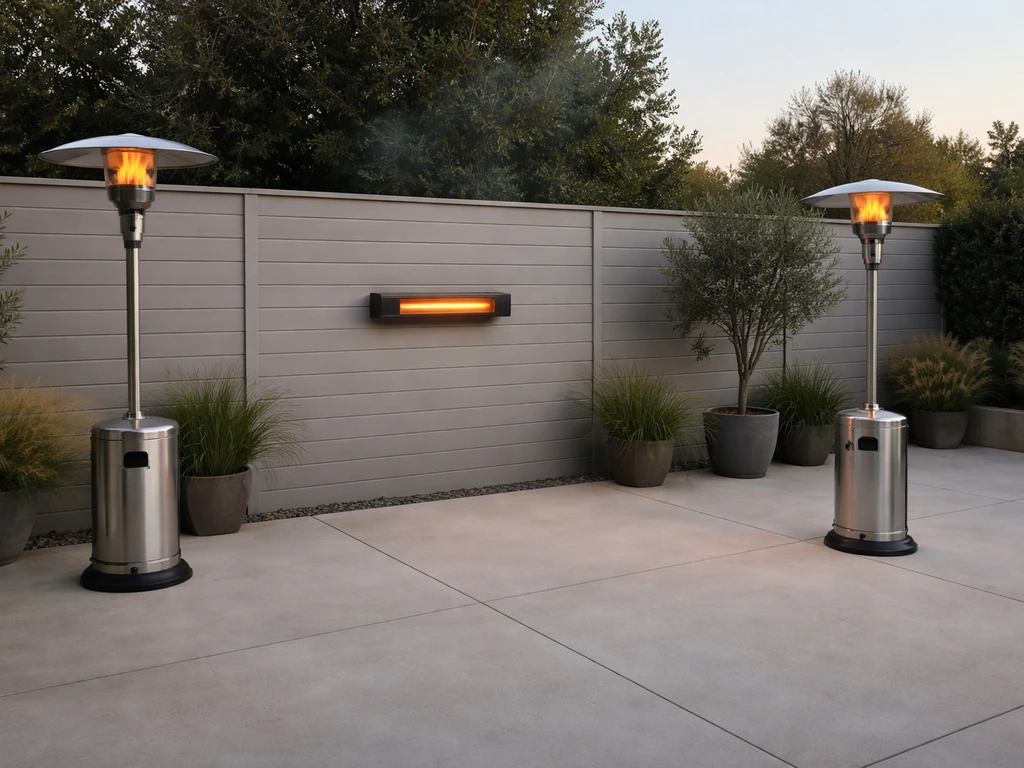
The fuel type affects more than just coverage. It affects where you can put the heater, how quickly it warms up, and how well it handles wind.
| Heater Type | Typical Output | Coverage (calm) | Wind Resistance | Best For |
|---|---|---|---|---|
| Propane freestanding | 30,000–48,000 BTU | 150–300 sq ft | Poor to moderate | Open patios, portability |
| Natural gas fixed mount | 25,000–50,000 BTU | 150–300 sq ft | Moderate | Permanent covered patios |
| Electric infrared (overhead) | 1,000–4,000W (~3,400–13,600 BTU) | 65–160 sq ft per unit | Good (radiant, overhead) | Covered areas, lower ceilings |
| Electric freestanding | 1,500–2,000W (~5,100–6,800 BTU) | 50–100 sq ft | Poor | Small spaces, balconies |
Electric overhead infrared heaters like the Bromic Tungsten Smart-Heat Electric cover 65–160 sq ft depending on bracket angle and positioning. That sounds small, but because they're mounted directly overhead and aimed at seating, that coverage is dense and effective. A 1,500W unit over a dining table feels warmer than a 40,000 BTU tower heater parked 10 feet away in a breeze.
Natural gas heaters are best for permanent installations. They have the same BTU output as propane but you don't have to swap tanks. The tradeoff is installation cost and the need to run a gas line. For covered patios where you're building a permanent outdoor living space, natural gas is hard to beat. For a portable setup you'll move around, propane wins.
How heater placement affects effective warmth
Placement matters as much as BTU rating. A common mistake is centering one large heater in the middle of the patio and expecting even warmth everywhere. Radiant heat travels in a cone from the emitter, and people sitting at the edges of that cone get much less heat than those directly underneath.
SunStar's sizing guidelines specifically recommend placing heaters at the points of greatest heat loss, which usually means the perimeter and corners of a covered space, not the center. For a freestanding propane tower, position it at the edge of your seating group, not in the center of the patio. The heat head radiates outward and downward, so guests on the outer ring still get warmth, but the heater isn't wasting output on empty concrete behind it.
- Freestanding tower heaters: place at the upwind edge of your seating area so heat radiates across guests rather than blowing away
- Overhead mounted heaters: position directly above seating, not walkways or open space
- Multiple heaters: distribute them around the perimeter rather than clustering them together
- Wall-mounted heaters: aim at a 30–45 degree downward angle toward seating, not parallel to the ground
The Infratech installation guidelines specify a minimum installation height of 8 feet above finished floor for their overhead units. That's not just a safety number. Height directly affects heat spread. Mount it too low and you get intense heat in a tight spot. Mount it at the correct height and coverage spreads out properly across a seating group.
Sizing for wind, insulation, ceiling height, and seating layout
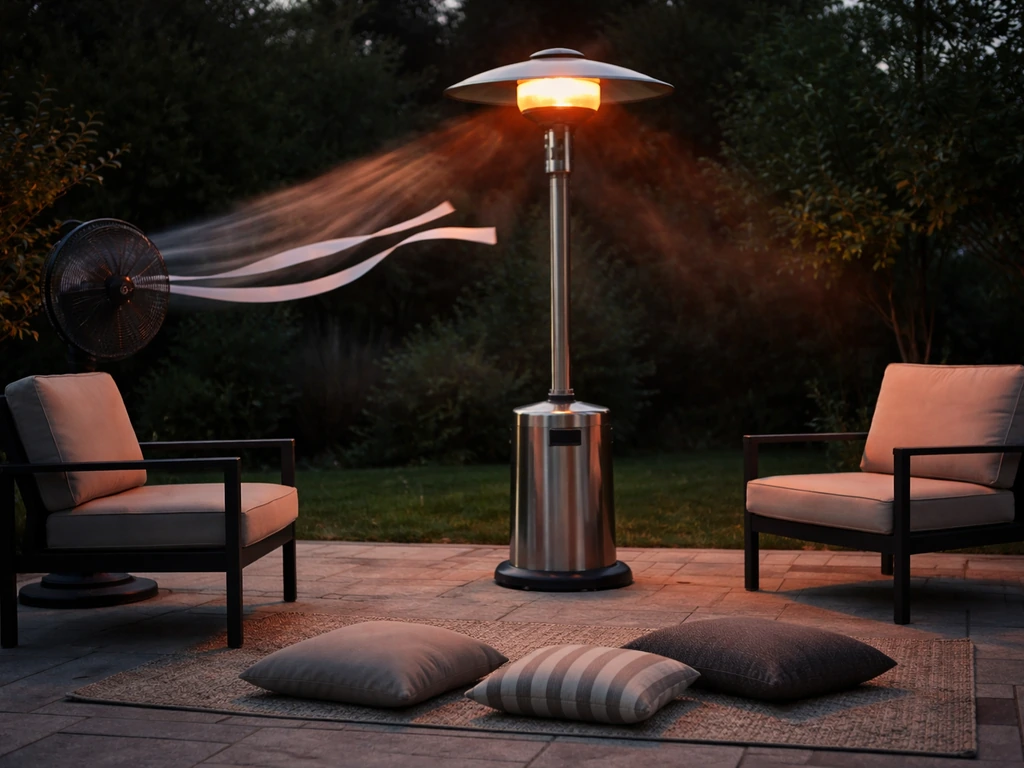
Wind is the single biggest variable
Most manufacturer coverage claims are measured in still air. The Patio-Pal manual is unusually honest about this: it states that effective infrared surface temperature on a person can be diminished by wind above 5 mph. The Dyna-Glo manual lists 10 mph as the operating wind speed limit. If you're on a coastal property, an elevated deck, or an open backyard that catches a regular evening breeze, cut your heater's effective coverage in half and size accordingly. A windbreak, lattice, or even a row of tall planters makes a measurable difference. SunStar's quick start manual also recommends using a suitable windbreak to reduce direct wind effects, consistent with this sizing approach.
Ceiling height and covered vs open spaces
A covered patio with an 8-foot ceiling retains heat better than a pergola with open slats, which in turn beats a fully open patio. Higher ceilings mean heat rises and dissipates before reaching guests at ground level. If you're working with a 10–12 foot ceiling, add 20–30% more BTU capacity compared to an 8-foot ceiling. A fully open patio with no roof should be treated like the windy-condition case above.
Seating layout and density
A tightly grouped seating area of 8 people is easier to heat than 8 people spread across a 400 sq ft patio. When you're sizing, think about the seating footprint you're actually trying to warm, not the entire patio square footage. If your dining table occupies a 10x12 ft space, a well-placed 40,000 BTU heater may be perfect even if the total patio is twice that size. This also affects how many heaters you need, which is worth thinking through carefully before buying. Before you finalize the purchase, confirm the total patio size, wind exposure, and seating layout so you know how many patio heaters you need how many patio heaters do i need.
Safety checks and common buying mistakes when sizing
Clearance requirements you can't ignore
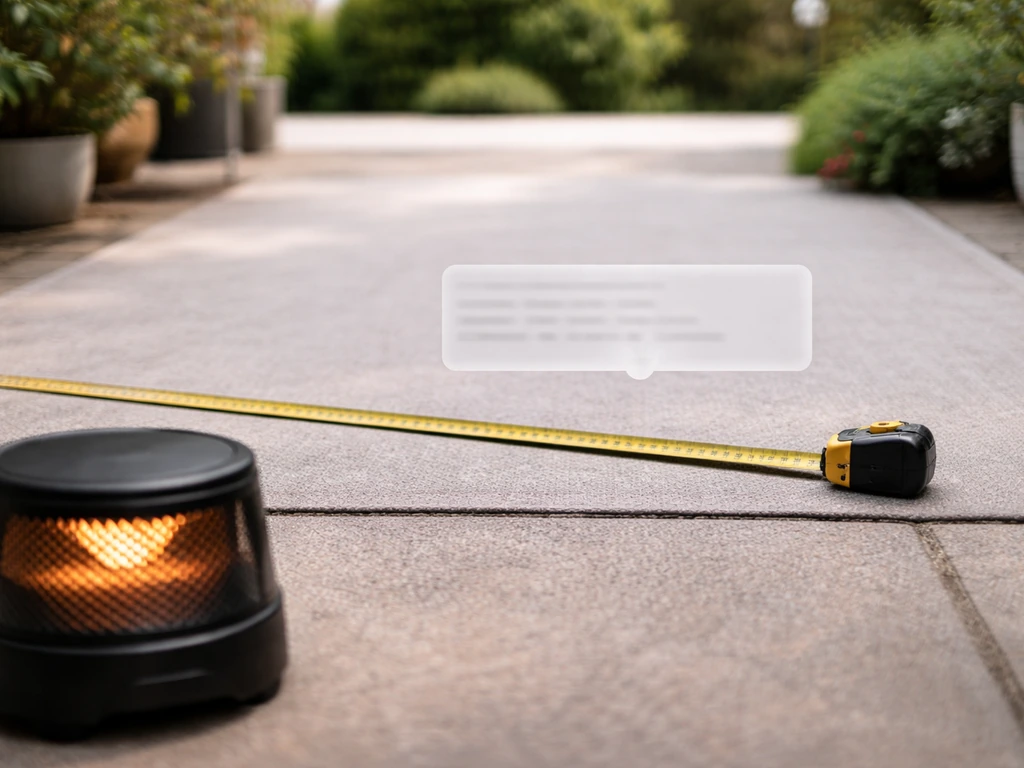
Every gas patio heater manual specifies minimum clearances from combustible materials. The Patio Comfort manual calls for at least 24 inches in all directions from combustibles. The PH-F122 manual lists 24 inches from the sides as a minimum, referencing Z83.26/CSA 2.37 safety standards. Before you buy, measure your intended spot. If you're planning to put a tower heater under a low pergola with wood beams overhead, check the top clearance against the manufacturer spec. This isn't optional and it's one of the most commonly skipped steps.
Common sizing mistakes
- Buying a single large heater for a long, narrow patio: the ends stay cold regardless of BTU rating
- Using indoor BTU calculations for an outdoor space: radiant outdoor heaters work differently and the 20 BTU/sq ft rule is a rough outdoor-adapted estimate, not a precise formula
- Ignoring fuel availability: natural gas heaters need a gas line; if you don't have one, a propane unit is your real choice
- Overlooking mounting constraints: wall-mount and overhead electric units need structural support and often wiring; freestanding propane units need stable, hard, non-combustible ground (per Dyna-Glo's manual)
- Buying based on BTU alone without checking coverage radius claims: a 40,000 BTU heater can have very different reflector designs that produce wildly different effective coverage areas
- Assuming one heater is always enough: for anything over 300 sq ft or with wind exposure, two heaters almost always perform better than one
Ventilation for gas and propane units
Propane and natural gas heaters produce combustion byproducts. Outdoor freestanding units are designed to be used in open or semi-open spaces with natural ventilation. Never use a propane patio heater inside an enclosed space or garage. For semi-enclosed patios with solid walls on multiple sides, make sure there are adequate openings for airflow. USDA guidelines for portable propane heaters specify ventilation openings on opposite walls with a minimum free area of 24 square inches per opening. If your covered patio is more enclosed than open, check this against your heater's manual.
Quick calculator-style steps and example scenarios
Here's how to size your heater in four steps.
- Measure your seating area in square feet (length x width of the zone you want heated, not the entire patio)
- Multiply by 20 BTU to get your baseline: a 15x15 ft seating area = 225 sq ft x 20 = 4,500 BTU/hr... wait, that's too low for a gas heater. This is where the indoor rule breaks down outdoors. For an open patio, use 40 BTU per sq ft instead: 225 x 40 = 9,000 BTU/hr minimum, but gas heaters start at 25,000+ BTU, so a single unit comfortably handles this.
- Adjust for wind: if you're on an exposed property or regularly experience breezes above 5 mph, multiply your BTU need by 1.5
- Adjust for ceiling height: if your covered patio ceiling is above 9 feet, add 20%; if fully open, treat as the windy-condition case
Example 1: Covered 200 sq ft patio, calm conditions, 8 ft ceiling
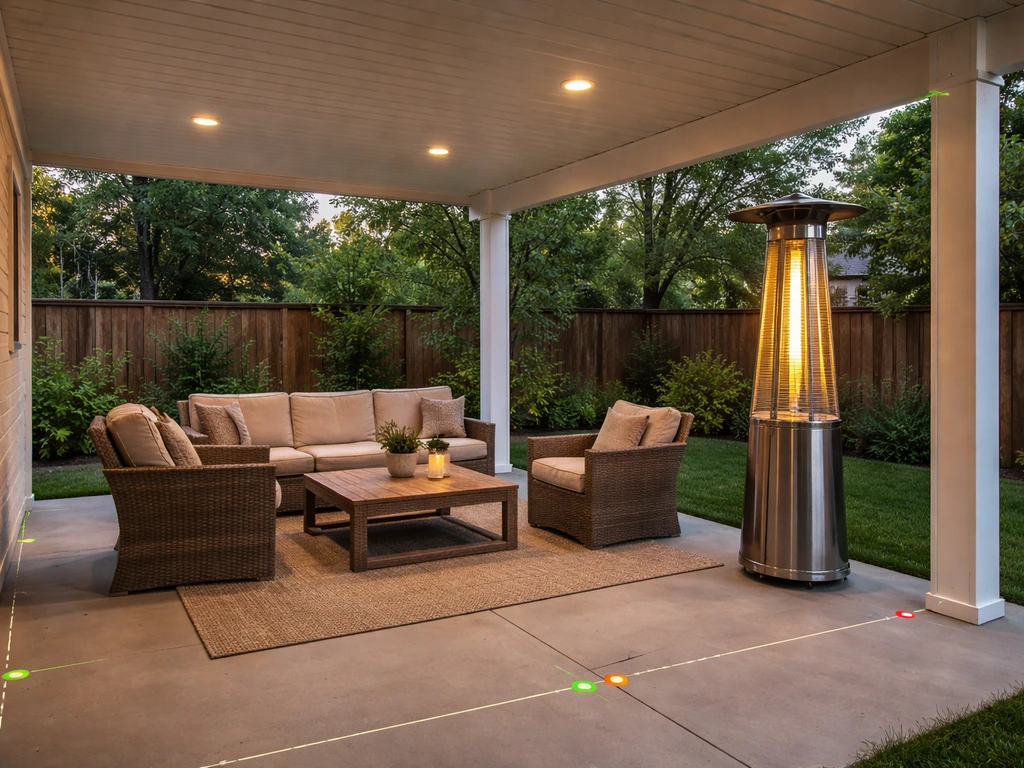
200 sq ft x 20 BTU = 4,000 BTU minimum. Outdoors, round up to a 25,000–40,000 BTU gas or propane heater. One standard 40,000 BTU tower heater is the right call here. If you are renting instead of buying, the best way to estimate cost is to choose the right BTU and fuel type for your patio size and conditions first how much to rent a patio heater. An overhead electric infrared unit at 2,000W (about 6,800 BTU) is enough if the patio is enclosed and calm, but go with two units for margin.
Example 2: Open 300 sq ft deck, regular evening breeze
300 sq ft x 40 BTU (open patio factor) = 12,000 BTU baseline, then x1.5 for wind = 18,000 BTU minimum effective output. But because wind disrupts radiant comfort regardless of BTU, the better solution is two 30,000–40,000 BTU heaters positioned at the upwind edges of the seating group rather than one 48,000 BTU unit in the center.
Example 3: Small 100 sq ft balcony, electric only
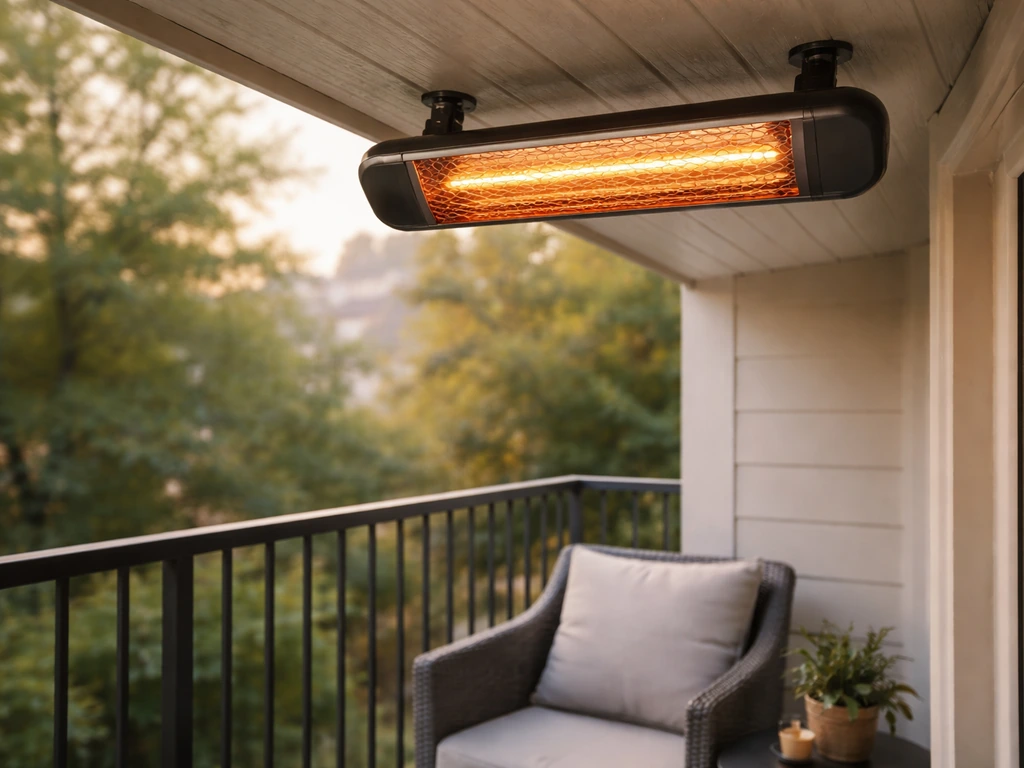
100 sq ft of balcony with a wall you can mount to is a perfect match for a 1,500–2,000W overhead electric infrared heater. No gas line needed, no propane tank, no stability concerns. Mount it at 8 feet or per manufacturer spec, aim it at the seating area, and you're done. The Bromic Tungsten-style units cover up to 130–160 sq ft adjusted via bracket angle, which fits this scenario exactly.
Maintenance and tuning tips to get the heat you paid for
Buying the right size heater is only half the job. A poorly maintained heater underdelivers on heat output, and then you're convinced you undersized when the real problem is a dirty burner or a weak regulator. Here's what to check after you buy and every season after that.
Gas and propane units
The venturi tube is the most commonly neglected part of a propane patio heater. It's the air intake tube that mixes air with gas before combustion. Spiders and insects love to nest in it during storage, and even a partial blockage causes a weak, yellow flame that puts out a fraction of rated heat. The AZ Patio Heaters care guide recommends cleaning the venturi tube with a pipe cleaner or compressed air at least once a year. If your heater is putting out an orange or yellow flame instead of blue, check this first.
The regulator is the other common culprit. The Patio-Pal installation, operation and maintenance manual provides operational maintenance steps, including cleaning the venturi tubes and adjusting the main valve or regulator as specified blank" rel="noopener noreferrer">adjusting the main valve/regulator as specified. If your heater fires up but never reaches full output, the regulator may be stuck in bypass mode (a safety feature that trips when the valve is opened too fast). Fix: turn everything completely off, wait 30 seconds, then open the propane tank valve slowly before pressing the igniter. The thermocouple is part of the safety shutoff system: if the pilot lights but the main burner won't stay on, the thermocouple isn't sensing the flame properly. It's a DIY-replaceable part on most units, and it's usually the cause when a heater won't stay lit.
Check the hose and regulator connection at least once a year. The AZ Patio Heaters guide recommends applying soapy water to all gas connections and looking for bubbles while the gas is on. Any bubbling means a leak. Don't use the heater until that connection is fixed or the hose is replaced.
Electric infrared units
Electric heaters are simpler but still need attention. The reflector behind the heating element collects dust and oxidizes over time, which reduces the directional efficiency of the unit. Clean it with a soft damp cloth at the start of each season. Check that the mounting bracket hasn't shifted, since even a few degrees of angle change can redirect heat away from your seating area. If the element heats unevenly or flickers, that's a sign the element is failing and needs replacement before the unit drops below effective output.
Seasonal storage and pre-season checks
- Cover propane heaters when not in use to keep insects out of the venturi tube and burner
- Store propane tanks upright in a ventilated outdoor area, never indoors
- Before first use each season, inspect the emitter screen for debris, corrosion, or damage
- Test ignition before guests arrive, not during the party
- For gas units, verify the regulator connection and hose integrity with a soapy water test
- Check that freestanding units are stable on level ground before lighting, especially if stored over winter
If you go through the sizing process carefully, place your heater correctly, and keep it clean and tuned, it should deliver the warmth you expect. Most complaints about patio heaters being 'not warm enough' trace back to one of three things: undersizing for wind conditions, poor placement, or a maintenance issue that starves the burner. Fix any one of those and you'll likely find you already have the right size heater.
FAQ
Can I size a patio heater by table size instead of the whole patio?
It depends on how you plan to use the space. If you want people to feel comfortable sitting close to a dining table, size to the seating footprint (table area plus a short buffer around it). If you need broad warmth across the entire deck, size to the full open area and use either higher BTU or multiple heaters to remove cold zones.
If I buy a bigger BTU heater, will it warm the patio more evenly?
A higher BTU heater does not guarantee even heat. Radiant heaters warm in a cone or area under and around the emitter, so the same BTU can feel great in one spot and weak a few feet away. If your seating wraps around corners or extends upwind, prioritize coverage by placement (upwind edges, corners, perimeter) over simply buying more BTUs.
What should I do if my patio is exposed to regular wind?
For propane towers, treat windy patios as an undersized-risk zone. Start by sizing for your effective coverage with wind in mind, then add margin by either increasing BTU (within safe clearance limits) or using two smaller units positioned to cover the seating from both sides. Also consider adding a windbreak, since reducing wind exposure can improve comfort without pushing BTU to the maximum.
Can I use an electric infrared heater instead of gas or propane, and will it handle wind?
Yes, but only within the manufacturer’s electrical limits and the mounting plan. Overhead electric units are typically designed to be aimed at seating, and bracket angle changes coverage. If you try to compensate for wind or an open patio by buying one very large electric unit, you may still get weak comfort at the edges because electric infrared still needs line-of-sight and stable conditions.
How do I interpret “coverage” claims on patio heater specs?
Many heaters are listed with “coverage” that assumes still air, so treat that number as an upper bound. A practical method is to decide your target comfort area (how far guests sit from the heater), then choose BTUs that cover that area with extra margin. If you do not want to do the math, default to two heaters for open patios rather than one oversized unit.
Where should a tower heater be placed if I have a large L-shaped seating area?
Avoid centering one heater when your goal is to warm a defined group. Centering wastes output heating empty space and leaves the outer ring of guests colder. Place the heater at the edge of the seating group, or use multiple units placed along the perimeter so the radiant cones overlap where people actually sit.
Can I mount an overhead electric patio heater under a pergola with a lower ceiling?
Yes, but it usually makes sense only when you can mount overhead safely and keep the heater aimed correctly. If you have a low ceiling under a pergola, the installation height requirement matters and can limit effective use, because mounting too low can create overly concentrated heat while reducing the effective spread. If you cannot meet the minimum height spec, consider a different heater type or multiple units.
What’s the most common clearance mistake people make when installing a patio heater?
Clearances from combustibles are not optional, especially with propane units and any mounted electric unit with hot reflectors. If your heater will sit near wood, lattice, umbrellas, or roof beams, measure the real clearance space and compare to the exact manual for that model. If you are close, reposition or switch to a different mounting style, do not try to “make it fit.”
My patio is long and narrow. Should I size to the whole length or plan multiple heaters?
You usually should not buy strictly based on the total patio square footage when you have a long, narrow patio. For long layouts, coverage is better achieved by splitting output into two (or more) heaters placed along the length, especially if the seating is separated into zones. This prevents one end from being too hot while the far end stays chilly.
What signs tell me my heater is undersized versus dirty or malfunctioning?
A single heater that “matches BTU” can still underperform if the burner is dirty or the gas supply is restricted. Common no-heat issues include clogged venturi tube (often shows up as yellow or orange flame), a regulator that is not delivering full output, or gas leaks at the hose connection. If your flame color is wrong or output seems weak, address maintenance before concluding you bought an undersized heater.
How can I estimate what size patio heater to rent if I’m unsure about wind and layout?
If you’re considering rental, you can make the decision faster by choosing fuel type first based on logistics, then BTU based on conditions (covered vs open, wind, and seating footprint). For uncertainty, rental setups often work better with two smaller units because placement flexibility reduces cold spots, compared with betting everything on one large heater.