A gas patio heater works by releasing propane (or natural gas) through a regulator and valve, mixing it with air at a venturi tube, then igniting that mixture at a burner head. A piezo igniter sparks a small pilot flame, which heats a thermocouple safety sensor over about 30 seconds. Once the thermocouple gets hot enough, it sends a tiny electrical signal that holds the gas valve open, allowing fuel to flow to the main burner. If anything in that chain fails, the heater either won't light at all or lights briefly and then shuts off.
How Does a Patio Heater Work Step by Step Guide

Grant Mercer
18 May 2026
The full operating cycle, start to finish
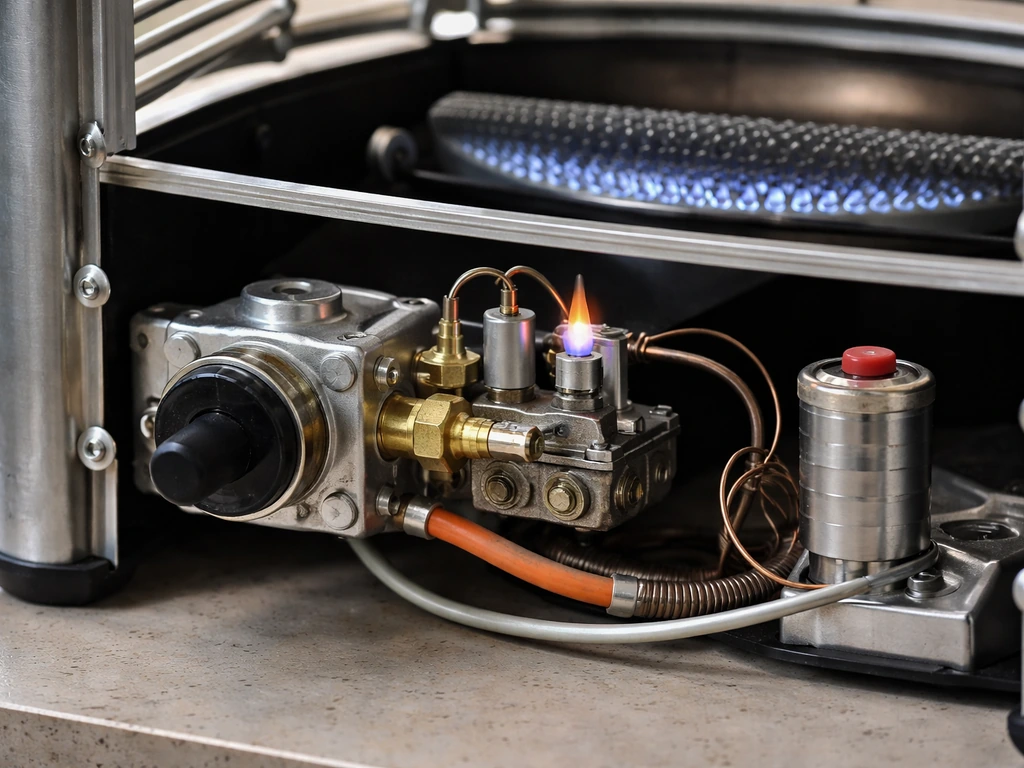
Understanding the whole sequence makes troubleshooting much easier, because each step depends on the one before it. Here's what happens from the moment you touch the control knob to the moment heat radiates off the emitter head.
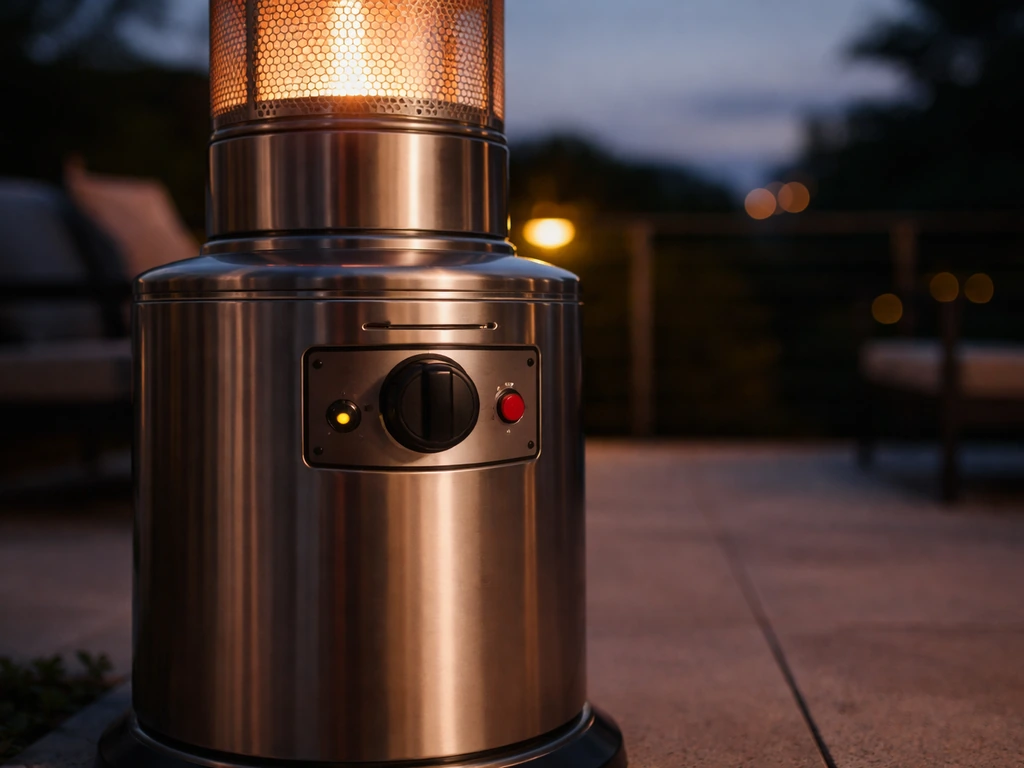
- You press and hold the control knob inward, which mechanically bypasses the main gas valve just enough to let a small amount of gas reach the pilot assembly.
- While holding the knob down, you press the igniter button. This fires a piezo spark at the pilot tip, lighting a small pilot flame.
- You keep holding the knob pressed in for 30 to 45 seconds. During this time, the pilot flame is heating the thermocouple tip.
- The thermocouple generates a small millivolt electrical signal as it gets hot. That signal travels to an electromagnet inside the gas valve and holds it open.
- You release the knob. Because the thermocouple is now hot enough to keep the valve energized, gas continues to flow.
- You rotate the control knob to your desired heat setting. Gas flows to the main burner, ignites from the pilot, and the burner head glows and radiates infrared heat outward.
- When you turn the heater off (or something trips a safety device), the valve closes, gas stops, and the flame goes out.
That 30-to-45-second hold is the step most people skip or rush, and it's the single most common reason a heater lights and then immediately goes out. The thermocouple physically needs time to heat up. You can't shortcut it.
How the burner actually makes heat
Gas patio heaters use an atmospheric burner, which is a simple but precise system. Propane flows from the tank through a regulator (which drops the high-pressure tank gas down to a safe, usable pressure) and into a small orifice at the base of a venturi tube. The gas moving through that orifice creates a venturi effect, pulling in surrounding air and mixing it with the fuel before it even reaches the burner ports. This pre-mixed gas-and-air combination is what actually burns cleanly and efficiently.
The flame at the burner ports uses that pre-mixed air (called primary air) plus additional air from the surrounding environment (secondary air) to complete combustion. When the mix is right, you get a clean blue flame or a proper orange glow from the emitter grid above. When something's off with the air-fuel ratio, the flame tells you: a soft, yellow or yellow-tipped flame means not enough primary air, while a small, hard blue flame that lifts off the ports means too much air. The Patio Comfort NPC05 owner’s manual notes that wind gusts can disrupt the glow and flame pattern, which may cause operational issues that can resemble component failures wind gusts affect and can disrupt the glow and flame pattern. Both are signs something is partially blocked or misaligned.
The safety and control components that keep it running
Three components do most of the work of keeping a gas patio heater running safely. If any one of them fails, the heater shuts down, often without any obvious sign of what went wrong.
Thermocouple (the flame sensor)
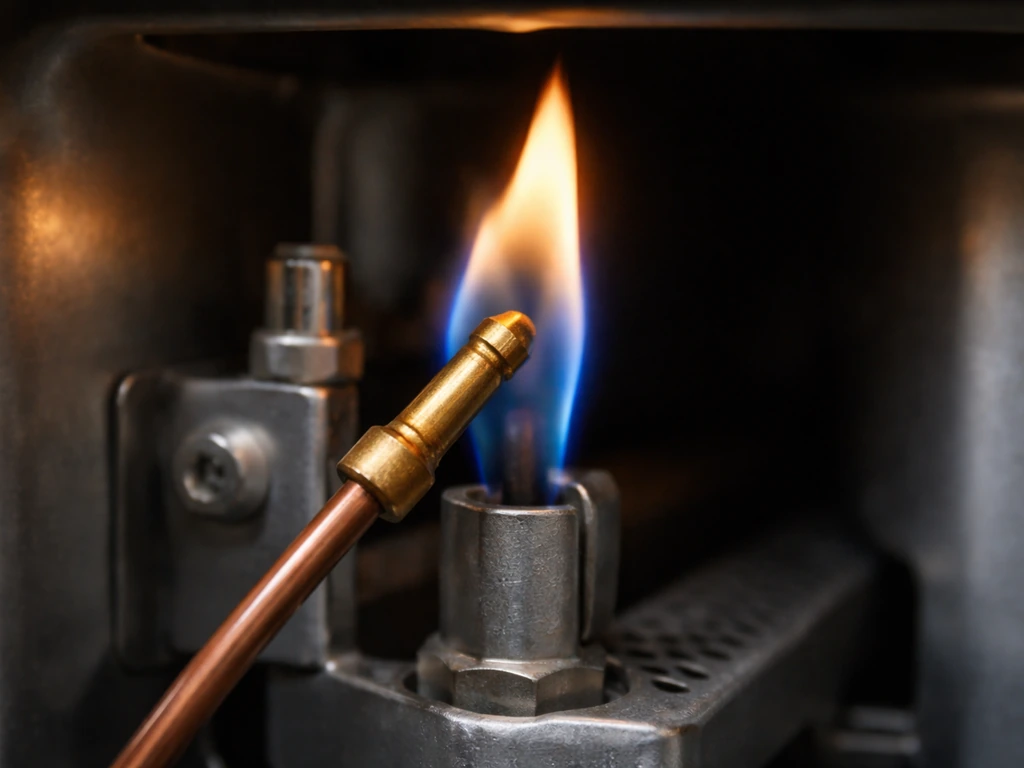
The thermocouple is a small copper probe, usually a few inches long, mounted right next to the pilot tube with its tip sitting directly in the pilot flame. Heat from the flame causes a voltage difference between the two dissimilar metals inside it, generating a millivolt signal that holds the gas valve electromagnet open. The moment the flame goes out, the thermocouple cools, the signal drops, and the valve closes automatically. This is the primary safety shutoff. If the thermocouple tip is not sitting in the flame, is covered in soot, or has failed internally, the heater won't stay lit no matter what else you do.
Tilt switch (the tip-over shutoff)
The tilt switch is usually a simple mechanical or magnetic switch mounted near the base of the heater. If the heater leans past a certain angle, the switch opens and cuts power to the gas valve, shutting everything off. This is a non-negotiable safety feature, but it also trips on surfaces that aren't perfectly level, on decks that flex, or if someone bumps the heater. The tilt switch and thermocouple are linked in the same circuit, so if either one fails or trips, the result looks identical: the heater goes out and won't stay lit.
Regulator and gas valve
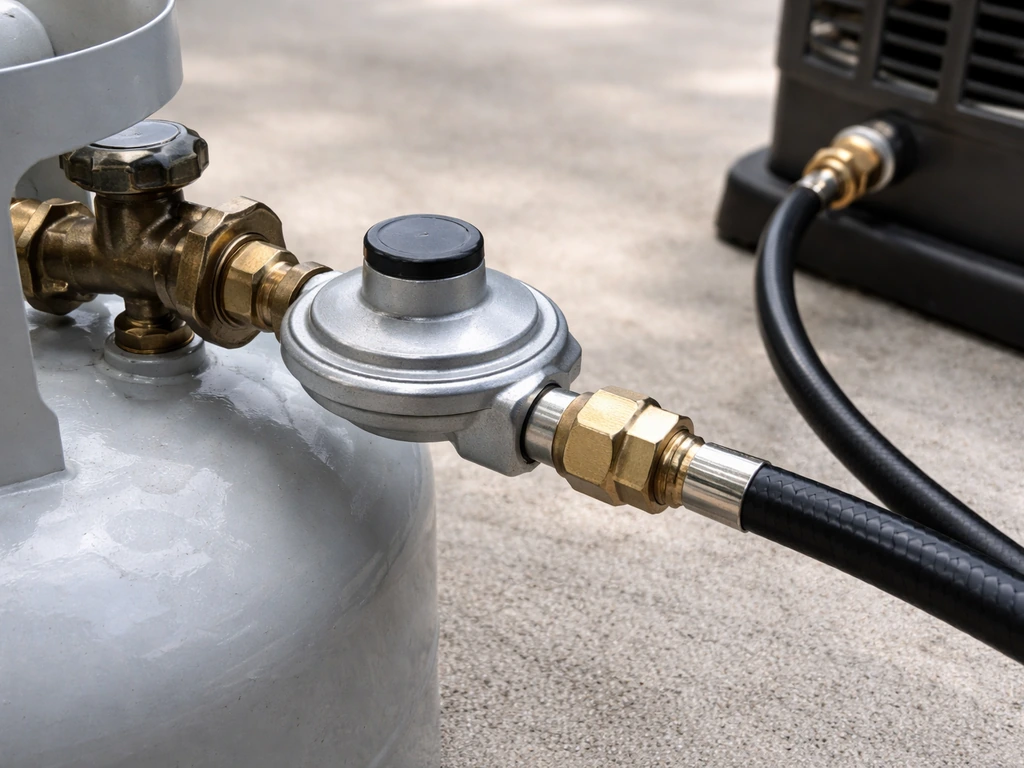
The regulator sits between your propane tank and the heater body and reduces tank pressure (which can be over 100 PSI when full) down to the low, stable pressure the burner needs, typically around 11 inches of water column for propane. A faulty or frozen regulator will starve the burner of fuel or deliver inconsistent pressure, causing weak flames or ignition failures. The main gas valve controls flow and is held open by the thermocouple signal once the system is lit. Valves rarely fail outright but can develop internal leaks or fail to open fully if the thermocouple voltage is low.
Why your heater won't ignite or won't stay lit
Most ignition and stay-lit failures come from a small set of very specific causes. Here's how the common symptoms map to actual component problems.
| Symptom | Most Likely Cause | What's Actually Happening |
|---|---|---|
| Clicks but no flame | No gas reaching pilot or clogged orifice | Venturi tube, pilot orifice, or burner ports blocked by debris, spider webs, or insects |
| Lights then goes out immediately | Thermocouple not hot enough / not held long enough | Knob released before thermocouple generated enough signal to hold the valve open |
| Lights, holds for a few seconds, then goes out | Thermocouple tip out of flame path or failing | Tip not sitting directly in flame; soot-coated tip; thermocouple internally degraded |
| Randomly shuts off during use | Tilt switch tripping or unstable surface | Heater on uneven ground, flexible deck surface, or wind rocking the unit |
| Weak or yellow flame after lighting | Air-fuel mix issue or dirty burner ports | Partially clogged venturi or burner ports restricting primary air mix |
| Pilot blows out in wind | Environmental / installation factor | Heater placed in exposed location; wind disrupting pilot flame and causing thermocouple to cool |
Blocked venturi tubes and burner ports are a bigger problem than most people realize. Spiders and insects love to nest in the venturi tube during off-season storage, and even a small obstruction completely changes the air-fuel mix. This is one of the first things to check on a heater that sat unused for months and suddenly won't work right.
DIY checks you can do safely today
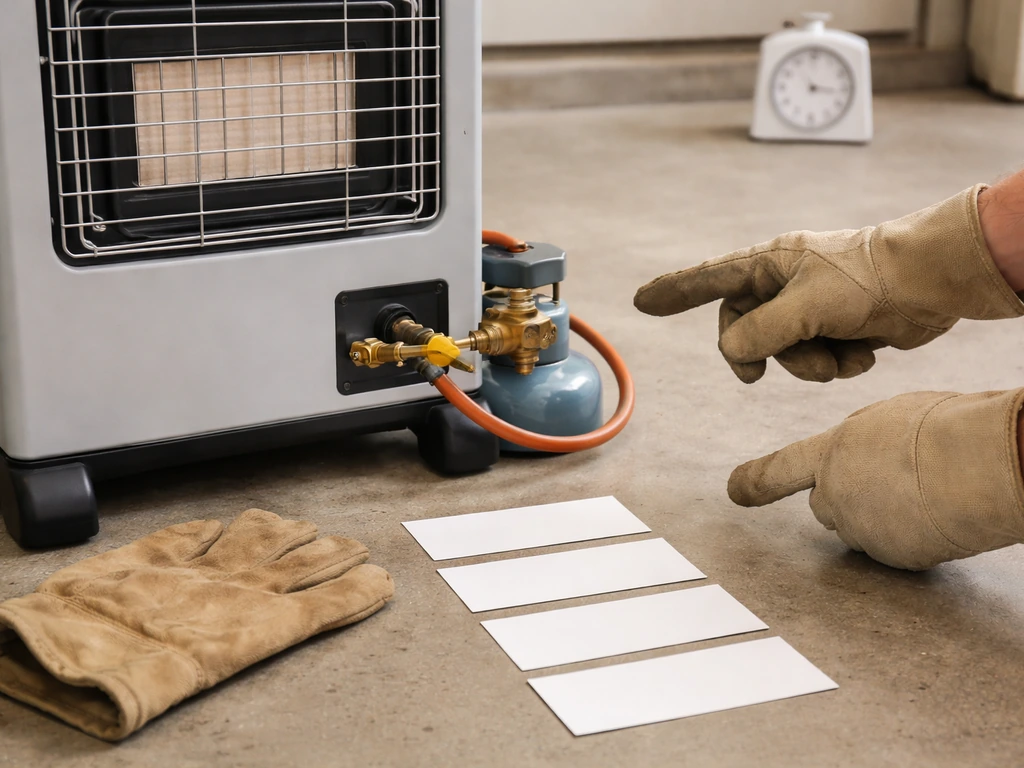
Before you do anything, turn the heater off, close the tank valve, and let the unit cool completely. Never inspect or adjust components with gas flowing. Wait at least five minutes after any failed ignition attempt for any unburned gas to dissipate before trying again. That's not just a suggestion: attempting a relight into accumulated gas is a real explosion risk.
Step 1: Check your lighting technique first
The most common failure is user error, not a broken part. Make sure you're pressing the knob fully inward (not just rotating it), holding it in continuously while pressing the igniter, and then holding it in for a full 30 to 45 seconds after the pilot lights before releasing. Count it out loud. If you release too early, the thermocouple hasn't had time to heat up and the valve closes. Try the proper sequence twice before assuming anything is broken.
Step 2: Check the surface and tilt switch
Place the heater on a hard, flat, level surface and confirm it doesn't rock at all. Decks and patios that slope even slightly can trip a sensitive tilt switch. If your heater shuts off randomly or won't stay lit but ignites fine, try it on a flat concrete surface as a test. If it runs reliably there, your original surface or a failing tilt switch is the issue. A tilt switch can be tested for continuity with a basic multimeter when the heater is upright and cool, but replacing one is straightforward and the parts are inexpensive.
Step 3: Inspect the thermocouple position
With the heater cold and gas off, locate the thermocouple probe next to the pilot tube. Its tip should be sitting directly in the path of the pilot flame, not off to the side. If it's been bumped or bent away, you can very gently bend it back toward the pilot tip using your fingers. Relight and hold the full 30 to 45 seconds. If the heater now stays lit, that was your problem. If the tip is in position but the heater still won't stay lit after proper hold time, the thermocouple itself may be generating insufficient voltage and needs replacement. They're typically a $10 to $20 part and are usually held in place by a single nut.
Step 4: Inspect and clean the venturi tube and burner ports
With the gas off and the unit cool, locate the venturi tube (the tapered metal tube where air enters and mixes with gas). Use a vacuum or a can of compressed air at the orifice opening to clear any debris or insect nests. Don't use water. For the burner ports, a soft brush or a blast of compressed air along the port openings is usually enough. If you see visible blockage or the flame was noticeably yellow before, this cleaning will often restore normal operation immediately.
Step 5: Check the regulator
If the heater ignites but the flame is weak, or if nothing changes after the checks above, the regulator may be the issue. A common cause of regulator problems is opening the tank valve too quickly, which can trigger a built-in flow-limiter. Fix: turn everything off, disconnect the regulator from the tank, wait 30 seconds, reconnect it slowly, and open the tank valve slowly. If the flame is still weak or inconsistent, the regulator may need replacement. These are also inexpensive parts, usually under $20, and are user-replaceable.
When to stop and call a professional
If you smell gas when the heater is off, if you see damage to the gas line or connections, or if the main gas valve itself is suspect, stop and contact a qualified technician. Valve replacement and gas line work on a unit with any signs of damage or corrosion is outside safe DIY territory. The component checks above are all safe for a careful homeowner, but anything involving a suspected internal valve leak or damaged regulator body should go to a pro.
A quick note on electric and infrared patio heaters
Electric patio heaters work on a completely different principle: a resistive element or quartz infrared tube heats up when current passes through it, radiating heat outward with no combustion, no gas valve, and no thermocouple. They're simpler to troubleshoot (usually a failed element, thermostat, or power supply issue) but generate less intense heat than a comparable gas unit. If you're deciding between heater types for a new installation, or setting one up for the first time, the setup considerations are quite different from what's covered here. If you need step-by-step help, see our guide on how to install patio heater units safely and correctly setup considerations are quite different from what's covered here.
What to do right now
If your heater isn't working today, start with technique: make sure you're holding that control knob in for the full 30 to 45 seconds after the pilot lights. If you're trying to keep patio warm in winter, make sure the heater stays lit reliably before you rely on it for steady warmth how to keep patio warm in winter. That alone fixes the majority of 'won't stay lit' complaints. If that's not the issue, move through the checklist above in order: level surface, thermocouple position, venturi cleaning, regulator reset. Each check takes less than five minutes and costs nothing. Most patio heater failures are fixable at home with basic tools, and knowing exactly how the system works makes it much easier to zero in on the real cause instead of guessing. If you're starting from scratch and wondering how to build a patio heater, focus first on the correct burner setup, safe gas regulation, and proper mounting and clearances Most patio heater failures are fixable at home. If you're wondering how to set up a patio heater from scratch, start with placement and the basic lighting steps, then move into these troubleshooting checks if it won't stay lit. Once you know what can go wrong, you can buy a patio heater by matching the right fuel type, BTU output, and safety features to your space how to buy a patio heater.
FAQ
How long should I hold the knob after the pilot lights on a gas patio heater?
Hold the control knob in continuously for 30 to 45 seconds after the pilot ignites. If you release earlier, the thermocouple may not reach enough temperature to keep the gas valve open, so the heater will shut off even though the pilot momentarily looked fine.
Why does my patio heater light but then shut off right away?
Most commonly the thermocouple is not heating long enough or its tip is not positioned in the pilot flame. Soot, a bumped probe, or holding the knob for too short a time can all produce the same symptom, the pilot goes out and the valve closes automatically.
What should I do if I tried to relight and it keeps shutting down?
Turn the heater off, close the tank valve, and let the unit cool. Wait at least five minutes before attempting another ignition so any unburned gas can dissipate, then retry the full lighting sequence from the start.
My flame looks yellow or has yellow tips. Does that mean it is working normally?
A yellow or yellow-tipped flame usually indicates the burner is not getting the right amount of primary air. The venturi tube or burner ports may be partially blocked or misaligned, especially after insect or spider nesting during storage.
What does a hard blue flame that lifts off the ports mean?
A flame that is small and hard blue and lifts off the burner ports often points to too much air or an air-fuel mix problem. Check for partial obstructions or air mixing issues around the venturi and burner ports, then confirm the heater is on a stable, level surface.
Can I adjust the thermocouple or bend it while gas is flowing?
No. With any gas system, shut the heater off, close the tank valve, and let everything cool before inspecting or adjusting the thermocouple. Inspecting with gas flowing is unsafe and unnecessary.
How can I tell if my tilt switch is the reason the heater won’t stay lit?
Place the heater on a hard, flat, level surface (for example, concrete) and test. If it stays lit on flat ground but not on a patio or deck, the tilt switch is likely sensitive to slope, deck flex, or minor bumps. The identical shutdown symptoms can come from either tilt or thermocouple, so this test helps isolate the cause.
Is water okay for cleaning the venturi tube or burner ports?
Avoid water. Use a vacuum or compressed air directed at the orifice opening to remove debris, and use a soft brush or compressed air at burner ports. Water can introduce corrosion or contamination and does not help clear packed insect nesting reliably.
If the venturi is clear and the thermocouple is positioned correctly, what’s the next most likely cause?
A weak or inconsistent flame can come from a regulator issue or an opening procedure problem. Opening the tank valve too quickly can trigger a flow limiter, so try reconnecting the regulator and opening the tank slowly after everything is turned off and cooled.
Why does opening the propane tank valve quickly matter?
Some regulators incorporate a flow-limiting response to rapid tank opening. If it triggers, the heater may ignite weakly or inconsistently. The fix is to open the tank valve slowly (after a regulator reconnect) and then retry the proper lighting hold time.
What if I smell gas even when the heater is off?
Stop using the unit immediately. Gas odor with the heater off can indicate a leak in the hose, connections, or an internal valve issue. Do not troubleshoot further, and contact a qualified technician, especially if you see damage or corrosion.
How do I safely confirm whether my thermocouple tip is in the pilot flame?
With gas off and the unit fully cool, locate the thermocouple probe next to the pilot tube. The tip should sit in the pilot flame path, not to the side. If it was bumped, gently reposition by hand, then relight and hold for the full 30 to 45 seconds to verify the heater stays lit.
Does the safety shutoff circuit behave the same way for thermocouple and tilt switch problems?
Yes. If either the thermocouple signal drops or the tilt switch opens, the heater typically shuts down and will not stay lit, even if it ignites. That is why the level-surface test is helpful, and why the hold time and thermocouple placement both need to be correct.
How do I choose between a gas patio heater and an electric one for troubleshooting?
Gas heaters rely on ignition, a thermocouple, and safety switches, so “won’t stay lit” often ties to those parts. Electric heaters typically fail due to a power supply issue, thermostat, or infrared element, and they do not have combustion components like a gas valve or thermocouple.